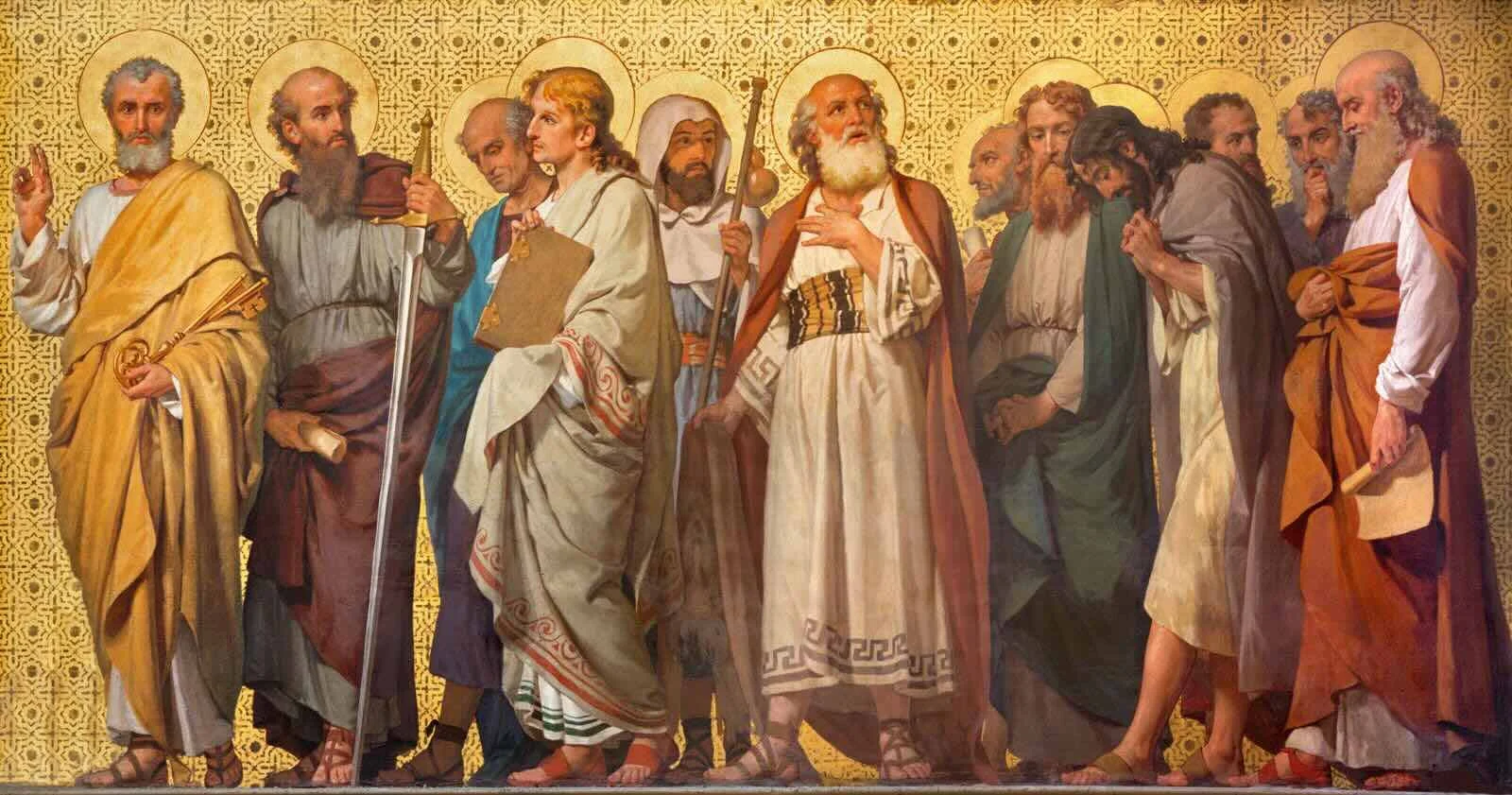
Translated from Philip Schaff's History of The Christian Church
第三章 穆罕默德教与基督教的关系1
目录
§ 38. 文献
§ 39. 统计与年表
§ 40. 穆罕默德教在教会史上的地位
§ 41. 伊斯兰教的故乡与历史背景
§ 42. 穆罕默德的生平与品格
§ 43. 伊斯兰的征服
§ 44. 《古兰经》与《圣经》
§ 45. 穆罕默德教
§ 46. 穆罕默德教的礼拜
§ 47. 基督教对伊斯兰教的论驳——附论摩门教
“除上帝外,别无神明,穆罕默德是他的使者。”——《古兰经》 (The Koran)。
“因为只有一位上帝,在上帝和人中间,只有一位中保,乃是降世为人的基督耶稣;他舍自己作万人的赎价。”——《提摩太前书》2:5、6。
§ 38. 文献
见A. 施普伦格 (A. Sprenger) 的《施普伦格东方文献目录》 (Bibliotheca Orientalis Sprengeriana)。吉森 (Giessen),1857年。
W. 缪尔 (W. Muir):《穆罕默德传》 (Life of Mahomet),第I卷,第1章。缪尔特别探讨了穆罕默德教传统的史料价值。
Ch. 弗里德里奇 (Ch. Friedrici):《东方文献目录》 (Bibliotheca Orientalis)。伦敦,Trübner & Co.,1875年及后。
I. 史料
- 《古兰经》 (The Koran 或 AL-Koran)。最主要的史料。它是穆罕默德教的圣经,自称是穆罕默德在二十年间受默示而得的。篇幅约为《新约》的两倍。最好的阿拉伯文抄本,往往书写极其精美,藏于开罗 (Cairo)、大马士革 (Damascus)、君士坦丁堡 (Constantinople) 和巴黎的清真寺;收藏最多的是开罗赫迪夫的图书馆。阿拉伯文印本有欣克尔曼 (Hinkelmann) 版(汉堡,1694年);穆拉·奥斯曼·伊斯梅尔 (Molla Osman Ismael) 版(圣彼得堡,1787、1803年);G. 弗吕格尔 (G. Flügel) 版(莱比锡,1834年),后由雷德斯洛布 (Redslob) 修订(1837、1842、1858年)。阿拉伯文、拉丁文对照本 (Arabice et Latine),L. 马拉奇 (L. Maraccius) 编,帕多瓦 (Patav.),1698年,2卷,对开本(《古兰经全文》〔Alcorani textus universus〕,附注释与驳论)。阿拉伯文石印本于1878年(伊斯兰历1296年)在印度勒克瑙 (Lucknow) 出版。
通行的英译本:乔治·赛尔 (Geo. Sale) 的散文译本(初版于伦敦,1734年;另有1801、1825年版,费城1833年版等),附有博学而宝贵的绪论和注释;J. M. 罗德韦尔 (J. M. Rodwell) 的译本,采用原文的格律而不押韵(伦敦,1861年;第2版,1876年,各章按年代顺序排列)。E. H. 帕尔默 (E. H. Palmer) 的新散文译本(牛津,1880年,2卷),收入M. 缪勒 (M. Müller) 的《东方圣书》丛书 ("Sacred Books of the East")。爱德华·W. 莱恩 (Edward W. Lane) 所译的部分篇章十分出色。
法译本有萨瓦里 (Savary) 译本,巴黎,1783年,2卷;加尔桑·德·塔西 (Garcin de Tassy) 增订版,1829年,3卷;另有M. 卡西米尔斯基 (M. Kasimirski) 译本,巴黎,1847、1873年。
德译本有瓦尔 (Wahl) 译本(哈雷,1828年)、L. 乌尔曼 (L. Ullmann) 译本(比勒费尔德,1840年;第4版,1857年);另有哈默·冯·普格施塔尔 (Hammer von Purgstall) 的部分译文(载《东方宝藏》〔Fundgruben des Orients〕),以及施普伦格的部分译文(载《穆罕默德的生平与教导》〔Das Leben und die Lehre des Mohammad〕)。
- 关于穆罕默德生平及伊斯兰教 (Islâm) 起源的次要史料,有同时代人的大量诗篇,尤见于伊本·伊斯哈格 (Ibn Ishâc) 的著作;还有穆罕默德言论的汇编,尤其是布哈里 (Albuchârî,卒于871年) 的《实录》 (Sahih,即真实、确实之意)。另有早期的《古兰经》注释,解释其中的难解段落,调和其矛盾,并插入传统言论与传说。见施普伦格,第III卷,第CIV页及后。
II. 关于《古兰经》的著作
Th. 奈尔德克 (Th. Nöldeke):《古兰经史》 (Geschichte des Quorâns;History of the Koran),哥廷根,1860年;以及他在《不列颠百科全书》 ("Encycl. Brit.") 第9版第XVI卷第597–606页的文章。
加尔桑·德·塔西:《依据〈古兰经〉的伊斯兰教:教义教导与实践》 (L’Islamisme d’après le Coran l’enseignement doctrinal et la pratique),第3版,巴黎,1874年。
古斯塔夫·魏尔 (Gustav Weil):《古兰经历史批判导论》 (Hist. kritische Einleitung in den Koran)。比勒费尔德、莱比锡,1844年;第2版,1878年。
威廉·缪尔爵士 (Sir William Muir):《古兰经:其编成与教导,以及它为圣经所作的见证》 (The Corân. Its Composition and Teaching; and the Testimony it bears to the Holy Scriptures)。(阿拉哈巴德,1860年);第3版,伦敦,1878年。
施普伦格,前引书 (l.c.),第III卷,第xviii–cxx页。
III. 穆罕默德传记
- 穆罕默德教传记作者。
祖赫里 (Zohri,最早的一位,卒于迁徙纪元124年)。
伊本·伊斯哈格 (Ibn Ishâc,或作 Ibni Ishak,卒于伊斯兰历151年,即公元773年),由维斯滕费尔德 (Wüstenfeld) 据抄本编成阿拉伯文版,哥廷根,1858–60年;魏尔 (Weil) 译,斯图加特,1864年。
伊本·希沙姆 (Ibn〔Ibni〕Hishâm,卒于伊斯兰历213年,公元835年),亦由维斯滕费尔德编订,魏尔翻译,1864年。
卡提卜·瓦基迪 (Katib Al Waquidi,或作 Wackedee、Wackidi,伊斯兰历207年,即公元829年卒于巴格达),学识极其渊博,搜集传统,遗下六百箱书籍(施普伦格,第III卷,第LXXI页);以及他的秘书穆罕默德·伊本·萨德 (Muhammad Ibn Sâad,卒于伊斯兰历230年,公元852年),他整理、节略并补全其师的传记著作,编为十二或十五卷对开本;第1卷载穆罕默德传,缪尔和施普伦格认为此书胜过其他所有传记。韦尔豪森 (Wellhausen) 德译本:《麦地那的穆罕默德:译自瓦基迪的阿拉伯文》 (Muhammed in Medina. From the Arabic of Vakidi)。柏林,1882年。
塔巴里 (Tabari,或作 Tibree,卒于伊斯兰历310年,公元932年),被吉本 (Gibbon) 称为“阿拉伯人的李维”。
缪尔说(第I卷,第CIII页):“审慎的穆罕默德史家,将只以伊本·希沙姆、瓦基迪及其秘书、塔巴里所作的三部传记为原始依据。对于最早的圣训传述者——布哈里 (Bokhâri)、穆斯林 (Muslim)、提尔米济 (Tirmidzi) 等——所编综合集录中与其主题有关的传统,他也会同样郑重地接纳。但他会拒绝以所有后出的作者为证据。”阿布尔费达 (Abulfeda,或作 Abulfida,卒于1331年) 一度被视为首要权威,如今已被年代早得多的史料所取代。
赛义德·艾哈迈德·汗·巴哈杜尔 (Syed Ahmed Khan Bahador)(皇家亚洲学会会员):《穆罕默德生平论文集》 (A Series of Essays on the Life of Mohammed)。伦敦,Trübner & Co.,1870年。他还写过《穆罕默德教圣经注释》 ("Mohammedan Commentary on the Holy Bible")。他开篇写道:“In nomine Dei Misericordis Miseratoris(奉至仁至慈的上帝之名)。宇宙间无数奇观之中,最奇妙的是宗教。”
毛拉赛义德·阿米尔·阿里 (Syed Ameer Ali, Moulvé,一位穆罕默德教律师,前者之弟):《穆罕默德生平与教导的批判性考察》 (A Critical Examination of the Life and Teachings of Mohammed)。伦敦,1873年。为穆罕默德所作的辩护,主要取材于伊本·希沙姆及伊本·艾西尔 (Ibn-al Athîr,1160–1223年)。
- 基督徒所作的传记。
座堂主任牧师普里多 (Dean Prideaux,卒于1724年):《穆罕默德传》 (Life of Mahomet),1697年;第7版,伦敦,1718年。评价极为不利。
布兰维利耶伯爵 (Count Boulinvilliers):《穆罕默德传》 (The Life of Mahomet)。译自法文。伦敦,1731年。
让·加尼耶 (Jean Gagnier,卒于1740年):《穆罕默德传》 (La vie de Mahomet),1732年,2卷,等等;阿姆斯特丹,1748年,3卷。主要取材于阿布尔费达及逊奈 (Sonna)。他也翻译了阿布尔费达的著作。
吉本 (Gibbon):《罗马帝国衰亡史》等 (Decline and Fall, etc.)(1788年),第50–52章。吉本虽非阿拉伯文学者,却极善于利用当时可得的拉丁文、法文及英文史料,描绘了一幅生动而总体上公正的图景。
古斯塔夫·魏尔:《先知穆罕默德:其生平与教导》 (Mohammed der Prophet, sein Leben und seine Lehre)。斯图加特,1843年。另参他所译的伊本·伊斯哈格和伊本·希沙姆,斯图加特,1864年,2卷;以及他的《穆斯林的圣经传说:取自阿拉伯文史料,并与犹太传说比较》 (Biblische Legenden der Muselmänner aus arabischen Quellen und mit jüd. Sagen verglichen),法兰克福 (Frcf.),1845年。后一书亦有英译本。
Th. 卡莱尔 (Th. Carlyle):《作为先知的英雄》 (The Hero as Prophet),载其《英雄、英雄崇拜与历史上的英雄事迹》 (Heroes Hero- Worship and the Heroic in History)。伦敦,1840年。仅是一篇概论,却充满天才的见解和启发性的提示。他说:“我们选择穆罕默德,不是因为他是最杰出的先知,而是因为谈论他,我们最能畅所欲言。他决不是最真实的先知,但我认为他是一位真实的先知。再者,既然我们任何人都没有成为穆罕默德教徒的危险,我便打算尽我所能,公正地把他的长处都说出来。这是探得他奥秘的途径。”
华盛顿·欧文 (Washington Irving):《穆罕默德及其追随者》 (Mahomet and His Followers)。纽约,1850年,2卷。
乔治·布什 (George Bush):《穆罕默德传》 (The Life of Mohammed)。纽约,Harpers。
威廉·缪尔爵士(孟加拉文官署官员):《穆罕默德传》 (The Life of Mahomet)。附论穆罕默德传记的原始史料及伊斯兰教兴起前阿拉伯历史的导论各章 (With introductory chapters on the original sources for the biography of Mahomet, and on the pre-Islamite history of Arabia)。伦敦,1858–1861年,4卷。博学、精到而公正。单卷节本,伦敦,1877年。
A. 施普伦格:先于1851年在阿拉哈巴德出版一部英文传记,后又以德文写成更完备的《穆罕默德的生平与教导:依据迄今大多未曾利用的史料》 (Das Leben und die Lehre des Mohammad. Nach bisher grösstentheils unbenutzten Quellen)。柏林,1861–65年;第2版,1869年,3卷。此书以原始史料及阿拉伯文史料为依据,也得益于作者在印度与穆罕默德教徒长期的亲身交往,但并不是一部融会贯通、具有哲理的传记。
特奥多尔·奈尔德克 (Theod. Nöldeke):《穆罕默德传》 (Das Leben Muhammeds)。汉诺威,1863年。另参他在赫尔佐格 (Herzog)《百科全书》 (Real-Encycl.) 初版第XVIII卷中的详尽文章。
E. 勒南 (E. Renan):《穆罕默德与伊斯兰教的起源》 (Mahomet, et les origines de l’islamisme),载其《宗教史研究》 ("Etudes de l’histoire relig."),第7版,巴黎,1864年。
巴泰勒米·圣伊莱尔 (Barthélemy Saint-Hilaire):《穆罕默德与古兰经》 (Mahomet et le Oran)。巴黎,1865年。以施普伦格和缪尔的著作为依据。
Ch. 朔尔 (Ch. Scholl):《伊斯兰教及其创始人》 (L’Islam et son Fondateur)。巴黎,1874年。
R. 博斯沃思·史密斯 (R. Bosworth Smith,哈罗公学助理教师):《穆罕默德与穆罕默德教》 (Mohammed and Mohammedanism)。伦敦,1874年;纽约重印,1875年。
J. W. H. 斯托巴特 (J. W. H. Stobart):《伊斯兰教及其创始人》 (Islam and its Founder)。伦敦,1876年。
J. 韦尔豪森 (J. Wellhausen):《穆罕默德》条目 (Moh.),载《不列颠百科全书》 ("Encycl. Brit.") 第9版,第XVI卷,第545–565页。
IV. 阿拉伯人与土耳其人的历史
约瑟夫·冯·哈默-普格施塔尔 (Jos. von Hammer-Purgstall):《奥斯曼帝国史》 (Geschichte des osmanischen Reiches)。佩斯 (Pesth),1827–34年,10卷。另有4卷本的简编版。这部权威著作是三十年辛劳的成果,叙事下迄1774年。同一作者:《阿拉伯文学史》 (Literaturgeschichte der Araber)。维也纳,1850–57年,7卷。
G. 魏尔 (G. Weil):《哈里发史》 (Gesch. der Chalifen)。曼海姆,1846–5l年,3卷。
科桑·德·佩尔斯瓦尔 (Caussin de Perceval):《阿拉伯人史论》 (Essai sur l’histoire des Arabes)。巴黎,1848年,3卷。
爱德华·A. 弗里曼 (Edward A. Freeman,D. C. L.、LL. D.):《撒拉逊人的历史与征服》 (History and Conquests of the Saracens)。伦敦,1856年;第3版,1876年。
罗伯特·杜里·奥斯本 (Robert Durie Osborn,孟加拉参谋军团少校):《阿拉伯人统治下的伊斯兰教》 (Islam under the Arabs)。伦敦,1876年;《巴格达哈里发统治下的伊斯兰教》 (Islam under the Khalifs of Baghdad)。伦敦,1877年。
爱德华·S. 克里西爵士 (Sir Edward S. Creasy):《奥斯曼土耳其人史:自其帝国肇建至今》 (History of the Ottoman Turks from the Beginning of their Empire to the present Time)。伦敦,第2版,1877年。主要依据冯·哈默的著作。
Th. 奈尔德克:《萨珊王朝时期的波斯人与阿拉伯人史:译自塔巴里的阿拉伯文编年史》 (Geschichte der Perser und Araber zur Zeit der Sasaniden. Aus der arabischen Chronik des Tabari übersetzt)。莱顿,1879年。
威廉·缪尔爵士 (Sir Wm. Muir):《早期哈里发统治编年史》 (Annals of the Early Caliphate)。伦敦,1883年。
V. 穆罕默德教徒的风俗习惯
约翰·路德维希·布尔克哈特 (Joh. Ludwig Burckhardt):《努比亚游记》 (Travels in Nubia),1819年;《叙利亚与巴勒斯坦游记》 (Travels in Syria and Palestine),1823年;《贝都因人札记》 (Notes on the Bedouins),1830年。
爱德华·W. 莱恩 (Edw. W. Lane):《现代埃及人》 (Modern Egyptians)。伦敦,1836年;第5版,1871年,2卷。
理查德·F. 伯顿 (Rich. F. Burton):《麦地那与麦加朝觐亲历记》 (Personal narrative of a Pilgrimage to El Medinah and Meccah)。伦敦,1856年,3卷。
C. B. 克伦青格 (C. B. Klunzinger):《上埃及:其人民与物产——尼罗河谷、沙漠与红海沿岸居民的风俗、习惯、迷信与职业纪实》 (Upper Egypt: its People and its Products. A descriptive Account of the Manners, Customs, Superstitions, and Occupations of the People of the Nile Valley, the Desert, and the Red Sea Coast)。纽约,1878年。是莱恩著作的宝贵补充。
东方游记,尤其是有关埃及和土耳其的著作。巴尔特 (Bahrdt) 的《中非游记》 (Travels in Central Africa)(1857年),帕尔格雷夫 (Palgrave) 的《阿拉伯》 (Arabia)(1867年),等等。
VI. 穆罕默德教与犹太教的关系
亚伯拉罕·盖格 (Abraham Geiger):《穆罕默德从犹太教吸收了什么?》 (Was hat Mohammed aus dem Judenthum aufgenommen?)。波恩,1833年。
哈特维希·希尔施费尔德 (Hartwig Hirschfeld):《古兰经中的犹太教成分》 (Jüdische Elemente im Koran)。柏林,1878年。
- 作为宗教的穆罕默德教及其与基督教的关系。
L. 马拉奇 (L. Maracci):《驳古兰经导论》 (Prodromus ad refutationem Alcorani)。罗马,1691年,4卷。
S. 李 (S. Lee):《基督教与穆罕默德教论争文集》 (Controversial Tracts on Christianity and Mahometanism)。1824年。
J. 德林格 (J. Döllingber,罗马天主教徒):《穆罕默德的宗教:其内在发展及其对各民族生活的影响》 (Muhammed’s Religion nach ihrer innern Entwicklung u. ihrem Einfluss auf das Leben der Völker)。雷根斯堡,1838年。
A. 默勒 (A. Möhler,罗马天主教徒):《伊斯兰教与基督教的关系》 (Das Verhältniss des Islam zum Christenthum),载其《文集》 ("Gesammelte Schriften")。雷根斯堡,1839年。
C. F. 格罗克 (C. F. Gerock):《古兰经基督论试述》 (Versuch einer Darstellung der Christologie des Koran)。汉堡、哥达,1839年。
J. H. 纽曼 (J. H. Newman,罗马天主教徒):《土耳其人与欧洲的关系》 (The Turks in their relation to Europe)(写于1853年),载其《历史素描》 ("Historical Sketches")。伦敦,1872年,第1–237页。
座堂主任牧师阿瑟·P. 斯坦利 (Dean Arthur P. Stanley):《穆罕默德教及其与东方教会的关系》 (Mahometanism and its relations to the Eastern Church),载《东方教会史讲演录》 (Lectures on the "History of the Eastern Church")。伦敦、纽约,1862年,第360–387页。一篇生动的概述。
座堂主任牧师米尔曼 (Dean Milman):《拉丁基督教史》 (History of Latin Christianity)。第IV编,第1、2章。(第II卷,第109页。)
特奥多尔·奈尔德克:《穆罕默德与伊斯兰教》条目 (Muhammed und der Islam),载赫尔佐格《百科全书》 ("Real-Encyclop."),第XVIII卷(1864年),第767–820页。
伊曼纽尔·多伊奇 (Eman. Deutsch):《伊斯兰教》 (Islam),载其《文学遗稿》 ("Liter. Remains")。伦敦、纽约,1874年,第50–134页。此文最初刊于伦敦《季度评论》 ("Quarterly Review") 1869年10月号,也附印于R. 博斯沃思·史密斯《穆罕默德》 (Mohammed) 的纽约版(Harper)卷末。《阿拉哈巴德传教士总会议报告》 (Reports of the General Missionary Conference at Allahabad),1873年。
J. 米莱森·阿诺德 (J. Mühleisen Arnold,前巴达维亚牧师):《伊斯兰教:其历史、特征及与基督教的关系》 (Islam: its History, Character, and Relation to Christianity)。伦敦,1874年,第3版。
古斯塔夫·勒施 (Gustav. Rösch):《伊斯兰教中的耶稣神话》 (Die Jesusmythen des Islam),载《研究与评论》 ("Studien und Kritiken")。哥达,1876年(第III期,第409–454页)。
马库斯·多兹 (Marcus Dods):《穆罕默德、佛陀与基督》 (Mohammed, Buddha, and Christ)。伦敦,第2版,1878年。
Ch. A. 艾肯 (Ch. A. Aiken):《作为传教宗教的穆罕默德教》 (Mohammedanism as a Missionary Religion)。载安多弗《圣学文库》 ("Bibliotheca Sacra"),1879年,第157页。
特伦奇大主教 (Archbishop Trench):《中世纪教会史讲义》 (Lectures on Mediaeval Church History)(第IV讲,第45–58页)。伦敦,1877年。
亨利·H. 杰瑟普 (Henry H. Jessup,美国长老会驻贝鲁特传教士):《穆罕默德教传教问题》 (The Mohammedan Missionary Problem)。费城,1879年。
爱德华·萨尤斯 (Edouard Sayous):《穆罕默德眼中的耶稣基督》 (Jésus Christ d’après Mahomet)。巴黎,1880年。
G. P. 巴杰 (G. P. Badger):《穆罕默德》 (Muhámmed),载史密斯与韦斯 (Smith and Wace) 所编著作,第III卷,第951–998页。
§ 39. 统计与年表
穆罕默德教人口估计(据基思·约翰斯顿 (Keith Johnston))。
| 亚洲 | 112,739,000 |
|---|---|
| 非洲 | 50,416,000 |
| 欧洲 | 5,974,000 |
| 总计 | 169,129,000 |
基督教政府统治下的穆罕默德教徒。
| 英国在印度统治的人数 | 41,000,000 |
|---|---|
| 俄国在中亚统治的人数 | 6,000,000 |
| 法国在非洲统治的人数 | 2,000,000 |
| 荷兰在爪哇 (Java) 和西里伯斯 (Celebes) 统治的人数 | 1,000,000 |
| 总计 | 50,000,000 |
公元纪年大事表。
570年。穆罕默德 (Mohammed) 生于麦加 (Mecca)。
610年。穆罕默德领受加百列的异象,开始其先知生涯。(盎格鲁-撒克逊人归信。)
622年。希吉拉 (Hegira),即穆罕默德从麦加逃往麦地那 (Medina)。穆罕默德教纪元开始。
632年。6月8日,穆罕默德卒于麦地那。
632年。阿布·伯克尔 (Abû Bekr) 成为首任哈里发 (Caliph),即穆罕默德的继承者。
636年。哈里发欧麦尔 (Omar) 攻占耶路撒冷。
640年。欧麦尔攻占亚历山大城 (Alexandria)。
711年。塔里克 (Tharyk) 从非洲渡过海峡进入欧洲,并将那座山命名为杰贝勒·塔里克 (Jebel Tharyk,即直布罗陀 (Gibraltar))。
732年。普瓦捷 (Poitiers) 与图尔 (Tours) 之战;阿卜杜勒·拉赫曼 (Abd-er-Rahman) 为查理·马特 (Charles Martel) 所败;西欧得免于穆斯林的征服。
786–809年。巴格达 (Bagdad) 哈里发哈伦·拉希德 (Haroun al Rashîd) 在位。穆罕默德教的黄金时代。(与查理曼 (Charlemagne) 通信。)
1063年。塞尔柱突厥 (Seljukian Turkish) 君主阿尔普·阿尔斯兰 (Allp Arslan)。
1096年。第一次十字军东征。布永的戈德弗鲁瓦 (Godfrey of Bouillon) 攻占耶路撒冷。
1187年。埃及苏丹、令十字军闻风丧胆的萨拉丁 (Saladin) 在提比里亚 (Tiberias) 获胜,并攻取耶路撒冷(1187年);后在亚实基伦 (Askelon) 为狮心理查 (Richard Coeur de Lion) 所败,1193年去世。十字军东征走向衰落。
1288–1326年。奥斯曼(土耳其)王朝 (Ottoman (Turkish) dynasty) 的建立者奥斯曼 (Othman) 在位。
1453年。“征服者”穆罕默德二世 (Mohammed II.) 攻占君士坦丁堡 (Constantinople),奠定土耳其强盛的基业。(希腊学者大批迁往南欧;希腊文《新约》传入西方;文艺复兴。)
1492年7月2日。波阿卜迪勒 (Boabdil,或称 Alien Abdallah) 在格拉纳达 (Granada) 为斐迪南 (Ferdinand) 所败;穆斯林在西班牙的统治结束。(哥伦布 (Columbus) 发现美洲。)
1517年。奥斯曼苏丹塞利姆一世 (Selim I.) 征服埃及,从穆塔瓦基勒·比拉 (Motawekkel Billah) 手中夺取阿拉伯古莱氏 (Koreish) 世系的哈里发权位,并将其转归奥斯曼诸苏丹;奥斯曼的哈里发地位始终未获波斯或摩尔穆斯林承认。(宗教改革。)
1521–1566年。“大帝”苏莱曼二世 (Solyman II.) 在位,标志着土耳其军力的顶峰;他攻取贝尔格莱德 (Belgrade,1521年),击败匈牙利人(1526年),却在维也纳 (Vienna) 城下被击退(1529年及1532年)。
1571年。塞利姆二世 (Selim II.) 在勒班陀 (Lepanto) 海战中,为奥地利的唐胡安 (Don John of Austria) 统率的基督教诸国海军所败。土耳其势力开始衰落。
1683年。9月12日,波兰国王约翰·索别斯基 (John Sobieski) 在维也纳城门前最终击退土耳其人;东欧得免于穆斯林的统治。
1792年。在摩尔达维亚 (Moldavia) 的雅西 (Jassy) 缔结和约,以德涅斯特河 (Dniester) 为俄国与土耳其的边界。
1827年。10月20日,英国、法国及俄国的联合舰队在纳瓦里诺 (Navarino) 海战中歼灭土耳其—埃及舰队。1829年签订《阿德里安堡条约》 (Treaty of Adrianople)。1832年希腊王国独立。
1856年。克里米亚战争 (Crimean War) 结束;英国与法国援助苏丹抵抗俄国侵略,使土耳其得以保全;签订《巴黎条约》 (Treaty of Paris);欧洲各国约定不干涉土耳其内政。
1878年。土耳其为俄国所败;但俄国因比肯斯菲尔德勋爵 (Lord Beaconsfield) 领导下的英国出面干涉而受到遏制。欧洲列强召开会议,签订《柏林条约》 (Treaty of Berlin);保加利亚的独立得到保障;缔结《英土条约》 (Anglo-Turkish Treaty);英国占领塞浦路斯 (Cyprus)——同意保卫土耳其亚洲领土的边境,抵抗俄国,条件是苏丹须在土耳其的亚洲领土实行根本改革。
1880年。在柏林召开补充会议。调整并扩大黑山 (Montenegro) 与希腊的边界。
§ 40. 穆罕默德教在教会史上的地位
当使徒们所不知晓的北欧与西欧的新民族、新地区加入基督教会之际,我们却在亚洲和非洲看见相反的景象:一种与基督教抗衡的宗教兴起并扩展,如今全球已有十分之一以上的居民信奉它。它因其创始人而被称为“穆罕默德教” (Mohammedanism),又因其首要的美德——绝对顺服独一真神——而被称为“伊斯兰教” (Islâm)。它与基督教一样,诞生于孕育了三大一神宗教的闪族 (Shemitic race),不过发源之处却是一个偏僻乃至荒漠的地区;它的成功更为迅速,却不及基督教持久。
然而,两者所用的手段与所获的结果,差别何其大!基督教藉着和平的传教士和劝服的力量赢得征服,并随之带来家庭、自由与文明的福祉。穆罕默德教却以刀剑征服了世上最美好的地区,又以多妻制、奴隶制、专制与荒凉使这些地区遭受祸殃。基督教传教的动力是爱上帝、爱人;伊斯兰教的动力则是狂热与暴力。基督教在各民族、各气候地带都找到了自己的家园;穆罕默德教虽然曾竭尽全力征服世界,终究仍是沙漠、帐棚和商队的宗教,局限于游牧、野蛮或半开化的民族,主要是阿拉伯人、波斯人和土耳其人。除凭暴力以外,它从未在欧洲产生过影响;它在君士坦丁堡不过是安营扎寨,并未真正安家落户,而当它不得不退出欧洲之时,也将不会留下任何痕迹。
伊斯兰教在征服的进程中,以武力占据了圣经之地及希腊教会的领土,夺取君士坦丁的宝座,席卷西班牙,越过比利牛斯山 (Pyrenees),甚至长期威胁罗马教会和德意志帝国,直到最后在维也纳城墙下被击退。在中世纪基督教史上占据如此显著地位的十字军东征,起因正是人们渴望从那位“假先知”的追随者手中夺回圣地;它也使东方与西方发生了接触。西班牙的君主国与教会,连同其建筑、骑士精神、偏执与宗教裁判所,都是从与摩尔人 (Moors) 的激烈冲突中形成的。甚至十六世纪的宗教改革也与土耳其问题纠缠在一起;奥格斯堡议会 (diet of Augsburg) 对此问题的关注,不亚于对福音派诸侯和神学家之信仰告白的关注。路德 (Luther) 在他最为流行的赞美诗之一中,祈求脱离“杀人的教皇和土耳其人”,视他们为福音的两大仇敌2;而英国国教《公祷书》 (Prayer Book) 在受难日的祝文中,祈求上帝“怜悯所有土耳其人”,也怜悯“犹太人、不信者和异端”。3
来自这一方面、威胁西方基督教世界的危险早已过去;那“令人难以启齿”的土耳其人已不再是不可战胜的了。然而,希腊教会在亚洲及东欧一部分地区的信徒,仍处于苏丹的专制统治之下;四百多年来,苏丹在君士坦丁堡的宝座,一直是对基督教世界的公然侮辱。
因此,穆罕默德教在教会史上是作为一种敌对势力、一个真正的以实玛利人 (Ishmaelite) 出现的;它是基督教历来唯一可怕的劲敌,也是唯一至少曾一度企图建立世界帝国的宗教。
然而,它也并非只有敌对的一面。它对西方文明并非毫无有益的影响。它促进了骑士精神的发展;影响了基督教建筑;推动了数学、化学和医学的研究(代数 (algebra)、化学 (chemistry)、炼金术 (alchemy) 这些术语便表明了这一点);西班牙摩尔人对亚里士多德 (Aristotle) 著作的阿拉伯文翻译和注释,则奠定了经院哲学的哲学基础。甚至土耳其人攻占君士坦丁堡,也给西方带来了不可估量的福祉:这件事迫使希腊学者携带希腊文《新约》前往意大利,在那里开创了文艺复兴,为新教宗教改革预备了道路。
穆罕默德教夺去了东方教会最美好的领地;若从它与东方教会的关系来看,它乃是上帝施予的、罪所当得的惩罚,针对的是那些毫无果效的思辨、激烈的争执、空洞的仪式主义和实质上的偶像崇拜——这些事使五世纪以后的东方基督教堕落蒙羞。真正宗教的本质,即爱上帝和爱人,已被怨恨与纷争侵蚀殆尽,因而再无力量抵抗外来征服者到底。正统的东方教会与被逐出其共融的东方分离派之间的仇恨,以及希腊教会与拉丁教会之间的嫉妒,使它们无法彼此援助,共同阻止仇敌的进展。希腊人憎恶拉丁教会的和子说 (Filioque),认为它是比伊斯兰教更致命的异端;拉丁人则更关心教皇的至上权,而非基督教的胜利,并在十字军东征期间于东方另立了一套与当地教会抗衡的教阶体系。即便如今,若没有土耳其士兵维持秩序,伯利恒和耶路撒冷的希腊及拉丁修士,在圣诞节和复活节仍动辄会在他们共同的主和救赎者的摇篮与坟墓旁大打出手!4
然而,若从穆罕默德教与其所由产生、或被它改变信仰的异教之间的关系来看,它乃是一个巨大的进步,并且最终可能成为通往基督教的阶石,正如摩西的律法曾作训蒙的师傅,引人归向福音。它摧毁了阿拉伯及亚非广大地区偶像崇拜的势力,使鞑靼人 (Tartars) 和黑人从最粗陋的迷信中提升出来,转而相信并敬拜独一的真神,也达到了一定程度的文明。
但也应当指出,据传教士和非洲旅行者的见证,穆罕默德教以狂热的不洁之火煽动了心思单纯的非洲部落,使他们有了更强的力量来抗拒基督教。威廉·缪尔爵士 (Sir William Muir) 是一位极有资格作出判断的人;他认为,穆罕默德教藉着多妻制与奴隶制的毒害,并藉着压制宗教上一切自由判断,设置了阻止人接受基督教的最有效屏障。他说:“要使受其支配的各民族与真理之光隔绝,再没有什么制度能设计得比它更为精巧周密了。崇拜偶像的阿拉伯人,本来可能被唤醒,进入属灵的生命,接受耶稣的信仰;但在人看来,信奉穆罕默德教的阿拉伯,却已封闭起来,拒绝福音的仁惠影响……穆罕默德的刀剑和《古兰经》 (Coran),乃是文明、自由与真理最致命的仇敌。”5
就过去而言,这无疑是真实的。然而,我们尚未看见这一历史问题的结局。伊斯兰教最终仍有可能成为东方复兴纯正、合乎圣经的宗教所必需的条件。来自英国和美国的新教传教士,在穆罕默德教统治之下所享有的自由,比在希腊或俄国政府统治下所能享有的更多。穆罕默德教对偶像崇拜和圣像崇拜的憎恶,以及它的简朴与节制,都是它与福音派基督教相接触的契合点;这种基督教已从极西之地前来,在土耳其最重要的地区建立了兴旺的传教事业。希腊教会对于穆罕默德教徒几乎无能为力,甚或完全无能为力;若要使他们归信,就必须由一种毫无偶像崇拜外观、敬拜更为简朴、生命更有活力的基督教来完成,而不能靠那种曾被他们轻易征服、并已为他们所鄙视的基督教。一个令人鼓舞的事实是,穆罕默德教徒十分尊重盎格鲁-撒克逊民族。如今,他们指着英国人的诺言起誓,就如同指着穆罕默德的胡须起誓一样。
伊斯兰教 (Islâm) 至今仍是东方一股强大的宗教势力。它在叙利亚、巴勒斯坦、小亚细亚、埃及和北非居于至高无上的地位,并在黑暗大陆内地的野蛮部落中不断扩展。它绝不只是施莱格尔 (Schlegel) 所描述的那种制度:“一位没有神迹的先知,一种没有奥秘的信仰,一套没有爱的道德。”它有坚韧的持久力、进取的活力和强烈的热忱。凡到东方旅行的人,必定会为它那简明的一神信仰对信徒所产生的力量而震撼。参观开罗爱资哈尔清真寺 (Mosque El Azhar) 内的穆斯林大学,颇能使人有所领悟。这所大学创立于十世纪(975年),学生人数不少于一万(至少在1877年我参观时如此),来自穆罕默德教世界各地,看起来仿佛一所庞大的主日学。他们分成小组席地而坐,研习《古兰经》,以之为一切智慧的起点和终点;到了规定的祷告时刻,便起身在教师带领下举行礼拜。他们过着极其简朴的生活,在同一座清真寺里,铺一条毯子或一张草席,就在那里读书、吃饭、睡觉;但他们脸上的神情,却显露出对其信条的狂热献身。他们或自给自足,或靠信徒的施舍维持生活。教师有三百余人,不领薪水,靠私人授课或富有学生的馈赠度日。
然而,伊斯兰教的势力正像它的象征——月亮——一样,在重新升起于东方地平线上的基督教太阳面前逐渐消逝。它的信徒已有近三分之一处于基督教国家(主要是英国)的统治之下。它本质上是一种政治与宗教结合的制度,土耳其则是它的堡垒。苏丹早已是一个“病夫”,其性命全赖基督教列强的容忍与彼此猜忌才得以保全。他迟早要被逐出欧洲,退往布鲁萨 (Brusa) 或麦加 (Mecca)。庞大的俄罗斯帝国是土耳其的世仇;在1854年和1877年的战争中,若非天主教的法国和新教的英国前来援助,土耳其早已被它消灭。与此同时,欧洲文明和基督教宣教事业的无声影响,正在侵蚀土耳其的根基,为东方在宗教、道德和社会上的更新与转变预备道路。“上帝的磨盘转得虽慢,却磨得确实,磨得细妙。”在祂面前,千年如一日,而一日也能成就千年的工作。
§ 41. 伊斯兰教的故乡与历史背景
关于阿拉伯的原住民及伊斯兰教兴起以前的宗教状况,可比较赛尔 (Sale) 的绪论,第1、2节;缪尔 (Muir),第I卷,第2章;施普伦格 (Sprenger),I. 13–92;以及斯托巴特 (Stobart),第1章。
伊斯兰教的故乡是阿拉伯 (Arabia),即位于红海、印度洋与波斯湾之间的半岛。其地遍布沙漠、荒山、岩石环绕的海岸、肥沃的干河谷和丰美的牧场。居民是游牧部落和商人,自称出自五个族祖的世系,即古实 (Cush)、闪 (Shem)、以实玛利 (Ishmael)、基土拉 (Keturah) 和以扫 (Esau)。古人将此地划分为沙漠阿拉伯 (Arabia Deserta)、岩石阿拉伯 (Arabia Petraea,即以佩特拉为首府的西奈地区) 和幸福阿拉伯 (Arabia Felix,即也门 El-Yemen,意即右方之地或南方之地)。大多数河流因周期性的降雨而水势上涨,随后便消失在沙质平原之中;很少流入海洋,没有一条可以通航。这片土地有肃杀的沙漠,也有条条青翠的绿地;有干旱和贫瘠,也有暴雨、晴空、热带的炎热、椰枣树、芳草、咖啡、香脂、没药、乳香,以及代替谷物的高粱 (dhurra)。主要牲畜是号称“沙漠之舟”的骆驼、优良品种的马,以及绵羊和山羊。沙漠如同海洋,也自有其壮丽之处。它使人感到无边无际,助长静默,以及对上帝和永恒的默想。在那里,人独自与上帝相处。阿拉伯沙漠孕育了一些最崇高的篇章:米利暗的自由颂歌、摩西的《诗篇》第九十篇,以及卡莱尔 (Carlyle) 称为“人类笔下最伟大的诗篇”的《约伯记》。
阿拉伯人喜爱游牧生活,朴素节制,彬彬有礼,尊重他人,热情好客,富于想象,爱好诗歌与雄辩;但又轻视人的性命,报复心重,纵情声色,狂热偏执。阿拉伯受沙漠的庇护,从未真正被外族征服。
伊斯兰教的宗教首都,也是其创立者的诞生地——它的耶路撒冷和罗马——就是麦加 (Mecca,或作 Mekka),阿拉伯最古老的城市之一。它位于红海沿岸吉达 (Jiddah) 以东六十五英里、麦地那 (Medina) 以南二百四十五英里处,坐落在一条狭窄而贫瘠的山谷中,四周为光秃的山丘所封闭。繁盛时期人口超过十万,如今仅约四万五千。它由苏丹直接管辖。街道宽阔,却未经铺砌,夏季尘土飞扬,冬季泥泞不堪。房屋以砖石建造,高三四层,室内陈设比东方通常所见的更好。这些房屋出租给朝圣者,是收入的主要来源。麦加城内及周围几乎没有花园或耕地,只有零星带刺的金合欢树和低矮灌木,稍可舒缓目力。城中所有瓜果——西瓜、椰枣、黄瓜、酸橙、葡萄、杏、无花果、扁桃——都来自塔伊夫 (Tâif) 和法蒂玛谷 (Wady Fatima);朝圣季节,这两地每天向首都遣送一百多头负载货物的骆驼。居民懒惰而贪财,主要靠朝圣者谋生;这些人每年从穆罕默德教世界各地成千上万地涌来。只有穆斯林才准进入麦加,但有几位基督徒旅行家曾冒着生命危险,乔装穆斯林前来访问:阿里贝伊 (Ali Bey,西班牙人多明戈·巴迪亚-伊-莱夫利希 Domingo Badia y Leblich 的化名,卒于1818年)、1814年的布尔克哈特 (Burckhardt)、1852年的伯顿 (Burton)、1862年的马尔赞 (Maltzan),以及1880年的基恩 (Keane)。我们对这地方的认识,都有赖于他们。6
麦加最神圣的地方是克尔白 (Al-Kaaba),一座小型长方形庙宇,因其立方体形状而得名。7千百万穆斯林每日五次虔诚地面向它祷告。它被大清真寺包围着;这座清真寺的重要地位,相当于耶路撒冷的所罗门圣殿和罗马的圣彼得大教堂,可容纳约三万五千人。四周环列柱廊、房舍、穹顶和宣礼塔。附近有汩汩涌出的渗渗井 (Zemzem),据说夏甲和以实玛利曾饮其水,解了灼人的干渴。克尔白比麦加古老得多。西西里的狄奥多罗斯 (Diodorus Siculus) 提到它,说它是他那个时代最古老、最受尊崇的庙宇。传说它最初由天使建成帐幕的形状,从天降下;亚当被逐出乐园以后,曾在那里敬拜;塞特以泥石建筑代替帐幕;洪水将它毁坏以后,亚伯拉罕和以实玛利又将它重建,如今仍有人指示他们留下的足迹。81627年,它曾彻底重建。其中安放着著名的黑石 (Black Stone),9位于靠近门口的东北角。这可能是一块陨石,或源出火山,最初用作祭坛。阿拉伯人相信,它与亚当一同从乐园降下,原本洁白如乳,却因人的罪而变黑。10它呈半圆形,高约六英寸,宽约八英寸,离地四五英尺,色泽红黑;无数次的亲吻已使它光滑发亮(如同罗马圣彼得大教堂内彼得雕像的脚一样)。它镶在银框中,覆有黑绸和《古兰经》经文。自远古以来,它便受人崇敬;直到如今,穆斯林朝圣者绕行庙宇七周时,每绕一周,仍虔诚地亲吻或触摸它。11
穆罕默德后来清除了克尔白中一切偶像崇拜的遗物,使它成为其信徒朝圣的地方。他创造或恢复了这样一个传说:亚伯拉罕奉上帝的命令,遣其子以实玛利与夏甲前往麦加,在那里建立真正的敬拜和朝圣节期。他在《古兰经》中说:“上帝已指定克尔白,即那圣屋,作人类驻足之所。”又说:“你们当记得,我们曾指定圣所为人们归聚和安然避居之地,并说:‘你们当以亚伯拉罕站立之处为祷告的地方。’我们又命令亚伯拉罕和以实玛利:‘你们当洁净我的殿,供那些列队绕行、屈身俯伏的人使用。’”12
穆罕默德出现时,阿拉伯已具备一切要素,足以产生一种像他所建立的那样粗犷、好战而兼收并蓄的宗教。当地居民有崇拜星辰的异教徒、犹太人和基督徒。
异教徒是居统治地位的族群,出自亚伯拉罕(易卜拉欣 Ibrahim)的私生子以实玛利,是真正的沙漠之子,充满肉体的生气与力量。他们的圣所就在麦加的克尔白;远在穆罕默德以前,那里每年便吸引大批朝圣者前来。
耶路撒冷毁灭之后,犹太人散居阿拉伯,尤以麦地那地区为多;他们凭借较高的文化和拉比传统,发挥了相当大的影响。
这些基督徒大多属于四、五世纪激烈的教义争论期间,被逐出罗马帝国的各种异端派别。我们在那里可以找到阿里乌派 (Arians)、撒伯流派 (Sabellians)、伊便尼派 (Ebionites)、聂斯托利派 (Nestorians)、欧迪奇派 (Eutychians)、基督一性派 (Monophysites)、马利亚派 (Marianites),以及科利里底派 (Collyridians,即崇拜马利亚者) 的踪迹。隐修士和修道士大批定居在塞尔巴山 (Mount Serbal) 周围的费兰谷 (Wady Feiran);查士丁尼 (Justinian) 又在西奈山脚下奠立了圣凯瑟琳修道院 (Convent of St. Catharine) 的根基。直到1859年,那里仍珍藏着出自君士坦丁时代、最古老而又最完整的希腊文新旧约圣经大写字体抄本。然而,在这些沙漠地带安家的基督教,是极其肤浅而败坏的;就连使徒保罗,也曾在归信以后,在这片地方度过三年,为他伟大的使命作静默的预备。
这三个族群和三种宗教,虽然彼此势不两立,却同样尊崇信心之父亚伯拉罕,以他为共同的祖先。这一事实,可能使一位伟大的人物产生这样的构想:用一种在原则上信奉一神、在性质上兼收并蓄的民族宗教,将他们联合起来。这似乎就是伊斯兰教创立者最初的计划。
近来的研究已经证实,在穆罕默德蒙召之时及此前,麦加和麦地那已有相当多寻求真理的人。他们与叙利亚和阿比西尼亚 (Abyssinia) 的东方基督徒有所往来,不满周围的偶像崇拜,倾向于一神信仰,并将这种信仰追溯到亚伯拉罕。他们自称哈尼夫 (Hanyfs),意即归信者、清教徒。其中一人是塔伊夫的欧迈耶 (Omayah),我们知道他曾受基督教影响;其他人的一神思想,似乎来自犹太教。穆罕默德早期的一些归信者,例如宰德 (Zayd,他所宠爱的奴隶)、欧迈亚卜 (Omayab,或作 Umaijah,一位广受欢迎的诗人),以及瓦拉卡 (Waraka,赫蒂彻 Chadijah 的堂兄弟,研习犹太人和基督徒的圣经),都属于这一派;甚至穆罕默德起初也承认自己是一名哈尼夫。13据说,只要穆罕默德仍是一名哈尼夫,瓦拉卡便信任他,但后来离弃了他,死时是基督徒或犹太人。14
穆罕默德巩固了这场改革运动,赋予它力量,并以伊斯兰 (Islâm),即顺服上帝这一新名称,使它具有世界性的意义;穆斯林 (Moslem,或作 Muslim) 一词也由此而来,意为顺服上帝的人。
§ 42. 穆罕默德的生平与品格
穆罕默德 (Mohammed) 未受学校教育,靠自学成才,是一个半开化的自然之子;他出身高贵,相貌俊美,富于想象,精力充沛,勇敢无畏,堪称贝都因 (Bedouin) 酋长的理想典型。他注定要成为阿拉伯的政治与宗教改革者,成为它的诗人、先知、祭司和君王。
他约于公元570年生于麦加,是一位名叫阿米娜 (Amina) 的年轻寡妇的独生子。15他的父亲阿卜杜拉 (Abdallah) 在他出生前几个月,赴麦地那经商时去世,年仅二十五岁,留给这个遗孤五匹骆驼、一些羊和一个女奴。16他属于信奉异教的哈希姆 (Hàshim) 家族;这个家族并不富裕,却自称是以实玛利的直系后裔,与古莱氏族 (Koreish,或作 Korashites) 有亲缘关系;后者是阿拉伯人的首要部族,也是神圣克尔白 (Kaaba) 的世袭守护者。17传统以种种奇异的传说,为他的降生笼罩上一圈光环:他生来便已受割礼,脐带也已剪断,背上有光的文字写成的先知印记;他随即俯伏在地,举手为自己的百姓祈求赦免;有三个人从天而降,光辉如同太阳,一人拿着银杯,一人拿着翡翠盘,一人拿着丝巾,将他洗了七遍,随后为他祝福,向他致敬,称他为“人类之君”。他由一位健壮的沙漠贝都因妇人哺育。四岁时,他曾有一次类似癫痫的发作,瓦基迪 (Wâckidi) 及其他历史家将此事化为神迹。他常患剧烈的头痛和伴有发热的抽搐,发作时像醉汉一样倒在地上,发出骆驼般的鼾声。18六岁时,母亲带他骑骆驼到麦地那,探望他父亲母系的亲属,却在归途中去世;他的保姆——一个忠实的女奴——将他带回麦加。他先由年迈的祖父阿卜杜勒·穆塔利卜 (Abd al Motkalib) 照料;祖父于578年去世后,又由叔父阿布·塔利卜 (Abu Tâlib) 抚养。叔父有两个妻子、十个孩子,虽家境贫寒,也不相信侄儿所负的使命,却始终慷慨地保护着他。
他曾随叔父赴叙利亚经商,穿越沙漠、古代城市的废墟,以及犹太人和基督徒的聚居地;这一切必定在他年少的想象中留下了深刻的印象。
穆罕默德靠随商队做杂役,以及看守绵羊和山羊,勉强维持生计。后一种职业在阿拉伯人中颇受轻视,通常留给未婚女子和奴隶;但他后来却以摩西和大卫为例,以此为荣,并说上帝从不呼召一个未曾做过牧人的先知。据传统所述——由于严格禁止画像,我们并没有这位先知的肖像——他身材中等,较为清瘦,却肩膀宽阔、肌肉强健,黑眼黑发,面庞呈椭圆形,牙齿洁白,鼻子修长,蓄着族长般的胡须,目光威严。他步履迅捷而坚定。他平时穿白色棉布衣服,节庆时则穿带条纹或染红的细麻衣。他凡事亲自动手,直到晚年仍自己缝补衣服、修补凉鞋,帮助妻子们缝纫做饭。他常常欢笑,也常露出微笑。他想象力极为丰富,在诗歌和宗教方面富有天才,却没有学问。他是一位“不识字的先知”,在这一点上,与以色列的某些先知及加利利的渔夫相似。他究竟是否识字、能否书写,在穆斯林和基督教学者中一直是个争论的问题。19他大概并不识字。他凭着灵感口授《古兰经》(Koran),由门徒和书记记录。他所有的知识,都是在人生途中,从与人交往、听人读书,尤其是旅行中零星得来的。
二十五岁时,他娶了富有的寡妇赫蒂彻 (Chadijah,或作 Chadîdsha),她比他年长十五岁,此前曾雇他经营亡夫留下的生意。她父亲反对这门婚事,她却使父亲醉酒,并一直让他醉到婚礼完成。他接管她的商队,经营得十分成功,也曾数次远行。这段婚姻幸福美满,生有六个孩子,两子四女;但除了小法蒂玛 (Fâtima) 以外,全都去世了。法蒂玛后来成为先知无数婚生与非婚生后裔的先祖母。他还收养了阿里 (Alî),阿里与他的密切关系,后来在伊斯兰历史上具有极其重要的意义。他忠于赫蒂彻,在她死后仍怀着感激纪念她。20他常说:“当没有人相信我时,赫蒂彻相信了我。”他后来娶了许多妻子,她们给他带来不少烦恼和丑闻。他最宠爱的妻子阿伊莎 (Ayesha),对已故赫蒂彻的嫉妒,超过了对十二个或更多在世情敌中任何一人的嫉妒,因为他不断把那位牙齿脱落的老妇人奉为妻子的典范。
在赴叙利亚经商的旅途中,他结识了犹太人和基督徒,对他们的传统有了一些不完整的认识。他用许多时间独处、祈祷、禁食和默想。他曾剧烈抽搐,癫痫发作;他的敌人,起初连他自己,都将这些发作归因于鬼魔附身,后来他却归因于上帝那令人无法承受的临在。他心中燃起了上帝独一这一观念的火焰,这成了支配他一生的热情;随后,他又萌生了一个大胆的念头:自己是上帝的使者,蒙召警告同胞离弃偶像崇拜,敬拜独一的真神,以逃避审判和地狱的定罪。他的无知,以及他对是非之别的不完全认识,虽未削弱他对一神信仰的热忱,却使这热忱受到了扰乱。
四十岁时(公元610年),他领受了加百列的呼召;加百列就是侍立于上帝右边、曾向童贞女马利亚宣告救主降生的天使长。他第一次得启示,是在希拉山 (Mount Hirâ) 荒僻孤寂之处的恍惚状态中,那里离麦加约一小时步行路程。他奉命“奉主的名呼喊”。他浑身战栗,仿佛遭遇了什么可怕的事,便赶忙回家见妻子;妻子告诉他应当欢喜,因为他将成为自己百姓的先知。他等待更多异象,却始终没有。他再次登上希拉山——这次是为了自杀。但每当走近悬崖,他就看见加百列在天际对他说:“我是加百列,你是穆罕默德,上帝的先知。不要惧怕!”于是,他开始了先知和新宗教创立者的生涯。这宗教结合了当时阿拉伯境内三种宗教的不同成分,却由对安拉 (Allah) 的信仰赋予生命并加以支配;安拉被视为全能、无处不在而又不断施行作为的意志。从此,他的一生便在世人眼前展开,体现在他的事迹和《古兰经》中。
这些启示断断续续延续了二十多年。有人问他启示如何传给他,据阿伊莎转述,他回答说:“有时像铃声——这种传达方式令我极为难受;声音停止时,我便发现自己已经明白了训示。有时天使会以人的形状来到,与我交谈,他所说的一切话,我都记得。”
蒙召以后,穆罕默德起初在亲友中工作了三年,遭遇重重挫折,使约四十人归信,其中第一个是他的妻子赫蒂彻,最重要的则是岳父阿布·伯克尔 (Abu Bakr) 和年轻而精力充沛的欧麦尔 (Omar)。女儿法蒂玛、养子阿里和奴隶宰德也都相信他负有神圣的使命。随后,他公开宣告,决意遵照上帝的命令,承担先知和立法者的职分;他向蜂拥至麦加的朝圣者传道,抨击麦加的偶像崇拜,与反对者辩论,并按时势所需,“一页一页”地拿出《古兰经》,回应他们要求神迹的请求,由此激起了逼迫和内乱。622年,他被迫带着追随者逃离麦加,前往北方二百五十英里外的麦地那 (El-Medina an-Nabî,意为“先知之城”) 以保全性命;这段路途穿过沙漠中的沙地与岩石,需走十天。
这次逃亡或迁徙,称为希吉拉 (Hégira,或作 Hidshra),标志着他惊人成功的开端,也是伊斯兰纪元的起点(622年7月15日)。他在麦地那被承认为先知和立法者。起初他宣扬宽容:“宗教之事,不可强迫。”但后来他又启示了相反的原则:必须召所有不信者在接受伊斯兰、纳贡或刀剑之间作出选择。他率领日益壮大的热忱追随者军队,出征攻打敌人;624年,他以305人的军队(大多是麦地那居民),击败兵力两倍于己的古莱氏族,取得首次胜利;又征服了几个犹太人和基督徒的部族;他下令在一天之内屠杀六百名犹太人,并亲自观看,21他们的妻儿则被卖为奴隶(627年);随后,他凯旋进入麦加(630年),摧毁克尔白的三百六十座偶像,成为阿拉伯的主人。古莱氏族被他的成功所震慑,如今也高呼:“只有一位上帝,穆罕默德是他的先知。”各部族熔铸成了一个民族,世代相传的宿仇,也转化为对不信者共同的狂热仇恨;其他一切宗教的信徒都被称为不信者。《古兰经》的最后一章命令,阿拉伯境内所有拜偶像的人,除非在四个月内归服,否则都须毫不留情地予以灭绝。
希吉拉纪元第十年,先知率领四万名穆斯林,最后一次前往麦加朝圣,教导他们一切重要的规条,劝勉他们保护弱者、穷人和妇女,并戒绝高利贷。他还计划大举出征,攻打希腊人。
但回到麦地那不久,他便因高烧于632年6月8日死在阿伊莎的家中和怀里,享年六十三岁;他被葬在去世之处,如今那里已被一座清真寺围在其中。他忍受着极大的痛苦,哭泣哀号,绝望地在榻上辗转。当妻子们对他的表现感到惊讶时,他对她们说:“你们不知道先知所受的苦,必须比所有人更多吗?有一位被虫子吞噬;另一位死时穷得只有破布遮羞;但他们在来世所得的赏赐也必更大。”他临终的话包括:“愿主毁灭犹太人和基督徒!愿他的怒气向那些把先知的坟墓变作敬拜之所的人发作!主啊,不要让我的坟墓成为敬拜的对象!愿整个阿拉伯除了伊斯兰以外,不再留下任何信仰……加百列,靠近我!主啊,赐我赦免,使我在高天与你相伴!永居乐园!赦免!是的,在高天蒙福的相伴!”22
欧麦尔不肯相信穆罕默德已经死了,便在麦地那的清真寺中宣告:“先知只是昏厥过去;他若不将每一个伪善者和不信者斩草除根,就绝不会死。”但阿布·伯克尔制止了他,说:“凡敬拜穆罕默德的人,当知道穆罕默德已经死了;凡敬拜上帝的人,当知道主是永活的,永远不会死。”穆罕默德生前最为钟爱的阿布·伯克尔,被选为哈里发 (Calif),即穆罕默德的继承者。
后世的传说,甚至最早的传记,都把种种奇异的神迹归于这位麦加先知,并以神话般的荣光笼罩着他的名字。行走的树木和石头向他致敬;他常常只消轻轻一触,就使无奶的母山羊乳房胀满奶水;他使洪流从干涸的地面涌起,使水从空器皿中喷出,或从指缝间流出;他使死人复活;他曾骑着坐骑布拉克 (Borak),一夜之间腾空从麦加到耶路撒冷,再从耶路撒冷到乐园及众先知、天使的居所,然后又返回麦加。23然而,他自己在《古兰经》的几处经文中,却明确否认自己有行神迹的能力;他诉诸其教义的内在证据,并以上帝的护理为自己辩护,说上帝不肯赐下那些可能减损信心的功德、加重不信之罪的神迹。24
穆罕默德的品格
《古兰经》若按年代排列,就必须视为对他品格的最佳注释。他的追随者直到今日仍尊他为上帝最伟大的先知,但在基督教世界中,他却长期被憎恶为邪恶的骗子,被视为《圣经》所预言、受谎言之父驱使的敌基督或假先知。
近代历史学家较为冷静的判断,倾向于认为他兼具东方首领的优点与缺点:在早年,他是一位真诚的改革者和热忱之士;但在建立自己的王国之后,他便成了征服野心的奴隶。他在麦加遭受逆境和逼迫时,比在麦地那兴盛得胜时为人更好。历史记载了许多这样的人物:从贫困和默默无闻中崛起,成就伟业,继而在财富与权力的阳光下衰败。他像所罗门一样堕落,却没有像那位宣告“虚空的虚空”的传道者一样悔改。他的气质忧郁而神经质,容易产生离奇的幻觉,在极度亢奋与深沉抑郁之间交替,有时几乎陷于绝望,濒临自杀。关于他早年频繁癫痫发作的记载,可以在一定程度上解释他的启示;他领受启示时,有时像骆驼一般低吼,口吐白沫,大汗淋漓。他相信邪灵、预兆、符咒和梦。他的头脑既不清晰,也不敏锐,却强烈而炽热,受着充沛想象力的支配。他是一位上乘的诗人,《古兰经》则是阿拉伯文学的第一部经典。他相信自己是先知,受到超自然力量不可抗拒的催迫,要教导并警告他的同胞。他起初深信上帝独一,这信念压倒一切,又憎恶偶像崇拜,希望拯救同胞脱离这罪中之罪,以及将来审判的恐怖;但他逐渐从一个民族改革者,升为普世宗教的创立者,要使这一宗教吞并其他宗教,并以暴力传播。对于这样一个人物,很难在真诚的热忱与自私的野心、对上帝的敬畏与对权势荣耀的贪爱之间划清界限。
他鄙视宝座与王冠,同妻子们住在一排用未烧制的土砖砌成、低矮简陋的小屋里,并帮助她们操持家务;他在饮食上极其节制,主要以椰枣和水为食;他不以亲自挤羊奶、缝补衣服和修补鞋子为耻;他去世时的私人财产,不过是一些没收来的土地、十四五个奴隶、几匹骆驼和骡子、一百只羊和一只公鸡。这种沙漠贝都因酋长 (Bedouin Sheikh) 的简朴,同穆罕默德的继承者——哈里发与苏丹——的奢华生活和炫目排场相比,显得可贵得多;这些继承者拥有数十座宫殿和后宫,其中充满太监和妇女,而这些妇女除了服饰、礼仪的虚荣和一点音乐之外,便一无所知。他平易近人,乐于接见那些怀着信心和敬意前来的人;他有耐心,慷慨,而且据阿伊莎说,他谦逊腼腆,“如同蒙着面纱的处女”。但他对仇敌却残酷而好报复。他不惜背信弃义。他相信刀剑是最好的传教士,为求成功而全然不择手段。他有极大的道德勇气,却少有身体上的勇气;他无畏地忍受民众十三年的讥嘲与威胁,但虽然总是随军出征,却从不在战场上以身犯险。
穆罕默德是肉欲的奴隶。最了解他私下品格与习惯的阿伊莎常说:“先知喜爱三样东西:女人、香料和食物;前两样他都称心如意,最后一样却未能如愿。”他在多妻方面的放纵,出于随年岁增长而日益强烈的情欲,以及想要男性后嗣的愿望。他的追随者以亚伯拉罕、大卫和所罗门的先例,以及他履行先知职分所遭遇的艰难,为他开脱或辩护;他们说,这些艰难如此之大,以至上帝赐他性爱的享受作为补偿,并赋予他超过三十个普通男子的能力。在二十四年间,他只有一位妻子,就是他所爱的赫蒂彻 (Chadijah);她于619年去世,享年六十五岁。但在她去世后仅两个月,他便娶了一个名叫绍达 (Sawda) 的寡妇(619年4月),并逐渐扩充后宫,尤其在他生命的最后两年。施普伦格 (Sprenger) 说,他一听说有美貌女子,就向她求婚,但偶尔也遭拒绝。他至少有十四位合法妻子,此外还有若干婢妾。他去世时留下九位寡妇。他声称自己领受了特别启示,准许他比普通穆斯林享有更大的纵欲自由(普通穆斯林只准娶四妻),并使他不受禁止近亲结婚之律的约束。25他娶了养子兼密友宰德 (Zayd) 的妻子宰纳布 (Zeynab),据他声称,这是遵从神的命令。他的妻子除阿伊莎以外,全都是寡妇。其中一位是美貌而富有的犹太女子;其他妻子轻视她,讥笑说:“呸,一个犹太女人!”他教她回答:“亚伦是我的父亲,摩西是我的叔父!”阿布·伯克尔 (Abû Bakr) 的女儿阿伊莎,是他特别宠爱的妻子。他娶她时,她还是个九岁的女孩,他则已五十三岁。她带着自己的玩偶出嫁,以她的嬉戏、活泼和机智逗乐先知,使他倾心。她识字,拥有一部《古兰经》,在神学、谱系和诗歌方面的知识,比穆罕默德其余所有寡妇都多。他宣告,她在乐园里也将是他的妻子。然而,直到他领受了一项宣告她清白的启示,她才摆脱不贞的嫌疑。他死后,她成为穆斯林中最神圣的人物,也是宗教和法律问题上的最高权威。她比丈夫多活了四十七年,于678年7月13日在麦地那去世,享年六十七岁。26
穆罕默德建立世袭王朝的野心,遭到了惨痛的挫折:他失去了赫蒂彻为他所生的两个儿子,也失去了宠妾埃及人马利亚 (Mary) 所生的第三个儿子。
把这样一个人与耶稣相比,是荒谬的,甚至是亵渎的。耶稣是罪人无罪的救主;穆罕默德则是个罪人,他自己也知道并承认这一点。在道德纯洁上,他远不及摩西、以利亚,或任何一位先知与使徒。但在启示的范围之外,他与孔子 (Confucius)、佛陀释迦牟尼 (Cakya Muni) 并列,属于最伟大的宗教创立者与民族立法者之列。
§ 43. 伊斯兰的征服
穆罕默德说:“刀剑是天堂与地狱的钥匙;为安拉的事业流一滴血,或执戈度过一夜,比禁食或祈祷两个月更有功效;凡战死的人,罪都得赦免,到审判之日,他的肢体将由天使和基路伯的翅膀来替代。”这就是他成功的秘诀。拜偶像者必须在伊斯兰、为奴与死亡之间作出选择;犹太人和基督徒则获准缴纳贡赋,换取有限的宽容,但除此以外,仍被置于屈辱的奴役之下。历史所记载的受宗教激励的战士,没有比穆斯林征服者更英勇的,唯有克伦威尔 (Cromwell) 的铁骑军和苏格兰盟约派 (Scotch Covenanters) 例外;后者是以更纯洁的动机,为更高尚的事业而战。
穆罕默德的继承者哈里发们,像他一样集祭司与君王的尊位于一身,继续进行他的征服,战斗的呼声是:“你们面前是乐园,背后是死亡和地狱。”这些狂野的沙漠之子,以最粗陋的食物为满足,在战争、艰苦和轻生忘死的环境中受过磨炼;他们受强烈狂热的鼓动,又得助于拜占庭帝国 (Byzantine empire) 的衰弱和希腊教会的内部纷争,征服了巴勒斯坦 (Palestine)、叙利亚 (Syria) 和埃及 (Egypt),将原始基督教的经典故土囊括其中。耶路撒冷、安提阿 (Antioch) 和亚历山大 (Alexandria) 三个牧首辖区内的数千座基督教堂,被无情地摧毁,或改为清真寺。穆罕默德死后二十一年,新月旗统治的疆域已与罗马帝国相当。甚至君士坦丁堡 (Constantinople) 也曾两度被围(668年和717年),虽然都未被攻克。新发明的“希腊火”的可怕威力,以及一个漫长冬季异乎寻常的严寒,击败了敌人,使东欧与北欧免遭《古兰经》的摧残。大批有名无实的基督徒,先前为了信条中无益的微妙问题而彼此激烈争吵,此时却向征服者放弃了自己的信仰。707年,北非诸省落入阿拉伯人手中;圣奥古斯丁曾在这里引导教会,关注神学与宗教中最高深的问题。
711年,他们从非洲渡海进入西班牙,在科尔多瓦 (Cordova) 建立了一个独立的哈里发国。西哥特人 (Western Goths) 的道德堕落和内部纷争,使他们更容易被征服。受这些胜利的鼓舞,阿拉伯人越过比利牛斯山 (Pyrenees),夸口说,不久就要把罗马圣彼得大教堂变成他们的马厩;但在732年,即希吉拉纪元一百一十年后,查理·马特 (Charles Martel) 在普瓦捷 (Poitiers) 与图尔 (Tours) 之间击败阿卜杜勒·拉赫曼 (Abd-er Rahman),遏止了他们在西方的进展。1492年,也就是哥伦布 (Columbus) 发现新大陆的同一年,斐迪南 (Ferdinand) 在格拉纳达 (Granada) 城门前击败西班牙最后一支穆斯林军队,将他们逐回非洲。阿尔罕布拉 (Alhambra) 的宫殿与堡垒,连同狮子庭院、精巧的阿拉伯式纹饰和镂刻,以及芳香的花园与树林,至今仍然留存,成为摩尔 (Moorish) 诸王权势的壮丽遗迹。
在东方,穆斯林又取得了新的征服。九世纪,他们征服了波斯 (Persia)、阿富汗 (Afghanistan) 和印度的大部分地区。他们使琐罗亚斯德 (Zoroaster) 的信徒锐减为少数散居的群体,并征服了婆罗门教 (Brahminism) 和佛教 (Buddhism) 的广大领土,甚至越过恒河 (Ganges)。十一世纪的塞尔柱突厥人 (Seliuk Turks) 和十三世纪的蒙古人 (Mongols),都接受了被他们征服的哈里发们的宗教。1453年,君士坦丁堡终于落入土耳其人之手;宏伟的圣索菲亚教堂 (St. Sophia),即查士丁尼 (Justinian) 在位时期的荣耀,被改成清真寺,那里所诵读的不再是福音,而是《古兰经》,诵读者手中还握着出鞘的弯刀。土耳其人从君士坦丁堡出发,威胁德意志帝国,直到1683年,才终于在维也纳 (Vienna) 城门前被索别斯基 (Sobieski) 击败,逐回多瑙河 (Danube) 对岸。
鞑靼突厥人 (Tartar Turks) 怀着狂热与劫掠的盲目暴怒,使东欧最美好的地区沦为荒凉的废墟。他们极端蔑视其他一切宗教,使基督徒实际上处于奴役状态,把他们当作“狗”来对待,也这样称呼他们。他们不干涉基督徒的内部事务,却把教会职位当作商品买卖。凡试图使穆斯林归信的人,都面临死刑的威胁。背弃信仰也就是背叛国家,不仅在今世应受最严厉的惩罚,在来世也要受永远的定罪。
1856年克里米亚战争 (Crimean war) 以后,苏丹 (Sultan) 统治下的领土名义上废除了叛教的死刑;1878年的《柏林条约》(Berlin Treaty) 又保证土耳其帝国境内所有现存教派享有宗教自由(不只是宽容)。然而,旧有的狂热只会向更强大的武力屈服,而这项自由的保证,并不被理解为包括向穆斯林传教的自由。基督教各教派可以自由地彼此侵夺,但倘若侵入伊斯兰 (Islâm) 的神圣领域,他们就有祸了。27
穆罕默德教的一项传统包含一个奇特的预言:马利亚之子基督将作为最后一位哈里发 (Calif) 再来,审判世界。28穆斯林中越来越多人感到,他们终究无法抵挡基督教和西方文明的稳步发展。作为哈里发继承者的苏丹,不过是王座上的一个虚影,为自己的性命战栗。土耳其帝国的解体,在不远的将来便可预期;这将折断伊斯兰的脊梁,并为东方问题的真正解决开辟道路——以圣经的基督教,使圣经诸地在道德上获得重生。
§ 44. 《古兰经》与《圣经》
“穆罕默德的真理在于一部圣书,
基督的真理在于一种圣洁的生命。”——米尔恩斯 (Milnes),《棕榈叶》(Palm-Leaves)。
《古兰经》(Koran)29是穆罕默德教徒的圣书,是他们的《圣经》。它是他们的信条、法典和礼仪书。它自称是天使长加百列所传神圣默示的产物;加百列在这里履行的,是《圣经》中归于圣灵的职能。30穆罕默德教徒区分两种启示:一种按天使所说的话逐字传达(称为 Wahee Matloo,即上帝的话);另一种则由先知用自己的话表达默示教诲的含义(称为 Wahee Ghair Matloo,或 Hadees)。先知的名字只出现五次,但加百列在全书中始终以“你说”一词向他说话,视他为启示的领受者和神圣的记录者。全书由114章(Suras)31、6,225节组成。每章(第九章除外)都以一句源自犹太教的定式开头:“奉安拉——施恩的上帝、慈悲者——之名。”32
《古兰经》采用不完全规则的格律与押韵写成(押韵在阿拉伯语中与在意大利语中一样自然容易)。它的语言被认为是最纯正的阿拉伯语。它的诗体以东方的意象,以及某种分句的平行或对应,与希伯来诗歌略有相似;然而一经翻译,便失去了魅力;《诗篇》和先知书却能用任何语言再现,而不失原有的力量与美。《古兰经》受到迷信般的崇敬,直到不久以前,人们仍认为它过于神圣,不可翻译,也不可像普通书籍那样出售。33
穆罕默德随着不断领受启示、推进自己的事业,不时编制并口授《古兰经》;它不是为读者,而是为听众预备的,许多地方都有赖于公开诵读所产生的感发作用,诵读时或凭记忆,或依据友人记录的抄本。因此,它具有因事而发、零散片断的性质。他死后约一年,奉其岳父兼直接继承者阿布·伯克尔 (Abu-Bakr) 之命,先知的首席辅士(ansar),亦即书记宰德 (Zayd),从“棕榈叶、白石板和人们的胸中”收集《古兰经》的散篇,却完全不顾年代次序或主题的连贯。阿布·伯克尔将这份抄本交给穆罕默德的一位遗孀哈芙莎 (Haphsa) 保管。在欧麦尔 (Omar) 任哈里发的十年间,它一直是标准本。由于各抄本的异文引起严重争论,宰德与几名古莱什人 (Koreish) 受命确保文本采用纯正的麦加方言,先前的所有抄本则被收缴焚毁。宰德的校订本受到极其谨慎的保存,原封不动地流传至今,几乎不见异文;差异仅限于后来才发明的元音符号。《古兰经》包含许多不一致和自相矛盾之处,但注释者认为,后来的命令取代先前的命令。
要正确理解伊斯兰如何在其创立者的思想和性格中逐渐发展,就必须恢复各章的年代顺序。34早期、中期和晚期的各章之间,有相当大的差别。早期以诗意、奔放和狂想的成分为主;中期以散文、叙事和传教的成分为主;晚期则以政令和立法的成分为主。穆罕默德起初描绘自然事物、审判、天堂与地狱,发出热烈而零散的言辞,多半是简短的句子;继而作出教义断言,陈述取自犹太教与基督教史料的历史事迹,并发出传教的呼吁和劝导;最后则以立法者和战士的专断命令作结。“那在麦加 (Mecca) 劝诫、说服人的,到了麦地那 (Medina),就成为立法者和战士,强令人服从,所用的武器也不再只是诗人与文士的笔。当事务紧迫时,正如在麦地那那样,诗便让位于散文;35虽然诗的成分偶尔还会流露出来,而且他直到很晚仍须为自己辩护,驳斥他不过是个诗人的指控,但麦地那诸章中已很少出现诗意;令我们惊讶的是,这里竟把顺服上帝和使者、上帝的恩赐和使者的恩赐、上帝的喜悦和使者的喜悦相提并论,并把用于安拉的称号和属性公然用于穆罕默德,如第IX章所见。”36
《古兰经》的材料,凡不是作者自身想象的产物,便是取自阿拉伯和叙利阿里乌传的传统、拉比式的犹太教,以及一种败坏的基督教,再按他的目的加以改造。
穆罕默德在旅行中曾接触不同宗教的信徒;他初次随赶骆驼的人出行时,遇到波斯特拉 (Bostra) 的一位聂斯托利派 (Nestorian) 修士,此人有几个不同的名字(波哈里 Bohari、巴希拉 Bahyra、塞尔吉乌斯 Sergius、乔治 George),他欢迎这位年轻的先知,并预言他未来的伟大。37据说,穆罕默德的妻子赫蒂彻 (Chadijah) 及她的堂兄瓦拉卡 (Waraka,据传已归信基督教,但更可能是个犹太人),都很熟悉犹太人和基督徒的圣书。
《古兰经》,尤其是早期诸章,常常高度称扬《圣经》,称之为“上帝的书”“上帝的话”“讨拉特”(Tourât,即 Thora,摩西五经)和“福音书”(Ynyil),并把犹太人和基督徒称为“有经书的人”“有圣经的人”或“有福音的人”。它在《圣经》中找出有关穆罕默德及其成功的预言,也包含亚当与夏娃的堕落、挪亚与洪水、亚伯拉罕与罗得、所多玛与蛾摩拉的毁灭、摩西与约瑟、施洗约翰、童贞女马利亚及耶稣的叙事;有时采用《圣经》的措辞,但多半加以歪曲,并夹杂拉比和伪经的寓言。38
很可能曾有人把《圣经》的某些部分读给穆罕默德听;但他亲自读过《圣经》的可能性极小;因为按照通行的穆斯林传统,他根本不识字,而且在穆罕默德教徒的征服使阿拉伯语传播到被征服的各国以前,并没有阿拉伯语译本。此外,他若曾稍加留意地读过《圣经》,便不可能犯下如此严重的错误。少数借用《圣经》措辞的地方——如“施舍故意叫人看见”“除了上帝以外,谁能赦罪”——可能来自个人交往和民间传统。耶稣(Isa)被称为“马利亚之子,蒙圣灵坚固的”。挪亚(Nûh)、亚伯拉罕(Ibrahym)、摩西(Mûsa)、亚伦(Harun)也常受到尊敬的称述,但所依据的资料显然总是不完整的传统或伪经。39
《古兰经》无疑是世界上的伟大典籍之一。它不仅是一部书,也是一种制度,一部自称具有神圣起源和权威的民事与宗教法典。它在历代留下了深刻的印记。直到今日,它仍滋养着一亿多人的虔敬生活,规范着他们的私人生活与公共生活。书中有许多富于诗意之美、宗教热忱和明智劝诫的段落,却又混杂着荒谬之言、夸大之辞、无意义的意象和卑下的肉欲。它充满重复和矛盾,而便利的废止说并不能消除这些矛盾。它时而吸引人,时而令人反感,是一部读来极为疲倦的书。吉本 (Gibbon) 称《古兰经》为“对上帝独一性的一项光辉见证”,但也十分恰当地称它为“一篇无休无止、杂乱无章的狂想,充斥着寓言、训诫和高谈阔论,极少激起一种情感或一个思想,有时在尘土中爬行,有时又迷失在云端”。40赖斯克 (Reiske)41 斥之为最荒谬的书,对具有健全常识的读者而言,读它是一种折磨。歌德 (Goethe) 是最善于评判文学与诗歌价值的人物之一;他形容其文风严峻、宏伟、可怖,有时确实崇高。他说:“关于准许和禁止之事的详细命令,犹太教和基督教的传说故事,各种铺陈发挥,无穷无尽的同义反复与重复,构成了这部圣书的主体;我们每次接近它,起初总又感到排斥,继而又重新受到吸引,满怀赞叹,最后不得不心生敬畏。”他认为伊斯兰教 (Islâm) 的核心在第二章,那里将信与不信,以及二者必然招致的报应——天堂与地狱——相互对照。卡莱尔 (Carlyle) 称《古兰经》为“一个伟大而粗犷的人类灵魂在混沌中的激荡;这个灵魂粗犷,未受教养,甚至不识字,却热烈、诚恳,竭力挣扎着要用言语表达自己”;他又论穆罕默德教说:“不要称它为虚假,不要只看它虚假的一面;要看它真实的一面。这十二个世纪以来,它一直是全人类五分之一人口的宗教和生活指南。尤其重要的是,人们一直真心诚意地信奉这一宗教。”然而,尽管如此赞赏,卡莱尔仍承认,阅读英译《古兰经》,是他所承担过的“最艰苦的工作之一”。“一种令人疲倦、混乱不堪的杂烩,粗糙而无章法;无尽的反复,冗长拖沓,纠缠不清;总之,是令人无法忍受的愚钝。若非出于责任感,任何欧洲人都不可能把《古兰经》读完。我们读它,如同在国家档案局翻阅成堆不堪卒读的废纸,不过是为了窥见一个非凡人物的若干片影。”然而,据说竟有穆罕默德教的学者将《古兰经》读过七万遍!民族与宗教趣味的差别何其大!伊曼纽尔·多伊奇 (Emanuel Deutsch) 认为,《古兰经》的宏伟主要在于其阿拉伯语措辞,在于“闪米特语的声音和言谈所特有的庄严、动人而洪亮的性质;在于它那些冗长的词语(sesquipedalia verba),以及这些词语所带的成群前缀和附缀;每一部分都确立自身的位置,同时又有意识地作用于并影响着中心词根;它们环绕词根,仿佛一件层层叠叠的衣袍,又如蒙选的朝臣围绕着受膏的君王。”E. H. 帕尔默 (E. H. Palmer) 说,《古兰经》自称具有神奇的雄辩,西方人听来无论多么荒谬,在阿拉伯人看来,过去如此,现在也仍是无可争辩的。他用以下事实解释它历来对阿拉伯人心灵所产生的巨大影响:“它不仅由一个人的热情言论构成,也包含了此前许多世代在沙漠部族中流传的民间格言、精妙雄辩的片段和人们喜爱的传说。阿拉伯作家常常谈到古代阿拉伯雄辩家所享有的盛名,例如沙伊班·瓦伊勒 (Shâibân Wâil);可惜他们的作品没有任何片段流传到我们手中。然而,《古兰经》(Qur’ân) 使我们能够判断,那些如此深深打动其同胞的演说究竟是什么样的。”42
在一切书籍中,即使将《吠陀》(Vedas) 也包括在内,《古兰经》仍是《圣经》最强大的对手,但其内容和形式都远远不能与《圣经》相比。
两者都包含了奉其为权威的各民族的道德与宗教准则;《古兰经》与《旧约》一样,也是一部民事与政治法典。两者的文风和意象都具有东方特色。两者都因应特定的历史处境和具体需要而写成,带有应时之作的鲜活气息。但《圣经》是独一真神在基督里使世人与自己和好的真实启示;《古兰经》则是没有基督、没有赎罪的伪启示。《古兰经》中凡真实的,都是借自《圣经》;凡独创的,都是虚假或轻浮之物。《圣经》具有历史性,体现了人类历代以来最高尚的向往,直至最终的成全;《古兰经》则始于穆罕默德,也止于穆罕默德。《圣经》将无穷的多样性与统一性、普世的适用性与地方的适应性结合起来;《古兰经》则单一而单调,局限于一个国家、一种社会形态和一类心智。《圣经》是全世界的书,不断传至地极,将属灵的粮食带给各族和社会各阶层;《古兰经》却停留在东方,对一切曾尝过永生上帝真实话语的人来说,索然无味。43即使《古兰经》的诗歌,也从未达到《约伯记》或《以赛亚书》的宏伟与崇高、《诗篇》的抒情之美、《雅歌》的甜美可爱,以及《箴言》和《传道书》言简意赅的智慧。
举几个例子,便足以说明。
第一章称为“赞美与祈祷章”,穆斯林在每日五次礼拜中,每次都要诵读数遍;它对他们而言,相当于主祷文,其中祈求的数目也与主祷文相同。我们先列出一种押韵的译文,再列出一种较为直译的译文:
“奉安拉 (Allah) 仁慈、怜悯之名!
赞美归于安拉,他创造了三界,
他仁慈,他怜悯,
他是命定之日的君王,
我们惟独敬拜你,惟独向你求助。
求你引导我们走正直的道路——
就是你厚爱之人所行的道路,
不是那些遭憎恶之人的道路,
也不是偏离者的道路!阿们。44
“奉上帝怜悯、仁慈之名。
赞美归于上帝,万界之主!
他怜悯,他仁慈!
他是审判之日的君王!
我们惟独敬拜你,向你呼求帮助。
求你引导我们走正路,
就是你施恩之人的道路;
不是那些惹你发怒之人的道路,
也不是走入歧途者的道路。”45
我们再附上最新的散文译本:
“奉仁慈、怜悯的上帝之名。
赞美归于上帝,万界之主,仁慈者,怜悯者,审判之日的统治者!我们事奉你,向你求助。求你引导我们走正路,就是你施恩之人的道路;不是那些惹你发怒之人的道路,也不是迷误之人的道路。”46
这一章自然使人将它与主祷文相比,而主祷文的优越实在无可比拟;同样,将《古兰经》对乐园的描写与圣约翰所见天上耶路撒冷的异象相对照,结果也是如此:
“那日,乐园的居民必欢然从事他们的活动;
他们与配偶,在荫下斜倚婚床:
在那里,他们必有果实,以及所求的一切——
‘平安!’这是仁慈之主所说的话。
但你们这些罪人啊,今日要分别出来!”47
“上帝真诚的仆人,
必有为他们预备的筵席,
满是果实;他们必得尊荣,
在喜乐的园中,
在榻上彼此相对。
盛着泉水的杯,必在他们中间传递,
清澈,饮者甘之如饴;
它不使感官昏沉,他们也不因它而醉,
在他们身旁,有目光羞怯自持的大眼女子,
白皙如珍藏的卵。”48
§ 45. 穆罕默德教
伊斯兰教并不是一种新宗教;在那完美无缺、为万国万代而设的宗教出现之后,我们也不能期待另有一种新宗教。它是既存成分的混合物或镶嵌品,是将穆罕默德在阿拉伯所见的异教、犹太教和基督教加以融合的一种粗陋尝试;而他所见到的这些宗教,形态都极不完善。49它自称是恢复亚伯拉罕的信仰;亚伯拉罕是以撒和以实玛利共同的父亲。但这并非亚伯拉罕真实的信仰,不具有那直接以福音时代为目标和成全的弥赛亚盼望与向往,而是以实玛利的一种杂种犹太教,是基督教出现之后、反对基督教的《塔木德》(Talmud) 犹太教。穆罕默德更不知道《新约》所载耶稣纯正的宗教;他所知道的,不过是它的一种歪曲和漫画,正如我们在那些拙劣的伪经福音书和异端福音书中所见的。这种对《圣经》的无知,以及穆罕默德教徒所接触的东方基督教的败坏,为他们错误的信仰和顽固的偏见提供了一些可谅解之处。然而,即使《古兰经》中这些贫乏的伪犹太教和伪基督教成分,也足以改革阿拉伯和非洲的古老异教,将其提升到远为崇高的层次。伊斯兰教伟大而无可争辩的功绩,就是破除偶像崇拜,传播一神信仰。
伊斯兰教的信条很简单,包括六项:上帝、预定、天使(善的与恶的)、经典、先知、复活与审判,以及随之而来的永赏与永罚。
上帝
一神信仰是这一体系的基石。它表现在那句不断重复的话中:“除上帝(Allâh,即真实而独一的上帝)以外,别无神明,穆罕默德是他的先知(或使徒)。”50吉本称此为“一个永恒真理与一个必要虚构的混合物”。前半句确实是借自《旧约》的一个伟大而有力的真理(《申命记》6:4),也是这一体系在宗教上的力量所在。但穆罕默德教的一神信仰(如同后期犹太教、索齐尼派〔Socinian〕和独一神派〔Unitarian〕的一神信仰),是抽象而单调的,缺乏内在生命与丰盛,反对三位一体,因此也在这一点上反对基督教。基督的神性,是穆罕默德教徒最不肯承认的事情之一。上帝的许多属性得到鲜明的领会、强调,并在祈祷中反复述说。但安拉是一位具有无限能力和智慧的上帝,而不是一位以救赎之爱待全人类的上帝;他是战兢的臣民与奴仆的专制君主,而不是满怀信赖的儿女的慈父。他是令人敬畏、惧怕的对象,而非令人爱戴、感恩的对象。他是命运之神,已经不可更改地预定了一切,无论善恶;因此,无条件地顺服他(这就是伊斯兰一词的含义),便是真智慧与真虔敬。他不是一位隐藏而不可知的存在,而是一位借着所拣选的使者——天使和人——启示自己的上帝。亚当、挪亚、亚伯拉罕、摩西和耶稣,是他的主要先知。51但穆罕默德是最后而且最伟大的一位。
基督
《古兰经》的基督论是一种奇特的混合:既有事实,也有伪经的虚构;既尊崇作为人的耶稣,又否认他的神性。他被称为“弥赛亚耶稣,马利亚之子”,或“蒙福的马利亚之子”。52他是独一真神的仆人和使徒,并蒙圣灵坚固;这里的圣灵,即天使加百列 (Dshebril),后来向穆罕默德传递神圣启示的也是他。但耶稣不是上帝的儿子;因为上帝既没有妻子,就不可能有儿子。53他永远独一,将另一个存在与安拉并列,是骇人而亵渎的事。
有些穆罕默德教神学家认为耶稣乃至他的母亲都没有罪,并且最早宣告了马利亚无染原罪的教义;伪经福音书已为这教义预备了道路。54《古兰经》犯了一个奇特的时代错置错误,将童贞女马利亚与亚伦 (Harun) 和摩西的姐姐米利暗 (Miriam) 混为一谈(出15:20;民21:1)。穆罕默德可能指的是另一位亚伦(因为他称马利亚为“亚伦的姐妹”,却没有称她为“摩西的姐妹”);然而,他的一些注释家却认为,摩西的姐姐蒙神迹保全性命,直到生下耶稣。55
据《古兰经》所述,童贞女马利亚在加百列显现时怀了耶稣,并在一棵棕榈树下生下他,树下随即涌出一道泉水。这故事源于伊便尼派 (Ebionite)。56耶稣在摇篮中便宣讲,在幼年时就行神迹(正如伪经福音书所述),在公开传道期间也行神迹;更确切地说,是安拉借着他行神迹。穆罕默德否认自己有行神迹的能力,而以其教义的真实性为更有力的凭据。耶稣宣扬上帝独一的纯正教义,并拒绝接受神的尊荣。
耶稣被钉十字架一事遭到否认。他借着神迹脱离了人为他预备的死亡,并与他的母亲一同被上帝接入乐园。犹太人误杀了一个与他相像的人。这种荒谬的幻影说 (docetic) 观念,被认为是基督徒共同的信仰。57
耶稣预言穆罕默德将要来临,说:“以色列的子孙啊!我实在是上帝差遣到你们这里的使徒,要证实在我以前所赐的律法,并宣告在我以后有一位使徒要来,他的名字叫艾哈迈德 (Ahmed)!”58这样,穆罕默德便将关于圣灵——“另一位保惠师”(约14:16)——的应许应用在自己身上,奇特地把 Paracletos(παράκλητος*)与 Periclytos(περίκλυτος*,声闻四方、著名的),或 Ahmed(受颂扬的、显赫的)混淆起来;后者是这位先知的名字之一。59
由于对基督教有这种部分的承认,穆罕默德起初并不被视为一种新宗教的创始人,而被视为主要的异端人物之一。60近代几位天主教和新教学者也表达了同样的看法。德林格 (Döllinger) 说:“伊斯兰教归根到底必须视为一种基督教异端,是基督教父亲与犹太教母亲所生的私生子;它与基督教的关系,实际上比被列为基督教派别的摩尼教 (Manichaeism) 更为密切。”61斯坦利 (Stanley) 称伊斯兰教为“东方基督教的一种偏离常轨的异端形态”,而埃瓦尔德 (Ewald) 则更为准确地称它为“诺斯替主义 (Gnosticism) 最后而最强大的支派”。62
伊斯兰教的伦理
顺服 (Islâm) 安拉全能的旨意,是首要的美德。无论在行动中还是在苦难中,这都是最有力的动机,却被推至宿命论与麻木不仁的极端。
猪肉和酒受到严格禁止;祈祷、禁食(尤其在整个斋月〔Ramadhân〕期间)和施舍,则是规定的义务。祈祷将人带到通往上帝的半途,禁食将他带到上帝宫殿的门前,施舍则使他获准进入。全体人民完全戒绝烈酒,即便在葡萄盛产之地也是如此,显出一种非凡的自制力,使许多基督教国家为之羞愧。穆罕默德教是一个庞大的戒酒团体。它最大的道德力量就在于此。
多妻制
然而,另一方面,异教的多妻与蓄妾恶习,却因先知的榜样而得以延续并受到鼓励。他约束并规范了既有的习俗,又赋予它宗教的认可。普通信徒最多只能有四位妻子(女奴不计在内),通常只有一两位。但哈里发 (Califs) 可以按其财富和情欲所及,充实后宫。所有人都可与女奴同居,毫无限制。奸污敌方被俘的妇女,是征服者合法的报偿。离婚和禁婚亲等的律例,大多借自犹太人;然而离婚变得十分容易,其盛行程度足以彻底败坏婚姻生活的道德。
多妻制与蓄养女奴为妾的制度,摧毁了妇女的尊严,也摧毁了家庭的美好与安宁。在所有穆罕默德教国家,妇女都是无知而卑下的;她用面纱遮蔽自己,不让公众看见(这既是卑下地位的标志,也是保护);她没有祈祷的义务,在清真寺中也难得见到她;她是否有灵魂,甚至仍是一个悬而未决的问题,但即便在乐园里,她也是满足男子情欲所不可缺少的。倘若有人问候穆斯林妻子或诸妻的健康,他会觉得受了侮辱。多妻制并不能防止违反自然的恶习;据说,这些恶习在穆罕默德教徒中盛行到了可怕的地步,正如在古代异教徒中一样。63
基督教对伊斯兰教的无限优越,没有什么比妇女的处境和家庭生活更能彰显出来。妇女的一切,都是福音宗教所赐。
肉欲的成分甚至玷污了穆罕默德教所描绘的天堂,贞洁在那里被排除在外。信徒得到的应许,是在繁花盛开的园林、清新的泉流和美丽的处女之间,享受丰盛乐园的欢愉。即使是最卑微的信徒,也将有七十二位天堂仙女 (Houris),即青春盛放的黑眼少女,专为供他享乐而受造;片刻的欢愉将延长为一千年,他的能力也将增强百倍。圣徒和殉道者将获准享受瞻仰上帝的属灵喜乐。但不信者和拒绝为信仰争战的人,将被投入地狱。
《古兰经》区分七重天和七层地狱(后者分别为邪恶或叛教的穆罕默德教徒、基督徒、犹太人、萨比教徒〔Sabians〕、祆教徒〔Magians〕、偶像崇拜者和伪善者所设)。地狱 (Jahennem=Gehenna) 位于最下层的大地和黑暗的海洋之下;横跨其上的桥,比头发还细,比剑刃还锋利;虔诚者转瞬便可通过,恶人却从桥上坠入深渊。
奴隶制
奴隶制被承认并认可为社会的正常状态;对于最终消灭奴隶制,《古兰经》没有任何暗示,穆罕默德教统治者也没有作出任何努力。它是多妻制的孪生姐妹;每一座后宫都是一处奴隶圈栏,或一座奴隶宫殿。“《古兰经》若成为普世的启示,就会成为一道永久的奴役敕令。”穆罕默德改善奴隶的处境,命令主人善待他们,却并未为废奴铺路,反倒将奴隶制的枷锁铆得更牢。穆斯林至今仍在非洲中部的黑人当中,从事野蛮的奴隶贸易,种种惨状丝毫未减。
战争
《古兰经》使对不信者的战争合法化。作战的男子应被杀死,妇女和儿童则沦为奴隶。犹太人和基督徒受到的待遇,比偶像崇拜者宽和一些;但他们也必须被彻底降服,并被迫纳贡。
§ 46. 穆罕默德教的礼拜
“一间简朴而无隔断的厅堂,
上覆宽广的穹顶,
或在某些得天独厚的地方,
中央敞开,仰对苍穹,
四周却有带顶的拱形回廊,
划定这片圣地的边疆,
也遮护着朝向麦加的壁龛,
龛旁两盏巨灯燃着光;
又有讲坛,神圣的话语,
在盛大节日从这里宣讲;
又有清新泉水,人们祈祷之前,
在这里洗去尘世的污秽;
又有明亮的宣礼塔,纤细高耸,
从那精巧格栏的阳台上,
宣告祈祷时辰的呼声,
传向寂静的空中:
这就是清真寺——神圣的地方,
各族虔诚的人们,
在这里从容相聚,彼此相向。”
(引自米尔恩斯〔Milnes〕,《棕榈叶》〔Palm Leaves〕。)
在礼拜方面,伊斯兰教的突出特征,是极端排斥圣像和严守清规。在这一点上,它类似于犹太会堂的礼拜。第二条诫命被按字面理解为禁止一切生物的形象,无论在教堂内还是在别处。唯一获准的装饰是“阿拉伯式花纹” (Arabesque),其题材总是取自无生命的自然界。64
礼仪非常简单。清真寺如同天主教堂一样,始终敞开,礼拜者经常出入,或独自或成群,蒙头赤足地作敬拜。进入时必须脱鞋,遵照这条命令:“当把你脚上的鞋脱下来,因为你所站之地是圣地。”通常备有拖鞋或草编凉鞋供外来者使用,须付费。总有五六个人索取“赏钱” (backsheesh)——旅客在埃及 (Egypt) 和叙利亚 (Syria) 听到的第一句话和最后一句话都是这个。讲道受到高度重视。65
割礼从犹太人那里保留下来,虽然《古兰经》没有提到它。星期五取代犹太人的安息日,成为圣日(或许因为此前这一天就是宗教聚会之日)。它被称为诸日之首,是最卓越的一日,人是在这一天受造,最后的审判也将在这一天发生;但守这日的规矩,不如犹太人守安息日那样严格。在庄严的场合,人们献上祭物,多半具有感恩祭的性质,并伴以周济穷人的善举。然而,伊斯兰教没有容纳赎罪观念的余地;上帝直接而任意地赦免罪,无须满足公义的要求。因此,那里没有一个世袭或永久的祭司阶层,负责献祭并在上帝与人民之间作中保。66然而,他们有穆夫提 (Mufties) 和托钵修士 (Dervishes),其权势不亚于任何祭司和修士阶层。穆斯林有自己的圣徒,并在他们白色的坟墓旁祈祷。在这一点上,他们接近希腊教会和罗马天主教徒;然而,他们又憎恶圣徒崇拜,视之为偶像崇拜。他们也十分重视宗教游行和朝圣。主要的朝圣地是麦加 (Mecca)。每年,成千上万的穆斯林从埃及和土耳其 (Turkey) 各地出发,穿越阿拉伯沙漠,到神圣的克尔白 (Kaaba) 敬拜;归来时则受到凯旋般的欢迎。被认为是摩西坟墓的地点,也被移到了死海西岸;耶路撒冷和邻近地区的穆斯林在四月前往谒拜。
伴以俯伏动作的祈祷,被化为一种机械的行为,像钟表运转一样规律地施行。祈祷前必须洗手,但在沙漠中准许以沙代水。每天有五个规定的祈祷时辰:黎明、近午、午后、日落后不久(为避免拜日之嫌)以及入夜;此外,还有两次供格外虔诚者举行的夜间祈祷。宣礼员 (muëddin 或 muëzzin,即呼唤者) 从清真寺的宣礼塔上,吟唱“阿赞” (Adan),即祈祷的召唤,以宣告敬拜的时辰,词句如下:
“上帝至大!”(四遍)。“我作见证,除上帝以外,别无神明。”(两遍)。“我作见证,穆罕默德是上帝的使徒。”(两遍)。“快来祈祷!”(两遍)。“快来得救!”(两遍)。“上帝至大!别无其他神明!”清晨,宣礼员还加上一句:“祈祷胜于睡眠!”
虔诚的穆斯林从不以在公众面前敬拜为耻,无论在清真寺、街道上,还是在船上。他不顾周围的环境,在人群中仿佛独自与上帝相处,面向麦加,双手时而举向天空,时而放在膝上,前额触地,行屈膝和俯伏之礼,诵念《古兰经》第一章以及安拉九十九个美名;这些名字构成他的念珠祷文。67清真寺中挤满了男子,正如许多基督教堂中挤满了女子一样。伊斯兰教是男子的宗教;妇女无足轻重;对女性施以教育、提高其地位,便会摧毁这一制度。
伊斯兰教的敬拜虽十分简朴庄重,却也有托钵修士 (Dervishes) 的狂热激动。在庆祝他们先知的诞辰及其他节日时,他们不断重复“安拉,安拉”,使自己进入一种失去知觉的狂喜状态;“在这种状态中,他们将刀剑刺入胸膛,用牙齿撕咬活蛇,吞食玻璃瓶,最后俯伏在地,让所属修会的首领骑马踏过他们的身体。”68
我还要简略描述一下“旋舞”与“呼号”托钵修士的苦修操练;这是我于1877年在君士坦丁堡 (Constantinople) 和开罗 (Cairo) 的修院中亲眼见到的。
佩拉 (Pera) 的旋舞或旋转托钵修士共有十三人,有的显得无知愚钝,有的虔诚而极其狂热。他们先祈祷、俯伏,随后脱去外衣,身穿飘逸的白色长袍,头戴硬羊毛料制成的高帽,随着奇异的乐声起舞。他们以脚尖优雅而熟练地旋转,圈中套圈,既不彼此碰触,也不越出各自的圈子。这场操演分为四幕,每分钟旋转四十至五十次;他们双臂平伸或举向天空,双眼半闭,心神似乎迷失于某种涅槃 (Nirwana) 状态,或泛神论式地融入安拉之中。几小时后,我竟见到一幕罕见的景象:正是这些托钵修士中的一人,醉醺醺地在街上和金角湾 (Golden Horn) 的下桥上踉跄来回。
斯库塔里 (Scutari) 的呼号托钵修士,所呈现的景象更为奇异,苦修的用力也更甚,却毫无优雅和美感。操演在一间简陋的小方室中举行,持续将近两小时。修士们进来时,亲吻首领的手,随他反复诵念《古兰经》中的长篇祷文。其中一人以悦耳的声音吟诵一首赞颂穆罕默德的阿拉伯歌曲。随后,他们站成一排,一边俯身、抬头,一边不断呼喊伊斯兰教的根本信条:Lâ ilâha ill’ Allâh(除安拉以外,别无神明),持续将近一小时。有些人精疲力竭,汗流浃背。我在开罗所见的操练,持续时间较短,却更具戏剧性;那些托钵修士蓄着长发,站成一圈,身体不断接连前后摆动,飘垂的头发几乎触及地面。在惊人的苦修壮举方面,穆斯林完全不逊于古代基督教隐修士和印度的苦行僧 (fakirs)。
§ 47. 基督教对伊斯兰教的论驳——附论摩门教
参见§ 38所列近代文献。
关于早期反对伊斯兰教的著作目录,参见J. Alb. 法布里修斯 (J. Alb. Fabricius):《论证选集及捍卫基督教真理、反对无神论者……犹太人和穆罕默德信徒……的作者目录》(Delectus argumentorum et syllabus scriptorum, qui veritatem Christ. Adv. Atheos, ... Judaeos et Muhammedanos ... asseruerunt)。汉堡 (Hamb.),1725年,第119页及后、735页及后。J. G. 瓦尔希 (J. G. Walch):《神学精选书目》(Bibliotheca Theolog. Selecta),耶拿 (Jenae),1757年,第I卷,第611页及后。另见普里多 (Prideaux)《穆罕默德传》(Life of Mahomet) 的附录。
特奥德·比布利安德 (Theod. Bibliander) 于1543年在巴塞尔 (Basle) 编印了一部反对穆罕默德的重要著作选集,附有《古兰经》拉丁文译本,1550年再版,书名为《撒拉逊人的首领穆罕默德及其继承者的生平、教义与古兰经本身》(Machumetis Saracenorum principis ejusque successorum vitae, doctrinae, ac ipse Alcoran),1卷,对开本。
理查德 (Richardus,约1300年):《驳古兰经》(Confutatio Alcorani),1511年在巴黎首次出版。
约翰·德·图雷克雷马塔 (Joh. de Turrecremata):《驳背信的穆罕默德及土耳其人的主要谬误》(Tractatus contra principales errores perfidi Mahometis et Turcorum)。罗马 (Rom.),1606年。
路德维科·马拉奇 (Lud. Maraccius,Maracci):《驳古兰经导论:以真宗教的四项主要标志,揭示穆罕默德教派之虚妄,证实基督教之真实》(Prodromus ad refutationem Alcorani; in quo, per IV. praecipuas verae religionis notas, mahumetanae sectae falsitas ostenditur, christianae religionis veritas comprobatur)。罗马 (Rom.,typis Congreg. de Propaganda Fide,传信部印刷所),1691年,4卷,小八开本;另见其《古兰经全文》(Alcorani textus universus) 的序言,帕多瓦 (Petav.),1698年,2卷,对开本。
哈德里安·雷兰 (Hadr. Reland):《论伊斯兰教》(De Religione Mohammedica)。乌得勒支 (Utrecht),1705年;第2版,1717年;法译本,海牙 (Hague),1721年。
W. 加斯 (W. Gass):《根纳迪乌斯与普勒托》(Gennadius und Pletho)。布雷斯劳 (Breslau),1844年,第I部,第106–181页。(《中世纪对伊斯兰教的论驳》,Die Bestreitung des Islâm im Mittelalter。)
伊斯兰教用来反对其他宗教的论据,就是刀剑。基督教欧洲在十字军东征中以刀剑回应,却失败了。希腊和拉丁神学家以更高的学识驳斥这位假先知,却未能上升到更高的上帝护理观,也没有产生任何可察觉的效果。基督教对穆罕默德和《古兰经》的论驳始于八世纪,时断时续,一直延续到十六、十七世纪。
生活在撒拉逊人 (Saracens) 中间的大马士革的约翰 (John of Damascus,约公元750年),是以十字架对抗新月的一系列卫士之首。在希腊教会中,继他而起的,有在美索不达米亚 (Mesopotamia) 与穆斯林多次辩论的阿布卡拉的狄奥多尔 (Theodor of Abukara)、加沙主教萨莫纳斯 (Samonas)、埃德萨的巴多罗买 (Bartholomew of Edessa)、约翰·坎塔库泽努斯 (John Kantakuzenus;更确切地说,是从前信奉伊斯兰教的修士梅勒提乌斯〔Meletius〕,他在皇帝帮助下,以四篇护教文和四篇演说为自己的归信辩护)、欧提米乌斯·齐加贝努斯 (Euthymius Zigabenus),以及君士坦丁堡牧首根纳迪乌斯 (Gennadius)。拉丁教会中的杰出人物有克吕尼修院院长彼得 (Peter, Abbot of Clugny,十二世纪)、托马斯·阿奎那 (Thomas Aquinas)、里尔的阿兰 (Alanus ab Insulis)、雷蒙德·卢尔 (Raimundus LulIus)、库萨的尼古拉 (Nicolaus of Cusa)、里科尔德或理查德 (Ricold or Richard,一位长期居住东方的多明我会修士)、萨沃纳罗拉 (Savonarola)、约翰·德·图雷克雷马塔。
中世纪的希腊和拉丁作家都把穆罕默德描绘为骗子和异端魁首,认为他主要以犹太人的(《塔木德》中的)寓言和基督教异端编织出自己的虚假宗教。他们认为,《但以理书》的小角和《启示录》的假先知,都是对他的预言。他们将他与聂斯托利派修士塞尔吉乌斯 (Sergius) 联系起来;另一些人则说,他与雅各派的巴希拉 (Bahira) 有关。此人教导穆罕默德,若不是恶毒的犹太人以诽谤从中作梗,本来可能使他归信基督教。于是,他成了一个伪福音的狡黠而自私的先知;这伪福音将背道的犹太教、背道的基督教与大量残存的本土阿拉伯异教混杂在一起。但丁 (Dante) 把他放在地狱第九沟的异端和分裂者首领中,身体被撕裂、残损,惨不忍睹,
“在那里付出代价的,
是那些播种纷争、自招重负的人。”69
这种中世纪的看法,部分建立在对事实的全然无知或歪曲之上。当时人们以为穆斯林是异教徒和偶像崇拜者,并且咒诅基督的名;而如今已知,他们憎恶偶像崇拜,并尊基督为仅次于穆罕默德的最高先知。
宗教改革者和较早的新教神学家,所持的看法大体相同,毫无保留地谴责《古兰经》及其作者。我们必须记得,直到十七世纪后期,土耳其人一直是欧洲和平最危险的敌人。路德 (Luther) 于1540年在维滕贝格 (Wittenberg) 出版了理查德《驳古兰经》(Confutatio Alcorani) 的德译本,附上辛辣的注释,为要说明“《古兰经》是何等无耻、虚谎、可憎的一本书”。他称穆罕默德为“魔鬼,撒但的长子”。他探讨教皇和穆罕默德究竟谁更坏,最后断定,终究还是教皇更坏,是真正的敌基督 (Endechrist)。他在跋文结尾说:“Wohlan(好吧),愿上帝赐我们恩典,惩罚教皇和穆罕默德,以及他们的魔鬼。我作为一个真先知和教师,已经尽了本分。不肯听的人,尽可置之不理。”就连温和博学的梅兰希通 (Melanchthon),也把穆罕默德视为《但以理书》的小角,或更确切地说,是《启示录》的歌革和玛各,并指责他的教派是“亵渎、掠夺和淫欲”的混合物。在那个论争激烈的时代,罗马天主教徒指控路德宗信徒,路德宗信徒指控加尔文宗信徒,而后两者又反过来指控罗马天主教徒持守伊斯兰教的异端,这就不十分奇怪了。70
到了十八世纪,这种看法逐渐得到纠正。博学的座堂主任牧师普里多仍把穆罕默德描绘为一个庸俗的骗子,但同时也把他看作上帝的鞭杖,借以公正地惩罚东方诸教会的罪,因为这些教会把我们神圣的宗教“变成了地狱的火把,用来挑起争论、纷争和暴行”。他着手撰写《穆罕默德传》(Life of Mahomet),以之作为《东方教会史》(History of the Eastern Church) 的一部分,不过并未完成这一计划。
伏尔泰 (Voltaire) 和其他自然神论者也仍然把穆罕默德看作骗子,不过,这是出于一种倾向,要把一切宗教都归因于祭司的权术和欺骗。斯潘海姆 (Spanheim)、赛尔 (Sale) 和加尼耶 (Gagnier) 开始采取更宽广、更有利的看法。吉本 (Gibbon) 作了冷静的历史叙述;但在总结自己的判断时,他仍犹豫不决,不知“对于那位非凡人物,狂热者或骗子这两个称号,究竟哪一个更为恰当……从狂热走向欺骗,这一步既危险又易于失足;苏格拉底 (Socrates) 的灵示提供了一个值得铭记的例子,说明智者何以能自欺,善人何以能欺人,良心何以能在自我迷惑与蓄意欺诈之间一种混杂而居中的状态里沉睡。”
座堂主任牧师米尔曼 (Milman) 暂不作判断,他说:“穆罕默德究竟是英雄、智者、骗子,还是狂热者?抑或他的性格兼有这些相互冲突的成分?若是兼有,又各占多少?对于这个问题,最好的回答,就是伊斯兰教那句虔敬的话:‘上帝知道。’”71
歌德 (Goethe) 和卡莱尔 (Carlyle) 则从正统派的斥骂摆向另一极端,以泛神论式的英雄崇拜过分推崇穆罕默德和《古兰经》;他们扩张启示与默示的范围,抹去了基督教与其他一切宗教之间的界线。斯坦利 (Stanley)、R. 博斯沃思·史密斯 (R. Bosworth Smith)、伊曼纽尔·多伊奇 (Emanuel Deutsch) 等人,都或多或少地沿袭了这种宽广而仁厚的自由主义。许多错误和偏见已经消除;伊斯兰教及其信徒的优良品性,他们虔敬、节制和顺服的习惯,被表彰出来,使基督教世界既惭愧又钦佩。如今人们普遍承认,穆罕默德本人起初是一位诚实的改革者,为信仰遭受许多逼迫,有效地摧毁了偶像崇拜,不受卑鄙动机驱使;在青年和壮年时期的二十四年中,严格奉行一夫一妻制,并且终身生活极其简朴。使他生命最后十二年蒙上污点的多妻制,比许多其他东方专制君主、哈里发 (Califs) 和苏丹 (Sultans) 的做法更为节制;其动机也部分出于善意,要照顾那些为他的宗教效力而受难的追随者所遗下的寡妇。72
然而,卡莱尔为麦加先知激起的热情,已因原始史料所提供的更充分资料而受到相当大的抑制;这些资料见于魏尔 (Weil)、奈尔德克 (Nöldeke)、施普伦格 (Sprenger) 和缪尔 (Muir) 的博学传记。他们提供了可靠的材料,使人能够作出冷静、明辨而公正的判断;不过,这种判断仍或多或少地受到历史学家宗教立场和同情倾向的影响。施普伦格把穆罕默德描绘为时代的产儿,褒贬兼陈,却不着意于心理分析或哲学性的考察。威廉·缪尔爵士 (Sir William Muir) 承认他起初作为改革者和警告者的诚实与热忱,却认为他逐渐堕落,终于因自欺之心而陷入上帝惩罚性的蒙蔽,甚至认为他后期的启示带有某种撒但的默示。他说:“我们大可承认,穆罕默德起初确实相信,或说服自己相信,他的启示是由神圣的力量授予的。在他生活于麦加的时期,确实找不到任何个人目的或卑劣动机,足以推翻这一结论。在那里,先知正如他自己所宣称的,是‘一个单纯的传道者和警告者’;他是一个悖逆民族所藐视、弃绝的教师;除了改革他们之外,他显然别无其他目的……然而,到了麦地那 (Medina),情形便全然改变。获取世俗权力、扩张势力和自我荣耀,混入了先知从前生活的宏大目标之中;而他追求并取得这些,所用的正是同一种手段。他随意搬出来自天上的信息,为自己的政治行为辩护,正如为自己的宗教训诫辩护一样。他以全能者认可为借口,发动战争,施行大规模处决,兼并领土。不仅如此,更卑劣的行为也借着假称上帝的赞同或命令,不但得到开脱,甚至受到鼓励……研读历史的人将会自行看出,穆罕默德纯洁而崇高的志向,如何先受一种半无意识的自欺所沾染,继而逐渐败坏;在这一过程中,真理如何化为虚假,诚恳如何化为诡诈——这些相反的原则,甚至常常同时成为支配他行为的力量。读者会注意到,先知一面急切地想要消灭偶像崇拜,在世间推进宗教与德行,一面又在自己心中滋养放纵情欲的自我享乐;直到最后,他自居为上天的宠儿,竟以来自上帝的‘启示’,为自己最公然违背道德的行为辩护。读者也会看到,穆罕默德虽怀有仁慈温厚的性情,‘与哀哭的人同哭’,并且乐于舍己,以爱与友谊的服事,使追随者的心依附于他;但他仍能以残忍而背信的暗杀为乐,因整个部族遭到屠杀而幸灾乐祸,并且凶狠地把无辜的婴孩判入地狱之火。从穆罕默德抵达麦地那之时起,这类矛盾便不断出现;唯有研究这些矛盾,才能正确理解他的性格。我相信,解开这类难题的许多钥匙,可以在‘论穆罕默德对自身默示的信念’一章中找到。他一旦胆敢冒用至高上帝的名,作为自己言行的印证与权威,便种下了祸根;此后他一生的种种错误,就由此肆意而致命地滋长出来。”73
关于摩门教的附记
史料
《摩门经》(The Book of Mormon)。1830年初版于纽约州帕尔迈拉 (Palmyra, N. Y.)。由先知摩门 (Mormon) 于基督降生后三百年,以“改革埃及语”(?)写在金页片上,再由先知小约瑟夫·史密斯 (Joseph Smith, Jun.) 借助乌陵和土明 (Urim and Thummim) 译成英文。篇幅与《旧约》相当。这是一部冗长乏味的历史传奇,叙述美洲大陆古代居民的故事;他们的祖先于公元前600年从耶路撒冷迁出,其退化的后裔就是红种印第安人。据说原是长老会牧师塞缪尔·斯波尔丁 (Samuel Spalding) 所写的一部小说。
《耶稣基督后期圣徒教会教义和圣约》(The Doctrines and Covenants of The Church of Jesus Christ of the Latter Day Saints)。犹他领地 (Utah Territory) 盐湖城 (Salt Lake City)。收录约瑟夫·史密斯和杨百翰 (Brigham Young) 在不同时期所得的特别启示。文体与《摩门经》相似,也同样枯燥无味。
约翰·雅克斯长老 (Elder John Jaques):《儿童教理问答》(A Catechism for Children)。盐湖城。1877年,印数第二万五千册。
本章论述东方的伊斯兰教,在结束之前,我们不能不略谈美国摩门教 (Mormonism) 这一反常现象。它兴起于十九世纪,与前者有着发人深省的相似之处。其最初创立者约瑟夫·史密斯(1805年生于佛蒙特州沙伦〔Sharon, Vt.〕,1844年在伊利诺伊州纳府〔Nauvoo〕被枪杀),或者更确切地说,该教派的组织者杨百翰(卒于1877年),可以称为美国的穆罕默德,尽管他们的才智和能力远逊于阿拉伯的先知。
两者相似之处既多且显著:声称经由天使传达而获得超自然的启示;以较后而更为便利的启示废除先前的启示;把启示汇成一部受默示的书;其体系具有折衷性质,糅合了犹太教、异教及各式基督教宗派的成分;早期摩门教徒怀着强烈的狂热,以英勇的忍耐,在一州又一州遭受猛烈的辱骂和逼迫,直到在犹他领地的荒漠中找到避难所,并将其化为园林;热心传教,差遣使徒到远方各地,又从英国、威尔士、挪威、德国和瑞士的无知民众中,招引归信者来到他们圣徒的黄金国 (Eldorado);宗教与民政合一,直接违背美国政教分离的原则;设立多妻制,蔑视基督教文明的社会秩序。在纵欲和贪财方面,杨百翰超过了穆罕默德;因为他在盐湖城去世时,留下十七个妻子、十六个儿子、二十八个女儿(他共有五十六个或更多子女),以及估计价值二百万美元的财产。74
美国政府不能干预摩门教的宗教信仰;但只要犹他仍是国会直接管辖的领地,政府就能规范与该教有关的社会制度。美国已立法禁止其管辖领地内的多妻制,海斯总统 (President Hayes) 也于1879年告诫各国政府,移居美国的摩门教归信者,有因违反当地法律而受惩罚的危险。加菲尔德总统 (President Garfield) 在1881年3月4日的就职演说中,对摩门教问题采取了同样坚决的立场,说:“摩门教会不仅因认可多妻制而触犯人类的道德感,而且妨碍通过通常的法律手段施行公义。在我看来,国会有责任,在充分尊重每一公民的良心信念和宗教顾忌的同时,在其管辖范围内禁止一切犯罪行为,尤其是那些破坏家庭关系、危害社会秩序的行为。也决不可容许任何教会组织,哪怕在最微小的程度上,篡夺国家政府的职能和权力,而以为无害。”
他的继任者阿瑟总统 (President Arthur) 在1884年12月致国会的最后一次咨文中,再次建议国会“取得对犹他领地的绝对政治控制权”,并说:“我仍相信,这种可憎的习俗〔多妻制〕若能以法律加以禁绝,就只能在不逾越宪法限制的前提下,采取最彻底的立法。”美国世俗和宗教报刊,除少数例外,都赞同这位最高行政长官的这些主张。
自墨西哥战争后犹他并入美国以来,被称为“外邦人” (Gentiles) 的基督徒已进入摩门教徒的聚居地,盐湖城也已建立了六个不同宗派的教会。但“后期圣徒”仍占压倒性多数,并正向毗邻的领地扩展。摩门教问题能否不诉诸武力,或不经摩门教徒再次迁徙而得到解决,时间将会表明。
Original Text
CHAPTER III. MOHAMMEDANISM IN ITS RELATION TO CHRISTIANITY.(1)
"There is no God but God, and Mohammed is his apostle."—The Koran.
"There is one God and one Mediator between God and men, the man Christ Jesus, who gave himself a ransom for all."—1 Tim. ii. 5, 6.
§ 38. Literature.
See A. Sprenger’s Bibliotheca Orientalis Sprengeriana. Giessen, 1857.
W. Muir.: Life of Mahomet, Vol. I., ch. 1. Muir discusses especially the value of Mohammedan traditions.
Ch. Friedrici: Bibliotheca Orientalis. London (Trübner & Co.) 1875 sqq.
I. Sources.
- The Koran or AL-Koran. The chief source. The Mohammedan Bible, claiming to be given by inspiration to Mohammed during the course of twenty years. About twice as large as the New Testament. The best Arabic MSS., often most beautifully written, are in the Mosques of Cairo, Damascus, Constantinople, and Paris; the largest, collection in the library of the Khedive in Cairo. Printed editions in Arabic by Hinkelmann (Hamburg, 1694); Molla Osman Ismael (St. Petersburg, 1787 and 1803); G. Flügel (Leipz., 1834); revised by Redslob (1837, 1842, 1858). Arabice et Latine, ed. L. Maraccius, Patav., 1698, 2 vols., fol. (Alcorani textus universus, with notes and refutation). A lithographed edition of the Arabic text appeared at Lucknow in India, 1878 (A. H. 1296).
The standard English translations: in prose by Geo. Sale (first publ., Lond., 1734, also 1801, 1825, Philad., 1833, etc.), with a learned and valuable preliminary discourse and notes; in the metre, but without the rhyme, of the original by J. M. Rodwell (Lond., 1861, 2d ed. 1876, the Suras arranged in chronological order). A new transl. in prose by E. H. Palmer. (Oxford, 1880, 2 vols.) in M. Müller’s "Sacred Books of the East." Parts are admirably translated by Edward W. Lane.
French translation by Savary, Paris, 1783, 2 vols.; enlarged edition by Garcin de Tassy, 1829, in 3 vols.; another by M. Kasimirski, Paris, 1847, and 1873.
German translations by Wahl (Halle, 1828), L. Ullmann (Bielefeld, 1840, 4th ed. 1857), and parts by Hammer von Purgstall (in the Fundgruben des Orients), and Sprenger (in Das Leben und die Lehre des Mohammad).
- Secondary sources on the Life of Moh. and the origin of Islâm are the numerous poems of contemporaries, especially in Ibn Ishâc, and the collections of the sayings of Moh., especially the Sahih (i.e. The True, the Genuine) of Albuchârî (d. 871). Also the early Commentaries on the Koran, which explain difficult passages, reconcile the contradictions, and insert traditional sayings and legends. See Sprenger, III. CIV. sqq.
II. Works On The Koran.
Th. Nöldeke: Geschichte des Quorâns, (History of the Koran), Göttingen, 1860; and his art. in the "Encycl. Brit., 9th ed. XVI. 597–606.
Garcin de Tassy: L’Islamisme d’après le Coran l’enseignement doctrinal et la pratique, 3d ed. Paris, 1874.
Gustav Weil: Hist. kritische Einleitung in den Koran. Bielefeld und Leipz., 1844, 2d ed., 1878.
Sir William Muir: The Corân. Its Composition and Teaching; and the Testimony it bears to the Holy Scriptures. (Allahabad, 1860), 3d ed., Lond., 1878.
Sprenger, l.c., III., pp. xviii.-cxx.
III. Biographies of Mohammed.
- Mohammedan biographers.
Zohri (the oldest, died after the Hegira 124).
Ibn Ishâc (or Ibni Ishak, d. A. H. 151, or a.d. 773), ed. in Arabic from MSS. by Wüstenfeld, Gött., 1858–60, translated by Weil, Stuttg., 1864.
Ibn (Ibni) Hishâm (d. A. H. 213, a.d. 835), also ed. by Wüstenfeld, and translated by Weil, 1864.
Katib Al Waquidi (or Wackedee, Wackidi, d. at Bagdad A. H. 207, a.d. 829), a man of prodigious learning, who collected the traditions, and left six hundred chests of books (Sprenger, III., LXXI.), and his secretary, Muhammad Ibn Sâad (d. A. H. 230, a.d. 852), who arranged, abridged, and completed the biographical works of his master in twelve or fifteen for. vols.; the first vol. contains the biography of Moh., and is preferred by Muir and Sprenger to all others. German transl. by Wellhausen: Muhammed in Medina. From the Arabic of Vakidi. Berlin, 1882.
Tabari (or Tibree, d. A. H. 310, a.d. 932), called by Gibbon "the Livy of the Arabians."
Muir says (I., CIII.): "To the three biographies by Ibn Hishâm, by Wackidi, and his secretary, and by Tabari, the judicious historian of Mahomet will, as his original authorities, confine himself. He will also receive, with a similar respect, such traditions in the general collections of the earliest traditionists—Bokhâri, Muslim, Tirmidzi, etc.,—as may bear upon his subject. But he will reject as evidence all later authors." Abulfeda (or Abulfida, d. 1331), once considered the chief authority, now set aside by much older sources.
Syed Ahmed Khan Bahador* (member of the Royal Asiatic Society): A Series of Essays on the Life of Mohammed. London (Trübner & Co.), 1870. He wrote also a "Mohammedan Commentary on the Holy Bible." He begins with the sentence: "In nomine Dei Misericordis Miseratoris. Of all the innumerable wonders of the universe, the most marvellous is religion."
Syed Ameer Ali, Moulvé (a Mohammedan lawyer, and brother of the former): A Critical Examination of the Life and Teachings of Mohammed. London 1873. A defense of Moh. chiefly drawn from Ibn-Hishâm (and Ibn-al Athîr (1160–1223).
- Christian Biographies.
Dean Prideaux (d. 1724): Life of Mahomet, 1697, 7th ed. Lond., 1718. Very unfavorable.
Count Boulinvilliers: The Life of Mahomet. Transl. from the French. Lond., 1731.
Jean Gagnier (d. 1740): La vie de Mahomet, 1732, 2 vols., etc. Amsterd. 1748, 3 vols. Chiefly from Abulfeda and the Sonna. He also translated Abulfeda.
Gibbon: Decline and Fall, etc*. (1788), chs. 50–52. Although not an Arabic scholar, Gibbon made the best use of the sources then accessible in Latin, French, and English, and gives a brilliant and, upon the whole, impartial picture.
Gustav Weil: Mohammed der Prophet, sein Leben und seine Lehre. Stuttgart, 1843. Comp. also his translation of Ibn Ishâc, and Ibn Hishâm, Stuttgart, 1864, 2 vols.; and his Biblische Legenden der Muselmänner aus arabischen Quellen und mit jüd. Sagen verglichen*. Frcf., 1845. The last is also transl. into English.
Th. Carlyle: The Hero as Prophet, in his Heroes Hero- Worship and the Heroic in History. London, 1840. A mere sketch, but full of genius and stimulating hints. He says: "We have chosen Mahomet not as the most eminent prophet, but as the one we are freest to speak of. He is by no means the truest of prophets, but I esteem him a true one. Farther, as there is no danger of our becoming, any of us, Mahometans, I mean to say all the good of him I justly can. It is the way to get at his secret."
Washington Irving: Mahomet and His Followers. N. Y., 1850. 2 vols.
George Bush: The Life of Mohammed. New York (Harpers).
SIR William MUIR (of the Bengal Civil Service): The Life of Mahomet. With introductory chapters on the original sources for the biography of Mahomet, and on the pre-Islamite history of Arabia*. Lond., 1858–1861, 4 vols. Learned, able, and fair. Abridgement in 1 vol. Lond., 1877.
A. Sprenger: First an English biography printed at Allahabad, 1851, and then a more complete one in German, Das Leben und die Lehre des Mohammad. Nach bisher grösstentheils unbenutzten Quellen*. Berlin, 1861–’65, 2d ed. 1869, 3 vols. This work is based on original and Arabic sources, and long personal intercourse with Mohammedans in India, but is not a well digested philosophical biography.
Theod. Nöldeke: Das Leben Muhammeds. Hanover, 1863. Comp. his elaborate art. in Vol. XVIII. of Herzog’s Real-Encycl*., first ed.
E. Renan: Mahomet, et les origines de l’islamisme, in his "Etudes de l’histoire relig.," 7th ed. Par., 1864.
Barthélemy Saint-Hilaire: Mahomet et le Oran. Paris, 1865. Based on Sprenger and Muir.
Ch. Scholl: L’Islam et son Fondateur. Paris, 1874.
R. Bosworth Smith (Assistant Master in Harrow School): Mohammed and Mohammedanism. Lond. 1874, reprinted New York, 1875.
J. W. H. Stobart: Islam and its Founder. London, 1876.
J. Wellhausen: Art. Moh. in the "Encycl. Brit." 9th ed. vol. XVI. 545–565.
IV. History Of The Arabs And Turks.
Jos. von Hammer-Purgstall: Geschichte des osmanischen Reiches. Pesth, 1827–34, 10 vols. A smaller ed. in 4 vols. This standard work is the result of thirty years’ labor, and brings the history down to 1774. By the same: Literaturgeschichte der Araber. Wien, 1850–’57, 7 vols.
G. Weil: Gesch. der Chalifen*. Mannheim, 1846–5l, 3 vols.
Caussin de Perceval: Essai sur l’histoire des Arabes*. Paris, 1848, 3 vols.
Edward A. Freeman (D. C. L., LL. D.): History and Conquests of the Saracens*. Lond., 1856, 3d ed. 1876.
Robert Durie Osborn (Major of the Bengal Staff Corps): Islam under the Arabs. London., 1876; Islam under the Khalifs of Baghdad. London, 1877.
Sir Edward S. Creasy: History of the Ottoman Turks from the Beginning of their Empire to the present Time. Lond., 2d ed. 1877. Chiefly founded on von Hammer’
Th. Nöldeke: Geschichte der Perser und Araber zur Zeit der Sasaniden. Aus der arabischen Chronik des Tabari übersetzt. Leyden, 1879.
Sir Wm. Muir: Annals of the Early Caliphate. London 1883.
V. Manners And Customs Of The Mohammedans.
Joh. Ludwig Burckhardt: Travels in Nubia, 1819; Travels in Syria and Palestine, 1823; Notes on the Bedouins, 1830.
Edw. W. Lane: Modern Egyptians*. Lond., 1836, 5th ed. 1871, in 2 vols.
Rich. F. Burton: Personal narrative of a Pilgrimage to El Medinah and Meccah*, Lond. 1856, 3 vols.
C. B. Klunzinger: Upper Egypt: its People and its Products. A descriptive Account of the Manners, Customs, Superstitions, and Occupations of the People of the Nile Valley, the Desert, and the Red Sea Coast. New York, 1878. A valuable supplement to Lane.
Books of Eastern Travel, especially on Egypt and Turkey. Bahrdt’s Travels in Central Africa (1857), Palgrave’s Arabia (1867), etc.
VI. Relation Of Mohammedanism To Judaism.
Abraham Geiger: Was hat Mohammed aus dem Judenthum aufgenommen*? Bonn, 1833.
Hartwig Hirschfeld: Jüdische Elemente im Koran. Berlin, 1878.
- Mohammedanism as a Religion, and its Relation to Christianity.
L. Maracci: Prodromus ad refutationem Alcorani. Rom., 1691, 4 vols.
S. Lee: Controversial Tracts on Christianity and Mahometanism. 1824.
J. Döllingber (R.C.): Muhammed’s Religion nach ihrer innern Entwicklung u. ihrem Einfluss auf das Leben der Völker. Regensb. 1838.
A. Möhler (R.C.): Das Verhältniss des Islam zum Christenthum (in his "Gesammelte Schriften"). Regensb., 1839.
C. F. Gerock: Versuch einer Darstellung der Christologie des Koran. Hamburg and Gotha, 1839.
J. H. Newman (R.C.): The Turks in their relation to Europe (written in 1853), in his "Historical Sketches." London, 1872, pp. 1–237.
Dean Arthur P. Stanley: Mahometanism and its relations to the Eastern Church (in Lectures on the "History of the Eastern Church." London and New York, 1862, pp. 360–387). A picturesque sketch.
Dean Milman: History of Latin Christianity. Book IV., chs.1 and 2. (Vol. II. p. 109).
Theod. Nöldeke: Art. Muhammed und der Islam, in Herzog’s "Real-Encyclop." Vol. XVIII. (1864), pp. 767–820.’
Eman. Deutsch: Islam, in his "Liter. Remains." Lond. and N. York, 1874, pp. 50–134. The article originally appeared in the London "Quarterly Review" for Oct. 1869, and is also printed at the end of the New York (Harper) ed. of R. Bosworth Smith’s Mohammed. Reports of the General Missionary Conference at Allahabad*, 1873.
J. Mühleisen Arnold (formerly chaplain at Batavia): Islam: its History, Character, and Relation to Christianity. Lond., 1874, 3d ed.
Gustav. Rösch: Die Jesusmythen des Islam, in the "Studien und Kritiken." Gotha, 1876. (No. III. pp. 409–454).
Marcus Dods: Mohammed, Buddha, and Christ. Lond. 2d ed. 1878.
Ch. A. Aiken: Mohammedanism as a Missionary Religion. In the "Bibliotheca Sacra," of Andover for 1879, p. 157.
Archbishop Trench: Lectures on Mediaeval Church History (Lect. IV. 45–58). London, 1877.
Henry H. Jessup (Amer. Presbyt. missionary at Beirut): The Mohammedan Missionary Problem. Philadelphia, 1879.
Edouard Sayous: Jésus Christ d’après Mahomet. Paris 1880.
G. P. Badger: Muhámmed in Smith and Wace, III. 951–998.
§ 39. Statistics and Chronological Table.
Estimate of the Mohammedan Population (According to Keith Johnston).
| In Asia, | 112,739,000 |
|---|---|
| In Africa, | 50,416,000 |
| In Europe, | 5,974,000 |
| Total, | 169,129,000 |
Mohammedans Under Christian Governments.
| England in India rules over | 41,000,000 |
|---|---|
| Russia in Central Asia rules over | 6,000,000 |
| France in Africa rules over | 2,000,000 |
| Holland in Java and Celebes rules over | 1,000,000 |
| Total, | 50,000,000 |
A.D. Chronological Survey.
Birth of Mohammed, at Mecca.
Mohammed received the visions of Gabriel and began his career as a prophet. (Conversion of the Anglo-Saxons).
The Hegira, or the flight of Mohammed from Mecca to Medina. Beginning of the Mohammedan era.
(June 8) Death of Mohammed at Medina.
Abû Bekr, first Caliph or successor of Mohammed
Capture of Jerusalem by the Caliph Omar.
Capture of Alexandria by Omar.
Tharyk crosses the Straits from Africa to Europe, and calls the mountain Jebel Tharyk (Gibraltar).
Battle of Poitiers and Tours; Abd-er-Rahman defeated by Charles Martel; Western Europe saved from Moslem conquest.
786–809. Haroun al Rashîd, Caliph of Bagdad. Golden era of Mohammedanism. Correspondence with Charlemagne).
Allp Arslan, Seljukian Turkish prince.
The First Crusade. Capture of Jerusalem by Godfrey of Bouillon.
Saladin, the Sultan of Egypt and scourge of the Crusaders, conquers at Tiberias and takes Jerusalem, (1187); is defeated by Richard Coeur de Lion at Askelon, and dies 1193. Decline of the Crusades.
1288–1326. Reign of Othman, founder of the Ottoman (Turkish) dynasty.
Capture of Constantinople by Mohammed II., "the Conqueror," and founder of the greatness of Turkey. (Exodus of Greek scholars to Southern Europe; the Greek Testament brought to the West; the revival of letters.)
July 2. Boabdil (or Alien Abdallah) defeated by Ferdinand at Granada; end of Moslem rule in Spain. (Discovery of’ America by Columbus).
Ottoman Sultan Selim I. conquers Egypt, wrests the caliphate from the Arab line of the Koreish through Motawekkel Billah, and transfers it to the Ottoman Sultans; Ottoman caliphate never acknowledged by Persian or Moorish Moslems. (The Reformation.)
1521–1566. Solyman II., "the Magnificent," marks the zenith of the military power of the Turks; takes Belgrade (1521), defeats the Hungarians (1526), but is repulsed from Vienna (1529 and 1532).
Defeat of Selim II. at the naval battle of Lepanto by the Christian powers under Don John of Austria. Beginning of the decline of the Turkish power.
Final repulse of the Turks at the gates of Vienna by John Sobieski, king of Poland, 2Sept. 12; Eastern Europe saved from Moslem rule.
Peace at Jassy in Moldavia, which made the Dniester the frontier between Russia and Turkey.
Annihilation of the Turko-Egyptian fleet by, the combined squadrons of England, France, and Russia, in the battle of Navarino, October 20. Treaty of Adrianople, 1829. Independence of the kingdom of Greece, 1832.
End of Crimean War; Turkey saved by England and France aiding the Sultan against the aggression of Russia; Treaty of Paris; European agreement not to interfere in the domestic affairs of Turkey.
Defeat of the Turks by Russia; but checked by the interference of England under the lead of Lord Beaconsfield. Congress of the European powers, and Treaty of Berlin; independence of Bulgaria secured; Anglo-Turkish Treaty; England occupies Cyprus—agrees to defend the frontier of Asiatic Turkey against Russia, on condition that the Sultan execute fundamental reforms in Asiatic Turkey.
Supplementary Conference at Berlin. Rectification and enlargement of the boundary of Montenegro and Greece.
§ 40. Position of Mohammedanism in Church History.
While new races and countries in Northern and Western Europe, unknown to the apostles, were added to the Christian Church, we behold in Asia and Africa the opposite spectacle of the rise and progress of a rival religion which is now acknowledged by more than one-tenth of the inhabitants of the globe. It is called "Mohammedanism" from its founder, or "Islâm," from its chief virtue, which is absolute surrender to the one true God. Like Christianity, it had its birth in the Shemitic race, the parent of the three monotheistic religions, but in an obscure and even desert district, and had a more rapid, though less enduring success.
But what a difference in the means employed and the results reached! Christianity made its conquest by peaceful missionaries and the power of persuasion, and carried with it the blessings of home, freedom and civilization. Mohammedanism conquered the fairest portions of the earth by the sword and cursed them by polygamy, slavery, despotism and desolation. The moving power of Christian missions was love to God and man; the moving power of Islâm was fanaticism and brute force. Christianity has found a home among all nations and climes; Mohammedanism, although it made a most vigorous effort to conquer the world, is after all a religion of the desert, of the tent and the caravan, and confined to nomad and savage or half-civilized nations, chiefly Arabs, Persians, and Turks. It never made an impression on Europe except by brute force; it is only encamped, not really domesticated, in Constantinople, and when it must withdraw from Europe it will leave no trace behind.
Islâm in its conquering march took forcible possession of the lands of the Bible, and the Greek church, seized the throne of Constantine, overran Spain, crossed the Pyrenees, and for a long time threatened even the church of Rome and the German empire, until it was finally repulsed beneath the walls of Vienna. The Crusades which figure so prominently in the history of mediaeval Christianity, originated in the desire to wrest the holy land from the followers of "the false prophet," and brought the East in contact with the West. The monarchy and the church of Spain, with their architecture, chivalry, bigotry, and inquisition, emerged from a fierce conflict with the Moors. Even the Reformation in the sixteenth century was complicated with the Turkish question, which occupied the attention of the diet of Augsburg as much as the Confession of the Evangelical princes and divines. Luther, in one of his most popular hymns, prays for deliverance from "the murdering Pope and Turk," as the two chief enemies of the gospel(2); and the Anglican Prayer Book, in the collect for Good Friday, invokes God "to have mercy upon all Turks," as well as upon "Jews, Infidels, and Heretics."(3)
The danger for Western Christendom from that quarter has long since passed away; the "unspeakable" Turk has ceased to be unconquerable, but the Asiatic and a part of the East European portion of the Greek church are still subject to the despotic rule of the Sultan, whose throne in Constantinople has been for more than four hundred years a standing insult to Christendom.
Mohammedanism then figures as a hostile force, as a real Ishmaelite in church history; it is the only formidable rival which Christianity ever had, the only religion which for a while at least aspired to universal empire.
And yet it is not hostile only. It has not been without beneficial effect upon Western civilization. It aided in the development of chivalry; it influenced Christian architecture; it stimulated the study of mathematics, chemistry, medicine (as is indicated by the technical terms: algebra, chemistry, alchemy); and the Arabic translations and commentaries on Aristotle by the Spanish Moors laid the philosophical foundation of scholasticism. Even the conquest of Constantinople by the Turks brought an inestimable blessing to the West by driving Greek scholars with the Greek Testament to Italy to inaugurate there the revival of letters which prepared the way for the Protestant Reformation.
Viewed in its relation to the Eastern Church which it robbed of the fairest dominions, Mohammedanism was a well-deserved divine punishment for the unfruitful speculations, bitter contentions, empty ceremonialism and virtual idolatry which degraded and disgraced the Christianity of the East after the fifth century. The essence of true religion, love to God and to man, was eaten out by rancor and strife, and there was left no power of ultimate resistance to the foreign conqueror. The hatred between the orthodox Eastern church and the Eastern schismatics driven from her communion, and the jealousy between the Greek and Latin churches prevented them from aiding each other in efforts to arrest the progress of the common foe. The Greeks detested the Latin Filioque as a heresy more deadly than Islâm; while the Latins cared more for the supremacy of the Pope than the triumph of Christianity, and set up during the Crusades a rival hierarchy in the East. Even now Greek and Latin monks in Bethlehem and Jerusalem are apt to fight at Christmas and Easter over the cradle and the grave of their common Lord and Redeemer, unless Turkish soldiers keep them in order!(4)
But viewed in relation to the heathenism from which it arose or which it converted, Mahommedanism is a vast progress, and may ultimately be a stepping-stone to Christianity, like the law of Moses which served as a schoolmaster to lead men to the gospel. It has destroyed the power of idolatry in Arabia and a large part of Asia and Africa, and raised Tartars and Negroes from the rudest forms of superstition to the belief and worship of the one true God, and to a certain degree of civilization.
It should be mentioned, however, that, according to the testimony of missionaries and African travelers, Mohammedanism has inflamed the simple minded African tribes with the impure fire of fanaticism and given them greater power of resistance to Christianity. Sir William Muir, a very competent judge, thinks that Mohammedanism by the poisoning influence of polygamy and slavery, and by crushing all freedom of judgment in religion has interposed the most effectual barrier against the reception of Christianity. "No system," he says, "could have been devised with more consummate skill for shutting out the nations over which it has sway, from the light of truth. Idolatrous Arabs might have been aroused to spiritual life and to the adoption of the faith of Jesus; Mahometan Arabia is, to the human eye, sealed against the benign influences of the gospel .... The sword of Mahomet and the Coran are the most fatal enemies of civilization, liberty, and truth."(5)
This is no doubt true of the past. But we have not yet seen the end of this historical problem. It is not impossible that Islâm may yet prove to be a necessary condition for the revival of a pure Scriptural religion in the East. Protestant missionaries from England and America enjoy greater liberty under the Mohammedan rule than they would under a Greek or Russian government. The Mohammedan abhorrence of idolatry and image worship, Mohammedan simplicity and temperance are points of contact with the evangelical type of Christianity, which from the extreme West has established flourishing missions in the most important parts of Turkey. The Greek Church can do little or nothing with the Mohammedans; if they are to be converted it must be done by a Christianity which is free from all appearance of idolatry, more simple in worship, and more vigorous in life than that which they have so easily conquered and learned to despise. It is an encouraging fact that Mohammedans have, great respect for the Anglo-Saxon race. They now swear by the word of an Englishman as much as by the beard of Mohammed.
Islâm is still a great religious power in the East. It rules supreme in Syria, Palestine, Asia Minor, Egypt, North Africa, and makes progress among the savage tribes in the interior of the Dark Continent. It is by no means simply, as Schlegel characterized the system, "a prophet without miracles, a faith without mysteries, and a morality without love." It has tenacity, aggressive vitality and intense enthusiasm. Every traveller in the Orient must be struck with the power of its simple monotheism upon its followers. A visit to the Moslem University in the Mosque El Azhar at Cairo is very instructive. It dates from the tenth century (975), and numbers (or numbered in 1877, when I visited it) no less than ten thousand students who come from all parts of the Mohammedan world and present the appearance of a huge Sunday School, seated in small groups on the floor, studying the Koran as the beginning and end of all wisdom, and then at the stated hours for prayer rising to perform their devotions under the lead of their teachers. They live in primitive simplicity, studying, eating and sleeping on a blanket or straw mat in the same mosque, but the expression of their faces betrays the fanatical devotion to their creed. They support themselves, or are aided by the alms of the faithful. The teachers (over three hundred) receive no salary and live by private instruction or presents from rich scholars.
Nevertheless the power of Islâm, like its symbol, the moon, is disappearing before the sun of Christianity which is rising once more over the Eastern horizon. Nearly one-third of its followers are under Christian (mostly English) rule. It is essentially a politico-religious system, and Turkey is its stronghold. The Sultan has long been a "sick man," and owes his life to the forbearance and jealousy of the Christian powers. Sooner or later he will be driven out of Europe, to Brusa or Mecca. The colossal empire of Russia is the hereditary enemy of Turkey, and would have destroyed her in the wars of 1854 and 1877, if Catholic France and Protestant England had not come to her aid. In the meantime the silent influences of European civilization and Christian missions are undermining the foundations of Turkey, and preparing the way for a religious, moral and social regeneration and transformation of the East. "God’s mills grind slowly, but surely and wonderfully fine." A thousand years before Him are as one day, and one day may do the work of a thousand years.
§ 41. The Home, and the Antecedents of Islâm.
On the Aborigines of Arabia and its religious condition before Islam, compare the preliminary discourse of Sale, Sect.1 and 2; Muir, Vol. I. ch. 2d; Sprenger, I. 13–92, and Stobart, ch. 1.
The fatherland of Islâm is Arabia, a peninsula between the Red Sea, the Indian Ocean and the Persian Gulf. It is covered with sandy deserts, barren hills, rock-bound coasts, fertile wadies, and rich pastures. It is inhabited by nomadic tribes and traders who claim descent from five patriarchal stocks, Cush, Shem, Ishmael, Keturah, and Esau. It was divided by the ancients into Arabia Deserta, Arabia Petraea (the Sinai district with Petra as the capital), and Arabia Felix (El-Yemen, i.e. the land on the right hand, or of the South). Most of its rivers are swelled by periodical rains and then lose themselves in the sandy plains; few reach the ocean; none of them is navigable. It is a land of grim deserts and strips of green verdure, of drought and barrenness, violent rains, clear skies, tropical heat, date palms, aromatic herbs, coffee, balsam, myrrh, frankincense, and dhurra (which takes the place of grain). Its chief animals are the camel, "the ship of the desert," an excellent breed of horses, sheep, and goats. The desert, like the ocean, is not without its grandeur. It creates the impression of infinitude, it fosters silence and meditation on God and eternity. Man is there alone with God. The Arabian desert gave birth to some of the sublimest compositions, the ode of liberty by Miriam, the ninetieth Psalm by Moses, the book of Job, which Carlyle calls "the grandest poem written by the pen of man."
The Arabs love a roaming life, are simple and temperate, courteous, respectful, hospitable, imaginative, fond of poetry and eloquence, careless of human life, revengeful, sensual, and fanatical. Arabia, protected by its deserts, was never properly conquered by a foreign nation.
The religious capital of Islâm, and the birthplace of its founder—its Jerusalem and Rome—is Mecca (or Mekka), one of the oldest cities of Arabia. It is situated sixty-five miles East of Jiddah on the Red Sea, two hundred and forty-five miles South of Medina, in a narrow and sterile valley and shut in by bare hills. It numbered in its days of prosperity over one hundred thousand inhabitants, now only about forty-five thousand. It stands under the immediate control of the Sultan. The streets are broad, but unpaved, dusty in summer, muddy in winter. The houses are built of brick or stone, three or four stories high; the rooms better furnished than is usual in the East. They are a chief source of revenue by being let to the pilgrims. There is scarcely a garden or cultivated field in and around Mecca, and only here and there a thorny acacia and stunted brushwood relieves the eye. The city derives all its fruit—watermelons, dates, cucumbers, limes, grapes, apricots, figs, almonds—from Tâif and Wady Fatima, which during the pilgrimage season send more than one hundred camels daily to the capital. The inhabitants are indolent, though avaricious, and make their living chiefly of the pilgrims who annually flock thither by thousands and tens of thousands from all parts of the Mohammedan world. None but Moslems are allowed to enter Mecca, but a few Christian travellers—Ali Bey (the assumed name of the Spaniard, Domingo Badia y Leblich, d. 1818), Burckhardt in 1814, Burton in 1852, Maltzan in 1862, Keane in 1880—have visited it in Mussulman disguise, and at the risk of their lives. To them we owe our knowledge of the place.(6)
The most holy place in Mecca is Al-Kaaba, a small oblong temple, so called from its cubic form.(7) To it the faces of millions of Moslems are devoutly turned in prayer five times a day. It is inclosed by the great mosque, which corresponds in importance to the temple of Solomon in Jerusalem and St. Peter’s cathedral in Rome, and can hold about thirty-five thousand persons. It is surrounded by colonnades, chambers, domes and minarets. Near it is the bubbling well Zemzem, from which Hagar and Ishmael are said to have quenched their burning thirst. The Kaaba is much older than Mecca. Diodorus Siculus mentions it as the oldest and most honored temple in his time. It is supposed to have been first built by angels in the shape of a tent and to have been let down from heaven; there Adam worshipped after his expulsion from Paradise; Seth substituted a structure of clay and stone for a tent; after the destruction by the deluge Abraham and Ishmael reconstructed it, and their footsteps are shown.(8) It was entirely rebuilt in 1627. It contains the famous Black Stone,(9) in the North-Eastern corner near the door. This is probably a meteoric stone, or of volcanic origin, and served originally as an altar. The Arabs believe that it fell from Paradise with Adam, and was as white as milk, but turned black on account of man’s sins.(10) It is semi-circular in shape, measures about six inches in height, and eight inches in breadth, is four or five feet from the ground, of reddish black color, polished by innumerable kisses (like the foot of the Peter-statue in St. Peter’s at Rome), encased in silver, and covered with black silk and inscriptions from the Koran. It was an object of veneration from time immemorial, and is still devoutly kissed or touched by the Moslem pilgrims on each of their seven circuits around the temple.(11)
Mohammed subsequently cleared the Kaaba of all relics of idolatry, and made it the place of pilgrimage for his followers. He invented or revived the legend that Abraham by divine command sent his son Ishmael with Hagar to Mecca to establish there the true worship and the pilgrim festival. He says in the Koran: "God hath appointed the Kaaba, the sacred house, to be a station for mankind," and, "Remember when we appointed the sanctuary as man’s resort and safe retreat, and said, ’Take ye the station of Abraham for a place of prayer.’ And we commanded Abraham and Ishmael, ’Purify my house for those who shall go in procession round it, and those who shall bow down and prostrate themselves.’ "(12)
Arabia had at the time when Mohammed appeared, all the elements for a wild, warlike, eclectic religion like the one which he established. It was inhabited by heathen star-worshippers, Jews, and Christians.
The heathen were the ruling race, descended from Ishmael, the bastard son of Abraham (Ibrahim), the real sons of the desert, full of animal life and energy. They had their sanctuary in the Kaaba at Mecca, which attracted annually large numbers of pilgrims long before Mohammed.
The Jews, after the destruction of Jerusalem, were scattered in Arabia, especially in the district of Medina, and exerted considerable influence by their higher culture and rabbinical traditions.
The Christians belonged mostly to the various heretical sects which were expelled from the Roman empire during the violent doctrinal controversies of the fourth and fifth centuries. We find there traces of Arians, Sabellians, Ebionites, Nestorians, Eutychians, Monophysites, Marianites, and Collyridians or worshippers of Mary. Anchorets and monks settled in large numbers in Wady Feiran around Mount Serbal, and Justinian laid the foundation of the Convent of St. Catharine at the foot of Mount Sinai, which till the year 1859 harbored the oldest and most complete uncial manuscript of the Greek Scriptures of both Testaments from the age of Constantine. But it was a very superficial and corrupt Christianity which had found a home in those desert regions, where even the apostle Paul spent three years after his conversion in silent preparation for his great mission.
These three races and religions, though deadly hostile to each other, alike revered Abraham, the father of the faithful, as their common ancestor. This fact might suggest to a great mind the idea to unite them by a national religion monotheistic in principle and eclectic in its character. This seems to have been the original project of the founder of Islâm.
It is made certain by recent research that there were at the time and before the call of Mohammed a considerable number of inquirers at Mecca and Medina, who had intercourse with Eastern Christians in Syria and Abyssinia, were dissatisfied with the idolatry around them, and inclined to monotheism, which they traced to Abraham. They called themselves Hanyfs, i.e. Converts, Puritans. One of them, Omayah of Tâif, we know to have been under Christian influence; others seem to have derived their monotheistic ideas from Judaism. Some of the early converts of Mohammed as, Zayd (his favorite slave), Omayab, or Umaijah (a popular poet), and Waraka (a cousin of Chadijah and a student of the Holy Scriptures of the Jews and Christians) belonged to this sect, and even Mohammed acknowledged himself at first a Hanyf.(13) Waraka, it is said, believed in him, as long as he was a Hanyf, but then forsook him, and died a Christian or a Jew.(14)
Mohammed consolidated and energized this reform-movement, and gave it a world-wide significance, under the new name of Islâm, i.e. resignation to God; whence Moslem (or Muslim), one who resigns himself to God.
§ 42. Life and Character of Mohammed.
Mohammed, an unschooled, self-taught, semi-barbarous son of nature, of noble birth, handsome person, imaginative, energetic, brave, the ideal of a Bedouin chief, was destined to become the political and religious reformer, the poet, prophet, priest, and king of Arabia.
He was born about a.d. 570 at Mecca, the only child of a young widow named Amina.(15) His father Abdallah had died a few months before in his twenty-fifth year on a mercantile journey in Medina, and left to his orphan five camels, some sheep and a slave girl.(16) He belonged to the heathen family of the Hàshim, which was not wealthy, but claimed lineal descent from Ishmael, and was connected with the Koreish or Korashites, the leading tribe of the Arabs and the hereditary guardians of the sacred Kaaba.(17) Tradition surrounds his advent in the world with a halo of marvellous legends: he was born circumcised and with his navel cut, with the seal of prophecy written on his back in letters of light; he prostrated himself at once on the ground, and, raising his hands, prayed for the pardon of his people; three persons, brilliant as the sun, one holding a silver goblet, the second an emerald tray, the third a silken towel, appeared from heaven, washed him seven times, then blessed and saluted him as the "Prince of Mankind." He was nursed by a healthy Bedouin woman of the desert. When a boy of four years he was seized with something like a fit of epilepsy, which Wâckidi and other historians transformed into a miraculous occurrence. He was often subject to severe headaches and feverish convulsions, in which he fell on the ground like a drunken man, and snored like a camel.(18) In his sixth year he lost his mother on the return from Medina, whither she had taken him on camel’s back to ’visit the maternal relations of his father, and was carried back to Mecca by his nurse, a faithful slave girl. He was taken care of by his aged grandfather, Abd al Motkalib, and after his death in 578 by his uncle Abu Tâlib, who had two wives and ten children, and, though poor and no believer in his nephew’s mission, generously protected him to the end.
He accompanied his uncle on a commercial journey to Syria, passing through the desert, ruined cities of old, and Jewish and Christian settlements, which must have made a deep impression on his youthful imagination.
Mohammed made a scanty living as an attendant on caravans and by watching sheep and goats. The latter is rather a disreputable occupation among the Arabs, and left to unmarried women and slaves; but he afterwards gloried in it by appealing to the example of Moses and David, and said that God never calls a prophet who has not been a shepherd before. According to tradition—for, owing to the strict prohibition of images, we have no likeness of the prophet—he was of medium size, rather slender, but broad-shouldered and of strong muscles, had black eyes and hair, an oval-shaped face, white teeth, a long nose, a patriarchal beard, and a commanding look. His step was quick and firm. He wore white cotton stuff, but on festive occasions fine linen striped or dyed in red. He did everything for himself; to the last he mended his own clothes, and cobbled his sandals, and aided his wives in sewing and cooking. He laughed and smiled often. He had a most fertile imagination and a genius for poetry and religion, but no learning. He was an "illiterate prophet," in this respect resembling some of the prophets of Israel and the fishermen of Galilee. It is a disputed question among Moslem and Christian scholars whether he could even read and write.(19) Probably he could not. He dictated the Koran from inspiration to his disciples and clerks. What knowledge he possessed, he picked up on the way from intercourse with men, from hearing books read, and especially from his travels.
In his twenty-fifth year he married a rich widow, Chadijah (or Chadîdsha), who was fifteen years older than himself, and who had previously hired him to carry on the mercantile business of her former husband. Her father was opposed to the match; but she made and kept him drunk until the ceremony was completed. He took charge of her caravans with great success, and made several journeys. The marriage was happy and fruitful of six children, two sons and four daughters; but all died except little Fâtima, who became the mother of innumerable legitimate and illegitimate descendants of the prophet. He also adopted Alî, whose close connection with him became so important in the history of Islâm. He was faithful to Chadijah, and held her in grateful remembrance after her death.(20) He used to say, "Chadijah believed in me when nobody else did." He married afterwards a number of wives, who caused him much trouble and scandal. His favorite wife, Ayesha, was more jealous of the dead Chadijah than any of her twelve or more living rivals, for he constantly held up the toothless old woman as the model of a wife.
On his commercial journeys to Syria, he became acquainted with Jews and Christians, and acquired an imperfect knowledge of their traditions. He spent much of his time in retirement, prayer, fasting, and meditation. He had violent convulsions and epileptic fits, which his enemies, and at first he himself, traced to demoniacal possessions, but afterwards to the overpowering presence of God. His soul was fired with the idea of the divine unity, which became his ruling passion; and then he awoke to the bold thought that he was a messenger of God, called to warn his countrymen to escape the judgment and the damnation of hell by forsaking idolatry and worshipping the only true God. His monotheistic enthusiasm was disturbed, though not weakened, by his ignorance and his imperfect sense of the difference between right and wrong.
In his fortieth year (a.d. 610), he received the call of Gabriel, the archangel at the right hand of God, who announced the birth of the Saviour to the Virgin Mary. The first revelation was made to him in a trance in the wild solitude of Mount Hirâ, an hour’s walk from Mecca. He was directed "to cry in the name of the Lord." He trembled, as if something dreadful had happened to him, and hastened home to his wife, who told him to rejoice, for he would be the prophet of his people. He waited for other visions; but none came. He went up to Mount Hirâ again—this time to commit suicide. But as often as he approached the precipice, he beheld Gabriel at the end of the horizon saying to him: "I am Gabriel, and thou art Mohammed, the prophet of God. Fear not!" He then commenced his career of a prophet and founder of a new religion, which combined various elements of the three religious represented in Arabia, but was animated and controlled by the faith in Allah, as an almighty, ever-present and working will. From this time on, his life was enacted before the eyes of the world, and is embodied in his deeds and in the Koran.
The revelations continued from time to time for more than twenty years. When asked how they were delivered to him, he replied (as reported by Ayesha): "Sometimes like the sound of a bell—a kind of communication which was very severe for me; and when the sounds ceased, I found myself aware of the instructions. And sometimes the angel would come in the form of a man, and converse with me, and all his words I remembered."
After his call, Mohammed labored first for three years among his family and friends, under great discouragements, making about forty converts, of whom his wife Chadijah was the first, his father-in-law, Abu Bakr, and the young, energetic Omar the most important. His daughter Fatima, his adopted son Alî, and his slave Zayd likewise believed in his divine mission. Then he publicly announced his determination to assume by command of God the office of prophet and lawgiver, preached to the pilgrims flocking to Mecca, attacked Meccan idolatry, reasoned with his opponents, answered their demand for miracles by producing the Koran "leaf by leaf," as occasion demanded, and provoked persecution and civil commotion. He was forced in the year 622 to flee for his life with his followers from Mecca to Medina (El-Medina an-Nabî, the City of the Prophet), a distance of two hundred and fifty miles North, or ten days’ journey over the sands and rocks of the desert.
This flight or emigration, called Hégira or Hidshra, marks the beginning of his wonderful success, and of the Mohammedan era (July 15, 622). He was recognized in Medina as prophet and lawgiver. At first he proclaimed toleration: "Let there be no compulsion in religion;" but afterwards he revealed the opposite principle that all unbelievers must be summoned to Islâm, tribute, or the sword. With an increasing army of his enthusiastic followers, he took the field against his enemies, gained in 624 his first victory over the Koreish with an army of 305 (mostly citizens of Medina) against a force twice as large, conquered several Jewish and Christian tribes, ordered and watched in person the massacre of six hundred Jews in one day,(21) while their wives and children were sold into slavery (627), triumphantly entered Mecca (630), demolished the three hundred and sixty idols of the Kaaba, and became master of Arabia. The Koreish were overawed by his success, and now shouted: "There is but one God, and Mohammed is his prophet." The various tribes were melted into a nation, and their old hereditary feuds changed into a common fanatical hatred of the infidels, as the followers of all other religions were called. The last chapter of the Koran commands the remorseless extermination of all idolaters in Arabia, unless they submit within four months.
In the tenth year of the Hegira, the prophet made his last pilgrimage to Mecca at the head of forty thousand Moslems, instructed them in all important ordinances, and exhorted them to protect the weak, the poor, and the women, and to abstain from usury. He planned a large campaign against the Greeks.
But soon after his return to Medina, he died of a violent fever in the house and the arms of Ayesha, June 8, 632, in the sixty-third year of his age, and was buried on the spot where he died, which is now enclosed by a mosque. He suffered great pain, cried and wailed, turned on his couch in despair, and said to his wives when they expressed their surprise at his conduct: "Do ye not know that prophets have to suffer more than all others? One was eaten up by vermin; another died so poor that he had nothing but rags to cover his shame; but their reward will be all the greater in the life beyond." Among his last utterances were: "The Lord destroy the Jews and Christians! Let his anger be kindled against those that turn the tombs of their prophets into places of worship! O Lord, let not my tomb be an object of worship! Let there not remain any faith but that of Islâm throughout the whole of Arabia .... Gabriel, come close to me! Lord, grant me pardon and join me to thy companionship on high! Eternity in paradise! Pardon! Yes, the blessed companionship on high!"(22)
Omar would not believe that Mohammed was dead, and proclaimed in the mosque of Medina: "The prophet has only swooned away; he shall not die until he have rooted out every hypocrite and unbeliever." But Abu Bakr silenced him and said: "Whosoever worships Mohammed, let him know that Mohammed is dead; but whosoever worships God, let him know that the Lord liveth, and will never die." Abu Bakr, whom he had loved most, was chosen Calif, or Successor of Mohammed.
Later tradition, and even the earliest biography, ascribe to the prophet of Mecca strange miracles, and surround his name with a mythical halo of glory. He was saluted by walking trees and stones; he often made by a simple touch the udders of dry goats distend with milk; be caused floods of water to well up from the parched ground, or gush forth from empty vessels, or issue from betwixt the fingers; he raised the dead; he made a night journey on his steed Borak through the air from Mecca to Jerusalem, from Jerusalem to paradise and the mansions of the prophets and angels, and back again to Mecca.(23) But he himself, in several passages of the Koran, expressly disclaims the power of miracles; he appeals to the internal proofs of his doctrine, and shields himself behind the providence of God, who refuses those signs which might diminish the merit of faith and aggravate the guilt of unbelief.(24)
Character of Mohammed.
The Koran, if chronologically arranged, must be regarded as the best commentary on his character. While his followers regard him to this day as the greatest prophet of God, he was long abhorred in Christendom as a wicked impostor, as the antichrist, or the false prophet, predicted in the Bible, and inspired by the father of lies.
The calmer judgment of recent historians inclines to the belief that he combined the good and bad qualities of an Oriental chief, and that in the earlier part of his life he was a sincere reformer and enthusiast, but after the establishment of his kingdom a slave of ambition for conquest. He was a better man in the period of his adversity and persecution at Mecca, than during his prosperity and triumph at Medina. History records many examples of characters rising from poverty and obscurity to greatness, and then decaying under the sunshine of wealth and power. He degenerated, like Solomon, but did not repent, like the preacher of "vanity of vanities." He had a melancholic and nervous temperament, liable to fantastic hallucinations and alternations of high excitement and deep depression, bordering at times on despair and suicide. The story of his early and frequent epileptic fits throws some light on his revelations, during which he sometimes growled like a camel, foamed at his mouth, and streamed with perspiration. He believed in evil spirits, omens, charms, and dreams. His mind was neither clear nor sharp, but strong and fervent, and under the influence of an exuberant imagination. He was a poet of high order, and the Koran is the first classic in Arabic literature. He believed himself to be a prophet, irresistibly impelled by supernatural influence to teach and warn his fellow-men. He started with the over-powering conviction of the unity of God and a horror of idolatry, and wished to rescue his countrymen from this sin of sins and from the terrors of the judgment to come; but gradually he rose above the office of a national reformer to that of the founder of a universal religion, which was to absorb the other religions, and to be propagated by violence. It is difficult to draw the line in such a character between honest zeal and selfish ambition, the fear of God and the love of power and glory.
He despised a throne and a diadem, lived with his wives in a row of low and homely cottages of unbaked bricks, and aided them in their household duties; he was strictly temperate in eating and drinking, his chief diet being dates and water; he was not ashamed to milk his goats, to mend his clothes and to cobble his shoes; his personal property at his death amounted to some confiscated lands, fourteen or fifteen slaves, a few camels and mules, a hundred sheep, and a rooster. This simplicity of a Bedouin Sheikh of the desert contrasts most favorably with the luxurious style and gorgeous display of Mohammed’s successors, the Califs and Sultans, who have dozens of palaces and harems filled with eunuchs and women that know nothing beyond the vanities of dress and etiquette and a little music. He was easy of access to visitors who approached him with faith and reverence; patient, generous, and (according to Ayesha) as modest and bashful "as a veiled virgin." But towards his enemies he was cruel and revengeful. He did not shrink from perfidy. He believed in the use of the sword as the best missionary, and was utterly unscrupulous as to the means of success. He had great moral, but little physical courage; he braved for thirteen years the taunts and threats of the people, but never exposed himself to danger in battle, although he always accompanied his forces.
Mohammed was a slave of sensual passion. Ayesha, who knew him best in his private character and habits, used to say: "The prophet loved three things, women, perfumes and food; he had his heart’s desire of the two first, but not of the last." The motives of his excess in polygamy were his sensuality which grew with his years, and his desire for male offspring. His followers excused or justified him by the examples of Abraham, David and Solomon, and by the difficulties of his prophetic office, which were so great that God gave him a compensation in sexual enjoyment, and endowed him with greater capacity than thirty ordinary men. For twenty-four years he had but one wife, his beloved Chadijah, who died in 619, aged sixty-five, but only two months after her death he married a widow named Sawda (April 619), and gradually increased his harem, especially during the last two years of his life. When he heard of a pretty woman, says Sprenger, he asked her hand, but was occasionally refused. He had at least fourteen legal wives, and a number of slave concubines besides. At his death he left nine widows. He claimed special revelations which gave him greater liberty of sexual indulgence than ordinary Moslems (who are restricted to four wives), and exempted him from the prohibition of marrying near relatives.(25) He married by divine command, as he alleged, Zeynab, the wife of Zayd, his adopted son and bosom-friend. His wives were all widows except Ayesha. One of them was a beautiful and rich Jewess; she was despised by her sisters, who sneeringly said: "Pshaw, a Jewess!" He told her to reply: "Aaron is my father and Moses my uncle!" Ayesha, the daughter of Abû Bakr, was his especial favorite. He married her when she was a girl of nine years, and he fifty-three years old. She brought her doll-babies with her, and amused and charmed the prophet by her playfulness, vivacity and wit. She could read, had a copy of the Koran, and knew more about theology, genealogy and poetry than all the other widows of Mohammed. He announced that she would be his wife also in Paradise. Yet she was not free from suspicion of unfaithfulness until he received a revelation of her innocence. After his death she was the most sacred person among the Moslems and the highest authority on religious and legal questions. She survived her husband forty-seven years and died at Medina, July 13, 678, aged sixty-seven years.(26)
In his ambition for a hereditary dynasty, Mohammed was sadly disappointed: he lost his two sons by Chadijah, and a third one by Mary the Egyptian, his favorite concubine.
To compare such a man with Jesus, is preposterous and even blasphemous. Jesus was the sinless Saviour of sinners; Mohammed was a sinner, and he knew and confessed it. He falls far below Moses, or Elijah, or any of the prophets and apostles in moral purity. But outside of the sphere of revelation, he ranks with Confucius, and Cakya Muni the Buddha, among the greatest founders of religions and lawgivers of nations.
§ 43. The Conquests of Islâm.
"The sword," says Mohammed, "is the key of heaven and hell; a drop of blood shed in the cause of Allah, a night spent in arms, is of more avail than two months of fasting or prayer: whosoever falls in battle, his sins are forgiven, and at the day of judgment his limbs shall be supplied by the wings of angels and cherubim." This is the secret of his success. Idolaters had to choose between Islâm, slavery, and death; Jews and Christians were allowed to purchase a limited toleration by the payment of tribute, but were otherwise kept in degrading bondage. History records no soldiers of greater bravery inspired by religion than the Moslem conquerors, except Cromwell’s Ironsides, and the Scotch Covenanters, who fought with purer motives for a nobler cause.
The Califs, Mohammed’s successors, who like him united the priestly and kingly dignity, carried on his conquests with the battle-cry: "Before you is paradise, behind you are death and hell." Inspired by an intense fanaticism, and aided by the weakness of the Byzantine empire and the internal distractions of the Greek Church, the wild sons of the desert, who were content with the plainest food, and disciplined in the school of war, hardship and recklessness of life, subdued Palestine, Syria, and Egypt, embracing the classical soil of primitive Christianity. Thousands of Christian churches in the patriarchal dioceses of Jerusalem, Antioch and Alexandria, were ruthlessly destroyed, or converted into mosques. Twenty-one years after the death of Mohammed the Crescent ruled over a realm as large as the Roman Empire. Even Constantinople was besieged twice (668 and 717), although in vain. The terrible efficacy of the newly invented "Greek fire," and the unusual severity of a long winter defeated the enemy, and saved Eastern and Northern Europe from the blight of the Koran. A large number of nominal Christians who had so fiercely quarreled with each other about unfruitful subtleties of their creeds, surrendered their faith to the conqueror. In 707 the North African provinces, where once St. Augustin had directed the attention of the church to the highest problems of theology and religion, fell into the hands of the Arabs.
In 711 they crossed from Africa to Spain and established an independent Califate at Cordova. The moral degeneracy and dissensions of the Western Goths facilitated their subjugation. Encouraged by such success, the Arabs crossed the Pyrenees and boasted that they would soon stable their horses in St. Peter’s cathedral in Rome, but the defeat of Abd-er Rahman by Charles Martel between Poitiers and Tours in 732—one hundred and ten years after the Hegira—checked their progress in the West, and in 1492—the same year in which Columbus discovered a new Continent—Ferdinand defeated the last Moslem army in Spain at the gates of Granada and drove them back to Africa. The palace and citadel of the Alhambra, with its court of lions, its delicate arabesques and fretwork, and its aromatic gardens and groves, still remains, a gorgeous ruin of the power of the Moorish kings.
In the East the Moslems made new conquests. In the ninth century they subdued Persia, Afghanistan, and a large part of India. They reduced the followers of Zoroaster to a few scattered communities, and conquered a vast territory of Brahminism and Buddhism even beyond the Ganges. The Seliuk Turks in the eleventh century, and the Mongols in the thirteenth, adopted the religion of the Califs whom they conquered. Constantinople fell at last into the hands of the Turks in 1453, and the magnificent church of St. Sophia, the glory of Justinian’s reign, was turned into a mosque where the Koran is read instead of the Gospel, the reader holding the drawn scimetar in his hand. From Constantinople the Turks threatened the German empire, and it was not till 1683 that they were finally defeated by Sobieski at the gates of Vienna and driven back across the Danube.
With the senseless fury of fanaticism and pillage the Tartar Turks have reduced the fairest portions of Eastern Europe to desolation and ruin. With sovereign contempt for all other religions, they subjected the Christians to a condition of virtual servitude, treating them like "dogs," as they call them. They did not intermeddle with their internal affairs, but made merchandise of ecclesiastical offices. The death penalty was suspended over every attempt to convert a Mussulman. Apostasy from the faith is also treason to the state, and merits the severest punishment in this world, as well as everlasting damnation in the world to come.
After the Crimean war in 1856, the death penalty for apostasy was nominally abolished in the dominions of the Sultan, and in the Berlin Treaty of 1878 liberty of religion (more than mere toleration) was guaranteed to all existing sects in the Turkish empire, but the old fanaticism will yield only to superior force, and the guarantee of liberty is not understood to imply the liberty of propaganda among Moslems. Christian sects have liberty to prey on each other, but woe to them if they invade the sacred province of Islâm.(27)
A Mohammedan tradition contains a curious prophecy that Christ, the son of Mary, will return as the last Calif to judge the world.(28) The impression is gaining ground among the Moslems that they will be unable ultimately to withstand the steady progress of Christianity and Western civilization. The Sultan, the successor of the Califs, is a mere shadow on the throne trembling for his life. The dissolution of the Turkish empire, which may be looked for at no distant future, will break the backbone of lslâm, and open the way for the true solution of the Eastern question—the moral regeneration of the Lands of the Bible by the Christianity of the Bible.
§ 44. The Koran, and the Bible.
"Mohammed’s truth lay in a sacred Book,
Christ’s in a holy Life."—Milnes (Palm-Leaves).
The Koran(29) is the sacred book, the Bible of the Mohammedans. It is their creed, their code of laws, their liturgy. It claims to be the product of divine inspiration by the arch-angel Gabriel, who performed the function assigned to the Holy Spirit in the Scriptures.(30) The Mohammedans distinguish two kinds of revelations: those which were literally delivered as spoken by the angel (called Wahee Matloo, or the word of God), and those which give the sense of the inspired instruction in the prophet’s own words (called Wahee Ghair Matloo, or Hadees). The prophet is named only five times, but is addressed by Gabriel all through the book with the word Say, as the recipient and sacred penman of the revelations. It consists of 114 Suras(31) and 6,225 verses. Each Sura (except the ninth) begins with the formula (of Jewish origin): "In the name of Allah, the God of Mercy, the Merciful."(32)
The Koran is composed in imperfect metre and rhyme (which is as natural and easy in the Arabic as in the Italian language). Its language is considered the purest Arabic. Its poetry somewhat resembles Hebrew poetry in Oriental imagery and a sort of parallelism or correspondence of clauses, but it loses its charm in a translation; while the Psalms and Prophets can be reproduced in any language without losing their original force and beauty. The Koran is held in superstitious veneration, and was regarded till recently as too sacred to be translated and to be sold like a common book.(33)
Mohammed prepared and dictated the Koran from time to time as he received the revelations and progressed in his career, not for readers, but for hearers, leaving much to the suggestive action of the public recital, either from memory or from copies taken down by his friends. Hence its occasional, fragmentary character. About a year after his death, at the direction of Abu-Bakr, his father-in-law and immediate successor, Zayd, the chief ansar or amanuensis of the Prophet, collected the scattered fragments of the Koran "from palm-leaves, and tablets of white stone, and from the breasts of men," but without any regard to chronological order or continuity of subjects. Abu-Bakr committed this copy to the custody of Haphsa, one of Mohammed’s widows. It remained the standard during the ten years of Omar’s califate. As the different readings of copies occasioned serious disputes, Zayd, with several Koreish, was commissioned to secure the purity of the text in the Meccan dialect, and all previous copies were called in and burned. The recension of Zayd has been handed down with scrupulous care unaltered to this day, and various readings are almost unknown; the differences being confined to the vowel-points, which were invented at a later period. The Koran contains many inconsistencies and contradictions; but the expositors hold that the later command supersedes the earlier.
The restoration of the chronological order of the Suras is necessary for a proper understanding of the gradual development of Islâm in the mind and character of its author.(34) There is a considerable difference between the Suras of the earlier, middle, and later periods. In the earlier, the poetic, wild, and rhapsodical element predominates; in the middle, the prosaic, narrative, and missionary; in the later, the official and legislative. Mohammed began with descriptions of natural objects, of judgment, of heaven and hell, impassioned, fragmentary utterances, mostly in brief sentences; he went on to dogmatic assertions, historical statements from Jewish and Christian sources, missionary appeals and persuasions; and he ended with the dictatorial commands of a legislator and warrior. "He who at Mecca is the admonisher and persuader, at Medina is the legislator and the warrior, who dictates obedience and uses other weapons than the pen of the poet and the scribe. When business pressed, as at Medina, poetry makes way for prose,(35) and although touches of the poetical element occasionally break forth, and he has to defend himself up to a very late period against the charge of being merely a poet, yet this is rarely the case in the Medina Suras; and we are startled by finding obedience to God and the Apostle, God’s gifts and the Apostle’s, God’s pleasure and the Apostle’s, spoken of in the same breath, and epithets, and attributes, applied to Allah, openly applied to Mohammed, as in Sura IX."(36)
The materials of the Koran, as far as they are not productions of the author’s own imagination, were derived from the floating traditions of Arabia and Syria, from rabbinical Judaism, and a corrupt Christianity, and adjusted to his purposes.
Mohammed had, in his travels, come in contact with professors of different religions, and on his first journey with camel-drivers he fell in with a Nestorian monk of Bostra, who goes by different names (Bohari, Bahyra, Sergius, George), and welcomed the youthful prophet with a presage of his future greatness.(37) His wife Chadijah and her cousin Waraka (a reputed convert to Christianity, or more probably a Jew) are said to have been well acquainted with the sacred books of the Jews and the Christians.
The Koran, especially in the earlier Suras, speaks often and highly of the Scriptures; calls them "the Book of God," "the Word of God," "the Tourât" (Thora, the Pentateuch), "the Gospel" (Ynyil), and describes the Jews and Christians as "the people of the Book," or "of the Scripture," or "of the Gospel." It finds in the Scriptures prophecies of Mohammed and his success, and contains narratives of the fall of Adam and Eve, Noah and the Deluge, Abraham and Lot, the destruction of Sodom and Gomorrah, Moses and Joseph, John the Baptist, the Virgin Mary and Jesus, sometimes in the words of the Bible, but mostly distorted and interspersed with rabbinical and apocryphal fables.(38)
It is quite probable that portions of the Bible were read to Mohammed; but it is very improbable that he read it himself; for according to the prevailing Moslem tradition he could not read at all, and there were no Arabic translations before the Mohammedan conquests, which spread the Arabic language in the conquered countries. Besides, if he had read the Bible with any degree of care, he could not have made such egregious blunders. The few allusions to Scripture phraseology—as "giving alms to be seen of men," "none forgiveth sins but God only"—may be derived from personal intercourse and popular traditions. Jesus (Isa) is spoken of as "the Son of Mary, strengthened by the Holy Spirit." Noah (Nûh), Abraham (Ibrahym), Moses (Mûsa), Aaron (Harun), are often honorably mentioned, but apparently always from imperfect traditional or apocryphal sources of information.(39)
The Koran is unquestionably one of the great books of the world. It is not only a book, but an institution, a code of civil and religious laws, claiming divine origin and authority. It has left its impress upon ages. It feeds to this day the devotions, and regulates the private and public life, of more than a hundred millions of human beings. It has many passages of poetic beauty, religious fervor, and wise counsel, but mixed with absurdities, bombast, unmeaning images, low sensuality. It abounds in repetitions and contradictions, which are not removed by the convenient theory of abrogation. It alternately attracts and repels, and is a most wearisome book to read. Gibbon calls the Koran "a glorious testimony to the unity of God," but also, very properly, an "endless, incoherent rhapsody of fable and precept and declamation, which seldom excites a sentiment or idea, which sometimes crawls in the dust, and is sometimes lost in the clouds."(40) Reiske(41) denounces it as the most absurd book and a scourge to a reader of sound common sense. Goethe, one of the best judges of literary and poetic merit, characterizes the style as severe, great, terrible, and at times truly sublime. "Detailed injunctions," he says, "of things allowed and forbidden, legendary stories of Jewish and Christian religion, amplifications of all kinds, boundless tautologies and repetitions, form the body of this sacred volume, which to us, as often as we approach it, is repellent anew, next attracts us ever anew, and fills us with admiration, and finally forces us into veneration." He finds the kernel of Islâm in the second Sura, where belief and unbelief with heaven and hell, as their sure reward, are contrasted. Carlyle calls the Koran "the confused ferment of a great rude human soul; rude, untutored, that cannot even read, but fervent, earnest, struggling vehemently to utter itself In words;" and says of Mohammedanism: "Call it not false, look not at the falsehood of it; look at the truth of it. For these twelve centuries it has been the religion and life-guidance of the fifth part of the whole kindred of mankind. Above all, it has been a religion heartily believed." But with all his admiration, Carlyle confesses that the reading of the Koran in English is "as toilsome a task" as he ever undertook. "A wearisome, confused jumble, crude, incondite; endless iterations, long-windedness, entanglement; insupportable stupidity, in short, nothing but a sense of duty could carry any European through the Koran. We read it, as we might in the State-Paper Office, unreadable masses of lumber, that we may get some glimpses of a remarkable man." And yet there are Mohammedan doctors who are reported to have read the Koran seventy thousand times! What a difference of national and religious taste! Emanuel Deutsch finds the grandeur of the Koran chiefly in its Arabic diction, "the peculiarly dignified, impressive, sonorous nature of Semitic sound and parlance; its sesquipedalia verba, with their crowd of prefixes and affixes, each of them affirming its own position, while consciously bearing upon and influencing the central root, which they envelop like a garment of many folds, or as chosen courtiers move round the anointed person of the king." E. H. Palmer says that the claim of the Koran to miraculous eloquence, however absurd it may sound to Western ears, was and is to the Arab incontrovertible, and he accounts for the immense influence which it has always exercised upon the Arab mind, by the fact, "that it consists not merely of the enthusiastic utterances of an individual, but of the popular sayings, choice pieces of eloquence, and favorite legends current among the desert tribes for ages before this time. Arabic authors speak frequently of the celebrity attained by the ancient Arabic orators, such as Shâibân Wâil; but unfortunately no specimens of their works have come down to us. The Qur’ân, however, enables us to judge of the speeches which took so strong a hold upon their countrymen."(42)
Of all books, not excluding the Vedas, the Koran is the most powerful rival of the Bible, but falls infinitely below it in contents and form.
Both contain the moral and religious code of the nations which own it; the Koran, like the Old Testament, is also a civil and political code. Both are oriental in style and imagery. Both have the fresh character of occasional composition growing out of a definite historical situation and specific wants. But the Bible is the genuine revelation of the only true God in Christ, reconciling the world to himself; the Koran is a mock-revelation without Christ and without atonement. Whatever is true in the Koran is borrowed from the Bible; what is original, is false or frivolous. The Bible is historical and embodies the noblest aspirations of the human race in all ages to the final consummation; the Koran begins and stops with Mohammed. The Bible combines endless variety with unity, universal applicability with local adaptation; the Koran is uniform and monotonous, confined to one country, one state of society, and one class of minds. The Bible is the book of the world, and is constantly travelling to the ends of the earth, carrying spiritual food to all races and to all classes of society; the Koran stays in the Orient, and is insipid to all who have once tasted the true word of the living God.(43) Even the poetry of the Koran never rises to the grandeur and sublimity of Job or Isaiah, the lyric beauty of the Psalms, the sweetness and loveliness of the Song of Solomon, the sententious wisdom of the Proverbs, and Ecclesiastes.
A few instances must suffice for illustration.
The first Sura, called "the Sura of Praise and Prayer," which is recited by the Mussulmans several times in each of the five daily devotions, fills for them the place of the Lord’s Prayer, and contains the same number of petitions. We give it in a rhymed, and in a more literal translation:
"In the name of Allah, the Merciful, the Compassionate!
Praise be to Allah, who the three worlds made,
The Merciful, the Compassionate,
The King of the day of Fate,
Thee alone do we worship, and of Thee alone do we ask aid.
Guide us to the path that is straight —
The path of those to whom Thy love is great,
Not those on whom is hate,
Nor they that deviate! Amen.(44)
"In the name of God, the Compassionate, the Merciful.
Praise be to God, Lord of the worlds!
The Compassionate, the Merciful!
King on the day of judgment!
Thee only do we worship, and to Thee do we cry for help.
Guide Thou us on the right path,
The path of those to whom Thou art gracious;
Not of those with whom Thou art angered,
Nor of those who go astray."(45)
We add the most recent version in prose:
"In the name of the merciful and compassionate God.
Praise belongs to God, the Lord of the worlds, the merciful, the compassionate, the ruler of the day of judgment! Thee we serve and Thee we ask for aid. Guide us in the right path, the path of those Thou art gracious to; not of those Thou art wroth with; nor of those who err."(46)
As this Sura invites a comparison with the Lord’s Prayer infinitely to the advantage of the latter, so do the Koran’s descriptions of Paradise when contrasted with St. John’s vision of the heavenly Jerusalem:
"Joyous on that day shall be the inmates of Paradise in their employ;
In shades, on bridal couches reclining, they and their spouses:
Therein shall they have fruits, and whatever they require —
’Peace!’ shall be the word on the part of a merciful Lord.
But be ye separated this day, O ye sinners!"(47)
"The sincere servants of God
A stated banquet shall they have
Of fruits; and honored shall they be
In the gardens of delight,
Upon couches face to face.
A cup shall be borne round among them from a fountain,
Limpid, delicious to those who drink;
It shall not oppress the sense, nor shall they therewith be drunken,
And with them are the large-eyed ones with modest refraining glances,
fair like the sheltered egg."(48)
§ 45. The Mohammedan Religion.
lslâm is not a new religion, nor can we expect a new one after the appearance of that religion which is perfect and intended for all nations and ages. It is a compound or mosaic of preëxisting elements, a rude attempt to combine heathenism, Judaism and Christianity, which Mohammed found in Arabia, but in a very imperfect form.(49) It is professedly, a restoration of the faith of Abraham, the common father of Isaac and of Ishmael. But it is not the genuine faith of Abraham with its Messianic hopes and aspirations looking directly to the gospel dispensation as its goal and fulfilment, but a bastard Judaism of Ishmael, and the post-Christian and anti-Christian Judaism of the Talmud. Still less did Mohammed know the pure religion of Jesus as laid down in the New Testament, but only a perversion and caricature of it such as we find in the wretched apocryphal and heretical Gospels. This ignorance of the Bible and the corruptions of Eastern Christianity with which the Mohammedans came in contact, furnish some excuse for their misbelief and stubborn prejudices. And yet even the poor pseudo-Jewish and pseudo-Christian elements of the Koran were strong enough to reform the old heathenism of Arabia and Africa and to lift it to a much higher level. The great and unquestionable merit of Islâm is the breaking up of idolatry and the diffusion of monotheism.
The creed of Islâm is simple, and consists of six articles: God, predestination, the angels (good and bad), the books, the prophets, the resurrection and judgment with eternal reward and eternal punishment.
God.
Monotheism is the comer-stone of the system. It is expressed in the ever-repeated sentence: "There is no god but God (Allâh, i.e., the true, the only God), and Mohammed is his prophet (or apostle)."(50) Gibbon calls this a "compound of an eternal truth and a necessary fiction." The first clause certainly is a great and mighty truth borrowed from the Old Testament (Deut. 6:4); and is the religious strength of the system. But the Mohammedan (like the later Jewish, the Socinian, and the Unitarian) monotheism is abstract, monotonous, divested of inner life and fulness, anti-trinitarian, and so far anti-Christian. One of the last things which a Mohammedan will admit, is the divinity of Christ. Many of the divine attributes are vividly apprehended, emphasized and repeated in prayer. But Allah is a God of infinite power and wisdom, not a God of redeeming love to all mankind; a despotic sovereign of trembling subjects and slaves, not a loving Father of trustful children. He is an object of reverence and fear rather than of love and gratitude. He is the God of fate who has unalterably foreordained all things evil as well as good; hence unconditional resignation to him (this is the meaning of Islâm) is true wisdom and piety. He is not a hidden, unknowable being, but a God who has revealed himself through chosen messengers, angelic and human. Adam, Noah, Abraham Moses, and Jesus are his chief prophets.(51) But Mohammed is the last and the greatest.
Christ.
The Christology of the Koran is a curious mixture of facts and apocryphal fictions, of reverence for the man Jesus and denial of his divine character. He is called "the Messiah Jesus Son of Mary," or "the blessed Son of Mary."(52) He was a servant and apostle of the one true God, and strengthened by the Holy Spirit, i.e., the angel Gabriel (Dshebril), who afterwards conveyed the divine revelations to Mohammed. But he is not the Son of God; for as God has no wife, he can have no son.(53) He is ever alone, and it is monstrous and blasphemous to associate another being with Allah.
Some of the Mohammedan divines exempt Jesus and even his mother from sin, and first proclaimed the dogma of the immaculate conception of Mary, for which the apocryphal Gospels prepared the way.(54) By a singular anachronism, the Koran confounds the Virgin Mary with Miriam," the sister of Aaron" (Harun), and Moses (Ex. xv. 20; Num. xxi. 1). Possibly Mohammed may have meant another Aaron (since he calls Mary, "the sister of Aaron but not "of Moses"); some of his commentators, however, assume that the sister of Moses was miraculously preserved to give birth to Jesus.(55)
According to the Koran Jesus was conceived by the Virgin Mary at the appearance of Gabriel and born under a palm tree beneath which a fountain opened. This story is of Ebionite origin.(56) Jesus preached in the cradle and performed miracles in His infancy (as in the apocryphal Gospels), and during His public ministry, or rather Allah wrought miracles through Him. Mohammed disclaims the miraculous power, and relied upon the stronger testimony of the truth of his doctrine. Jesus proclaimed the pure doctrine of the unity of God and disclaimed divine honors.
The crucifixion of Jesus is denied. He was delivered by a miracle from the death intended for Him, and taken up by God into Paradise with His mother. The Jews slew one like Him, by mistake. This absurd docetic idea is supposed to be the common belief of Christians.(57)
Jesus predicted the coming of Mohammed, when he said: "O children of Israel! of a truth I am God’s apostle to you to confirm the law which was given before me, and to announce an apostle that shall come after me whose name shall be Ahmed!"(58) Thus the promise of the Holy Ghost, "the other Paraclete," (John xiv. 16) was applied by Mohammed to himself by a singular confusion of Paracletos (paravklhto") with Periclytos (perivkluto", heard all round, famous) or Ahmed (the glorified, the illustrious), one of the prophet’s names.(59)
Owing to this partial recognition of Christianity Mohammed was originally regarded not as the founder of a new religion, but as one of the chief heretics.(60) The same opinion is expressed by several modern writers, Catholic and Protestant. Döllinger says: "Islâm must be considered at bottom a Christian heresy, the bastard offspring of a Christian father and a Jewish mother, and is indeed more closely allied to Christianity than Manichaeism, which is reckoned a Christian sect."(61) Stanley calls Islâm an "eccentric heretical form of Eastern Christianity," and Ewald more correctly, "the last and most powerful offshoot of Gnosticism."(62)
The Ethics of Islâm.
Resignation (Islâm) to the omnipotent will of Allah is the chief virtue. It is the most powerful motive both in action and suffering, and is carried to the excess of fatalism and apathy.
The use of pork and wine is strictly forbidden; prayer, fasting (especially during the whole month of Ramadhân), and almsgiving are enjoined. Prayer carries man half-way to God, fasting brings him to the door of God’s palace, alms secure admittance. The total abstinence from strong drink by the whole people, even in countries where the vine grows in abundance, reveals a remarkable power of self-control, which puts many Christian nations to shame. Mohammedanism is a great temperance society. Herein lies its greatest moral force.
Polygamy.
But on the other hand the heathen vice of polygamy and concubinage is perpetuated and encouraged by the example of the prophet. He restrained and regulated an existing practice, and gave it the sanction of religion. Ordinary believers are restricted to four wives (exclusive of slaves), and generally have only one or two. But Califs may fill their harems to the extent of their wealth and lust. Concubinage with female slaves is allowed to all without limitation. The violation of captive women of the enemy is the legitimate reward of the conqueror. The laws of divorce and prohibited degrees are mostly borrowed from the Jews, but divorce is facilitated and practiced to an extent that utterly demoralizes married life.
Polygamy and servile concubinage destroy the dignity of woman, and the beauty and peace of home. In all Mohammedan countries woman is ignorant and degraded; she is concealed from public sight by a veil (a sign of degradation as well as protection); she is not commanded to pray, and is rarely seen in the mosques; it is even an open question whether she has a soul, but she is necessary even in paradise for the gratification of man’s passion. A Moslem would feel insulted by an inquiry after the health of his wife or wives. Polygamy affords no protection against unnatural vices, which are said to prevail to a fearful extent among Mohammedans, as they did among the ancient heathen.(63)
In nothing is the infinite superiority of Christianity over Islâm so manifest as in the condition of woman and family life. Woman owes everything to the religion of the gospel.
The sensual element pollutes even the Mohammedan picture of heaven from which chastity is excluded. The believers are promised the joys of a luxuriant paradise amid blooming gardens, fresh fountains, and beautiful virgins. Seventy-two Houris, or black-eyed girls of blooming youth will be created for the enjoyment of the meanest believer; a moment of pleasure will be prolonged to a thousand years; and his faculties will be increased a hundred fold. Saints and martyrs will be admitted to the spiritual joys of the divine vision. But infidels and those who refuse to fight for their faith will be cast into hell.
The Koran distinguishes seven heavens, and seven hells (for wicked or apostate Mohammedans, Christians, Jews, Sabians, Magians, idolaters, hypocrites). Hell (Jahennem=Gehenna) is beneath the lowest earth and seas of darkness; the bridge over it is finer than a hair and sharper than the edge of a sword; the pious pass over it in a moment, the wicked fall from it into the abyss.
Slavery.
Slavery is recognized and sanctioned as a normal condition of, society, and no hint is given in the Koran, nor any effort made by Mohammedan rulers for its final extinction. It is the twin-sister of polygamy; every harem is a slave-pen or a slave-palace. "The Koran, as a universal revelation, would have been a perpetual edict of servitude." Mohammed, by ameliorating the condition of slaves, and enjoining kind treatment upon the masters, did not pave the way for its abolition, but rather riveted its fetters. The barbarous slave-trade is still carried on in all its horrors by Moslems among the negroes in Central Africa.
War.
War against unbelievers is legalized by the Koran. The fighting men are to be slain, the women and children reduced to slavery. Jews and Christians are dealt with more leniently than idolaters; but they too must be thoroughly humbled and forced to pay tribute.
§ 46. Mohammedan Worship.
"A simple, unpartitioned room,
Surmounted by an ample dome,
Or, in some Iands that favored he,
With centre open to the sky,
But roofed with arched cloisters round,
That mark the consecrated bound,
And shade the niche to Mecca turned,
By which two massive lights are burned;
With pulpit whence the sacred word
Expounded on great days is heard;
With fountains fresh, where, ere they pray,
Men wash the soil of earth away;
With shining minaret, thin and high,
From whose fine trellised balcony,
Announcement of the hour of prayer
Is uttered to the silent air:
Such is the Mosque—the holy place,
Where faithful men of every race
Meet at their ease and face to face."
(From Milnes, "Palm Leaves.")
In worship the prominent feature of Islâm is its extreme iconoclasm and puritanism. In this respect, it resembles the service of the synagogue. The second commandment is literally understood as a prohibition of all representations of living creatures, whether in churches or elsewhere. The only ornament allowed is the "Arabesque," which is always taken from inanimate nature.(64)
The ceremonial is very simple. The mosques, like Catholic churches, are always open and frequented by worshippers, who perform their devotions either alone or in groups with covered head and bare feet. In entering, one must take off the shoes according to the command: "Put off thy shoes from off thy feet, for the place whereon thou standest is holy ground." Slippers or sandals of straw are usually provided for strangers, and must be paid for. There are always half a dozen claimants for "backsheesh"—the first and the last word which greets the traveller in Egypt and Syria. Much importance is attached to preaching.(65)
Circumcision is retained from the Jews, although it is not mentioned in the Koran. Friday is substituted for the Jewish Sabbath as the sacred day (perhaps because it was previously a day for religious assemblage). It is called the prince of days, the most excellent day on which man was created, and on which the last judgment will take place; but the observance is less strict than that of the Jewish Sabbath. On solemn occasions sacrifice, mostly in the nature of a thank-offering, is offered and combined with an act of benevolence to the poor. But there is no room in Islâm for the idea of atonement; God forgives sins directly and arbitrarily, without a satisfaction of justice. Hence there is no priesthood in the sense of a hereditary or perpetual caste, offering sacrifices and mediating between God and the people.(66) Yet there are Mufties and Dervishes, who are as powerful as any class of priests and monks. The Mussulmans have their saints, and pray at their white tombs. In this respect, they approach the Greeks and Roman Catholics; yet they abhor the worship of saints as idolatry. They also make much account of religious processions and pilgrimages. Their chief place of pilgrimage is Mecca. Many thousands of Moslems from Egypt and all parts of Turkey pass annually through the Arabian desert to worship at the holy Kaaba, and are received in triumph on their return. The supposed tomb of Moses, also, which is transferred to the Western shore of the Dead Sea, is visited by the Moslems of Jerusalem and the neighboring country in the month of April.
Prayer with prostrations is reduced to a mechanical act which is performed with the regularity of clock work. Washing of hands is enjoined before prayer, but in the desert, sand is permitted as a substitute for water. There are five stated seasons for prayer: at day-break, near noon, in the afternoon, a little after sunset (to avoid the appearance of sun-worship), and at night-fall, besides two night prayers for extra devotion. The muëddin or muëzzin (crier) announces the time of devotion from the minaret of the mosque by chanting the "Adan" or call to prayer, in these words:
God is great!" (four times). "I bear witness that there is no god but God" (twice). "I bear witness that Mohammed is the Apostle of God" (twice). "Come hither to prayers!" (twice). "Come hither to salvation!" (twice). "God is great! There is no other God!" And in the early morning the crier adds: "Prayer is better than sleep!"
A devout Mussulman is never ashamed to perform his devotion in public, whether in the mosque, or in the street, or on board the ship. Regardless of the surroundings, feeling alone with God in the midst of the crowd, his face turned to Mecca, his hands now raised to heaven, then laid on the lap, his forehead touching the ground, he goes through his genuflexions and prostrations, and repeats the first Sura of the Koran and the ninety-nine beautiful names of Allah, which form his rosary.(67) The mosques are as well filled with men, as many Christian churches are with women. Islâm is a religion for men; women are of no account; the education and elevation of the female sex would destroy the system.
With all its simplicity and gravity, the Mohammedan worship has also its frantic excitement of the Dervishes. On the celebration of the birthday of their prophet and other festivals, they work themselves, by the constant repetition of "Allah, Allah," into a state of unconscious ecstacy, "in which they plant swords in their breasts, tear live serpents with their teeth, eat bottles of glass, and finally lie prostrate on the ground for the chief of their order to ride on horseback over their bodies."(68)
I will add a brief description of the ascetic exercises of the "Dancing" and "Howling" Dervishes which I witnessed in their convents at Constantinople and Cairo in 1877.
The Dancing or Turning Dervishes in Pera, thirteen in number, some looking ignorant and stupid, others devout and intensely fanatical, went first through prayers and prostrations, then threw off their outer garments, and in white flowing gowns, with high hats of stiff woolen stuff, they began to dance to the sound of strange music, whirling gracefully and skilfully on their toes, ring within ring, without touching each other or moving out of their circle, performing, in four different acts, from forty to fifty turnings in one minute, their arms stretched out or raised to heaven their eyes half shut, their mind apparently lost in a sort of Nirwana or pantheistic absorption in Allah. A few hours afterward I witnessed the rare spectacle of one of these very Dervishes reeling to and fro in a state of intoxication on the street and the lower bridge of the Golden Horn.
The Howling Dervishes in Scutari present a still more extraordinary sight, and a higher degree of ascetic exertion, but destitute of all grace and beauty. The performance took place in a small, plain, square room, and lasted nearly two hours. As the monks came in, they kissed the hand of their leader and repeated with him long prayers from the Koran. One recited with melodious voice an Arabic song in praise of Mohammed. Then, standing in a row, bowing, and raising their heads, they continued to howl the fundamental dogma of Mohammedanism, Lâ ilâha ill’ Allâh for nearly an hour. Some were utterly exhausted and wet with perspiration. The exercises I saw in Cairo were less protracted, but more dramatic, as the Dervishes had long hair and stood in a circle, swinging their bodies backward and forward in constant succession, and nearly touching the ground with their flowing hair. In astounding feats of asceticism the Moslems are fully equal to the ancient Christian anchorites and the fakirs of India.
§ 47. Christian Polemics against Mohammedanism. Note on Mormonism.
See the modern Lit. in § 38.
For a list of earlier works against Mohammedanism, see J. Alb. Fabricius: Delectus argumentorum et syllabus scriptorum, qui veritatem Christ. Adv. Atheos, ... Judaeos et Muhammedanos ... asseruerunt. Hamb., 1725, pp. 119 sqq., 735 sqq. J. G. Walch: Bibliotheca Theolog. Selecta (Jenae, 1757), Tom. I. 611 sqq. Appendix to Prideaux’s Life of Mahomet.
Theod. Bibliander, edited at Basle, in 1543, and again in 1550, with the Latin version of the Koran, a collection of the more important works against Mohammed under the title: Machumetis Saracenorum principis ejusque successorum vitae, doctrinae, ac ipse Alcoran., I vol. fol.
Richardus (about 1300): Confutatio Alcorani, first publ. in Paris, 1511.
Joh. de Turrecremata: Tractatus contra principales errores perfidi Mahometis et Turcorum. Rom., 1606.
Lud. Maraccius (Maracci): Prodromus ad refutationem Alcorani; in quo, per IV. praecipuas verae religionis notas, mahumetanae sectae falsitas ostenditur, christianae religionis veritas comprobatur. Rom. (typis Congreg. de Propaganda Fide), 1691. 4 vols., small oct.; also Pref. to his Alcorani textus universus, Petav., 1698, 2 vols. fol.
Hadr. Reland: De Religione Mohammedica. Utrecht, 1705; 2nd ed. 1717; French transl., Hague, 1721.
W. Gass: Gennadius und Pletho. Breslau, 1844, Part I., pp. 106–181. (Die Bestreitung des Islâm im Mittelalter.)
The argument of Mohammedanism against other religions was the sword. Christian Europe replied with the sword in the crusades, but failed. Greek and Latin divines refuted the false prophet with superior learning, but without rising to a higher providential view, and without any perceptible effect. Christian polemics against Mohammed and the Koran began in the eighth century, and continued with interruptions to the sixteenth and seventeenth.
John of Damascus, who lived among the Saracens (about a.d. 750), headed the line of champions of the cross against the crescent. He was followed, in the Greek Church, by Theodor of Abukara, who debated a good deal with Mohammedans in Mesopotamia, by Samonas, bishop of Gaza, Bartholomew of Edessa, John Kantakuzenus (or rather a monk Meletius, formerly a Mohammedan, who justified his conversion, with the aid of the emperor, in four apologies and four orations), Euthymius Zigabenus, Gennadius, patriarch of Constantinople. Prominent in the Latin church were Peter, Abbot of Clugny (twelfth century), Thomas Aquinas, Alanus ab Insulis, Raimundus LulIus, Nicolaus of Cusa, Ricold or Richard (a Dominican monk who lived long in the East), Savonarola, Joh. de Turrecremata.
The mediaeval writers, both Greek and Latin, represent Mohammed as an impostor and arch-heretic, who wove his false religion chiefly from Jewish (Talmudic) fables and Christian heresies. They find him foretold in the Little Horn of Daniel, and the False Prophet of the Apocalypse. They bring him in connection with a Nestorian monk, Sergius, or according to others, with the Jacobite Bahira, who instructed Mohammed, and might have converted him to the Christian religion, if malignant Jews had not interposed with their slanders. Thus he became the shrewd and selfish prophet of a pseudo-gospel, which is a mixture of apostate Judaism and apostate Christianity with a considerable remnant of his native Arabian heathenism. Dante places him, disgustingly torn and mutilated, among the chief heretics and schismatics in the ninth gulf of Hell,
"Where is paid the fee
By those who sowing discord win their burden."(69)
This mediaeval view was based in part upon an entire ignorance or perversion of facts. It was then believed that Mohammedans were pagans and idolaters, and cursed the name of Christ, while it is now known, that they abhor idolatry, and esteem Christ as the highest prophet next to Mohammed.
The Reformers and older Protestant divines took substantially the same view, and condemn the Koran and its author without qualification. We must remember that down to the latter part of the seventeenth century the Turks were the most dangerous enemies of the peace of Europe. Luther published, at Wittenberg, 1540, a German translation of Richard’s Confutatio Alcorani, with racy notes, to show "what a shameful, lying, abominable book the Alcoran is." He calls Mohammed "a devil and the first-born child of Satan." He goes into the question, whether the Pope or Mohammed be worse, and comes to the conclusion, that after all the pope is worse, and the real Anti-Christ (Endechrist). "Wohlan," he winds up his epilogue, "God grant us his grace and punish both the Pope and Mohammed, together with their devils. I have done my part as a true prophet and teacher. Those who won’t listen may leave it alone." Even the mild and scholarly Melanchthon identifies Mohammed with the Little Horn of Daniel, or rather with the Gog and Magog of the Apocalypse, and charges his sect with being a compound of "blasphemy, robbery, and sensuality." It is not very strange. that in the heat of that polemical age the Romanists charged the Lutherans, and the Lutherans the Calvinists, and both in turn the Romanists, with holding Mohammedan heresies.(70)
In the eighteenth century this view was gradually corrected. The learned Dean Prideaux still represented Mohammed as a vulgar impostor, but at the same time as a scourge of God in just punishment of the sins of the Oriental churches who turned our holy religion "into a firebrand of hell for contention, strife and violence." He undertook his "Life of Mahomet" as a part of a "History of the Eastern Church," though he did not carry out his design.
Voltaire and other Deists likewise still viewed Mohammed as an impostor, but from a disposition to trace all religion to priestcraft and deception. Spanheim, Sale, and Gagnier began to take a broader and more favorable view. Gibbon gives a calm historical narrative; and in summing up his judgment, he hesitates whether "the title of enthusiast or impostor more properly belongs to that extraordinary man .... From enthusiasm to imposture the step is perilous and slippery; the daemon of Socrates affords a memorable instance how a wise man may deceive himself, how a good man may deceive others, how the conscience may slumber in a mixed and middle state between self-illusion and voluntary fraud."
Dean Milman suspends his judgment, saying: "To the question whether Mohammed was hero, sage, impostor, or fanatic, or blended, and blended in what proportions, these conflicting elements in his character? the best reply is the reverential phrase of Islâm: God knows.’ "(71)
Goethe and Carlyle swung from the orthodox abuse to the opposite extreme of a pantheistic hero-worshiping over-estimate of Mohammed and the Koran by extending the sphere of revelation and inspiration, and obliterating the line which separates Christianity from all other religions. Stanley, R. Bosworth Smith, Emanuel Deutsch, and others follow more or less in the track of this broad and charitable liberalism. Many errors and prejudices have been dispelled, and the favorable traits of Islâm and its followers, their habits of devotion, temperance, and resignation, were held up to the shame and admiration of the Christian world. Mohammed himself, it is now generally conceded, began as an honest reformer, suffered much persecution for his faith, effectually destroyed idolatry, was free from sordid motives, lived in strict monogamy during twenty-four years of his youth and manhood, and in great simplicity to his death. The polygamy which disfigured the last twelve years of his life was more moderate than that of many other Oriental despots, Califs and Sultans, and prompted in part by motives of benevolence towards the widows of his followers, who had suffered in the service of his religion.(72)
But the enthusiasm kindled by Carlyle for the prophet of Mecca has been considerably checked by fuller information from the original sources as brought out in the learned biographies of Weil, Nöldeke, Sprenger and Muir. They furnish the authentic material for a calm, discriminating and impartial judgment, which, however, is modified more or less by the religious standpoint and sympathies of the historian. Sprenger represents Mohammed as the child of his age, and mixes praise and censure, without aiming at a psychological analysis or philosophical view. Sir William Muir concedes his original honesty and zeal as a reformer and warner, but assumes a gradual deterioration to the judicial blindness of a self-deceived heart, and even a kind of Satanic inspiration in his later revelations. "We may readily admit," he says, "that at the first Mahomet did believe, or persuaded himself to believe, that his revelations were dictated by a divine agency. In the Meccan period of his life, there certainly can be traced no personal ends or unworthy motives to belie this conclusion. The Prophet was there, what he professed to be, ’a simple Preacher and a Warner;’ he was the despised and rejected teacher of a gainsaying people; and he had apparently no ulterior object but their reformation .... But the scene altogether changes at Medina. There the acquisition of temporal power, aggrandizement, and self-glorification mingled with the grand object of the Prophet’s previous life; and they were sought after and attained by precisely the same instrumentality. Messages from heaven were freely brought forward to justify his political conduct, equally with his religious precepts. Battles were fought, wholesale executions inflicted, and territories annexed, under pretext of the Almighty’s sanction. Nay, even baser actions were not only excused but encouraged, by the pretended divine approval or command .... The student of history will trace for himself how the pure and lofty aspirations of Mahomet were first tinged, and then gradually debased by a half unconscious self-deception, and how in this process truth merged into falsehood, sincerity into guile,—these opposite principles often co-existing even as active agencies in his conduct. The reader will observe that simultaneously with the anxious desire to extinguish idolatry and to promote religion and virtue in the world, there was nurtured by the Prophet in his own heart a licentious self-indulgence; till in the end, assuming to be the favorite of Heaven, he justified himself by ’revelations’ from God in the most flagrant breaches of morality. He will remark that while Mahomet cherished a kind and tender disposition, ’Weeping with them that wept,’ and binding to his person the hearts of his followers by the ready and self-denying offices of love and friendship, he could yet take pleasure in cruel and perfidious assassination, could gloat over the massacre of entire tribes, and savagely consign the innocent babe to the fires of hell. Inconsistencies such as these continually present themselves from the period of Mahomet’s arrival at Medina; and it is by, the study of these inconsistencies that his character must be rightly comprehended. The key, to many difficulties of this description may be found, I believe, in the chapter ’on the belief of Mahomet in his own inspiration.’ When once he had dared to forge the name of the Most High God as the seal and authority of his own words and actions, the germ was laid from which the errors of his after life freely and fatally developed themselves."(73)
Note on Mormonism.
Sources.
The Book of Mormon. First printed at Palmyra, N. Y., 1830. Written by the Prophet Mormon, three hundred years after Christ, upon plates of gold in the "Reformed Egyptian" (?) language, and translated by the Prophet Joseph Smith, Jun., with the aid of Urim and Thummim, into English. As large as the Old Testament. A tedious historical romance on the ancient inhabitants of the American Continent, whose ancestors emigrated from Jerusalem b.c. 600, and whose degenerate descendants are the red Indians. Said to have been written as a book of fiction by a Presbyterian minister, Samuel Spalding.
The Doctrines and Covenants of The Church of Jesus Christ of the Latter Day Saints. Salt Lake City, Utah Territory. Contains the special revelations given to Joseph Smith and Brigham Young at different times. Written in similar style and equally insipid as the Book of Mormon.
A Catechism for Children by Elder John Jaques. Salt Lake City. 25th thousand, 1877.
We cannot close this chapter on Oriental Mohammedanism without some remarks on the abnormal American phenomenon of Mormonism, which arose in the nineteenth century, and presents an instructive analogy to the former. Joseph Smith (born at Sharon, Vt., 1805; shot dead at Nauvoo, in Illinois, 1844), the first founder, or rather Brigham Young (d. 1877), the organizer of the sect, may be called the American Mohammed, although far beneath the prophet of Arabia in genius and power.
The points of resemblance are numerous and striking: the claim to a supernatural revelation mediated by an angel; the abrogation of previous revelations by later and more convenient ones; the embodiment of the revelations in an inspired book; the eclectic character of the system, which is compounded of Jewish, heathenish, and all sorts of sectarian Christian elements; the intense fanaticism and heroic endurance of the early Mormons amidst violent abuse and persecution from state to state, till they found a refuge in the desert of Utah Territory, which they turned into a garden; the missionary zeal in sending apostles to distant lands and importing proselytes to their Eldorado of saints from the ignorant population of England, Wales, Norway, Germany, and Switzerland; the union of religion with civil government, in direct opposition to the American separation of church and state; the institution of polygamy in defiance of the social order of Christian civilization. In sensuality and avarice Brigham Young surpassed Mohammed; for he left at his death in Salt Lake City seventeen wives, sixteen sons, and twenty-eight daughters (having had in all fifty-six or more children), and property estimated at two millions of dollars.(74)
The government of the United States cannot touch the Mormon religion; but it can regulate the social institutions connected therewith, as long as Utah is a Territory under the immediate jurisdiction of Congress. Polygamy has been prohibited by law in the Territories under its control, and President Hayes has given warning to foreign governments (in 1879) that Mormon converts emigrating to the United States run the risk of punishment for violating the laws of the land. President Garfield (in his inaugural address, March 4, 1881) took the same decided ground on the Mormon question, saying: "The Mormon church not only offends the moral sense of mankind by sanctioning polygamy, but prevents the administration of justice through the ordinary instrumentalities of law. In my judgment it is the duty of Congress, while respecting to the uttermost the conscientious convictions and religious scruples of every citizen, to prohibit within its jurisdiction all criminal practices, especially of that class which destroy the family relations and endanger social order. Nor can any ecclesiastical organization be safely permitted to usurp in the smallest degree the functions and powers of the National Government."
His successor, President Arthur, in his last message to Congress, Dec. 1884, again recommends that Congress "assume absolute political control of the Territory of Utah," and says: "I still believe that if that abominable practice [polygamy] can be suppressed by law it can only be by the most radical legislation consistent with the restraints of the Constitution." The secular and religious press of America, with few exceptions, supports these sentiments of the chief magistrate.
Since the annexation of Utah to the United States, after the Mexican war, "Gentiles" as the Christians are called, have entered the Mormon settlement, and half a dozen churches of different denominations have been organized in Salt Lake City. But the "Latter Day Saints" are vastly in the majority, and are spreading in the adjoining Territories. Time will show whether the Mormon problem can be solved without resort to arms, or a new emigration of the Mormons.
Original Footnotes
(1; original 136): Mahomet and Mahometanism, is the usual, but Mohammad, Muhammad, or Mohammed, Mohammedanism, is the more correct spelling in English. Sale, Deutsch, B. Smith, Khan Bahador, and others, spell Mohammed; Sprenger, Mohammad; Nöldeke, Muhammed; Gibbon, Carlyle and Muir, retain Mahomet. The word means: the Praised, the Glorified, the Illustrious; but according to Sprenger and Deutsch, the Desired, perhaps with reference to the Messianic interpretation of "the Desire of all nations," Hagg. 2:7. See on the name, Sprenger, I. 155 sqq., and Deutsch, p. 68 note.
(2; original 137): "Erhalt uns,Herr, bei deinem Wort,
Und steur’ des Papst’s und Türken Mord."
(3; original 138): The words "all Jews, Turks, Infidels, and Heretics," were inserted by the framers of the Prayer Book in the first edition (1547); the rest of the collect is translated from the old Latin service. In the middle ages the word "infidel" denoted a Mohammedan. The Mohammedans in turn call Christians, Jews, and all other religionists, "infidels" and "dogs."
(4; original 139): Archbishop Trench, l.c. p. 54: "We can regard Mohammedanism in no other light than as a scourge of God upon a guilty church. He will not give his glory to another. He will not suffer the Creator and the creature to be confounded; and if those who should have been witnesses for the truth, who had been appointed thereunto, forsake, forget, or deny it, He will raise up witnesses from quarters the most unlooked for, and will strengthen their hands and give victory to their arms even against those who bear his name, but have forgotten his truth." Similarly Dr. Jessup, l.c. p. 14: "The Mohammedan religion arose, in the providence of God, as a scourge to the idolatrous Christianity, and the pagan systems of Asia and Africa—a protest against polytheism, and a preparation for the future conversion to a pure Christianity of the multitude who have fallen under its extraordinary power." Carlyle calls the creed of Mohammed "a kind of Christianity better than that of those miserable Syrian Sects with the head full of worthless noise, the heart empty and dead. The truth of it is imbedded in portentous error and falsehood; but the truth makes it to be believed, not the falsehood: it succeeded by its truth. A bastard kind of Christianity, but a living kind; with a heart-life in it; not dead, chopping, barren logic merely."
(5; original 140): Life of Mahomet, IV. 321, 322.
(6; original 141): See Ali Bey’s Travels in Asia and Africa, 1803-1807 (1814, 3 vols.); the works of Burckhardt, and Burton mentioned before; and Muir, I. 1-9.
(7; original 142): The Cube-house or Square house, Maison carrée. It is also called Beit Ullah, (Beth-el), i.e. House of God. It is covered with cloth. See a description in Burckhaxdt, Travels, Lond., 1829, p. 136, Burton II. 154, Sprenger II. 340, and Khan Ballador’s Essay on the History of the Holy Mecca (a part of the work above quoted). Burckhardt gives the size: 18 paces long, 14 broad, 35 to 40 feet high. Burton: 22 paces (= 55 English feet) long, 18 paces (45 feet) broad.
(8; original 143): Baliador says, l.c.: "The most ancient and authentic of all the local traditions of Arabia ... represent the temple of the Kaaba as having been constructed in the 42d century a. m., or 19th century b.c., by Abraham, who was assisted in his work by his son Ishmael." He quotes Gen. xii. 7; xiii. 18 in proof that Abraham raised "altars for God’s worship on every spot where he had adored Him." But the Bible nowhere says that he ever was in Mecca.
(9; original 144): It is called in Arabic Hhajera el-Assouád, the Heavenly Stone. Muir II. 35.
(10; original 145): Bahador discredits this and other foolish traditions, and thinks that the Black Stone was a Piece of rock from the neighboring Abba Kobais mountain, and put in its present place by Ishmael at the desire of Abraham.
(11; original 146): See pictures of the Kaaba and the Black Stone, in Bahador, and also in Muir, II. 18, and description, II. 34 sqq.
(12; original 147): Rodwell’s translation, pp. 446 and 648. Sprenger, II. 279, regards the Moslem legend of the Abrahamic origin of the Kaaba worship as a pure invention of Mohammed, of which there is no previous trace.
(13; original 148): Sprenger I. 45: "Die bisher unbekannt gebliebenen Hanyfen waren die Vorläufer des Mohammad. Er nennt sich selbst einen Hanyf, und während der ersten Periode seines Lehramtes hat er wenig anderes gethan, als ihre Lehre bestätigt."
(14; original 149): According to Sprenger, I. 91 sqq., he died a Christian; but Deutsch, l.c., p. 77, says: "Whatever Waraka was originally, he certainly lived and died a Jew." He infers this from the fact that when asked by Chadijah for his opinion concerning Mohammed’s revelations, he cried out: "Koddus! Koddus! (i.e., Kadosh, Holy). Verily this is the Namus (i.e., novmo", Law) which came to Moses. He will be the prophet of his people."
(15; original 150): We know accurately the date of Mohammed’s death (June 8, 632), but the year of his birth only by reckoning backwards; and as his age is variously stated from sixty-one to sixty-five, there is a corresponding difference in the statements of the year of his birth. De Sacy fixes it April 20, 571, von Hammer 569, Muir Aug. 20, 570, Sprenger between May 13, 567, and April 13, 571, but afterwards (I. 138), April 20, 571, as most in accordance with early tradition.
(16; original 151): According to Ihn Ishâk and Wâckidi. Bahador adopts this tradition, in the last of his essays which treats of "the Birth and Childhood of Mohammed." But according to other accounts, Abdallah died several months (seven or eighteen) after Mohammed’s birth. Muir. I. 11; Sprenger, I. 138.
(17; original 152): On the pedigree of Mohammed, see an essay in the work of Syed Ahmed Khan Bahador, and MuirI1. 242-271. The Koreish were not exactly priests, but watched the temple, kept the keys, led the processions, and provided for the pilgrims. Hâshim, Mohammed’s great-grandfather (b. a. d. 442), thus addressed the Koreish: "Ye are the neighbors of God and the keepers of his house. The pilgrims who come honoring the sanctity of his temple, are his guests; and it is meet that ye should entertain them above all other guests. Ye are especially chosen of God and exalted unto this high dignity; wherefore honor big guests and refresh them." He himself set an example of munificent hospitality, and each of the Koreish contributed according to his ability. Muir I. CCXLVII.
(18; original 153): Sprenger has a long chapter on this disease of Mohammed, which he calls with Schönlein, hysteria muscularis I. 207-268.
(19; original 154): Sprenger discusses the question, and answers it in the affirmative, Vol. II. 398 sqq. The Koran (29) says: "Formerly [before I sent down the book, i.e. the Koran] thou didst not read any book nor write one with thy right hand!" From this, some Moslems infer that after the reception of the Koran, he was supernaturally taught to read and write; but others hold that he was ignorant of both. Syed Ahmed Khan Bahador says: "Not the least doubt now exists that the Prophet was wholly unacquainted with the art of writing, being also, as a matter of course (?), unable to read the hand-writing of others; for which reason, and for this only, be was called Ummee" (illiterate).
(20; original 155): Sprenger attributes his faithfulness to Chadyga (as he spells the name) not to his merit, but to his dependence. She kept her fortune under her own control, and gave him only as much as he needed.
(21; original 156): So Sprenger,III. 221. Others give seven hundred and ninety as the number of Jews who were beheaded in a ditch.
(22; original 157): See Sprenger, III. 552 sqq., Muir, IV. 270 sqq.
(23; original 158): This absurd story, circumstantially described by Abulfeda, is probably based on a dream which Mohammed himself relates in the Koran, Sura 17, entitled The Night Journey: "Glory be to Him who carried his servant by night from the sacred temple of Mecca to the temple that is remote" [i.e. in Jerusalem]. In the Dome of the Rock on Mount Moriah, the hand-prints of the angel Gabriel are shown in the mysterious rock which attempted to follow Mohammed to its native quarry in Paradise, but was kept back by the angel!
(24; original 159): See an interesting essay on the "Miracles of Mohammed" in Tholuck’s Miscellaneous Essays (1839), Vol. I., pp. 1-27. Also Muir, I., pp. 65 sqq.; Sprenger, II. 413 sqq.
(25; original 160): He speaks freely of this subject in the Koran, Sur. 4, and 33. In the latter (Rodman’s transl., p. 508) this scandalous passage occurs: "O Prophet! we allow thee thy wives whom thou hast dowered, and the slaves whom thy right hand possesseth out of the booty which God hath granted thee, and the daughters of thy uncle, and of thy paternal and maternal aunts who fled with thee to Medina, and any believing woman who hath given herself up to the Prophet, if the Prophet desired to wed her, a privilege for thee above the rest of the faithful." Afterwards in the same Sura (p. 569) he says: "Ye must not trouble the Apostle of God, nor marry his wives after him forever. This would be a grave offence with God."
(26; original 161): Sprenger, III. 61-87, gives a full account of fourteen wives of Mohammed, and especially of Ayesha, according to the list of Zohry and Ibn Saad. Sprenger says, p. 37: "Der Prophet hatte keine Wohnung für sich selbst. Sein Hauptquartier war in der Hütte der Ayischa und die öffentlichen Geschäfte verrichtete er in der Moschee, aber er brachte jede Nacht bei einer seiner Frauen zu und war, wie es scheint, auch ihr Gast beim Essen. Er ging aber täglich, wenn er bei guter Laune war, bei allen seinen Frauen umher, gab jeder einen Kuss, sprach einige Worte und spielte mit ihr. Wir haben gesehen, dass seine Familie neun Hütten besass, dies war auch die, Anzahl der Frauen, welche er bei seinem Tode hinterliess. Doch gab es Zeiten, zu denen sein Harem stärker war. Er brachte dann einige seiner Schönen in den Häusern von Nachbarn unter. Es kam auch vor, dass zwei Frauen eine Hütte bewohnten. Stiefkinderwohnten, so lange sie jung waren, bei ihren Müttern."
(27; original 162): If Protestant missionaries enjoy more toleration and liberty in Turkey than in Roman Catholic Austria and in Greek Catholic Russia, it must be understood with the above limitation. Turkish toleration springs from proud contempt of Christianity in all its forms; Russian and Austrian intolerance, from despotism and bigoted devotion to a particular form of Christianity.
(28; original 163): Among the traditional sayings of Mohammed is this (Gerock, l.c., p. 132): "I am nearest to Jesus, both as to the beginning and the end; for there is no prophet between me and Jesus; and at the end of time he will be my representative and my successor. The prophets are all brethren, as they have one father, though their mothers are different. The origin of all their religions is the same, and between me and Jesus there is no other prophet!’
(29; original 164): Arabic qurân, i.e. the reading or that which should be read, the book. It is read over and over again in all the mosques and schools.
(30; original 165): Sura 53 (Rodwell, p. 64):
"The Koran is no other than a revelation revealed to him:
One terrible in power [Gabriel, i.e. the Strong one of God] taught it him.
Endued with wisdom, with even balance stood he
In the highest part of the horizon.
He came nearer and approached,
And was at the distance of two bows, or even closer,—
And he revealed to his servant what he revealed."
I add the view of a learned modern Mohammedan, Syed Ahmed Khan Babador, who says (l.c., Essay on the Holy Koran): "The Holy Koran was delivered to Mohammed neither in the form of graven tablets of stone, nor in that of cloven tongues of fire; nor was it necessary that the followers of Mohammed, like those of Moses, should be furnished with a copy or counterpart, in case the original should be lost. No mystery attended the delivery of it, for it was on Mohammed’s heart that it was engraven, and it was with his tongue that it was communicated to all Arabia. The heart of Mohammed was the Sinai where he received the revelation, and his tablets of stone were the hearts of true believers."
(31; original 166): Sura means either revelation, or chapter, or part of a chapter. The Mohammedan commentators refer it primarily to the succession of subjects or parts, like the rows of bricks in a wall. The titles of the Suras are generally taken from some leading topic or word in each, as "The Sun," "The Star," "The Charges," "The Scattering," "The Adoration," "The Spider," "Women," "Hypocrites," "Light," "Jonas," "The Cave," "The Night Journey," "The Cow," "The Battle," "The Victory."
(32; original 167): "Bismillahi ’rrahonani ’rrahim." According to the Ulama (the professors of religion and law), "God of mercy" means merciful in great things; "the Merciful" means merciful in small things. But, according to E. W. Lane, "the first expresses an occasional sensation, the second a constant quality!" In other words, the one refers to acts, the other to a permanent attribute.
(33; original 168): These scruples are gradually giving way, at least in India, where "printed copies, with inter-lineal versions in Persian and Urdoo—too literal to be intelligible—are commonly used." Muir, The Corân, p. 48. The manuscript copies in the mosques, in the library of the Khedive in Cairo, and in many European libraries, are equal in caligraphic beauty to the finest mediaeval manuscripts of the Bible.
(34; original 169): The present order, Says Muir (Corân, p. 41), is almost a direct inversion of the natural chronological order; the longest which mostly belong to the later period of Mohammed, being placed first and the shortest last. Weil, Sprenger, and Muir have paid much attention to the chronological arrangement. Nöldeke also, in his Geschichte des Qôrans, has fixed the order of the Suras, with a reasonable degree of certainty on the basis of Mohammedan traditions and a searching analysis of the text; and he has been mainly followed by Rodwell in his English version.
(35; original 170): The ornament of metre and rhyme, however, is preserved throughout.
(36; original 171): Rodwell, p. X. Comp. Deutsch, l.c., p. 121.
(37; original 172): Muir, Life of Moh., I. 35; Stanley, p. 366.
(38; original 173): See a collection of these correspondences in the original Arabic and in English in Sir William Muir’s Coran, pp. 66 sqq. Muir concludes that Mohammed knew the Bible, and believed in its divine origin and authority.
(39; original 174): Muir (Life, II. 313, 278) and Stanley (p. 366) adduce, as traces of a faint knowledge of the Canonical Gospels, the account of the birth of John the Baptist in the Koran, and the assumption by Mohammed of the name of Paracletus under the distorted form of Periclytus, the Illustrious. But the former does not strike me as being taken from St. Luke, else he could not have made such a glaring chronological mistake as to identify Mary with Miriam, the sister of Moses. And as to the promise of the Paraclete, which only occurs in St. John, it certainly must have passed into popular tradition, for the word occurs also in the Talmud. If Mohammed had read St. John, he must have seen that the Paraclete is the Holy Spirit, and would have identified him with Gabriel, rather than with himself. Palmer’s opinion is that Mohammed could neither read nor write, but acquired his knowledge from the traditions which were then current in Arabia among Jewish and Christian tribes. The Qur’ân, I., p. xlvii.
(40; original 175): Decline and Fall of the R. E., Ch. 50.
(41; original 176): As quoted in Tholuck.
(42; original 177): The Qur’ân, Introd. I., p. 1.
(43; original 178): On this difference Ewald makes some good remarks in the first volume of his Biblical Theology (1871), p. 418.
(44; original 179): Translated by Lieut. Burton.
(45; original 180): Rodwell, The Korân (2nd ed., 1876), p. 10.
(46; original 181): E. H. Palmer, The Qur’ân, Oxford, 1880, Part I., p. 1.
(47; original 182): · Sura 36 (in Rodwell, p. 128).
(48; original 183): · The ostrich egg carefully protected from dust. Sura 37 (in Rodwell, p 69). Brides and wives always figure in the Mohammedan Paradise.
(49; original 184): Luther said of the religion of the Turks: "Also ist’s ein Glaub zusammengeflickt aus der Jüden, Christen und Heiden Glaube." Milman (II. 139) calls Mohammedanism "the republication of a more comprehensive Judaism with some depraved forms of Christianity." Renan describes it as "the least original" of the religious creations of humanity. Geiger and Deutsch (both Hebrews) give prominence to the Jewish element. "It is not merely parallelisms," says Deutsch, "reminiscences, allusions, technical terms, and the like, of Judaism, its lore and dogma and ceremony, its Halacha and Haggadah (which may most briefly be rendered by ’Law’ and ’Legend’), which we find in the Koran; but we think Islâm neither more nor less than Judaism as adapted to Arabia—plus the apostleship of Jesus and Mohammed. Nay, we verily believe that a great deal of such Christianity as has found its way into the Koran, has found it through Jewish channels" (l.c. p. 64).
(50; original 185): Lâ ilâha ill’ Allâh, wa Muhammeda rrasúlà ’llâh. Allâh is composed of the article al, "the," and ilâh, "a god," and is equivalent to the Hebrew Eli and Elohim. He was known to the Arabs before Mohammed, and regarded as the chief god in their pantheon.
(51; original 186): A similar idea is presented in the pseudo-Clementine Homilies.
(52; original 187): Mesich Isa ben Mariam.
(53; original 188): In rude misconception or wilful perversion, Mohammed seems to have understood the Christian doctrine of the trinity to be a trinity of Father, Mary, and Jesus. The Holy Spirit is identified with Gabriel. "God is only one God! Far be it from his glory that he should have a son!" Sura 4, ver. 169; comp. 5, ver. 77. The designation and worship of Mary as "the mother of God" may have occasioned this strange mistake. There was in Arabia in the fourth century a sect of fanatical women called Collyridians (Kollurivde"), who rendered divine worship to Mary. Epiphanius, Haer. 79.·
(54; original 189): As the Protevangelium Jacobi, the Evang. de Nativitate Mariae, the Evang. Infantis Servatoris, etc. Gibbon (ch. 50) and Stanley (p. 367) trace the doctrine of the immaculate conception directly to the Koran. It is said of Mary: "Remember when the angel said: ’O Mary! verily hath God chosen thee, and purified thee, and chosen thee above the women of the worlds.’ " But this does not necessarily mean more than Luke i. 28. The Koran knows nothing of original sin in the Christian sense.
(55; original 190): Gerok, l.c. pp. 22-28. This would be a modification of the rabbinical fable that ordinary death and corruption had as little power over Miriam as over Moses, and that both died by the breath of Jehovah.
(56; original 191): Rösch (l.c., p. 439) Die Geburtsgeschichte Jesu im Koran ist nichts anderes als ein mythologischer Mythus aus Ezech. 47 mit eingewobenen jüdischen Zügen, der seine Heimath im Ebionismus hat."
(57; original 192): Sura 4. This view of the crucifixion is no doubt derived from apocryphal sources. The Gnostic sect of Basilides supposed Simon of Cyrene, the Evangel. Barrabae, Judas, to have been that other person who was crucified instead of Jesus. Mani (Epist. Fund.) says that the prince of darkness was nailed to the cross, and wore the crown of thorns.
(58; original 193): Sura 61.
(59; original 194): The Moslems refer also some other passages of Scripture to Mohammed and his religion, e.g. Gen. xvi. 10; xvii. 20; xxi. 12, 13; xxvii. 20 (the promise of God to bless Hagar and Ishmael); Deut. xviii. 15, 18 (the promise to raise up a prophet like Moses); Isa. xxi. 67 (where Mohammed is supposed to be meant by the "rider on the camel," as distinct from Jesus, "the rider on the ass"); John iv. 21; 1 John iv. 23 (where he is the spirit that is of God, because he proclaimed that Jesus was a true man, not God); Deut. xxxii.2 (where Sinai is said to mean the Jewish, Seir the Christian, and Paran the Mohammedan revelation).
(60; original 195): So by John of Damascus and the mediaeval writers against Islâm. Peter of Clugny speaks of "haereses Saracenorum sive Ismaelitarum."Comp. Gass, Gennadius und Pletho, p. 109.
(61; original 196): Lectures on the Reunion of Churches, p. 7 (transl. by Oxenham, 1872).
(62; original 197): Die Lehre der Bibel von Gott, Vol. I. (1871), p. 418.
(63; original 198): Rom. i. 24sqq. See the statements of Dr. Jessup of Beirût, l.c., p. 47.
(64; original 199): The lions in the court of the Alhambra farm an exception.
(65; original 200): For an interesting description of a sermon from the pulpit of Mecca, see Burton’s Pilgrimage, II. 314; III. 117, quoted by Stanley, p. 379. Burton says, he had never and nowhere seen so solemn, so impressive a religious spectacle. Perhaps he has not heard many Christian sermons.
(66; original 201): Gibbon’s statement that "the Mohammedan religion has no priest and no sacrifice;" is substantially correct.
(67; original 202): They are given in Arabic and English by Palmer, l.c. I., Intr, p. lxvii. sq. The following are the first ten:
ar-Ra’hmân, the Merciful.
ar-Ra’hîm, the Compassionate.
al-Mâlik, the Ruler.
4 . al-Quaddûs, the Holy.
as-Salâm, Peace.
al-Mû’min, the Faithful.
al-Muhâimun, the Protector.
al-Haziz the Mighty.
al-Gabbâr, the Repairer.
al-Mutakabbir, the Great.
(68; original 203): Description of Dean Stanley from his own observation in Cairo, l.c., p. 385.
(69; original 204): Inferno, Canto XXVIII. 22 sqq. (Longfellow’s translation):
"A cask by losing centre-piece or cant
Was never shattered so, as I saw one
Rent from the chin to where one breaketh wind.
Between his legs were hanging down his entrails;
His heart was visible, and the dismal sack
That maketh excrement of what is eaten.
While I was all absorbed in seeing him,
He looked at me, and opened with his hands
His bosom, saying: ’See now how I rend me;
How mutilated, am, is Mahomet;
In front of me doth Ali weeping go,
Cleft in the face from forelock unto chin;
And all the others whom thou here beholdest
Sowers of scandal and of schism have been
While living, and therefore are thus cleft asunder.’ "
(70; original 205): Maracci, Vivaldus, and other Roman writers point out thirteen or more heresies in which Mohammedanism and Lutheranism agree, such as iconoclasm, the rejection of the worship of saints, polygamy (in the case of Philip of Hesse), etc. A fanatical Lutheran wrote a book to prove that "the damned Calvinists hold six hundred and sixty-six theses (the apocalyptic number) in common with the Turks!" The Calvinist Reland, on the other hand, finds analogies to Romish errors in the Mohammedan prayers for the dead, visiting the graves of prophets, pilgrimages to Mecca, intercession of angels, fixed fasts, meritorious almsgiving, etc.
(71; original 206): Lat. Christianity, II. 120.
(72; original 207): The Mohammedan apologist, Syed Ameer Ali (The Life and Teachings of Mohammed, London, 1873, pp. 228 sqq.), makes much account of this fact, and entirely justifies Mohammed’s polygamy. But the motive of benevolence and generosity can certainly not be shown in the marriage of Ayesha (the virgin-daughter of Abu-Bakr), nor of Zeynab (the lawful wife of his freedman Zeyd), nor of Safiya (the Jewess). Ali himself must admit that "some of Mohammed’s marriages may possibly have arisen from a desire for male offspring." The motive of sensuality he entirely ignores.
(73; original 208): Life of Mah., IV. 317, 322.
(74; original 209): As stated in the New York Tribune for Sept. 3, 1877.
脚注
Best guess 对照表
正文及中文脚注中带上标 * 的外文为 best guess,尚未逐项核实;原始字串保留如下。
| 原字串 | Best guess | 语言 | 出现位置 | 说明 |
|---|---|---|---|---|
| paravklhto" | παράκλητος | Greek | 正文第 236 段 | 按旧字体编码还原,v 表示前一元音的重音,词尾引号表示终结西格玛;与 Paracletos 对应。 |
| perivkluto" | περίκλυτος | Greek | 正文第 236 段 | 按旧字体编码还原为 περίκλυτος,与 Periclytos 及“著名的”释义相符。 |
| novmo" | νόμος | Greek | 脚注 14 | 旧字体编码 novmo" 可还原为 νόμος,与上下文“律法”相符。 |
| Kollurivde" | Κολλυρίδες | Greek | 脚注 53 | 按原串逐字还原,保留大写首字母及原有词形,不据教派名称另改拼写。 |
Mahomet 和 Mahometanism 是通常的英文拼法,但 Mohammad、Muhammad 或 Mohammed、Mohammedanism 更为准确。赛尔 (Sale)、多伊奇 (Deutsch)、B. 史密斯 (B. Smith)、汗·巴哈杜尔 (Khan Bahador) 等人拼作 Mohammed;施普伦格拼作 Mohammad;奈尔德克拼作 Muhammed;吉本、卡莱尔和缪尔则保留 Mahomet。此词意为:受赞美者、得荣耀者、显赫者;但据施普伦格和多伊奇,则意为所羡慕者,或许与《哈该书》2:7“万国所羡慕的”这一说法的弥赛亚解释有关。关于此名,见施普伦格,I. 155及后;多伊奇,第68页注。↩︎
“Erhalt uns,Herr, bei deinem Wort,
Und steur’ des Papst’s und Türken Mord. ”
“主啊,求你使我们持守你的道,
并制止教皇与土耳其人的杀戮。”↩︎
“一切犹太人、土耳其人、不信者和异端”这几个字,是《公祷书》(Prayer Book) 的编订者在1547年初版中加入的;这篇祝文的其余部分则译自旧拉丁文礼文。中世纪时,“不信者”一词指穆斯林。穆斯林反过来也称基督徒、犹太人及其他一切信奉宗教的人为“不信者”和“狗”。↩︎
特伦奇大主教 (Archbishop Trench),前引书 (l.c.),第54页:“我们只能把伊斯兰教视为上帝加在有罪教会身上的鞭杖。他必不将自己的荣耀归给别人。他必不容许把造物主与受造物混为一谈;那些本应为真理作见证、也已受命如此行的人,若离弃、忘记或否认真理,他就要从最出人意料的地方兴起见证人,坚固他们的手,使他们的兵器得胜,甚至战胜那些虽称他的名,却忘记他真理的人。”杰瑟普博士 (Dr. Jessup) 也有类似的话,前引书 (l.c.),第14页:“在上帝的护理中,伊斯兰教兴起,成为鞭打崇拜偶像的基督教以及亚非异教体系的鞭杖——它是对多神教的抗议,也为那些落在其非凡势力之下的广大民众,预备将来归信纯正的基督教。”卡莱尔称穆罕默德的信仰为“一种基督教,比那些可悲的叙利亚教派更好;那些教派头脑里充满毫无价值的喧嚣,心灵却空虚而死寂。其中的真理埋藏在骇人的错误和虚假之中;但使人相信它的是真理,不是虚假:它凭借真理而成功。这是一种杂种的基督教,却是活的;其中有心灵的生命;并非仅仅是死的、支离琐碎而不结果实的逻辑。”↩︎
《穆罕默德传》(Life of Mahomet),IV. 321、322。↩︎
见阿里贝伊 (Ali Bey)《亚非游记》(Travels in Asia and Africa),1803—1807年(1814年出版,3卷);前述布尔克哈特 (Burckhardt) 和伯顿 (Burton) 的著作;以及缪尔,I. 1—9。↩︎
即立方屋或方屋,Maison carrée。又称 Beit Ullah(Beth-el),即(i.e.)上帝之屋。屋外覆以布幔。相关描述见布尔克哈特 (Burckhaxdt)《游记》(Travels),伦敦 (Lond.),1829年,第136页;伯顿,II. 154;施普伦格,II. 340;以及汗·巴哈杜尔 (Khan Ballador)《圣城麦加历史论》(Essay on the History of the Holy Mecca)(前引著作的一部分)。布尔克哈特所记尺寸为:长18步,宽14步,高35至40英尺。伯顿所记为:长22步(=55英尺),宽18步(45英尺)。↩︎
巴哈杜尔 (Baliador) 在前引书 (l.c.) 中说:“阿拉伯一切地方传统中最古老、最可信的传统……都说克尔白 (Kaaba) 圣殿由亚伯拉罕在创世后第四十二世纪,或公元前第十九世纪建造,他的儿子以实玛利协助他施工。”他引《创世记》12:7;13:18,证明亚伯拉罕“在每一个曾敬拜上帝的地方,都筑坛敬拜他”。但圣经从未说过他曾到麦加。↩︎
阿拉伯语称之为 Hhajera el-Assouád,即天石。缪尔,II. 35。↩︎
巴哈杜尔 (Bahador) 不信这一传说及其他愚妄的传说,认为黑石是取自邻近阿布·库拜斯山 (Abba Kobais) 的一块岩石,由以实玛利遵照亚伯拉罕的意思安放在现今的位置。↩︎
克尔白 (Kaaba) 和黑石的图像见巴哈杜尔的著作,亦见缪尔 (Muir),II. 18;有关描述见 II. 34及下页。↩︎
罗德韦尔 (Rodwell) 译本,第446、648页。施普伦格 (Sprenger),II. 279,认为穆斯林关于克尔白崇拜源于亚伯拉罕的传说,纯属穆罕默德的杜撰,此前毫无踪迹可寻。↩︎
施普伦格,I. 45:“这些迄今不为人知的哈尼夫派 (Hanyfen),乃是穆罕默德的先驱。他自称为哈尼夫 (Hanyf),在其传教职事的最初时期,除了确认他们的教导之外,几乎没有做过别的事。”↩︎
据施普伦格,I. 91及下页,他去世时是基督徒;但多伊奇 (Deutsch),前引书 (l.c.),第77页,却说:“无论瓦拉卡 (Waraka) 起初是什么,他生前和死时无疑都是犹太人。”他作出这一推断,是因为赫蒂彻 (Chadijah) 问他如何看待穆罕默德所得的启示时,他喊道:“Koddus! Koddus!(即 Kadosh,圣哉!)这实在就是临到摩西的 Namus(即 νόμος*,律法)。他将成为他本族的先知。”↩︎
我们确切知道穆罕默德去世的日期(632年6月8日),但其出生年份只能倒推;而关于他的寿数,有六十一至六十五岁的不同说法,因此出生年份的记载也有相应差异。德·萨西 (De Sacy) 定为571年4月20日,冯·哈默 (von Hammer) 定为569年,缪尔定为570年8月20日,施普伦格则定在567年5月13日至571年4月13日之间,但后来(I. 138)认为571年4月20日最符合早期传统。↩︎
据伊本·伊斯哈格 (Ihn Ishâk) 和瓦基迪 (Wâckidi)。巴哈杜尔在其论文集最后一篇论“穆罕默德的出生与童年”的文章中采纳了这一传统。但据其他记载,阿卜杜拉 (Abdallah) 是在穆罕默德出生后数月(七个月或十八个月)去世的。缪尔,I. 11;施普伦格,I. 138。↩︎
关于穆罕默德的家谱,见赛义德·艾哈迈德·汗·巴哈杜尔 (Syed Ahmed Khan Bahador) 著作中的一篇论文,以及缪尔,I. 242—271。古莱氏族 (Koreish) 严格说来并不是祭司,却负责守护圣殿、掌管钥匙、带领游行,并供给朝圣者所需。穆罕默德的曾祖父哈希姆 (Hâshim,生于公元442年) 曾这样对古莱氏族说:“你们是上帝的邻舍,是他殿宇的守护者。那些为尊崇他圣殿的神圣而来的朝圣者,乃是他的宾客;你们理当款待他们,胜过一切其他宾客。你们蒙上帝特选,被提升到这样崇高的地位;所以应当尊重他的宾客,使他们得以舒畅。”他自己树立了慷慨好客的榜样,古莱氏族各人也都量力捐献。缪尔,I. CCXLVII。↩︎
施普伦格用很长的一章论述穆罕默德的这种疾病,并沿用舍恩莱因 (Schönlein) 的名称,称之为 hysteria muscularis(肌肉性癔病),I. 207—268。↩︎
施普伦格讨论了这一问题,并作出肯定的回答,第II卷,398及下页。《古兰经》(29)说:“从前〔在我降下这部经书,即《古兰经》以前〕,你未曾诵读任何经书,也未曾用右手书写!”有些穆斯林由此推断,他在领受《古兰经》以后,曾以超自然的方式蒙教导而学会读写;另一些人则认为他两者皆不通。赛义德·艾哈迈德·汗·巴哈杜尔说:“如今已毫无疑问,先知全然不谙书写之术,因而自然也(?)不能读别人手写的文字;正是为此,也仅仅为此,他才被称为 Ummee”(不识字者)。↩︎
施普伦格认为,穆罕默德对赫蒂彻(他将此名拼作 Chadyga)的忠贞,并非出于他的美德,而是由于他仰赖她生活。她始终自行掌管财产,只给他所需的数额。↩︎
施普伦格如此记载,III. 221。另一些人则说,在一条沟中被斩首的犹太人有七百九十名。↩︎
见施普伦格,III. 552及下页;缪尔,IV. 270及下页。↩︎
阿布尔费达 (Abulfeda) 详尽叙述的这一荒诞故事,可能源于穆罕默德本人在《古兰经》第17章所讲述的一个梦;该章题为《夜行》: “赞颂那使自己的仆人在夜间从麦加禁寺行至远寺〔即在耶路撒冷〕的主!”在摩利亚山 (Mount Moriah) 的圆顶清真寺 (Dome of the Rock) 内,人们还指给人看那块神秘岩石上的天使加百列手印;据说这岩石曾想随穆罕默德上升,回到它在乐园中的原生石场,却被天使按住了!↩︎
见托卢克 (Tholuck)《杂论文集》(Miscellaneous Essays,1839年),第I卷,第1—27页,其中有一篇饶有意味的“穆罕默德的神迹”。亦见缪尔,I.,第65及下页;施普伦格,II. 413及下页。↩︎
他在《古兰经》第4、33章中毫无顾忌地谈论这一题目。后者(罗德曼〔Rodman〕译本,第508页)有这样一段可耻的话:“先知啊!我们准许你享有那些你已付给聘仪的妻子,以及上帝赐你的战利品中你右手所拥有的女奴,还有与你一同逃往麦地那的叔父之女、姑母之女、姨母之女;任何将自己献给先知的信女,若先知愿意娶她,也准许你娶她。这是专赐给你的特权,其他信士不得享有。”其后在同一章中(第569页),他又说:“你们不可烦扰上帝的使者,也永不可在他身后娶他的妻子。这在上帝面前乃是大罪。”↩︎
施普伦格,III. 61—87,根据祖赫里 (Zohry) 和伊本·萨德 (Ibn Saad) 的名录,详述穆罕默德的十四位妻子,尤其是阿伊莎 (Ayesha)。施普伦格在第37页说:“先知没有自己的住所。他以阿伊莎 (Ayischa) 的小屋为大本营,在清真寺办理公务,却每夜在某一位妻子那里过夜,而且似乎也在她那里作客用饭。不过,他若心情好,每天就会走遍众妻的住处,给每人一个吻,谈几句话,并与她嬉戏。我们已经看到,他家共有九间小屋,这也是他去世时留下的妻子人数。然而,他的后宫有时人数更多,那时他便把其中几位美人安置在邻人的屋里。也曾有两个妻子同住一间小屋的情形。继子女年幼时,与各自的母亲同住。”↩︎
若说新教传教士在土耳其享有的宽容与自由,比在罗马天主教的奥地利和希腊大公教会的俄国更多,就必须按上述限制来理解。土耳其的宽容,出于对各种形式的基督教的傲慢蔑视;俄国和奥地利的不宽容,则出于专制以及对某一种基督教形式的偏狭笃信。↩︎
穆罕默德的传世言论中有这样一段(格罗克〔Gerock〕,前引书〔l.c.〕,第132页):“无论就起初还是末后而言,我都与耶稣最近;因为在我与耶稣之间没有先知;到末时,他将作我的代表和继承者。众先知都是弟兄,因为他们虽有不同的母亲,却有同一位父亲。他们所有宗教的根源都是相同的,在我与耶稣之间没有别的先知!”↩︎
阿拉伯语 qurân,即诵读,或应当诵读之物,亦即经书。在一切清真寺和学校中,人们都反复诵读它。↩︎
第53章(罗德韦尔,第64页):
“《古兰经》无非是向他启示的启示:
那位能力可畏者〔加百列,即上帝的大能者〕将它教导他。
他富有智慧,端然挺立,
在天际最高之处。
他走近,趋前,
相距两弓之遥,甚至更近,——
于是他向自己的仆人启示了所启示的。”
我再补充一位博学的近代穆斯林赛义德·艾哈迈德·汗·巴哈杜尔 (Syed Ahmed Khan Babador) 的看法。他说(前引书,〈论神圣的《古兰经》〉〔l.c., Essay on the Holy Koran〕):“神圣的《古兰经》传给穆罕默德时,既不是刻在石版上,也不是以分开的火舌之形;穆罕默德的信徒也无须像摩西的追随者那样,备有抄本或副本,以防原本失落。它的传授并无奥秘,因为它是铭刻在穆罕默德心上的,又藉他的舌头传遍整个阿拉伯。穆罕默德的心,就是他领受启示的西奈山;而他的石版,就是真信徒的心。”↩︎
苏拉 (Sura) 意为启示、章,或一章的一部分。穆斯林注释家主要将它解释为题目或各部分的相继排列,如同墙上一排排的砖。各苏拉的标题,通常取自其中某个主要题目或词语,如“太阳”“星辰”“负载者”“播散者”“崇拜”“蜘蛛”“妇女”“伪信者”“光明”“约拿”“山洞”“夜行”“母牛”“战役”“胜利”。↩︎
“Bismillahi ’rrahonani ’rrahim”(奉至仁至慈的上帝之名)。据乌里玛 (Ulama,即宗教与律法的教师) 说,“仁慈的上帝”意指在大事上施怜悯;“慈悲者”意指在小事上施怜悯。但据 E. W. 莱恩 (E. W. Lane) 说,“前者表达偶发的感情,后者表达恒常的品性!”换言之,前者指行为,后者指永恒的属性。↩︎
这些顾忌正逐渐消退,至少在印度是如此,那里“附有波斯语和乌尔都语行间译文的印本已普遍使用,尽管译得过于直白,以致难以理解”。缪尔,《古兰经》(The Corân),第48页。清真寺、开罗赫迪夫 (Khedive) 的图书馆,以及欧洲许多图书馆收藏的抄本,其书法之美足与中世纪最精美的圣经抄本媲美。↩︎
缪尔说(《古兰经》〔Corân〕,第41页),现有次序几乎完全颠倒了自然的年代顺序;最长的篇章大多属于穆罕默德的后期,却置于卷首,最短的则置于卷末。魏尔 (Weil)、施普伦格和缪尔都十分重视按年代排列的问题。奈尔德克 (Nöldeke) 也在其《古兰经史》(Geschichte des Qôrans) 中,根据穆斯林传统及对文本的深入分析,以相当可信的程度确定了各苏拉的顺序;罗德韦尔的英译本主要遵循他的编排。↩︎
然而,格律与押韵的修饰自始至终都保留着。↩︎
罗德韦尔,第X页。参多伊奇,前引书 (l.c.),第121页。↩︎
缪尔,《穆罕默德传》(Life of Moh.),I. 35;斯坦利 (Stanley),第366页。↩︎
威廉·缪尔爵士 (Sir William Muir) 的《古兰经》(Coran),第66及下页,收集了这些相应之处的阿拉伯文原文及英译。缪尔由此断定,穆罕默德知道圣经,并相信它的神圣起源与权威。↩︎
缪尔(《传记》〔Life〕,II. 313、278)和斯坦利(第366页)提出,《古兰经》中关于施洗约翰出生的记述,以及穆罕默德将 Paracletus(保惠师)歪曲为 Periclytus(显赫者,Illustrious)而用以自称,都是他略知正典福音书的痕迹。但在我看来,前者不像取自《路加福音》,否则他就不会犯下如此明显的年代错误,将马利亚与摩西的姐姐米利暗视为一人。至于仅见于《约翰福音》的保惠师应许,它无疑早已传入民间传统,因为这个词也出现在《塔木德》里。倘若穆罕默德读过《约翰福音》,必定已经看见保惠师就是圣灵,就会把他认作加百列,而不是自己。帕尔默 (Palmer) 的意见是,穆罕默德既不能读,也不能写,他的知识来自当时阿拉伯的犹太部族和基督徒部族中流传的传统。《古兰经》(The Qur’ân),I.,第xlvii页。↩︎
《罗马帝国衰亡史》(Decline and Fall of the R. E.),第50章。↩︎
据托卢克所引。↩︎
《古兰经》(The Qur’ân),导言,I.,第1页。↩︎
关于这一区别,埃瓦尔德 (Ewald) 在其《圣经神学》(Biblical Theology,1871年) 第1卷,第418页,有一些精辟的评论。↩︎
由伯顿 (Burton) 中尉翻译。↩︎
罗德韦尔,《古兰经》(The Korân,第2版,1876年),第10页。↩︎
E. H. 帕尔默 (E. H. Palmer),《古兰经》(The Qur’ân),牛津,1880年,第I部,第1页。↩︎
· 第36章(罗德韦尔译本,第128页)。↩︎
· 精心护持、不沾尘埃的鸵鸟蛋。第37章(罗德韦尔译本,第69页)。穆斯林的乐园中总有新娘与妻子的身影。↩︎
路德 (Luther) 论土耳其人的宗教说:“Also ist’s ein Glaub zusammengeflickt aus der Jüden, Christen und Heiden Glaube.”(这是一种由犹太人、基督徒和异教徒的信仰拼凑而成的信仰。)米尔曼 (Milman,II. 139) 称伊斯兰教为“融合了某些败坏的基督教形式、范围更广的犹太教的重新刊行”。勒南 (Renan) 称它为人类宗教创造中“最缺乏独创性”的一种。盖格 (Geiger) 和多伊奇 (Deutsch,两人都是犹太人) 都着重指出其中的犹太教成分。多伊奇说:“我们在《古兰经》中发现的,不仅是与犹太教及其学问、教义、仪式、哈拉卡 (Halacha) 和哈加达 (Haggadah,最简要地说,可分别译为‘律法’和‘传说’) 相应的类似之处、追忆、暗示、专门术语等等;我们认为,伊斯兰教不多不少,正是适应阿拉伯环境的犹太教——再加上耶稣和穆罕默德的使徒身份。不仅如此,我们确实相信,进入《古兰经》的这类基督教成分,有很大一部分也是经由犹太教的渠道传入的。”(前引书,l.c.,第64页。)↩︎
Lâ ilâha ill’ Allâh, wa Muhammeda rrasúlà ’llâh.(万物非主,唯有安拉;穆罕默德是安拉的使者。)Allâh 由冠词 al(“这位”)和 ilâh(“一位神”)组成,相当于希伯来文的 Eli 和 Elohim。在穆罕默德以前,阿拉伯人就已知道他,并视他为其万神殿中的主神。↩︎
《伪克莱门讲道集》(pseudo-Clementine Homilies) 中也提出过类似的观念。↩︎
Mesich Isa ben Mariam.(马利亚之子、弥赛亚耶稣。)↩︎
出于粗陋的误解或蓄意的曲解,穆罕默德似乎把基督教的三位一体教义理解为父、马利亚和耶稣三者的一体。圣灵则被等同于加百列。“上帝只是独一的上帝!他竟会有一个儿子,这与他的荣耀何其不相称!”《古兰经》第4章,第169节;比较第5章,第77节。称马利亚为“上帝之母”并加以崇拜,可能造成了这一奇怪的误解。第四世纪的阿拉伯有一个由狂热妇女组成的教派,称为献饼派 (Collyridians,Κολλυρίδες*),她们把马利亚当作神来敬拜。伊皮法纽 (Epiphanius),《驳异端》(Haer.),79。·↩︎
例如《雅各原福音》(Protevangelium Jacobi)、《马利亚诞生福音》(Evang. de Nativitate Mariae)、《救主童年福音》(Evang. Infantis Servatoris) 等(etc.)。吉本 (Gibbon,第50章) 和斯坦利 (Stanley,第367页) 把无原罪始胎的教义直接追溯到《古兰经》。其中论到马利亚说:“你当记念,天使曾说:‘马利亚啊!上帝确已拣选你,使你洁净,拣选你超越万世的妇女。’”但这句话的含义未必超过《路加福音》1:28。《古兰经》并不知道基督教意义上的原罪。↩︎
格罗克 (Gerok),前引书(l.c.),第22–28页。这可能是对拉比传说的一种改写:通常的死亡与朽坏对米利暗和对摩西一样,都无能为力;二人都是因耶和华的气息而死的。↩︎
勒施 (Rösch,前引书,l.c.,第439页):“Die Geburtsgeschichte Jesu im Koran ist nichts anderes als ein mythologischer Mythus aus Ezech. 47 mit eingewobenen jüdischen Zügen, der seine Heimath im Ebionismus hat.”(《古兰经》中耶稣诞生的故事,无非是由《以西结书》第47章衍生的一则神话,其中交织着犹太教的色彩,其发源地乃是伊便尼主义。)↩︎
《古兰经》第4章。这种对钉十字架的看法,无疑来自伪经的资料。诺斯替派 (Gnostic) 中的巴西利德派 (Basilides) 认为,代替耶稣被钉十字架的那个人是古利奈人西门;《巴拿巴福音》(Evangel. Barrabae) 则认为是犹大。摩尼 (Mani) 在《根本书信》(Epist. Fund.) 中说,被钉在十字架上、戴着荆棘冠冕的是黑暗之君。↩︎
《古兰经》第61章。↩︎
穆斯林也把圣经中其他一些经文解释为指向穆罕默德及其宗教,例如(e.g.):《创世记》16:10;17:20;21:12、13;27:20(上帝赐福夏甲和以实玛利的应许);《申命记》18:15、18(兴起一位像摩西的先知的应许);《以赛亚书》21:67(其中“骑骆驼的”被认为是指穆罕默德,有别于“骑驴的”耶稣);《约翰福音》4:21;《约翰一书》4:23(他在这里被认为是出于上帝的灵,因为他宣告耶稣是真正的人,而不是上帝);《申命记》32:2(其中西奈据说指犹太教的启示,西珥指基督教的启示,巴兰指伊斯兰教的启示)。↩︎
大马士革的约翰 (John of Damascus) 和中世纪反对伊斯兰教的作家就是如此。克吕尼的彼得 (Peter of Clugny) 说到“haereses Saracenorum sive Ismaelitarum.”(撒拉森人或以实玛利人的异端)。比较加斯 (Gass),《根纳迪乌斯与普莱托》(Gennadius und Pletho),第109页。↩︎
《论教会重新联合的讲演》(Lectures on the Reunion of Churches),第7页(奥克森纳姆〔Oxenham〕译,1872年)。↩︎
《圣经论上帝的教义》(Die Lehre der Bibel von Gott),第I卷(1871年),第418页。↩︎
《罗马书》1:24及后。参见贝鲁特 (Beirût) 的杰瑟普博士 (Dr. Jessup) 的陈述,前引书(l.c.),第47页。↩︎
阿尔罕布拉宫 (Alhambra) 庭院中的狮子是一个例外。↩︎
关于麦加 (Mecca) 讲坛上一篇讲道的有趣描述,见伯顿 (Burton) 的《朝圣记》(Pilgrimage),II. 314;III. 117;斯坦利引于第379页。伯顿说,他从未在任何地方见过如此庄严、如此感人的宗教景象。也许他没有听过多少基督教讲道。↩︎
吉本所说“伊斯兰教没有祭司,也没有献祭”,基本上是正确的。↩︎
帕尔默 (Palmer) 在前引书(l.c.)第I卷,导言第lxvii页及下页,列出了这些名称的阿拉伯文和英文。以下是前十个:
ar-Ra’hmân,仁慈者。
ar-Ra’hîm,怜悯者。
al-Mâlik,统治者。
4 . al-Quaddûs,圣洁者。
as-Salâm,和平。
al-Mû’min,信实者。
al-Muhâimun,保护者。
al-Haziz,大能者。
al-Gabbâr,修复者。
al-Mutakabbir,伟大者。
斯坦利教长根据自己在开罗 (Cairo) 的亲身观察所作的描述,前引书(l.c.),第385页。↩︎
《地狱篇》(Inferno),第XXVIII歌,第22行及后(朗费罗〔Longfellow〕译本):
“一个失去中板或侧板的木桶,
也从未破裂得像我看见的那个人那样,
从下巴直裂到排气之处。
他的肠子垂在两腿之间;
心脏显露在外,还有那可怕的囊袋,
把吃下去的食物变作粪便。
正当我全神贯注地望着他,
他看着我,用双手掰开
胸膛,说:‘看我怎样撕裂自己;
看穆罕默德,我,被残毁成什么样子;
在我前面,阿里哭泣着走去,
脸从额发直到下巴被劈开;
你在这里看到的其他所有人,
活着时都曾播下纷争与分裂的种子,
因此如今都被这样劈裂。’”↩︎
马拉奇 (Maracci)、维瓦尔杜斯 (Vivaldus) 和其他罗马天主教作家指出,伊斯兰教与路德宗在十三种或更多的异端上相合,例如破坏圣像、拒绝敬拜圣徒、多妻制(黑森的腓力〔Philip of Hesse〕的情形)等等。一位狂热的路德宗信徒写了一本书,要证明“那些被定罪的加尔文派,与土耳其人共有六百六十六条论纲(《启示录》中的数字)!”另一方面,加尔文派的雷兰 (Reland) 则在穆斯林为死者祈祷、拜谒先知坟墓、赴麦加朝圣、天使代求、定期斋戒、以施舍为功德等事上,发现了与罗马天主教谬误相似之处。↩︎
《拉丁基督教史》(Lat. Christianity),II. 120。↩︎
伊斯兰教的辩护士赛义德·阿米尔·阿里 (Syed Ameer Ali) 在《穆罕默德的生平与教导》(The Life and Teachings of Mohammed,伦敦,1873年,第228页及后) 中,极为看重这一事实,并全然为穆罕默德的多妻制辩护。然而,娶阿伊莎 (Ayesha,阿布·伯克尔〔Abu-Bakr〕的处女女儿)、宰纳布 (Zeynab,他所释放的奴隶宰德〔Zeyd〕的合法妻子),或萨菲娅 (Safiya,一位犹太女子),这些婚姻的动机,显然都无法证明是出于仁慈和慷慨。阿里自己也不得不承认,“穆罕默德的某些婚姻,可能是出于求得男性后嗣的愿望。”至于情欲的动机,他则完全置之不理。↩︎
《穆罕默德传》(Life of Mah.),IV. 317、322。↩︎
据1877年9月3日《纽约论坛报》(New York Tribune) 所述。↩︎