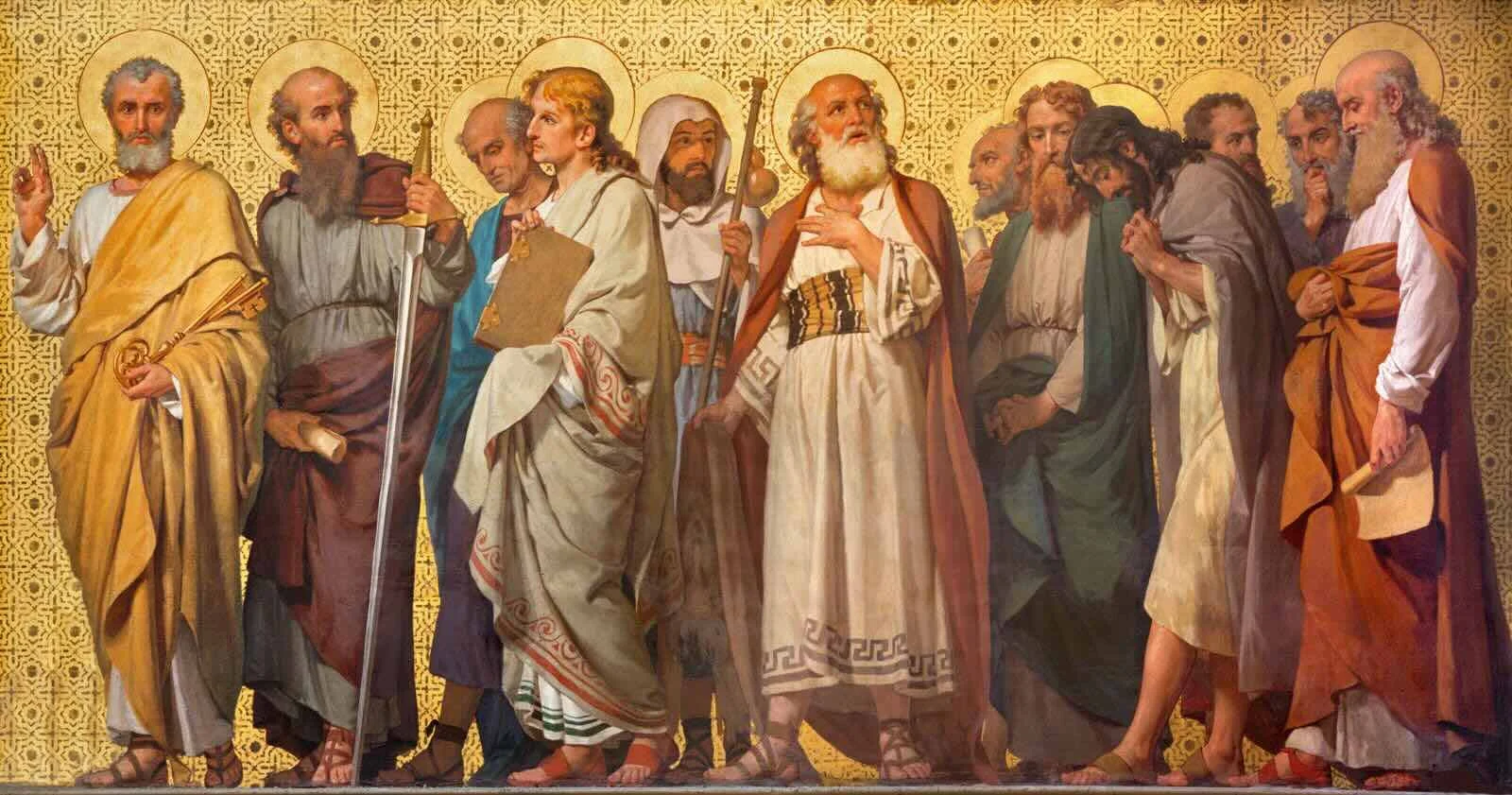
Translated from Philip Schaff's History of The Christian Church
第十二章 经院神学与神秘神学
目录
§ 95. 文献与总论
§ 96. 经院神学的来源与发展
§ 97. 实在论与唯名论
§ 98. 坎特伯雷的安瑟伦
§ 99. 彼得·阿伯拉尔 (Peter Abaelard)
§ 100. 阿伯拉尔的学说与神学
§ 101. 与阿伯拉尔同时代的后辈
§ 102. 彼得·伦巴德与神学大全作家
§ 103. 神秘主义
§ 104. 作为神秘主义者的圣伯尔纳
§ 105. 圣维克多的雨果与理查
§ 95. 文献与总论
文献:I.—安瑟伦 (Anselm)、阿伯拉尔 (Abaelard)、伦巴德的彼得 (Peter the Lombard)、圣维克多的雨果 (Hugo of St. Victor)、大阿尔伯特 (Albertus Magnus)、托马斯·阿奎那 (Thomas Aquinas)、波纳文图拉 (Bonaventura)、邓斯·司各脱 (Duns Scotus) 及其他经院学者的著作。
II.—R. D. 汉普登 (R. D. Hampden,赫里福德主教,卒于1868年):《经院哲学与基督教神学的关系》(The Scholastic Philos. considered in its Relation to Christ. Theol.),班普顿讲座,牛津 (Oxf.),1832年,第3版1848年。—B. 奥雷奥 (B. Haureau):《论经院哲学》(De la philos. scholast.),2卷,巴黎,1850年。—W. 考利希 (W. Kaulich):《经院哲学史》(Gesch. d. scholast. Philos.),布拉格 (Prag),1863年。—C. 普兰特尔 (C. Prantl):《西方逻辑史》(Gesch. d. Logik im Abendlande),4卷,莱比锡 (Leip.),1861—1870年。—P. D. 莫里斯 (P. D. Maurice,卒于1872年):《中世纪哲学》(Med. Philos.),伦敦,1870年。—* A. 施特克尔 (A. Stöckl,罗马天主教徒):《中世纪哲学史》(Gesch. d. Philos. d. Mittelalters),美因茨 (Mainz),3卷,1864—1866年。第I卷论述经院哲学从塞维利亚的伊西多尔 (Isidore of Seville) 到伦巴德的彼得的开端时期;第II卷论述其鼎盛时期;第III卷论述其衰落时期,下迄耶稣会主义与詹森主义。—R. 罗伊特 (R. Reuter,哥廷根教会史教授,卒于1889年):《中世纪宗教启蒙史》(Gesch. d. Rel. Aufklärung im Mittelalter),2卷,柏林,1875—1877年。研究中世纪怀疑主义和理性主义倾向的重要著作。—TH. 哈珀 (TH. Harper):《经院形而上学》(The Metaphysics of the School),伦敦,1880年。—K. 维尔纳 (K. Werner,罗马天主教徒):《中世纪晚期的经院哲学》(D. Scholastik des späteren Mittelalters),4卷,维也纳 (Wien),1881—1887年。始于邓斯·司各脱。—哈纳克 (Harnack)、洛夫斯 (Loofs)、费舍尔 (Fisher)、泽贝格 (Seeberg)、谢尔登 (Sheldon) 及罗马天主教神学家所著《教义史》中的有关章节;另有 J. 巴赫 (J. Bach):《中世纪教义史》(Dogmengesch. d. Mittelalters),2卷,1873—1875年;以及 * J. 施瓦内 (J. Schwane):《中世纪教义史》(Dogmengesch. d. mittleren Zeit),1882年。—里特尔 (Ritter)、埃尔德曼 (Erdmann)、于伯韦格—海因策 (Ueberweg-Heinze) 所著《哲学史》(The Histories of Philos.),以及塞思 (Seth) 教授撰写的〈经院哲学〉,载《大英百科全书》(Enc. Brit.),第XXI卷,417—431页。
经院神学 (Scholasticism) 是中世纪神学的名称。它与教父著作和宗教改革者的著述一样,构成一个独特的思辨体系。教父在圣经的矿场中劳作,在与异端的争战中,逐一将圣经的教训锤炼为教义陈述。经院学者收集、分析这些教义,将其系统化,并针对一切可以设想的异议,论证其合理性。宗教改革者则摆脱人为权威的轭,贬抑经院学者,重返圣经的泉源,重新阐明其中的真理。
经院神学的主要特点,是使理性服从教会权威,同时又力求借助辩证法,独立地证明教会的教义。至于圣经,经院学者接受其权威,并显出他们对从《创世记》到《启示录》的经文有广泛的认识。除了阿伯拉尔这类罕见的例外,他们也毫无保留地接受教父的教导,认为这些教导准确反映了圣经。黑尔斯的亚历山大 (Alexander of Hales) 及其他人把圣经与教父的教导加以区分:前者被视为真理,veritas;后者被视为权威,auctoritas。
他们所关心的,并不是从圣经中寻求新的真理,也不是在任何意义上重新展开对圣经的探究。他们承担的任务,是确认自己所承受的遗产。因此,他们对释经学和圣经神学没有作出原创性的贡献。他们并不声称发现了任何新的教义;他们只是传供从教父那里承受的教义。
经院学者力求成就两件事:调和教义与理性,并把教会的教义编排成一种井然有序的体系,称为“神学大全”——summa theologiae。这些体系如同我们现代的百科全书,旨在包罗无遗。宗教与伦理领域中每一个严肃的问题,都由此被置于理智的审察之下,这是人类心智值得称许之处。然而,经院学者走向了极端,把一切可以想象的问题都引入讨论;这些问题即便得到解答,除了满足一种病态的好奇心,也毫无益处。安瑟伦就上帝的存在、道成肉身的必要性、魔鬼的堕落等个别题目所写的专论,堪称最佳典范。伦巴德的彼得编成了最清晰的系统神学,托马斯·阿奎那则编成了最完备、最成熟的系统神学。
这些勤勉的思想家怀着无畏的自信,勇于探究最高深的思辨,提出并解答形形色色的疑难,又使每一项公认的教义经受烈火般的考验,以显明其不可攻破的本质。他们是神学的骑士,是神学中的戈弗雷 (Godfrey) 和坦克雷德 (Tancred)。在他们那里,哲学是婢女——ancilla,辩证法则是刀剑与长矛。
在严密的辩证论述中,基督教的教义有失去其清新与生命力、变成一具神学尸体的危险。中世纪最伟大的神学家凭着宗教热忱,避免了这种结果。安瑟伦、托马斯·阿奎那和波纳文图拉都是敬虔热切的人;他们像奥古斯丁 (Augustine) 一样,将形而上学的成分与神秘的成分相结合,将思辨的气质与默想、祷告的习惯相结合。
若有人以为中世纪的思辨不过是炫人耳目的凌空飘举,是理智杂技的表演,那就大错特错了。相反,这些都是怀着庄严目的而进行的严肃研究。经院学者深感上帝的临在与十字架的牺牲,并受其感动;托马斯·阿奎那著作中的伦理部分等论述,也表明他们对人类行为领域有深切的关注。正因如此,也因为这些著作代表了两个多世纪的神学文献,它们至今仍有生命力,而且无疑还将继续存留。1
经院学者遵循奥古斯丁,以信仰先于认识这一原则为出发点——fides praecedit intellectum。或者,如安瑟伦所说:“我信,为要理解;我并非理解了才信”——credo ut intelligam, non intelligo ut credam。他们引用《以赛亚书》7:9作为凭据:“你们若是不信,定然不得立稳。”阿伯拉尔是个例外,他颠倒了这个次序,使认识先于信仰;然而,众人所得的结论却是一致的。启示与理性、信仰与科学、神学与哲学彼此相合,因为它们都出于同一位不能自相矛盾的上帝。
经院神学不仅作为一种独特的理智活动成果而引人关注,也因其直到今日仍是罗马天主教会中占主导地位的神学而具有重要意义。经院学者所阐述的教义,例如对异端的处置、教会高于国家的至尊地位、圣母无原罪始胎以及七件圣礼,至今仍有约束力,或者至少未曾被正式放弃。利奥十三世 (Leo XIII) 在1879年8月4日的通谕中,宣告托马斯·阿奎那的神学为天主教正统信仰的标准,并且是在信仰与十九世纪怀疑主义的争战中,基督教哲学最稳妥的指南;这便为上述事实提供了新的见证。
经院神学体系与中世纪一切独特的制度和运动一样,规模宏大,气势非凡。其作者的勤勉不能不令人惊叹。论断接着论断,虽令人厌倦,却具有推论上的必然性与精确性;如此章接一章,卷叠一卷,直到题目的一切可能方面都已得到考察,论述也已穷尽。邓斯·司各脱写成了十三卷对开本著作,而他去世时可能只有三十四岁。大阿尔伯特的著作卷帙更为浩繁。人们把这些神学体系与中世纪的教皇制度及哥特式建筑的杰作相比,确有道理:它们都气势雄伟,体量庞大,支撑坚固。教皇制度使一切王国服从其神圣权威;建筑使一切材料和已知的机械技艺都为敬拜效力;经院学者则运用逻辑与哲学的一切力量,为正统的神学体系辩护。然而,正如宗教改革者以及近世更为健全的释经、更合乎圣经的神学所表明的,他们在建造时也用了许多草木禾秸。
§ 96. 经院神学的来源与发展
滋养经院神学的主要源泉,是奥古斯丁和亚里士多德 (Aristotle) 的著作。前者提供内容,后者提供形式;一位提供教义原则,另一位提供辩证方法。
支配中世纪思想的奥古斯丁,是那位强调教会、圣礼,反对摩尼教和多纳徒派的神学家。路德 (Luther) 与加尔文 (Calvin) 为其罪与恩典的教义而援引的,既是同一位奥古斯丁,却又是另一面的奥古斯丁。何等奇妙,同一位伟大的思想家,既曾帮助建立经院神学的大厦,又帮助宗教改革者拆毁它,并建立另一座既更合乎圣经、又更适应实际生活需要的大厦!
在中世纪人的评价中,亚里士多德是哲学思想的大师。经院学者一再称他为“哲学家”,表明他们对他无比的推崇。但丁 (Dante) 因他和维吉尔 (Virgil) 都是异教徒,而将二人排除于天堂和炼狱之外,安置在地狱的前庭;不过,他们在那里免受实际的苦难。亚里士多德被视为基督教真理的先驱,是方法和自然事物知识方面的施洗约翰——precursor Christi in naturalibus,即自然事物方面的基督先驱。直到十三世纪,人们对他的著作仍只有不完全的了解。阿伯拉尔及其他经院学者通过波爱修 (Boethius) 的拉丁文译本,认识了《范畴篇》(Categories) 和《解释篇》(de interpretatione);索尔兹伯里的约翰 (John of Salisbury) 则认识《工具论》(Organon) 中的三篇。约在1200年,他的《物理学》(Physics) 和《形而上学》(Metaphysics) 开始为人所知;十三世纪初,借着阿拉伯哲学家阿维森纳 (Avicenna,卒于1037年)、阿威罗伊 (Averrhoes,卒于1198年) 和阿布巴塞尔 (Abuacer,卒于1185年) 的中介,以及犹太人的文献渠道,他的全部著作都已可供研读。罗杰·培根 (Roger Bacon) 曾慨叹迈克尔·司各脱 (Michael Scot)、克雷莫纳的杰拉德 (Gerard of Cremona) 及其他人从阿拉伯文译出的文本错误甚多。2
起初,这位斯塔吉拉人 (Stagyrite) 受到猜疑,甚至遭到教皇和教会会议的禁斥,因为人们认为他的学说容易滋生异端和属灵的骄傲。3 然而,从1250年起,他的权威始终至高无上。圣维克多的戈特弗里德 (Gottfried of St. Victor) 的话在巴黎流传开来:
凡不披戴亚里士多德铠甲而来的人,
一概被排斥,遭禁绝。4
宗教改革者摆脱了他的轭;路德一时对当日堕落的经院学者动怒,斥责他为“那可诅咒的异教徒亚里士多德”,并在《教会被掳于巴比伦》(Babylonish Captivity) 中称中世纪教会为“托马斯主义的或亚里士多德主义的教会”。
经院学者的谱系始于十一世纪最后一年,以罗瑟林 (Roscellinus) 和安瑟伦为开端。两个世纪以前,约翰·司各脱·爱留根纳 (John Scotus Erigena) 已预先探讨了他们后来所讨论的一些根本主题,并提出真正的哲学与真正的宗教乃是一体的原则。但他似乎并未对经院思想产生任何可察觉的影响。经院神学的历史可分为三个时期:兴起、全盛与衰落。5 属于第一时期的有安瑟伦,卒于1109年;罗瑟林,约卒于1125年;阿伯拉尔,卒于1142年;伯尔纳 (Bernard),卒于1153年;圣维克多的雨果 (Hugo de St. Victor),卒于1161年;圣维克多的理查 (Richard of St. Victor),卒于1173年;以及普瓦捷的吉尔伯特 (Gilbert of Poictiers),卒于1154年。第二时期的主要人物有伦巴德的彼得,卒于1160年;黑尔斯的亚历山大,卒于1243年;大阿尔伯特,卒于1280年;托马斯·阿奎那,卒于1274年;波纳文图拉,卒于1274年;罗杰·培根,卒于1294年;以及邓斯·司各脱,卒于1308年。属于衰落时期的,除其他人外,有杜兰杜斯 (Durandus),卒于1334年;布拉德沃丁 (Bradwardine),卒于1349年;以及奥卡姆 (Ockam),卒于1367年。英格兰、法国、德国、意大利和西班牙都为这一群星璀璨的人物行列作出了贡献。卒于1495年的图宾根 (Tübingen) 教授加布里埃尔·比尔 (Gabriel Biel),通常被称为最后一位经院学者。几乎所有伟大的经院学者都是修士。
从安瑟伦 (Anselm) 到邓斯·司各脱 (Duns Scotus) 活跃期间的这两个世纪,在一些重要问题上,见解发生了显著变化,例如圣母无原罪始胎,以及能否凭纯粹理性证明道成肉身和三位一体等教义。托马斯·阿奎那 (Thomas Aquinas)、邓斯·司各脱和奥卡姆 (Ockam) 都宣称,后面这两项教义不在纯粹推理的范围之内。甚至上帝的存在和灵魂不朽,也逐渐被邓斯·司各脱及后期经院学者视为奥秘,只能凭教会的权威加以接受。在经院思想的最后阶段,或然性论证受到了前所未有的重视。
经院学者为了表达思想中最细微的区别,创造了一套古典拉丁文所没有的新词汇,其中包括 ens, absolutum identitas quidditas, haecceitas, aliquiditas, aleitas 等词。6 他们任意展开的诡辩式思辨,大多涉及天使、童贞女马利亚、魔鬼、创造以及复活的身体。以下这类问题,都曾由主要的经院学者提出,并极其郑重地加以讨论。大阿尔伯特 (Albertus Magnus) 问道:对上帝而言,创造宇宙是否比创造人更难?天使的悟性是在清晨还是在傍晚更为明亮?“亚当和夏娃,谁的罪更大?”是安瑟伦、圣维克多的雨果 (Hugo de St. Victor)7 等人喜爱探讨的问题。黑尔斯的亚历山大 (Alexander of Hales) 试图确定亚当是在一天的哪个时辰犯罪的,经过长篇讨论,断定是在第九时,就是基督断气的时辰。波纳文图拉 (Bonaventura) 辩论过:几个天使能否同时在同一地方?一个天使能否同时在几个地方?上帝爱人类是否胜过爱基督?8 安瑟伦在论三位一体的著作中问道:上帝能否取女性的性别?圣灵为何没有道成肉身?关于前一个问题,圣维克多的瓦尔特 (Walter of St. Victor) 在谈到伦巴德的彼得 (Peter the Lombard) 时,很明智地说,与其由伦巴德的彼得问上帝能否以女性形体道成肉身,还不如由他来问伦巴德的彼得为何没有以驴的形体出现在世上,这样倒更合乎理性。关于老鼠吃了圣饼会产生何种效果的著名讨论,将在论圣餐时述及。大阿尔伯特、波纳文图拉、托马斯·阿奎那等人都曾深思这个问题。罗伯特·普伦 (Robert Pullen) 则问:人在复活时,能否取回在伊甸园失去的那根肋骨?一个人是否会重新得到他剪下的全部指甲?
这类无休止的讨论被讥为幼稚而轻浮,尽管如前所述,它们出于穷尽一切问题的愿望。它们最终使经院哲学声名扫地,这也是理所当然的。经院哲学迷失于超验事物的云雾之中,却忽略了脚下的大地。正如教皇制度因令人无法容忍的野心而给自己判了刑,经院哲学也因理智上的诡辩而损害了自己的权威,终被文艺复兴和人文主义的实际关切,以及那查考圣经、寻求与基督活泼相契的单纯信仰所取代。9
§ 97. 实在论与唯名论
经院思辨所依据的根本哲学问题,是一般概念或类概念是否具有真实而独立的存在;这类概念称为 universalia,即共相。它们是否必然蕴含实体性的存在?在这个问题上,经院学者分为两大阵营:实在论者 (Realists) 和唯名论者 (Nominalists)。10 这个如今很少受到关注的问题,在中世纪却被视为至关重要。
实在论认为,共相不只是心智所作的概括,而是具有真实的存在。一派实在论者追随亚里士多德笔下的柏拉图 (Plato),认为共相是创造的原型,是神心中的范型。他们的观点用 universalia ante rem 这一表述来说明,即共相先于个别的具体事物而存在。亚里士多德派的实在论者认为,共相具有真实的存在,但只存在于个别事物之中。这就是 universalia in re 的学说。例如,人性就是具有真实存在的共相。苏格拉底 (Socrates) 分有这种人性,而他是一个个别的人,有别于其他人。作为柏拉图学派代表的安瑟伦,把人性这一共相视为本身具有独立的存在。作为第二种理论代表的邓斯·司各脱,则在共相中找到一切分类的基础,并且只在这个意义上赋予它真实的存在。
唯名论者认为,共相或一般概念并无先在的存在。它们只是名称——nomina, flatus vocis, voces,即名称、发声时的气息、语词——是通过比较个别事物及其性质而得来的。因此,美是心智通过观察美的事物而获得的概念。先观察个别事物,再从中得出共相,即抽象概念。这一学说以 universalia post rem 来表述,即共相是在个别事物之后才被认识的。这一见解的一种修正形式称为概念论 (Conceptualism),其学说认为,共相作为概念存在于心智中,却不具有实在的存在。11
这种辩证区分的出发点,可能是波爱修 (Boethius) 所传波菲利 (Porphyry)《导论》(Isagoge) 中的一段话。波菲利虽不愿深入讨论这一问题,却提出疑问:应当认为共相在有形事物之外具有独立的实体性存在,还是认为它们只是心智中的概念,仅在有形事物中才具有实体性存在?12 当这一区分被应用于三位一体、赎罪和原罪等神学教义时,它便具有了实际的重要性。
十一世纪,实在论受到罗瑟林 (Roscellinus) 的质疑。他与安瑟伦同时,又是阿伯拉尔 (Abaelard) 的老师,看来是主张唯名论的。13 我们对他观点的了解,几乎完全来自他的两位对手安瑟伦和阿伯拉尔的陈述。1092年,他在苏瓦松 (Soissons) 教区的贡比涅 (Compiegne) 任座堂教士,当时他被迫撤回被指称的三神论;他曾以此代替三位一体的教义。
这位神学家的观点促使安瑟伦撰写了论三位一体的著作,而阿伯拉尔则鄙视他,视他为冒牌的辩证学家。14 安瑟伦断言,罗瑟林关于三位一体的异端观点,直接出于他错误的哲学原则,即否认共相具有真实的存在。罗瑟林称神格的三个位格为三个实体,正如司各脱·爱留根纳 (Scotus Erigena) 从前所作的那样。这三个位格是三个不同的存在者,权能和意志相等,然而彼此分离,各自完备,如同三个人或三个天使。这三者不能在同一本质的意义上成为一位上帝,否则,父和圣灵也就必须同子一样道成肉身了。
安瑟伦在捍卫正统的三位一体教义时,以严格的实在论为基础,宣称三个位格代表三种关系,而非三个实体。泉源、溪流和池塘是三者,然而各处都是同样的水;我们不能说溪流就是泉源,也不能说泉源就是池塘。溪流的水可以经管道输送,但在这种情况下,经管道输送的并不是泉源,也不是池塘。同样,神格道成了肉身,却不意味着父和圣灵也道成了肉身。
苏瓦松宗教会议的裁决和安瑟伦的论证,将唯名论逐出了论争的舞台;直到十四世纪,由思想活跃而务实的奥卡姆,以及杜兰杜斯 (Durandus) 等人重新提倡,才又有人公开承认这一学说。它一度受到各次会议及国王路易十一 (Louis XI.) 的猛烈攻击,后来却为十四、十五世纪许多伟大的教师所采纳。
§ 98. 坎特伯雷的安瑟伦
文献:安瑟伦《著作集》(Works)。首部全集由热尔伯龙 (Gerberon) 编,巴黎,1675年,重印于米涅 (Migne),第158、159卷。——安瑟伦《小品集》(opuscula),译本,芝加哥,1903年,288页。——安瑟伦《敬虔默想》(Devotions),普西 (Pusey) 译,牛津 (Oxf.),1856年,伦敦,1872年;另有 C. C. J. 韦伯 (C. C. J. Webb) 译本,伦敦,1903年。——《上帝为何成为人》(Cur Deus homo) 译本,收入《古今丛书》(Anc. and Mod. Library),伦敦。——安瑟伦的秘书兼挚友艾德默 (Eadmer) 所著《安瑟伦传》:de vita Anselmi 及《新事史》(Historia novorum),载于米涅版;另有鲁尔 (Rule) 编本,收入《档案丛书》(Rolls series),伦敦,1884年。——索尔兹伯里的约翰 (John of Salisbury) 所著《传记》(Life),为推动亚历山大三世 (Alexander III.) 将安瑟伦封圣而作,米涅版,199: 1009–1040,以艾德默的著作为依据。——马姆斯伯里的威廉 (William Of Malmesbury) 在《主教事迹》(Gesta Pontificum) 中增补了一些材料。——现代传记 (Modern Lives):F. R. 哈塞 (F. R. Hasse) 著,2卷,莱比锡 (Leip.),1843–1852年;W. 特纳 (W. Turner) 节译本,伦敦,1850年。是最佳历史专题著作之一。——C. 德·雷米萨 (C. De Remusat):巴黎,1853年,最后一版,1868年。——座堂主任牧师 R. W. 丘奇 (R. W. Church,卒于1890年):伦敦,新版,1877年(对安瑟伦生平叙述甚佳,但很少论及他的哲学和神学)。——M. 鲁尔 (M. Rule):2卷,伦敦,1883年,颂扬之作,持教皇至上主义立场。——P. 拉热 (P. Ragey):2卷,巴黎,1890年。——J. M. 里格 (J. M. Rigg):伦敦,1896年。——A. C. 韦尔奇 (A. C. Welch),爱丁堡,1901年。——W. R. W. 斯蒂芬斯 (W. R. W. Stephens),载《英国国家传记辞典》(Dict. Natl. Biog.),II. 10–31。——P. 沙弗 (P. Schaff),载《长老会与改革宗评论》(Presb. and Ref’d Review),1894年1月。——Ed. A. 弗里曼 (Ed. A. Freeman):《红发威廉的统治》(The Reign of William Rufus),2卷,伦敦,1882年。——H. 伯默 (H. Böhmer):《十一、十二世纪英格兰与诺曼底的教会与国家》(Kirche u. Staat in England u. in der Normandie im XI. u. XIIten Jahrh.),莱比锡,1899年。——里特尔 (Ritter)、埃德曼 (Erdmann) 及于伯韦格—海因策 (Ueberweg-Heinze) 各自的《哲学史》讨论了安瑟伦的哲学;论述其神学的著作有鲍尔 (Baur):《基督教和好教义史》(Gesch. d. Christl. Lehre. von d. Versöhnung),图宾根 (Tübingen),1838年,142–189页。——里奇尔 (Ritschl):《称义与和好》(Rechtfertigung u. Versöhnung),以及各部教义史。——克林 (Kölling):《代赎补偿》(D. satisfactio vicaria),2卷,居特斯洛 (Gütersloh),1897–1899年。有力地阐述了安瑟伦的观点。——莱波尔特 (Leipoldt):《安瑟伦思想中的功德概念》(D. Begriff meritum in Anselm),载《神学研究与评论》(Theol. Studien u. Kritiken),1904年。——波雷法政牧师 (Le Chanoine Porée):《贝克修道院史》(Hist. de l’Abbaye du Bec),巴黎,1901年。
坎特伯雷的安瑟伦 (Anselm of Canterbury,1033–1109年) 是伟大经院学者中的第一位,也是中世纪教会中最有才干、最为纯正的人物之一。他在许多方面参与了他那个时代的历史。他是修道主义的热心倡导者。他担任坎特伯雷大主教,在英格兰为希尔德布兰德式教阶制度 (Hildebrandian hierarchy) 与国家抗争。他的基督教默想使他在教会的敬虔史上占据崇高地位。他深邃的思辨标志着神学史上的一个重要时代,并为他赢得了教会圣师的地位。伯尔纳 (Bernard) 最伟大之处在于他是一位修士,安瑟伦最伟大之处则在于他是一位神学家。他是自奥古斯丁 (Augustine) 以来教会中最具独创性的思想家。15
生平——安瑟伦生于皮埃蒙特 (Piedmont) 的奥斯塔 (Aosta),位于大圣伯纳山 (great St. Bernard) 山脚下;此山将意大利与瑞士西部分隔开来。16 他的母亲埃尔门贝加 (Ermenberga) 是一位虔诚的妇人。他的父亲贡杜尔夫 (Gundulf) 则是一位世俗而粗鲁的贵族,曾极力反对儿子的宗教志向,但他自己临终时也穿上了修士服,以求逃脱沉沦。
安瑟伦在童年的想象中,认为全能的上帝坐在阿尔卑斯山 (Alps) 顶的宝座上;在一次梦中,他爬上山去朝见上帝。途中,他看见王的侍女们在收割的田间怠忽工作——当时正值秋季——便决定向王禀告她们的懈怠。这孩子受到极其亲切的接待,王问他从哪里来,有什么愿望。王的慈爱使他把原先打算提出的控告全都忘了。随后,他吃了洁白无比的饼,恢复了精神,便又下到山谷中。第二天,他坚信自己确实到过天上,并在主的筵席上吃过饭。这是他登上坎特伯雷大主教座之后讲述的故事。
安瑟伦因与父亲争执而离家。他向西而行,最后定居于诺曼底的贝克修道院 (Le Bec),当时这所修道院由他杰出的同乡兰弗兰克 (Lanfranc) 主持。他在这里研读,并领受圣职;1063年,兰弗兰克调往卡昂 (Caen) 的圣司提反修道院 (St. Stephen) 后,他继任副院长,1078年又任院长。他的大部分著作都是在贝克写成的。他在书信中屡次谈及修道生活,担任大主教后又渴望返回修道院,足见他对修道生活的热忱。
1093年,他接替兰弗兰克出任坎特伯雷大主教。他与红发威廉 (William Rufus) 及亨利一世 (Henry I.) 围绕授职权展开的斗争,前文已有叙述(第88–93页)。流亡欧洲大陆期间,他出席了巴里 (Bari) 的一次宗教会议,在那里针对与会的希腊主教,为拉丁教会关于圣灵发出的教义辩护。17
这位大主教在英格兰度过的最后几年十分平静,临终也很安详。人们将他从床上抬起,安放在地板的灰烬上。在那里,“复活节前的星期三,晨光初现之时”,即1109年4月21日,他担任大主教的第十六年、享年七十六岁之际,他安然长眠,正如他的传记作者艾德默 (Eadmer) 所说,“将自己的灵魂交在造物主手中”。他葬于坎特伯雷座堂,在兰弗兰克身旁。
安瑟伦为人正直无瑕,专心致力于真理与公义,在苦难中忍耐;早在1494年正式封圣以前,他已被尊为圣徒。18 但丁 (Dante) 在《天堂篇》中,将他与先见拿单 (Nathan)、屈梭多模 (Chrysostom),以及卡拉布里亚 (Calabrian) 的先知约阿希姆 (Joachim) 列在一起;前两位都以斥责居高位者的罪恶而著称。19
著作——安瑟伦在神学领域的主要著作,是提出上帝存在之证明的《独白》(Monologium) 与《宣讲》(Proslogium),以及论述赎罪的《上帝为何成为人》(Cur Deus homo)。他还撰文论述三位一体,反驳罗瑟林 (Roscellinus);另有著作论及原罪、自由意志、预知与预定的协调,以及魔鬼的堕落。除这些神学论著外,还有若干更具实践性质的著述,包括讲道、默想,以及四百一十二封书信;在这些书信中,我们看见他身处不同关系之中,或为教会高级教士,或为牧者,或为给学生提供劝导的教师,或为朋友。20 他的通信展现了他与人的交往。他的默想和祷告显明了他敬虔的深度。他的神学论著则流露出他非凡的才智。就篇幅而言,这些著作远不及托马斯·阿奎那 (Thomas Aquinas) 及后期其他经院学者的著作浩繁。
神学——安瑟伦是少数罕见的人物之一,崇高的理性与孩童般的信心在他身上完全和谐地一同运作。爱上帝是他日常生活的灵魂,也是他神学炽热的中心。引导他从事思辨的,不是怀疑,而是对真理的热忱和对上帝的虔诚。他那句著名的命题——信仰先于理解,fides praecedit intellectum——被施莱尔马赫 (Schleiermacher) 用作自己神学的格言。神圣的事必须先成为亲身的体验,然后才能为理智所领悟。安瑟伦说:“不信的人未曾体验,未曾体验的人也就不明白。”21 基督必须经由信仰的途径进入理智,而非经由理智的途径进入信仰。22 另一方面,安瑟伦也明确反对盲信,并称有信仰却不努力求知,是一种怠忽之罪。23
这些将超自然主义与理性主义调和起来的观点,构成了安瑟伦神学的运作原则。知识的两个来源是圣经和教会的教导;二者完全一致,也与真正的哲学相合。24 安瑟伦深深敬仰那位伟大的非洲教师奥古斯丁 (Augustine);他在精神与方法上与奥古斯丁的一致,使他赢得了“第二位奥古斯丁”和“奥古斯丁之舌”的称号。
安瑟伦对神学作出了两项永久的贡献:他关于上帝存在的论证,以及他的赎罪理论。
他所提出的本体论论证 (ontological argument),在上帝存在之证明的历史上划出了一个时代。这一论证最初见于《独白》(Monologium,或称 Soliloquy);他称此书为默想信仰之合理性的范例,不过其中还混有宇宙论的成分。安瑟伦从善与真必定独立于具体事物而存在这一观念出发,由相对的善与大的概念,逐步上升到那绝对善、绝对大的上帝。
在《宣讲》(Proslogium,或称 Allocution) 中,本体论论证以最纯粹的形式呈现出来。安瑟伦之所以构建这一论证,是因为他渴望找到一个单一的、凭其自身便足以证明上帝存在的论据。这一论证是长久思索的成果,扎根于敬虔和祷告之中。上帝的存在能够如此证明这一念头,日夜萦绕着作者。他为此苦恼到有时无法入睡、无法进食的地步。终于,一天夜里,在守夜祈祷时,这一论证的完整轮廓清晰地呈现在他心中。趁着心中的印象尚且鲜明,安瑟伦便将其记录下来。第一份记录遗失了;第二份则不慎被打碎。
安瑟伦的论证是宗教默想与经院推理的最高典范,其前言有一段劝勉,并有如下话语:“我不是为了相信而寻求理解,而是为了理解而相信;因为我确信这一点:我若不信,就不会理解。”
这一推理从人心对上帝所具有的观念出发,进而断言上帝客观存在的必然性。人心具有这样一个概念:有一存在者,我们无法设想有比它更大的。25 即使愚顽人在心里说“没有上帝”(诗14:1),他也具有这一概念。他听见这话时便领会了这一概念,而他所领会的就在他的心中。这一无法设想有比它更大的存在者,不可能仅仅存在于心中。因为,如果它仅仅存在于心中,那么便可以设想它也存在于现实中(即客观地存在),而这就会是一个更大的存在者。26 这是不可能的。因此,这一无法设想有比它更大的存在者,既存在于心中,也存在于现实中。这就是上帝。安瑟伦高呼:“主上帝啊,你的存在如此真实,以至不可能设想你不存在。因为,倘若任何心灵能够设想出比你更好的存在者,那么受造物就会升到造物主之上,成为他的审判者,这是极其荒谬的。除你以外的一切,都可以被设想为不存在。”
这一三段论的表述虽紧凑,措辞看似精确,但作为逻辑陈述仍有缺陷。它预设了所要证明的结论。它违反了这样一条原则:从定义作出的推论,只有在被定义之物确实存在的假定下才有效。关于上帝的定义及其存在的陈述,已经包含在“有一存在者,我们无法设想有比它更大的”这一大前提之中。然而,安瑟伦所要证明的,恰恰就是这一存在者的客观存在。即使撇开这一异议,还有另一项致命的异议:客观存在并不是一个谓词。当我们断言任何事物时,已经隐含了客观存在。这一异议由康德 (Kant) 提出。27 此外,安瑟伦还混淆了理解一件事物与在理解中具有一个概念,将二者视为同义。28
贝克附近马尔穆捷 (Marmontier) 的修士高尼罗 (Gaunilo),在《为愚顽人辩护》(Liber pro insipiente) 中抨击了《宣讲》的推理。他反对从主观概念推论客观实在,理由是:照同样的方法,我们可以从自己的任何概念,论证所设想之物的真实存在,例如论证失落之岛亚特兰蒂斯 (Atlantis) 的存在。“无法设想有比它更大的存在者”在心中的存在方式,与这样一座岛屿的完美性在心中的存在方式,并无不同。必须先知道一件事物确实存在,才能对它作出任何断言。对于高尼罗的异议,安瑟伦回答说,失落之岛的观念并非必然的概念,而最高存在者的观念则是;他的论证仅适用于后者。
安瑟伦的论证在逻辑上虽不能成立,却具有强烈的吸引力,并包含一个伟大的真理。上帝的存在是心灵的一种直觉,唯有上帝的客观存在才能解释这种直觉。现代的对应理论 (theory of correlation),有助于印证安瑟伦论述中终究最为根本的一点,即心中关于上帝的观念,必定有一位真实存在的上帝与之对应。否则,我们就只能面对另一个或许更大的奥秘:这样一个观念,究竟怎能如此牢固而普遍地占据人类的心灵。29
赎罪的教义——随着《上帝为何成为人》(Cur Deus homo) 的问世,赎罪教义的发展揭开了新的一章。这部采用对话形式的论著,是作者最为精详的作品;他认为,其中的论证足以驳倒犹太人和异教徒对基督教体系的异议。
安瑟伦是第一个试图通过纯粹理性的推理,证明上帝之子道成肉身及受死之必然性的人。他论证说,世界不能凭上帝一道任意的谕令得赎,也不能借人或天使得赎。人受魔鬼支配,应当受罚,也确实受到公正的惩罚;然而魔鬼并无权折磨人,30 因为它这样做,不是出于上帝的授权,而是出于恶意。那攻击罪人、在律例上所写的字据(西2:14),并不是欠魔鬼的债据,而是上帝的判决:犯罪的,应当作罪的奴仆。
上帝不能容许他起初的旨意受到挫败。罪必须得蒙赦免,但如何赦免呢?人有义务顺服上帝的旨意。罪就是拒绝将上帝所当得的尊荣归给他。31 必须先向公义作出补偿,才可能有赦免。然而,单纯归还原物,还不足以构成补偿。人为自己的“凌辱”行为,必须偿还超过所夺取的。他必须补偿上帝的尊荣。32 正如使人受伤的人,不仅必须治愈伤口,还必须赔偿损失,以满足受损尊荣的要求。
因此,一切罪都必须受到惩罚,或由补偿来抵偿。人能够作出这种补偿吗?不能。即使他从意识到自己负债的那一刻起,能够过完全圣洁的生活,他也不过是在那段时期内尽自己的本分。过去的债仍然没有清偿。然而,罪既已侵入人之存在的根基,他便不能过完全的生活。
因此,人无法满足上帝公义的要求。人应当作出补偿,却无力做到;上帝不必作出补偿,却作了。因为,任凭人——他所造之物中最宝贵的——灭亡,是最不合上帝本性的事。然而,既然必须由上帝亲自作出补偿,而人又负有补偿的义务,那么,这补偿就必须由一位既是上帝又是人的来作出,也就是由神人来作出。33
为了作出补偿,神人必须向上帝献上某种他并无义务献上的东西。完全顺服的一生,是他本来就当献上的;死亡却不是他所当受的,因为死是罪的工价,而他并没有罪。他借着甘愿受死,取得了功德。这功德与无限的上帝之子的位格相连,因而具有无限的价值,足以抵偿罪人无限的罪责,构成所要求的补偿。
安瑟伦 (Anselm) 在论著的结尾,探讨了魔鬼及其使者为何不能借基督得救。他的回答是:它们并不像人从亚当而来那样,因一个个体而承受罪责和有罪的境况。它们各自为自己犯罪。因此,每一个都必须由一位兼具神性与天使性的救主个别拯救。安瑟伦宣告堕落天使不可能得救,最后说道:“我说这是不可能的,并不是说基督之死的价值不够大,不足以抵偿人和堕落天使的一切罪,而是因为事物不变的本性中有一个缘由,阻碍了失丧天使的得救。”34
安瑟伦论证的长处在于:亚他那修 (Athanasius) 和奥古斯丁 (Augustine) 着重强调,赎罪是借基督受苦而成就的;安瑟伦则解释了这些苦难的必然性。他还作出了一项极有价值的贡献,就是摒弃了教父传下来的那种观点,认为基督的死是付给撒但的赎价。甚至奥古斯丁也曾主张魔鬼拥有权利。此外,安瑟伦恰当地强调了罪的罪责。他认真看待罪,不把它当作一种错误,而是视为对律法的违犯,对上帝应得尊荣的减损。
《上帝为何成为人》(Cur Deus homo) 的论证,并未穷尽赎罪这一主题。没有一种理论能够涵盖它的全部意义。在安瑟伦之后,某些他未曾强调的圣经要义得到了彰显。每一个富于创造力的时代,都有自己对神学的表述;圣经真理虽不改变,却时而彰显这一方面,时而彰显另一方面。各种理论必须各归其位,作为真理完整表述的片段。安瑟伦看待赎罪,着眼于上帝本性的法律方面,而非道德方面。公义这一属性受到了不成比例的强调。人与上帝的关系,被完全解释为下属与上级的关系。上帝的父性未得到充分承认。在人类救赎中采取行动的,是身为主宰和审判者的上帝。安瑟伦遗漏了《约翰福音》3:16和浪子的比喻。35
作为神秘主义者的安瑟伦——在安瑟伦身上,神秘主义与经院哲学相结合,虔诚的敬拜与高远的思辨相结合,祷告与逻辑分析相结合。他深厚的属灵本性显露在他的一切著述中,尤其显露在他那些专为灵修而作的《默想录》和《祷告集》中。36 人们专注于安瑟伦的神学讨论,这些作品反而有遭到忽略的危险。
这位经院学者的属灵默想,充满了从他内心深处的帐幕中涌出的热切言辞。他时而沉浸于对上帝属性的默观,时而为人的死寂与悖逆哀叹;时而以赞美和崇拜的歌声高飞,时而低声祈求怜悯与赦免。他一刻凝视十字架的惨剧或蒙赎者的喜乐,另一刻又凝视审判的恐怖和失丧者绝望的境况。如此温润的情感与高远的思辨交融,实属罕见。中世纪的伟大人物,除伯尔纳 (Bernard) 外,没有一人在神秘主义方面超过他;他也常使我们想起伯尔纳,例如他感叹道:“哦,良善的耶稣,对于那思念你、爱你之人的心,你是何等甘甜。”37 又如他在第十篇默想中呼喊:“哦,仁慈的耶稣,俯就卑微者的主,圣洁的夫子,口中的甘甜,心中的甘甜,耳中的甘甜,温柔得不可测度、不可言喻,舍己、怜悯、智慧、大能,至为甘甜可爱”——valde dulcis et suavis。安瑟伦思想的崇高雄伟,可以比作他故乡的群山;他属灵情感的纯净丰沛,可以比作那里谷中的溪流和草地。他一再引用圣经,圣经的语言构成了他表达思想的主要载体。
在第一篇默想中,安瑟伦作了那个著名的比喻,将人生比作走过一座狭窄的桥;桥下是幽深黑暗的深渊,渊底满是各种污秽可怖之物。38 桥面只有一英尺宽。一个人若蒙着双眼、捆着双臂,连用手杖探路都不能,却不得不从桥上走过,他会陷入何等的惊恐!倘若空中还有大鸟飞翔,伺机俯冲下来,阻挠旅人前行,这惊恐岂不更要加剧!倘若他每走一步,身后便有一块桥砖坠落,又要增添多少惊恐!这深谷就是地狱,深不可测,漆黑阴惨的烟雾使它黑暗得可怕!39 这危险的桥,就是今生。凡生活邪恶的,便坠入深渊。桥砖就是人在世生活的一个个日子。飞鸟就是邪灵。我们这些旅人,因无知而瞎眼,又被行善之难如铁索般捆绑。我们岂不应当举目仰望主——“他是我们的亮光,是我们的拯救,我们还怕谁呢?”《诗篇》27:1。
这些祷告既向父献上,也向子和圣灵献上。此外,还有向童贞女和众圣徒所献的祈求;安瑟伦将极尽谀美的称号加在童贞女身上。在这一点上,安瑟伦完全是他那个时代的产儿。
这些灵修操练,是安瑟伦灵魂的礼仪,是虔敬思想的宝库,却尚未得到应有的赏识。他的神学论著固然高深而重要,但使他获得更高地位的,却是其中神秘主义的因素。40
§ 99. 彼得·阿伯拉尔 (Peter Abaelard)
文献:阿伯拉尔《著作集》(Works):杜申 (Duchesne) 首编,巴黎,1616年。库赞 (Cousin):《阿伯拉尔未刊著作》(Ouvrages inédites d’Abélard),巴黎,1836年,收录《辩证法》(Dialectica) 和《是与否》(Sic et Non);另有《全集》(Opera omnia),2卷,巴黎,1849–1859年。重刊于米涅 (Migne),第178卷。——R. 施特尔茨勒 (R. Stölzle):《论神的合一与三一》(De unitate et trinitate divina),初版,布赖斯高的弗赖堡 (Freib. im Br.),1891年。——《书信集》,R. 罗林森 (R. Rawlinson) 编,伦敦 (Lond.),1718年。《阿伯拉尔与爱洛伊丝书信集》(Letters of Abaelard and Heloise) 英译本,收入《坦普尔经典丛书》(Temple Classics)。
传记资料:阿伯拉尔自传:《灾难史》(Hist. calamitatum),载米涅,第178卷,第113–180页。——贝伦加尔 (Berengar):《驳伯尔纳辩护书》(Apologeticus contra Bernardum) 等,载米涅,第178卷,第1856–1870页。——伯尔纳的书信,见下文所引。——弗赖辛的奥托 (Otto of Freising):《腓特烈事迹》(De Gestis Frid.),47及后。——索尔兹伯里的约翰 (John of Salisbury):《逻辑学辩护》(Metalog.) 及《教宗史》(Hist. Pontificalis)。——近代传记作者:A. F. 热尔韦 (A. F. Gervaise),巴黎,1728年;库赞,载《著作集》(Ouvrages),1836年;威尔金斯 (Wilkins),哥廷根 (Göttingen),1855年;Ch. 德·雷米扎 (Ch. de Rémusat),巴黎,1845年,2卷,新版,1855年;O. I. 德·罗舍利 (O. I. de Rochely),《阿伯拉尔与近代理性主义》(Abél. et le rationalisme moderne),巴黎,1867年;博尼耶 (Bonnier),《阿伯拉尔与圣伯尔纳》(Abél. et S. Bernard),巴黎,1862年;瓦康达尔 (Vacandard),《彼得·阿伯拉尔及其与圣伯尔纳的斗争》(P. Abél. et sa lutte avec S. Bernard),巴黎,1881年;S. M. 多伊奇 (S. M. Deutsch),《彼得·阿伯拉尔:十二世纪的一位批判神学家》(P. Abael, ein kritischer Theologe des 12ten Jahrh.),对阿伯拉尔体系的最佳阐述,莱比锡 (Leip.),1883年;A. 豪斯拉特 (A. Hausrath),莱比锡,1893年;约瑟夫·麦凯布 (Joseph McCabe),伦敦,1901年。——E. 凯泽 (E. Kaiser):《彼得·阿伯拉尔:批判研究》(P. Abél. Critique),弗赖堡 (Freib.),1901年。——阿伯拉尔与爱洛伊丝的故事,另有以下专门著述:基佐夫人 (Mad. Guizot),2卷,巴黎,1839年;雅各比 (Jacobi),柏林 (Berl.),1850年;赖特 (Wright),纽约,1853年;卡尼斯 (Kahnis),莱比锡,1865年,等等。——孔佩雷 (Compayré):《阿伯拉尔与大学的起源及早期历史》(Abél. and the Orig. and Early His. of Universities)。——R. L. 普尔 (R. L. Poole):《彼得·阿伯拉尔》(P. Abailard),载《中世纪思想例论》(Illustrations of Med. Thought),伦敦,1884年,第136–167页。——施特克尔 (Stöckl):《中世纪哲学》(Phil. des Mittelalters),I. 218–272。——德尼夫勒 (Denifle):《阿伯拉尔的〈命题集〉及十二世纪中叶以前对其神学的改编》(D. Sentenzen d. Abael. und die Bearbeitungen seiner Theologie vor Mitte des 12ten Jahrh.),载《文学与教会史档案》(Archiv für Lit. und Kirchengesch.) 等,1885年,第402–470、584–624页;赫费勒 (Hefele),《会议史》(Councils*),V. 451–488。——于伯韦格—海因策 (Ueberweg-Heinze) 和里特尔 (Ritter) 的哲学史。——圣伯尔纳传记:尼安德 (Neander),I. 207–297;II. 1–44;莫里森 (Morison),254–322;瓦康达尔,II. 120–181。——施瓦内 (Schwane)、哈纳克 (Harnack)、洛夫斯 (Loofs)、费舍尔 (Fisher)、泽贝格 (Seeberg)、谢尔登 (Sheldon) 的教义史。
十二世纪上半叶,彼得·阿伯拉尔 (Peter Abaelard,1079–1142年) 是欧洲最引人注目的人物之一。他的声名来自他卓越的才智。他与安瑟伦迥然不同。后者是一位建构性的神学家,阿伯拉尔则是一位批判者。安瑟伦深思熟虑,阿伯拉尔冲动而鲁莽。安瑟伦喜爱隐居,阿伯拉尔追求公众的瞩目。在那些以非凡感召力吸引听众的教师中,阿伯拉尔位居前列,在法国恐怕无人超过他。他的一些神学思辨超越了他的时代。他个人的不幸,使他的传记带有其他任何经院学者所没有的传奇色彩。他思想大胆,性情躁动,思想信念不定,道德上也不可靠。关于他的生平,我们的主要依据是他亲笔以书信形式写成的《灾难史》(Story of Misfortunes, Historia calamitatum)(米涅,第178卷,第113–180页)。
阿伯拉尔是一位骑士的长子,出生于距南特 (Nantes) 数英里的帕莱村,亦称勒帕莱 (Palais or le Pallet)。他的原名是帕莱的皮埃尔 (Pierre de Palais)。他的父母后来都进了修道院。阿伯拉尔最初的老师是罗瑟林 (Roscellinus)。他曾听讲于尚波的威廉 (William of Champeaux),后者当时主持巴黎的主教座堂学校;不久,他便满怀自信地开始反驳威廉的主张。41 随后,他在默伦 (Melun) 和科尔贝伊 (Corbeil) 创办了独立的学校。他患病后,在父亲家中休养了一段时期,随后返回巴黎。他再次听威廉讲授修辞学,却公开宣称自己反对威廉的观点,并在当时遍植葡萄园的圣热纳维耶芙山 (Mt. Genevieve) 授课。据阿伯拉尔自述,他将主教座堂学校的学生几乎全都吸引到了圣热纳维耶芙山。此后,我们见他从学于拉昂的安瑟伦 (Anselm of Laon);后者与兄弟拉杜尔夫 (Radulf) 一同使拉昂的学校闻名。阿伯拉尔再一次起来反对自己的老师,形容他口若悬河,却毫无思想;他点起火来,却使满屋充满烟雾。42 他好比那棵不结果子的无花果树,只有预示果实的叶子,别无所有。阿伯拉尔便在拉昂另开讲席,讲授《以西结书》,与老师抗衡。
如今,他一生中的良机来到了:他受召主持巴黎的主教座堂学校。尚波的威廉 (William of Champeaux) 已退居圣维克多 (St. Victor),随后又被任命为主教。紧接着的几年,是阿伯拉尔生涯中最辉煌的时期。全世界仿佛都要向他致敬。四面八方的学子蜂拥而来,聆听他的讲授。他讲授哲学和神学。他熟读古典著作,又广泛涉猎宗教文献。他的辩证才能已臻成熟;论据不足之处,这位教师的想象力和修辞便来补救。他的著作不但在学校和修道院中有人阅读,也流传于城堡和行会会所。蒂耶里的威廉 (William of Thierry) 说,43这些著作渡过海洋,越过阿尔卑斯山。他到访城镇时,百姓挤满街道,伸长脖颈,只求看他一眼。他对男女所具有的非凡感召力,与其说应归因于思想的深度,不如说应归因于某种大胆的气魄、文辞的技巧和才华的光彩。他仪表出众;伯尔纳 (Bernard) 说阿伯拉尔外表是约翰,内心却是希律时,心中所想的或许正是这一点。44他的陈述清晰明白,善用贴切的比喻,并经常引用贺拉斯 (Horace)、奥维德 (Ovid) 及其他拉丁诗人的诗句。除这些禀赋外,他还有一种活泼愉悦的性情,表现于作歌和歌唱之中,使他深受女子欢迎,正如爱洛伊丝 (Heloise) 后来提醒他的那样。45
就在这声望隆盛之际,他一生中惨痛的悲剧发生了:他与爱洛伊丝有了私情;雷米扎 (Remusat) 曾称她为“女子中的第一人”。46这位中世纪最杰出的法国女子,显现于世人面前,周身笼罩着女王般尊严的光辉;而诱惑她的人,却因自己对待她的方式,失去了所有重视男子汉的坚毅与忠贞、过于无论何等辉煌的才智之人的敬重。
爱洛伊丝可能是一位教士的女儿,住在巴黎她的舅父富尔贝尔 (Fulbert) 家中;富尔贝尔也是一位教士。阿伯拉尔结识她时,她十七岁,容貌秀美,才智丰厚。阿伯拉尔说服富尔贝尔,准许他住进家中,担任爱洛伊丝的教师。爱洛伊丝此前曾住在阿让特伊 (Argenteuil) 的女修道院。学生与教师的会面,变成了情人间的幽会。正如阿伯拉尔所写,在摊开的书卷之上,他们说的情话多于讨论,亲吻多于教诲。这件事在巴黎私下传开了。富尔贝尔勃然大怒。阿伯拉尔把爱洛伊丝送到布列塔尼 (Brittany) 的姐姐家中,她在那里生了一个儿子,取名阿斯特拉拉比乌斯 (Astralabius)。47为平息富尔贝尔的怒气,阿伯拉尔表示愿意举行婚礼,不过要秘密进行。他避而不肯公开结婚,正如他自己明说的,是怕自己的声名因此受损。48
《灾难史》(Story of Misfortunes) 清楚表明,他所愿意做的出于恐惧,而不是出于对爱洛伊丝的任何荣誉感,也不是出于对女子或婚姻的正当认识。他写道:“学问与乳母,书写用具与摇篮,书籍和书桌与纺车,苇笔和墨水与纺锤,彼此有什么相合之处!谁若专心于神圣之事与哲学的默想,怎能忍受孩子的啼哭、乳母的摇篮曲,以及男女成群的喧闹!谁能忍受幼儿那令人厌恶、无时无刻不有的污秽!”
阿伯拉尔声称,他依从爱洛伊丝亲属的要求,举行了秘密婚礼。这至多不过是一场徒具形式的仪式,因为爱洛伊丝始终否认自己是阿伯拉尔的妻子。她怀着虽属错误却又壮丽的献身之情,拒绝嫁给他,认定婚姻会妨碍他的事业。她在给他的一封信中写道:“若在你看来,妻子的称呼更为合宜,在我心中,朋友这个小小的称呼却始终更为可爱;倘若你认为这个称呼也不妥,那么就称我为姘妇或娼妓,concubina vel scortum。我求上帝为我作证:即便奥古斯都 (Augustus) 向我求婚,愿将全世界的统治权交给我,我也宁愿做你的情妇,meretrix,而不愿做他的皇后,imperatrix。把你引到我身边来的,与其说是友情,不如说是情欲;与其说是爱,不如说是欲火。”49
阿伯拉尔把爱洛伊丝送到阿让特伊,她在那里披上了修女的面纱。他秘密前去探望她,而富尔贝尔此时施行了报复。他与阿伯拉尔的仆人串通,夜间袭击他,将他阉割。阿伯拉尔受此羞辱,于1118年进入圣但尼 (St. Denis) 修道院,并非出于任何虔敬的感动,而是出于权宜之计。50他对爱洛伊丝变得冷淡了。
新的试炼临到他坎坷的生涯——异端的指控。1121年,他因持有撒伯流派 (Sabellian) 的三一论观点,在苏瓦松 (Soissons) 被传到教宗使节面前受审。他从前的老师罗瑟林 (Roscellinus) 首先提出控告。阿伯拉尔抱怨说,实际审讯及其结果,应由他的两个仇敌负责,即在兰斯 (Rheims) 任教的阿尔贝里克 (Alberic) 和洛图尔夫 (Lotulf)。他被迫将自己的书投入火中,51并公开宣读一份《亚他那修信经》。
他又因反对一种流行的信念而陷入困境。这种信念根据比德 (Bede) 的记载,认定法国的主保圣徒狄奥尼修 (Dionysius),即圣但尼,就是在雅典因保罗传道而归信的那位狄奥尼修。圣但尼的修士不能容忍他。他逃走了,收回自己的言论,并得到圣但尼新任院长叙热 (Suger) 的许可,在香槟 (Champagne) 的一片荒地定居,建了一座祈祷所,以三位一体第三位格的名称,称之为保惠师 (Paraclete)。学生再次聚集到他周围,最初用芦苇和稻草搭起的建筑,也换成了一座坚固的石屋。但据他所说,旧日的对手又开始追逼他,正如古时异端追逼亚他那修一样;“某些教会人士”——大概是普雷蒙特利会 (Premonstrants) 的创立者诺伯特 (Norbert) 和克莱尔沃的伯尔纳 (Bernard of Clairvaux)——也被煽动起来反对他。阿伯拉尔自称,与他们相比,自己仿佛狮子面前的一只蚂蚁;这话也许并不算过分自贬。就在这种处境下,他接到通知,说自己已当选为故乡布列塔尼海滨圣吉尔达斯 (St. Gildas) 修道院的院长。他前往就任,宣称:“法兰西人的嫉妒把我赶到西方,正如罗马人的嫉妒把耶柔米赶到东方。”
阿伯拉尔笔下的圣吉尔达斯修士,是一群十足的恶棍。他们把妻子儿女安置在修道院的领地上。他们以轻蔑和暴力对待新院长,至少两次企图谋害他的性命。其中一次是在圣餐杯中下毒。他抱怨周围环境荒凉贫瘠。伯尔纳则称他为一位毫无纪律的院长。阿伯拉尔在绝望中逃走;他说:“我力图逃脱一把刀,却又扑到另一把刀上。”自传到此中断;此后直到1136年,我们对作者的情况所知甚少。52
与此同时,阿让特伊的修女被逐出了居所。1127年,阿伯拉尔让爱洛伊丝主持保惠师修道院;在她的管理下,修道院日渐兴盛。他此前长久保持冷淡的沉默,如今却不时到访保惠师修道院,向修女们讲道。爱洛伊丝收到《灾难史》(Story of Misfortunes) 后,便写信给他,称他为“她的主,毋宁说是父亲;她的丈夫,毋宁说是兄弟”,落款则是“他的婢女,毋宁说是女儿;他的配偶,毋宁说是姊妹”。她最初的两封信,全心倾诉,热烈表达献身之情,在书信史上即使不是绝无仅有,也几乎无与伦比。她恳求他给她写信。她岂不是为了他的缘故,已将自己的整个生命献在祭坛上!她岂不是凡事都顺从了他,丝毫也不愿冒犯他!
阿伯拉尔只把爱洛伊丝当作保惠师修道院修女们的院长来回信。对他而言,她不过如此。他向她讲论祷告,请修女们为他代祷,并嘱咐将自己的遗体安葬在保惠师修道院。他庆幸爱洛伊丝因与自己的关系而未能结婚生子。她由此被迫进入一种更高的生活,成为众多属灵女儿的母亲。爱洛伊丝接连向他询问圣经中的难解经文,以及日常生活和修道服饰方面的实际问题——这是为了使通信延续下去的办法。阿伯拉尔的答复,是为修女们制定冗长而严厉的规章。他尤其嘱咐她们研读圣经,要求她们效法晚年才开始学习希伯来文的耶柔米。他寄给她们一些讲章,其中七篇曾在保惠师修道院宣讲。他提议在保惠师修道院近旁设立一座男修道院。修士和修女应当彼此帮助。两所修道院应由一位男院长统辖。修女要为修士洗衣做饭、挤牛奶、喂鸡喂鹅。
1137年,以及后来的1139年,我们发现阿伯拉尔突然又在圣热纳维耶芙 (St. Genevieve) 任教,一时享有流星般耀眼的声望。索尔兹伯里的约翰 (John of Salisbury) 是他的学生之一。这种转变如何发生,并不完全清楚。但阿伯拉尔注定不得安宁。他动荡不定的生涯,如今进入了最后一个时期。伯尔纳当时是欧洲最有威望的宗教人物,阿伯拉尔则是欧洲最敏锐的哲学思想家。前者代表忠于教会的立场和教会权威,后者代表自由探究。这两个人物之间的冲突已迫在眉睫。这两个人在公开论争的战场上、在教会会议的会场中交锋,不能算作历史的不幸。历史如实描绘人物本来面目时,才最忠于自身。倘若历史不利用机会揭示他们的弱点,也揭示他们的美德,她便不是一位称职的教师。
这场冲突的发生,阿伯拉尔那自负逞强的态度,与伯尔纳无必要地侵入阿伯拉尔的领域,负有同样的责任。圣蒂耶里 (St. Thierry) 的院长威廉致信伯尔纳和沙隆 (Chalons) 主教若弗鲁瓦 (Geoffrey),告知他们,阿伯拉尔又在讲授并撰写教义上的新说。这些并非无足轻重之事,而是涉及三一论、基督的位格、圣灵和上帝的恩典。这些新说甚至在罗马教廷中也获得了赞许。威廉举出的错误不下十三项。53
双方敌对的第一个公开迹象,是阿伯拉尔写出的一封充满自负的信。伯尔纳到保惠师修道院探望爱洛伊丝时,曾反对在主祷文中使用“超实体的饼”一语,而不采用路加所记的“日用的饼”。阿伯拉尔从爱洛伊丝那里听说这一异议后,仿佛急于同伯尔纳一较高下,便写信指出他的错误。他转而讥讽,指出克莱尔沃正在实行教会其他地方闻所未闻的新做法:唱新圣诗,省略某些代祷,仿佛熙笃会 (Cistercian) 修士自身就不需要别人代祷似的。54
据我们所知,伯尔纳并未答复这封信。过了一段时间,他才依照蒂耶里的威廉的请求采取行动。他到巴黎拜访阿伯拉尔,力图使他答应撤回自己的错误。55
双方的分歧在1141年的桑斯 (Sens) 宗教会议上演变为公开冲突;阿伯拉尔请求在会上陈述自己的案件,并与伯尔纳辩论。布雷西亚的阿诺德 (Arnold of Brescia) 似乎也在与会者之中。56 伯尔纳周围尽是朋友和仰慕者。阿伯拉尔的朋友寥寥无几,而且从一开始就受到猜疑。伯尔纳前来参加会议,是要运用自己的全部影响力反对阿伯拉尔。他曾召集主教们,以基督之友的身份前来,因为基督的新妇正从异端的荆棘丛中向他们呼求。他写信给枢机们和英诺森二世 (Innocent II.),把阿伯拉尔形容为吞吃人的狮子和大龙。阿伯拉尔身旁有阿诺德为他拿兵器,宛如另一个歌利亚,向以色列的军队骂阵;伯尔纳则觉得,论辩证技巧,自己不过是个少年。
在与主教们举行的一次预备会议上,伯尔纳逐项陈述了案情;看来,至少已非正式地决定,要定阿伯拉尔的罪。57 次日,伯尔纳公开提出指控,但令众人大为惊讶的是,阿伯拉尔拒绝为自己辩论,并向教皇上诉。据说,他经过普瓦捷的吉尔伯特 (Gilbert of Poictiers) 身旁时,低声念了贺拉斯 (Horace) 的诗句:
“邻舍的房屋既已起火,你就当留心自己的安危。”
Nam tua res agitur, paries eum proximus ardet.(邻墙着火,事关你自身。)
此案必须送交罗马。阿伯拉尔无疑觉得,对这些高级教士已无可指望。58 他曾支持英诺森二世,反对敌对教皇阿纳克勒图斯 (Anacletus),因此或许可以期待英诺森给予几分眷顾,况且他在教廷中也有朋友。宗教会议吁请最高教皇以永久的定罪——perpetua damnatione——斥责阿伯拉尔的异端,并惩罚其辩护者。指控共十四项,涉及三一论、信心的本质、基督的能力与工作,以及罪的本质。59 会议致函之后,伯尔纳又上书教皇,这封信在米涅 (Migne) 的版本中占了四十栏;他还致信多位枢机,信中满是对被告的猛烈指控。阿伯拉尔与布雷西亚的阿诺德彼此勾结。阿伯拉尔追随亚流 (Arius),在三一之中划分等级;追随伯拉纠 (Pelagius),把自由意志置于恩典之先;又追随聂斯托利 (Nestorius),分裂基督的位格。他名义和外表上是修士,内心却是异端。他从布列塔尼 (Brittany) 出来,犹如一条蜿蜒的蛇钻出洞穴;又像九头蛇一般,原先只有一个头的地方,如今长出了七个头。60 伯尔纳在致教皇的信中宣称,阿伯拉尔唯一不认识的词就是 nescio,即“我不知道”。
判决来得迅速,而且一经下达,便是毁灭性的打击。只用了十天。教皇在枢机们面前,于圣彼得大教堂前亲手焚烧了那十四条命题。阿伯拉尔本人被宣布为异端,并被处以终身缄默和幽禁之刑。这个不幸的人已经动身前往罗马,才刚刚上路,判决便传到了他那里。他在克吕尼 (Cluny) 停了下来,在那里遇见了他一生中给予他最大帮助的朋友——可敬者彼得 (Peter the Venerable)。经彼得求情,英诺森准许这位无家可归的学者留在克吕尼;教皇自己也曾从这里走出去。
阿伯拉尔听从彼得的劝告,再次与伯尔纳当面相见。他在致爱洛伊丝的一篇为自己信仰正统性所作的辩护中,申明自己接受教会的一切信条,从三一论直到死人复活。他以耶柔米 (Jerome) 为例,指出任何人著述一多,都难免遭到误解。
然而,他动荡不定的生涯已经结束。彼得为了他的健康,把他送往沙隆附近的圣马尔塞勒 (St. Marcellus),他于1142年4月21日在那里去世,享年六十三岁。彼得在一封致爱洛伊丝的信中,描述了他在克吕尼最后的日子,字里行间充满真正基督徒的同情。他称阿伯拉尔为基督的真正哲学家。他从未见过举止如此谦卑的人。他饮食节制,不断读书,热切祷告。他忠实地将自己的身体和灵魂,无论今世还是永恒,都交托给他的主、他的救赎者。“彼得大师就这样度完了他的一生。他以渊博的学识和卓越的教学才能闻名于几乎整个世界,如今安然死在那位曾说‘我心里柔和谦卑,你们当学我的样式’的主里面;我们必须相信,他已经到主那里去了。”
阿伯拉尔的遗体被运到保惠师修道院 (Paraclete),安葬在那里。二十二年后,爱洛伊丝也葬在他的身旁。墓上的铭文写道:“高卢人 (Gauls) 的苏格拉底 (Socrates),西方人的伟大柏拉图 (Plato),我们的亚里士多德 (Aristotle);在逻辑学家之中,谁能胜过他,或与他比肩!阿伯拉尔是世上学者之冠,才华多样,思想精微敏锐,凭其心智之力征服万有。而当他进入克吕尼,转向基督真正的哲学时,他才真正成为得胜者。”61 后来,在这两位非凡而不幸的人物合葬之处,又刻上了以下铭文:“这块大理石下,安息着本修道院的创建者P.阿伯拉尔和首任女院长爱洛伊丝;他们昔日因学问、心灵、爱情、受禁的婚姻——infaustis nuptiis——以及悔罪而相联,如今,我们盼望,他们也在永恒的福乐中相联。”
1792年法国大革命期间,保惠师修道院被毁,大理石棺被移往巴黎;1816年,又迁至拉雪兹神父公墓 (Père la Chaise)。石棺至今仍在那里,是这座庄严墓园中最引人注目的所在,吸引着法国人和远方来客。他们流着同情的眼泪,为凡人的过失献上祈祷,纪念这对不幸的恋人。
§ 100. 阿伯拉尔的学说与神学
阿伯拉尔才华横溢,在法国公开授课的教师中居于第一流。然而,他受冲动支配,对自己的天赋和学识又自负得令人反感。他缺少与伟大相称的敬虔谦逊和平衡稳健。他缺乏足够的道德力量,不能超越命运的鞭打与刺痛,更确切地说,不能超越自己造成的灾难。他似乎看不见任何超出自身自私野心的目标。正如尼安德 (Neander) 所说,倘若他是一个品德纯洁的人,他在学术研究领域所取得的成就就会更大。具有最高尚品格的人,不可能用阿伯拉尔那样的语气写自己的《苦难史》(Story of Misfortunes)。对于自己如何对待爱洛伊丝,他丝毫没有向上帝悔罪的表现。他回忆那段往事,既不是为了自责,也不是为了向她作任何补偿。
他动辄与自己的老师对立,轻蔑地谈论他们,又把他们反对自己的动机归于嫉妒,这也表明他缺少较高的道德情操。他念念不忘并不断哀叹的,是自己名声和地位的丧失。他不把自己的不幸归因于自身的错误和乖戾性情,反而归因于别人的竞争与嫉妒。62 在患难中,他唯一的目标似乎就是恢复自己的声望。
阿伯拉尔的著作包括辩证法、伦理学和神学论著,诗歌、致爱洛伊丝的书信,以及自传。他主要的神学著作有《罗马书注释》(Commentary on the Romans)、《神学导论》(Introduction to Theology)、《基督教神学》(Christian Theology)——后两部主要论述三一论——以及一篇哲学家、犹太人和基督徒之间的对话,和《是与否》(Sic et Non)。在最后这部著作中,作者用一百五十八章,并列汇集了教父们看来彼此矛盾或确实彼此矛盾的引文。编者并未试图调和这些论述。这些相异意见所涉及的题目,上自三一论和基督位格这样深奥的问题,下至究竟只有夏娃受了引诱,还是亚当也与她一同受了引诱;亚当是否葬在髑髅地——安布罗斯 (Ambrose) 和耶柔米持肯定见解,塞维利亚的伊西多尔 (Isidore of Seville) 则持否定见解——以及亚当是否得救。他主要的伦理学著作是《认识你自己》(Scito te ipsum)。
阿伯拉尔的某些神学观念超越了他的时代。他撒下的思想新种子,已在近代萌芽。他的著作表明,在十二世纪,批判意识也有自己的代表人物。
在实在论 (Realism) 与唯名论 (Nominalism) 的争论中,阿伯拉尔采取了中间立场。一方面,他嘲讽罗瑟林 (Roscellinus) 的唯名论;另一方面,他又反驳尚波的威廉 (William of Champeaux) 的严格实在论。他教导说,共相不只是一个词,vox;它是一项断言,sermo。63 他宣称,我们的思想所发现的共同之处是真实的,而事物的形式在创造之前就已存在于上帝的心意之中。
更值得关注的,是阿伯拉尔对于宗教权威的最终所在以及默示的看法。尽管他的陈述有时似乎彼此矛盾,但我们仍有理由得出结论:他主张一定程度的批判与探究自由,即便其结果与教会的权威相抵触。他承认默示的原则,但他所说的默示,并不是大贵格利 (Gregory the Great) 所教导的那样,认为圣经作者全然被动。他们发挥了一定程度的独立性,同时蒙保守,不致有任何错误。
他对待教父和圣经所依据的原则,阐明于《是与否》的序言中。64 他列举教父们彼此矛盾的意见,显示出思想上的自由,因为当时公认的信念是,教父们的陈述始终一致。阿伯拉尔断言,这是一种错误。奥古斯丁 (Augustine) 岂不也曾撤回自己的某些论述吗?不过,他们的错误,以及人们所认为的圣经错误,也许只是想象出来的,起因是我们未能明白他们所说的话。保罗说麦基洗德无父无母,不过是指《旧约》没有记载他父母的名字。扫罗求问隐多珥交鬼的妇人时,撒母耳向他显现,那只是幻象,并非实事。先知并非总是凭着上帝的灵说话,彼得也犯过错误。教父们为什么就不会犯错呢?圣经和教父的权威并不排斥批判性的考察。相反,批判精神正是我们研读他们时应有的精神。“我们怀着怀疑的精神开始探究,借着探究寻得真理,正如那位自身就是真理的主所说:‘你们寻找,就寻见;叩门,就给你们开门。’”65
在安瑟伦 (Anselm) 身上结合为一的神秘主义与哲学成分,在阿伯拉尔身上却分离了。不过,阿伯拉尔沿着哲学原则走得比安瑟伦更远。他是天生的批判者,心思不安于现状,急于创新。在他里面,好问探究的性情压倒了信靠的性情。有些作者甚至把他视为近代理性主义的先驱。至少从表面上看,他是从一个与安瑟伦相反的原则出发的,即“凡未经理解的,就不应相信”。66 他把信心定义为对未见之事的推定,67 伯尔纳和其他同时代的人把这理解为:信心是一种不确定的意见。阿伯拉尔的意思可能是,信心的根基不在权威,而在探究与经验。然而,有时他似乎又自相矛盾,提出相反的原则。他说:“我们相信,为要认识;你们若不信,就不能认识。”68 他的同时代人觉得他的思想不纯正,他的立场会推翻教会的权威。69
阿伯拉尔认为,三位一体与上帝存在这些重大教义,无法被证明为必然,只能被证明为或然。针对经院哲学 (Scholasticism) 过度的好奇探究,他提出一项原则:许多关于上帝的事,既不必相信,也不必否认,因为信与不信都不涉及任何危险。70 他举例说,上帝明日是否降雨,以及上帝是否怜悯某个极其邪恶的人,便属于此类。另一方面,他又宣称,若断言我们不能理解所传授的三位一体教义,就等于说圣经作者自己也不明白他们所教导的事。71 至于大公信仰,则是人人所必需的;凡心智健全的人,没有这信仰就不能得救。72
阿伯拉尔对三位一体教义的阐述,使自己同时招致形态论 (Modalism) 和阿里乌派 (Arianism) 的指控。这引出了伯尔纳最严厉的谴责。阿伯拉尔对这一课题并无贡献。他从上帝绝对的完全性推导出三位一体的观念。上帝就能力而言是父,就智慧而言是子,就爱而言是圣灵。他援引圣经来支持这一看法。父将万事置于自己的权柄之下,《使徒行传》1:7。子作为道 (Logos),就是智慧。圣灵被称为良善的,《诗篇》143:10,并赐下属灵的恩赐。他把三位一体的三个位格比作铸印的铜、印的形状,以及由铜与形状而来、或将二者结合起来的印本身,这个比喻引起了极大的反感。“铜本身是铜印的实体,而印本身以铜为其实体,二者在本质上是一;然而,铜与印在属性上如此不同,以致铜的属性是一回事,铜印的属性又是另一回事。”归根到底,这是三件事:铜,aes;能够盖印的铜,sigillabile;以及正在盖印的铜,sigillans。
阿伯拉尔对赎罪的论述,包含一些宝贵的独创成分。73 奇怪的是,他丝毫没有提及安瑟伦的伟大论著。阿伯拉尔说,人处在魔鬼的权势之下,但魔鬼并无权享有这种权势。一个奴仆对于另一个被他引入歧途的奴仆,能有什么权利呢?基督不仅没有为救赎人而向魔鬼支付任何代价,也没有向神的公义作出补偿、平息上帝的忿怒。如果亚当的堕落需要以某个人的死来作出补偿,那么谁又能为基督的死作出补偿呢?在救赎主的生与死中,上帝的旨意是彰显他的爱,从而在人心中激起爱,并以爱吸引人归向自己。上帝原可以用一句话救赎人,但他却选择在基督里向人展示他的爱。基督的爱构成基督的功德。这一理论预示了近代所谓的赎罪道德感化论 (Moral Influence Theory)。
阿伯拉尔的罪论,同样呈现出与当时流行观点不同的特点。74 堕落发生在夏娃决意吃禁果之时,也就是说,在她的欲望被激起之后,而在实际吃下果子之前。75
罪的所在是意向;意向如同根,结出善果与恶果。76 欲望或贪欲并不是罪。这意向,intentio,并不只是某种打算,例如预谋杀人,与无预谋的杀人相对;它乃是潜在的行善或作恶的意图。罪责就在这种对于善恶的自觉之中。那些自以为行得正当而将基督处死的人,并没有犯罪;或者,即使犯了罪,其严重程度也远远不及他们若违背良心、不将他处死所犯的罪。那么,基督为何祈求赦免那些将他钉十字架的人呢?阿伯拉尔回答说,基督所求免除的惩罚,在性质上是今世的。
从阿伯拉尔的前提作出合乎逻辑的推论,就会得出这样的结论:除了自愿同意犯罪的人以外,没有人应受刑罚。但他却在这个结论面前退缩了。他以最阴暗的色彩描绘异教徒不敬神的光景。不过,他赞扬哲学家,认为他们借着《西比拉书》(Sibylline Books) 或其他途径,认识了上帝的独一性,甚至三位一体。77 伯尔纳致函英诺森二世 (Innocent II),说阿伯拉尔力图证明柏拉图 (Plato) 是基督徒,却证明了自己是异教徒。尽管他在某些教义见解上颇为宽容,他在坚持圣礼、尤其洗礼和圣餐的效力这一点上,却与教会完全一致。
由于阿伯拉尔站在他那个时代的神学圈子之外,他将永远是中世纪最引人关注的人物之一。他的缺陷在于缺乏道德力量。研究者常常不禁要问,他的言论是否始终真诚地表达了他的信念。若不是缺少这种道德力量,他本可以成为中世纪的特土良 (Tertullian);在思想的锐气与独创的新鲜活力方面,他与特土良颇为相似。那位非洲教父虽具有如此强大的道德力量,拉丁教会却因他在教会问题上的异议,将他排除在圣徒之列。至于阿伯拉尔,教会则因他的道德软弱而不能将他列入其中。78 假如他甘愿受苦,而不撤回被指控的一切错误,他或许会在为思想殉难的人中占有一席之地。79 但就实际情形而言,他的不幸使我们同情人所共有的软弱;他的神学与品格却不能唤起我们的钦佩。
§ 101. 与阿伯拉尔同时代的后辈
参考文献:关于普瓦捷的吉尔伯特 (Gilbert〔Gislebertus〕of Poictiers):他为波爱修斯 (Boethius)《论三位一体》(De trinitate) 所作的《注释》(Commentaries),见米涅 (Migne),64卷,1266及后页。《论六原则》(De sex principiis),米涅,188卷,1250–1270页。关于他的生平:欧塞尔的戈弗里德 (Gaufrid of Auxerre),米涅,185卷,595及后页。——弗赖辛的奥托 (Otto of Freising):《腓特烈事迹》(De gestis Frid.),50–57。——索尔兹伯里的约翰 (J. of Salisbury):《教宗史》(Hist. pontif.),第VIII章。——普尔 (Poole):《中世纪思想史例证》(Illustr. of the Hist. of Med. Thought),167–200页。赫费勒 (Hefele),V卷,503–508、520–524页。——尼安德—多伊奇 (Neander-Deutsch):《圣伯尔纳》(St. Bernard),II卷,130–144页。
关于索尔兹伯里的约翰 (John of Salisbury):《著作集》(Works),载米涅,190、199卷;另有J. A. 贾尔斯 (J. A. Giles) 编本,牛津,1848年,5卷。——《罗马教宗史》(Hist. pontificalis romanus),载《日耳曼历史文献》(Mon. German.),第XX卷。——《传记》(Lives),罗伊特 (Reuter) 著,柏林,1842年。——C. 沙尔施密特 (C. Schaarschmidt):《索尔兹伯里的约翰:生平、研究、著作与哲学》(Joh. Saresbriensis nach Leben und Studien, Schriften und Philosophie),莱比锡,1862年;另见其在赫尔措格 (Herzog) 百科全书中的文章,IX卷,313–319页。——德尼缪 (Denimuid),巴黎,1873年。——舒伯特 (Schubert):《索尔兹伯里的约翰的国家学说》(Staatslehre J. von Sal.),柏林,1897年。——斯塔布斯 (Stubbs),载《中世纪与近代史研究》(Study of Med. and Mod. Hist.),第VI、VII讲。——普尔,载《例证》(Illustr.) 等,201–226页;另见《英国国家人物传记辞典》(Dict. of Natl. Biogr.),XXIX卷,439–446页。
与阿伯拉尔同时代的后辈及其学生中,有普瓦捷的吉尔伯特、索尔兹伯里的约翰和罗伯特·普伦 (Robert Pullen);这些神学家都或多或少受到阿伯拉尔自由探究精神的影响。卒于1164年的伦巴德的彼得 (Peter the Lombard),其教导也显出阿伯拉尔学说的深刻痕迹,尤其在基督论方面。80
普瓦捷的吉尔伯特(1070–1154年)之所以闻名,更多是由于他所受的公开审判,而不是由于他的著作或对神学作出的任何持久贡献。他出生于普瓦捷,曾师从沙特尔的伯尔纳 (Bernard of Chartres)、尚波的威廉、拉昂的安瑟伦 (Anselm of Laon) 和阿伯拉尔。他主持沙特尔主教座堂学校十年,1137年开始在巴黎授课。1142年,他被任命为普瓦捷主教。他的两部主要著作,一部是《论六原则》(De sex principiis),阐释亚里士多德 (Aristotle) 最后六个范畴,这些范畴亚里士多德本人未作解释;另一部是为那部归于波爱修斯名下的三位一体论著所作的注释。这两部作品印出来仅占数页。
吉尔伯特论三位一体的著作,使他卷入一场异端审判,伯尔纳在其中再次扮演了主要角色。81 此案先后提交1147年的巴黎会议和1148年的兰斯 (Rheims) 会议审理。据弗赖辛的奥托说,吉尔伯特是一个志意诚恳的人。使他遭到不正统指控的,是他晦涩深奥的表达方式和强烈的实在论。
吉尔伯特的某些学生愿意出庭作证反对他,但在巴黎未能提出足够证据,证明他持三神论,主持会议的教宗遂将此案延期至兰斯审理。在兰斯,被任命为控诉人的伯尔纳,因其进行控诉的方式而得罪了某些枢机。弗赖辛的奥托和索尔兹伯里的约翰82 都说,当时几乎酿成分裂,只因教宗尤金 (Eugenius) 处置明智才得以避免。
教宗问吉尔伯特:他断言三位一体的每一个位格都凭借那至高的本质而为上帝,那么,他是否相信这本质本身就是上帝?吉尔伯特作了否定的回答。83 他凭借对教父的透彻认识,赢得了与会者的支持。会议宣布指控未获证实,并责令吉尔伯特依据伯尔纳提出的第四项命题,修正那些有疑问的论述。这位被告继续治理自己的主教区,直至去世。弗赖辛的奥托在记述结尾说,或者是伯尔纳误解了吉尔伯特教导的性质,正如大卫受米非波设蒙蔽一般,《撒母耳记下》9:19及后;或者是吉尔伯特巧妙运用言辞,掩盖了自己的真正意思,以逃避教会的判决。鉴于他惯于以言辞混淆智慧,圣维克多的瓦尔特 (Walter of St. Victor) 称吉尔伯特为法兰西四大迷宫之一。
索尔兹伯里的约翰,约1115–1180年,是十二世纪英国人中首屈一指的文学家和学者,他的著作展现出后来英国哲学的务实倾向。84 他出生于索尔兹伯里,出身平民。他在欧洲大陆花了十年或十二年从事“各种研究”,1136年曾在圣热纳维耶芙山 (Mt. Genevieve) 受教于阿伯拉尔门下,并听过普瓦捷的吉尔伯特、孔什的威廉 (William of Conches)、罗伯特·普伦以及其他著名教师的讲授。他在《逻辑学辩护》(Metalogicus) 中详述了求学岁月。返回英国后,他成为大主教西奥博尔德 (Theobald) 的心腹。后来,他支持贝克特 (Becket) 的事业;大主教遇害时,他就在主教座堂内。他曾劝大主教不要进入自己的教堂。1176年,他被任命为沙特尔主教。他说,自己为教会事务翻越阿尔卑斯山不下十次。
约翰以其回忆录和杂记,为我们认识他所生活的时代作出了少有人能及的贡献。他具有一种人文主义者的天性;倘若晚生几个世纪,他很可能会完全赞同文艺复兴。他的主要著作是《逻辑学辩护》(Metalogicus)、《论治国》(Polycraticus) 和《教宗史》(Historia pontificalis)。《论治国》是一部论述治国原则与哲学的著作,旨在使人不再专注于世间琐碎的争执与事务,转而思考教会以及人生的正当用途。85 他引用圣经和古典作家的话来巩固自己的立场,并表明教会是道德的真正维护者,也是国家中正义的捍卫者。他是当时最博览古典著作的人之一。86
在《逻辑学辩护》(Metalogicus) 中,约翰要求停止经院哲学的繁琐辨析,并宣告理性同感官一样容易犯错。辩证法已被用来炫示心智的敏锐,像小桥的亚当 (Adam du Petit Pont) 这样的人,便尽可能把讲授弄得错综晦涩,以高深的外表吸引学生。约翰宣告,逻辑若不作为工具,便是虚妄之物;它本身就像“侏儒手中的赫拉克勒斯之剑”一样无用。他强调能够付诸实用的知识的重要性,并列出一长串智者也可能存疑的事情,如天意与人的命运、灵魂的起源、运动的起源,以及一切罪是否同等、是否应受同等惩罚。他断言,上帝超乎心智所能想象的一切,也超越我们的推理能力。87
《教宗史》(Historia pontificalis) 记述了约翰亲自观察到的教会事务,时间从1148年的兰斯会议延续至1152年。
§ 102. 彼得·伦巴德与神学大全作家
文献:彼得·伦巴德 (P. Lombard)《著作集》,载米涅 (Migne),第191、192卷。——普罗图瓦 (Protois):《彼得·伦巴德:他的时代、生平、著作及影响》(P. Lomb. son épôque, sa vie, ses écrits et son influence),巴黎,1881年。收有米涅版未载的讲道。——克格尔 (Kögel):《彼得·伦巴德在中世纪哲学中的地位》(P. Lomb. in s. Stellung zur Philos. des Mittelalters),莱比锡,1897年。——O. 巴尔策 (O. Baltzer):《彼得·伦巴德的〈箴言集〉:其来源及其教义史意义》(D. Sentenzen d. P. Lomb., irhe Quellen und ihre dogmengeschichtl. Bedeutung),莱比锡,1902年。——德尼夫勒 (Denifle):《阿伯拉尔的〈箴言集〉》(D. Sentenzen Abaelards) 等,载《档案》(Archiv),1885年,第404页及后。——《伦巴德》(Lombardus) 条,载韦策尔—韦尔特 (Wetzer-Welte),IX,第1916–1923页;以及泽贝格 (Seeberg) 撰、载《赫尔佐格百科全书》(Herzog) 的条目,XI,第630–642页。——施特克尔 (Stöckl):《中世纪哲学》(Philos. des Mittelalters),I,第390–411页。施瓦内 (Schwane) 的《教义史》,第160页及后,以及巴赫 (Bach)、哈纳克 (Harnack)、费舍尔 (Fisher) 等人的《教义史》。
彼得·伦巴德 (Peter the Lombard) 是天主教会系统神学之父。他编成了中世纪最实用、最普及的神学教科书,正如托马斯·阿奎那 (Thomas Aquinas) 构建了最完备的神学体系一样。就方法而言,他属于十三世纪伟大神学家的时代,那时经院哲学正值鼎盛。就年代而言,他属于十二世纪;他与该世纪的神学家伯尔纳、阿伯拉尔、吉尔伯特、圣维克多的雨果 (Hugo of St. Victor) 等人都有交往。彼得生于意大利北部的诺瓦拉 (Novara),约于1164年卒于巴黎。88 他在博洛尼亚求学后,前往法国,就读于圣维克多学校和巴黎主教座堂学校,并受到阿伯拉尔的影响。后来他在巴黎任教。沃尔特·马普 (Walter Map) 叙述自己在法国的经历时,称他为“著名的神学家”。1159年,他被任命为巴黎主教。
他的不朽之作《箴言四书》(libri quatuor sententiarum),系统地涵盖了教义神学的整个领域,正如四百年前大马士革的约翰 (John of Damascus) 在其《正统信仰概论》中所做的那样。这部著作为作者赢得了“箴言大师”(magister sententiarum) 的称号。在伦巴德这部论著之前,已有其他以《箴言集》(sentences) 为名的神学体系著作。圣伯尔纳曾将这样一部著作归于阿伯拉尔。89 这可能是个错误。不过,可以确定的是,阿伯拉尔的学生——1142年在博洛尼亚任教授的罗兰 (Roland,后来的亚历山大三世),以及奥姆内贝内 (Omnebene)——都写过这类著作,并沿用阿伯拉尔的三分法,分为信、爱与圣礼。90 更重要的是拉昂的安瑟伦 (Anselm of Laon)、罗伯特·普伦 (Robert Pullen)91 和圣维克多的雨果的论著,他们都在伦巴德编写其著作之前动笔。罗伯特·普伦约卒于1147年,是英国人,也是牛津最早的教师之一,后来前往巴黎;约1142年,索尔兹伯里的约翰曾是他的听众之一。他与圣伯尔纳交好,在罗马受到器重,并被塞莱斯廷二世 (Coelestin II) 任命为枢机。
伦巴德的著作明晰、紧凑而精练,态度温和,持论公允,很少探讨无用的繁琐问题。尽管其正统性受到过一些攻击,它仍获得广泛认可,并作为教科书使用了数百年,正如后来加尔文的《基督教要义》(Institutes) 在新教各教会中的用途一样。直到十六世纪,巴黎每一位申请文学学士学位的人,都必须通过有关此书的考试。很少有书享有如此殊荣,竟有那么多为其撰写的注释。据说,英国人所写的有一百六十部,多明我会成员所写的有一百五十二部。最伟大的经院学者都曾讲授此书,并为之撰写注释,如黑尔斯的亚历山大 (Alexander Hales)、大阿尔伯特 (Albertus Magnus)、波拿文图拉 (Bonaventura)、托马斯·阿奎那、杜兰杜斯 (Durandus) 和奥卡姆 (Ockam)。92
伦巴德在汇集教父言论时,并非未受阿伯拉尔在《是与否》(Sic et Non) 中所用方法的影响;他着手编纂这部著作,是要使学生免于亲自检索教父著作的劳苦。93 其中引自奥古斯丁的文字,比其他所有教父引文总和的两倍还多。94 伦巴德比阿伯拉尔更进一步,意在表明教父诸说之间的和谐。在材料的编排以及材料本身上,他大量取自阿伯拉尔、格拉提安 (Gratian) 和圣维克多的雨果,95 却没有指名引用他们。他从雨果那里整段整段地取用文字。
《箴言集》(Sentences) 分为四部分,论述三一上帝;受造之物与罪;道成肉身、基督徒的美德与十诫;以及圣礼和末世论中的若干问题。作者的方法是先陈明教会所教导的教义,以圣经加以证实,再引述教父的见解;若这些见解看似互相冲突,便加以调和。他的最终目的,是将真理的光高举在灯台上;他向我们保证,这项工作使他付出了许多辛劳和汗水。96
伦巴德用以证明上帝存在的论证,主要是宇宙论的。上帝对选民的预定,是他们里面善的原因,并非基于预见他们可能具有的任何良善。选民的数目既不能增加,也不能减少。另一方面,上帝并不主动使沉沦者被定罪。他们被弃绝,是上帝所预见的、他们里面的恶所带来的结果。97
在第二卷中,伦巴德引用了奥古斯丁的一句名言;这句话常被误认为是马太·亨利 (Matthew Henry) 的原创:女人不是取自亚当的头,仿佛她要管辖他;也不是取自他的脚,仿佛她要作他的奴仆;而是取自他的肋旁,好作他的伴侣。人因堕落而受损,如同受了创伤,vulneratio,却并非丧失了一切德性。原罪以身体为媒介传递,并因灵魂与身体接触而对灵魂发生作用。罪的根源是私欲,concupiscentia。伦巴德主张灵魂由上帝个别创造。98 上帝知道人将要堕落。祂为何不加阻止,人无从知晓。
彼得在论述赎罪时,否认基督的死是付给魔鬼的赎价。基督的死乃是上帝之爱的彰显,基督在十字架上的爱,也在我们里面燃起了爱。在这里,伦巴德接近阿伯拉尔的观点。他没有说任何赞同安瑟伦观点的话,即基督的死是为上帝的尊荣所付的偿价。99
伦巴德在论述圣礼时,赞许浸礼为洗礼的适当形式,无论浸三次或一次。100 洗礼除去原罪的罪责。圣餐是一种献祭,其中的饼与酒转变为基督的身体和血。酒中须掺水,水象征因基督受难而蒙救赎的百姓。
一部得到如此普遍推崇、其论述又如此谨慎地以奥古斯丁的言论为依据的著作,竟会一再被攻击为异端,实在值得注意;例如在1163年的图尔会议 (synod of Tours) 和1179年的第三次拉特兰会议 (Third Lateran) 上,都有这种攻击,但两次会议均未采取行动。1215年的第四次拉特兰会议上,彼得关于三位一体的陈述再次受到攻击。彼得曾说,父、子、圣灵是“某一至高的存在”,而本体既不生,也不受生,更不由任何事物发出。101 约阿希姆 (Joachim) 指控他以四位一体取代三位一体,并称他为异端;但会议持另一种看法,判定彼得的信仰是正统的。圣维克多的瓦尔特甚至指控《箴言集》的作者持有撒伯流主义 (Sabellianism)、阿里乌主义 (Arianism) 及“新奇的异端”。102 尽管有这些指控,若要从简明扼要的论述中清楚认识中世纪神学,没有哪部著作能胜过彼得·伦巴德的作品,或许波拿文图拉的《神学纲要》(Breviloquium) 可以例外。
十二世纪最后一位神学大全作家,也是其中论述最明晰的作家之一,是阿拉努斯·德·因苏利斯 (Alanus de Insulis),即里尔的阿兰 (Alain of Lille);他生于佛兰德斯 (Flanders) 的里尔,约卒于1202年。103 他的著作广为人读,尤其是他的寓言诗《反克劳狄安》(Anticlaudianus) 和《自然之哀诉》(De planctu naturae)。
阿拉努斯在《神圣神学规则》(Rules of Sacred Theology) 中,对一百二十五个神学命题作了简短阐释。在五卷本《大公信仰》(Catholic Faith) 中,104 他探讨上帝的教义、创造与救赎、圣礼以及末后的事。他将教会定义为承认基督的信徒会众,以及圣礼的军械库。105 在论述卡特里派 (Cathari) 和瓦勒度派 (Waldenses) 的章节中,我们已采用过阿拉努斯的《驳异端》(Against Heretics)。
这里还可以提到圣维克多的瓦尔特 (Walter of St. Victor)。他主要以这样一种说法闻名:他把阿伯拉尔、普瓦捷的吉尔伯特、彼得·伦巴德,以及伦巴德的学生、后来担任巴黎大学校监的普瓦捷的彼得 (Peter of Poictiers),称为法兰西的四大迷宫。他把他们的推理比作群蛙的聒噪——ranarum garrulitas——并宣称,他们这些诡辩家以种种问题与反问动摇了信仰。瓦尔特的著作从未付印。他继理查之后担任圣维克多修院的院长,约卒于1180年。106
§ 103. 神秘主义
文献:圣伯尔纳、圣维克多的雨果与理查 (Richard of St. Victor)、道依茨的鲁珀特 (Rupert of Deutz),以及安瑟伦、波拿文图拉、托马斯·阿奎那的《著作集》,均收于米涅的《教父学》(Patrology)。——G. 阿诺德 (G. Arnold):《神秘神学的历史与描述》(Historie und Beschreibung d. myst. Theologie),法兰克福,1703年。——H. 施密德 (H. Schmid):《中世纪的神秘主义》(D. Mysticismus des Mittelalters),耶拿,1824年。——J. 格雷斯 (J. Görres,慕尼黑历史学教授,德国教宗至上主义的创始人,卒于1848年):《基督教神秘主义》(D. christl. Mystik),4卷,雷根斯堡,1836–1842年。这与其说是严谨历史研究的成果,不如说是想象的产物。——A. 赫尔费里希 (A. Helfferich):《基督教神秘主义》(D. christl. Mystik) 等,2部,哥达,1842年。——R. A. 沃恩 (R. A. Vaughn):《与神秘主义者共度的时光》(Hours with the Mystics),伦敦,1856年;第4版,无日期,附威克利夫·沃恩 (Wycliffe Vaughan) 所作序言。——路德维希·诺阿克 (Ludwig Noack):《基督教神秘主义的历史发展》(D. christl. Mystik nach ihrem geschichtl. Entwickelungsgang),2部,柯尼斯堡,1863年。——J. 汉贝格尔 (J. Hamberger):《神秘主义之声》(Stimmen der Mystik) 等,2部,斯图加特,1857年。——W. 普雷格尔 (W. Preger):《中世纪德国神秘主义史》(Gesch. der deutschen Mystik im Mittelalter),3卷,莱比锡,1874–1893年。十二、十三世纪的神秘主义见第I卷,第1–309页。——卡尔·杜·普雷尔 (Carl du Prel):《神秘主义哲学》(D. Philosophie der Mystik),莱比锡,1885年。——W. R. 英奇 (W. R. Inge):《基督教神秘主义》(Christ. Mysticism),伦敦,1899年。——伯尔纳、圣维克多的雨果等人的《传记》。——施瓦内、哈纳克等人的《教义史》。
与中世纪神学中的经院要素并肩发展的,还有神秘主义要素。神秘主义旨在借着内心的虔修和属灵的渴慕,使灵魂与无限的灵直接建立亲密的交通;它所凭借的是超脱而非逻辑分析,是崇拜而非论辩,是心灵而非头脑,是属灵的情感而非智力的才干,是灵魂与上帝的直接接触而非礼仪典章。用来标明神秘主义者活动的特征词是虔修,标明经院学者活动的特征词则是思辨。神秘主义较少在外界寻求上帝,而更多在内心寻求上帝。它倚靠体验,过于倚靠定义。107 神秘主义既反对理性主义,也反对礼仪上的形式主义。
在使徒约翰以及保罗身上,我们都能看到神秘主义要素的体现。约翰神学的中心是上帝就是爱。信徒的目标是住在基督里面,并让基督住在自己里面。真正的神秘主义者有切身的感受。他不是空想家,也不是涉猎秘术的人。他也不是隐士。无论这一时期的神秘主义者,还是后来时期的艾克哈特 (Eckart) 和陶勒 (Tauler),都没有与人类事件的进程和人类社会隔绝。伯尔纳和圣维克多 (St. Victor) 的神学家们,并未沉迷于出神的操练而失去自我,虽然他们确实寻求在爱基督和纯粹默观属灵事物的感召下,达到灵魂完全而安详的宁静。圣伯尔纳说:“借着祷告,比借着辩论,更容易寻求并找到上帝。”伯尔纳和圣维克多的雨果都说:“人爱上帝有多深,认识他也就有多深。”但丁 (Dante) 将伯尔纳置于经院思想大师托马斯·阿奎那之上;在伯尔纳的引领下,他借着祷告得见圣三一的荣福异象,他的《神曲》(Divine Comedy) 就以此结束。108
奥古斯丁 (Augustine) 为中世纪的神秘主义者提供了主要的材料,正如他为经院学者所做的一样。正是他说过:“你为你自己造了我们,我们的心不得安宁,直到安息在你里面。”神秘主义者以基督教新柏拉图主义者、亚略巴古的狄奥尼修斯 (Dionysius the Areopagite) 取代亚里士多德 (Aristotle);其著作经司各脱·爱留根纳 (Scotus Erigena) 译为拉丁文,因而得以供人阅读。109 在最伟大的经院学者安瑟伦、托马斯·阿奎那和波拿文图拉身上,神秘主义要素也十分强烈。
中世纪以拉结和利亚、马利亚和马大,分别代表默观的生活与行动的生活、修道院的生活与世俗的生活,也代表神秘主义与经院学的方法。彼得·达米安 (Peter Damiani) 说,110 雅各在整整两个七年期间,都是为拉结服事的。每一个归信者都必须忍受试探的争战,但人人都盼望在至高默观的喜乐中得到安宁和歇息;这就仿佛投入美丽的拉结的怀抱。这两个时期代表旧约和新约、律法和福音的恩典。凡遵守两约诫命的人,最终便进入长久渴慕的拉结的怀抱。
圣维克多的理查用一整篇论著来比较拉结与利亚。利亚更能生育,拉结更为秀美。利亚代表美德的操练,拉结代表真理的教导。拉结代表默想、默观、属灵的领悟与洞见;利亚代表哭泣、哀叹、怨尤与忧伤。拉结在生便雅悯时死去。同样,理性经过推论的阵痛之后,也在生出宗教的虔敬与热忱时死去。111
这一比较取自奥古斯丁;他说,拉结代表对真理的喜乐领悟,正因如此,经上才说她面貌秀美、身材俊秀。112 圣伯尔纳论到行动生活与默观生活的相交时,将两者比作同一家庭的两个成员,如马利亚和马大一般同住。113
经院神学是在学校和大学中发展起来的,神秘神学则是在修道院中发展起来的。克莱尔沃 (Clairvaux) 和巴黎附近的圣维克多,是神秘主义的炉边家园。中世纪那些热情洋溢的赞美诗,写成于修道院的围墙之内;托马斯·阿奎那的圣餐赞美诗,也是神秘主义者而非经院学者的心声。
这一时期主要的神秘神学家,是伯尔纳、圣维克多的雨果和理查,以及道依茨的鲁珀特。弗洛雷的约阿希姆 (Joachim of Flore)、希尔德加德 (Hildegard) 和舍瑙的伊丽莎白 (Elizabeth of Schönau),其整个倾向也属于神秘主义,不过他们自成一类。
§ 104. 作为神秘主义者的圣伯尔纳
文献参见§ 65,另见里奇尔 (Ritschl):《圣伯尔纳阅读札记》(Lesefrüchte aus d. hl. Bernard),载《研究与批评》(Studien u. Kritiken),1879年,第317–335页。——J. 里斯 (J. Ries,罗马天主教徒):《依圣伯尔纳教导论属灵生活》(D. geistliche Leben nach der Lehre d. hl. Bernard),弗赖堡 (Freib.),1906年,第327页。
伯尔纳阐述其神秘神学的著作,包括《谦卑与骄傲的阶梯》(Degrees of Humility and Pride)、一篇向教士宣讲而题为《归正》(Conversion) 的讲道、《论爱上帝》(Loving God)、《雅歌讲道集》(Sermons on the Canticles),以及他的赞美诗。作者对圣经的精熟,几乎每页都可见到。他对各卷书运用自如,引文接踵而至。他为答复问题而写的书信表明,伯尔纳作为内在生命的阐释者,在同时代人中享有至高的声誉。哈纳克 (Harnack) 称他为十二世纪的宗教天才、他那个时代的领袖、德意志历来所听到的最伟大的传道人。在宗教默观方面,哈纳克称他为一位新的奥古斯丁,即“复生的奥古斯丁”——Augustinus redivivus。114
实际的本能使伯尔纳排斥思辨的要素,正如世俗的野心使阿伯拉尔 (Abaelard) 排斥神秘主义的要素一样。伯尔纳极为尊重使徒保罗,并十分钦佩奥古斯丁,称他为“击打异端最有力的铁锤”和“教会的柱石”。115 当他作为虔修神学家,详述爱的美善,重申保罗在《哥林多前书》16:14所说的“凡你们所做的,都要凭爱心而做”时,他远比作为正统信仰的斗士、写下“宁可一人灭亡,不可合一毁灭”这句话时更有吸引力。116
按伯尔纳的看法,认识上帝的道路是祷告和个人的圣洁,而不是辩论。领悟上帝的是圣徒,不是辩论者。117 谦卑和爱是神学的根本伦理原则。修道院生活及其守夜、禁食,并非目的,而是培养这两种基督徒根本美德的手段。118 他把每一所修道院都看作完全者的团体——collegium perfectorum,但这并不是说所有修士都已经完全。119
《论爱上帝》断言,人爱上帝有多深,就会认识他有多深。海默里克枢机 (Cardinal Haimeric) 曾问“为什么应当爱上帝,又当怎样爱他”,伯尔纳写信答道:“激发人爱上帝的原因,就是上帝自己。爱上帝的尺度,就是毫无尺度地爱上帝。120 自然的恩赐与灵魂的恩赐,都适于唤起爱。但灵魂与父、子、圣灵——不信的人所不认识的——之间的关系所包含的恩赐,其宝贵更是难以言喻;这些恩赐呼召人以无限、无量的爱来回应,因为上帝是无限、无量的。灵魂的伟大,与它爱上帝的程度相称。”121
爱随着我们对上帝之爱的领悟而增长。灵魂默观十字架时,自身也被爱的剑刺透,正如《雅歌》II. 5所说:“我因爱成病。”对上帝的爱自有赏赐,但爱并不是为了赏赐才爱。真爱本身便已充足。完全沉浸于爱,就是成为神。122 正如一滴水落入酒中,仿佛失去了自身的颜色和滋味;又如铁置于炽热的火焰中,失去了先前的形状,变得如同火焰;又如空气被日光照透,自身也变得如同光,仿佛就是太阳本身;同样,圣徒的一切情感,也都完全被上帝的旨意贯注,上帝便成为一切,又在一切之中。
伯尔纳的八十六篇《雅歌讲道集》,是对爱——上帝的爱以及灵魂对上帝的爱——绵延不绝的呼颂。作为讲道,它们卓然出众,正如马西永 (Massillon) 的《小四旬期讲道集》(Petite Carême) 在法国讲坛的伟大讲道集中一样。伯尔纳只讲到第三章第一节。他用拉丁文写成的释义,尽情驰骋于这部中世纪所钟爱的书卷的比喻意象之中。每一样事物都被赋予寓意,连字句本身也成了繁盛纷呈的寓意。然而,在这全部长篇论述中,没有一处带有肉欲或不贞洁的暗示。至于历史意义与字面意义,伯尔纳一概拒绝,认为这样的解释不配用于圣经,只配属于那些脸前蒙着帕子的犹太人。123 书拉密女及其良人的爱情,象征教会与基督之间的爱,不过有时灵魂、甚至童贞女马利亚,也被置于书拉密女的位置。《雅歌》1:2的亲嘴,就是三一上帝的第二位所启示的圣灵。124 新妇的两乳(4:5),就是基督所怀有并施予人的恩慈和宽容,见《罗马书》2:4。《雅歌》是一首纪念圣洁情爱之恩典与永恒婚姻之圣礼的诗歌。125 它是一首婚礼赞歌;不爱的人,谁也听不懂,因为爱的语言,对于不爱的人,就像希腊语对于非希腊人一样,是异邦的言语。126 爱除自身以外,不需要别的激励。爱之所以爱,只为得到爱的回应。
伯尔纳在克莱尔沃修道院一天之中的不同时辰向听众讲道时,诸如此类的激情之语便丰沛地涌流出来。这些话并没有思想上的递进。箴言式的陈述代替了逻辑推论,同样的属灵体验一再得到表达。然而,他的论述始终虔诚而充满灵性的膏泽,证明人们给予这位热忱传道人的称号——“流蜜博士”,doctor mellifluus——确实恰如其分。
圣伯尔纳的神秘主义以基督为中心。灵魂借着默观基督,充满了知识和狂喜。灵魂所渴望达到的目标,是让基督活在我们里面,使我们对上帝的爱成为统摄一切的情感。基督是幽谷中纯洁的百合花,其光辉照亮心智。正如百合黄色的花粉透过洁白的花瓣闪耀,他神性的金光也透过他的人性闪耀。伯利恒和各各他,基督的降生和受难,主导着这位传道人的思想。钉十字架的基督,就是他全部哲学的总纲。127 耶稣的名如同油,能照明、滋养和抚慰;它是光,是食物,也是医药。耶稣在口中是蜜,在耳中是乐曲,在心中是喜乐。128
伯尔纳远离艾克哈特那种泛神论式的自我消除,也远离圣特蕾莎 (St. Theresa) 那种想象的放纵。他与居庸夫人 (Madame Guyon) 及十七世纪的寂静主义者 (Quietists) 不同,不相信今生能够达到纯爱之境。在今世,除非在某些殉道者身上,否则不可能完全顺从爱的律法。129 他的务实倾向和常识,使他既不沉溺于自满自足的默观生活,也不推崇这种生活。人与上帝及基督的联合,如同初期教会门徒的团契,他们同心合意,见《使徒行传》4:32。这种联合不是本性的混淆,而是意志的契合。130
§ 105. 圣维克多的雨果与理查
关于雨果的文献——《著作集》(Works),初版于巴黎,1618、1625年等。米涅 (Migne),第175–177卷。——《传记》(Lives),A. 于戈南 (A. Hugonin) 撰,载米涅,第175卷,XV–CXXV页。另见《法国文学史》(Hist. Lit. de France),重印于米涅,第175卷,CXXVI页及后。——A. 利布纳 (A. Liebner):《圣维克多的雨果及其时代的神学思潮》(Hugo von St. V. und d. Theol. Richtungen s. Zeit),莱比锡 (Leip.),1832年。——B. 奥罗 (B. Haureau):《圣维克多的雨果,附两篇未刊小品》(Hugues de S. V. avec deux opuscules inédits),巴黎,1859年;新版,1886年。——A. 米尼翁 (A. Mignon):《经院哲学的起源与圣维克多的雨果》(Les origines de la scholastique et Hugues de St. V.),2卷,巴黎,1896年。——基尔根施泰因 (Kilgenstein):《圣维克多的雨果的上帝论》(D. Gotteslehre d. Hugo von St. V.),维尔茨堡 (Würzb.),1897年。——德尼夫勒 (Denifle):《圣维克多的Z.的〈箴言集〉》(D. Sentenzen Z. von St. Victor),载1887年《档案》(Archiv) 等,第644页及后。——施特克尔 (Stökl),第352–381页。
关于理查的文献——《著作集》(Works),初版于威尼斯,1506年。米涅,第196卷。——J. G. V. 恩格尔哈特 (J. G. V. Engelhardt):《圣维克多的理查》(Rich. von St. V.),埃尔朗根 (Erlangen)。——利布纳:《圣维克多的理查论默观的教义》(Rich. à S. Victore de contemp. doctrina),哥廷根 (Gött.),1837–1839年,2部。——考利希 (Kaulich):《圣维克多的雨果与理查的学说》(D. Lehren des H. und Rich. von St. Victor),布拉格 (Prag.),1864年。——《英国国家人物传记辞典》(Dict. Of Natl. Biogr.) 中的条目,以及普雷格尔 (Preger)、沃恩 (Vaughan)、施特克尔、施瓦内 (Schwane) 等人的著作。
在圣维克多的雨果 (Hugo of St. Victor,卒于1141年) 身上,神秘主义的成分受到一股强劲的经院思潮的调节;在他的学生圣维克多的理查 (Richard of St. Victor,卒于1173年) 身上,这一点表现得更为充分。对伯尔纳而言,神秘主义是一种高度发展的个人体验;在圣维克多派 (Victorines) 那里,它被纳入严谨定义的范围,成为一个系统的学理体系。雨果和理查把自己的活动局限在修道院内,并未参与当时的公共论争。131
雨果是德国伟大神学家中的第一位,约于1097年生于萨克森 (Saxony)。132 约在1115年,他与一位叔父同赴巴黎,成为圣维克多修道院的一员。他是圣伯尔纳的朋友。雨果留下了卷帙浩繁的著作。他是一位独立而审慎的思想家,对同时代的作者产生了影响,他们的著作中也引用他的话。他最重要的著作是《论学问》《论圣礼》、一部《神学大全》(Summa),133 以及对亚略巴古的狄奥尼修斯 (Dionysius the Areopagite) 所著《天阶体系》的注释。他为《罗马书》《传道书》及其他圣经书卷撰写了注释,还写过一部按今日说法可称为《圣经导论》的论著。134 他承认圣经有三重意义,即历史意义、寓意和上升意义,并倾向于比当时一般人更重视历史意义。约伯的事例可以说明这三重意义。约伯是乌斯地的人,家业丰厚,后来遭遇不幸,坐在粪堆上刮身体。这是历史意义。约伯的名字意为受苦者,dolens,他象征基督离开自己的神圣荣耀,进入我们的苦境,坐在这个世界的粪堆上,分担我们的软弱与忧伤。这是寓意。约伯又象征悔罪的灵魂,在记忆中把自己的一切罪孽堆成粪堆,不断坐在其上默想、哀哭。这是上升意义。
从雨果开始,人们以奥古斯丁对圣礼的定义——不可见恩典的可见记号——为基础,对圣礼教义作出细致的探讨。他的见解见于论圣礼制度的一章。
神秘主义的成分在雨果的一切著作中都十分突出。135 灵魂有三重领悟和观看的能力,即肉体之眼、理性之眼和默观之眼。默观的官能关乎神圣之事,却在堕落时丧失了;当时理性之眼也受了损伤,惟独肉体之眼仍完好无损。救赎的恩典使默观之眼得以复明。这一官能的活动可分为三个阶段:cogitatio,即从事物的外在形式领悟事物;meditatio,即探究事物的内在意义和本质;以及 contemplatio,即清晰而无阻碍地洞察真理、瞻仰上帝。这三个阶段被比作一堆湿柴所燃的火。刚点燃时,火焰与烟雾混杂,火焰只是偶尔窜出,这便是 cogitatio。柴火燃起火焰,烟雾仍在上升,代表 meditatio。明亮炽烈、不杂烟雾的火焰,则代表 contemplatio。属肉体的心就是那湿柴,其中情欲的激情尚未干透。136
在另一处,雨果把因渴慕而燃烧、向上帝升去的心灵,比作一道烟柱,越升高便越稀薄。心灵升到情欲的烟雾之上,主面上的光便照彻其中,使它得以瞻仰他。137 当心完全化为爱火时,我们便知道上帝是一切中的一切。爱拥有上帝,也认识上帝。爱与瞻仰是同时发生的。
在雨果看来,宗教生活有五个部分:阅读、反思、祷告、行为和默观。138 “爱”这个字在雨果笔下出现的频率,不及在圣伯尔纳笔下那样高。他最常用来表达思想的词是默观和瞻仰;他也多次论及灵魂的出神,excessus 或 raptus。“清心的人必得见神”这句福语,是他最喜爱的经文;他反复引用,既用来指将来的荣福直观,也用来指灵魂即使在现今也能升达的瞻仰境界。最初的人在无罪状态中,生活在对上帝不间断的瞻仰之中。
有上帝之灵的人,就有上帝。他们看见上帝。因为他们的眼睛已蒙光照,他们便按上帝的本相看见他,看见他与万物有别、独自存在。有理性的人才能分享上帝的福乐;对上帝认识得越多,我们便越能拥有他。上帝把人造成有理性的受造物,为要使人能够认识;借着认识而爱,借着爱而拥有,借着拥有而享受。139
圣维克多的理查比雨果更倾向于辩证方法,对圣经的解释也更偏重寓意。雨果审慎之处,理查却驰骋幻想;雨果自制之处,理查却放纵无度;雨果平静之处,理查却浮夸激昂。140 然而,他总能激发人的思想。他的著作多有存世,生平却鲜为人知。他是苏格兰人,1162年出任圣维克多修道院副院长,后任院长。他在圣维克多期间,亚历山大三世 (Alexander III) 和托马斯·贝克特 (Thomas á Becket) 曾到访这座修道院。在解释《雅歌》《启示录》和《以西结书》的著作中,理查任其丰沛的想象力徜徉于寓意解释之中。就《雅歌》而言,它所展示的是默观生活,正如《传道书》展示自然生活、《箴言》展示道德生活一样。雅各与《雅歌》相对应,因为他看见天使上去下来。亚伯拉罕与《箴言》相对应,以撒则与《传道书》相对应。141 《雅歌》展示默观生活,因为这卷书表达了对主降临及得见主面的渴望。
在教义学领域,理查写了《以马内利》(Emmanuel),这是一篇针对犹太人的论著;142 他还写了一部呈献给圣伯尔纳的论道成肉身的著作,143 其中追随奥古斯丁,赞美罪是一桩有福的过犯——felix culpa——因为罪促成了救赎主的道成肉身。144 他主要的神学著作论述三位一体。在这部著作中,他首先指出,一切知识皆来自经验、推理和信仰。在力求把知识与信仰结合起来时,他让辩证法充分发挥作用。理查谴责那些伪哲学家,他们倚重亚里士多德过于倚重基督,更想被人视为新事物的发现者,而非既定真理的宣扬者。145 他把信仰阐明为基督教知识不可或缺的先决条件,是其起点和根基。146 作者从爱的观念证明神性中的三位一体;爱要求有不同的位格,而且恰好是三个位格,因为两个彼此相爱的位格,必愿有第三者,供他们共同去爱。
理查那些具有鲜明神秘主义特色的著作,为他赢得了“伟大的默观者”——magnus contemplator——的称号。在《心灵预备默观》(Preparation of the Mind for Contemplation),又名《小便雅悯》(Benjamin the Less) 中,他对利亚和拉结作了长篇比较,前文已曾提及。他阐述了二人的两个使女及其儿女的属灵意义,一直讲到便雅悯。理查甚至大胆地说,便雅悯杀死了自己的母亲,为要超越自然理性。147
《大便雅悯》(Benjamin the Greater),又名《默观的恩典》,讨论灵魂“经过自我而超越自我”,升至天上瞻仰上帝时所经历的过程。理查坚持认为,灵魂洁净自己、脱离一切罪,是认识上帝的条件。心必须充满理查所阐述的种种美德,才能上升到至高之境;凡想攀登知识高峰的人,都必须把完全认识自己作为首要而最重要的功课。148
理查重述了雨果对 cogitatio、meditatio 和 contemplatio 的划分。默观是心灵自由、清晰而赞叹地瞻仰神圣智慧的奇妙。149 它包括六个阶段,最后一个阶段是“超乎理性并在理性之外的默观”,借此领悟三位一体的奥秘。灵魂在超越自身的界限时,可以进入出神状态,看见异象,享受升华的敬拜和无法言喻的甘美体验。这就是与上帝直接相交。保罗被提上去的第三层天超乎理性,惟有借着心灵出神的超拔——per mentis excessum——才能达到。它“超乎理性,并在理性之外”。150 爱是整个默观过程的推动力,而“默观是一座高过一切世俗哲学的山峰”。亚里士多德未曾发现这样的事,柏拉图也没有,众哲学家中更无一人发现过。151
理查尊崇圣经,并以圣经为检验属灵状态的准则。凡不符合圣经字面意义的事,都应受到怀疑。152
这两位启人深思的教师,其主要思想是:我们必须相信、爱,并洁净自己,使灵魂能够达到默观的狂喜与宁静,或对上帝的认识。圣经是至高的向导,灵魂借着默观,达到一种理智与论证所能达到的属灵状态。
多伊茨的鲁珀特 (Rupert of Deutz)——在十二世纪的神秘主义者中,多伊茨的鲁珀特占有不容忽视的地位。153 他是德国人,约于1120年出任科隆 (Cologne) 附近多伊茨 (Deutz) 本笃会修道院的院长,1136年去世。他因一则传闻而与拉昂的安瑟伦 (Anselm of Laon) 和香波的威廉 (William of Champeaux) 发生冲突;据这则传闻,两人教导说,上帝已经预定了恶,亚当犯罪乃是遵从上帝的旨意。鲁珀特写了《论上帝的旨意》和《论上帝的全能》(Omnipotence of God) 两部著作,驳斥这些谬误。他甚至前往法国,要与这两位著名教师辩论。154 他找到拉昂的安瑟伦时,后者已卧于临终的病榻;他则与威廉举行了一场公开辩论。
鲁珀特的主要贡献在于释经。他是当时著述最为浩繁的圣经注释家。他尊崇圣经。在一部连续编排的著作中,他注释了旧约从《创世记》到《历代志》的各卷、四大先知书以及四福音书。155 单是《创世记》的注释,在米涅 (Migne) 版中就占了近四百栏。他的其他释经著作包括《约翰福音》和《约翰启示录》、《小先知书》、《传道书》的注释,尤其还有《雅歌》和《马太福音》的注释。在这些著作中,他认真而勤勉地逐节解说经文。鲁珀特认为《雅歌》是一首颂扬童贞女马利亚的歌,但他反对她受孕时无罪的教义。这部注释开篇如此解释《雅歌》1:2:“‘愿他用口与我亲嘴。’这是何等强烈、何等突然的呼喊!有福的马利亚啊,喜乐的洪流、爱的力量、欢愉的激流充满了你,使你全然陶醉;你感受到了眼睛未曾看见、耳朵未曾听见、人心也未曾想到的事,于是你说:‘愿他用口与我亲嘴。’因为你曾对天使说:‘我是主的使女,情愿照你的话成就在我身上。’那是什么话呢?他对你说了什么呢?他说:‘你在主面前已经蒙恩了。看哪,你要怀孕生子。’……天使的这句话,岂不就是主即将以口亲吻你的话语和应许吗?”等等。156
鲁珀特在圣餐教义史上也占有一席之地;他是否以圣体合质说 (impanation) 取代了变质说 (transubstantiation),仍是一个悬而未决的问题。157
Original Text
CHAPTER XII. SCHOLASTIC AND MYSTIC THEOLOGY.
§ 95. Literature and General Introduction.
Literature: I.—The works Of Anselm, Abaelard, Peter The Lombard, Hugo Of St. Victor, Albertus Magnus, Thomas Aquinas, Bonaventura, Duns Scotus, and other Schoolmen.
II.—R. D. Hampden (bishop of Hereford, d. 1868): The Scholastic Philos. considered in its Relation to Christ. Theol., Bampton Lectures, Oxf., 1832, 3d ed. 1848.—B. Haureau: De la philos. scholast., 2 vols. Paris, 1850.—W. Kaulich: Gesch. d. scholast. Philos., Prag, 1863.—C. Prantl: Gesch. d. Logik im Abendlande, 4 vols. Leip., 1861–1870:—P. D. Maurice (d. 1872): Med. Philos., London, 1870.—A. Stöckl (Rom. Cath.): Gesch. d. Philos. d. Mittelalters, Mainz, 3 vols. 1864–1866. Vol. I. covers the beginnings of Scholasticism from Isidore of Seville to Peter the Lombard; Vol. II., the period of its supremacy; Vol. III., the period of its decline down to Jesuitism and Jansenism.—R. Reuter (Prof. of Ch. Hist. at Göttingen, d. 1889): Gesch. d. Rel. Aufklärung im Mittelalter, 2 vols. Berlin, 1875–1877. Important for the sceptical and rationalistic tendencies of the M. A.—TH. Harper: The Metaphysics of the School, London, 1880.—K. Werner (Rom. Cath.): D. Scholastik des späteren Mittelalters, 4 vols. Wien, 1881–1887. Begins with Duns Scotus.—The relevant chapters in the Histories of Doctrine, by Harnack, Loofs, Fisher, Seeberg, Sheldon, and the Rom. Cath. divines, and J. Bach: Dogmengesch. d. Mittelalters, 2 vols. 1873–1875, and J. Schwane: Dogmengesch. d. mittleren Zeit, 1882.—The Histories of Philos. by Ritter, Erdmann, Ueberweg-Heinze, and Scholasticism, by Prof. Seth, in Enc. Brit. XXI. 417–431.
Scholasticism is the term given to the theology of the Middle Ages. It forms a distinct body of speculation, as do the works of the Fathers and the writings of the Reformers. The Fathers worked in the quarries of Scripture and, in conflict with heresy, wrought out, one by one, its teachings into dogmatic statements. The Schoolmen collected, analyzed and systematized these dogmas and argued their reasonableness against all conceivable objections. The Reformers, throwing off the yoke of human authority, and disparaging the Schoolmen, returned to the fountain of Scripture, and restated its truths.
The leading peculiarities of Scholasticism are that it subjected the reason to Church authority and sought to prove the dogmas of the Church independently by dialectics. As for the Scriptures, the Schoolmen accepted their authority and show an extensive acquaintance with their pages from Genesis to Revelation. With a rare exception, like Abaelard, they also accepted implicitly the teaching of the Fathers as accurately reflecting the Scriptures. A distinction was made by Alexander of Hales and others between the Scriptures which were treated as truth, veritas, and the teaching of the Fathers, which was treated as authority, auctoritas.
It was not their concern to search in the Scriptures for new truth or in any sense to reopen the investigation of the Scriptures. The task they undertook was to confirm what they had inherited. For this reason they made no original contributions to exegesis and biblical theology. They did not pretend to have discovered any new dogmas. They were purveyors of the dogma they had inherited from the Fathers.
It was the aim of the Schoolmen to accomplish two things,—to reconcile dogma and reason, and to arrange the doctrines of the Church in an orderly system called summa theologiae. These systems, like our modern encyclopaedias, were intended to be exhaustive. It is to the credit of the human mind that every serious problem in the domains of religion and ethics was thus brought under the inspection of the intellect. The Schoolmen, however, went to the extreme of introducing into their discussions every imaginable question,—questions which, if answered, would do no good except to satisfy a prurient curiosity. Anselm gives the best example of treatises on distinct subjects, such as the existence of God, the necessity of the Incarnation, and the fall of the devil. Peter the Lombard produced the most clear, and Thomas Aquinas the most complete and finished systematic bodies of divinity.
With intrepid confidence these busy thinkers ventured upon the loftiest speculations, raised and answered all sorts of doubts and ran every accepted dogma through a fiery ordeal to show its invulnerable nature. They were the knights of theology, its Godfreys and Tancreds. Philosophy with them was their handmaid,—ancilla,—dialectics their sword and lance.
In a rigid dialectical treatment, the doctrines of Christianity are in danger of losing their freshness and vital power, and of being turned into a theological corpse. This result was avoided in the case of the greatest of the mediaeval theologians by their religious fervor. Anselm, Thomas Aquinas, and Bonaventura were men of warm piety and, like Augustine, they combined with the metaphysical element a mystical element, with the temper of speculation the habit of meditation and prayer.
He is far from the truth who imagines the mediaeval speculations to be mere spectacular balloonings, feats of intellectual acrobatism. They were, on the contrary, serious studies pursued with a solemn purpose. The Schoolmen were moved with a profound sense of the presence of God and the sacrifice of the cross, and such treatments as the ethical portions of Thomas Aquinas’ writings show deep interest in the sphere of human conduct. For this reason, as well as for the reason that they stand for the theological literature of more than two centuries, these writings live, and no doubt will continue to live.(1)
Following Augustine, the Schoolmen started with the principle that faith precedes knowledge—fides praecedit intellectum. Or, as Anselm also put it, "I believe that I may understand; I do not understand that I may believe" credo ut intelligam, non intelligo ut credam. They quoted as proof text, Isa. 7:9. "If ye will not believe, surely ye shall not be established." Abaelard was an exception, and reversed the order, making knowledge precede faith; but all arrived at the same result. Revelation and reason, faith and science, theology and philosophy agree, for they proceed from the one God who cannot contradict himself.
In addition to the interest which attaches to Scholasticism as a distinct body of intellectual effort, is its importance as the ruling theology in the Roman Catholic Church to this day. Such dogmas as the treatment of heresy, the supremacy of the Church over the State, the immaculate conception, and the seven sacraments, as stated by the Schoolmen, are still binding, or at any rate, they have not been formally renounced. Leo XIII. bore fresh witness to this when, in his encyclical of Aug. 4, 1879, he pronounced the theology of Thomas Aquinas the standard of Catholic orthodoxy, and the safest guide of Christian philosophy in the battle of faith with the scepticism of the nineteenth century.
The Scholastic systems, like all the distinctive institutions and movements of the Middle Ages, were on an imposing scale. The industry of their authors cannot fail to excite amazement. Statement follows statement with tedious but consequential necessity and precision until chapter is added to chapter and tome is piled upon tome, and the subject has been looked at in every possible aspect and been exhausted. Duns Scotus produced thirteen folio volumes, and perhaps died when he was only thirty-four. The volumes of Albertus Magnus are still more extensive. These theological systems are justly compared with the institution of the mediaeval papacy, and the creations of Gothic architecture, imposing, massive, and strongly buttressed. The papacy subjected all kingdoms to its divine authority. Architecture made all materials and known mechanical arts tributary to worship. The Schoolmen used all the forces of logic and philosophy to vindicate the orthodox system of theology, but they used much wood and straw in their constructions, as the sounder exegesis and more scriptural theology of the Reformers and these later days have shown.
§ 96. Sources and Development of Scholasticism.
The chief feeders of Scholasticism were the writings of Augustine and Aristotle. The former furnished the matter, the latter the form; the one the dogmatic principles, the other the dialectic method.
The Augustine, who ruled the thought of the Middle Ages, was the churchly, sacramentarian, anti-Manichaean, and anti-Donatist theologian. It was the same Augustine, and yet another, to whom Luther and Calvin appealed for their doctrines of sin and grace. How strange that the same mighty intellect who helped to rear the structure of Scholastic divinity should have aided the Reformers in pulling it down and rearing another structure, at once more Scriptural and better adapted to the practical needs of life!
Aristotle was, in the estimation of the Middle Ages, the master philosophical thinker. The Schoolmen show their surpassing esteem for him in calling him again and again "the philosopher." Dante excluded both him and Virgil as pagans from paradise and purgatory and placed them in the vestibule of the inferno, where, however, they are exempt from actual suffering. Aristotle was regarded as a forerunner of Christian truth, a John the Baptist in method and knowledge of natural things—precursor Christi in naturalibus. Until the thirteenth century, his works were only imperfectly known. The Categories and the de interpretatione were known to Abaelard and other Schoolmen in the Latin version of Boethius, and three books of the Organon to John of Salisbury. His Physics and Metaphysics became known about 1200, and all his works were made accessible early in the thirteenth century through the mediation of the Arab philosophers, Avicenna, d. 1037, Averrhoes, d. 1198, and Abuacer, d. 1185, and through Jewish sources. Roger Bacon laments the mistakes of translations made from the Arabic, by Michael Scot, Gerard of Cremona, and others.(2)
At first the Stagyrite was looked upon with suspicion or even prohibited by the popes and synods as adapted to breed heresy and spiritual pride.(3) But, from 1250 on, his authority continued supreme. The saying of Gottfried of St. Victor became current in Paris.
Every one is excluded and banned
Who does not come clad in Aristotle’s armor.(4)
The Reformers shook off his yoke and Luther, in a moment of temper at the degenerate Schoolmen of his day, denounced him as "the accursed pagan Aristotle" and in his Babylonish Captivity called the mediaeval Church "the Thomistic or Aristotelian Church."
The line of the Schoolmen begins in the last year of the eleventh century with Roscellinus and Anselm. Two centuries before, John Scotus Erigena had anticipated some of their discussions of fundamental themes, and laid down the principle that true philosophy and true religion are one. But he does not seem to have had any perceptible influence on Scholastic thought. The history divides itself into three periods: the rise of Scholasticism, its full bloom, and its decline.(5) To the first period belong Anselm, d. 1109, Roscellinus, d. about 1125, Abaelard, d. 1142, Bernard, d. 1153, Hugo de St. Victor, d. 1161, Richard of St. Victor, d. 1173, and Gilbert of Poictiers, d. 1154. The chief names of the second period are Peter the Lombard, d. 1160, Alexander of Hales, d. 1243, Albertus Magnus, d. 1280, Thomas Aquinas, d. 1274, Bonaventura, d. 1274, Roger Bacon, d. 1294, and Duns Scotus, d. 1308. To the period of decline belong, among others, Durandus, d. 1334, Bradwardine, d. 1349, and Ockam, d. 1367. England, France, Germany, Italy, and Spain made contributions to this galaxy of men. Gabriel Biel, professor at Tübingen, who died 1495, is usually called the last of the Schoolmen. Almost all the great Schoolmen were monks.
The two centuries included between the careers of Anselm and Duns Scotus show decided modifications of opinion on important questions such as the immaculate conception, and in regard to the possibility of proving from pure reason such doctrines as the incarnation and the Trinity. These two doctrines Thomas Aquinas, as well as Duns Scotus and Ockam, declared to be outside the domain of pure ratiocination. Even the existence of God and the immortality of the soul came to be regarded by Duns Scotus and the later Schoolmen as mysteries which were to be received solely upon the authority of the Church. The argument from probability was emphasized in the last stages of Scholastic thought as it had not been before.
In their effort to express the minutest distinctions of thought, the Schoolmen invented a new vocabulary unknown to classical Latin, including such words as ens, absolutum identitas quidditas, haecceitas, aliquiditas, aleitas.(6) The sophistical speculations which they allowed themselves were, for the most part, concerned with the angels, the Virgin Mary, the devil, the creation, and the body of the resurrection. Such questions as the following were asked and most solemnly discussed by the leading Schoolmen. Albertus Magnus asked whether it was harder for God to create the universe than to create man and whether the understandings of angels are brighter in the morning or in the evening. "Who sinned most, Adam or Eve?" was a favorite question with Anselm, Hugo de St. Victor,(7) and others. Alexander of Hales attempted to settle the hour of the day at which Adam sinned and, after a long discussion, concluded it was at the ninth hour, the hour at which Christ expired. Bonaventura debated whether several angels can be in one place at the same time, whether one angel can be in several places at the same time, and whether God loved the human race more than He loved Christ.(8) Anselm, in his work on the Trinity, asked whether God could have taken on the female sex and why the Holy Spirit did not become incarnate. Of the former question, Walter of St. Victor, speaking of Peter the Lombard, very sensibly said that it would have been more rational for him to have asked why the Lombard did not appear on earth as an ass than for the Lombard to ask whether God could have become incarnate in female form. The famous discussion over the effect the eating of the host would have upon a mouse will be taken up in connection with the Lord’s Supper. Albertus Magnus, Bonaventura, Thomas Aquinas, and others pondered over the problem. It was asked by Robert Pullen whether man in the resurrection will receive back the rib he lost in Eden, and whether a man will recover all the clippings of his finger nails.
Such endless discussions have been ridiculed as puerile and frivolous, though, as has already been said, they grew out of the desire to be exhaustive. At last and justly, they brought Scholasticism into disrepute. While it was losing itself in the clouds and mists of things transcendental, it neglected the earth at its feet. As the papacy passed sentence upon itself by intolerable ambition, so Scholasticism undermined its authority by intellectual sophistries and was set aside by the practical interests of the Renaissance and Humanism and by simple faith, searching through the Scriptures, to reach the living sympathy of Christ.(9)
§ 97. Realism and Nominalism.
The underlying philosophical problem of the Scholastic speculations was the real and independent existence of general or generic concepts, called universalia or universals. Do they necessarily involve substantial being? On this question the Schoolmen were divided into two camps, the Realists and the Nominalists.(10) The question, which receives little attention now, was regarded as most important in the Middle Ages.
Realism taught that the universals are not mere generalizations of the mind but have a real existence. Following Plato, as he is represented by Aristotle, one class of Realists held that the universals are creative types, exemplars in the divine mind. Their view was stated in the expression—universalia ante rem — that is, the universals exist before the individual, concrete object. The Aristotelian Realists held that the universals possess a real existence, but exist only in individual things. This was the doctrine of universalia in re. Humanity, for example, is a universal having a real existence. Socrates partakes of it, and he is an individual man, distinct from other men. Anselm, representing the Platonic school, treated the universal humanity as having independent existence by itself. Duns Scotus, representing the second theory, found in the universal the basis of all classification and gives to it only in this sense a real existence.
The Nominalists taught that universals or general conceptions have no antecedent existence. They are mere names—nomina, flatus vocis, voces — and are derived from a comparison of individual things and their qualities. Thus beauty is a conception of the mind gotten from the observation of objects which are beautiful. The individual things are first observed and the universal, or abstract conception, is derived from it. This doctrine found statement in the expression universalia post rem, the universal becomes known after the individual. A modification of this view went by the name of Conceptualism, or the doctrine that universals have existence as conceptions in the mind, but not in real being.(11)
The starting-point for this dialectical distinction may have been a passage in Porphyry’s Isagoge, as transmitted by Boethius. Declining to enter into a discussion of the question, Porphyry asks whether the universals are to be regarded as having distinct substantial existence apart from tangible things or whether they were only conceptions of the mind, having substantial existence only in tangible things.(12) The distinction assumed practical importance when it was applied to such theological doctrines as the Trinity, the atonement, and original sin.
The theory of Realism was called in question in the eleventh century by Roscellinus, a contemporary of Anselm and the teacher of Abaelard, who, as it would seem, advocated Nominalism.(13) Our knowledge of his views is derived almost exclusively from the statements of his two opponents, Anselm and Abaelard. He was serving as canon of Compiegne in the diocese of Soissons, 1092, when he was obliged to recant his alleged tritheism, which he substituted for the doctrine of the Trinity.
The views of this theologian called forth Anselm’s treatise on the Trinity, and Abaelard despised him as a quack dialectician.(14) Anselm affirmed that Roscellinus’ heretical views on the Trinity were the immediate product of his false philosophical principle, the denial that universals have real existence. Roscellinus called the three persons of the Godhead three substances, as Scotus Erigena had done before. These persons were three distinct beings equal in power and will, but each separate from the other and complete in himself, like three men or angels. These three could not be one God in the sense of being of the same essence, for then the Father and the Holy Spirit would have had to become incarnate as well as the Son.
Defending the orthodox doctrine of the Trinity, Anselm proceeded on the basis of strict realism and declared that the three persons represented three relations and not three substances. Fountain, brook, and pond are three; yet the same water is in each one and we could not say the brook is the fountain or the fountain is the pond. The water of the brook may be carried through a pipe, but in that case it would not be the fountain which was carried through, nor the pond. So in the same way, the Godhead became incarnate without involving the incarnation of the Father and Holy Spirit.
The decision of the synod of Soissons and Anselm’s argument drove Nominalism from the field and it was not again publicly avowed till the fourteenth century when it was revived by the energetic and practical mind of Ockam, by Durandus and others. It was for a time fiercely combated by councils and King Louis XI., but was then adopted by many of the great teachers of the fourteenth and fifteenth centuries.
§ 98. Anselm of Canterbury.
Literature: The Works of Anselm. First complete ed. by Gerberon, Paris, 1675, reprinted in Migne, vols. 158, 159.—Anselm’s opuscula, trans. Chicago, 1903, pp. 288.—Anselm’s Devotions, trans. by Pusey, Oxf., 1856, London, 1872, and by C. C. J. Webb., London, 1903.—Trans. of Cur Deus homo in Anc. and Mod. Library, London.—The Life of Anselm by his secretary and devoted friend Eadmer: de vita Anselmi and Historia novorum in Migne, and ed. by Rule in Rolls series, London, 1884.—John of Salisbury’s Life, written to further Anselm’s canonization by Alexander III., Migne, 199: 1009–1040, is based upon Eadmer.—William Of Malmesbury in Gesta Pontificum adds some materials.—Modern Lives, by F. R. Hasse, 2 vols. Leip., 1843–1852, Abrdg. trans. by W. Turner, London, 1850. One of the best of Hist. monographs.—C. De Remusat: Paris, 1853, last ed., 1868.—Dean R. W. Church (d. 1890): London, new ed., 1877 (good account of Anselm’s career, but pays little attention to his philosophy and theology).—M. Rule: 2 vols. London, 1883, eulogistic and ultramontane.—P. Ragey: 2 vols. Paris, 1890.—J. M. Rigg: London, 1896.—A. C. Welch, Edinburgh, 1901.—W. R. W. Stephens in Dict. Natl. Biog., II. 10–31.—P. Schaff, in Presb. and Ref’d Review, Jan., 1894.—Ed. A. Freeman: The Reign of William Rufus, 2 vols. London, 1882.—H. Böhmer: Kirche u. Staat in England u. in der Normandie im XI. u. XIIten Jahrh., Leip., 1899.—Anselm’s philosophy is discussed by Ritter, Erdmann, and Ueberweg-Heinze in their Histories of Philos.; his theology is treated by Baur: Gesch. d. Christl. Lehre. von d. Versöhnung, Tübingen, 1838, 142–189.—Ritschl: Rechtfertigung u. Versöhnung, and in the Histories of Doctrine.—Kölling: D. satisfactio vicaria, 2 vols., Gütersloh, 1897–1899. A vigorous presentation of the Anselmic view.—Leipoldt: D. Begriff meritum in Anselm, in Theol. Studien u. Kritiken, 1904.—Le Chanoine Porée: Hist. de l’Abbaye du Bec, Paris, 1901.
Anselm of Canterbury, 1033–1109, the first of the great Schoolmen, was one of the ablest and purest men of the mediaeval Church. He touched the history of his age at many points. He was an enthusiastic advocate of monasticism. He was archbishop of Canterbury and fought the battle of the Hildebrandian hierarchy against the State in England. His Christian meditations give him a high rank in its annals of piety. His profound speculation marks one of the leading epochs in the history of theology and won for him a place among the doctors of the Church. While Bernard was greatest as a monk, Anselm was greatest as a theologian. He was the most original thinker the Church had seen since the days of Augustine.(15)
Life.—Anselm was born at Aosta, in Piedmont, at the foot of the great St. Bernard, which divides Italy from western Switzerland.(16) He had a pious mother, Ermenberga. His father, Gundulf, a worldly and rude nobleman, set himself violently against his son’s religious aspirations, but on his death-bed himself assumed the monastic garb to escape perdition.
In his childish imagination, Anselm conceived God Almighty as seated on a throne at the top of the Alps, and in a dream, he climbed up the mountain to meet Him. Seeing, on his way, the king’s maidens engaged in the harvest field, for it was Autumn, neglecting their work he determined to report their negligence to the king. The lad was most graciously received and asked whence he came and what he desired. The king’s kindness made him forget all about the charges he was intending to make. Then, refreshed with the whitest of bread, he descended again to the valley. The following day he firmly believed he had actually been in heaven and eaten at the Lord’s table. This was the story he told after he had ascended the chair of Canterbury.
A quarrel with his father led to Anselm’s leaving his home. He set his face toward the West and finally settled in the Norman abbey of Le Bec, then under the care of his illustrious countryman Lanfranc. Here he studied, took orders, and, on Lanfranc’s transfer to the convent of St. Stephen at Caen, 1063, became prior, and, in 1078, abbot. At Bec he wrote most of his works. His warm devotion to the monastic life appears in his repeated references to it in his letters and in his longing to get back to the convent after he had been made archbishop.
In 1093, he succeeded Lanfranc as archbishop of Canterbury. His struggle with William Rufus and Henry I. over investiture has already been described (pp. 88–93). During his exile on the Continent he attended a synod at Bari, where he defended the Latin doctrine of the procession of the Holy Spirit against the Greek bishops who were present.(17)
The archbishop’s last years in England were years of quiet, and he had a peaceful end. They lifted him from the bed and placed him on ashes on the floor. There, "as morning was breaking, on the Wednesday before Easter," April 21, 1109, the sixteenth year of his pontificate and the seventy-sixth of his life, he slept in peace, as his biographer Eadmer says, "having given up his spirit into the hands of his Creator." He lies buried in Canterbury Cathedral at the side of Lanfranc.
Anselm was a man of spotless integrity, single devotion to truth and righteousness, patient in suffering, and revered as a saint before his official canonization in 1494.(18) Dante associates him in Paradise with Nathan, the seer, and Chrysostom, both famous for rebuking vice in high places, and with the Calabrian prophet, Joachim.(19)
Writings.—Anselm’s chief works in the departments of theology are his Monologium and Proslogium, which present proofs for God’s existence, and the Cur Deus homo, "Why God became Man," a treatise on the atonement. He also wrote on the Trinity against Roscellinus; on original sin, free will, the harmony of foreknowledge and foreordination, and the fall of the devil. To these theological treatises are to be added a number of writings of a more practical nature, homilies, meditations, and four hundred and twelve letters in which we see him in different relations, as a prelate of the Church, a pastor, as a teacher giving advice to pupils, and as a friend.(20) His correspondence shows him in his human relations. His meditations and prayers reveal the depth of his piety. His theological treatises betray the genius of his intellect. In extent they are far less voluminous than the works of Thomas Aquinas and other Schoolmen of the later period.
Theology.—Anselm was one of those rare characters in whom lofty reason and childlike faith work together in perfect harmony. Love to God was the soul of his daily life and love to God is the burning centre of his theology. It was not doubt that led him to speculation, but enthusiasm for truth and devotion to God. His famous proposition, which Schleiermacher adopted as a motto for his own theology, is that faith precedes knowledge—fides praecedit intellectum. Things divine must be a matter of experience before they can be comprehended by the intellect. "He who does not believe," Anselm said, "has not felt, and he who has not felt, does not understand."(21) Christ must come to the intellect through the avenue of faith and not to faith through the avenue of intellect.(22) On the other hand, Anselm declared himself against blind belief, and calls it a sin of neglect when he who has faith, does not strive after knowledge.(23)
These views, in which supernaturalism and rationalism are harmonized, form the working principle of the Anselmic theology. The two sources of knowledge are the Bible and the teaching of the Church which are in complete agreement with one another and are one with true philosophy.(24) Anselm had a profound veneration for the great African teacher, Augustine, and his agreement with him in spirit and method secured for him the titles "the second Augustine" and the, Tongue of Augustine."
Anselm made two permanent contributions to theology, his argument for the existence of God and his theory of the atonement.
The ontological argument, which he stated, constitutes an epoch in the history of the proofs for God’s existence. It was first laid clown in the Monologium or Soliloquy, which he called the example of meditation on the reasonableness of faith, but mixed with cosmological elements. Starting from the idea that goodness and truth must have an existence independent of concrete things, Anselm ascends from the conception of what is relatively good and great, to Him who is absolutely good and great.
In the Proslogium, or Allocution, the ontological argument is presented in its purest form. Anselm was led to its construction by the desire to find out a single argument, sufficient in itself, to prove the divine existence. The argument was the result of long reflection and rooted in piety and prayer. Day and night the author was haunted with the idea that God’s existence could be so proved. He was troubled over it to such a degree that at times he could not sleep or take his meals. Finally, one night, during vigils, the argument stood clearly before his mind in complete outline. The notes were written down while the impression was still fresh in Anselm’s mind. The first copy was lost; the second was inadvertently broken to pieces.
Anselm’s argument, which is the highest example of religious meditation and scholastic reasoning, is prefaced with an exhortation and the words, "I do not seek to understand in order that I may believe, but I believe in order that I may understand, for of this I feel sure, that, if I did not believe, I would not understand."
The reasoning starts from the idea the mind has of God, and proceeds to the affirmation of the necessity of God’s objective existence. The mind has a concept of something than which nothing greater can be conceived.(25) This even the fool has, when he says in his heart, "there is no God, " Ps. 14:1. He grasps the conception when he listens, and what he grasps is in his mind. This something, than which nothing greater can be conceived, cannot exist solely in the mind. For, if it existed solely in the mind, then it would be possible to think of it as existing also in reality (objectively), and that would be something greater.(26) This is impossible. This thing, therefore, than which nothing greater can be conceived, exists both in the mind and in reality. This is God. "So truly," exclaims Anselm, "dost Thou exist, O Lord God, that it is not possible to conceive of Thee as not existing. For, if any mind could conceive of anything better than Thou art, then the creature would ascend above the Creator and become His judge, which is supremely absurd. Everything else besides Thyself can be conceived of as not existing."
The syllogism, compact as its presentation is and precise as its language seems to be, is nevertheless defective, as a logical statement. It begs the question. It offends against the principle that deductions from a definition are valid only on the supposition that the thing defined exists. The definition and the statement of God’s existence are in the major premise, "there is something than which nothing greater can be conceived." And yet it was the objective existence of this being, Anselm wanted to prove. Setting this objection aside, there is the other fatal objection that objective existence is not a predicate. Objective being is implied when we affirm anything. This objection was stated by Kant.(27) Again, Anselm confused, as synonymous, understanding a thing and having a conception in the understanding.(28)
The reasoning of the Proslogium was attacked by the monk Gaunilo of Marmontier, near Bec, in his Liber pro insipiente. He protested against the inference from the subjective conception to objective reality on the ground that by the same method we might argue from any of our conceptions to the reality of the thing conceived, as for example for the existence of a lost island, the Atlantis. "That, than which nothing greater can be thought," does not exist in the mind in any other way than does the perfection of such an island. The real existence of a thing must be known before we can predicate anything of it. Gaunilo’s objection Anselm answered by declaring that the idea of the lost island was not a necessary conception while that of the highest being was, and that it was to it alone his argument applied.
Untenable as Anselm’s argument is logically, it possesses a strong fascination, and contains a great truth. The being of God is an intuition of the mind, which can only be explained by God’s objective existence. The modern theory of correlation lends its aid to corroborate what was, after all, fundamental in the Anselmic presentation, namely, that the idea of God in the mind must have corresponding to it a God who really exists. Otherwise, we are left to the mystery which is perhaps still greater, how such an idea could ever have taken firm and general hold of the human mind.(29)
The doctrine of the atonement.—With the Cur Deus homo, "Why God became Man," a new chapter opens in the development of the doctrine of the atonement. The treatise, which is in the form of a dialogue, is the author’s most elaborate work, and he thought the argument sufficient to break down the objections of Jew and Pagan to the Christian system.
Anselm was the first to attempt to prove the necessity of the incarnation and death of the Son of God by the processes of pure reason. He argued that the world cannot be redeemed by an arbitrary decree of God, nor through man or angel. Man is under the domination of the devil, deserves punishment, and is justly punished; but the devil torments him without right,(30) for he does not do it by the authority of God, but from malice. The handwriting of ordinances against the sinner (Col. 2:14) is not a note due the devil, but the sentence of God that he who sinned should be the servant of sin.
God cannot allow his original purpose to be thwarted. Sin must be forgiven, but how? Man owes subjection to God’s will. Sin is denying to God the honor due him.(31) Satisfaction must be rendered to justice before there can be forgiveness. Bare restitution, however, is not a sufficient satisfaction. For his "contumely," man must give back more than he has taken. He must compensate God’s honor.(32) Just as he who has inflicted a wound must not only heal the wound, but pay damages to satisfy the demands of violated honor.
All sin, then, must either receive punishment or be covered by satisfaction. Can man make this satisfaction? No. Were it possible for him to lead a perfectly holy life, from the moment he became conscious of his debt, he would be simply doing his duty for that period. The debt of the past would remain unsettled. But sin, having struck at the roots of man’s being, he is not able to lead a perfect life.
God’s justice, then, man is not able to satisfy. Man ought, but cannot. God need not, but does. For, most foreign to God would it be to allow man, the most precious of his creatures, to perish. But as God himself must make the satisfaction, and man ought to make it, the satisfaction must be made by one who is both God and man, that is, the God-man.(33)
To make satisfaction, the God-man must give back to God something he is not under obligation to render. A life of perfect obedience he owes. Death he does not owe, for death is the wages of sin, and he had no sin. By submitting to death, he acquired merit. Because this merit is infinite in value, being connected with the person of the infinite Son of God, it covers the infinite guilt of the sinner and constitutes the satisfaction required.
Anselm concludes his treatise with the inquiry why the devil and his angels are not saved by Christ. His answer is that they did not derive their guilt and sinful estate through a single individual as men do from Adam. Each sinned for himself. For this reason each would have to be saved for himself by a God-angel. In declaring the salvation of fallen angels to be impossible, Anselm closes with the words, "I do not say that this is impossible as though the value of Christ’s death were not great enough to be sufficient for all the sins of men and fallen angels, but because of a reason in the unchangeable nature of things which stands in the way of the salvation of the lost angels."(34)
It is the merit of Anselm’s argument that, while Athanasius and Augustine had laid stress upon the article that through Christ’s sufferings atonement was made, Anselm explained the necessity of those sufferings. He also did the most valuable service of setting aside the view, which had been handed down from the Fathers, that Christ’s death was a ransom-price paid to Satan. Even Augustine had asserted the rights of the devil. Again, Anselm laid proper stress upon the guilt of sin. He made earnest with it, not as a mistake, but as a violation of law, a derogation from the honor due to God.
The subject of the atonement was not exhausted by the argument of the Cur Deus homo. No one theory can comprehend its whole meaning. Certain biblical features have been made prominent since his day which Anselm did not emphasize. Each creative age has its own statement of theology, and now one aspect and now another aspect of the unchangeable biblical truth is made prominent. The different theories must be put into their proper places as fragments of the full statement of truth. Anselm regarded the atonement from the legal rather than from the moral side of the divine nature. The attribute of justice is given a disproportionate emphasis. Man’s relation to God is construed wholly as the relation of a subordinate to a superior. The fatherhood of God has no adequate recognition. The actor in human redemption is God, the sovereign and the judge. Anselm left out John 3:16 and the Parable of the Prodigal Son.(35)
Anselm as a mystic.—In Anselm, mysticism was combined with scholasticism, pious devotion with lofty speculation, prayer with logical analysis. His deeply spiritual nature manifests itself in all his writings, but especially in his strictly devotional works, his Meditations and Prayers.(36) They are in danger of suffering neglect in the attention given to Anselm’s theological discussions.
The Schoolman’s spiritual reflections abound in glowing utterances from the inner tabernacle of his heart. Now he loses himself in the contemplation of the divine attributes, now he laments over the deadness and waywardness of man. Now he soars aloft in strains of praise and adoration, now he whispers low the pleadings for mercy and pardon. At one moment he surveys the tragedy of the cross or the joys of the redeemed; at another the terrors of the judgment and hopeless estate of the lost. Such a blending of mellow sentiment with high speculations is seldom found. No one of the greater personages of the Middle Ages, except Bernard, excels him in the mystical element; and he often reminds us of Bernard, as when he exclaims, "O good Jesus, how sweet thou art to the heart of him who thinks of thee and loves thee."(37) Or again, when he exclaims in his tenth meditation, "O benign Jesus, condescending Lord, holy Master, sweet in mouth, sweet in heart, sweet in ear, inscrutably, unutterably gentle, self-sacrificing, merciful, wise, mighty, most sweet and lovely"—valde dulcis et suavis. The soaring grandeur of Anselm’s thoughts may be likened to the mountains of the land of his birth, and the pure abundance of his spiritual feeling to the brooks and meadows of its valleys. He quotes again and again from Scripture, and its language constitutes the chief vehicle of his thoughts.
In the first meditation, Anselm makes the famous comparison of human life to the passage over a slender bridge, spanning a deep, dark abyss whose bed is full of all kinds of foul and ghastly things.(38) The bridge is a single foot in width. What anguish would not take hold of one obliged to cross over it, with eyes bandaged and arms tied, so as not to be able even to use a staff to feel one’s way! And how greatly would not the anguish be increased, if great birds were flying in the air, intent on swooping down and defeating the purpose of the traveller! And how much more anguish would be added if at every step a tile should fall away from behind him! The ravine is hell, measureless in its depth, horribly dark with black, dismal vapors!(39) And the perilous bridge is the present life. Whosoever lives ill falls into the abyss. The tiles are the single days of a man’s existence here below. The birds are malign spirits. We, the travellers, are blinded with ignorance and bound with the iron difficulty of doing well. Shall we not turn our eyes unto the Lord "who is our light and our salvation, of whom shall we be afraid?" Ps. 27:1.
The Prayers are addressed to the Son and Spirit as well as to the Father. To these are added petitions to the Virgin, on whom Anselm bestows the most fulsome titles, and to the saints. In this Anselm was fully the child of his age.
These devotional exercises, the liturgy of Anselm’s soul, are a storehouse of pious thought to which due appreciation has not been accorded. The mystical element gives him a higher place than his theological treatises, elevated and important as they are.(40)
§ 99. Peter Abaelard.
Literature: Works of Abaelard: ed. first by Duchesne, Paris, 1616. Cousin: Ouvrages inédites d’Abélard, Paris, 1836, containing the Dialectica and Sic et Non; also the Opera omnia, 2 vols. Paris, 1849–1859. Reprod. in Migne, vol. 178.—R. Stölzle: De unitate et trinitate divina, first ed., Freib. im Br., 1891.—Ed. of his Letters by R. Rawlinson, Lond., 1718. Engl. trans. of Letters of Abaelard and Heloise, in Temple Classics.
Biographical: Abaelard’s Autobiography: Hist. calamitatum, in Migne, 178. 113–180.—Berengar: Apologeticus contra Bernardum, etc., in Migne, 178. 1856–1870.—Bernard’s letters as quoted below.—Otto of Freising: De Gestis Frid., 47 sqq.—John of Salisbury: Metalog. and Hist. Pontificalis.—Modern Lives by A. F. Gervaise, Paris, 1728; Cousin, in the Ouvrages, 1836; Wilkins, Göttingen, 1855; Ch. de Rémusat, Paris, 1845, 2 vols., new ed., 1855; O. I. de Rochely (Abél. et le rationalisme moderne), Paris 1867; Bonnier (Abél. et S. Bernard), Paris, 1862; Vacandard (P. Abél. et sa lutte avec S. Bernard), Paris, 1881; S. M. Deutsch (P. Abael, ein kritischer Theologe des 12ten Jahrh., the best exposition of Abaelard’s system, Leip., 1883; A. Hausrath, Leip., 1893; Joseph McCabe, London, 1901.—E. Kaiser: P. Abél. Critique, Freib., 1901.—The story of Abaelard and Heloise has been specially told by Mad. Guizot, 2 vols., Paris 1839; Jacobi, Berl., 1850; Wright, New York, 1853; Kahnis, Leip., 1865, etc.—Compayré, Abél. and the Orig. and Early His. of Universities.—R. L. Poole: P. Abailard* in Illustrations of Med. Thought, Lond., 1884, pp. 136–167.—Stöckl: Phil. des Mittelalters, I. 218–272.—Denifle: D. Sentenzen d. Abael. und die Bearbeitungen seiner Theologie vor Mitte des 12ten Jahrh. in Archiv für Lit. und Kirchengesch., etc., 1885, pp. 402–470, 584–624; Hefele, Councils, V. 451–488.—The Histories of Philos. of Ueberweg-Heinze and Ritter — The Lives of St. Bernard by Neander, I. 207–297; II. 1–44; Morison, 254–322; Vacandard, II. 120–181.—The Histories of Doctrine of Schwane, Harnack, Loofs, Fisher, Seeberg, Sheldon.
During the first half of the twelfth century, Peter Abaelard, 1079–1142, was one of the most conspicuous characters of Europe. His fame was derived from the brilliance of his intellect. He differed widely from Anselm. The latter was a constructive theologian; Abaelard, a critic. Anselm was deliberate, Abaelard, impulsive and rash. Anselm preferred seclusion; Abaelard sought publicity. Among teachers exercising the spell of magnetism over their hearers, Abaelard stands in the front rank and probably has not been excelled in France. In some of his theological speculations he was in advance of his age. His personal misfortunes give to his biography a flavor of romance which belongs to no other Schoolman. A man of daring thought and restless disposition, he was unstable in his mental beliefs and morally unreliable. Our main authority for his career is the Story of Misfortunes, Historia calamitatum, written by his own hand, (Migne, 178. 113–180,) in the form of a letter.
The eldest son of a knight, Abaelard was born at the village of Palais or le Pallet, a few miles from Nantes. His original name was Pierre de Palais. Both his parents entered convents. Abaelard had for his first teacher Roscellinus. He listened to William of Champeaux, then at the head of the cathedral school at Paris, and soon began with confidence to refute William’s positions.(41) He then established independent schools at Melun and Corbeil. After a period of sickness, spent under his father’s roof, he returned to Paris. He again listened to William on rhetoric, but openly announced himself as an antagonist of his views, and taught on Mt. Genevieve, then covered with vineyards. Abaelard represents himself as having drawn almost the last scholar away from the cathedral school to Genevieve. We next find him under Anselm of Laon, who, with his brother Radulf, had made the school of Laon famous. Again Abaelard set himself up against his teacher, describing him as having a wonderful flow of words, but no thoughts. When he lit a fire, he filled the whole house with smoke.(42) He was like the barren fig tree with the promise of leaves and nothing more. Abaelard started at Laon counter lectures on Ezekiel.
Now the opportunity of his life came and he was called to preside over the cathedral school at Paris. William of Champeaux had retired to St. Victor and then had been made bishop. The years that immediately followed were the most brilliant in Abaelard’s career. All the world seemed about to do him homage. Scholars from all parts thronged to hear him. He lectured on philosophy and theology. He was well read in classical and widely read in sacred literature. His dialectic powers were ripe and, where arguments failed, the teacher’s imagination and rhetoric came to the rescue. His books were read not only in the schools and convents, but in castles and guildhouses. William of Thierry said(43) they crossed the seas and overleaped the Alps. When he visited towns, the people crowded the streets and strained their necks to catch a glimpse of him. His remarkable influence over men and women must be explained not by his intellectual depth so much as by a certain daring and literary art and brilliance. He was attractive of person, and Bernard may have had this in mind when he says, Abaelard was outwardly a John though he had the heart of a Herod.(44) His statements were clear. He used apt analogies and quoted frequently from Horace, Ovid, and other Latin poets. To these qualities he added a gay cheerfulness which expressed itself in compositions of song and in singing, which made him acceptable to women, as in later years Heloise reminded him.(45)
In the midst of this popularity came the fell tragedy of his life, his connection with Heloise, whom Remusat has called "the first of women."(46) This, the leading French woman of the Middle Ages, stands forth invested with a halo as of queenly dignity, while her seducer forfeits by his treatment of her the esteem of all who prefer manly strength and fidelity to gifts of mind, however brilliant.
Heloise was probably the daughter of a canon and had her home in Paris with her uncle, Fulbert, also a canon. When Abaelard came to know her, she was seventeen, attractive in person and richly endowed in mind. Abaelard prevailed upon Fulbert to admit him to his house as Heloise’s teacher. Heloise had before been at the convent of Argenteuil. The meetings between pupil and tutor became meetings of lovers. Over open books, as Abaelard wrote, more words of love were passed than of discussion and more kisses than instruction. The matter was whispered about in Paris. Fulbert was in rage. Abaelard removed Heloise to his sister’s in Brittany, where she bore a son, called Astralabius.(47) Abaelard expressed readiness to have the nuptial ceremony performed, though in secret, in order to placate Fulbert. Open marriage was eschewed lest he should himself suffer loss to his fame, as he himself distinctly says.(48)
The Story of Misfortunes leaves no doubt that what he was willing to do proceeded from fear and that he was not actuated by any sense of honor toward Heloise or proper view of woman or of marriage. What accord, he wrote, "has study with nurses, writing materials with cradles, books and desks with spinning wheels, reeds and ink with spindles! Who, intent upon sacred and philosophical reflections could endure the squalling of children, the lullabies of nurses and the noisy crowd of men and women! Who would stand the disagreeable and constant dirt of little children!"
Abaelard declared a secret marriage was performed in obedience to the demands of Heloise’s relatives. At best it was a mock ceremony, for Heloise persisted in denying she was Abaelard’s wife. With mistaken but splendid devotion, she declined to marry him, believing that marriage would interrupt his career. In one of her letters to him she wrote: "If to you, the name of wife seems more proper, to me always was more dear the little word friend, or if you do not deem that name proper, then the name of concubine or harlot, concubina vel scortum. I invoke God as my witness that, if Augustus had wished to give me the rule over the whole world by asking me in marriage, I would rather be your mistress, meretrix, than his empress, imperatrix. Thy passion drew thee to me rather than thy friendship, and the heat of desire rather than love."(49)
Abaelard removed Heloise to Argenteuil and she assumed the veil. He visited her in secret and now Fulbert took revenge. Entering into collusion with Abaelard’s servant, he fell upon him at night and mutilated him. Thus humiliated, Abaelard entered the convent of St. Denis, 1118,—not from any impulse of piety but from expediency.(50) He became indifferent to Heloise.
New trials fell upon his chequered career—charges of heresy. He was arraigned for Sabellian views on the Trinity at Soissons, 1121, before the papal legate. Roscellinus, his old teacher, opened the accusations. Abaelard complains that two enemies were responsible for the actual trial and its issue, Alberic and Lotulf, teachers at Rheims. He was obliged to commit his book to the flames(51) and to read publicly a copy of the Athanasian Creed.
Again he got himself into difficulty by opposing the current belief, based upon Bede’s statement, that Dionysius or St. Denis, the patron of France, was the Dionysius converted by Paul at Athens. The monks of St. Denis would not tolerate him. He fled, retracted his utterance, and with the permission of Suger, the new abbot of St. Denis, settled in a waste tract in Champagne and built an oratory which he called after the third person of the Trinity, the Paraclete. Students again gathered around him, and the original structure of reeds and straw was replaced by a substantial building of stone. But old rivals, as he says, again began to pursue him just as the heretics pursued Athanasius of old, and "certain ecclesiastics"—presumably Norbert, the founder of the Premonstrants, and Bernard of Clairvaux—were stirred up against him. Abaelard, perhaps with not too much self-disparagement, says of himself that, in comparison to them, he seemed to be as an ant before a lion. It was under these circumstances that he received the notice of his election as abbot of the monastery of St. Gildas on the sea, in his native Brittany. He went, declaring that "the envy of the Francians drove him to the West, as the envy of the Romans drove Jerome to the East."
The monks of St. Gildas are portrayed by Abaelard as a band of unmitigated ruffians. They had their wives and children settled upon the convent’s domains. They treated their new abbot with contempt and violence, twice, at least, attempting his life. On one occasion it was by drugging the chalice. He complained of the barrenness of the surroundings. Bernard described him as an abbot without discipline. In sheer despair, Abaelard fled and in "striving to escape one sword I threw myself upon another," he said. At this point the autobiography breaks off and we know little of its author till 1136.(52)
In the meantime the nuns of Argentueil were driven out of their quarters. In 1127, Abaelard placed Heloise in charge of the Paraclete, and under her management it became prosperous. He had observed a cold silence for a protracted period, but now and again visited the Paraclete and delivered sermons to the nuns. Heloise received the Story of Misfortunes, and, in receiving it, wrote, addressing him as "her lord or rather father, her husband or rather brother, from his handmaid or rather daughter, his consort or rather sister." Her first two letters have scarcely, if ever, been equalled in the annals of correspondence in complete abandonment of heart and glowing expressions of devotion. She appealed to him to send her communications. Had she not offered her very being on the altar for his sake! Had she not obeyed him in everything, and in nothing would she offend him!
Abaelard replied to Heloise as the superior of the nuns of the Paraclete. She was to him nothing more. He preached to her sermons on prayer, asked for the intercession of the nuns on his behalf, and directed that his body be laid away in the Paraclete. He rejoiced that Heloise’s connection with himself prevented her from entering into marriage and giving birth to children. She had thereby been forced into a higher life and to be the mother of many spiritual daughters. Heloise plied him with questions about hard passages in the Scriptures and about practical matters of daily living and monastic dress, —a device to secure the continuance of the correspondence. Abaelard replied by giving rules for the nuns which were long and severe. He enjoined upon them, above all else, the study of the Scriptures, and called upon them to imitate Jerome who took up Hebrew late in life. He sent them sermons, seven of which had been delivered in the Paraclete. He proposed that there should be a convent for monks close by the Paraclete. The monks and nuns were to help each other. An abbot was to stand at the head of both institutions. The nuns were to do the monks’ washing and cooking, milk the cows, feed the chickens and geese.
In 1137 and again in 1139, we find Abaelard suddenly installed at St. Genevieve and enjoying, for a while, meteoric popularity. John of Salisbury was one of his pupils. How the change was brought about does not fully appear. But Abaelard was not destined to have peace. The final period of his restless career now opens. Bernard was at that time the most imposing religious personality of Europe, Abaelard was its keenest philosophical thinker. The one was the representative of churchmanship and church authority, the other of freedom of inquiry. A clash between these two personalities was at hand. It cannot be regarded as an historical misfortune that these two men met on the open field of controversy and on the floor of ecclesiastical synods. History is most true to herself when she represents men just as they were. She is a poor teacher, when she does not take opportunity to reveal their infirmities as well as their virtues.
Abaelard was as much to blame for bringing on the conflict by his self-assertive manner as Bernard was to blame by unnecessarily trespassing upon Abaelard’s territory. William, abbot of St. Thierry, addressed a letter to Bernard and Geoffrey, bishop of Chalons, announcing that Abaelard was again teaching and writing doctrinal novelties. These were not matters of mean import, but concerned the doctrine of the Trinity, the person of Christ, the Holy Spirit, and God’s grace. They were even receiving favor in the curia at Rome. William adduced no less than thirteen errors.(53)
The first open sign of antagonism was a letter written by Abaelard, brimming over with self-conceit. On a visit to Heloise at the Paraclete, Bernard had taken exception to the use of the phrase "supersubstantial bread" in the Lord’s Prayer, instead of "daily bread" as given by Luke. Abaelard heard of the objection from Heloise, and, as if eager to break a lance with Bernard, wrote to him, showing he was in error. He became sarcastic, pointing out that, at Clairvaux, novelties were being practised which were otherwise unknown to the Church. New hymns were sung and certain intercessory prayers left out as if the Cistercian monks did not stand in need of intercession also.(54)
So far as we know, Bernard did not answer this letter. After some delay, he acted upon the request of William of Thierry. He visited Abaelard in Paris and sought to secure from him a promise that he would retract his errors.(55)
The difference was brought to open conflict at the synod of Sens, 1141, where Abaelard asked that his case might be presented, and that he might meet Bernard in argument. Arnold of Brescia seems to have been among those present.(56) Bernard was among friends and admirers. Abaelard had few friends, and was from the first looked upon with suspicion. Bernard had come to the synod to lay the whole weight of his influence against Abaelard. He had summoned the bishops as friends of Christ, whose bride called to them out of the thicket of heresies. He wrote to the cardinals and to Innocent II., characterizing Abaelard as a ravenous lion, and a dragon. With Arnold as his armor-bearer at his side, Abaelard stood like another Goliath calling out against the ranks of Israel, while Bernard felt himself a youth in dialectical skill.
At a preliminary meeting with the bishops, Bernard went over the case and it seems to have been decided, at least in an informal way, that Abaelard should be condemned.(57) The next day Bernard publicly presented the charges, but, to the great surprise of all, Abaelard declined to argue his case and appealed it to the pope. Passing by Gilbert of Poictiers, Abaelard is said to have whispered Horace’s line,
"Look well to your affairs now that your neighbor’s house is burning."
Nam tua res agitur, paries eum proximus ardet.
To Rome the case must go. Abaelard no doubt felt that he had nothing to hope for from the prelates.(58) From Innocent II., whose side he had espoused against the antipope, Anacletus, he might expect some favor and he had friends in the curia. The synod called upon the supreme pontiff to brand Abaelard’s heresies with perpetual condemnation—perpetua damnatione — and to punish their defenders. The charges, fourteen in number, concerned the Trinity, the nature of faith, the power and work of Christ, and the nature of sin.(59) Bernard followed up the synodal letter with a communication to the pope, filling forty columns in Migne, and letters to cardinals, which are full of vehement charges against the accused man. Abaelard and Arnold of Brescia were in collusion. Abaelard had joined himself with Arius in ascribing degrees within the Trinity, with Pelagius in putting free will before grace, and with Nestorius in separating the person of Christ. In name and exterior a monk, he was at heart a heretic. He had emerged from Brittany as a tortuous snake from its hole and, as in the case of the hydra, seven heads appeared where before there had been but one.(60) In his letter to the pope, he declared the only thing Abaelard did not know was the word nescio, "I do not know."
The judgment was swift in coming and crushing when it came. Ten days were sufficient. The fourteen articles were burned by the pope’s own hand in front of St. Peter’s in the presence of the cardinals. Abaelard himself was declared to be a heretic and the penalty of perpetual silence and confinement was imposed upon him. The unfortunate man had set out for Rome and was hardly well started on his journey, when the sentence reached him. He stopped at Cluny, where he met the most useful friend of his life, Peter the Venerable. At Peter’s intercession, Innocent allowed the homeless scholar to remain in Cluny whence the pope himself had gone forth.
Following Peter’s counsel, Abaelard again met Bernard face to face. In a defence of his orthodoxy, addressed to Heloise, he affirmed his acceptance of all the articles of the Church from the article on the Trinity to the resurrection of the dead. As it was with Jerome, so no one could write much without being misunderstood.
But his turbulent career was at an end. He was sent by Peter to St. Marcellus near Chalons for his health, and there he died April 21, 1142, sixty-three years old. His last days in Cluny are described by Peter in a letter written to Heloise, full of true Christian sympathy. He called Abaelard a true philosopher of Christ. One so humble in manner he had not seen. He was abstinent in meat and drink. He read continually and prayed fervently. Faithfully he had committed his body and soul to his Lord Redeemer for time and eternity. "So Master Peter finished his days and he who was known in almost the whole world for his great erudition and ability as a teacher died peacefully in Him who said ’Learn of me, for I am meek and lowly of heart,’ and he is, as we must believe, gone to Him."
Abaelard’s body was carried to the Paraclete and there given rest. Twenty-two years later, Heloise was laid at his side. The inscription placed over the tomb ran, "The Socrates of the Gauls, the great Plato of the Occidentals, our Aristotle, who was greater or equal to him among the logicians! Abaelard was the prince of the world’s scholars, varied in talent, subtle and keen, conquering all things by his mental force. And then he became a conqueror indeed, when, entering Cluny, be passed over to the true philosophy of Christ."(61) At a later time the following inscription was placed over the united dust of these remarkable and unfortunate personages, "Under this marble lie the founder of this convent, P. Abaelard and the first abbess Heloise, once joined by studies, mind, love, forbidden marriage,—infaustis nuptiis, —and penitence and now, as we hope, in eternal felicity."
At the destruction of the Paraclete during the French Revolution, 1792, the marble sarcophagus was removed to Paris and in 1816 it was transferred to the cemetery of Père la Chaise. There it remains, the chief object of interest in that solemn place of the dead, attracting Frenchmen and visitors from distant lands who commemorate, with tears of sympathy and a prayer over the mistakes of mortals, the unfortunate lovers.
§ 100. Abaelard’s Teachings and Theology.
Furnished with brilliant talents, Abaelard stands in the front rank of French public teachers. But he was a creature of impulse and offensively conscious of his own gifts and acquirements. He lacked the reverent modesty and equilibrium which become greatness. He was deficient in moral force to lift him above the whips and stings of fortune, or rather the calamities of his own making. He seems to have discerned no goal beyond his own selfish ambition. As Neander has said, if he had been a man of pure moral character, he would have accomplished more than he did in the domain of scholarly study. A man of the highest type could not have written his Story of Misfortunes in the tone that Abaelard wrote. He shows not a sign of repentance towards God for his treatment of Heloise. When he recalls that episode, it is not to find fault with himself, and it is not to do her any reparation.
His readiness to put himself in opposition to his teachers and to speak contemptuously of them and to find the motive for such opposition in envy, indicates also a lack of the higher moral sentiment. It is his own loss of fame and position that he is continually thinking of, and lamenting. Instead of ascribing his misfortunes to his own mistakes and mistemper, he ascribes them to the rivalry and jealousy of others.(62) His one aim in his troubles seems to have been to regain his popularity.
Abaelard’s writings are dialectic, ethical, and theological treatises, poems and letters to Heloise, and his autobiography. His chief theological works are a Commentary on the Romans, the Introduction to Theology, and a Christian Theology, the last two being mainly concerned with the Trinity, a colloquy between a philosopher, a Jew, and a Christian and the Sic et Non, Yes and No. In the last work the author puts side by side in one hundred and fifty-eight chapters a collection of quotations from the Fathers which seem to be or really are contradictory. The compiler does not offer a reconciliation. The subjects on which the divergent opinions are collated range from the abstruse problem of the Trinity and the person of Christ to the questions whether Eve alone was seduced or Adam with her, whether Adam was buried on Calvary (the view taken by Ambrose and Jerome) or not (Isidore of Seville), and whether Adam was saved or not. His chief writing on Ethics was the Scito te ipsum, "Know thyself."
In some of his theological conceptions Abaelard was in advance of his age. The new seeds of thought which he let fall have germinated in recent times. His writings show that, in the twelfth century also, the critical sense had a representative.
In the conflict over Realism and Nominalism Abaelard occupied an intermediate position. On the one hand he ridiculed the nominalism of Roscellinus, and on the other he controverted the severe realism of William of Champeaux. He taught that the universal is more than a word, vox. It is an affirmation, sermo.(63) That which our thinking finds to be common, he declared to be real, and the forms of things existed in the divine mind before the creation.
Of much more interest are Abaelard’s views of the ultimate seat of religious authority and of inspiration. Although his statements at times seem to be contradictory, the conclusion is justified that he was an advocate of a certain freedom of criticism and inquiry, even though its results contradicted the authority of the Church. He recognized the principle of inspiration, but by this he did not mean what Gregory the Great taught, that the biblical authors were altogether passive. They exercised a measure of independence, and they were kept from all mistakes.
The rule upon which he treated the Fathers and the Scriptures is set forth in the Prologue of the Sic et Non.(64) In presenting the contradictory opinions of the Fathers he shows his intellectual freedom, for the accredited belief was that their statements were invariably consistent. Abaelard pronounced this a mistake. Did not Augustine retract some of his statements? Their mistakes, however, and the supposed mistakes of the Scriptures may be only imaginary, due to our failure to understand what they say. Paul, in saying that Melchisedek has neither father nor mother, only meant that the names of his parents were not given in the Old Testament. The appearance of Samuel to Saul at the interview with the witch of Endor was only a fancy, not a reality. Prophets did not always speak with the Spirit of God, and Peter made mistakes. Why should not the Fathers also have made mistakes? The authority of Scripture and the Fathers does not preclude critical investigation. On the contrary, the critical spirit is the proper spirit in which to approach them. "In the spirit of doubt we approach inquiry, and by inquiry we find out the truth, as He, who was the Truth said, ’Seek and ye shall find, knock and it shall be opened unto you.’ "(65)
The mystical and the philosophical elements, united in Anselm, were separated in Abaelard. But Abaelard followed the philosophical principle further than Anselm. He was a born critic, restless of mind, and anxious to make an innovation. In him the inquisitive temper was in the ascendant over the fiducial. Some writers even treat him as the forerunner of modern rationalism. In appearance, at least, he started from a principle the opposite of Anselm’s, namely, "nothing is to be believed, until it has been understood."(66) His definition of faith as a presumption of things not seen(67) was interpreted by Bernard and other contemporaries to mean that faith was an uncertain opinion. What Abaelard probably meant was, that faith does not rest upon authority, but upon inquiry and experience. There are times, however, when he seems to contradict himself and to set forth the opposite principle. He says, "We believe in order to know, and unless ye believe, ye cannot know."(68) His contemporaries felt that he was unsound and that his position would overthrow the authority of the Church.(69)
The greater doctrines of the Trinity and the existence of God, Abaelard held, could not be proved as necessary, but only as probable. In opposition to the pruriency of Scolasticism, he set up the principle that many things pertaining to God need neither to be believed, nor denied, for no danger is involved in the belief or denial of them.(70) He gives as examples, whether God will send rain on the morrow or not, and whether God will grant pity to a certain most wicked man or not. On the other hand be declared that to affirm that we cannot understand what has been taught about the Trinity is to say that the sacred writers themselves did not understand what they taught.(71) As for the Catholic faith, it is necessary for all, and no one of sound mind can be saved without it.(72)
In his statement of the doctrine of the Trinity, Abaelard laid himself open to the charge both of modalism and Arianism. It called forth Bernard’s severest charges. Abaelard made no contribution to the subject. The idea of the Trinity he derived from God’s absolute perfections. God, as power, is the Father; as wisdom, He is the Son; as love, the Spirit. The Scriptures are appealed to for this view. The Father has put all things in His power, Acts 1:7. The Son, as Logos, is wisdom. The Holy Spirit is called good, Ps. 143:10, and imparts spiritual gifts. The figure gave much umbrage, by which he compared the three persons of the Trinity to the brass of which a seal is made, the form of the seal, and the seal itself proceeding from, or combining the brass and the form. "The brass itself which is the substance of the brazen seal, and the seal itself of which the brass is the substance, are essentially one; yet the brass and the seal are so distinct in their properties, that the property of the brass is one, and the property of the brazen seal another." These are ultimately three things: the brass, aes, the brass capable of sealing, sigillabile, and the brass in the act of sealing, sigillans.
In his treatment of the atonement, Abaelard has valuable original elements.(73) Strange to say, he makes no reference to Anselm’s great treatise. Man, Abaelard said, is in the power of the devil, but the devil has no right to this power. What rights does a slave have over another slave whom he leads astray? Christ not only did not pay any price to the devil for man’s redemption, he also did not make satisfaction to divine justice and appease God’s wrath. If the fall of Adam needed satisfaction by the death of some one, who then would be able to satisfy for the death of Christ? In the life and death of the Redeemer, God’s purpose was to manifest. His love and thus to stir up love in the breast of man, and to draw man by love back to Himself. God might have redeemed man by a word, but He chose to set before man an exhibition of His love in Christ. Christ’s love constitutes the merit of Christ. The theory anticipates the modern moral influence theory of the atonement, so called.
Abaelard’s doctrine of sin likewise presents features of difference from the view current in his time.(74) The fall occurred when Eve resolved to eat the forbidden fruit, that is, after her desire was aroused and before the actual partaking of the fruit.(75)
The seat of sin is the intention, which is the root, bearing good and bad fruit.(76) Desire or concupiscence is not sin. This intention, intentio, is not the simple purpose, say, to kill a man in opposition to killing one without premeditation, but it is the underlying purpose to do right or wrong. In this consciousness of right or wrong lies the guilt. Those who put Christ to death from a feeling that they were doing right, did not sin, or, if they sinned, sinned much less grievously than if they had resisted their conscience and not put him to death. How then was it that Christ prayed that those who crucified him might be forgiven? Abaelard answers by saying that the punishment for which forgiveness was asked was temporal in its nature.
The logical deduction from Abaelard’s premises would have been that no one incurs penalty but those who voluntarily consent to sin. But from this he shrank back. The godless condition of the heathen he painted in darkest colors. He, however, praised the philosophers and ascribed to them a knowledge through the Sibylline books, or otherwise, of the divine unity and even of the Trinity.(77) Bernard wrote to Innocent II. that, while Abaelard labored to prove Plato a Christian, he proved himself to be a pagan. Liberal as he was in some of his doctrinal views, he was wholly at one with the Church in its insistence upon the efficiency of the sacraments, especially baptism and the Lord’s Supper.
Because Abaelard stands outside of the theological circle of his day, he will always be one of the most interesting figures of the Middle Ages. His defect was in the lack of moral power. The student often finds himself asking the question, whether his statements were always the genuine expression of convictions. But for this lack of moral force, he might have been the Tertullian of the Middle Ages, whom he is not unlike in dash and original freshness of thought. The African Father, so vigorous in moral power, the Latin Church excludes from the number of the saints on account of his ecclesiastical dissent. Abaelard she cannot include on account of moral weakness.(78) Had he been willing to suffer and had he not retracted all the errors charged against him, he might have been given a place among the martyrs of thought.(79) As it is, his misfortunes arouse our sympathy for human frailties which are common; his theology and character do not awaken our admiration.
§ 101. Younger Contemporaries of Abaelard.
Literature: For Gilbert (Gislebertus) of Poictiers. His Commentaries on Boethius, De trinitate are in Migne, 64. 1266 sqq. T he De sex principiis, Migne, 188. 1250–1270. For his life: Gaufrid of Auxerre, Migne, 185. 595 sqq.—Otto of Freising, De gestis Frid., 50–57.—J. of Salisbury, Hist. pontif., VIII.—Poole, in Illustr. of the Hist. of Med. Thought, pp. 167–200. Hefele, V. 503–508, 520–524.—Neander-Deutsch, St. Bernard, II. 130–144.
For John of Salisbury, Works in Migne, vols. 190, 199, and J. A. Giles, Oxford, 1848, 5 vols.—Hist. pontificalis romanus, in Mon. German., vol. XX.—Lives by Reuter, Berlin, 1842.—C. Schaarschmidt, Joh. Saresbriensis nach Leben und Studien, Schriften und Philosophie, Leip., 1862, and art. in Herzog, IX. 313–319.—Denimuid, Paris, 1873.—Schubert: Staatslehre J. von Sal., Berlin, 1897.—Stubbs, in Study of Med. and Mod. Hist., Lectt. VI., VII.—Poole, in Illustr. etc., pp. 201–226, and Dict. of Natl. Biogr*., XXIX. 439–446.
Among Abaelard’s younger contemporaries and pupils were Gilbert of Poictiers, John of Salisbury, and Robert Pullen, theologians who were more or less influenced by Abaelard’s spirit of free inquiry. Peter the Lombard, d. 1164, also shows strong traces of Abaelard’s teaching, especially in his Christology.(80)
Gilbert of Poictiers, 1070–1154, is better known by his public trial than by his writings, or any permanent contributions to theology. Born at Poictiers, he studied under Bernard of Chartres, William of Champeaux, Anselm of Laon, and Abaelard. He stood at the head of the cathedral school in Chartres for ten years, and in 1137 began teaching in Paris. In 1142 he was made bishop of Poictiers. His two principal works are De sex principiis, an exposition of Aristotle’s last six categories, which Aristotle himself left unexplained, and a commentary on the work on the Trinity, ascribed to Boethius. They occupy only a few pages in print.
Gilbert’s work on the Trinity involved him in a trial for heresy, in which Bernard was again a leading actor.(81) The case was brought before the synods of Paris, 1147, and Rheims, 1148. According to Otto of Freising, Gilbert was a man of earnest purpose. It was his dark and abstruse mode of statement and intense realism that exposed him to the accusation of unorthodoxy.
Some of Gilbert’s pupils were ready to testify against him, but sufficient evidence of tritheism were not forthcoming at Paris and the pope, who presided, adjourned the case to Rheims. At Rheims, Bernard who had been appointed prosecutor offended some of the cardinals by his methods of conducting the prosecution. Both Otto of Freising and John of Salisbury(82) state that a schism was threatened and only averted by the good sense of pope Eugenius.
To the pope’s question whether Gilbert believed that the highest essence, by virtue of which, as he asserted, each of the three persons of the Trinity was God, was itself God, Gilbert replied in the negative.(83) Gilbert won the assembly by his thorough acquaintance with the Fathers. The charge was declared unproven and Gilbert was enjoined to correct the questionable statements in the light of the fourth proposition brought in by Bernard. The accused continued to administer his see till his death. Otto of Freising concludes his account by saying, that either Bernard was deceived as to the nature of Gilbert’s teaching as David was deceived by Mephibosheth, 2 Sam. 9:19 sqq., or that Gilbert covered up his real meaning by an adroit use of words to escape the judgment of the Church. With reference to his habit of confusing wisdom with words Walter of St. Victor called Gilbert one of the four labyrinths of France.
John of Salisbury, about 1115–1180, was the chief literary figure and scholar among the Englishmen of the twelfth century, and exhibits in his works the practical tendency of the later English philosophy.(84) He was born at Salisbury and of plebeian origin. He spent ten or twelve years in "divers studies" on the Continent, sat at the feet of Abaelard on Mt. Genevieve, 1136, and heard Gilbert of Poictiers, William of Conches, Robert Pullen, and other renowned teachers. A full account of the years spent in study is given in his Metalogicus. Returning to England, he stood in a confidential relation to archbishop Theobald. At a later time he espoused Becket’s cause and was present in the cathedral when the archbishop was murdered. He had urged the archbishop not to enter his church. In 1176 he was made bishop of Chartres. He says he crossed the Alps no less than ten times on ecclesiastical business.
By his reminiscences and miscellanies, John contributed, as few men did, to our knowledge of the age in which he lived. He had the instincts of a Humanist, and, had he lived several centuries later, would probably have been in full sympathy with the Renaissance. His chief works are the Metalogicus, the Polycraticus, and the Historia pontificalis. The Polycraticus is a treatise on the principles of government and philosophy, written for the purpose of drawing attention away from the trifling disputes and occupations of the world to a consideration of the Church and the proper uses of life.(85) He fortified his positions by quotations from the Scriptures and classical writers, and shows that the Church is the true conservator of morality and the defender of justice in the State. He was one of the best-read men of his age in the classics.(86)
In the Metalogicus, John calls a halt to the casuistry of Scholasticism and declares that the reason is apt to err as well as the senses. Dialectics had come to be used as an exhibition of mental acumen, and men, like Adam du Petit Pont, made their lectures as intricate and obscure as possible, so as to attract students by the appearance of profundity. John declared that logic was a vain thing except as an instrument, and by itself as useless as the "sword of Hercules in a pygmy’s hand." He emphasized the importance of knowledge that can be put to use, and gave a long list of things about which a wise man may have doubts, such as providence and human fortune, the origin of the soul, the origin of motion, whether all sins are equal and equally to be punished. God, he affirmed, is exalted above all that the mind can conceive, and surpasses our power of ratiocination.(87)
The Historia pontificalis is an account of ecclesiastical matters falling under John’s own observation, extending from the council at Rheims, 1148, to the year 1152.
§ 102. Peter the Lombard and the Summists.
Literature: Works of P. Lombard, Migne, vols. 191, 192.—Protois, P. Lomb. son épôque, sa vie, ses écrits et son influence, Paris, 1881. Contains sermons not found in Migne.—Kögel: P. Lomb. in s. Stellung zur Philos. des Mittelalters, Leip., 1897.—O. Baltzer: D. Sentenzen d. P. Lomb., irhe Quellen und ihre dogmengeschichtl. Bedeutung, Leip., 1902. —Denifle: D. Sentenzen Abaelards, etc., in Archiv, 1885, pp. 404 sqq.—Arts. Lombardus, in Wetzer-Welte, IX. 1916–1923, and Herzog, by Seeberg, XI. 630–642.—Stöckl, Philos. des Mittelalters*, I. 390–411. The Histories of Doctrine of Schwane, pp. 160 sqq., Bach, Harnack, Fisher, etc.
Peter the Lombard is the father of systematic theology in the Catholic Church. He produced the most useful and popular theological text-book of the Middle Ages, as Thomas Aquinas produced the most complete theological system. In method, he belongs to the age of the great theologians of the thirteenth century, when Scholasticism was at its height. In point of time, he has his place in the twelfth century, with whose theologians, Bernard, Abaelard, Gilbert, Hugo of St. Victor, and others, he was personally acquainted. Peter was born at Novara, in Northern Italy, and died in Paris about 1164.(88) After studying in Bologna, he went to France and attended the school of St. Victor and the cathedral school in Paris, and came under the influence of Abaelard. He afterwards taught in Paris. Walter Map, describing his experiences in France, calls him "the famous theologian." In 1159 he was made bishop of Paris.
His monumental work, the Four Books of Sentences, libri quatuor sententiarum, covers, in a systematic way, the whole field of dogmatic theology, as John of Damascus had done four hundred years before in his summary of the Orthodox Faith. It won for its author the title, the Master of Sentences, magister sententiarum. Other systems of theology under the name of sentences had preceded the Lombard’s treatise. Such a work was ascribed to Abaelard by St. Bernard.(89) This was probably a mistake. It is certain, however, that Abaelard’s scholars—Roland (afterwards Alexander III.), while he was professor at Bologna, 1142, and Omnebene—produced such works and followed Abaelard’s threefold division of faith, charity, and the sacraments.(90) Of more importance were the treatises of Anselm of Laon, Robert Pullen,(91) and Hugo of St. Victor, who wrote before the Lombard prepared his work. Robert Pullen, who died about 1147, was an Englishman and one of the first teachers at Oxford, then went to Paris, where he had John of Salisbury for one of his hearers about 1142, enjoyed the friendship of St. Bernard, came into favor at Rome, and was appointed cardinal by Coelestin II.
The Lombard’s work is clear, compact, and sententious, moderate and judicial in spirit, and little given to the treatment of useless questions of casuistry. In spite of some attacks upon its orthodoxy, it received wide recognition and was used for several centuries as a text-book, as Calvin’s Institutes, at a later period, was used in the Protestant churches. Down to the sixteenth century, every candidate for the degree of B. A. at Paris was obliged to pass an examination in it. Few books have enjoyed the distinction of having had so many commentaries written upon them. One hundred and sixty are said to be by Englishmen, and one hundred and fifty-two by members of the order of St. Dominic. The greatest of the Schoolmen lectured and wrote commentaries upon it, as Alexander Hales, Albertus Magnus, Bonaventura, Thomas Aquinas, Durandus, and Ockam.(92)
Not uninfluenced by the method pursued by Abaelard in the Sic et Non, the Lombard collated statements from the Fathers and he set about making his compilation to relieve the student from the task and toil of searching for himself in the Fathers.(93) Augustine furnished more than twice as many quotations as all the other Fathers together.(94) The Lombard went further than Abaelard and proposed to show the harmony existing between the patristic statements. In the arrangement of his material and for the material itself he drew largely upon Abaelard, Gratian, and Hugo of St. Vector,(95) without, however, quoting them by name. Upon Hugo he drew for entire paragraphs.
The Sentences are divided into four parts, treating of the triune God, created beings and sin, the incarnation, the Christian virtues and the decalogue, and the sacraments with some questions in eschatology. The author’s method is to state the doctrine taught by the Church, to confirm it from Scripture, then to adduce the opinions of the Fathers and, if they seemed to be in conflict, to reconcile them. His ultimate design was to lift up the light of truth in its candlestick, and he assures us his labor had cost him much toil and sweat of the brow.(96)
The Lombard’s arguments for the divine existence are chiefly cosmological. God’s predestination of the elect is the cause of good in them and is not based upon any foreseen goodness they may have. Their number cannot be increased or diminished. On the other hand, God does not take the initiation the condemnation of the lost. Their reprobation follows as a consequence upon the evil in them which is foreseen.(97)
In the second book, the Lombard makes the famous statement which he quotes from Augustine, and which has often been falsely ascribed as original to Matthew Henry, that the woman was not taken from Adam’s head, as if she were to rule over him or from his feet as if she were to be his slave, but from his side that she might be his consort. By the Fall man suffered injury as from a wound, vulneratio, not deprivation of all virtue. Original sin is handed down through the medium of the body and becomes operative upon the soul by the soul’s contact with the body. The root of sin is concupiscence, concupiscentia. The Lombard was a creationist.(98) God knew man would fall. Why He did not prevent it, is not known.
In his treatment of the atonement, Peter denied that Christ’s death was a price paid to the devil. It is the manifestation of God’s love, and by Christ’s love on the cross, love is enkindled within us. Here the Lombard approaches the view of Abaelard. He has nothing to say in favor of Anselm’s view that the death of Christ was a payment to the divine honor.(99)
In his treatment of the sacraments, the Lombard commends immersion as the proper form of baptism, triune or single.(100) Baptism destroys the guilt of original sin. The Lord’s Supper is a sacrifice, and the elements are transmuted into the body and blood of Christ. Water is to be mixed with the wine, the water signifying the people redeemed by Christ’s passion.
It is remarkable that a work which came into such general esteem, and whose statements are so carefully guarded by references to Augustine, should have been attacked again and again as heretical, as at the synod of Tours, 1163, and at the Third Lateran, 1179; but at neither was any action taken. Again at the Fourth Lateran, 1215, Peter’s statement of the Trinity was attacked. Peter had said that the Father, Son, and Spirit were "a certain highest being," and that the substance neither begets nor is begotten, nor does it proceed from anything.(101) Joachim charged that he substituted a quaternity for the Trinity and called him a heretic, but the council took another view and pronounced in favor of Peter’s orthodoxy. Walter of St. Victor went so far as to accuse the author of the Sentences with Sabellianism, Arianism, and "novel heresies."(102) In spite of such charges no one can get as clear an idea of mediaeval theology in a succinct form as in Peter Lombard unless it be in the Breviloquium of Bonaventura.
The last and one of the clearest of the Summists of the twelfth century was Alanus de Insulis, Alain of Lille, who was born at Lille, Flanders, and died about 1202.(103) His works were much read, especially his allegorical poems, Anticlaudianus and De planctu naturae.
In the Rules of Sacred Theology Alanus gives one hundred and twenty-five brief expositions of theological propositions. In the five books on the Catholic Faith,(104) he considers the doctrine of God, creation and redemption, the sacraments, and the last things. The Church is defined as the congregation of the faithful confessing Christ and the arsenal of the sacraments.(105) Alanus’ work, Against Heretics, has already been used in the chapters on the Cathari and Waldenses.
Another name which may be introduced here is Walter of St. Victor, who is chiefly known by his characterization of Abaelard, Gilbert of Poictiers, Peter the Lombard, and the Lombard’s pupil, Peter of Poictiers, afterwards chancellor of the University of Paris, as the four labyrinths of France. He likened their reasoning to the garrulity of frogs, — ranarum garrulitas,—and declared that, as sophists, they had unsettled the faith by their questions and counterquestions. Walter’s work has never been printed. He succeeded Richard as prior of the convent of St. Victor. He died about 1180.(106)
§ 103. Mysticism.
Literature: The Works of St. Bernard, Hugo and Richard of St. Victor, Rupert of Deutz, and also of Anselm, Bonaventura, Thomas Aquinas, all in Migne’s Patrology.—G. Arnold: Historie und Beschreibung d. myst. Theologie, Frankf., 1703.—H. Schmid: D. Mysticismus des Mittelalters, Jena, 1824.—J. Görres (Prof. of Hist. in Munich, founder of German ultramontanism, d. 1848): D. christl. Mystik, 4 vols. Regensb., 1836–1842. A product of the fancy rather than of sober historical investigation.—A. Helfferich: D. christl. Mystik, etc., 2 parts, Gotha, 1842. —R. A. Vaughn: Hours with the Mystics, Lond., 1856, 4th ed., no date, with preface by Wycliffe Vaughan .—Ludwig Noack: D. christl. Mystik nach ihrem geschichtl. Entwickelungsgang, 2 parts, Königsb., 1863.—J. Hamberger: Stimmen der Mystik, etc., 2 parts, Stuttg., 1857.—W. Preger: Gesch. der deutschen Mystik im Mittelalter, 3 vols. Leip., 1874–1893. The Mysticism of the twelfth and thirteenth cents. is given, vol. I 1–309.—Carl du Prel: D. Philosophie der Mystik, Leip., 1885.—W. R. Inge: Christ. Mysticism, Lond., 1899.—The Lives of Bernard, Hugo of St. Victor, etc.—The Histories of Doctrine of Schwane, Harnack, etc.
Side by side with the scholastic element in mediaeval theology was developed the mystical element. Mysticism aims at the immediate personal communion of the soul with the Infinite Spirit, through inward devotions and spiritual aspirations, by abstraction rather than by logical analysis, by adoration rather than by argument, with the heart rather than with the head, through the spiritual feelings rather than through intellectual prowess, through the immediate contact of the soul with God rather than through rites and ceremonies. The characteristic word to designate the activity of the mystic is devotion; of the scholastic, speculation. Mysticism looks less for God without and more for God within the breast. It relies upon experience rather than upon definitions.(107) Mysticism is equally opposed to rationalism and to ritual formalism.
In the Apostle John and also in Paul we have the mystical element embodied. The centre of John’s theology is that God is love. The goal of the believer is to abide in Christ and to have Christ abide in him. The true mystic has felt. He is no visionary nor a dabbler in occultism. Nor is he a recluse. Neither the mystics of this period nor Eckart and Tauler of a later period seclude themselves from the course of human events and human society. Bernard and the theologians of St. Victor did not lose themselves in the absorption of ecstatic exercises, though they sought after complete and placid composure of soul under the influence of love for Christ and the pure contemplation of spiritual things. "God," said St. Bernard, "is more easily sought and found by prayer than by disputation." "God is known," said both Bernard and Hugo of St. Victor, "so far as He is loved." Dante placed Bernard still higher than Thomas Aquinas, the master of scholastic thought, and was led by him through prayer to the beatific vision of the Holy Trinity with which his Divine Comedy closes.(108)
Augustine furnished the chief materials for the mystics of the Middle Ages as he did for the scholastics. It was he who said, "Thou hast made us for thyself and the heart is restless till it rests in Thee." For Aristotle, the mystics substituted Dionysius the Areopagite, the Christian Neo-Platonist, whose works were made accessible in Latin by Scotus Erigena.(109) The mystical element was strong in the greatest of the Schoolmen, Anselm, Thomas Aquinas, and Bonaventura.
The Middle Ages took Rachel and Leah, Mary and Martha as the representatives of the contemplative and the active life, the conventual and the secular life, and also of the mystic and scholastic methods. Through the entire two periods of seven years, says Peter Damiani,(110) Jacob was serving for Rachel. Every convert must endure the fight of temptation, but all look forward to repose and rest in the joy of supreme contemplation; that is, as it were, the embraces of the beautiful Rachel. These two periods stand for the Old and New Testament, the law and the grace of the Gospel. He who keeps the commandments of both at last comes into the embraces of Rachel long desired.
Richard of St. Victor devotes a whole treatise to the comparison between Rachel and Leah. Leah was the more fertile, Rachel the more comely. Leah represented the discipline of virtue, Rachel the doctrine of truth. Rachel stands for meditation, contemplation, spiritual apprehension, and insight; Leah for weeping, lamentation, repining, and grief. Rachel died in giving birth to Benjamin. So reason, after the pangs of ratiocination, dies in giving birth to religious devotion and ardor.(111)
This comparison was taken from Augustine, who said that Rachel stands for the joyous apprehension of the truth and, for that reason, was said to have a good face and beautiful form.(112) St. Bernard spoke of the fellowship of the active and contemplative life as two members of the same family, dwelling together as did Mary and Martha.(113)
The scholastic theology was developed in connection with the school and the university, the mystic in connection with the convent. Clairvaux and St. Victor near Paris were the hearth-stones of mysticism. Within cloistral precincts were written the passionate hymns of the Middle Ages, and the eucharistic hymns of Thomas Aquinas are the utterances of the mystic and not of the Schoolman.
The leading mystical divines of this period were Bernard, Hugo and Richard of St. Victor, and Rupert of Deutz. Mystical in their whole tendency were also Joachim of Flore, Hildegard and Elizabeth of Schönau, who belong in a class by themselves.
§ 104. St. Bernard as a Mystic.
For literature, see § 65, also, Ritschl: Lesefrüchte aus d. hl. Bernard, in Studien u. Kritiken, 1879, pp. 317–335.—J. Ries (Rom. Cath.): D. geistliche Leben nach der Lehre d. hl. Bernard, Freib., 1906, p. 327.
The works of Bernard which present his mystical theology are the Degrees of Humility and Pride, a sermon addressed to the clergy, entitled Conversion, the treatise on Loving God, his Sermons on the Canticles, and his hymns. The author’s intimate acquaintance with the Scriptures is shown on almost every page. He has all the books at his command and quotation follows quotation with great rapidity. Bernard enjoyed the highest reputation among his contemporaries as an expounder of the inner life, as his letters written in answer to questions show. Harnack calls him the religious genius of the twelfth century, the leader of his age, the greatest preacher Germany had ever heard. In matters of religious contemplation he called him a new Augustine, Augustinus redivivus.(114)
The practical instinct excluded the speculative element from Bernard as worldly ambition excluded the mystical element from Abaelard. Bernard had the warmest respect for the Apostle Paul and greatly admired Augustine as "the mightiest hammer of the heretics" and "the pillar of the Church."(115) Far more attractive is he as a devotional theologian, descanting on the excellencies of love and repeating Paul’s words. "Let all your things be done in love," 1 Cor. 16:14, than as a champion of orthodoxy and writing, "It is better that one perish than that unity perish."(116)
Prayer and personal sanctity, according to Bernard, are the ways to the knowledge of God, and not disputation. The saint, not the disputant, comprehends God.(117) Humility and love are the fundamental ethical principles of theology. The conventual life, with its vigils and fastings, is not an end but a means to develop these two fundamental Christian virtues.(118) Every convent he regarded as a company of the perfect, collegium perfectorum, but not in the sense that all the monks were perfect.(119)
The treatise on Loving God asserts that God will be known in the measure in which He is loved. Writing to Cardinal Haimeric, who had inquired "why and how God is to be loved," Bernard replied. "The exciting cause of love to God, is God Himself. The measure of love to God is to love God without measure.(120) The gifts of nature and the soul are adapted to awaken love. But the gifts involved in the soul’s relation to the Father, Son, and Holy Spirit, whom the unbeliever does not know, are inexpressibly more precious and call upon man to exercise an infinite and measureless love, for God is infinite and measureless. The soul is great in the proportion in which it loves God."(121)
Love grows with our apprehension of God’s love. As the soul contemplates the cross it is itself pierced with the sword of love, as when it is said in the Canticles, II. 5. "I am sick from love." Love towards God has its reward, but love loves without reference to reward. True love is sufficient unto itself. To be fully absorbed by love is to be deified.(122) As the drop of water dropped into wine seems to lose its color, and taste, and as the iron held in the glowing flame loses its previous shape and becomes like the flame, and as the air, transfused by the light of the sun, becomes itself like the light, and seems to be as the sun itself, even so all feeling in the saint is wholly transfused by God’s will, and God becomes all and in all.
In Bernard’s eighty-six Sermons on the Song of Solomon, we have a continuous apostrophe to love, the love of God and the soul’s love to God. As sermons they stand out like the Petite Carême of Massillon among the great collections of the French pulpit. Bernard reached only the first verse of the third chapter. His exposition, which is written in Latin, revels in the tropical imagery of this favorite book of the Middle Ages. Everything is allegorized. The very words are exuberant allegories. And yet there is not a single sensual or unchaste suggestion in all the extended treatment. As for the historical and literal meaning, Bernard rejects all suggestion of it as unworthy of Holy Scripture and worthy only of the Jews, who have this veil before their faces.(123) The love of the Shulamite and her spouse is a figure of the love between the Church and Christ, though sometimes the soul, and even the Virgin Mary, is put in the place of the Shulamite. The kiss of SS. 1:2 is the Holy Spirit whom the second person of the Trinity reveals.(124) The breasts of the bride, 4:5, are the goodness and longsuffering which Christ feels and dispenses, Rom. 2:4. The Canticles are a song commemorating the grace of holy affection and the sacrament of eternal matrimony.(125) It is an epithalamial hymn; no one can hear who does not love, for the language of love is a barbarous tongue to him who does not love, even as Greek is to one who is not a Greek.(126) Love needs no other stimulus but itself. Love loves only to be loved again.
Rhapsodic expressions like these welled up in exuberant abundance as Bernard spoke to his audiences at different hours of the day in the convent of Clairvaux. They are marked by no progress of thought. Aphoristic statement takes the place of logic. The same spiritual experiences find expression over and over again. But the treatment is always devout and full of unction, and proves the justice of the title, "the honey-flowing doctor,"—doctor mellifluus — given to the fervid preacher.
The mysticism of St. Bernard centres in Christ. It is by contemplation of Him that the soul is filled with knowledge and ecstasy. The goal which the soul aspires to is that Christ may live in us, and our love to God become the all-controlling affection. Christ is the pure lily of the valley whose brightness illuminates the mind. As the yellow pollen of the lily shines through the white petals, so the gold of his divinity shines through his humanity. Bethlehem and Calvary, the birth and passion of Christ, controlled the preacher’s thought. Christ crucified was the sum of his philosophy.(127) The name of Jesus is like oil which enlightens, nourishes, and soothes. It is light, food, and medicine. Jesus is honey in the mouth, melody in the ear, and in the heart, joy.(128)
Bernard was removed from the pantheistic self-deletion of Eckart and the imaginative extravagance of St. Theresa. From Madame Guyon and the Quietists of the seventeenth century, he differed in not believing in a state of pure love in the present life. Complete obedience to the law of love is impossible here unless it be in the cases of some of the martyrs.(129) His practical tendencies and his common sense kept him from yielding himself to a life of self-satisfied contemplation and commending it. The union with God and Christ is like the fellowship of the disciples in the primitive Church who were together with one heart and one soul, Acts 4:32. The union is not by a confusion of natures, but by a concurrence of wills.(130)
§ 105. Hugo and Richard of St. Victor.
Literature for Hugo.—Works, first publ. Paris, 1618, 1625, etc. Migne, vols. 175–177.—Lives by A. Hugonin in Migne, 175. XV-CXXV. In Hist. Lit. de France, reprinted in Migne, 175. CXXVI. sqq.—A. Liebner: Hugo von St. V. und d. Theol. Richtungen s. Zeit., Leip., 1832.—B. Haureau: Hugues de S. V. avec deux opuscules inédits, Paris, 1859. new ed. 1886.—A. Mignon: Les origines de la scholastique et Hugues de St. V., 2 vols. Paris, 1896.—Kilgenstein: D. Gotteslehre d. Hugo von St. V., Würzb., 1897.—Denifle: D. Sentenzen Z. von St. Victor, in Archiv*, etc., for 1887, pp. 644 sqq.—Stökl, pp. 352–381.
For Richard.—Works, first publ. Venice, 1506. Migne, vol. 196.—J. G. V. Engelhardt: Rich. von St. V., Erlangen,—Liebner: Rich. à S. Victore de contemp. doctrina, Gött., 1837–1839, 2 parts.—Kaulich: D. Lehren des H. und Rich. von St. Victor, Prag., 1864.—Art. in Dict. Of Natl. Biogr., Preger, Vaughan, Stökl, Schwane, etc.
In Hugo of St. Victor, d. 1141, and more fully in his pupil, Richard of St. Victor, d. 1173, the mystical element is modified by a strong scholastic current. With Bernard mysticism is a highly developed personal experience. With the Victorines it is brought within the limits of careful definition and becomes a scientific system. Hugo and Richard confined their activity to the convent, taking no part in the public controversies of the age.(131)
Hugo, the first of the great German theologians, was born about 1097 in Saxony.(132) About 1115 he went to Paris in the company of an uncle and became an inmate of St. Victor. He was a friend of St. Bernard. Hugo left behind him voluminous writings. He was an independent and judicious thinker, and influenced contemporary writers by whom he is quoted. His most important works are on Learning, the Sacraments, a Summa,(133) and a Commentary on the Coelestial Hierarchy of Dionysius the Areopagite. He wrote commentaries on Romans, Ecclesiastes, and other books of the Bible, and also a treatise on what would now be called Biblical Introduction.(134) He recognized a triple sense of Scripture, historical, allegorical, and anagogical, and was inclined to lay more stress than was usual in that period upon the historical sense. An illustration of these three senses is given in the case of Job. Job belonged to the land of Uz, was rich, was overtaken by misfortune, and sat upon the dunghill scraping his body. This is the historical sense. Job, whose name means the suffering one, dolens, signifies Christ who left his divine glory, entered into our misery, and sat upon the dunghill of this world, sharing our weaknesses and sorrows. This is the allegorical sense. Job signifies the penitent soul who makes in his memory a dunghill of all his sins and does not cease to sit upon it, meditate, and weep. This is the anagogical sense.
From Hugo dates the careful treatment of the doctrine of the sacraments upon the basis of Augustine’s definition of a sacrament as a visible sign of an invisible grace. His views are given in the chapter on the Sacramental System.
The mystical element is prominent in all of Hugo’s writings.(135) The soul has a threefold power of apprehension and vision, the eye of the flesh, the eye of reason, and the eye of contemplation. The faculty of contemplation is concerned with divine things, but was lost in the fall when also the eye of reason suffered injure, but the eye of the flesh remained unimpaired. Redemptive grace restores the eye of contemplation. This faculty is capable of three stages of activity: cogitatio, or the apprehension of objects in their external forms; meditatio, the study of their inner meaning and essence; and contemplatio, or the clear, unimpeded insight into the truth and the vision of God. These three stages are likened unto a fire of green fagots. When it is started and the flame and smoke are intermingled so that the flame only now and then bursts out, we have cogitatio. The fire burning into a flame, the smoke still ascending, represents meditatio. The bright glowing flame, unmixed with smoke, represents contemplatio. The carnal heart is the green wood from which the passion of concupiscence has not yet been dried out.(136)
In another place Hugo compares the spirit, inflamed with desire and ascending to God, to a column of smoke losing its denseness as it rises. Ascending above the vapors of concupiscence, it is transfused with light from the face of the Lord and comes to behold Him.(137) When the heart is fully changed into the fire of love, we know that God is all in all. Love possesses God and knows God. Love and vision are simultaneous.
The five parts of the religious life, according to Hugo, are reading, reflection, prayer, conduct, and contemplation.(138) The word "love" was not so frequently on Hugo’s pen as it was on St. Bernard’s. The words he most often uses to carry his thought are contemplation and vision, and he has much to say of the soul’s rapture, excessus or raptus. The beatitude, "The pure in heart shall see God," is his favorite passage, which he quotes again and again to indicate the future beatific vision and the vision to which even now the soul may arise. The first man in the state of innocence lived in unbroken vision of God.
They who have the spirit of God, have God. They see God. Because the eye has been illuminated, they see God as He is, separate from all else and by Himself. It is the intellectual man that partakes of God’s bliss, and the more God is understood the more do we possess Him. God made man a rational creature that he might understand and that by understanding he might love, by loving possess, and by possessing enjoy.(139)
More given to the dialectical method and more allegorical in his treatment of Scripture than Hugo, was Richard of St. Victor. Richard is fanciful where Hugo is judicious, extravagant where Hugo is self-restrained, turgid where Hugo is calm.(140) But he is always stimulating. Of his writings many are extant, but of his life little is known. He was a Scotchman, became subprior of St. Victor, 1162, and then prior. While he was at St. Victor, the convent was visited by Alexander III, and Thomas á Becket. In his exegetical works on the Canticles, the Apocalypse, and Ezekiel, Richard’s exuberant fancy revels in allegorical interpretations. As for the Canticles, they set forth the contemplative life as Ecclesiastes sets forth the natural and Proverbs the moral life. Jacob corresponds to the Canticles, for he saw the angels ascending and descending. Abraham corresponds to the Proverbs and Isaac to Ecclesiastes.(141) The Canticles set forth the contemplative life, because in that book the advent and sight of the Lord are desired.
In the department of dogmatics Richard wrote Emmanuel, a treatise directed to the Jews,(142) and a work on the Incarnation, addressed to St. Bernard, (143)in which, following Augustine, he praised sin as a happy misdemeanor,—felix culpa,—inasmuch as it brought about the incarnation of the Redeemer.(144) His chief theological work was on the Trinity. Here he starts out by deriving all knowledge from experience, ratiocination, and faith. Dialectics are allowed full sweep in the attempt to join knowledge and faith. Richard condemned the pseudo-philosophers who leaned more on Aristotle than on Christ, and thought more of being regarded discoverers of new things than of asserting established truths.(145) Faith is set forth as the essential prerequisite of Christian knowledge. It is its starting-point and foundation.(146) The author proves the Trinity in the godhead from the idea of love, which demands different persons and just three because two persons, loving one another, will desire a third whom they shall love in common.
Richard’s distinctively mystical writings won for him the name of the great contemplator, magnus contemplator. In the Preparation of the Mind for Contemplation or Benjamin the Less, the prolonged comparison is made between Leah and Rachel to which reference has already been made. The spiritual significance of their two nurses and their children is brought down to Benjamin. Richard even uses the bold language that Benjamin killed his mother that he might rise above natural reason.(147)
In Benjamin the Greater, or the Grace of Contemplation, we have a discussion of the soul’s processes, as the soul rises "through self and above self" to the supernal vision of God. Richard insists upon the soul’s purification of itself from all sin as the condition of knowing God. The heart must be imbued with virtues, which Richard sets forth, before it can rise to the highest things, and he who would attempt to ascend to the height of knowledge must make it his first and chief study to know himself perfectly.(148)
Richard repeats Hugo’s classification of cogitatio, meditatio, and contemplatio. Contemplation is the mind’s free, clear, and admiring vision of the wonders of divine wisdom.(149) It includes six stages, the last of them being "contemplation above and aside from reason," whereby the mysteries of the Trinity are apprehended. In transgressing the limits of itself, the soul may pass into a state of ecstasy, seeing visions, enjoying sublimated worship and inexpressible sweetness of experience. This is immediate communion with God. The third heaven, into which Paul was rapt, is above reason and to be reached only by a rapturous transport of the mind—per mentis excessum. It is "above reason and aside from reason."(150) Love is the impelling motive in the entire process of contemplation and "contemplation is a mountain which rises above all worldly philosophy." Aristotle did not find out any such thing, nor did Plato, nor did any of the company of the philosophers.(151)
Richard magnifies the Scriptures and makes them the test of spiritual states. Everything is to be looked upon with suspicion which does not conform to the letter of Scripture.(152)
The leading ideas of these two stimulating teachers are that we must believe and love and sanctify ourselves in order that the soul may reach the ecstasy and composure of contemplation or the knowledge of God. The Scriptures are the supreme guide and the soul by contemplation reaches a spiritual state which the intellect and argumentation could ever bring it to.
Rupert of Deutz.—Among the mystics of the twelfth century no mean place belongs to Rupert of Deutz.(153) A German by nationality, he was made abbot of the Benedictine convent of Deutz near Cologne about 1120 and died 1136. He came into conflict with Anselm of Laon and William of Champeaux through a report which represented them as teaching that God had decreed evil, and that, in sinning, Adam had followed God’s will. Rupert answered the errors in two works on the Will of God and the Omnipotence of God. He even went to France to contend with these two renowned teachers.(154) Anselm of Laon he found on his death-bed. With William he held an open disputation.
Rupert’s chief merit is in the department of exegesis. He was the most voluminous biblical commentator of his time. He magnified the Scriptures. In one consecutive volume he commented on the books of the Old Testament from Genesis to Chronicles, on the four Major Prophets, and the four evangelists.(155) The commentary on Genesis alone occupies nearly four hundred columns in Migne’s edition. Among his other exegetical works were commentaries on the Gospel and Revelation of St. John, the Minor Prophets, Ecclesiastes, and especially the Canticles and Matthew. In these works he follows the text conscientiously and laboriously, verse by verse. The Canticles Rupert regarded as a song in honor of the Virgin Mary, but he set himself against the doctrine that she was conceived without sin. The commentary opens with an interpretation of Cant. 1:2, thus: " ’Let him kiss me with the kiss of his mouth.’ What is this exclamation so great, so sudden? Of blessed Mary, the inundation of joy, the force of love, the torrent of pleasure have filled thee full and wholly intoxicated thee and thou hast felt what eye has not seen nor ear heard nor has entered into the heart of man, and thou hast said, ’Let him kiss me with the kiss of his mouth’ for thou didst say to the angel ’Behold the handmaid of the Lord, let it be unto me according to thy word.’ What was that word? What did he say to thee? ’Thou hast found grace,’ he said, ’with the Lord. Behold thou shalt conceive and bare a son.’... Was not this the word of the angel, the word and promise of the kiss of the Lord’s mouth ready to be given?" etc.(156)
Rupert also has a place in the history of the doctrine of the Lord’s Supper, and it is an open question whether or not he substituted the doctrine of impanation for the doctrine of transubstantiation.(157)
Original Footnotes
(1; original 1312): 1. Milman, Hist. of Lat. Christianity, VIII. 257, is certainly unjust when he says: "With all their search into the unfathomable, the Schoolmen have fathomed nothing; with all their vast logical apparatus, they have proved nothing to the satisfaction of the inquisitive mind." One has only to think of the ontological argument of Anselm and the cosmological arguments of Thomas Aquinas and the statements wrought out on the satisfaction of Christ to feel that the statement is not true.
(2; original 1313): See Roger Bacon: Opus Majus, Bridges’ ed. I. 54-56; Sandys, Class. Scholarship, pp. 507, 540-546, 568-sqq., and Seth, Enc. Brit., XXI. 419.
(3; original 1314): The council of Paris, 1209, forbade the use of his Natural Philosophy. Gregory IX., 1231, condemned the Physics, but in 1254 the University of Paris prescribed the number of hours to be devoted to the explanation of Aristotle’s works.
(4; original 1315): Omnis hic excluditur, omnis est abjectus.
Qui non Aristotelis venit armis tectus. Chart., I. p. xviii.
(5; original 1316): Cousin made three periods, the first when philosophy was in subjection to theology, the second when they were in union, and the third when they were separated.
(6; original 1317): "Otherness," applied by Rich. de St. Victor to the Trinitarian distinctions.
(7; original 1318): de sacram., I. 7; Migne’s ed., 176, 290.
(8; original 1319): Peltier’s ed., V. 38.
(9; original 1320): Thomas Fuller quaintly compared the Schoolmen to those who built their houses in London on small patches of ground "improving their small bottom with towering speculations."
(10; original 1321): H. Doergens, Lehre von d. Universalien, Heidelb., 1867; J. H. Löwe, D. Kampf zwischen d. Realismus und Nominalismus im Mittelalter, Prag, 1876. Art."Universalien," in Wetzer-Welte, XII. 305 sqq. The Histt. of Philosophy.
(11; original 1322): According to John of Salisbury there were no less than thirteen different shades of opinion on the subject. See Prantl, Gesch. der Logik, II. 118.
(12; original 1323): The passage from Porphyry runs—mox de generibus et speciebus illud quidem sive subsistant, sive in solis nudis intellectibus posita sint, sive subsistentia corporalia sint an incorporalia, et utrum separata a sensibilibus, an insensibilibus posita et circa haec consistentia, dicere recusabo. Altissimum enim negotium est hujusmodi et majoris egens inquisitionis. See Gieseler, Ch. Hist., Germ. ed., III. 384.
(13; original 1324): Otto of Freising, de gest. Frid., I. 47, spoke of him as the originator of Nominalism in that age, qui primus nostris temporibus in logica sententiam vocum instituit. According to John of Salisbury, nominalism almost wholly vanished with Roscellinus, Metalog., II. 17.
(14; original 1325): Pseudo-Dialecticus. Ep., 21. De fide trin. 3. tres personae sunt tres res sicut tres angeli aut tres animae, ita tamen ut voluntas et potestas omnino sunt idem. Also Ep., II. 41.
(15; original 1326): Loofs, p. 271, says, "He is perhaps the most important of all the mediaeval theologians."
(16; original 1327): Church gives a graphic picture of "wild Aosta lulled by Alpine rills." Aosta was a Roman settlement bearing the name Augusta Praetoria, and was made a bishopric about the fifth century.
(17; original 1328): His views were set forth in the de processione Spiritus Sancti. He argued that the Spirit proceeded from the Father not as father but as God. He must therefore also proceed from the Son as God.
(18; original 1329): See quotations in Freeman, W. Rufus, II. 661.
(19; original 1330): Paradiso, XII. 137.
(20; original 1331): Freeman has an excursus on Anselm’s letters in his W. Rufus, II. 570-588.
(21; original 1332): Qui non crediderit, non experietur, et qui expertus non fuerit non intelliget, de fide trin., 2; Migne, 158, 264.
(22; original 1333): Ep., II. 41;Migne, 158. 1193, Christianus per fidem debet ad intellectum proficere non per intellectum ad fidem.
(23; original 1334): Cur Deus homo, I. 2; Migne, 158. 364.
(24; original 1335): Eadmer: nihil asserere nisi quod aut canonicis aut Augustini dictis posse defendi videret.
(25; original 1336): aliquid quo majus nihil cogitari potest.
(26; original 1337): si vel in solo intellectu est, potest cogitari esse et in re, quod majus est.
(27; original 1338): Thomas Aquinas said that, even if the name of God means illud quo majus cogitari non potest, yet it would not be possible to proceed to the affirmation of God’s real existence, because the atheist denies that there is aliquid quo majus cogitari non potest, Summa, I. ii. 2. Hegel replied to Kant that the Begriff an und für sich selbst enthält das Sein also eine Bestimmtheit. Professor E. Caird, in an article, Anselm’s Argument for the Being of God (Journal of Theolog. Studies, 1900, pp. 23-39), sums up his objection to Anselm’s argument by saying, "It is the scholastic distortion of an idea which was first presented in the Platonic philosophy," etc. Ritschl, Justification and Reconciliation, p. 217, makes the same objection when he says Anselm confuses reality and thought.
(28; original 1339): intelligere andin intellectu esse.
(29; original 1340): A careful statement of the history of the ontological argument was given by Köstlin, D. Beweise fürs Dasein Gottes, in Studien u. Kritiken, 1875, 1876. Also Ruze, D. ontol. Gottesbeweis seit Anselm, Halle, 1882.
(30; original 1341): Quamvis homo juste a diabolo torqueretur, ipse tamen illum injuste torquebat, etc., I. 7; Migne, 158. 367 sq. Again Anselm takes up this point, II. 20; p. 427 sq., and says it was not necessary for God to descend to conquer the devil or to proceed judicially against him in order to liberate man. Nothing else did God owe the devil but punishment, and nothing else did man owe the devil but to treat him as he had been treated, that is, to conquer him as man himself had been conquered. All that was demanded by the devil, man owed to God and not to the devil.
(31; original 1342): Non aliud est peccare quam Deo non reddere debitum. I. 11; Migne, p. 376.
(32; original 1343): pro contumelia illata plus reddere quam abstulit .... Debet omnis qui peccat, honorem quem rapuit, Deo solvere et haec est satisfactio quam omnis peccator Deo debet facere.
(33; original 1344): Satisfactio quam nec potest facere nisi Deus nec debet nisi homo, necesse est ut eam faciat Deus-homo, II. 6; Migne, p. 404.
(34; original 1345): II. 22; Migne, 158. 431. It is a matter of dispute how far Anselm drew upon the doctrine of penance which had been handed down from the Fathers or from the German law with its Wehrgeld, or debt of honor; or whether he drew upon them at all. It is probable that the Church’s penitential system had affected the chivalric idea of honor. Harnack, Dogmengesch., III. 252 sq., and Ritschl, Justification, etc., p. 263, make the objection against Anselm’s argument that it was based upon an "idea of God’s justice which implies an equality in private rights between God and man."
(35; original 1346): Harnack gives prolonged attention to Anselm’s argument (Dogmengesch., III. 341-358) and, in specifying its merits and defects, declares that the defects largely outweigh the merits. Anselm’s theory is not at all to be adopted, die Theorie ist völlig unannehmbar. It would not be necessary, Harnack says, to waste many words over the defects if it were not that the theology of the present day is stuck in traditionalism and neglects all the canons of Gospel, ethics, logic, and culture. He declares it to be a fearful thought that God may not forgive from pure love, but had to have his honor appeased by sacrfice. Anselm’s argument taken by itself does not justify such severe criticism, and, if his other writings and his own character be taken into account, he will be absolved from the implied charges.
(36; original 1347): Meditationes seu Orationes, Migne, 158. 709-1014. See Hasse, I. 176-232.
(37; original 1348): Jesu bone, quam dulcis es in corde cogitantis de te et diligentis te, Migne, 158. 770.
(38; original 1349): Rule, I. 48, describes from personal observation the ancient and dizzy bridge, le Pont de l’Aël, over a torrent near Aosta, which, as he says, Anselm in making his description may have had in mind.
(39; original 1350): Sine mensura profundum, et tenebrosa caligine horribiliter obscurum, Migne, 158, 719.
(40; original 1351): The later Schoolmen did not lean back upon
Anselm’s theology as we might have expected them to do. He was, however,
often quoted, as by Thomas Aquinas and Albertus Magnus, e.g.,
Summa, I. 3, 13, etc., Borgnet’s ed., XXXI. 60
(41; original 1352): From this point and the enmity of William, he dates his misfortunes. Hinc calamitatum mearum quae nunc perseverant coeperunt exordia et quo amplius fama extendebatur nostra, aliena in me succensa est invidia, Migne, p. 116.
(42; original 1353): Verborum usum habebat mirabilem, sed sensu contemptibilem et ratione vacuum, Migne, p. 123.
(43; original 1354): Ep., 326; St. Bernard’s Works, Migne, 182. 531.
(44; original 1355): Remusat gives an attractive picture of his appearance, I. 43 sq.
(45; original 1356): Ep., II.; Migne, 178, 188.
(46; original 1357): See his description, I. 47 sqq.
(47; original 1358): A letter is preserved written by Abaelard to his son. It indicates affection. The father urges him to study the Scriptures. An Astralabius is mentioned as belonging to the chapter of Nantes in 1150. Hausrath, p. 173, conjectures he was Abaelard’s son.
(48; original 1359): Ut amplius mitagarem, obtuli me ei satisfacere eam scilicet quam corruperam mihi matrimonio copulando, dummodo id secreto fieret, ne famae detrimentum incurrerem. Migne, p. 130.
(49; original 1360): Concupiscentia te mihi potius quam amicitia sociavit, libidinis ardor potius quam amor. Ep., II.; Migne, p. 186.
(50; original 1361): Deutsch, p. 35. So war Abaelard Mönch geworden, nicht von innerem Verlangen getrieben, etc. His relations with Heloise made freedom in his position as a public teacher in the open for the time impossible.
(51; original 1362): Introductio in theologiam. Abaelard is our chief authority for the trial. Hist. Calam., Migne, pp. 141-150. See Otto of Freising.
(52; original 1363): Abaelard closes his autobiography by declaring that like another Cain he was dragged about the earth, a fugitive and vagabond, but also by quoting passages upon the providence of God as that all things work together for good to them that love Him.
(53; original 1364): Ep. Bernardi, 326; Migne, 132. 531 sqq. William sent to Bernard Abaelard’s Theologia and other works to make good his charges. He feared Abaelard would become "a dragon" whom no one could destroy. Kutter, in his Wilhelm von St. Thierry, pp. 34, 36, 43, 48, insists, as against Deutsch, that William was the exciting originator of the trial of Abaelard, which was soon to follow, and that Bernard preferred silence and peace to conflict, and was amused to action by William’s appeal.
(54; original 1365): Ep. Abael., X.; Migne, 178. 335.
(55; original 1366): Bernard’s biographer, Gaufrid, states that Abaelard promised amendment. No reference was made to such a promise in the charges at Sens, an omission difficult to understand if the promise was really made. See Remusat, I. 172, and Poole, p. 163.
(56; original 1367): Ep. Bernardi, 189; Migne, 182. 355. Bernard describes the meeting and sets forth the danger from Abaelard’s influence, Epp. 187-194, 330-338. For an account of this trial, see my art., "St. Bernard the Churchman" in Princeton Rev., 1903, pp. 180 sqq.
(57; original 1368): This preliminary meeting rests upon the testimony of Berengar and upon a passage in John of Salisbury, Hist. Pontif., chap. VIII. 9. John, in describing the trial of Gilbert of Poictiers, says Bernard wanted to have Gilbert’s case prejudged in a preliminary sitting and by the same method he had resorted to in the case of Abaelard, —arte sim ili magistrum Petrum agressus erat. Berengar’s defence of Abaelard descends to passionate invective. Migne, 178. 1858 sqq. Berengar represents the bishops and Bernard as being heated with wine at this preliminary conference, when they decided against Abaelard. The details of his account and his charges against Bernard are altogether out of accord with his character as it is otherwise known to us. Deutsch (Neander’s St. Bernard, II. 1 sqq.) cannot free Bernard from unfairness in the part he took at this conference, as Vacandard does.
(58; original 1369): The statement is not inconsistent with the representation of Otto of Freising, a disinterested reporter, who gives as reason for refusing to make an argument that he feared a popular tumult.
(59; original 1370): Migne, 182. 1049-1051. Also Hefele, V. 463 sqq.
(60; original 1371): Ep., 331; Migne, 182. 537. There are nine of these letters to the cardinals, 188, 192, 193, 331-335, 338. The longest letter was the one addressed to the pope, 190; Migne, 182. 1051-1071. The great vehemence of these letters have exposed Bernard in some quarters to unmitigated condemnation. From the standpoint of Christian moderation and charity they are difficult to understand and cannot be justified. Hausrath, p. 248, etc., represents him as der werltkluge Abt von Clairvaux, resorting to all the arts of diplomacy to secure a verdict against Abaelard. M’Cabe, in a very readable chapter, pp. 322-354, takes the same view. Without excusing him, it must be remembered in passing judgment that heresy was regarded with horror in that age. Bernard, no doubt, also shrank from Abaelard as a man who sought applause rather than the advancement of the Church. Morison, p. 302, speaks "of a horror of great darkness falling upon Bernard," when he recognized the dangers of a new era. Neander, St. Bernard, II. 3, says that no one can question that Bernard’s zeal proceeded from a pure Christian purpose, but that he used the weapons of hatred under the mask of holy love.
(61; original 1372): Migne, 178. 103.
(62; original 1373): The Story of Misfortunes was written while he was abbot of St. Gildas. It has been compared to the Confessions of Augustine. But no comparison could more sadly offend against truth. Abaelard revealed his inward states to gain a worldly end. He wanted to draw attention to himself and prepare the way for a new career. His letters to Heloise are not so much to assure her of his orthodoxy as to make that impression upon the Church authorities. This is the position taken by Deutsch, pp. 43 sqq., Hausrath, 275 sqq., and Nitsch, art. Abaelard in Herzog.
(63; original 1374): The French writers designate Abaelard’s theory Conceptualism, and hold that he substituted conceptus for voces. Deutsch, p. 105. Walter Map, writing in the second half of the twelfth century, speaks of Abaelard as "the leader of the Nominalists, princeps nominalismi, who sinned more in dialectics than he did in his treatment of Scripture." Wright’s ed., I. 24, p. 41.
(64; original 1375): See also Introd. ad Theol., Migne, 178. 980.
(65; original 1376): Dubitando ad inquisitionem venimus, inquirendo veritatem percipimus. Sic et Non, Migne, p. 1349. Deutsch, pp. 159 sq., speaks of this spirit of free inquiry, Die Freiheit der Forschung, as the note running through all Abaelard’s writings.
(66; original 1377): Hist. Calam., Migne, 178. 142. Nec credi posse aliquid nisi primitus intellectus, etc.
(67; original 1378): Introd. ad Theol., Migne, p. 1051, also p. 959. Fides quippe dicitur existimatio non apparentium, cognitio vero ipsarum rerum experientia per ipsam earam praesentiam.
(68; original 1379): Credimus ut cognoscamus; nisi credideritis, non intelligetis. See other quotations in Hefele, V. 463-469; also Deutsch, in his chapter on Faith and Knowledge, pp. 168 sqq.
(69; original 1380): So the charges of Bernard and the Synod of Sens, and Otto of Freising. De gestis Frid., 48.
(70; original 1381): Introd. ad Theol., Migne, p. 986.
(71; original 1382): Introd. ad Theol., Migne, p. 1052.
(72; original 1383): Catholica quippe est fides, id est universalis quae ita omnibus necessaria est ut nemo discretus absque ea salvari possit, Migne, p. 986. In view of such a statement, Poole’s remark has much in its favor, "it was not really Abaelard’s results that formed the strength of the indictment against him, but the method by which he reached them," p. 153.
(73; original 1384): They are found in his Com. on Romans, as well as in his Introd. ad Theol. and his Sermons, V., X., XII.
(74; original 1385): They are set forth more particularly in the ethical treatise Scito te ipsum and the Com. on Romans, especially in an excursus on original sin, appended to chap. V., Migne, pp. 866-874.
(75; original 1386): He thinks the tree whose fruit excited the sexual passions was the vine. Hexameron, Migne, p. 777.
(76; original 1387): Com. on Romans, chap. II. 6. Deutsch, pp. 344 sqq., deals at length with Abaelard’s views on Sin.
(77; original 1388): Introd. ad Theol., Migne, p. 1008.
(78; original 1389): Hausrath, pp. 293 sqq., assigns to Abaelard a place in the front rank of such martyrs. He justifies him for declining to stand by his conclusions in these words: "It would be unfair to demand that a scholar, who was under the pressure of such circumstances (that is mediaeval ecclesiasticism should have the courage of a farm hand, or carry his views to their logical conclusion like a statesman."
(79; original 1390): Abaelard left admiring pupils, some of whom, like Omnibene, wrote books of Sentences based upon their teacher’s Theology, and followed his threefold division of faith, the Sacraments, and love. See Denifle, Archiv, pp, 613 sqq.
(80; original 1391): Denifle includes the Lombard in the theological school of Abaelard. See his Abaelard’s Sentenzen und d. Bearbeitungen seiner Theologie, Archiv, 1885, pp. 613-624.
(81; original 1392): Neander-Deutsch, St. Bernard, II. 131. Poole, p. 181, calls Gilbert’s exposition of the Trinity "one of the subtlest and most elaborate contributions to theological metaphysics the Middle Ages produced."
(82; original 1393): Hist. pontif., VIII.; Migne, pp. 522 sqq. One of the accusers was Adam du Petit Pont, an Englishman, afterwards bishop of St. Asaph. He got his name from the school he set up on a little bridge connecting Paris with the Latin quarter. Schaarschmidt, p. 13.
(83; original 1394): Otto of Freising states the four detailed charges as follows: 1. divina essentia non est deus. 2. proprietates personarum non sunt ipsae personae. 3. theolog. personae in nulla praedicantur propositione. 4. dimna natura non est incarnata. Gaufried, Migne, 185. 617, states the first three a little differently.
(84; original 1395): Stephens calls him "by far the most distinguished English scholar of his century."Hist. of the Engl. Ch., pp. 320 sqq.
(85; original 1396): Schaarschmidt calls it "the first great theory of the state in the literature of the Middle Ages." In view of the variety of its contents, Poole, p. 218, says that "it is to some extent an encyclopaedia of the cultivated thought of the middle of the twelfth century."
(86; original 1397): Poole says, "No writer of his age can be placed beside him in the extent and depth of his classical reading."Dict. of Natl. Biog., XXIX. 441. Schaarschmidt speaks of his marvellous acquaintance with the classics—eine staunenswerthe Vertrautheit.
(87; original 1398): Metalog., VII. 2.
(88; original 1399): This is the date given on an ancient epitaph in Paris, but the date is made uncertain by the appointment of a bishop of Paris as the Lombard’s successor, 1160. This would seem to indicate his death occurred at that time unless he was deposed on the charge of simony, of which, as Walter of St. Victor says, he was guilty. Migne, 199. 1140.
(89; original 1400): Liber quem dicunt sententarium, Ep., 188; Migne, 182. 668. Walter of St. Victor declares it to have been by Abaelard’s hand or taken from his works, aut ex libris ejus excerptus. See Deutsch, P. Abaelard excursus.
(90; original 1401): Denifle, Archiv, 1885, learnedly establishes the relation of these works to Abaelard. They exist in MSS. at Nürnberg, Munich, etc. Omnebene expressly declared his work to be a compilatlon taken from different sources.
(91; original 1402): Sententiarum theologicarum libri, VII.; Migne, vol. 186. His name is spelt Pullein, Pullan, etc. See Rashdall’s art. in Dict. of Nat’l Biogr., XLVII. 19.
(92; original 1403): The Jesuit Possevin gives a list of 246 commentaries in print. See Wetzer-Welte, IX. 1921, which speaks of the number of commentaries as unzaelig, "without number." Hergenröther (Gesch. II. 516) speaks of them in the same way as zahllos. The first commentary, according to Werner (Thom. von Aquino, I. 314), was by William of Seignelay, teacher in Paris and later bishop of Paris.
(93; original 1404): Prolog. to the Sentences, brevi volumine complicans patrum sententias appositis eorum eorum testimoniis, etc.
(94; original 1405): Baltzer, pp. 2-5, gives the results of a careful study. Augustine furnishes 1000 quotations. Hilary comes next, being quoted 86 times. Baltzer’s book is a laborious comparison of every paragraph of the Lombard with the Fathers and his predecessors among the Schoolmen, especially Abaelard and Hugo of St. Victor.
(95; original 1406): Denifle (Archiv, pp. 621 sqq.) is authority for the statement that he also quotes from Gandulf’s Sentences which still remain in MS. at Turin.
(96; original 1407): Migne, 192. 522.
(97; original 1408): Reprobatio Dei est praescientia militiae in quibusdam non finiendae, et praeparatio poenae non terminandae.
(98; original 1409): II. 31; Migne, p. 211.
(99; original 1410): Mors nos justificat, dum per eam caritas excitatur in cordibus nostris, III. 19; Migne, p. 285. John of Cornwall, his pupil, expressly says that the Bombard learned his view of the atonement from Abaelard and often had Abaelard’s Theologia in his hands, Migne, 199. 1052. See Denifle, pp. 616 sqq. Baltzer, pp. 96 sqq., goes so far as to say that his silence is to be interpreted as a denial of the Anselmic theory.
(100; original 1411): IV. 3; Migne, p. 335.
(101; original 1412): Quaedam summa res est Pater et Filius et Spiritus et illa non est generans neque genita nec procedens.
(102; original 1413): From time to time questionable articles continued to be cited from the Lombard. In the middle of the thirteenth century the number of such articles at variance with the doctrine of the Church was given as eight. The doctors of Paris increased the number. Eymeric wrote a treatise on twenty-two such heretical statements. A list of fifteen are given at the close of Peter’s Sentences. Migne, 451-454.
(103; original 1414): He is probably a different man from Alanus, archbishop of Auxerre, with whom he has often been identified, and who spent the last twenty years of his life at Clairvaux and wrote a life of St. Bernard. Migne, 186. 470-523. See Deutsch, Alanus, Herzog, I. 283 sqq. Hergenröther-Kirsch frequently quotes Alanus.
(104; original 1415): Regulae de sacra theologia, Migne, 210. 621-684; and de arte sive de articulis catholicae fidei, Migne, 593-617.
(105; original 1416): Congregatio fidelium confitentium Christum, et sacramentorum subsidium, Migne, p. 613. Under the title liber sententiarum, Migne, 229-264, he wrote also on the Lord’s birth, John the Baptist, and Mary.
(106; original 1417): Walter speaks of the four labyrinths as "treating with scholastic levity the mysteries of the Trinity and the incarnation and vomiting out many heresies." Planck gave an analysis of Walter’s work in Studien und Kritiken, 1844, pp. 823 sqq. Bulaeus, in Hist. universitatum, vol. II. 402, 629, gives extracts, which are reprinted in Migne, 199, pp. 1127 sqq. Denifle also gives quotations, Archiv, etc., 1886, pp. 404 sqq.
(107; original 1418): Harnack, Dogmengesch., III. 314 sqq., 373 sqq., turns to ridicule the alleged difference between scholasticism and mysticism. With the emotional or quietistic type of religion, die Pektoraltheologie, the cardiac theology, as the Germans call it, he has little sympathy. Piety, he says, is the starting-point of both and full knowledge their goal. He makes the brusque statement, p. 318, that "a mystic who does not become a Roman Catholic, is a dilettante." Ritschl had said before that there is "no normal mysticism except in connection with the hermit life. The love for it, widely prevalent among evangelical Christians, is dilettanteism."Pietismus, II. 12. Harnack, however, is willing to allow a distinction in the terms and to speak of scholasticism when the relation of God to the universe is thought of and of mysticism when we have in mind the union of the soul with God.
(108; original 1419): Paradiso, XXXI. 130, XXXIII. 49, etc. Dr. Philip Schaff said, Lit. and Poetry, p. 232, "Bernard defended orthodox mysticism and the theology of the heart against speculative rationalism and the theology of the intellect in contrast with Peter Abaelard."
(109; original 1420): "The mediaeval mystics were steeped in Dionysius." Inge, p. 110.
(110; original 1421): De perf. monachi, VIII.; Migne, 145. 303.
(111; original 1422): De preparat. ad contemplationem sive Benjamin minor, I. 73; Migne, 196. 52.
(112; original 1423): C. Faus. Man., XXII. 52.
(113; original 1424): Sermo in Cant., 51, 2. See De consid., I, 1.
(114; original 1425): Dogmengesch., III. 301, 305. For Bernard’s acquaintance with Scripture, see Ries, pp. 11 sq.
(115; original 1426): Ries, pp. 9, 15.
(116; original 1427): Omnia vestra in caritate fiant, Ep., 221. Melius est ut unus pereat quam unitas, Ep., 102; Migne, 182. 257.
(117; original 1428): Non ea disputatio comprehendit sed sanctitas, quoting Eph., III., 18. Sancti comprehendunt. De consid., V. 14; Migne, 182. 804.
(118; original 1429): Ep., 142, 2; Migne, 182, 297. Dr. Philip Schaff said that "love and humility were the crowning traits of Bernard’s character."Lit. and Poetry, p. 232.
(119; original 1430): Ries, pp. 35, sqq.
(120; original 1431): Causa diligendi Deum Deus est, modus sine modo diligere. De dilig. Deo. 1. Migne, 182. 974.
(121; original 1432): In Cant., p. 919, as quoted by Ries, p. 212.
(122; original 1433): Sic affici deificari est. Bernard does not shrink from the use of this word as also Origen and Gregory of Nyssa did not, and other Fathers who used it or its Greek equivalent.
(123; original 1434): Serm., LXXV. 2; LXIII. 1; LXXIII. 1, 2.
(124; original 1435): Serm., VIII. Migne, p. 810.
(125; original 1436): Divinitus inspiratus Christi et ecclesiae laudes, et sacri amoris gratiam et aeterni connubii cecinit sacramenta, etc. Serm., I. 8.; Migne, p. 788.
(126; original 1437): Serm., LXXIX. 1; Migne, p. 1163.
(127; original 1438): Haec mea philosophia scire Jesum Christum et hunc crucifixum. Serm., XLIII. 4; Migne, p. 995.
(128; original 1439): Jesus mel in ore, in aure melos, in corde jubilus. Serm., XV. 6; Migne, p. 847.
(129; original 1440): See Vacandard, Vie de S. Bernard, II. 497, and Ries, pp. 198 sq.
(130; original 1441): Unitas quam facit non confusio naturarum, sed voluntatum consensio. Serm. in Cant., LXXI. 7; Migne, 183. 1124. Harnack, whose treatment of St. Bernard is one of the most stirring chapters in his Hist. of Doctrine, nevertheless says unjustly III. 304, that Bernard’s mysticism naturally led to Pantheism. In Bernard himself there is no trace of Pantheism. See Ries, pp. 190 sq.
(131; original 1442): St. Victor, the convent which William of Champeaux, Hugo, and Richard made famous, had its filial houses not only in France but also in Ireland. With the French Revolution the convent and its grounds disappeared. Two streets of Paris, the Rue Guy de la Brosse and the Rue de Jussieu, were driven through them. See Wetzer-Welte, St. Victor, XII. 914 sqq.
(132; original 1443): The argument in favor of Saxony is well stated by Preger, Deutsche Mystik, I. 227 sqq. So Zöckler in Herzog, and the art. on Hugo, in Wetzer-Welte.
(133; original 1444): Summa Sententiarum, Migne, 176. 42-172. This work has been denied to Hugo by Denifle on insufficient grounds. Hugo opens the work with a treatment of the three cardinal virtues, faith, hope, and love, and proceeds to the discussion of the Trinity, creation, the five sacraments, and marriage.
(134; original 1445): He discusses the senses of Scripture, the number of the books, the apocrypha, the translation, the historical difficulties of Scripture, etc. See Migne, 175. 9-28. The same topics are treated in his treatise on Learning. Migne, 176. 778-811.
(135; original 1446): Among his mysticalwritings are de arca Noe morali, Migne, 176. 619-680; de arca mystica, Migne, 176. 681-703; de vanitate mundi. Noah’s ark is symbolical of the spiritual house and Christ is the "Captain, the supreme Noah." The wood, windows, and other parts of the ark are all spiritualized. In the second treatise the ark represents the cross.
(136; original 1447): Carnale cor quasi lignum viride necdum ab humore carnalis concupiscentiae exsiccatum, etc. See Liebner, p. 315.
(137; original 1448): De arca morali, III. 7; Migne, 176. 654.
(138; original 1449): de erud. didasc., Migne, 176. 797.
(139; original 1450): Quia non potest dei beatitudo participari nisi per intellectum, etc. Summa, II. 1: Migne, 176. 79.
(140; original 1451): See Liebner, Hugo von St. Victor, pp. 81 sq.
(141; original 1452): Migne, 196. 409.
(142; original 1453): .De Emmanuele, Migne, 196. 601-665
(143; original 1454): Migne, 196. 995-1011. Richard calls Bernard, divus Bernardus, and "my Bernard," V; Migne, 195. 999. He also addressed other works to St. Bernard.
(144; original 1455): O felix culpa quae talem ac tantum meruit habere redemptorem, Migne,196. 1003.
(145; original 1456): See Engelhardt, pp. 14 sqq.
(146; original 1457): Fides totius boni initium est atque fundamentum, Migne, 196. 889.
(147; original 1458): Interficit matrem ubi omnem supergreditur rationem. De prep., 86; Migne, 196. 62, etc.
(148; original 1459): Animus qui ad scientae altitudinem nititur ascendere, primum et principale sit ei studium se ipsum cognoscere. De prep., 76; Migne, 196. 54.
(149; original 1460): Contemplatio est libera mentis perspicacia in sapientae spectacula cum admiratione suspensa. De gratia, I. 5; Migne, 196. 67. Here, as in other places, Richard quotes his teacher Hugo.
(150; original 1461): Supra rationem et praeter rationem. De prep., 86; Migne, 196. 61.
(151; original 1462): De prep., 74; Migne, p. 54.
(152; original 1463): Suspecta mihi est omnis veritas, quam non confirmat scripturarum auctoritas. De prep., 81; Migne, 196. 57.
(153; original 1464): A fall edition of his works is given by Migne, vols. 167-170. See Bach and Schwane. Also Rocholl, Rupert von Deutz. Beitrag zur Gesch. der Kirche im 12ten Jahrh., Gütersloh, 1886.
(154; original 1465): Rupert gives an account of his journey to France to meet William and Anselm in disputation in his De regula Benedicti, I. 1; Migne, 170. 482 sq.
(155; original 1466): The name of the work is De operibus sanctae trinitatis Migne, 167. 199-1827. The first two parts represent the work of the Father and the Son and the third the work of the Holy Spirit, pp. 1571-1827.
(156; original 1467): Migne, 168. 841.
(157; original 1468): De operibus S. trinitatis, II. 10. Bellarmin pronounced Rupert a heretic because of his views on the Lord’s Supper. Schwane, Dogmengesch., p. 641, denies the charge.
脚注
- 米尔曼 (Milman) 在《拉丁基督教史》(Hist. of Lat. Christianity),VIII. 257,说:“经院学者虽竭力探究那不可测度的,却没有测透任何事;虽拥有庞大的逻辑工具,却没有证明任何足以使探究之心满意的事。”这番话显然不公允。只须想到安瑟伦 (Anselm) 的本体论论证、托马斯·阿奎那 (Thomas Aquinas) 的宇宙论论证,以及他们就基督的补赎所作的精密阐述,便会觉得这一论断并不真实。
见罗杰·培根 (Roger Bacon):《大著作》(Opus Majus),布里奇斯 (Bridges) 编,I. 54–56;桑迪斯 (Sandys),《古典学术史》(Class. Scholarship),第507、540–546、568及后页;以及塞思 (Seth),Enc. Brit.,XXI. 419。↩︎
1209年的巴黎会议禁止使用他的《自然哲学》(Natural Philosophy)。格列高利九世 (Gregory IX) 于1231年谴责《物理学》(Physics),但1254年巴黎大学却规定了讲解亚里士多德著作所须投入的课时数。↩︎
Omnis hic excluditur, omnis est abjectus.
Qui non Aristotelis venit armis tectus. “凡未披戴亚里士多德武装而来的人,在这里一概被排斥,一概被摈弃。”Chart.,I. 第xviii页。↩︎
库赞 (Cousin) 将其分为三个时期:第一时期,哲学从属于神学;第二时期,两者联合;第三时期,两者分离。↩︎
“他异性” (Otherness),圣维克多的理查 (Rich. de St. Victor) 用以指三位一体中的位格区别。↩︎
《论圣礼》(de sacram.),I. 7;米涅版,176,290。↩︎
佩尔捷 (Peltier) 编本,V. 38。↩︎
托马斯·富勒 (Thomas Fuller) 风趣地将经院学者比作那些在伦敦小块土地上建房的人,“以高耸的思辨来扩展其狭小的根基”。↩︎
H. 德尔根斯 (H. Doergens),《共相学说》(Lehre von d. Universalien),海德堡 (Heidelb.),1867年;J. H. 勒韦 (J. H. Löwe),《中世纪实在论与唯名论之争》(D. Kampf zwischen d. Realismus und Nominalismus im Mittelalter),布拉格 (Prag),1876年。韦策尔—韦尔特 (Wetzer-Welte),XII. 305及后页,“共相” (Universalien) 条。另见各部哲学史。↩︎
据索尔兹伯里的约翰 (John of Salisbury) 说,这个问题上的不同见解不下十三种。见普兰特尔 (Prantl),《逻辑史》(Gesch. der Logik),II. 118。↩︎
波菲利 (Porphyry) 的这段话如下:mox de generibus et speciebus illud quidem sive subsistant, sive in solis nudis intellectibus posita sint, sive subsistentia corporalia sint an incorporalia, et utrum separata a sensibilibus, an insensibilibus posita et circa haec consistentia, dicere recusabo. Altissimum enim negotium est hujusmodi et majoris egens inquisitionis。“关于属和种,我暂不论述它们究竟是实存的,还是仅存在于纯粹的概念之中;若是实存的,究竟是有形的还是无形的;又究竟与感性事物分离,还是存在于非感性事物之中并依存于这些事物。因为这类问题极其深奥,需要更深入的探究。”见吉泽勒 (Gieseler),《教会史》(Ch. Hist.),德文版,III. 384。↩︎
弗赖辛的奥托 (Otto of Freising) 在《腓特烈事迹》(de gest. Frid.),I. 47,称他为那个时代唯名论的创始者:qui primus nostris temporibus in logica sententiam vocum instituit,“他在我们这个时代首先在逻辑学中确立了语词学说”。据索尔兹伯里的约翰说,唯名论几乎随着罗瑟林 (Roscellinus) 而完全消失,见《逻辑学辩护》(Metalog.),II. 17。↩︎
Pseudo-Dialecticus,即“伪辩证家”。《书信》(Ep.),21。《论三位一体的信仰》(De fide trin.),3。tres personae sunt tres res sicut tres angeli aut tres animae, ita tamen ut voluntas et potestas omnino sunt idem,“三个位格是三个实在,如同三个天使或三个灵魂,然而其意志与能力却完全相同”。另见《书信》(Ep.),II. 41。↩︎
洛夫斯 (Loofs),第271页,说:“他也许是所有中世纪神学家中最重要的一位。”↩︎
丘奇 (Church) 生动地描绘了“在阿尔卑斯山涧声中安睡的荒野奥斯塔 (Aosta)”。奥斯塔原是罗马人的聚居地,名为奥古斯塔·普雷托里亚 (Augusta Praetoria),约在五世纪成为主教驻地。↩︎
他的观点阐述于《论圣灵的发出》(de processione Spiritus Sancti)。他论证说,圣灵从父而出,并非因父是父,而是因父是上帝。因此,圣灵也必从身为上帝的子而出。↩︎
引文见弗里曼 (Freeman),《威廉·鲁弗斯》(W. Rufus),II. 661。↩︎
《天堂篇》(Paradiso),XII. 137。↩︎
弗里曼在其《威廉·鲁弗斯》(W. Rufus),II. 570–588,附有一篇论安瑟伦书信的专论。↩︎
Qui non crediderit, non experietur, et qui expertus non fuerit non intelliget,“不信的人就不会经历,没有经历的人就不会理解。”《论三位一体的信仰》(de fide trin.),2;米涅,158,264。↩︎
《书信》(Ep.),II. 41;米涅,158. 1193。Christianus per fidem debet ad intellectum proficere non per intellectum ad fidem,“基督徒应当借着信仰进至理解,而不是借着理解进至信仰。”↩︎
《上帝为何成为人》(Cur Deus homo),I. 2;米涅,158. 364。↩︎
埃德默 (Eadmer):nihil asserere nisi quod aut canonicis aut Augustini dictis posse defendi videret,“凡他看不出能以正典或奥古斯丁的言论加以辩护的,他一概不作断言。”↩︎
aliquid quo majus nihil cogitari potest,“一个不能设想有任何东西比它更伟大的存在”。↩︎
si vel in solo intellectu est, potest cogitari esse et in re, quod majus est,“即使它只存在于理解之中,也可以设想它在现实中存在,而后者更为伟大。”↩︎
托马斯·阿奎那说,即使上帝之名意指 illud quo majus cogitari non potest,即“不能设想有任何东西比之更伟大的存在”,也不能由此进而肯定上帝的真实存在,因为无神论者否认有 aliquid quo majus cogitari non potest,即“不能设想有任何东西比之更伟大的存在”。《神学大全》(Summa),I. ii. 2。黑格尔 (Hegel) 回答康德 (Kant) 说,the Begriff an und für sich selbst enthält das Sein also eine Bestimmtheit,即“自在自为的概念本身包含存在,作为一种规定性”。E. 凯尔德 (E. Caird) 教授在〈安瑟伦关于上帝存在的论证〉一文(《神学研究杂志》[Journal of Theolog. Studies],1900年,第23–39页)中,总结他对安瑟伦论证的异议说:“这是对最初见于柏拉图哲学的一种观念所作的经院式歪曲”,等等。里奇尔 (Ritschl) 在《称义与和好》(Justification and Reconciliation),第217页,提出同样的异议,说安瑟伦混淆了现实与思想。↩︎
intelligere,即“理解”,与 in intellectu esse,即“存在于理解之中”。↩︎
克斯特林 (Köstlin) 在〈上帝存在的证明〉(D. Beweise fürs Dasein Gottes),载于《研究与批评》(Studien u. Kritiken),1875、1876年,对本体论论证的历史作了细致的阐述。另见鲁策 (Ruze),《安瑟伦以来的上帝存在本体论证明》(D. ontol. Gottesbeweis seit Anselm),哈勒 (Halle),1882年。↩︎
Quamvis homo juste a diabolo torqueretur, ipse tamen illum injuste torquebat, “虽然人受魔鬼折磨是公正的,魔鬼折磨人却是不公正的”,等等,I. 7;米涅,158. 367及下页。安瑟伦在II. 20,第427及下页,再次讨论这一点,说上帝为了解救人,并不需要降临征服魔鬼,也不需要对他采取司法程序。上帝对魔鬼所欠的,除了惩罚别无其他;人对魔鬼所欠的,也不过是以其人之道还治其人之身,即像人自己被征服那样去征服他。魔鬼所索取的一切,人都是欠上帝的,而不是欠魔鬼的。↩︎
Non aliud est peccare quam Deo non reddere debitum,“犯罪无非是不向上帝偿还所欠的。”I. 11;米涅,第376页。↩︎
pro contumelia illata plus reddere quam abstulit .... Debet omnis qui peccat, honorem quem rapuit, Deo solvere et haec est satisfactio quam omnis peccator Deo debet facere,“对于所加的侮辱,所偿还的必须多于所夺去的……凡犯罪的人,都应当将自己所夺去的尊荣偿还上帝,这就是每个罪人都应当向上帝作出的补赎。”↩︎
Satisfactio quam nec potest facere nisi Deus nec debet nisi homo, necesse est ut eam faciat Deus-homo,“这补赎惟有上帝才能作出,却又惟有人才有义务作出,因此必须由神人来作出。”II. 6;米涅,第404页。↩︎
- 22;米涅,158. 431。安瑟伦在多大程度上借用了教父传下的补赎教义,或日耳曼法律中带有 Wehrgeld(偿命金)即荣誉之债的观念,乃至他究竟是否借用过这些,都是有争议的问题。教会的补赎制度很可能影响了骑士的荣誉观。哈纳克 (Harnack),《教义史》(Dogmengesch.),III. 252及下页,以及里奇尔,《称义》等,第263页,反对安瑟伦的论证,认为它建立在一种“暗示上帝与人在私权上平等的上帝公义观”之上。
哈纳克对安瑟伦的论证给予了长篇的关注(《教义史》[Dogmengesch.],III. 341–358),在逐项列出其优缺点时,断言其缺点远远超过优点。安瑟伦的理论完全不可接受,die Theorie ist völlig unannehmbar。哈纳克说,若非当今神学深陷传统主义,忽视福音、伦理、逻辑和文化的一切准则,本来无须对这些缺点多费唇舌。他宣称,上帝不能出于纯粹的爱而赦免,却必须借献祭使自己的尊荣得到满足,这是一种可怕的思想。单就安瑟伦的论证本身而言,它并不足以招致如此严厉的批评;若将他的其他著作及其本人的品格也考虑在内,他便可免于这些隐含的指控。↩︎
《默想或祷告》(Meditationes seu Orationes),米涅,158. 709–1014。见哈塞 (Hasse),I. 176–232。↩︎
Jesu bone, quam dulcis es in corde cogitantis de te et diligentis te,“良善的耶稣啊,你在默想你、爱你之人的心中何等甘甜。”米涅,158. 770。↩︎
鲁尔 (Rule),I. 48,根据亲眼观察,描写了横跨奥斯塔附近一条急流的古老桥梁——埃尔桥 (le Pont de l’Aël);这座桥令人目眩。他说,安瑟伦作这番描述时,心中可能想到的就是它。↩︎
Sine mensura profundum, et tenebrosa caligine horribiliter obscurum,“深不可测,被幽暗的浓雾笼罩,黑暗得令人恐惧。”米涅,158,719。↩︎
后来的经院学者并没有如我们所预期的那样,以上溯安瑟伦的神学为依归。不过,他们还是经常引用他,如托马斯·阿奎那和大阿尔伯特 (Albertus Magnus);例如《神学大全》(Summa),I. 3、13等,博尔涅 (Borgnet) 编本,XXXI. 60
,69
,326。↩︎他将自己的不幸追溯到此时以及威廉 (William) 的敌意。Hinc calamitatum mearum quae nunc perseverant coeperunt exordia et quo amplius fama extendebatur nostra, aliena in me succensa est invidia,“我那延续至今的灾难由此开始;我的名声越是远播,别人对我的嫉妒就越是炽烈。”米涅,第116页。↩︎
Verborum usum habebat mirabilem, sed sensu contemptibilem et ratione vacuum,“他运用言辞令人惊叹,内容却鄙陋可轻,毫无理性。”米涅,第123页。↩︎
《书信》(Ep.),326;《圣伯纳德著作集》,米涅,182. 531。↩︎
雷米萨 (Remusat) 对他的外貌作了引人入胜的描写,I. 43及下页。↩︎
《书信》(Ep.),II.;米涅,178,188。↩︎
见他的描述,I. 47及后页。↩︎
阿伯拉尔 (Abaelard) 写给儿子的一封信保存了下来,流露出他的慈爱。父亲敦促儿子研读圣经。1150年的记载提到一位阿斯特拉拉比乌斯 (Astralabius),属于南特 (Nantes) 的座堂参事会。豪斯拉特 (Hausrath),第173页,推测他就是阿伯拉尔的儿子。↩︎
Ut amplius mitagarem, obtuli me ei satisfacere eam scilicet quam corruperam mihi matrimonio copulando, dummodo id secreto fieret, ne famae detrimentum incurrerem。“为进一步平息他的怒气,我提出愿意补偿他,就是与我所玷污的女子结婚,但须秘密进行,免得我的名声受损。”米涅,第130页。↩︎
Concupiscentia te mihi potius quam amicitia sociavit, libidinis ardor potius quam amor. “使你与我结合的,与其说是友爱,不如说是情欲;与其说是爱情,不如说是欲火。”《书信》(Ep.),II.;米涅,第186页。↩︎
多伊奇 (Deutsch),第35页。So war Abaelard Mönch geworden, nicht von innerem Verlangen getrieben,“阿伯拉尔就这样成了修士,并非受内心渴望的驱使”,等等。他与爱洛伊丝 (Heloise) 的关系,使他一时无法以公开教师的身份自由地在公众中活动。↩︎
《神学导论》(Introductio in theologiam)。关于这次审判,阿伯拉尔本人是我们的主要史料来源。见《苦难史》(Hist. Calam.),米涅,第141–150页。另见弗赖辛的奥托。↩︎
阿伯拉尔在自传结尾宣称,自己如同另一个该隐,被拖着在地上流离飘荡;但他也引用论及上帝护理的经文,如万事都互相效力,叫爱上帝的人得益处。↩︎
《伯纳德书信》(Ep. Bernardi),326;米涅,132. 531及后页。威廉将阿伯拉尔的《神学》(Theologia) 和其他著作寄给伯纳德,以证实自己的指控。他担心阿伯拉尔会成为一条无人能够消灭的“巨龙”。库特尔 (Kutter) 在《圣蒂埃里的威廉》(Wilhelm von St. Thierry),第34、36、43、48页,反对多伊奇的看法,坚持认为威廉才是不久后阿伯拉尔受审一事的煽动者和发起人;伯纳德宁愿沉默安宁,不愿争斗,是威廉的呼吁才促使他采取行动。↩︎
《阿伯拉尔书信》(Ep. Abael.),X.;米涅,178. 335。↩︎
伯纳德的传记作者高弗里德 (Gaufrid) 说,阿伯拉尔曾答应改正。在桑斯 (Sens) 的控告中,却未提及这一承诺;如果确曾作出这样的承诺,这种遗漏便难以理解。见雷米萨 (Remusat),I. 172;以及普尔 (Poole),第163页。↩︎
《伯纳德书信》(Ep. Bernardi),189;米涅,182. 355。伯纳德描述了这次会面,并阐明阿伯拉尔的影响所带来的危险,见《书信》(Epp.),187–194、330–338。关于这次审判,见拙文《作为教会人士的圣伯纳德》("St. Bernard the Churchman"),载《普林斯顿评论》(Princeton Rev.),1903年,第180页及后。↩︎
这次预备会议的说法,依据的是贝伦加尔 (Berengar) 的证言,以及索尔兹伯里的约翰 (John of Salisbury)《教宗史》(Hist. Pontif.) 第VIII章9中的一段话。约翰在描述普瓦捷的吉尔伯特 (Gilbert of Poictiers) 受审时说,伯纳德想在一次预备会议上预先裁定吉尔伯特的案件,采用的正是他对付阿伯拉尔时所用的方法——arte sim ili magistrum Petrum agressus erat,即他曾以类似手法攻击彼得大师。贝伦加尔为阿伯拉尔所作的辩护,竟流于激烈的谩骂。见米涅,178. 1858及后页。贝伦加尔声称,在这次预备会议上,主教们和伯纳德酒酣耳热,作出了不利于阿伯拉尔的裁决。他叙述的细节及其对伯纳德的指控,与我们从其他方面所知的伯纳德品格完全不符。多伊奇 (Deutsch) 不像瓦康达尔 (Vacandard) 那样,能够为伯纳德在这次会议中所起的作用洗脱不公之嫌;见尼安德《圣伯纳德》(St. Bernard),II. 1及后页。↩︎
这一说法与弗赖辛的奥托 (Otto of Freising) 的叙述并不矛盾。奥托是一位不偏不倚的记述者;据他说,阿伯拉尔拒绝申辩,是因为害怕引起民众骚乱。↩︎
米涅,182. 1049–1051。另见赫费勒 (Hefele),V. 463及后页。↩︎
《书信》(Ep.),331;米涅,182. 537。这类致枢机主教的书信共有九封,即188、192、193、331–335、338。最长的一封是致教宗的第190封;米涅,182. 1051–1071。这些书信措辞极其激烈,致使伯纳德在某些方面受到毫不留情的谴责。从基督徒应有的节制与仁爱来看,这些信令人难以理解,也无法为之辩护。豪斯拉特 (Hausrath),第248页等处,将他描绘为“精于世故的克莱尔沃修道院院长”——der werltkluge Abt von Clairvaux,为了取得对阿伯拉尔不利的裁决而使尽外交手段。麦凯布 (M’Cabe) 在一章颇为引人入胜的论述中,第322–354页,也持同样看法。我们虽不为他开脱,但在作出判断时,必须记得,那个时代的人视异端为可怕之事。无疑,伯纳德也厌避阿伯拉尔,认为他追求的是喝彩,而非教会的进展。莫里森 (Morison),第302页,说伯纳德意识到新时代的危险时,“有一种深沉黑暗的恐怖临到他身上”。尼安德 (Neander) 在《圣伯纳德》,II. 3中说,无人能够怀疑,伯纳德的热忱出于纯正的基督徒宗旨,但他却在圣洁之爱的面具下使用仇恨的武器。↩︎
米涅,178. 103。↩︎
《苦难史》(Story of Misfortunes) 写于他任圣吉尔达斯 (St. Gildas) 修道院院长期间。有人将它与奥古斯丁的《忏悔录》相比。然而,没有什么比较比这更令人遗憾地违背事实了。阿伯拉尔揭露自己的内心状态,是为了达到世俗的目的。他想引人注意自己,为新的生涯铺路。他写给爱洛伊丝 (Heloise) 的信,与其说是要使她相信自己的正统,不如说是要给教会当局留下这样的印象。这是多伊奇,第43页及后;豪斯拉特,第275页及后;以及尼奇 (Nitsch) 在赫尔佐格百科全书所撰“阿伯拉尔”(Abaelard) 条中所持的立场。↩︎
法国作者将阿伯拉尔的理论称为概念论 (Conceptualism),认为他以 conceptus(概念)取代了 voces(语词)。多伊奇,第105页。十二世纪后半叶的作者沃尔特·马普 (Walter Map) 称阿伯拉尔为“唯名论者的领袖,princeps nominalismi;他在辩证法中所犯的错误,比他在处理圣经时所犯的还多”。赖特 (Wright) 编本,I. 24,第41页。↩︎
另见《神学导论》(Introd. ad Theol.),米涅,178. 980。↩︎
Dubitando ad inquisitionem venimus, inquirendo veritatem percipimus. “我们由怀疑而进入探究,由探究而认识真理。”《是与否》(Sic et Non),米涅,第1349页。多伊奇,第159页及下页,称这种自由探究的精神——Die Freiheit der Forschung——为贯穿阿伯拉尔全部著作的基调。↩︎
《苦难史》(Hist. Calam.),米涅,178. 142。Nec credi posse aliquid nisi primitus intellectus,即任何事物若未经首先理解,便不可能相信,等等。↩︎
《神学导论》(Introd. ad Theol.),米涅,第1051页,另见第959页。Fides quippe dicitur existimatio non apparentium, cognitio vero ipsarum rerum experientia per ipsam earam praesentiam。即所谓信仰,是对未显现之事的判断;而知识,则是借着事物本身的呈现而对它们有所体验。↩︎
Credimus ut cognoscamus; nisi credideritis, non intelligetis。“我们信,为要认识;你们若不信,就不能明白。”其他引文见赫费勒,V. 463–469;另见多伊奇论“信仰与知识”的一章,第168页及后。↩︎
伯纳德、桑斯宗教会议及弗赖辛的奥托所提的指控,皆是如此。见《腓特烈事迹》(De gestis Frid.),48。↩︎
《神学导论》(Introd. ad Theol.),米涅,第986页。↩︎
《神学导论》(Introd. ad Theol.),米涅,第1052页。↩︎
Catholica quippe est fides, id est universalis quae ita omnibus necessaria est ut nemo discretus absque ea salvari possit, 即“信仰是大公的,也就是普世的;它对所有人都是如此必需,以致凡有辨识能力的人,没有它便不能得救”。米涅,第986页。鉴于这样的表述,普尔的评论颇有道理:“对他的控告之所以有力,实际上并不在于阿伯拉尔所得的结论,而在于他得出这些结论的方法。”第153页。↩︎
这些见于他的《罗马书注释》(Com. on Romans),也见于《神学导论》(Introd. ad Theol.) 及《讲道集》(Sermons) 第V、X、XII篇。↩︎
这些观点在伦理学论著《认识你自己》(Scito te ipsum) 和《罗马书注释》(Com. on Romans) 中有更详尽的阐述,尤其见附于第V章之后的一篇论原罪的专论,米涅,第866–874页。↩︎
他认为,那棵果实激起性欲的树是葡萄树。《六日创世论》(Hexameron),米涅,第777页。↩︎
《罗马书注释》(Com. on Romans),第II章6。多伊奇,第344页及后,详论了阿伯拉尔关于罪的看法。↩︎
《神学导论》(Introd. ad Theol.),米涅,第1008页。↩︎
豪斯拉特,第293页及后,将阿伯拉尔列在这类殉难者的前列。他用以下的话为阿伯拉尔不肯坚持自己结论的做法辩护:“要求一个处在这种环境压力之下的学者(即中世纪教会主义的压力之下),具备农场雇工的勇气,或像政治家那样将自己的观点贯彻到合乎逻辑的结论,是不公平的。”↩︎
阿伯拉尔身后留下了一批仰慕他的学生,其中有些人,如奥姆尼贝内 (Omnibene),以老师的《神学》(Theology) 为基础撰写《箴言集》(Sentences),并沿用他将内容分为信仰、圣礼和爱三部分的方式。见德尼弗勒 (Denifle),《文献汇刊》(Archiv),第613页及后。↩︎
德尼弗勒将伦巴德 (the Lombard) 列入阿伯拉尔的神学学派。见其《阿伯拉尔的〈箴言集〉及其〈神学〉的改编本》(Abaelard’s Sentenzen und d. Bearbeitungen seiner Theologie),《文献汇刊》(Archiv),1885年,第613–624页。↩︎
尼安德—多伊奇 (Neander-Deutsch),《圣伯纳德》(St. Bernard),II. 131。普尔,第181页,称吉尔伯特对三位一体的阐释为“中世纪对神学形而上学所作的最精微、最详尽的贡献之一”。↩︎
《教宗史》(Hist. pontif.),VIII;米涅,第522页及后。控告者之一是小桥的亚当 (Adam du Petit Pont),一位英国人,后来任圣亚萨 (St. Asaph) 主教。他因在连接巴黎与拉丁区的一座小桥上设立学校而得此名。沙尔施密特 (Schaarschmidt),第13页。↩︎
弗赖辛的奥托将四项具体指控列举如下:1. divina essentia non est deus,神的本质不是神。2. proprietates personarum non sunt ipsae personae,位格的特性不是位格本身。3. theolog. personae in nulla praedicantur propositione,神学中的位格在任何命题中都不作谓词。4. dimna natura non est incarnata,神性并未道成肉身。高弗里德 (Gaufried) 对前三项的表述略有不同,见米涅,185. 617。↩︎
斯蒂芬斯 (Stephens) 称他为“他那个世纪最杰出的英国学者,远非他人可比”。《英国教会史》(Hist. of the Engl. Ch.),第320页及后。↩︎
沙尔施密特称此书为“中世纪文献中第一部伟大的国家理论著作”。鉴于其内容的多样,普尔,第218页,说:“它在某种程度上是一部十二世纪中叶知识界思想的百科全书。”↩︎
普尔说:“就古典文献阅读的广度和深度而言,他那个时代没有一位作者可与他并列。”《英国名人传记辞典》(Dict. of Natl. Biog.),XXIX. 441。沙尔施密特也说,他对古典文献的熟悉令人惊叹——eine staunenswerthe Vertrautheit。↩︎
《逻辑学辩护》(Metalog.),VII. 2。↩︎
这是巴黎一篇古老墓志铭所记的日期;但1160年已有一位巴黎主教获任为伦巴德的继任者,因此这一日期并不确定。这似乎表明他死于当时,除非他因买卖圣职的罪名而被罢免;圣维克多的沃尔特 (Walter of St. Victor) 说,他确实犯有此罪。米涅,199. 1140。↩︎
Liber quem dicunt sententarium,“他们所谓的《箴言集》”,《书信》(Ep.),188;米涅,182. 668。圣维克多的沃尔特宣称,此书或出自阿伯拉尔之手,或摘自他的著作——aut ex libris ejus excerptus。见多伊奇,《彼得·阿伯拉尔》附论 (P. Abaelard excursus)。↩︎
德尼弗勒在1885年的《文献汇刊》(Archiv) 中,以博学的考证确立了这些著作与阿伯拉尔的关系。它们的手稿现存于纽伦堡 (Nürnberg)、慕尼黑 (Munich) 等地。奥姆内贝内 (Omnebene) 明确声明,他的著作是取自不同来源的汇编。↩︎
《神学箴言集》(Sententiarum theologicarum libri),VII;米涅,第186卷。他的姓名也拼作 Pullein、Pullan 等。见拉什多尔 (Rashdall) 在《英国名人传记辞典》(Dict. of Nat’l Biogr.) 所撰的条目,XLVII. 19。↩︎
耶稣会士波塞文 (Possevin) 列出了246部已刊行的注释。见韦策尔—韦尔特 (Wetzer-Welte),IX. 1921,其中称注释的数量为 unzaelig,即“不可胜数”。赫根勒特 (Hergenröther) 在《历史》(Gesch.),II. 516中,也同样用 zahllos(无数)形容它们。据韦尔纳 (Werner)《托马斯·阿奎那》(Thom. von Aquino),I. 314,第一部注释出自塞涅莱的威廉 (William of Seignelay);他曾在巴黎任教,后来成为巴黎主教。↩︎
《箴言集》序言 (Prolog. to the Sentences):brevi volumine complicans patrum sententias appositis eorum eorum testimoniis,即“以简短的篇幅汇集教父们的论断,并附上他们的证言”,等等。↩︎
巴尔策 (Baltzer),第2–5页,给出了细致研究的结果。其中引自奥古斯丁的有1000处;希拉里 (Hilary) 次之,被引用86次。巴尔策的著作煞费苦心地逐段比较伦巴德与教父们,以及他在经院学者中的前辈,尤其是阿伯拉尔和圣维克多的雨果 (Hugo of St. Victor)。↩︎
关于他也引用了甘杜尔夫 (Gandulf) 的《箴言集》(Sentences) 这一说法,其依据是德尼弗勒(《文献汇刊》[Archiv],第621页及后)。该书手稿至今仍存于都灵 (Turin)。↩︎
米涅,192. 522。↩︎
Reprobatio Dei est praescientia militiae in quibusdam non finiendae, et praeparatio poenae non terminandae。上帝的弃绝,是预知某些人永不止息的争战,并为他们预备永无止境的刑罚。↩︎
- 31;米涅,第211页。
Mors nos justificat, dum per eam caritas excitatur in cordibus nostris,“死使我们称义,因为爱借此在我们心中被激发起来”,III. 19;米涅,第285页。他的学生康沃尔的约翰 (John of Cornwall) 明确说,伦巴德从阿伯拉尔那里学得了他的赎罪观,并且时常手持阿伯拉尔的《神学》(Theologia);米涅,199. 1052。见德尼弗勒,第616页及后。巴尔策,第96页及后,甚至说,应将他的沉默理解为对安瑟伦理论的否定。↩︎
- 3;米涅,第335页。
Quaedam summa res est Pater et Filius et Spiritus et illa non est generans neque genita nec procedens. “有某一至高的实在,就是父、子、灵;这一实在既非生者,亦非受生者,也非发出者。”↩︎
人们仍不时从伦巴德的著作中援引出可疑的条文。十三世纪中叶,据称这类与教会教义不符的条文有八项。巴黎的博士们又增加了这一数目。埃梅里克 (Eymeric) 撰文论述了二十二项这样的异端言论。彼得的《箴言集》(Sentences) 末尾列出了十五项。米涅,第451–454页。↩︎
他很可能并非欧塞尔 (Auxerre) 的阿拉努斯大主教 (Alanus),尽管人们常将二者视为一人。后者在克莱尔沃 (Clairvaux) 度过了生命的最后二十年,并撰写过一部《圣伯纳德传》。米涅,186. 470–523。见多伊奇在赫尔佐格百科全书所撰“阿拉努斯”条,I. 283及后页。赫根勒特—基尔施 (Hergenröther-Kirsch) 经常引用阿拉努斯。↩︎
《神圣神学规则》(Regulae de sacra theologia),米涅,210. 621–684;以及《关于大公信仰的技艺或条款》(de arte sive de articulis catholicae fidei),米涅,第593–617页。↩︎
Congregatio fidelium confitentium Christum, et sacramentorum subsidium,“承认基督的信徒的会众,以及圣礼的扶助”,米涅,第613页。他还以《箴言集》(liber sententiarum) 为题,论述主的降生、施洗约翰和马利亚,米涅,第229–264页。↩︎
沃尔特说,这四座迷宫“以经院式的轻浮态度处理三位一体和道成肉身的奥秘,吐出许多异端”。普朗克 (Planck) 在《研究与评论》(Studien und Kritiken),1844年,第823页及后,对沃尔特的著作作了分析。布莱乌斯 (Bulaeus) 在《大学史》(Hist. universitatum),第II卷,第402、629页,提供了摘录;这些摘录重印于米涅,199,第1127页及后。德尼弗勒也提供了引文,见《文献汇刊》(Archiv) 等,1886年,第404页及后。↩︎
哈纳克 (Harnack) 在《教义史》(Dogmengesch.),III. 314及后页、373及后页,对经院主义与神秘主义之间所谓的区别加以嘲讽。对于情感型或寂静主义型的宗教,即德国人所谓的 die Pektoraltheologie(心灵神学),他少有同情。他说,敬虔是二者的起点,完满的知识是二者的目标。他在第318页直截了当地断言:“一个不成为罗马天主教徒的神秘主义者,不过是个业余爱好者。”里奇尔 (Ritschl) 此前曾说:“除与隐修生活相联系者外,并无正常的神秘主义。福音派基督徒中广为流行的对它的喜爱,不过是业余爱好。”《敬虔主义》(Pietismus),II. 12。不过,哈纳克愿意容许在用语上有所区别:思想上帝与宇宙的关系时,可称为经院主义;想到灵魂与上帝的联合时,则称为神秘主义。↩︎
《天堂篇》(Paradiso),XXXI. 130,XXXIII. 49等。菲利普·沙弗 (Philip Schaff) 博士在《文学与诗歌》(Lit. and Poetry),第232页说:“伯纳德维护正统的神秘主义和心灵的神学,反对思辨的理性主义和理智的神学,与彼得·阿伯拉尔 (Peter Abaelard) 形成对照。”↩︎
“中世纪的神秘主义者深受狄奥尼修斯 (Dionysius) 的熏陶。”英奇 (Inge),第110页。↩︎
《论修士的完全》(De perf. monachi),VIII;米涅 (Migne),145. 303。↩︎
《论默观的预备,或小便雅悯》(De preparat. ad contemplationem sive Benjamin minor),I. 73;米涅,196. 52。↩︎
《驳摩尼教徒浮士德》(C. Faus. Man.),XXII. 52。↩︎
《雅歌讲道集》(Sermo in Cant.),51,2。参见《论省察》(De consid.),I,1。↩︎
《教义史》(Dogmengesch.),III. 301、305。关于伯纳德对圣经的熟悉程度,见里斯 (Ries),第11页及下页。↩︎
里斯 (Ries),第9、15页。↩︎
Omnia vestra in caritate fiant,“凡你们所做的,都要凭爱心而做”,《书信集》(Ep.),221。Melius est ut unus pereat quam unitas,“宁可一人灭亡,也不可使合一毁灭”,《书信集》(Ep.),102;米涅,182. 257。↩︎
Non ea disputatio comprehendit sed sanctitas,“领悟这些的,不是辩论,而是圣洁”,引《以弗所书》(Eph.),III. 18。Sancti comprehendunt,“圣徒能够领悟”。《论省察》(De consid.),V. 14;米涅,182. 804。↩︎
《书信集》(Ep.),142,2;米涅,182,297。菲利普·沙弗 (Philip Schaff) 博士说:“爱与谦卑是伯纳德品格中最卓越的特征。”《文学与诗歌》(Lit. and Poetry),第232页。↩︎
里斯 (Ries),第35页及后。↩︎
Causa diligendi Deum Deus est, modus sine modo diligere,“爱上帝的原因就是上帝,爱他的尺度就是毫无限度地爱”。《论爱上帝》(De dilig. Deo),1。米涅,182. 974。↩︎
《雅歌讲道集》(In Cant.),第919页,转引自里斯 (Ries),第212页。↩︎
Sic affici deificari est,“有这样的情怀,就是被神化”。伯纳德并不避讳使用这个词,正如俄利根 (Origen) 和尼撒的贵格利 (Gregory of Nyssa),以及其他使用此词或其希腊文对应词的教父,也不避讳一样。↩︎
《讲道集》(Serm.),LXXV. 2;LXIII. 1;LXXIII. 1、2。↩︎
《讲道集》(Serm.),VIII。米涅,第810页。↩︎
Divinitus inspiratus Christi et ecclesiae laudes, et sacri amoris gratiam et aeterni connubii cecinit sacramenta,“他受神的默示,歌颂基督与教会,歌咏神圣之爱的恩典与永恒婚姻的奥秘”,等等。《讲道集》(Serm.),I. 8;米涅,第788页。↩︎
《讲道集》(Serm.),LXXIX. 1;米涅,第1163页。↩︎
Haec mea philosophia scire Jesum Christum et hunc crucifixum,“我的哲学,就是知道耶稣基督并他钉十字架”。《讲道集》(Serm.),XLIII. 4;米涅,第995页。↩︎
Jesus mel in ore, in aure melos, in corde jubilus,“耶稣在口中是蜜,在耳中是乐曲,在心中是欢呼”。《讲道集》(Serm.),XV. 6;米涅,第847页。↩︎
见瓦康达尔 (Vacandard),《圣伯纳德传》(Vie de S. Bernard),II. 497;以及里斯 (Ries),第198页及下页。↩︎
Unitas quam facit non confusio naturarum, sed voluntatum consensio,“造成这种合一的,不是本性的混淆,而是意志的一致”。《雅歌讲道集》(Serm. in Cant.),LXXI. 7;米涅,183. 1124。哈纳克 (Harnack) 在其《教义史》中对圣伯纳德的论述,是全书最激动人心的篇章之一;然而,他在III. 304却不公正地说,伯纳德的神秘主义自然导向泛神论。伯纳德本人丝毫没有泛神论的痕迹。见里斯 (Ries),第190页及下页。↩︎
圣维克多修道院 (St. Victor) 因尚波的威廉 (William of Champeaux)、休 (Hugo) 和理查 (Richard) 而闻名,其分院不仅遍及法国,也设在爱尔兰。法国大革命期间,修道院及其院地不复存在。巴黎的居伊·德·拉布罗斯街 (Rue Guy de la Brosse) 和朱西厄街 (Rue de Jussieu) 两条街道从其旧址穿过。见韦策尔—韦尔特 (Wetzer-Welte),“圣维克多”(St. Victor) 条,XII. 914及后页。↩︎
普雷格尔 (Preger) 在《德国神秘主义》(Deutsche Mystik),I. 227及后页,对支持萨克森 (Saxony) 之说的论据作了充分陈述。策克勒 (Zöckler) 在赫尔佐格 (Herzog) 百科全书中的论述,以及韦策尔—韦尔特 (Wetzer-Welte) 百科全书的“休”(Hugo) 条,也持此说。↩︎
《箴言总论》(Summa Sententiarum),米涅,176. 42–172。德尼弗勒 (Denifle) 否认此书出自休 (Hugo),但理由并不充分。休在书中首先论述信、望、爱这三种主要德行,继而讨论三位一体、创造、五种圣礼和婚姻。↩︎
他讨论了圣经的各种意义、书卷数目、次经、译本、圣经中的历史难题等。见米涅,175. 9–28。他在《论学习》一书中也讨论了同样的题目。米涅,176. 778–811。↩︎
他的神秘主义著作包括《挪亚方舟的道德意义》(de arca Noe morali),米涅,176. 619–680;《方舟的奥秘意义》(de arca mystica),米涅,176. 681–703;以及《论世界的虚空》(de vanitate mundi)。挪亚方舟象征属灵的殿宇,基督则是“船长,至高的挪亚”。方舟的木料、窗户和其他各部分,都被赋予属灵的意义。在第二部论著中,方舟代表十字架。↩︎
Carnale cor quasi lignum viride necdum ab humore carnalis concupiscentiae exsiccatum,“属肉体的心如同青木,尚未脱尽肉体情欲的湿气”,等等。见利布纳 (Liebner),第315页。↩︎
《方舟的道德意义》(De arca morali),III. 7;米涅,176. 654。↩︎
《论学习》(de erud. didasc.),米涅,176. 797。↩︎
Quia non potest dei beatitudo participari nisi per intellectum,“因为唯有借着理智,才能分享上帝的福乐”,等等。《总论》(Summa),II. 1;米涅,176. 79。↩︎
见利布纳 (Liebner),《圣维克多的休》(Hugo von St. Victor),第81页及下页。↩︎
米涅,196. 409。↩︎
《论以马内利》(De Emmanuele),米涅,196. 601–665。↩︎
米涅,196. 995–1011。理查 (Richard) 称伯纳德为 divus Bernardus(神圣的伯纳德),又称他为“我的伯纳德”,V;米涅,195. 999。他还将其他著作献给圣伯纳德。↩︎
O felix culpa quae talem ac tantum meruit habere redemptorem,“啊,有福的罪过,竟配得这样一位伟大的救赎主”,米涅,196. 1003。↩︎
见恩格尔哈特 (Engelhardt),第14页及后。↩︎
Fides totius boni initium est atque fundamentum,“信心是一切善的开端和根基”,米涅,196. 889。↩︎
Interficit matrem ubi omnem supergreditur rationem,“当它超越一切理性时,便杀死了母亲”。《论预备》(De prep.),86;米涅,196. 62等处。↩︎
Animus qui ad scientae altitudinem nititur ascendere, primum et principale sit ei studium se ipsum cognoscere,“心灵若努力攀登知识的高峰,其首要而根本的功课,就当是认识自己”。《论预备》(De prep.),76;米涅,196. 54。↩︎
Contemplatio est libera mentis perspicacia in sapientae spectacula cum admiratione suspensa,“默观是心灵自由的洞察,怀着惊叹凝神于智慧的景象”。《论恩典》(De gratia),I. 5;米涅,196. 67。在这里,如同在其他地方一样,理查引用了他的老师休的话。↩︎
Supra rationem et praeter rationem,“超乎理性,也在理性之外”。《论预备》(De prep.),86;米涅,196. 61。↩︎
《论预备》(De prep.),74;米涅,第54页。↩︎
Suspecta mihi est omnis veritas, quam non confirmat scripturarum auctoritas,“凡未经圣经权威证实的真理,我都存疑”。《论预备》(De prep.),81;米涅,196. 57。↩︎
米涅第167–170卷收有其著作的完整版本。见巴赫 (Bach) 和施瓦内 (Schwane)。另见罗霍尔 (Rocholl),《道依茨的鲁佩特:十二世纪教会史论稿》(Rupert von Deutz. Beitrag zur Gesch. der Kirche im 12ten Jahrh.),居特斯洛 (Gütersloh),1886年。↩︎
鲁佩特 (Rupert) 在《论本笃会规》(De regula Benedicti),I. 1,叙述了他前往法国与威廉 (William) 和安瑟伦 (Anselm) 会面辩论的经过;米涅,170. 482及下页。↩︎
此书名为《论圣三一的作为》(De operibus sanctae trinitatis),米涅,167. 199–1827。前两部分阐述圣父与圣子的作为,第三部分阐述圣灵的作为,第1571–1827页。↩︎
米涅,168. 841。↩︎
《论圣三一的作为》(De operibus S. trinitatis),II. 10。贝拉明 (Bellarmin) 因鲁佩特关于圣餐的观点而判定他是异端。施瓦内 (Schwane) 在《教义史》(Dogmengesch.),第641页,否认这一指控。↩︎