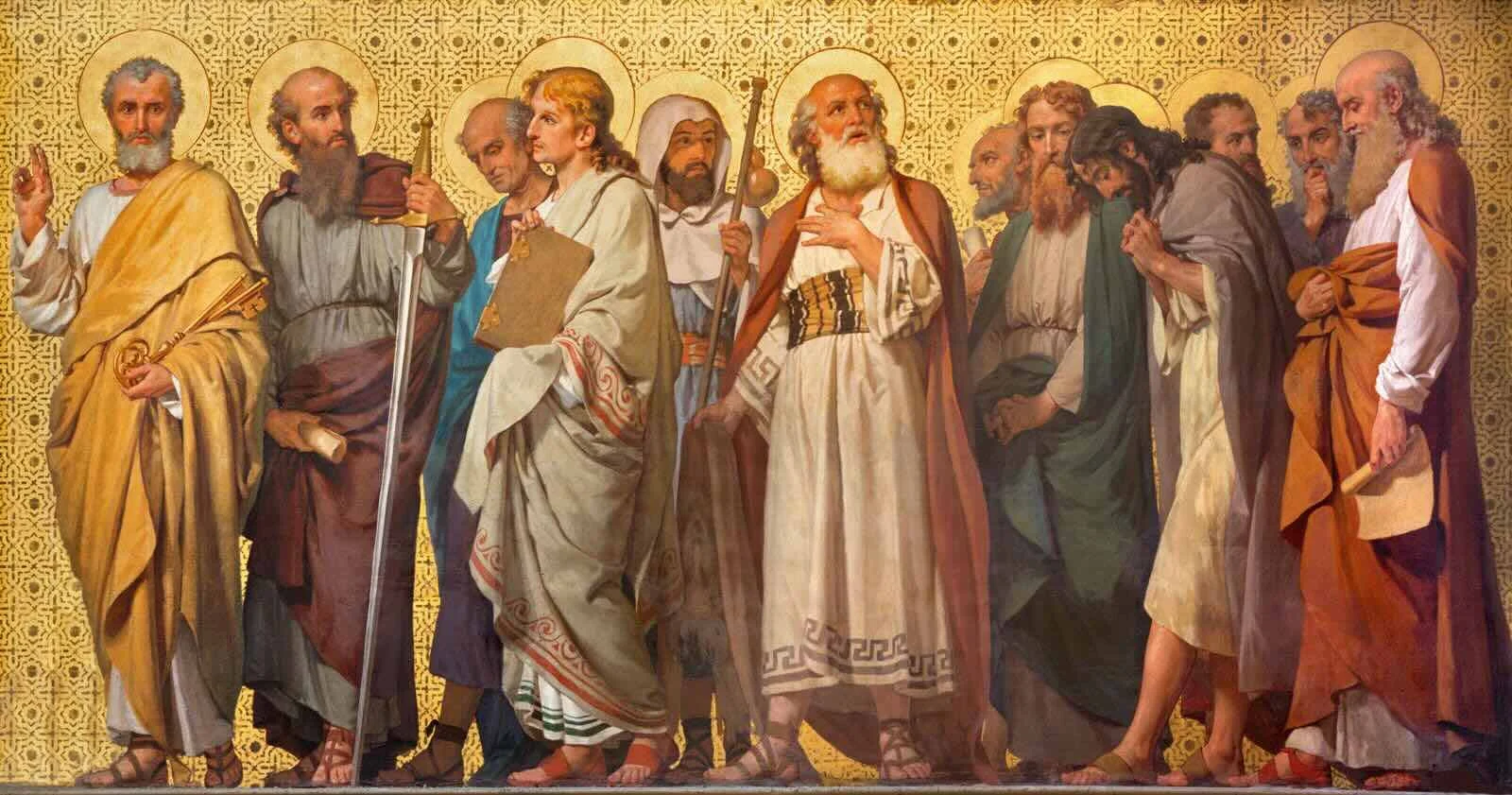
Translated from Philip Schaff's History of The Christian Church
第十二章 大公神学在与异端的冲突中的发展
目录
§ 137. 大公正统信仰
§ 138. 圣经与正典
§ 139. 大公教会的传统
§ 140. 信仰准则与《使徒信经》
§ 141. 《使徒信经》的异文
§ 142. 上帝与创造
§ 143. 人与堕落
§ 144. 基督与道成肉身
§ 145. 基督的神性
§ 146. 基督的人性
§ 147. 基督里面神性与人性的关系
§ 148. 圣灵
§ 149. 三位一体
§ 150. 反三位一体论者。第一类:阿洛吉派、狄奥多图、阿尔特蒙、撒摩撒他的保罗
§ 151. 第二类反三位一体论者:普拉克西亚、诺埃图、卡利斯图、贝吕鲁
§ 152. 撒伯流主义
§ 153. 救赎
§ 154. 其他教义
§ 155. 末世论:不朽与复活
§ 156. 死亡与复活之间
§ 157. 审判之后:将来的刑罚
§ 158. 千年国论
§ 137. 大公正统信仰
I. 史料:尼西亚会议以前诸教父的教义与论战著作,尤其是殉道者游斯丁 (Justin Martyr)、爱任纽 (Irenaeus)、希坡吕托斯 (Hippolytus)、德尔图良 (Tertullian)、居普良 (Cyprian)、亚历山大的革利免 (Clement of Alex.) 和奥利金 (Origen) 的著作。
- 文献:佩特拉维乌斯 (Petravius)、明舍尔 (Münscher)、尼安德 (Neander)、吉斯勒 (Giesler)、鲍尔 (Baur)、哈根巴赫 (Hagenbach)、谢德 (Shedd)、尼奇 (Nitzsch)、哈纳克 (Harnack) 的教义史著作中的相关章节(哈纳克的第一卷出版于1886年;第2版,1888年)。
约斯·施瓦内 (Jos. Schwane,罗马天主教):《尼西亚会议以前的教义史》(Dogmengeschichte der vornicänischen Zeit.)。明斯特 (Münster),1862年。
埃德姆·德·普雷桑塞 (Edm. De Pressensé):《异端与基督教教义》(Heresy and Christian Doctrine,),安妮·哈伍德 (Annie Harwood) 译。伦敦 (Lond.),1873年。
专题文献见下文。另参第十三章所列文献。
上一章所述广泛流传的谬误,向教会发起了一场强大的思想挑战;教会终于得胜而出,正如她的主所应许的,圣灵要引导她进入一切真理。面对异端分子主观、无根而又变动不居的臆测、梦想和虚构,教会以神圣启示中充实而坚固的实在与之抗衡。基督教神学的成长,固然出于信仰对知识的要求,仿佛是一种内在的必然;但异端,尤其是诺斯替主义 (Gnosticism),却从外面给了它强大的推动,如同一场使田地肥沃的雷雨。教会从起初就在信仰的经验和圣经中拥有真理,并以一丝不苟的忠实,将圣经世代相传。但如今的任务,是以理论的形式阐发基督教真理的实质1,从各方面加以巩固,并清楚地呈现在理智面前。因此,基督教的论战神学与教义神学,亦即教会对救恩教义的逻辑理解,便在这场与异端的冲突中发展起来;正如护教文献与殉道,是在犹太人和异教徒的逼迫之下产生的一样。
从此以后,大公信仰与异端、正统与异说、教会的信仰与持异议的个人意见之间的区别,便日益显著。凡与圣经和教会信仰相合的教义,都被接纳为大公的,也就是普世的,并排除其他教义的。2凡在实质上偏离这一标准的,每一种由这个或那个人任意构成的观念,每一种对基督教启示教义的歪曲或败坏,以及每一种背离教会共同信念的主张,都被视为异端。3
几乎所有教父都起来反对当时的异端,运用圣经中的论据、教会的传统以及理性的论证,证明这些异端内在的矛盾与荒谬。
但在这样做的时候,他们虽然在精神和目的上是一致的,却采取了两条迥然不同的道路;这取决于希腊与罗马民族特性的差别、心智结构的特点,以及上帝护理的安排。希腊神学,尤其是以革利免和奥利金为代表的亚历山大神学,主要是理念性和思辨性的,所探讨的是上帝、道成肉身、三位一体以及基督论等客观教义;它力求以真正的知识,即建立在基督教信仰 (pistis) 之上的正统哲学,来取代虚假的灵知 (gnosis)。它的逻各斯 (Logos) 教义深受柏拉图式思辨的影响。拉丁神学,尤其是以德尔图良和居普良为最杰出代表的北非神学,则更为务实而注重实践,关切人性与救恩的教义,也更直接地敌视诺斯替主义和哲学。与此相关的是,希腊教父最初是哲学家,而拉丁教父多为法学家和政治家;前者通过思辨的道路达到基督教信仰,后者则本着实践道德的精神归信。同样具有特色的是,希腊教会主要以使徒约翰这位卓越的默想型“神学家”为根基;拉丁教会则以教会务实的领袖彼得为根基。亚历山大的革利免和奥利金常常游离到朦胧而近乎诺斯替主义的思辨之中,几乎要把基督教观念的真实内涵化解成稀薄的唯灵论;德尔图良却毫不妥协地反对诺斯替主义及其所依据的异教哲学。他问道:“雅典与耶路撒冷、学园与教会、异端分子与基督徒,有什么相交呢?”然而,这种差别只是相对的。亚历山大学派虽然具有种种唯灵论倾向,却仍拘守一种惊人的字面解释;而德尔图良尽管厌恶哲学,却致力于深刻的思辨观念,这些观念到奥古斯丁 (Augustin) 那里才得到充分发展。
爱任纽出身于东方教会,使用希腊语,却在西方工作;他在教会这两个分支之间,处于某种居间调和的地位。总的说来,可以把他视为尼西亚会议以前教会正统信仰最为温和而健全的代表。他反对诺斯替主义,与德尔图良同样坚决,却没有忽视这一体系所流露出的思辨需要。他在177至192年间写成的反驳灵知的著作4,是第二世纪最重要的论战著作。在第一卷中,爱任纽详尽介绍了瓦伦廷派 (Valentinian) 的灵知体系;第二卷开始用哲学与逻辑的方法予以反驳;第三卷则以大公传统和圣经抗衡这一体系,维护关于上帝独一、世界受造、逻各斯道成肉身的正统教义,反对幻影说 (Docetism) 对基督真实人性的否认,以及伊便尼派 (Ebionites) 对他真实神性的否认;第四卷进一步巩固这些教义,并针对马吉安学派 (school of Marcion) 的反律法主义,论证新旧约的一致性;第五卷也是最后一卷,阐述他关于末世论的见解,尤其是身体复活这一极为诺斯替唯灵论所厌恶的教义,最后论及敌基督、世界的终结、中间状态和千禧年。
他的门徒希坡吕托斯在《哲学论辩》(Philosophumena) 中,就早期异端在许多方面给了我们更为详尽的记述,并追溯它们在异教哲学体系中的根源,但对于教会大公教义的阐释,却不及他深入。
这些论战文献的主要努力,自然是在正面阐发并确立基督教真理;这同时也是对相反谬误最有效的驳斥。其目的,尤其在于确定信仰准则、上帝道成肉身,以及基督真实的神性与真实的人性等教义。在这一努力中,教会的心智不断受到上帝圣言和使徒传统的引导,以不致迷误的直觉,航行于险峻的礁崖之间。然而,在对这些要点的系统理解和表述上,仍有不少不确定和模糊之处。而且在这个风雨飘摇的时代,尚无大公会议,能够以全教会的声音裁定教义争论。三位一体和基督位格的教义,直到下一个时期,即尼西亚时期,才臻于成熟,并获得最终的信经界定。
关于异端的附注
异端一词源于 αἵρεσις*,原意或为捕获(来自 αἱρέω*),或为选取、选择(来自 αἱρέομαι*),后来又附加了任意反对公共意见与权威的意思。在新约中,它指一种所选择的生活方式、一个学派、宗派或党派,未必含有贬义;它被用来称法利赛人、撒都该人,甚至用来将基督徒称为犹太教的一个宗派(《使徒行传》5:17;15:5;24:5、14;26:5;28:22);其次,它表示意见分歧所引起的不和(《加拉太书》5:20;《哥林多前书》11:19);最后,它表示谬误(《彼得后书》2:1,αἱρέσεις ἀπωλείας*,即毁灭性的异端,或走向灭亡的宗派)。这最后一处最接近教会所下的定义。异端分子(αἱρετικὸς ἄνθρωπος*)一词只出现过一次,见《提多书》3:10,其意思是好结党的人、宗派分子、党人,而不主要是持谬见者。
君士坦丁大帝 (Constantine the Great) 仍把基督教会称为一个宗派,ἡ αἵρεσις ἡ καθολική, ἡ ἁγιωτάτη αἵρεσις*(见他致叙拉古主教克雷斯图斯 [Chrestus, bishop of Syracuse] 的信,载优西比乌 [Eusebius]《教会史》[H. E.] X卷,第5章,§ 21、22,海尼兴 [Heinichen] 版,第I卷,第491页)。但在他以后,教会与宗派便成了对立的概念:前者只用于那唯一居统治地位的团体,后者则用于持异议的少数派。
教父通常以异端指与大公教义相反的错误教导,以分裂指与大公教会治理相反的纪律破坏。古代的异端研究者——他们虽诚实虔敬,却大多缺乏批判眼光,轻信而偏执,是狭隘正统信仰的狂热维护者——将异端的范围扩展到基督教之外,又把所有变体和差异分别计数,从而不合理地增加了异端的数目。布雷西亚 (Brescia),又名布里克西亚 (Brixia) 的主教菲拉斯特里乌斯或菲拉斯特鲁斯 (Philastrius or Philastrus,卒于387年),在《论异端》(Liber de Haeresibus,) 中列举了28种犹太异端和128种基督教异端;塞浦路斯的埃皮法尼乌斯 (Epiphanius of Cyprus,卒于403年) 在《药箱》(Πανάριον*) 中总共列出80种异端,其中20种在基督以前,60种在基督以后;奥古斯丁(卒于430年)列出88种基督教异端,包括伯拉纠主义 (Pelagianism);《预定论者》(Proedestinatus) 列出90种,包括伯拉纠主义和聂斯托利主义 (Nestorianism)。(教皇庇护九世 [Pius IX] 在1864年的《谬误表》[Syllabus of Errors] 中,谴责了80种现代异端。)奥古斯丁说,要给异端下定义,是“完全不可能的,或者无论如何也是极其困难的”;他又明智地补充说,构成异端的,与其说是谬误本身,不如说是人坚持谬误时所抱的精神。谬误有无辜的,也有应当归罪的。此外,许多人比他们所信的信条或不持信条的立场更好,也有许多人比他们所信的信条更坏,无论那信条多么正统。我们的主最严厉的话,正是针对法利赛人假冒为善的正统信仰。随着时间推移,异端被界定为:在真理已由教会以权威方式加以界定并宣告之后,仍故意而执拗地坚持与之相反的宗教谬误;或曰,“pertinax defensio dogmatis ecclesiae universalis judicio condemnati”,即“顽固地维护那经普世教会裁决所谴责的教义”。对神学上尚无定论的问题所作的思辨,并不是异端。奥利金在他自己的时代并不是异端分子,却在死后很久才遭到定罪。
在基督教世界目前分裂的状况下,正统与异端各有不同的种类。正统是符合公认的信经或公开教义的准则;异端则是故意偏离这些准则。希腊教会将罗马教会关于教皇制度、圣灵双重发出、童贞女马利亚无原罪始胎以及教皇无误的教义斥为异端,因为这些教义违反前七次大公会议的教导。罗马教会在特伦托会议 (Council of Trent) 上,将新教宗教改革的一切特有教义都加以咒诅。另一方面,福音派新教徒则把希腊教会和罗马教会那些不合圣经的传统视为异端。新教各教会之间又有较小的教义分歧;各教会持守这些不同见解时,其排他或宽容的程度,因其偏离罗马天主教会的程度而异。例如,路德 (Luther) 不肯容忍茨温利 (Zwingli) 对圣餐的看法,而茨温利却愿意不顾这一分歧,与他以弟兄相交。路德宗的《协同信条》(Formula of Concord) 和加尔文派的多特会议 (Synod of Dort),曾拒绝并谴责一些教义,而如今在正统的福音派教会中,持守这些教义却不受惩处。正统的危险在于走向排他而缺乏爱心的偏执,使真理变得狭隘;自由主义的危险则在于走向松弛与漠不关心,抹煞真理与谬误之间永恒的区别。
使徒受超乎人类智慧的引导,并赋有超乎教会的权柄,因此对一切在根本上偏离所启示之救恩真理的行为,都作了严厉的判断。保罗咒诅那些犹太化的教师,因为他们把割礼作为取得真正教会成员资格的条件(《加拉太书》1:8);他又讥讽地称他们为“犬类”、行“妄自行割”的人(《腓立比书》3:2,βλέπετε τοὺς κύνας ... τῆς κατατομῆς*)。他警告以弗所的长老,他离开以后,将有“凶暴的豺狼”(λύκοι βαρεῖς*)进入他们中间(《使徒行传》20:29);又把当时兴起、冒称为知识的灵知(ψευδώνυμος* γνῶσις*)之种种思辨,称为“鬼魔的道理”(διδασκαλίαι δαιμονίων*,《提摩太前书》4:1;比较6:3–20;《提摩太后书》3:1及下文;4:3及下文)。约翰也同样恳切而严厉地警告人,要防备一切否认道成肉身这一事实的假教师,并称他们为敌基督(《约翰一书》4:3;《约翰二书》7);《彼得后书》和《犹大书》则以最阴暗的色彩描绘异端分子。
因此,尼西亚会议以前的教父极端憎恶当时的诺斯替派异端分子,称他们为撒但的仆役、人形的野兽、致命毒药的贩卖者、强盗和海盗,我们也就不必惊讶了。坡旅甲 (Polycarp,《致腓立比人书》[Ad Phil.] 第7章)、伊格那修 (Ignatius,《致士每拿人书》[Ad Smyrn.] 第4章)、殉道者游斯丁 (Justin M.,《护教篇》[Apol.] I,第26章)、爱任纽 (Irenaeus,《驳异端》[Adv. Haer.] III,第3、4章)、希波吕托斯 (Hippolytus)、德尔图良 (Tertullian),甚至亚历山大的革利免 (Clement of Alexandria) 和奥利金 (Origen),在对异端毫不妥协的敌对态度上,与尼西亚时期及其后各时期的教父,基本上持相同立场。他们把异端看作魔鬼撒在主田里的稗子(《马太福音》13:3–6及下文)。因此,德尔图良推论说:“最初传下来的,出于主而且真实;后来引进的,则是外来的而且虚假”(《论异端的抗辩》[Praescr.] 第31章:“Ex ipso ordine manifestatur, id esse dominicum et verum quod sit prius traditum, id autem extraneum et falsum quod sit posterius inmissum”)。异端与宗派固然是免不了的(《哥林多前书》11:19),但“那绊倒人的有祸了”(《马太福音》18:7)。德尔图良说(同上,第30章):“主被出卖,固然是必要的;但那卖主的人有祸了。”
教父论战的另一特点,是把异端归因于卑劣的动机,如骄傲、野心受挫、肉欲和贪财。他们不考虑心智禀赋的不同、教育的影响以及其他原因。不过,也有少数高尚的例外。奥利金和奥古斯丁 (Augustin) 承认,至少有些传播谬误的教师是诚实而认真的。
我们必须注意尼西亚会议以前与其后的异端,以及惩治异端的方式,在两个重要方面的区别。
尼西亚会议以前的主要异端,无疑是对基督教真理的根本歪曲,不容有任何妥协。伊便尼派 (Ebionism)、诺斯替主义 (Gnosticism) 和摩尼教 (Manichaeism),在本质上都是反基督教的。教会若容忍这种异教道理与荒谬之说的混杂物,就必危及自身的存在。但对于孟他努派 (Montanists)、诺瓦atian派 (Novatians)、多纳徒派 (Donatists)、十四日派 (Quartodecimanians),以及其他在教义或纪律的次要问题上意见不同的宗派,教会的判断则较为温和,也承认他们的洗礼。
尼西亚会议以前,教会对异端的惩罚纯属教会性质,包括责备、罢职和逐出教会,并不影响其公民地位。
但教会与国家一开始联合,民政官员便在教会的赞同下,仿照摩西律法,增设没收财产、流放和处死等世俗刑罚,却违反了基督和使徒的精神与榜样。君士坦丁 (Constantine) 于公元316年颁布若干针对多纳徒派的敕令,开了先例。瓦伦提尼安一世 (Valentinian I.) 禁止摩尼教徒公开礼拜(371年)。第二次大公会议击败阿里乌派 (Arians) 之后,狄奥多西大帝 (Theodosius the Great) 在381至394年间颁布十五道敕令,以法律惩罚强制推行信仰一致。霍诺里乌斯 (Honorius,408年)、阿卡狄乌斯 (Arcadius)、小狄奥多西 (the younger Theodosius) 和查士丁尼 (Justinian,529年) 都沿袭了这一道路。根据这些帝国法令,异端分子,即公开反对帝国国教的人,被剥夺担任一切公职、公开礼拜、接受或遗赠财产以及订立有效契约的权利;他们受到罚款、放逐、体罚,甚至死刑。见《狄奥多西法典》(Theos. Code) 第XVI卷,第V题,De Haereticis(论异端分子)。最早因异端罪而被执行斩刑的,是普里西利安 (Priscillian) 及其六名持摩尼教观点的追随者(385年)。米兰的安布罗斯 (Ambrose of Milan) 和图尔的马丁 (Martin of Tours) 出于较为仁厚的情怀,抗议这一行为,却归于徒然。甚至伟大而良善的圣奥古斯丁,尽管自己曾作过九年的异端分子,仍因错误解释《路加福音》14:23的 Cogite eos intrare(勉强人进来),而为宗教逼迫的原则辩护(第93封书信,ad Vinc.;第185封书信,ad Bonif.;《订正录》[Retract.] II,第5章)。倘若他预见到讨伐阿尔比派 (Albigenses) 的十字军,以及西班牙宗教裁判所的种种惨事,他必会撤回这一危险的意见。神权式或伊拉斯都派 (Erastian) 的国教理论——无论属于希腊大公教会、罗马天主教会,还是新教——都把一切冒犯教会的行为视为冒犯国家的行为,并且要求按照当时对正统的热心和对异端的憎恨程度,施以轻重不等的惩罚。然而,上帝至高的护理使一切恶事生出善果,对异端分子的血腥逼迫——教会史中最黑暗的篇章之一——竟结出了宗教自由的甘美果实。见第III卷,第138–146页。
§ 138. 圣经与正典
罗伊斯 (Reuss)、韦斯科特 (Westcott,第6版,1889年)、赞恩 (Zahn,1888年) 关于正典的著作。霍尔茨曼 (Holtzmann):《正典与传统》(Kanon u. Tradition),1859年。沙弗 (Schaff):《希腊文新约与英文译本指南》(Companion to the Greek Testament and the English Version)。纽约及伦敦,1883年;第3版,1888年。格雷戈里 (Gregory):蒂申多夫 (Tischendorf)《希腊文新约》第8版的《导论》(Prolegomena)。莱比锡 (Lips.),1884年。A. 哈纳克 (A. Harnack):《公元200年前后的新约》(Das N. Test. um das jahr 200)。莱比锡 (Leipz.),1889年。
基督教知识的来源与准则问题,是一切神学的根基。因此,我们在论述各项信仰教义以前,先在这里加以考察。
- 这一知识的来源与准则,就是新旧两约的圣经。5 这里立刻产生一个问题,即圣书的数目与编排,也就是正典的问题;正典既有别于那些蒙光照却未受默示的教会教师的著作,也有别于最初四个世纪中为异端的利益或为满足无谓的好奇心,假托某位使徒或其他杰出人物之名而写成、刊行的大量伪经作品(福音书、行传、书信和启示录),其中有些至今尚存。不过,这些伪经并非全都出自伊便尼派和诺斯替派;有些不过是企图用虚构的故事,填补耶稣和使徒历史中的空白,或采用 vaticinia post eventum(事后编造的预言),借着当时普遍容许的虔诚欺诈,来荣耀基督教。
旧约正典由犹太人传给教会,并有基督和使徒的认可。犹太人的次经收在《七十士译本》中,又由此进入基督教的各译本。新约正典仿照旧约的模式,在最初四个世纪中,在同一位圣灵的引导下逐渐形成;各卷使徒著作也正是受这位圣灵的感动而写成的。其最初的痕迹见于《彼得后书》3:15,那里预设已有一部保罗书信集,6 并将之与“别的经书”并列。7 诚然,使徒教父和早期护教士为了证明基督教出于上帝,通常诉诸旧约、使徒口头的宣讲、基督教各教会活泼的信仰、殉道者得胜的死,以及持续发生的神迹。然而,他们的著作也引用了使徒最重要的著作,虽通常不注明作者姓名,或至少也有所引述,足以使这些著作的悠久年代和教会权威超乎一切合理的怀疑。8 第二世纪中叶,诺斯替派的马吉安 (Marcion) 所立的异端正典,由一部删残的《路加福音》和保罗的十封书信组成;这无疑意味着当时已有一部正统的正典,因为异端总以真理的存在为前提,而它本身不过是真理的歪曲形象。
新约的主要书卷,即四福音书、《使徒行传》、保罗的十三封书信、《彼得前书》和《约翰一书》——优西比乌 (Eusebius) 称之为“公认书卷”(Homologumena)——在第二世纪中叶以后,已在教会中普遍使用,并被承认为使徒所作、受基督之灵的默示,因此具有权威,属于正典。这一点由殉道者游斯丁 (Justin Martyr)、他提安 (Tatian)、安提阿的提阿非罗 (Theophilus of Antioch)、爱任纽、德尔图良、亚历山大的革利免和奥利金的见证,叙利亚文《别西大译本》(Peshito,仅缺《犹大书》《彼得后书》《约翰二书》《约翰三书》和《启示录》)、古拉丁文诸译本(除《彼得后书》《希伯来书》,以及可能还有《雅各书》外,均收录在内)和《穆拉托里残篇》(Fragment of Muratori) 所证实;9 异端分子和异教反对者克尔苏斯 (Celsus) 的见证也证实了这一点。这些人物和文献,在这件事上代表了小亚细亚、意大利、高卢、北非、埃及、巴勒斯坦和叙利亚的教会。因此,我们可以称这些书卷为原始正典。
至于其余七卷,即优西比乌所称的“有争议书卷”(Antilegomena),也就是《希伯来书》、10《启示录》、11《彼得后书》《约翰二书》《约翰三书》《雅各书》和《犹大书》,教会的传统直到优西比乌所处的第四世纪初,仍在接受与拒绝之间摇摆不定。不过,现存两部年代可追溯至优西比乌和君士坦丁 (Constantine) 时代的最古老希腊文新约抄本中,一部——《西奈抄本》(Codex Sinaiticus)——包含全部二十七卷;另一部——《梵蒂冈抄本》(Codex Vaticanus)——原来可能也同样完整,尽管《希伯来书》最后几章(自11:14起)、教牧书信、《腓利门书》和《启示录》现已遗失。有争议书卷还有第二类,优西比乌称之为“伪作”(νόθα*),包括使徒以后时期的几部著作,即《巴拿巴公函》、罗马的革利免《致哥林多人第一书》、坡旅甲 (Polycarp)《致腓立比人书》、《黑马牧人书》(Shepherd of Hermas)、现已失传的《彼得启示录》和《希伯来人福音》;这些著作至少曾在某些教会中诵读,但后来普遍被排除在正典之外。其中有些甚至收入最古老的圣经抄本,如《西奈抄本》中的《巴拿巴书》和《黑马牧人书》的一部分(二者均为希腊文原文),以及《亚历山大抄本》(Codex Alexandrinus) 中罗马的革利免《第一书》。
新约正典首次得到明确界定,并采用此后普遍沿用的形式,是在非洲举行的两次教会会议上:393年的希坡 (Hippo) 会议和397年的迦太基 (Carthage) 会议。奥古斯丁出席了这两次会议;他对当时一切神学问题都有举足轻重的影响。至少到那时,全教会对于正典书卷的数目必定已经近乎一致,甚至似乎无须再由大公会议予以认可。无论如何,东方教会在这件事上完全独立于北非教会。老底嘉 (Laodicea) 会议(363年)列出了我们现有新约各卷的名单,只缺《启示录》。包含这份名单的最后一条教规,很可能是后来增补的;然而,尼西亚及后尼西亚时期各大教父散见于各处的见证,证实所有这些书卷早已在教会中使用,只对《启示录》尚有若干疑问。这些教父包括亚他那修 (Athanasius,卒于373年)、耶路撒冷的区利罗 (Cyril of Jerusalem,卒于386年)、拿先斯的贵格利 (Gregory of Nazianzum,卒于389年)、萨拉米斯的埃皮法尼乌 (Epiphanius of Salamis,卒于403年)、金口约翰 (Chrysostom,卒于407年) 等。12 Novum Testamentum(新约)13 这一名称,以及 Novum Instrumentum(具有法律效力之意的法律用语),最早见于德尔图良,后来普遍使用,取代了更准确的名称“新盟约”(New Covenant)。这些书卷通常分为两部分:“福音书”14 和“使徒书”;第二部分的书信又分为大公书信(或普通书信)和保罗书信。如此确定的大公教会正典,直到宗教改革时期都未受触动;那时,次经和有争议书卷的问题才重新提出,圣经批判学也随之诞生。然而,近代最彻底的研究,未能动摇教会对新约的信仰,将来也绝不能动摇。
- 关于使徒著作的起源和性质,教父们把犹太人用于旧约的那种略带机械性与神秘力量色彩的默示理论,应用于新约;他们认为,各卷书都是在圣灵非凡的帮助之下写成的,因此得以免于错误(照奥利金的看法,甚至免于记忆的差错)。但这并不被认为排除了作者本身的活动和个性。例如,爱任纽认为保罗具有独特的文体,并将其归因于他那热切心灵中奔涌的思想。然而,亚历山大学派却把默示的观念扩展到了令人疑虑的程度。亚历山大的革利免称柏拉图 (Plato) 的著作受了默示,因为其中含有真理;他又认为,历史中一切美与善,都是无限者的一缕气息,是神圣的逻各斯 (Logos) 从人类灵魂的琴弦上奏出的一个音符。
圣经既是上帝启示的受默示之工具所产生的作品,便被承认为无谬的知识来源,以及基督徒信仰与行为绝无错误的准则,并被用来反驳异端,而未在新旧两约之间作批判性的区分。爱任纽称福音为真理的柱石和根基。德尔图良要求每一项教义都须有圣经的凭据,并宣称异端无法立足于纯粹的圣经基础之上。在奥利金看来,凡不能由圣经的见证加以证实的,都不值得相信。
- 起初,圣经的解释纯粹着眼于实际,目的在于直接造就信徒。与诺斯替派 (Gnostics) 的争论,要求采用一种更具学术性的方法。正统派与异端都仿效拉比派和亚历山大犹太教,大量采用寓意和神秘的解释,且不时迷失于纯粹的幻想和最荒诞的臆测之中。除少数例外(金口约翰和哲罗姆)之外,教父们一般几乎没有语法与历史释经的观念。
奥利金最早结合犹太柏拉图主义者斐罗 (Philo) 的寓意法,提出一套正式的解释理论,并将其贯彻于一长系列释经著作之中;这些著作以勤勉和才思见长,却鲜有扎实的成果。他认为圣经是一个活的有机体,由三种要素构成,分别对应柏拉图心理学所说的人的身体、魂和灵。因此,他赋予圣经三重意义:(1) 属身体的、字面的或历史的意义,直接来自字词的含义,但仅仅是遮蔽更高观念的帷幕;(2) 属魂的或道德的意义,使第一层意义富有生气,用以造就一般信徒;(3) 属灵的、神秘的和理念的意义,专供那些立于哲学知识高地的人领会。在运用这一理论时,他表现出与斐罗相同的倾向,即以属灵化的解释消解圣经的字面意义,尤其是在明白的历史意义似乎不够高尚之处,如大卫犯罪的历史;他并不只是阐明圣经的意义,反而把种种外来的观念和不相干的幻想塞进其中。但这种寓意化的解释迎合了当时的趣味,加上他丰富的才思和令人折服的学识,奥利金便成了早期教会释经方面的权威,直到他的正统性受到怀疑。他也是圣经文本批判的先驱,他的《六栏本》(Hexapla) 是编纂多语对照圣经的首次尝试。
尽管释经中的无数臆测和细节上的分歧,足以驳倒特伦托会议 (Tridentine) 所虚构的“教父一致同意”(unanimis consensus patrum),教父们从圣经引出最重要的信条时,在方法上仍有某种一致性。他们在解释中都遵循同一教义原则,即某种“信仰类比”(analogia fidei)。这就把我们引向传统的问题。
关于正典的附注
I. 优西比乌的陈述
优西比乌(卒于340年)在其《教会史》若干段落中,论及使徒著作的记载(尤其是III. 25;参较II. 22、23;III. 3、24;V. 8;VI. 14、25),颇有含混和前后不一之处;但总体而言,这些记载仍使我们最清楚地了解第四世纪最初四分之一时期、即尼西亚会议(325年)召开前夕正典的状况。
他将基督徒的圣书分为四类(《教会史》H. E. III. 25,海尼兴 (Heinichen) 版,第I卷,第130页及后;参较其第III卷,第87页及后的注释)。
- 公认书卷 (Homologumena),即普遍承认的书卷 (ὁμολογούμενα*):新约二十七卷中的二十二卷,即四福音书、《使徒行传》、保罗的十四封书信(包括《希伯来书》)、《彼得前书》《约翰一书》和《启示录》。他说:“论述至此,我们应当将前面(III. 24)所提到的新约著作列出一份简明的目录 (Ἀνακεφαλαιώσασθαι τὰς δηλωθείσας τῆς καινῆς διαθήκης γραφάς*)。首先,我们必须列入神圣的四部福音书(或四重组合,τετρακτύν*),其次是《使徒行传》(ἡ τῶν πράξεων τῶν ἀποστόλων γραφή*)。在此之后,必须算上保罗的书信,再其次,必须确认为真作(κυρωτέον*,是 κυρόω* 的动词形容词,意为认可)的,是流传为约翰第一封的那封书信 (τὴν φερομένην Ἰωάννου προτέραν*),同样还有彼得的书信 (καὶ ὁμοίως τὴν Πέτρου ἐπιστολήν*)。除这些书之外,若认为适当 (εἴγε φανείη*),我们还须列入《约翰启示录》(τὴν ἀποκάλυψιν Ἰωάννου*);关于此书的不同意见,我们将在适当之处陈述。这些都列在普遍接受的书卷之中 (ἐν ὁμολογουμένοις*)。”
优西比乌在第III卷第3章中说,保罗的“十四封书信”(τοῦ δὲ Παύλου πρόδηλοι καὶ σαφεῖς αἱ δεκατέσσαρες*) 普遍受到接受,但又补充说:“有人拒绝《希伯来书》,说此书受到争议,因为它不是保罗的书信之一。”
关于《启示录》,优西比乌的态度游移不定,取决于他是在陈述教会公认的信念,还是自己的私人意见。他先把它列在公认书卷之中,随后又在同一段(III. 25)中把它列入伪作;但两处都加上了限定语(εἰ φανείη*),把此事留给读者判断。他很少引用此书,通常称之为《约翰启示录》,但在一处(III. 39)暗示,此书可能出自“第二位约翰”;这必定是指有别于使徒的那位所谓“长老约翰”。这种意见很受施莱尔马赫 (Schleiermacher) 批判学派的赞同。由于其神秘的性质,直到今日,《启示录》对少数人而言仍是新约中最受喜爱的书卷,对多数人而言却是最不受喜爱的。它所得的见证与其他任何一卷同样充分,而且最激进的近代批评家(鲍尔、勒南)也承认,此书由使徒所作,写于耶路撒冷毁灭以前。
- 有争议书卷 (Antilegomena),即受到争议的书卷,但“教会中大多数人仍然熟悉”这些书 (ἀντιλεγόμενα, γνώριμα δ’ ὅμως τοῖς πολλοῖς*,III. 25)。共有五卷(或七卷),即雅各的一封书信、犹大的一封书信、《彼得后书》《约翰二书》和《约翰三书》(“无论这两封究竟属于福音书作者,还是另一位约翰”)。
我们可以把《希伯来书》和《启示录》也加在其中(尽管优西比乌没有明说):前者因为未被普遍承认为保罗所作,后者则因其中被认为含有千禧年论 (chiliasm),而这种学说为优西比乌和亚历山大学派所反感。
- 伪作 (νόθα*),如《保罗行传》《彼得启示录》《牧人书》(黑马)、《巴拿巴书》、所谓《使徒教训》,以及《希伯来人福音》,“那些接受了基督的希伯来人,特别喜爱此书”。
如前所述,他又前后不一地把《约翰启示录》加在其中:“正如我所说,有人拒绝此书 (ἥν τινες ἀθετοῦσιν*),另有人则把它列在普遍接受的书卷之中 (τοῖς ὁμολογουμένοις*)。”他本应将其列入有争议书卷。
可以说,这些 νόθα* 相当于旧约的次经,虔敬而有益,却不属于正典。
- 异端书籍。优西比乌说,这些比伪作更坏,必须“作为全然无价值且不敬虔的作品而摒弃”。他在此类中提到《彼得福音》《多马福音》《马提亚福音》,以及《安得烈行传》《约翰行传》和其他使徒的行传。
- 教会对正典的界定
四世纪中叶过后不久,教会在帝国中的地位稳固下来,关于旧约次经和新约争议书卷的一切疑问也随之止息;接受包含这两类书卷的大公教会正典,成为信仰的一项条款。第一次尼西亚大公会议 (Council of Nicaea) 并未像人们可能预期的那样确定正典,但圣经被毫无争议地视为正统信仰确实而不可动摇的根基。小亚细亚 (Asia Minor) 的冈格拉会议 (Synod of Gangra,约在四世纪中叶) 在最后一条教规(第20或21条)中说:“简而言之,我们愿教会遵守借着神圣经书和使徒传统传给我们的事。”参赫费勒 (Hefele),《大公会议史》(Conciliengesch.),I. 789。
第一个明确规定正典书卷数目的会议,是小亚细亚弗吕家 (Phrygia) 的老底嘉会议 (Council of Laodicea,召开于公元343至381年之间,可能约在363年)。其最后一条教规(第60或59条)先列举旧约正典书卷,然后按以下次序列出新约全部书卷,但《启示录》除外:
“新约的书卷如下:四福音书,即《马太福音》《马可福音》《路加福音》《约翰福音》;《使徒行传》;七封大公书信,即雅各一封、彼得两封、约翰三封、犹大一封;保罗的十四封书信,即致罗马人一封、致哥林多人两封、致加拉太人一封、致以弗所人一封、致腓立比人一封、致歌罗西人一封、致帖撒罗尼迦人两封、致希伯来人一封、致提摩太两封、致提多一封、致腓利门一封。”
若干抄本和译本没有这份目录,它很可能是后来从耶路撒冷的区利罗 (Cyril of Jerusalem) 的著作中插入的。施皮特勒 (Spittler)、赫布斯特 (Herbst) 和韦斯科特 (Westcott) 否认这份目录出自老底嘉会议,施勒克 (Schrökh) 和赫费勒则为此说辩护。它与《使徒教规》第85条的目录相似,后者同样没有《启示录》,但加入了革利免的两封书信和伪托的《使徒宪章》。
关于老底嘉会议及其不确定的日期,见赫费勒 (Hefele),《大公会议史》(Conciliengeschichte),修订版,第I卷,第746页及后;以及韦斯科特 (Westcott),《新约正典》(Canon of the N. T.),第2版,第382页及后。
在西方教会,第三次迦太基地方会议 (Council of Carthage,公元397年召开) 列出了新旧两约正典书卷的完整目录,规定教会中应当把这些书卷作为神圣经书诵读,其他一概排除。新约书卷按以下次序列出:“福音书四卷,《使徒行传》一卷,使徒保罗的书信十三封,同一位〔使徒〕致希伯来人的书信一封,使徒彼得的书信两封,约翰的书信三封,雅各的书信一封,犹大的书信一封,《约翰启示录》一卷。”这一教规此前已于公元393年由非洲的希波雷吉乌斯会议 (Synod of Hippo regius) 采纳;当时仍任长老的奥古斯丁 (Augustin) 在会上发表了《论信仰与信经》(De Fide et Symbolo) 的讲论。该会议的记录已佚,但其决议为第三次迦太基会议重新采纳;后者只有四十三位非洲主教参加,不能声称具有普遍的权威。(见韦斯科特,第391页;查特里斯 (Charteris),第20页;赫费勒,修订版,II. 53、68。)
奥古斯丁(两次会议均有出席)和哲罗姆 (Jerome,曾应罗马教皇达马苏斯 (Damasus) 的请求翻译拉丁文圣经),对于拉丁教会正典的确定发挥了决定性的影响。
特伦托会议 (Council of Trent,1546年) 确认了传统观点,并咒诅持异议者。韦斯科特博士说(第426页及下页):“这项祸害深远的法令,由五十三位高级教士批准;其中没有一个德国人,没有一个以历史学识著称的学者,也没有一个人曾作过专门研究,足以审查这个只能凭古代见证才能判明真相的问题。”
对希腊教会和罗马教会而言,正典问题已经定案,尽管从未有一个代表整个教会的、严格意义上的大公会议对此作出裁决。但新教要求享有尼西亚会议以前时期的自由,以及重新考察圣经每一卷书之起源与历史的权利。没有这种自由,释经神学就不可能有真正的进步。
§ 139. 大公教会的传统
爱任纽 (Irenaeus):《驳异端》(Adv. Haer.),第I卷,第9章,§ 5;I. 10, 1;III. 3, 1, 2;III. 4, 2;IV. 33, 7。德尔图良 (Tertull.):《论对异端者的抗辩》(De Praescriptionibus Haereticorum),尤其第13、14、17–19、21、35、36、40、41章;《论童女蒙头》(De Virgin. veland.),第1章;《驳普拉克西阿》(Adv. Prax.),第2章;另一方面,参《驳赫尔摩根尼》(Adv. Hermog.),第22章;《论基督的肉身》(De Carne Christi),第7章;《论肉身复活》(De Resurr. Carnis),第3章。诺瓦atian (Novatian):《论三位一体》(De Trinitate),第3章;《论信仰准则》(De Regula Fidei)。居普良 (Cyprian):《论教会的合一》(De Unitate Eccl.);另一方面,参《书信》(Epist.) 74。奥利金 (Origen):《论原理》(De Princip.),第I卷,序言,§ 4–6。耶路撒冷的区利罗 (Cyril of Jerus.):Κατηχήσεις*(写于348年)。
J. A. 丹尼尔 (J. A. Daniel):《神学争论》(Theol. Controversen)(论圣经作为知识来源的教义)。哈雷 (Halle),1843年。
J. J. 雅各比 (J. J. Jacobi):《教会关于传统与圣经之教义的发展》(Die Kirchl. Lehre von d. Tradition u. heil. Schrift in ihrer Entwicketung dargestellt.)。柏林 (Berl.),第I卷,1847年。
菲利普·沙弗 (Ph. Schaff):《基督教世界的信经》(Creeds of Christendom),第I卷,第12页及后;II. 11–44。参下一节的参考文献。
教父们,尤其是爱任纽和德尔图良,除了诉诸圣经,也同样满怀信心地援引“信仰准则”;15即教会共同的信仰,由自基督及其使徒以来直至他们当时绵延不绝的主教传承,以口头方式传递下来,尤其仍鲜活地存留于最初的使徒教会中,如耶路撒冷、安提阿、以弗所和罗马的教会。因此,传统与原始的主教制度紧密相连。后者是前者的载体,两者都被视为抵挡异端的堡垒。
爱任纽以大公教会公开而纯正的传统,对抗诺斯替派 (Gnostics) 的秘密传统,并指向众教会,尤其是罗马教会,视其为教义合一的可见中心。他说,凡愿认识真理的人,都能在整个教会中看见使徒的传统;我们也能逐一数出使徒所按立的主教,以及直至我们这时代的继任者,他们既未教导,也不知道任何这类异端。随后,他以罗马教会从利奴 (Linus) 到埃柳特里乌斯 (Eleutherus) 的头十二位主教为例,作为纯正使徒教义的见证人。他或许能够设想没有圣经的基督教,却无法想象没有活的传统的基督教;为支持这一见解,他提到那些没有纸墨——“sine charta et atramento”——却有福音写在心中的蛮族部落。
德尔图良在他著名的抗辩论证中,找到了对付一切异端的万能解毒剂。这一论证从一开始就剥夺异端者诉诸圣经的一切权利,理由是:圣经产生于基督的教会,赐给了教会,唯有在教会之内、借着教会,才能得到正确的理解。他在这里也提醒人注意那有形可见的传承;它将大公教会与任意妄为、变幻不定的异端宗派区别开来。在所有主要会众中,尤其是在使徒最初建立的群体中,这传承都从一位主教到另一位主教,毫无间断地上溯至使徒本身,由使徒上溯至基督,再由基督上溯至上帝。他在论抗辩的著作中说:“来吧,你若要在关乎自己救恩的事上作更有益的探究,就去遍访使徒的众教会吧。在那里,使徒本人的座位仍居于主持的地位,他们亲笔的真确书信仍被公开诵读,发出他们各人的声音,显出他们各人的面容。如果亚该亚 (Achaia) 离你最近,你就有哥林多;如果你离马其顿 (Macedonia) 不远,你就有腓立比,有帖撒罗尼迦;如果你能到亚细亚 (Asia),你就有以弗所;如果你住在意大利附近,你就有罗马,我们〔非洲教会〕也从那里而来。使徒以自己的鲜血,将全部教义倾注其中的教会,是何等有福啊!”等等。
要衡量这一论证的分量,我们必须记住,这些教父距离使徒时期仍然相当近,最古老教会的主教传承,可以凭两三代人尚存的记忆加以证实。事实上,爱任纽年轻时就认识圣约翰的门徒坡旅甲 (Polycarp)。但也正因如此,我们必须谨防过分高估这一见证,并用它来支持那些起源较晚、没有圣经根据的传统。
我们也不能设想,这些教父曾想过要让个人判断盲目而奴性地服从教会权威,服从使徒所建母会之主教的裁决。正是这位爱任纽,曾坦率地反对罗马主教维克多 (Victor)。德尔图良虽然在基本信仰上仍持守正统,却从他后来的孟他努派 (Montanistic) 立场出发,在若干问题上与大公教会争辩,并提出了真正的新教原则:尤其在宗教事务上,所当顾念的不是习俗,而是真理;尽管他起初只就童女蒙头这一惯行的习俗提出这原则。16他的学生居普良几乎将“合乎圣经的”与“大公教会的”视为可互换的用语,却仍郑重抗议罗马关于异端洗礼有效性的理论;在这场争论中,他与德尔图良完全一致,宣称没有真理的习俗,不过是历久而受尊崇的错误。17亚历山大学派自由地培植了种种独特见解,后来这些见解被斥为异端;尽管 παράδοσις ἀποστολική* 在他们那里占有显著地位,这一用语及类似表述在他们的语言中却具有不同含义,有时仅仅指圣经。例如,革利免在那段著名的话中说:“正如有人受了喀耳刻 (Circe) 的魔法,从人变为兽;照样,一个人若起来反对教会传统,转而投向人随意臆造的立场,就不再属于上帝,也不再忠于主了。”
这种使徒传统在教义实质上与圣经一致;虽然就形式而言,它来自使徒的口头宣讲,但就内容而言,它实际上与使徒的著作完全相同。从这一角度看,早期教父在信仰问题上同时赋予圣经和传统最高权威,所显出的矛盾便消解了。使徒亲口传讲、随后写入著作,而教会又以言语和文字世代忠实传递下来的,乃是同一个福音。18
§ 140. 信仰准则与《使徒信经》
鲁菲努斯 (Rufinus,卒于410年):《使徒信经释义》(Expos. in Symbolum Apostolorum)。收入费尔 (Fell) 编居普良著作1682年版的附录;亦见鲁菲努斯《著作集》(Opera),米涅 (Migne)《教父全集》("Patrologia"),第XXI卷,第335–386栏。
詹姆斯·厄舍 (James Ussher,新教阿马 (Armagh) 大主教,卒于1655年):《论罗马教会古老的使徒信经及其他信仰程式》(De Romanae Ecclesiae Symbolo Apostolico vetere, aliisque fidei formulis)。伦敦,1647年。收入其《著作集》(Works),都柏林,1847年,第VII卷,第297页及后。厄舍以他所发现的最古老抄本为基础,为信经的批判史研究开辟了道路。
约翰·皮尔逊 (John Pearson,切斯特 (Chester) 主教,卒于1686年):《信经释义》(Exposition of the Creed),1659年,有多种版本(E. 伯顿 (E. Burton) 博士修订版,牛津 (Oxf.),1847年;纽约,1851年)。圣公会神学的一部标准著作。
彼得·金 (Peter King,英格兰大法官,卒于1733年):《使徒信经史》(History of the Apostles’ Creed)。伦敦 (Lond.),1702年。
赫尔曼·维特修斯 (Herm. Witsius,加尔文派,1708年卒于莱顿 (Leyden)):《所谓使徒信经的神学研习》(Exercitationes sacrae in Symbolum quod Apostolorum dicitur)。阿姆斯特丹 (Amstel.),1700年;巴塞尔 (Basil.),1739年。四开本。弗雷泽 (Fraser) 英译本,爱丁堡 (Edinb.),1823年,2卷。
爱德华·克尔纳 (Ed. Köllner,路德宗):《基督教各教派信经学》(Symbolik aller christl. Confessionen),第I部。汉堡 (Hamb.),1837年,第6–28页。
奥古斯特·哈恩 (Aug. Hahn):《使徒大公教会的信经与信仰准则文库》(Bibliothek der Symbole und Glaubensregeln der apostolischkatholischen Kirche)〔新版改为“古代教会的”(der alten)〕。布雷斯劳 (Breslau),1842年(222页)。第2版由其子 G. 路德维希·哈恩 (G. Ludwig Hahn) 修订增补。布雷斯劳,1877年(300页)。
J. W. 内文 (J. W. Nevin):《使徒信经》(The Apostles’ Creed),载《默瑟斯堡评论》(Mercersburg Review),1849年。纯属教义性的论述。
彼得·迈尔斯 (Pet. Meyers,罗马天主教):《使徒信经的名称、起源及其在教会最古时期的权威》(De Symboli Apostolici Titulo, Origine ei antiquissimis ecclesiae temporibus Auctoritate)。特里尔 (Treviris),1849年(210页)。为信经的使徒起源所作的博学辩护。
W. W. 哈维 (W. W. Harvey):《三大信经的历史与神学》(The History and Theology of the three Creeds)(使徒信经、尼西亚信经和亚他那修信经)。伦敦 (Lond.),1854年。2卷。
查尔斯·A. 赫特利 (Charles A. Heurtley):《信经合参》(Harmonia Symbolica)。牛津 (Oxford),1858年。
米歇尔·尼古拉 (Michel Nicolas):《使徒信经:历史研究》(Le Symbole des apôtres. Essai historie)。巴黎,1867年。(持怀疑立场。)
J. 罗森·伦比 (J. Rawson Lumby):《信经史》(The History of the Creeds)(尼西亚以前的信经、尼西亚信经和亚他那修信经)。伦敦,1873年;第2版,1880年。
C. A. 斯温森 (C. A. Swainson):《尼西亚信经与使徒信经》(The Nicene and the Apostles’ Creed)。伦敦,1875年。
C. P. 卡斯帕里 (C. P. Caspari)(克里斯蒂安尼亚 (Christiania) 教授):《洗礼信经与信仰准则史料》(Quellen zur Gesch. des Tauf, symbols und der Glaubensregel)。克里斯蒂安尼亚,1866–1879年。4卷。包含新的研究和手稿发现。
F. J. A. 霍特 (F. J. A. Hort):《论“独生的上帝”及“四世纪君士坦丁堡信经与其他东方信经”的两篇论文》(Two Dissertations on μονογενὴς θεός* and on the “Constantinopolitan Creed and other Eastern Creeds of the Fourth Century”)。剑桥 (Cambr.)、伦敦 (Lond.),1876年。具有极高的考证价值。
F. B. 韦斯特科特 (F. B. Westcott):《历史的信仰》(The Historic Faith)。伦敦,1883年。
菲利普·沙弗 (Ph. Schaff):《基督教世界的信经》(Creeds of Christendom),第I卷,第3–42页;第II卷,第10–73页。(第4版,1884年。)
狭义而言,使徒传统或信仰准则 (κανὼν τῆς πίστεως*,regula fidei),是指基督教教义的概要,或教会信仰的纲要。这种概要产生于教理教导以及受洗候选人公开认信的需要。它逐渐与 symbolum 同义,即大公教会基督徒彼此相认、藉以区别于不信者和异端者的标记。彼得的认信(太16:16)奠定了基调,而洗礼公式(太28:19)则为基督教世界最早的信经或洗礼认信提供了三一论的框架。
起初并没有一种对所有信徒都有约束力的固定信仰公式。各主要教会虽同以洗礼公式为基础,却各按自己的需要,以一种近乎独立会众的方式制定信经;也可能以一份从使徒时代传下来的简短原型为范本。因此,在尼西亚以前的作者中,我们见到多种这样的信仰准则,确切地说,是关于这些准则的零星记述;有长有短,有陈述式,也有问答式。例如里昂的爱任纽 (Irenaeus of Lyons,180年)、迦太基的德尔图良 (Tertullian of Carthage,200年)、迦太基的居普良 (Cyprian of Carthage,250年)、罗马的诺瓦提安 (Novatian of Rome,250年)、亚历山大的俄利根 (Origen of Alexandria,250年)、行神迹者贵格利 (Gregory Thaumaturgus,270年)、安提阿的路奇安 (Lucian of Antioch,300年)、凯撒利亚的优西比乌 (Eusebius of Caesarea,325年)、安居拉的马尔凯鲁 (Marcellus of Ancyra,340年)、耶路撒冷的区利罗 (Cyril of Jerusalem,350年)、塞浦路斯的伊皮法纽 (Epiphanius of Cyprus,374年)、阿奎莱亚的鲁菲努斯 (Rufinus of Aquileja,390年),以及《使徒宪章》中的记载。19然而,尽管形式和篇幅各异,实质上却是一致的,故德尔图良可以说,信仰准则 (regula fidei) 是“una omnino, sola immobilis et irreformabilis”(完全为一,唯一不动摇、不可更改)。它们都是同一主题的变奏。要说明这种多样性与统一性,我们可以参看新英格兰清教徒各教会众多的正统会众信经;它们都以《威斯敏斯特准则》为基础。
东方的公式一般比西方的更长、变化更多,也更富形而上学色彩,并含有一些教义术语,用以反对东方盛行的异端教说。它们最终都被《尼西亚信经》(325、381及451年)取代;这信经被赋予大公会议的权威,至今仍是希腊教会的根本信经。严格说来,它是基督教世界唯一的大公信经,因为西方也采纳了它,虽然增添了一个后来成为分隔之墙的条款(Filioque,“及子”)。我们将在下一卷再论及它。
西方的各种公式——北非、高卢、意大利的公式——较短而简单,变化较少,显示出更为统一的类型。它们都汇入了罗马信经;这信经成为拉丁教会及其衍生教会的根本信经,直到今日仍是如此。
这份罗马信经,更以《使徒信经》(Apostles’ Creed) 这一受尊崇的名称为人所知。长期以来,人们相信(罗马教会中许多人至今仍相信),它是使徒们在离开耶路撒冷、分赴各地以前编成的,用来概括他们的教训(每位使徒在更高的默示下,各贡献十二条中的一条)。20这一兴起于四世纪的传统,21已被尼西亚以前诸信经以及《使徒信经》本身的种种异文所否定。使徒们若曾编写这样一份文献,人们必会谨慎地将其原封不动地传承下来。以使徒为名的这份信经,无疑是逐渐形成的。我们现有它的两种形式。
见于古老手稿的较早形式,22要短得多,可能追溯至三世纪,甚至二世纪。它可能是从东方传入的,也可能形成于罗马;它在实质上与安居拉的马尔凯鲁约于340年写给教皇尤利乌斯一世 (Julius I) 的信中、为证明自己正统而附上的希腊文信经相同,23也与埃塞尔斯坦王 (King Aethelstan)《诗篇集》所载的信经相同。24直到三世纪,希腊语一直是罗马教会及其文献的主导语言。25
罗马信经的较长形式,即现今的通行文本,直到六或七世纪才出现。其中有几个重要条款,是早期形式所没有的,如“他降在阴间”,26ecclesiam(教会)之后的修饰语“大公的”,27“圣徒相通”,28以及“永生”。29这些增文采自各行省的版本(高卢与北非),并被纳入较早的形式。
因此,《使徒信经》按其现有形式而言,属于使徒以后的时期;但就其内容和精神而言,却真正是使徒性的。它体现了尼西亚以前教会的信仰,是次一级默示的产物,正如《荣耀归于至高上帝颂》(Gloria in Excelsis) 和《赞美上帝颂》(Te deum) 一样;这两首颂歌体现了同一时代的敬虔,也同样无法追溯至某一位或某几位作者。它遵循父、子、圣灵三一上帝启示的历史次序,始于创造,终于复活和永生。它以基督为我们信仰的中心条款,环绕着他而展开。它陈述活生生的事实,而非抽象的教条;它使用百姓的语言,而非神学院的语言。它只限于根本真理,简单、简短,却又全面,极其适合教理教导和礼仪之用。无论正统基督教世界不同时代和不同支派彼此有多大差异,它至今仍是将他们联结起来的活纽带;更长、更完备的信经,无论在各自的位置上如何必要,也永远不能取代它。它既有古老的权威,又有常青青春的甘露,这一点胜过使徒以后时期的任何其他文献。它是西方唯一严格意义上的大公信经,正如《尼西亚信经》是东方唯一的大公信经一样。30它是信经中的信经,正如主祷文是祷告中的祷告。
附注
六世纪以后出现的、关于《使徒信经》的传说性公式,将各条任意分派给各位使徒,且有若干差异。以下引自一篇伪托奥古斯丁的讲章(见哈恩 (Hahn),第47页及下页):
“Decimo die post ascensionem discipulis prae timore Judaeorum congregatis Dominus promissum Paracletum misit: quo veniente ut candens ferrum inflammati omniumque linguarum peritia repleti Symbolum composuerunt.
升天后的第十日,门徒因惧怕犹太人而聚集,主差来了所应许的保惠师;他降临时,他们如烧红的铁一般炽热,充满了说各国语言的能力,于是编成了信经。
彼得说(Petrus dixit):Credo in Deum Patrem omnipotentem—creatorem coeli et terrae.(我信上帝,全能的父——创造天地的主。)
安得烈说(Andreas dixit):Et in Jesum Christum, Filium ejus—unicum Dominum nostrum.(又信耶稣基督,他的独生子——我们的主。)
雅各说(Jacobus dixit):Qui conceptus est de Spiritu Sancto—natus ex Maria Virgine.(因圣灵感孕——由童贞女马利亚所生。)
约翰说(Joannes dixit):Passus sub Pontio Pilato—crucifixus, mortuus et sepultus.(在本丢·彼拉多手下受难——被钉十字架,受死,埋葬。)
多马说(Thomas dixit):Descendit ad inferna—tertia die resurrexit a mortuis.(降在阴间——第三天从死里复活。)
雅各说(Jacobus dixit):Adscendit ad coelos—sedet ad dexteram Dei Patris omnipotentis.(升天——坐在全能父上帝的右边。)
腓力说(Philippus dixit):Inde venturus est judicare vivos et mortuos.(将从那里降临,审判活人死人。)
巴多罗买说(Bartholomaeus dixit):Credo in Spiritum Sanctum.(我信圣灵。)
马太说(Matthaeus dixit):Sanctam Ecclesiam catholicam—Sanctorum communionem.(圣而公的教会——圣徒相通。)
西门说(Simon dixit):Remissionem peccatorum.(罪得赦免。)
达太说(Thaddeus dixit):Carnis resurrectionem.(肉身复活。)
马提亚说(Matthias dixit):Vitam aeternam.(永生。)”
§ 141. 《使徒信经》的异文
我们列出两个表,说明《使徒信经》的逐渐形成,以及它与尼西亚以前的信仰准则和最终定型的《尼西亚信经》之间的关系。31
- 《使徒信经》比较表
显示其发展至现有形式的各个阶段。增文以方括号标出。
安居拉的马尔凯鲁公式(Formula Marcelli Ancryani)
约公元340年
罗马公式(Formula Roma)
始于第3或第4世纪
阿奎莱亚公式(Formula Aquileiensis)
据鲁菲努斯(400年)
通行公式(Formula Recepta)
自六或七世纪起
(后来的增文置于方括号内)
通行文本
我信全能的上帝(Πιστεύω εἰς θεὸν παντακράτορα*)
Credo in Deum Patrem omnipotentem.(我信上帝,全能的父。)
Credo in Deo Patre omnipotente,
[invisibili et impassibili],
(我信上帝,全能的父,[不可见、不能受苦的]。)
Credo in Deum Patrem omnipotentem,
[Creatorem coeli et terrae],
(我信上帝,全能的父,[创造天地的主]。)
我信上帝,全能的父,
[创造天地的主]。
又信基督耶稣,上帝的独生子,我们的主(Καὶ εἰς Χριστὸν Ἰησοῦν, τὸν υἱὸν αὐτοῦ τὸν μονογενῆ, τὸν κύριον ἡμῶν*),
Et in Christum Jesum, Filium ejus unicum, Dominum nostrum;(又信基督耶稣,他的独生子,我们的主;)
Et in Christo Jesu, unico filio ejus, Domino nostro;(又信基督耶稣,他的独生子,我们的主;)
Et in Jesum Christum, Filium ejus unicum, Dominum nostrum;(又信耶稣基督,他的独生子,我们的主;)
又信耶稣基督,他的独生子,我们的主;
由圣灵和童贞女马利亚所生(τὸν γεννηθέντα ἐκ Πνεύματος ἁγίου καὶ Μαρίας τῆς παρθένου*),
qui natus est de Spiritu Sancto et Maria Virgine;(由圣灵和童贞女马利亚所生;)
qui natus est de Spiritu Sancto ex Maria Virgine;(由圣灵、从童贞女马利亚所生;)
qui [conceptus] est de Spiritu Sancto, natus ex Maria Virgine;(因圣灵[感孕],由童贞女马利亚所生;)
因圣灵[感孕],由童贞女马利亚所生;
在本丢·彼拉多手下被钉十字架,埋葬(τὸν ἐπὶ Ποντίου Πιλάτου σταυρωθέντα καὶ ταφέντα*)
cruicifixus est sub Pontio Pilato, et sepultus;(在本丢·彼拉多手下被钉十字架,埋葬;)
cruicifixus sub Pontio Pilato, et sepultus;(在本丢·彼拉多手下被钉十字架,埋葬;)
[passus] sub Pontio Pilato, cruicifixus, [mortuus], et seupultus;(在本丢·彼拉多手下[受难],被钉十字架,[受死],埋葬;)
在本丢·彼拉多手下[受难],被钉十字架,[受死],埋葬。
[descendit ad inferna];([降在阴间];)
[descendit ad inferna];([降在阴间];)
[他降在阴间];
第三天从死人中复活(καὶ τῇ τρίτῃ ἡμέρᾳ ἀναστάντα ἐκ τῶν νεκρῶν*),
tertia die resurrexit a mortuis;(第三天从死里复活;)
tertia die resurrexit a mortuis;(第三天从死里复活;)
tertia die resurrexit a mortuis;(第三天从死里复活;)
第三天从死里复活;
升天(ἀναβάντα εἰς τοὺς οὐρανούς*)
ascendit in cœlus;(升天;)
ascendit in cœlus;(升天;)
ascendit in coelos;(升天;)
他升天;
坐在父的右边(καὶ καθήμενον ἐν δεξιᾷ τοῦ πατρὸς*),
sedet ad dexteran Patris;(坐在父的右边;)
sedet ad dexteram Patris;(坐在父的右边;)
sedet ad dexteram Patris [omnipotentis];(坐在[全能]父的右边;)
坐在[全能]父上帝的右边;
将从那里来审判活人、死人(ὅθεν ἔρχεται κρίνειν ζῶντας καὶ νεκρούς*)
inde venturus judicare vivos et mortuos.(将从那里降临,审判活人死人。)
inde venturus est judicare vivos et mortuos.(将从那里降临,审判活人死人。)
inde venturus judicare vivos et mortuos.(将从那里降临,审判活人死人。)
将从那里降临,审判活人死人。
又信圣灵(Καὶ εἰς Ἅγιον Πνεῦμα*)
Et in Spiritum Sanctum;(又信圣灵;)
Et in Spiritu Sancto.(又信圣灵。)
[Credo] in Spiritum Sanctum;([我信]圣灵;)
[我信]圣灵;
圣教会(ἁγίαν ἐκκλησίαν*)
Sanctam Ecclesiam;(圣教会;)
Sanctam Ecclesiam;(圣教会;)
Sanctam Ecclesiam [catholicam], [Sanctorum communionem];(圣[而公的]教会,[圣徒相通];)
圣[而公的]教会,[圣徒相通];
罪得赦免(ἄφεσιν ἁμαρτιῶν*)
remissionem peccatorum;(罪得赦免;)
remissionem peccatorum;(罪得赦免;)
remissionem peccatorum;(罪得赦免;)
罪得赦免;
身体复活(σαρκὸς ἀνάστασιν*)[永生(ζωὴν αἰώνιον*)]
carnis resurrectionem.(肉身复活。)
[hujus] carnis resurrectionem.([这]肉身复活。)
carnis resurrectionem; [vitam aeternam. Amen].(肉身复活;[永生。阿们]。)
身体复活;[并且永生。阿们]。
尼西亚以前信仰准则比较表
显示其与《使徒信经》和《尼西亚信经》的关系。
《使徒信经》。(罗马。)约公元340年。
后来的增文用斜体表示。
爱任纽 (Irenaeus)(高卢 (Gaul))。公元170年。
德尔图良 (Tertullian)(北非)。公元200年。
居普良 (Cyprian)(迦太基 (Carthage))。公元250年。
诺瓦提安 (Novatian)(罗马)。公元250年。
俄利根 (Origen)(亚历山大 (Alexandria))。公元230年。
我信
我们信
我们信
我信
我们信
[我们信]
上帝,全能的父,创造天地的主;
……独一的上帝,全能的父,创造天、地、海和其中万物的主;
1 ……独一的上帝,世界的创造者,从无中造出万有的主 ……
上帝,父;
上帝,父和全能的主;
独一的上帝,创造并塑成万物的主……
他在末后的日子差遣了
又信耶稣基督,他的独生子,我们的主;
又信独一的基督耶稣,上帝的儿子[我们的主];
又信道,就是他的儿子耶稣基督;
他的儿子基督;
上帝的儿子基督耶稣,我们的主、我们的上帝;
我们的主耶稣基督……在一切受造之物以先由父所生……
他因圣灵感孕,由童贞女马利亚所生;
他为我们的救恩[由童贞女]成为肉身;
他借着父上帝的灵和能力,降入童贞女马利亚,在她腹中成为肉身,并由她所生;
由童贞女和圣灵所生……
在本丢·彼拉多手下受难,被钉十字架,受死,埋葬;
以及他[在本丢·彼拉多手下]受难;
[在本丢·彼拉多手下]被钉十字架,受死,埋葬;
确实受难,受死;
5. 他降在阴间;第三天从死人中复活;
以及他从死人中复活;
第三天复活;
从死人中复活;
他升天,坐在全能父上帝的右边;
以及他的身体被接升天;
被接升天,坐在父上帝的右边;
被接升天……
将来必从那里降临,审判活人、死人。
以及他将在父的荣耀中从天降临,使万有同归于一位元首之下,……并按公义审判众人。
他将降临,审判活人、死人。
又我信圣灵;
又信圣灵……
又信圣灵,就是保惠师、使人成圣者,由基督从父那里所差来的。
圣灵;
圣灵(古时应许赐给教会,并在所定的适当时候赐下)。
圣灵,在尊荣和尊严上与父、子联合。
神圣的大公教会;圣徒相通;
罪得赦免;
我信罪得赦免,
身体复活;
又信基督将从天降临,使一切有血肉的复活……并判定不敬虔、不义的人……进入永火,
又信基督将在肉身复原之后,接纳他的圣徒
并且永生。32
并将不朽和永远的荣耀赐给公义、圣洁的人。
使他们享受永生和天上的应许,并以永火审判恶人。
以及借着神圣教会而得的永生
《使徒信经》。
格列高利 (Gregory,新凯撒利亚的)。公元270年。
路迦诺 (Lucian,安提阿的)。公元300年。
优西比乌 (Eusebius,巴勒斯坦凯撒利亚的)。公元325年。
区利罗 (Cyril,耶路撒冷的)。公元350年。
《尼西亚—君士坦丁堡信经》(Nicæno-Constantinoplitan Creed)。公元325及381年。
我信
[我们信]
[我们信]
我们信
我们信
我们[我]信
上帝,全能的父,创造天地的主;
独一的上帝,父;
独一的上帝,全能的父;
独一的上帝,全能的父;
独一的上帝,全能的父;
独一的上帝,全能的父,创造天地和一切有形无形之物的主;
又信耶稣基督,他的独生子,我们的主;
独一的主……出于上帝的上帝,神性的形象与样式,……产生一切受造之物的智慧与能力,真父的真子……
又信独一的主耶稣基督,他的儿子,在万世以前由父所生,出于上帝的上帝,智慧、生命、光……
又信独一的主耶稣基督,他的儿子,在万世以前由父所生,出于上帝的上帝,出于光的光,出于生命的生命,独生子,在一切受造之物以先的首生者,在万世以前由父上帝所生;万物都是借着他造的;
又信独一的主耶稣基督,上帝的独生子,在万世以前由父所生,真上帝,万物都是借着他造的;
又信独一的主耶稣基督,上帝的独生子,在万世以前由父所生;[出于上帝的上帝],出于光的光,出于真上帝的真上帝,受生而非被造,与父同质(ὁμοούσιον τῷ Πατρί*),万物都是借着他造的;
他因圣灵感孕,由童贞女马利亚所生;
他照圣经所说,由童贞女所生,并成为人……
他为我们的救恩成为肉身,住在人间;
他成为肉身,成为人;
他为我们世人,为我们的救恩,从天降临,借着圣灵和[由,ex]童贞女马利亚成为肉身,并成为人;
在本丢·彼拉多手下受难,被钉十字架,受死,埋葬;
他为我们受难;
他受难;
被钉十字架,埋葬;
他在本丢·彼拉多手下为我们被钉十字架,并且受难,埋葬;
5. 他降在阴间;第三天从死人中复活;
并在第三天为我们复活;
并在第三天复活
第三天复活;
并在第三天照圣经所说复活;
他升天,坐在全能父上帝的右边;
并且升天,坐在父上帝的右边;
并升到父那里;
并且升天,坐在父的右边
并且升天,坐在父的右边;
将来必从那里降临,审判活人、死人。
并将带着荣耀和能力再来,审判活人、死人;
并将带着荣耀再来,审判活人、死人。
并将在荣耀中再来,审判活人、死人;他的国度永无穷尽;
他将带着荣耀再来,审判活人、死人;他的国度永无穷尽;
又我信圣灵。
独一的圣灵,……施行成圣者,在他里面,那超乎万有之上、贯乎万有之中的父上帝,以及贯乎万有之中的子上帝得以显明——完全的三一,在荣耀、永恒和主权上不分割,也无差异……
又信圣灵,他被赐给信的人,使他们得安慰、成圣并完全……
我们也信圣灵
又信独一的圣灵,保惠师,他曾在众先知里面说话。
又[我信]圣灵,赐生命的主,从父[和子,Filioque]而出,与父、子同受敬拜,同得荣耀,曾借着众先知说话
神圣的大公教会;圣徒 相通;
又信使罪得赦的独一悔改之洗;
又[我信]独一、神圣、大公、使徒的教会;
罪得赦免;
又信独一、神圣的大公教会;
10. 我们[我]承认使罪得赦的独一洗礼;
身体复活;
又信肉身复活;
并且我们[我]盼望死人复活;
并且永生。
又信永生(ζωὴν αἰώνιον*)。
并且来世的生命(ζωὴν τοῦ μέλλοντος αἰῶνος*)。
末栏中以斜体排印的字句,是第二次大公会议(381年)所增添的;方括号内的字句则是西方的改动。
§ 142. 上帝与创造
E. 威廉·默勒 (E. Wilh. Möller):《希腊教会直至奥利金时期的宇宙论史》(Geschichte der Kosmologie in der griechischen Kirche bis auf Origenes.)。哈雷 (Halle),1860年,第112–188、474–560页。这部博学著作的大部分篇幅,论述的是诺斯替派 (Gnostics) 的宇宙论。
在阐述教会的各项教义时,我们必须始终记住:基督教进入世界,并不是作为一个逻辑体系,而是作为一个神人相合的事实;《新约》不仅是供学者使用的神学教科书,更是从始至终供一切信徒使用的生命之书。救恩的教义当然蕴含在这些救恩的事实之中,但所采取的是具体、鲜活、常新而通俗的形式。从上帝的话语和基督徒的经验中,以合乎逻辑、系统严谨的方式展开这些教义,乃是留给神学家的工作。因此,在我们所考察的这一时期,即使最杰出的教师对于重要信条的认识仍十分模糊而有缺欠,我们也不必惊讶;这些教师在自己心中感受到这些信条的实际力量,并将其深印在别人心上,其热忱丝毫不逊于他们最正统的继承者。基督教的中心,是基督神人二性的位格和神人二性的工作。从这一中心发出的变革,贯穿了当时宗教观念的整个领域,从最初的原则直到最终的结果,肯定先前宗教中的真实成分,摒弃其中的虚假。
最初几个世纪的信经,尤其《使徒信经》和《尼西亚信经》,几乎都以宣认信仰上帝为开端:他是全能的父,是天地及一切有形无形之物的创造者。爱任纽 (Irenaeus) 在驳斥诺斯替异端时,首先便维护这项在《圣经》第一章就已确立的根本教义。倘若主自己宣告的不是创造者,而是另一位上帝,他连主也不会相信。他拒绝任何以先验(a priori)方式构造上帝观念的做法,将自己对上帝的认识完全建立在启示和基督徒的经验上。
我们先从一切宗教赖以成立的一般上帝观念说起。这一观念因上帝在基督里的显现而得到净化,变得更属灵,也更有生气。我们尤其可以从德尔图良 (Tertullian) 的见解中看出这一进展:他认为人的灵魂有一种不可抗拒的倾向,趋向上帝,且趋向那独一的真上帝。他说:“上帝绝不会隐藏,上帝绝不会令世人失望;只要人愿意,他总能被认识、被感知、被看见。上帝使我们本身的一切,以及我们置身其中的一切,都成为他的见证。这样,他借着为众人所认识,证明自己是上帝,是独一的上帝;因为若有另一位,就必须先加以证明。对上帝的意识,是灵魂原初所禀赋的;在埃及、叙利亚和本都,这意识都相同,并无别样;因为一切灵魂都称犹太人的上帝为自己的上帝。”但自然界也为上帝作见证。它是他手中的工作,本身是好的;并非如诺斯替派所教导的,是物质或魔鬼的产物,本质上是恶的。按照爱任纽的看法,除非上帝启示自己,否则他是完全隐藏、不可理解的。但他已在创造和救赎中将自己显明,因此不可能向任何人完全隐而不露。
在证明上帝存在的各种论证中,我们发现宇宙论和自然神学方法的萌芽已见于这一时期。在理解上帝本性的方式上,我们看到这样的差别:亚历山大学派 (Alexandrians) 力求避免一切将上帝拟人化、赋予他人类情感的观念,强调上帝的非物质性与属灵性,几乎达到抽象化的地步;德尔图良却甚至将形体性归于上帝。不过,他认为唯有不存在者才是绝对无形体的,因此,他所谓的形体性,可能仅仅意在表示至高者的实体性和具体的位格性。33
关于上帝独一的教义,即上帝是永恒、全能、无所不在、公义、圣洁的万有创造者和维系者,基督教会从犹太教承继而来,并加以捍卫,以抵御异教徒荒谬的多神论,尤其抵御诺斯替派的二元论;后者假定物质与上帝同为永恒,并将世界的创造归于居间的造物主 (Demiurge)。这种二元论不过是多神论的另一种形式,它排除了绝对性,也随之排除了一切恰当的上帝观念。
关于创造:爱任纽 (Irenaeus) 和德尔图良 (Tertullian) 最坚决地拒绝异教和诺斯替主义 (Gnosticism) 的物活论 (hylozoism) 与造物主论 (demiurgism),并按照《创世记》教导说,上帝创造了包括物质在内的世界;当然,不是用任何材料造的,而是从无中创造的,或者从正面说,是出于他自由而全能的旨意,借着他的话语创造的。34 上帝这自由的旨意,这出于爱的旨意,是一切存在的至高原因和终极根据,绝对不受任何条件限制,却规定一切条件,因而排除了一切物理强力或流溢的观念。每一个受造物既出于良善圣洁的上帝,就其本质而言,本身都是好的。35 因此,恶并不是一种原初而具有实体的存在,而是本性的败坏,所以能够借着救赎的大能加以消灭。没有正确的创造论,就不可能有真正的救赎论;诺斯替派的一切体系都表明了这一点。
俄利根 (Origen) 关于永恒创造的见解颇为独特。他所想到的,与其说是新世界无穷无尽地相继出现,不如说是原初世界不断发生新的变化,从起初就彰显上帝的全能、智慧和良善。与此相联系的,是他那柏拉图式的灵魂先存观。他从上帝与世界之间密切关系的观念出发,将世界表述为上帝必然的启示。若主张曾有一个时候,上帝没有彰显那些构成他自身存在的本质属性,那便是不敬虔而荒谬的。他从未闲置无为,也从未静止不动。上帝的存在与他的良善和爱是同一的,他的旨意也与他的本性是同一的。他按着自己的本性必须创造,也愿意创造。因此,必然之事同时也是自由的行动。每一个世界都有开端和终结,二者都包含在上帝的护理之中。但在第一个世界以前又是什么呢?俄利根将时间的观念与世界的观念联系起来,却不能超越时间无穷相继的观念。上帝的永恒超乎时间,却又充满一切时间。俄利根以逻各斯 (Logos) 的永恒受生作为从上帝到世界的中介;逻各斯是父本体的真像,上帝借着他先创造属灵的世界,然后创造物质的世界。而他的受生本身也是一个持续的过程;上帝始终(ἀεί*)生他的儿子,从未有过没有儿子的时候,正如子也从不离开父一样。36
§ 143. 人与堕落
人是按上帝的形象受造的,原本纯洁圣善,后来因自己的罪责和撒但的引诱而堕落,而撒但自己也从原初的地位堕落了——这是教会普遍的信仰。然而,罪的范围和堕落的后果,直到第五世纪的伯拉纠争论 (Pelagian controversy) 才得到充分讨论。关于人类灵魂起源的形而上学问题,情形也是如此。不过,三种理论的萌芽已经出现。
德尔图良是灵魂遗传说 (traducianism) 的创立者,37 此说认为灵魂与身体都通过生育过程由父母传来。38 它假定上帝从无创造(de nihilo)的工作在第六日已经完成,亚当的灵魂受赋予一种能力,能够繁衍出各个个体的灵魂,正如植物界最初受造的种子具有繁衍同类的能力一样。西方神学家大多追随德尔图良而持此说,因为它最容易解释原罪如何借着生育而传播;39 但它将起源于心灵的罪物质化了。亚当在吃禁果之前,就已经因怀疑和悖逆而在内心堕落了。
亚里士多德式的灵魂创造说 (creationism) 将每一个体灵魂的起源追溯到上帝的直接作为,并假定灵魂后来因与身体接触而败坏;然而,这一理论破坏了灵魂与身体的有机统一,并将罪归源于物质部分。东方神学家以及西方的哲罗姆 (Jerome) 都倡导此说。奥古斯丁 (Augustin) 在这两种理论之间摇摆不定,而教会从未对此问题作出裁决。
第三种理论是先存说 (pre-existence),俄利根曾加以教导,在他以前,柏拉图 (Plato) 和斐洛 (Philo) 也曾持此说。它假定每一个人在历史开始以前就已存在并且堕落,借此解释原罪与个人的罪责;但除了在观念的意义上,它既无圣经的支持,也无人类意识的支持,因此在查士丁尼 (Justinian) 统治时期,被列为俄利根派的异端之一而遭定罪。尽管如此,它仍不时作为一种孤立的思辨见解而复兴。40
基督教信仰的事业要求人们一方面申明人需要救赎,以反对伊壁鸠鲁派 (Epicureans) 的轻浮和斯多亚派 (Stoics) 的自足;另一方面申明人能够蒙救赎,以反对诺斯替派和摩尼教派 (Manichaeans) 所持的本性本恶观念,以及各种形式的宿命论。
希腊教父,尤其亚历山大学派的教父,极力维护意志的自由,认为它是人的责任和全部道德本性的基础,也是区分德行与恶行不可或缺的条件。它因堕落而受损、削弱,却并未毁灭。对俄利根而言,选择的自由是其神学体系的主要支柱。爱任纽和希波吕托斯 (Hippolytus) 无法设想人会没有理智与自由这两种不可分离的属性。德尔图良在反驳马吉安 (Marcion) 和赫尔摩根尼 (Hermogenes) 时,也明确断言,自由意志是灵魂固有的属性之一,41 正如灵魂出于上帝、具有不朽性、统治的本能和预知的能力一样。42 然而,另一方面,爱任纽遵循保罗的教导,主张亚当的原罪与全人类的罪性之间存在因果联系,尤其德尔图良主张罪是遗传的,并借生育而传播;这些见解都趋向于奥古斯丁体系。这位最伟大的拉丁教父在与伯拉纠异端的争论中发展了这一体系,它对宗教改革家产生了极为强大的影响,却对东方教会毫无影响,且在实际中也被罗马教会部分地否认了。43
§ 144. 基督与道成肉身
文献
狄奥尼修斯·佩塔维乌斯 (Dionys. Petavius,或 Denis Petau,巴黎神学教授,卒于1652年):《神学教义论》(Opus de theologicis dogmatibus) 等。巴黎 (Par.),1644–50年,5卷,对开本。后出的版本有:安特卫普 (Antw.),1700年版;Fr. Ant. 扎卡里亚 (Fr. Ant. Zacharia) 编,威尼斯,1737年版(7卷,对开本);C. 帕萨利亚 (C. Passaglia) 和 C. 施拉德 (C. Schrader) 增补,罗马,1857年版(未完成);另有更晚的 J. B. 托马斯 (J. B. Thomas) 编本,巴勒迪克 (Bar le Due),1863年,8卷。佩托学识极为渊博,是耶稣会士,也是教义史(Dogmengeschichte)之父。在《论三位一体》(De Trinitate,第II卷) 部分,他汇集了尼西亚会议以前及尼西亚时期教父的大部分相关论述,并承认基督神性与三位一体的教义有一个逐步发展的过程;为此,圣公会的 G. 布尔 (G. Bull) 严厉责备他。
乔治·布尔 (George Bull,圣戴维斯主教,卒于1710年):《根据基督教会最初三个世纪大公教会教师的著作,为尼西亚信仰所宣认的上帝之子永恒神性辩护》(Defensio Fidei Nicaenae de aeterna Divinitate Filii Dei, ex scriptis catholic. doctorum qui intra tria ecclesiae Christianae secula floruerunt)。牛津 (Oxf.),1685年。(伦敦 (Lond.),1703年;1721年再版;亦收入爱德华·伯顿 (Edw. Burton) 编《布尔主教全集》,牛津,1827年,1846年再版,第V卷,第I、II部分。)英译本收入“盎格鲁大公派神学丛书”(“Library of Anglo-Catholic Theology”,牛津,1851年,2卷)。论述早期三位一体教义的作者中,布尔主教至今仍是学识最渊博、最有价值的作者之一;但他过多地透过《尼西亚信经》的镜片解读尼西亚会议以前的教父,因此在他所列的长串见证者中,有一半以上的人的用语,都需要他加以解释和辩护。
马蒂尼 (Martini):《最初四个世纪基督神性教义史》(Gesch. des Dogmas von der Gottheit Christi in den ersten vier Jahrh.)。罗斯托克 (Rost.),1809年(理性主义立场)。
Ad. 默勒 (Ad. Möller,罗马天主教徒):《大亚他那修》(Athanasius der Gr.)。美因茨 (Mainz),1827年,第二版1844年(第1编:《最初三个世纪教会关于三位一体等问题的信仰》,Der Glaube der Kirche der drei ersten Jahrh. in Betreff der Trinitaet 等,第1–116页)。
爱德华·伯顿 (Edw. Burton):《尼西亚会议以前的教父对基督神性的见证》(Testimonies of the ante-Nicene Fathers to the Divinity of Christ.)。第二版,牛津 (Oxf.),1829年。
F. C. 鲍尔 (F. C. Baur,(d.* 1860):《基督教关于三位一体与上帝道成肉身的教义及其历史发展》(Die christl. Lehre von der Dreieinigkeit u. Menschwerdung Gottes in ihrer geschichtlichen Entwicklung.)。图宾根 (Tüb.),1841–43年,3卷(第I卷,第129–341页)。极为独立、博学,富于批判精神与哲学思考。
G. A. 迈尔 (G. A. Meier):《三位一体教义的历史发展》(Die Lehre von der Trinitaet in ihrer Hist. Entwicklung.)。汉堡 (Hamb.),1844年,2卷(第I卷,第48–134页)。
伊萨克·A. 多尔纳 (Isaac A. Dorner):《基督位格教义发展史》(Entwicklungsgeschichte der Lehre von der Person Christi)(1839年),第二版,斯图加特及柏林 (Stuttg. u. Berl.),1845–56年,2卷(第I卷,第122–747页)。此书是一部杰作,学问详尽而严谨,批评透辟而公允。英译本由 W. I. 亚历山大 (W. I. Alexander) 和 D. W. 西蒙 (D. W. Simon) 翻译,爱丁堡 (Edinb.),1864年,5卷。
Robr. Is. 威尔伯福斯 (Robr. Is. Wilberforce,起初属圣公会,1854年起转属罗马天主教):《我们主耶稣基督道成肉身的教义及其与人类和教会的关系》(The Doctrine of the Incarnation of our Lord Jesus Christ, in its relation to Mankind and to the Church)(重在教义而非历史)。第4版,伦敦 (Lond.),1852年。(第V章,第93–147页。)另有据较早版本重印的费城 (Philad.) 版,1849年。
菲利普·沙弗 (Ph. Schaff):《尼西亚会议以前三位一体论与神体一位论之争》(The Conflict of Trinitarianism and Unitarianism in the ante-Nicene age),载《圣经文库》(Bibl. Sacra.)。安多弗 (Andover),1858年10月。
M. F. 萨德勒 (M. F. Sadler):《以马内利,或上帝之子道成肉身乃不变真理的根基》(Emmanuel, or, The Incarnation of the Son of God the Foundation of immutable Truth.)。伦敦,1867年(教义性著作)。
亨利·帕里·利登 (Henry Parry Liddon,圣公会牧师,圣保罗座堂法政牧师):《我们的主和救主耶稣基督的神性》(The Divinity of our Lord and Saviour Jesus Christ.)(1866年班普顿讲座)。伦敦,1867年,第9版,1882年。虔敬、精辟而雄辩。
菲利普·沙弗 (Ph. Schaff):《基督与基督教》(Christ and Christianity.)。纽约 (N. Y.),1885年,第45–123页。概述基督论从起初直至当今的历史。
另参哈根巴赫 (Hagenback)、托马修斯 (Thomasius)、哈纳克 (Harnack) 等人的教义史中有关各节。
拿撒勒人耶稣是弥赛亚,是上帝之子——彼得最先代表全体使徒,以及那些亲眼见过他位格与工作之神圣荣耀的人,宣认了这一点,将其视为他们亲身经历中最神圣、最宝贵的事实;复活以后,原先怀疑的多马也怀着敬拜之心喊道:“我的主,我的上帝!”承认了这一点——这就是基督教会的基石;44 而否认道成肉身的奥秘,则是敌基督异端的标志。45
因此,尼西亚会议以前时期的全部神学力量,都集中于基督作为神人和世界救赎主的教义。这一教义是一切洗礼信经的核心,也在早期教会的整个生活、体制和敬拜上留下了印记。教父们不仅明确宣告这一教义,以反对异端;教会也在每日和每周的敬拜、洗礼和圣餐的举行,以及每年的节期,尤其是复活节中,宣认这一教义。它体现于祷告、颂荣和赞美诗之中。从最早的记载来看,基督所接受的,并非那种给予有限的人物和事物、并以彼此平等为前提的钦佩,而是唯有无限、非受造的神圣存在才配接受的祈祷、赞美和敬拜。这一点可以从《新约》的若干经文、46 早期基督徒喜爱的象征——鱼(Ichthys)、47 《三圣颂》(Tersanctus)、《荣耀归于至高上帝颂》(Gloria in Excelsis)、亚历山大的革利免赞美逻各斯的诗歌,48 以及俄利根 (Origen) 的见证中看出;他说:“我们唯独向至高者和他的独生子——他就是道,就是上帝——歌唱赞美诗;我们赞美上帝和他的独生子。”49 异教徒小普林尼 (Pliny) 的见证也表明了这一点;他向图拉真 (Trajan) 皇帝报告说,亚细亚的基督徒惯常“向基督歌唱赞美诗,奉他为他们的上帝”。50 优西比乌 (Eusebius) 引用一位较早的作家(可能是希波吕托斯〔Hippolytus〕)反对阿尔特蒙 (Artemon) 异端的文字,提到游斯丁 (Justin)、米尔提亚德 (Miltiades)、他提安 (Tatian)、革利免和“许多其他人”为基督神性所作的见证,并问道:“谁不知道爱任纽 (Irenaeus)、米利托 (Melito) 以及其他人的著作呢?其中都宣告基督是上帝,也是人。弟兄们自起初由信徒写成的一切诗篇和赞美诗,无不宣认基督的神性,颂扬他为上帝之道。”51 同样的信仰,也由认信者和殉道者这支“高贵的军队”以受苦和死亡加以印证;他们承认基督是上帝,并为作为上帝的基督而死。52
生活和敬拜先于神学,基督徒的经验所包含的,也超过神学家所能用清晰言辞表达的内容。正如一个孩子,早在能够对自己的信仰作出理性说明以前,就可以敬拜救主,向他祷告。基督徒群体的本能始终指向正确的方向;若要他们为某些尼西亚会议以前的教师在思辨上的粗疏,以及探索性和尝试性的表述负责,那是不公正的。因此,基督的神性,以及与之相联的圣灵的神性,从起初便作为信仰的核心条款,牢不可移地确立在基督教会的心思与内心之中。
然而,要在逻辑上界定这一神性,以及它与《旧约》关于神圣本质唯一性的基本教义之间的关系——总而言之,要确立教会的三位一体教义——却是三个世纪的工作,直到尼西亚时期才大体完成。理性最初尝试把握这些深不可测的奥秘时,我们必须预料到会有各种错误、粗疏和不准确之处。
在使徒教父 (Apostolic Fathers) 的著作中,我们所见大多只是关于基督神性与人性的简单圣经陈述,采用的是普遍造就信徒所需的实用形式。在这些教父之中,伊格那丢 (Ignatius) 最深切地确信:被钉十字架的耶稣就是道成肉身的上帝;事实上,他屡次毫无限定地称基督为上帝。53
基督论的学术性发展始于游斯丁,至俄利根而达到顶峰。此后,从俄利根产生出两种相反的理解方式,即亚他那修式 (Athanasian) 和阿里乌式 (Arian) 的理解;前者最终在公元325年的尼西亚会议 (Nicaea) 上获胜,并在381年的君士坦丁堡会议 (Constantinople) 上巩固了这一胜利。在阿里乌之争中,尼西亚会议以前围绕这一至关重要的教义所起的冲突,达到了顶点,并获得了最终解决。
道成肉身的教义包含三个要素:基督的神性;他的人性;以及这二性与他不可分割的位格之间的关系。
§ 145. 基督的神性
基督神性的教义是关注的中心。它之所以居于前景,不仅是为了反对把基督贬为第二个摩西的理性主义神格唯一论 (Monarchianism) 和伊便尼派 (Ebionism),也是为了反对诺斯替主义 (Gnosticism);后者虽认为基督超乎常人,却仍将他与理念世界中的其他永世者 (aeons) 置于同一层次,因而仿照异教神话的方式,使上帝之子的数目无穷增多,以泛神论的方式冲淡并摧毁了独特子身份的一切观念。这一教义的发展,起源于《旧约》关于上帝之道与智慧的观念,起源于亚历山大的犹太柏拉图主义 (Platonism),尤其起源于保罗的基督论和约翰的逻各斯 (Logos) 教义。约翰的这一观点给予基督教思辨以强大的推动力,并不断为它提供新的材料。这是所有希腊教父理解基督道成肉身以前的神性与神圣尊位时所采用的形式。逻各斯一词在这里格外有用,因为它具有众所周知的双重意义,即“理性”和“言语”,也就是 ratio 和 oratio;不过,在约翰的著作中,显然只取后一种意义。54
殉道者游斯丁 (Justin Martyr) 最早发展出一套基督论;不过,他并不以此为新说,而是自觉地认为这是基督徒普遍持有的信仰。55 受逻各斯一词双重意义的启发,并沿袭斐洛 (Philo) 所作类似区分的先例,他在逻各斯,即基督的神圣存在中,区分出两个要素:内在的要素,即决定上帝在自身之内向自身启示的要素;56 以及向外的要素,上帝藉此向外启示自己。57 他以生育的比喻58 来说明逻各斯从上帝发出的行动,59 而神圣实体并无分割或减损;从这一观点看,逻各斯是上帝唯一而绝对的儿子,是独生子。然而,在他看来,这一生出并不像亚他那修在后来教会教义中所说的那样,是基于形而上学必然性的永恒行动。它发生于世界受造以前,出于上帝自由的意志。60 他将这一在世界以前受生的逻各斯(尽管看来并非严格意义上的永恒存在),理解为一个实存的存在,一个在数目上与父有别的位格;游斯丁将宇宙的创造与维系、《旧约》中上帝的一切显现(基督的显现),以及世界上一切真实而合理的事物,都归于这一位格在道成肉身以前的活动。61 基督是众理性之理性,是绝对而永恒之理性的道成肉身。他是真正的敬拜对象。游斯丁力求使这一观点与一神论相协调,时而主张两个神圣位格在道德上的合一,时而又明确地将子置于父之下。这样,游斯丁便把实存论 (hypostasianism),即基督具有独立、位格性(实存性)神性的理论,与从属论 (subordinationism) 结合起来;因此,他既不是阿里乌派,也不是亚他那修派;但他反对异端的整个神学倾向,显然趋向正统体系,倘若他生于较晚的时代,他必会签署《尼西亚信经》。62 德尔图良和俄利根也可以作如是观。
在这一关联中,我们还必须提到游斯丁关于“Logos spermatikos”,即散播在人间的神圣之道的卓越教义。他承认每一个理性灵魂中都有某种基督教的成分,都有逻各斯的萌芽(σπέρμα*),或绝对理性的火花。因此,他将一切如种子般散布在犹太人和异教徒中间的真与美的要素,都追溯至基督道成肉身以前的影响。他把异教的贤哲,如苏格拉底 (Socrates)(他将其比作亚伯拉罕)、柏拉图 (Plato)、斯多亚派 (Stoics),以及一些诗人和历史家,视为不自觉的逻各斯门徒,视为基督以前的基督徒。63
游斯丁的这一思想,无疑来自《约翰福音》1:4、5、9、10,尽管他只引用过其中的一处经文(3:3–5)。他的学生他提安在其《四福音合参》(Diatessaron) 中采用了这部福音书。64
逻各斯教义的进一步发展,见于其他护教士,如他提安、雅典那哥拉 (Athenagoras)、安提阿的提阿非罗 (Theophilus of Antioch),尤其见于亚历山大学派 (Alexandrian school)。
亚历山大的革利免以最崇高的言辞论述逻各斯,却没有清楚说明他独立的位格性。他以逻各斯为一切存在的终极原理,无始而超越时间;是父的启示者,一切理智和智慧的总和,具有位格的真理,创造大能所发出的、也能发声的道,世界真正的创始者,光与生命的源泉,人类伟大的教育者;他最终成为人,要吸引我们与他相交,使我们得以有分于他的神性。
俄利根深感基督论与三位一体问题的全部分量,并勇敢地着手应对,却又因引入外来的思辨而使它变得晦暗。他在同质(homo-ousian)的、亦即正统的理论,与类质(homoi-ousian)的、亦即从属论的理论之间摇摆不定;这两种理论后来在阿里乌之争中发生了尖锐冲突。65 一方面,他尽可能使子接近父的本质;不仅以他为绝对的、具有位格的智慧、真理、公义和理性,66 而且明确断言他是永恒的,并提出子之永恒受生这一教会教义。他通常把这一受生表述为出于父的意志;但他也认为它出于父的本质,因此,至少在一处,他已经将 homo-ousios(同质)一词用于子,从而宣告子在本质或本性上与父同等。67 然而,这一永恒受生的观念,在他那里却有一种独特的形式,因为它与他的永恒创造教义密切相连。他不能设想没有子的父,正如他不能设想没有创造的全能上帝,或没有光辉的光。68 因此,他把这一受生描述为并非单一、瞬间的行动,而是像创造一样,永远持续进行的行动。69 但另一方面,他又将子的本质与父的本质区分开来,谈到实体上的差别;70 并明确地将子置于父之下,参照《约翰福音》1:1,仅称他为不带冠词的 θεός*,即相对或次一级意义上的上帝(Deus de Deo,出于上帝的上帝),也称他为 δεύτερος θεός*;但父才是绝对意义上的上帝,ὁ θεός*(Deus per se,自身即为上帝),或 αὐτόθεος*,也是神性的泉源和根本。71 因此,他还教导说,祷告不应直接向子发出,而应在圣灵里藉着子向父祈求。72 无疑,这必须限于绝对的敬拜,因为他在别处也承认可以向子和圣灵祷告。73 然而,这种将子置于从属地位的看法,成了通往阿里乌主义的踏脚石;俄利根的一些门徒,尤其是亚历山大的狄奥尼修 (Dionysius of Alexandria),已明显趋近这一异端。不过,甚至在阿里乌之争以前,更深刻的基督徒情感便已对此提出坚决抗议,尤其以罗马的狄奥尼修 (Dionysius) 为代表;他在亚历山大的那位同名同道,则以宽宏的态度向他作了让步。
西方教父以较为简明的方式得出了这样的立场:基督必须与父为一,却又在位格上有别于父;这里也包括爱任纽和希波吕托斯,他们虽受过希腊式教育,却在西方工作。人们通常认为,他们比希腊教父更接近同质(homo-ousion)的立场。这一点适用于爱任纽,却不适用于德尔图良。至于居普良 (Cyprian),他的领域完全限于教会治理和纪律,他在思辨性教义上并没有什么独特之处。
爱任纽 (Irenaeus) 是继坡旅甲 (Polycarp) 之后约翰学派最忠实的代表;他更多地恪守圣经朴素陈述的界限,不像亚历山大学派那样从事大胆的思辨,却更为健全,也远为接近尼西亚 (Nicene) 的准则。他同样交替使用“逻各斯”和“上帝的儿子”这两个称谓,也承认瓦伦廷派 (Valentinians) 所作的内在之言与发出之言的区分,74 但仅就人而言;他反对把这一区分应用于上帝,因为上帝超越一切对立,绝对单纯而不改变,在他里面,先与后、思想与言说都是一致的。他也拒绝一切试图解释子如何出于父的思辨性或先验的(a priori)尝试;他认为这是不可理解的奥秘。75 他只满足于这样界定父与子实际的区别:前者是启示自己的上帝,后者是被启示的上帝;一位是启示的根基,另一位则是实际显现的启示本身。因此,他称父为子之不可见者,称子为父之可见者。他极其严格地区分受生与受造的概念。子虽由父所生,却仍与父一样,有别于受造的世界,是非受造的、无始的、永恒的。这一切清楚表明,就子与父本质同一的尼西亚教义而言,爱任纽远比游斯丁 (Justin) 和亚历山大学派更为接近。他若仍像在几处经文解释中那样,将子置于父之下,无疑便是自相矛盾;这是由于他未能准确区分永恒的逻各斯与实际的基督。76 像“父是比我大的”这类仅适用于历史中的基督的话,他也像游斯丁和俄利根 (Origen) 一样,用于永恒的道。另一方面,有人指责他偏向相反的极端,即撒伯流主义 (Sabellianism) 和圣父受苦论 (Patripassianism),但这一指责并不公正。77 尽管他的措辞常欠精确,总体而言,他凭着对圣经和教会稳妥的领悟,同样避开了这两个极端,既主张父与子本质上的合一,也主张二者永恒的位格区别。
爱任纽把逻各斯的道成肉身既表述为使人复原、救赎人脱离罪与死,也表述为上帝启示的完成和人之受造的完成。按照后一种看法,基督作为成全者,是完全的人子;在他里面,人对上帝的相似,即被视为道德责任的 similitudo Dei,有别于作为本质属性的 imago Dei(上帝的形像),才第一次完全成为现实。据此,道成肉身便当以神起初教育人类的计划为根基,而不以堕落为转移;即使没有堕落,道成肉身仍会发生,只是形式有所不同。然而,爱任纽并未明说这一点;对抽象可能性的思辨,与他注重实际的思想气质并不相合。
德尔图良 (Tertullian) 无法摆脱从属论 (subordinationism) 的指责。他直截了当地称父为神性实体的全体,称子为其中的一部分;78 又以泉源与溪流、太阳与光束的比喻说明二者的关系。他说,他不愿有两个太阳,却可以像保罗在《罗马书》9:5所作的那样,称基督为上帝。光束本身也可以称为太阳,却不能称太阳为光束。太阳与光束,是同一本质(substantia)中的两个不同事物(species),正如上帝与道、父与子一样。但我们不应过于拘泥比喻的措辞,必须记得,德尔图良特别着意于区分子与父,以反对主张圣父受苦论的普拉克西阿 (Praxeas)。在其他方面,他对教会的基督论作出了实质性的贡献。他提出子在位格上有三重存在方式(filiatio,子之身份):(1)子先存而永恒地内在于父;二者不可分离,正如人里面的理性与言语不可分离一样,因为人是照着上帝的形像受造的,因而在某种程度上反映他的存在;79(2)子为着创造的目的,与父一同发出;(3)子藉道成肉身显现在世上。80
希波吕托斯 (Hippolytus) 同样有力地抨击圣父受苦论,坚持承认不同的位格同样配受神圣的敬拜。然而,他也多少受到从属观点的束缚。81
另一方面,按照他在《驳斥一切异端》(Philosophumena) 中的叙述,罗马主教泽菲里努 (Zephyrinus),尤其是卡利斯图 (Callistus),都赞同圣父受苦论。然而,后来的教皇却是位格区别论 (hypostasianism) 的坚定捍卫者。其中一位狄奥尼修 (Dionysius),于公元262年,一方面针对亚历山大的狄奥尼修,坚持同质(homo-ousion)和永恒受生,另一方面针对撒伯流主义,坚持位格的区别,以大胆而清晰的轮廓勾画出尼西亚的标准观点;我们在论及三位一体时,还将更详细地看到这一点。
§ 146. 基督的人性
现在转论救主的人性教义,我们发现,伊格那丢 (Ignatius) 对此的申明,与他对基督神性的申明同样清楚有力。他论到当时那些把基督化为幻影的诺斯替幻影派 (Gnostic Docetists) 时说,他们自己才是没有身体的幻影,我们应当像畏惧人形的野兽一样畏惧他们,因为他们拆毁了我们盼望的根基。82 他极其重视肉身,也就是基督人性的完全真实性,重视他确实由童贞女所生,并在本丢·彼拉多 (Pontius Pilate) 手下被钉十字架;他称基督为道成肉身的上帝;83 因此,他的死就是生命的泉源。
爱任纽详尽地驳斥了幻影说 (Docetism)。他反对诺斯替派,主张基督若要救赎我们脱离败坏,使我们完全,就必须成为与我们一样的人。罪与死既藉着一个人进入世界,也就只有藉着一个人,才能合乎正理而有益于我们地加以除去;当然,这人不能仅仅是亚当的后裔,因而自己也需要救赎,而必须是超自然受生的第二个亚当,是我们人类新的始祖,既完全是神,也完全是人。必须以使人得生命的新生,取代使人归于死亡的旧生。基督作为成全者,也必须与我们相交,作我们的教师和榜样。他使自己与人相同,为要使人因与子相似,而在父眼中成为宝贵。爱任纽所理解的基督人性,并非仅仅是具有身体,虽然他在反驳诺斯替派时往往只为这一点辩护,而是真实的人性,包括身体、魂与灵。他认为,基督与重生的人类之间的关系,正如亚当与属自然的人类之间的关系;他以基督为绝对的、普遍的人,是全人类的原型与总括。84 与此相关的,是他那优美的思想:基督遍历了人生的一切阶段,为要救赎并使各个阶段成圣;希波吕托斯的《驳斥一切异端》(Philosophumena) 第十卷也有这一思想。为了使这一思想适用于较高的年龄,他竟异乎寻常地把耶稣的寿命延长至五十岁,并力图根据福音书证明这一观点,以反驳瓦伦廷派。85 基督与人完全相通,就意味着他要分担人的一切灾患与痛苦,经历死亡,并降到死人的居所。
德尔图良针对持幻影说的诺斯替派86 和圣父受苦论者,87 维护基督完整而无罪的人性。他指责前者把全然真实的基督变成半真半假的谎言,并且因否认他的肉身,把他在肉身中所作的一切工作、他的受苦与死亡,都化为一场空洞的表演,从而颠覆整个救赎计划。他反对圣父受苦论者,辩称父上帝不能受苦,并且超越有限与变化的领域。他明确地把魂包括在人性之内;在他看来,魂也包含理性,因为他所采用的不是三分法,而是二分法。他甚至认为,基督在升高以前,身体相貌是丑陋的,这是由于他误解了《以赛亚书》53:2;该处以比喻的方式,说受苦的弥赛亚“无佳形美容”。这一不自然的观点,与他对艺术及属世华美的厌恶相合;但若从最早以美丽的牧人怀抱或肩负羔羊的形像来表现基督的图像判断,这并不是基督徒普遍持守的看法。
亚历山大的革利免 (Clement of Alexandria) 同样采纳了耶稣外貌不美的观念,却以他灵魂在道德上的美来补偿。然而,他力图使主的身体理想化,使其超越一切感官的欲望与需要,几乎达到了诺斯替派的幻影说。
俄利根的基督论,在这一部分以及关于神性的条目上,都有更充分的发展,并因他关于灵魂先存、在亚当以前堕落以及被囚于肉体牢狱中的柏拉图主义观点而带上独特色彩;但他也过于理想化,倾向于以超人的事物取代纯粹属人的事物。他把道成肉身理解为渐进的过程,并在其中区分两个阶段——取了人的魂,以及取了人的身体。逻各斯在世界受造以前,不,甚至从起初,就把一个人的魂接到自己里面;这魂未曾参与世界存在以前的背道,而是在完全的爱中紧依逻各斯,被他全然温暖,犹如铁被火烧热一般。然后,这个与逻各斯联合的美好灵魂,从童贞女马利亚取了真实而无罪的身体;不是像堕落的灵魂那样,出于惩罚,而是出于对人的爱,为要成就他们的救赎。俄利根又区分了这人性显现的不同形式;主在这些形式中向什么样的人就作什么样的人,为要得着所有的人。他向广大群众显为仆人的形像;向亲近他的门徒和有教养的人,则显出至高之美与荣耀的光辉,正如复活以前已在他的神迹中,并在山上变像时所发出的光辉。与此相连的,是俄利根关于基督身体逐渐属灵化与神化的观点,甚至达到他所赋予这身体在升高状态中的无所不在。88
他的反对者仅凭这一不足为据的理由,就指责他教导两个基督(对应于诺斯替派较低的耶稣与较高的救主〔Soter〕),并教导救赎主的肉身存在仅有暂时的效力。
俄利根是第一个把“神人”一词应用于基督的人,89 这一称谓引向对两性关系的正确认识。
§ 147. 基督里面神性与人性的关系
关于基督里面神性与人性相互关系的教义,直到第五世纪的基督论争(聂斯托利派〔Nestorian〕与欧提基派〔Eutychian〕之争)中,才得到专门的讨论,并获致明确的定论。
然而,爱任纽 (Irenaeus) 在几处经文论述中提出了一些重要的提示。他明确教导,基督里面的神性与人性有着真实而不可分解的联合,并驳斥诺斯替派 (Gnostics) 的观念,即神圣的救主 (Soter) 与作为人的耶稣之间只有外在而短暂的联系。他认为,这一联合的根基在于逻各斯 (Logos) 创造世界,也在于人起初具有上帝的形象,并被命定与上帝保持永久的相交。在联合的行动中,即在超自然的成孕与降生中,神性是主动的本原,是位格之所在;人性则是被动或领受的一方;正如一般而言,人完全依赖上帝,是领受他智慧与慈爱之启示的器皿。联合的媒介与纽带是圣灵;他在成孕中取代男性的作用,以至高者的能力荫庇马利亚童贞的母腹。在这一关系上,他称马利亚为夏娃的对应者,在更高的意义上是“众生之母”;她因信而顺服,成为自己和全人类得救的原因,90 正如夏娃因不顺服而使人类背道并陷于死亡。这个类比富于启发,却也颇成问题;它受到保罗将亚当与基督相对照的启发,却并无保罗的根据,后来屡被推得过远,并且无疑违背其原意,被用来支持对蒙福童贞女的偶像式崇拜。爱任纽似乎91 把道成肉身理解为一个渐进的过程,其中两种要素到升天时才达到完全的相通(但彼此并不吞并);不过,在此以前,基督在生命的每一阶段都是完全的人,为各个年龄提供了模范。
创造“神人”一词的俄利根 (Origen),也是第一个使用铁被火烧透这一比喻的人;这一比喻后来成为经典,用来说明在基督里面,神性如何贯透人性(首先是灵魂)。
§ 148. 圣灵
Ed. 伯顿 (Ed. Burton):《尼西亚会议前教父为圣灵神性所作的见证》 (Testimonies of the Ante-Nicene Fathers to the Divinity of the Holy Ghost)。牛津 (Oxf.),1831年(《著作集》,第II卷)。
K. F. A. 卡尼斯 (K. F. A. Kahnis):《圣灵论》 (Die Lehre vom heil. Geiste)。哈雷 (Halle),1847年。(第I部,第149–356页。未完成。)
尼安德 (Neander):《教义史》 (Dogmengeschichte),雅各比 (Jacobi) 编,第I卷,第181–186页。
塞米施 (Semisch) 在其专著(布雷斯劳〔Breslau〕,1840年)第II卷,第305–332页,对殉道者游斯丁 (Justin Mart.) 的教义作了详尽透彻的论述。另参 Al. v. 恩格尔哈特 (Al. v. Engelhardt):《游斯丁的基督教》 (Das Christenthum Justins)(埃尔朗根〔Erlangen〕,1878年),第143–147页。
圣灵的教义发展远不充分,直到第四世纪中叶以前,从未成为专门争论的题目。因此,在《使徒信经》中,只有一条92 论及三位一体的第三位,而对上帝之子的认信则占了六七条,构成这信经的主体。甚至最初的《尼西亚信经》也在“又信圣灵”这句话上戛然而止;其余各条都是后来加上的。在这里,逻辑上的认识与信仰活生生的实质之间,距离似乎比在基督论中还要遥远。这一时期仍与使徒时期鲜活的属灵生命直接相接,仍能见到超常恩赐延续的运作,并且在生活、受苦与死亡中,充分经历神的灵使人重生、成圣和得安慰的感化;但对于圣灵本性与工作的神学界定,直到尼西亚时期,在许多方面仍然混乱而摇摆不定。
然而,理性主义的历史学家在种种指控之外,竟指责早期教会把圣灵与逻各斯视为同一位,这就太过分了。混淆职能,例如把先知所受的默示时而归于圣灵,时而归于逻各斯,绝不等于混淆位格。相反,近代的深入研究清楚表明,尼西亚会议前的教父,除神格唯一论者 (Monarchians),或许还有拉克坦提乌斯 (Lactantius) 之外,在两个基本要点上意见一致:圣灵是施行救赎的唯一行动者,是超自然的神圣存在,并且具有独立的位格;因而,他虽与父和子密切相联,在位格上却与二者有别。这是实际信仰中的观念,甚至洗礼的用语本身也要求如此。不过,当时通常并不像尼西亚教义那样,使圣灵严格地与其他神圣位格同等,而是使他居于父和子之下。
游斯丁的情形就是如此;他在圣灵论与基督论上,同样是学理探究的先驱。他反驳异教徒指控基督徒为无神论者时解释说,基督徒敬拜宇宙的创造者,其次敬拜子,93 再次94 敬拜感动先知的灵;这样便把三个神圣位格按递降的次序列为敬拜的对象。在另一处十分相似的论述中,他把众善天使置于子与圣灵之间,因而容易使人推断,他认为圣灵本身与天使同类,因此也是受造的存在。95 然而,且不论有关天使之众的措辞晦涩而含混,游斯丁许多别处的言论都完全排除了将圣灵与天使并列的可能;在那些言论中,他把圣灵高举于一切受造存在的领域之上,并主张三位一体中的各位都当受敬拜,而这样的敬拜是不可给予天使的。在他看来,正如在其他护教士看来一样,圣灵的主要职能是默示旧约先知。96 总的说来,圣灵引导犹太人的神权政体,并赋予其中的职任者以履职的能力。他的一切恩赐最终都集中在基督里面,又从基督传给教会中的信徒。不过,有一个引人注目的事实:游斯丁只有两处把基督徒新的道德生命归于圣灵,通常却把逻各斯说成这生命的泉源。他完全没有洞察旧约与新约中圣灵工作的区别,而是针对诺斯替派,强调二者的同一。
在亚历山大的革利免 (Clement of Alexandria) 那里,我们看不出比这更大的进展。不过,他称圣灵为神圣三一中的第三位,并要求人向他献上感谢,如同向子和父献上感谢一样。97
俄利根在圣灵论上徘徊于正统与异端见解之间,比在基督论上更甚。他把永恒的存在归于圣灵,像高举子一样,把他高举于一切受造物之上,并认为他是一切恩赐的源头,98 尤其是新旧两约之下信徒一切光照与圣洁的本原。然而,他把圣灵的本质、尊荣与效能置于子之下,其程度正如他把子置于父之下一样;虽然他在一处承认,99 圣经从未称圣灵为受造物,但根据另一句略显晦涩的话,他本人倾向于认为圣灵有一个开端(不过,按照他的体系,这并非在时间中,而是从永恒而有),并且是逻各斯所产生的一切存在中最先、最卓越的一位;只是他并未明言承认这一见解。100 在同一处,他列举了有关圣灵的三种意见:一种认为他没有起源;另一种不承认他具有独立的位格;第三种则认为他是由逻各斯所产生的存在。他否定第一种意见,因为唯有父是无起源的(ἀγέννητος*);他否定第二种意见,因为《马太福音》12:32明确区分圣灵与父和子;他认定第三种才是正确而合乎圣经的见解,因为万物都是藉着逻各斯造的。101 诚然,按照《马太福音》12:32,圣灵似乎应当高于子;但亵渎圣灵的罪比亵渎人子的罪更重,只是因为领受了圣灵的人,比仅仅从逻各斯领受理性的人处在更高的地位。
在这里,爱任纽也比亚历山大学派更接近圣灵与父和子在本质上完全同一的教义;不过,他反复以比喻称子和圣灵为父创造万物所用的“双手”(也正因是比喻,含义不那么确定),这仍暗含某种从属关系。他与大多数教父不同,不把《箴言》中的智慧归于逻各斯,而是归于圣灵;因此,他必然认为圣灵是永恒的。然而,他绝没有把圣灵理解为仅仅是一种能力或属性;他认为圣灵与逻各斯一样,具有独立的位格。他说:102 “道与智慧、子与灵,永远与上帝同在;上帝藉着他们,也在他们里面,自由地创造了万物;他曾对他们说:‘我们要照着我们的形象,按着我们的样式造人。’”不过,他论圣灵的工作,多于论圣灵的本性。圣灵在先知里面预言基督的降临;在一切神圣的安排中亲近人;将认识父与子的知识赐给人;使信徒意识到自己儿子的名分;他是与基督的相交,是不朽生命的凭据,也是我们藉以上升到上帝面前的梯子。
在孟他努派 (Montanistic) 的体系中,保惠师 (Paraclete) 占有特别重要的地位。他在其中显为启示最高阶段、亦即达到完全之教会的本原。德尔图良 (Tertullian) 认为圣灵是教会本有的实质,却使他从属于子,正如使子从属于父一样,尽管他在别处又肯定“unitas substantiae”(本质的合一)。在他看来,圣灵“a Patre per Filium”(从父藉子)而出,犹如果实从根经由树干而生。撒伯流 (Sabellius) 所提出的三位一体观,有助于抑制这些从属论的观念。
§ 149. 三位一体
参看§144所引著作,尤其是佩特拉维乌斯 (Petravius)、布尔 (Bull)、鲍尔 (Baur) 和多尔纳 (Dorner) 的著作。
现在,我们在这里已有了三位一体教义的诸要素,也就是关于永活、独一真神——父、子、灵——的教义;万有都是本于他、藉着他、归于他。这一教义是启示宗教一切真理与福分的简要总括,因此在基督教体系中具有独特、全面而确定性的意义。所以,构成一切古代信经基础的洗礼用语(《马太福音》28:19)是三一式的,使徒的祝福(《哥林多后书》13:14)也是如此。不过,在圣经中,这一教义与我们相遇,与其说是藉着直接的陈述和个别的措辞——上述两处是其中最清楚的——不如说是藉着伟大而活生生的事实;也就是永活的上帝在世界的创造与治理、和好与救赎、成圣与终成之中所作三重启示的历史;这一历史在基督教世界的经验中继续着。在三位一体这一信条中,基督教对上帝的观念得到完整的界定,既有别于犹太教抽象的一神论,也有别于异教的多神论和二元论。因此,历代都把它视为基督教会神圣的标志和根本教义;一旦否认它,基督与圣灵的神性,以及救赎与成圣之工作的神圣性质,便都随之倾覆。
教会的三位一体教义,正是在这一圣经基础上,以及基督徒意识到我们与上帝这位创造者、救赎者和成圣者具有三重关系的基础上产生的;它直接或间接地支配着尼西亚会议以前的神学,虽然直到尼西亚时期才获得确定的界说。它首先具有实践的宗教性质,只在次要意义上才是思辨的。它并非产生于形而上学的领域,而是产生于经验与敬拜的领域;也不是作为一条抽象、孤立的教义出现,而是与对基督和圣灵的研究不可分割地联系在一起,尤其与基督论相联系,因为一切神学都从“上帝在基督里,叫世人与自己和好”出发。在一神论的前提下,这一教义必然从基督和圣灵之神性的教义推导而出。旧约早已不可动摇地确立了上帝的独一性,使之成为启示宗教反对一切形式偶像崇拜的根本信条。但新约和基督徒的意识也同样坚定地要求人相信:成就救赎的子,以及建立教会、住在信徒里面的圣灵,都具有神性。这些看似矛盾的要求,只有在三位一体的形式中才能调和;103也就是在上帝独一而不可分割的本质中,104区分出三个位格;105同时承认,人类的一切观念与言辞,都不足以描述这一深不可测的奥秘。
因此,索西尼派 (Socinian) 和理性主义者认为教会的三位一体教义源于柏拉图主义 (Platonism)106 和新柏拉图主义 (Neo-Platonism)107,这一见解根本就是错误的。印度的三神一体 (Trimurti),其精神全然是泛神论的,与基督教的三位一体相距更远。惟有以下这一点是真实的:希腊哲学作为一种外来的激发力量,影响了整个教父神学的形式,其中也包括逻各斯 (Logos) 和三位一体的教义;而异教古代较为深邃的思想家,也曾预感到神的本质中有三重区别。但这不过是一种遥远而模糊的预感,正如异教心灵中一切较深刻的直觉一样,只能用来加强基督教的真理。旧约所提供的启示远为清楚,也更富成果,尤其见于关于弥赛亚、圣灵、上帝的道和智慧的教义,甚至见于象征数字的体系;这一体系以三(上帝)、四(世界)、七和十二(上帝与世界的联合,因而也是立约的数字)这些数字的神圣性为基础。然而,三位一体的奥秘,只有在救赎工作完成、圣灵浇灌下来之后,才能在新约中得到充分启示。三位一体在历史中的显现,是认识三位一体的条件。
再者,教会首先想到的是经世的或向外施行的三位一体 (œconomic or transitive trinity),也就是上帝在创造、救赎和成圣这三重工作中所启示的三位一体;使徒著作将这一三位一体呈现为活生生的事实。但从这里出发,依照理性与圣经,便推论出内在的或本体的三位一体 (immanent or ontologic trinity);也就是上帝本质自身中永恒的区别,这一区别反映在他的启示中,而我们也只能就它在上帝的作为与话语中显现的程度来理解它。这样,神性便不再被理解为抽象、空洞的单一,而被理解为无限丰盛的生命;基督教关于上帝的观念,在这一点上便如大马士革的约翰 (John of Damascus) 所说,将犹太教的一神论与甚至潜藏于异教多神论底层的真理结合起来,尽管这真理在那里已被扭曲、损毁得面目全非。
后来,为了更明确地阐明这一本质上的三位一体,具有思辨倾向的教会教师诉诸自然界中的各种类比,尤其是有限心灵领域中的类比;因为人的心灵是照着神的形象造的,因而在某种程度上容许这样的比拟。他们在下列各处都发现了某种三一结构:正、反、合的普遍规律;三段论的各个要素;语法中的三种人称;人里面身体、魂与灵的结合;灵魂的三种主要能力;理智与知识的本性,即思维主体与被思维客体的联合;以及爱的本性,同样也是施爱者与被爱者之间的联合。108这些思辨始于奥利金 (Origen) 和德尔图良 (Tertullian),由亚他那修 (Athanasius) 和奥古斯丁 (Augustin)、中世纪的经院学者与神秘主义者、梅兰希通 (Melanchthon),以及此后直至施莱尔马赫 (Schleiermacher)、罗特 (Rothe) 和多尔纳 (Dorner) 等具有思辨倾向的新教神学家继续推进;从伯麦 (Böhme) 到黑格尔 (Hegel) 的哲学家们也同样致力于此。这些思辨至今尚未穷尽,在我们达到荣福直观以前,也不会穷尽。因为神圣的三位一体虽是最显明的,却又是最深奥的奥秘,任何取自有限、属地事物的类比,都不能充分解释它。
既然在尼西亚会议以前的时期,关于基督和圣灵之神性的教义,在逻辑精确性方面尚未充分发展,就不能指望建立在这些教义之上的三位一体教义更加清晰。我们首先在最初三个世纪的一切信经中,见到它最为简朴、合乎圣经而切于实践的形式;这些信经与《使徒信经》和《尼西亚信经》一样,都以洗礼用语为基础,因此按三位一体的次序编排。其次,它也显于教会从起初就使用的三一颂荣之中;甚至士每拿 (Smyrna) 教会论坡旅甲 (Polycarp) 殉道的书信中,也有这样的颂荣。109罗马的革利免 (Clement of Rome) 称“上帝、主耶稣基督和圣灵”为“选民之信心与盼望”的对象。110我们藉圣灵上达于子,藉子上达于父,这一思想同样属于使徒亲传门徒的时代。111
殉道者游斯丁 (Justin Martyr) 屡次将父、子、灵并列为基督徒神圣敬拜的对象(虽然并不认为三者的尊荣全然相等),并认为柏拉图 (Plato) 对三位一体的教义已有预感。雅典那哥拉 (Athenagoras) 宣认他信父、子、灵,三者在能力上为一(κατὰ δύναμιν*),但他又以从属论的方式,按次序或尊荣(τάξις*)区分他们。安提阿的提阿非罗 (Theophilus of Antioch,180年) 是第一个用“三一体”(Triad) 一词来表示三个位格之间关系的人。112
奥利金把三位一体设想为三个同心圆,后一个圆所涵盖的范围总比前一个小。父上帝作用于一切受造的存在;逻各斯只作用于有理性的受造物;圣灵则只作用于教会中的圣徒。但圣灵使人成圣的工作引人归向子,子又引人归向父;因此,父是一切存在的根基与归宿,并且由于他施行作为的范围最广,他的尊荣也最高。
爱任纽 (Irenaeus) 并未超出洗礼用语和启示中的三位一体;他的出发点是这样的假设:上帝的国在地上的发展有三个相继的阶段,而上帝向世界的自我传达也是逐步进行的。他也按照《以弗所书》4:6来表述各位格之间的关系:父在众人之上,是基督的头;子贯乎众人之中,是教会的头;灵住在众人之内,是生命之水的泉源。113至于超越世界、本质上的三位一体,他仅流露出微弱的迹象。
德尔图良又前进了一步。他假定上帝自身之中就有区别;并根据受造的形象能提供理解非受造之原型的钥匙这一原则,以人类思维的类比来说明神性中的区别,即自我投射或在话语中使自身成为客体的必要性。为此,他借用了瓦伦廷派 (Valentinians) 的术语 προβολή*,或 prolatio rei alterius ex altera(一物从另一物发出),114却没有把它与诺斯替派 (Gnostics) 那种感官化的流溢说联系起来。不过,如前所述,若把他用来说明三一关系的比喻——根、干与果实,泉源、水流与溪涧,太阳、光线与光点——严格当作教义来推究,他仍站在从属论的立场上。115然而,他也直接肯定三个位格在本质上的合一。116
继德尔图良之后的是造成分裂却持守正统的诺瓦提安 (Novatian);他写了一部专论《论三位一体》(De Trinitate),取材于信经,并以圣经证据加以巩固,反对两类神格唯一论者 (Monarchians)。
罗马主教狄奥尼修 (Dionysius,公元262年) 出生于希腊,117他的立场最接近尼西亚教义。在与亚历山大的狄奥尼修 (Dionysius of Alexandria) 争论时,他明确坚持神圣三一体之三者在本质上的合一,以及位格上真实的区别;他凭着正统信仰的本能,也凭着教皇们已经熟习的咒诅之术,避开了三神论 (tritheism)、撒伯流主义 (Sabellianism) 和从属论。他的观点由亚他那修著作中的一段残篇传给了我们,其中说:“因此,我必须声明反对那些把上帝的合一分割、拆散为三种能力、分离的位格和三个神明,从而毁坏教会至圣教义的人。这种观念〔某种三神论观点,我们对此并无进一步的了解〕恰与撒伯流 (Sabellius) 的见解相反。因为后者想引入一种不敬虔的教义,说子就是父,父也就是子;前者则把神圣的合一分成三个完全分离的位格,在某种意义上教导有三位上帝。但神圣的逻各斯必须与万有的上帝不可分割地联合,圣灵也必须住在上帝里面,因此,神圣的三一体必须总括于一位之中,也就是统管万有的上帝,如同总括于一个元首之中。”118随后,狄奥尼修谴责子是受造物的教义,称之为“亵渎之极”,并总结说:“不可这样把那当受敬拜的神圣合一割裂成三个神明;也不可说子是受造的,从而贬低主超越一切的尊荣与伟大;我们必须信上帝全能的父,信他的儿子耶稣基督,并信圣灵,也必须认为逻各斯与万有的上帝不可分割地联合;因为他说:‘我与父原为一’;又说:‘我在父里面,父在我里面。’这样,神圣的三一体与上帝之独一性的神圣教义,就都得以完整无损地保存。”
§ 150. 反三位一体论者。第一类:阿洛吉派、狄奥多图、阿尔特蒙、撒摩撒他的保罗
参看§144,第543页所引著作。
施莱尔马赫 (Schleiermacher):《论撒伯流与亚他那修的三位一体观念之对立》(Ueber den Gegensatz der sabellianischen u. athanasianischen Vorstellung von der Trinitaet)(《神学著作集》〔Werke zur Theol.〕,第II卷)。这是建构性批评中罕见的范例(旨在维护撒伯流主义)。
洛贝格·兰格 (Lobeg. Lange):《尼西亚会议以前独一神论者的历史与教义》(Geschichte u. Lehrbegriff der Unitarier vor der nicaenischen Synode)。莱比锡 (Leipz.),1831年。
约斯·施瓦内 (Jos. Schwane,罗马天主教):《尼西亚以前时期的教义史》(Dogmengesch. der vornicaen. Zeit)(明斯特〔Münster〕,1862年),第142–156、199–203页。另参他在《韦策尔与韦尔特百科全书》(Wetzer und Welte) 新版第I卷第971–976页所撰的《反三位一体论者》(Antitrinitarier) 一文。
弗里德尔·尼奇 (Friedr. Nitzsch):《教义史》(Dogmengeschichte),第I部(柏林,1870年),第194–210页。
阿德·哈纳克 (Ad. Harnack):《神格唯一论》(Monarchianismus)。载《赫尔佐格百科全书》(Herzog)2,第X卷(1882年),第178–213页。这是一篇极为详尽的文章。节本见沙弗的《赫尔佐格百科全书》(Schaff’s Herzog),第II卷,第1548页及后。
阿德·希尔根费尔德 (Ad. Hilgenfeld):《原始基督教异端史》(Ketzergeschichte des Urchristenthums)(1884年),第608–628页。
这一目标终于圆满达成,很大程度上也应归功于教会同那些反对三位一体教义者所进行的争论,这些争论贯穿了整个第三世纪。这些反三位一体论者通常被称为神格唯一论者 (Monarchians),此名源自(μοναρχία*)119;也被称为独一神论者 (Unitarians),因为他们着重强调神在数目上、位格上的单一性。
但我们必须仔细区分其中两个相反的类别:一类是理性主义的或动力论的神格唯一论者,他们否认基督的神性,或将其解释为仅仅一种“能力”(δύναμις*);另一类是圣父受苦论的或形态论的神格唯一论者,他们将子与父等同起来,至多只承认一种形态上的三一,即三重的启示方式,而不承认三个位格。
这种异端的第一种形式蕴含于抽象的犹太教一神论之中,以自然神论的方式割裂了神与人,几乎没有超出伊便尼主义 (Ebionism)。这种异端在教会内被击败之后,又在教会之外以更大的规模兴起,冒称为启示,并取得惊人的成功,这就是穆罕默德教 (Mohammedanism);它可以称为东方伪犹太教、伪基督教式的独一神论。
第二种形式出于对基督神性最崇高的观念,但部分也出于泛神论的观念,近乎诺斯替派幻影说 (Gnostic docetism) 的立场。
前者损害子的尊严,后者损害父的尊严;然而后者远为深刻,也更具基督教性质,因此获得了更广泛的接纳。
第一类神格唯一论者认为,基督不过是一个充满神圣能力的人;但他们认为,这神圣能力从起初就在他里面运行,而不像伊便尼派所主张的那样,只从受洗时才开始;他们也承认他由圣灵超自然地生成。属于这一类的有:
阿罗吉派 (Alogians 或 Alogi),120 约公元170年出现于小亚细亚的一个异端教派,关于他们,所知甚少。伊皮法纽 (Epiphanius) 给他们起了这个名称,因为他们拒绝逻各斯 (Logos) 的教义和宣讲逻各斯的福音书,也拒绝《启示录》。他们说:“《启示录》及其中的七位天使、七印,于我有何益处?幼发拉底河边那四位必须由另一位天使释放的天使,以及那穿着如火与硫磺般胸甲的马军,与我何干?”他们似乎是浅薄枯燥的理性主义者,反对千禧年论 (chiliasm) 以及一切奥秘的教义。他们荒谬地将约翰的著作归于诺斯替派的克林妥 (Cerinthus),而这正是那位年老的使徒所反对的人。121 除了马吉安 (Marcion) 对正典的删削之外,这是消极的圣经批判最早的范例。1222. 狄奥多图派 (Theodotians),因其创始人、制革匠狄奥多图 (Theodotus) 而得名。他出身于拜占庭 (Byzantium),在一次逼迫中否认了基督,辩称自己所否认的不过是一个人;但他仍认定基督是以超自然方式生成的弥赛亚。他在罗马赢得了追随者,却被主教维克托 (Victor,192–202年) 革除教籍。他死后,该派选立宣信者纳塔利斯 (Natalis) 为主教;据说此人后来悔改,重归大公教会的怀抱。另一位较年轻的狄奥多图,即那位“兑换银钱的人”,将麦基洗德视为上帝与天使之间的中保,置于上帝与人之间的中保基督之上;他的追随者被称为麦基洗德派 (Melchizedekians)。123
阿尔特蒙派 (Artemonites),即阿尔特蒙 (Artemon 或 Artemos) 的追随者。阿尔特蒙稍后在罗马提出类似的见解,宣称基督神性的教义是一种新创,是向异教多神论的倒退;他被泽菲里努 (Zephyrinus,202–217年) 革除教籍,或是在此后遭到革除。阿尔特蒙派被指控将欧几里得 (Euclid) 和亚里士多德 (Aristotle) 置于基督之上,将数学与辩证法看得比福音更高。这表明他们有一种排斥奥秘的批判性理智倾向,也说明有人利用亚里士多德来反对基督的神性,正如另有人援引柏拉图 (Plato) 来支持它一样。
他们断言,真教义只是在泽菲里努的时代起,才在罗马教会中受到蒙蔽。124 近来借希坡吕托 (Hippolytus) 的《哲学论》(Philosophumena) 所揭示的事实,可以解释这一断言:泽菲里努(也许还有他的前任维克托)不顾罗马教会一部分人的激烈反对,支持圣父受苦论 (Patripassianism),并且很可能正是为了维护这一教义而定了阿尔特蒙派的罪。125
- 撒摩撒他的保罗 (Paul of Samosata),自260年起任安提阿 (Antioch) 主教,同时又是一名高级文官,126 是这些理性主义独一神论者中最著名的人物;他以自己的异端玷污了最早的使徒教会之一。他否认逻各斯和圣灵的位格性,认为他们只是上帝的能力,如同人里面的理性与心智;但他承认,逻各斯住在基督里面,其程度超过以往任何一位上帝的使者。他又像后来苏西尼派 (Socinians) 一样,教导说基督逐渐被提升至神的尊荣,而这一提升取决于他自身的道德发展。127 他承认基督始终无罪,胜过了我们始祖的罪,然后成为人类的救主。为了使民众接受他的基督论,他着手更改教会的诗歌;但他又十分机敏,知道迁就正统的信仰措辞,例如称基督为“出于童贞女的上帝”,128 甚至说他与父同质 (homo-ousia),不过当然是按照他自己的意思而言。129
叙利亚 (Syria) 在他属下的主教们不仅控告他持守异端,也控告他极其虚荣、傲慢、铺张、贪婪,并过分干预世俗事务;他们在公元269年或268年于安提阿举行的第三次会议上,宣布将他罢黜。关于出席主教的人数,各种记载不一(70、80、180人)。多米努 (Dominus) 被任命为继任者。会议的结果通告了罗马、亚历山大 (Alexandria) 的主教以及各地教会。但保罗受到帕尔米拉 (Palmyra) 女王芝诺比娅 (Zenobia) 的支持,因此直到272年她被皇帝奥勒良 (Aurelian) 征服之后,又经征询意大利诸主教的意见,罢黜之令才得以执行。130
他的垮台决定了神格唯一论者的败落;不过,直到第四世纪末,他们仍以撒摩撒他派 (Samosatians)、保罗派 (Paulianists) 和撒伯流派 (Sabellians) 的名称出现,被视为已受定罪的异端。
§ 151. 第二类反三位一体论者:普拉克西亚、诺埃图、卡利斯图、贝吕鲁
第二类神格唯一论者被德尔图良 (Tertullian) 称为“圣父受苦论者” (Patripassians)(正如后来基督一性论者的一支被称为“神受苦论者”〔Theopaschites〕),131 他们既有维护神格单一性的热忱,也感受到一种更深刻的基督教内在动力,要坚守基督的神性;但他们为此牺牲了基督独立的位格,将其融入父的本质之中。他们教导说,独一至高的上帝凭自己的自由意志,借着自我限制的行动成为人,因此子就是隐藏在肉身中的父。除了在基督里显现的那一位之外,他们不承认任何别的上帝,并指控他们的反对者持守二神论。他们比理性主义的独一神论者更为危险,而且有好些年甚至获得了教皇宝座的同情与支持。他们在罗马有一连串相继而起的教师,甚至到第四世纪末伊皮法纽的时代,在那里仍人数众多。
圣父受苦论异端第一位突出的倡导者,是小亚细亚的普拉克西亚 (Praxeas)。他在马可·奥勒留 (Marcus Aurelius) 统治时期,带着宣信者的声望来到罗马;在那里促成了对孟他努主义 (Montanism) 的定罪,并宣扬他的圣父受苦论,甚至争取到主教维克托的赞同。132 但德尔图良以压倒性的逻辑反驳他,同时维护孟他努主义与位格论 (hypostasianism),并讽刺地指控他在罗马执行了魔鬼的两项使命:赶走圣灵,又将父钉在十字架上。普拉克西亚不断援引《以赛亚书》45:5、《约翰福音》10:30(“我与父原为一”)和14:9(“人看见了我,就是看见了父”),仿佛整部圣经只有这三处经文;他教导说,父亲自成为人,在基督里饥饿、干渴、受苦并死亡。诚然,他不愿让人以为他直接说父受苦(pati),而只是说父与子一同受苦(copati);但无论如何,他都丧失了子的独立位格。他将父与子的关系理解为灵与肉身的关系。同一主体,就其为灵而言是父,就其为肉身而言是子。他认为大公教会的教义是三神论。133
士每拿 (Smyrna) 的诺埃图 (Noëtus) 约于公元200年宣扬同样的见解,也援引《罗马书》9:5,那里称基督为“在万有之上的独一上帝”。当他受到一次会议的谴责时,便为自己辩护说,他的教义增进了基督的荣耀。134 《哲学论》的作者将他与赫拉克利特 (Heraclitus) 的泛神论哲学联系起来;我们在这里首次获知,赫拉克利特把自然看作一切对立的和谐,并称宇宙既可分解又不可分解,既有起源又无起源,既会朽坏又不朽坏;因此,诺埃图以为,同一神圣主体必定能够将相反的属性结合于自身之中。135
他的两个门徒,埃皮戈努 (Epigonus) 和克利奥梅尼 (Cleomenes),136 在教皇泽菲里努的支持下,在罗马传播这一教义。
- 卡利斯图 (Callistus,即教皇卡利克斯图一世〔Calixtus I.〕) 接受并倡导诺埃图的教义。他宣称,子不过是父以人的形态所作的显现;父赋予子生命,如同灵赋予身体生命一样,137 并与他一同在十字架上受苦。他说:“那在子里面的父,取了肉身,使之成为上帝,将它与自己联合,使之成为一。因此,父与子是独一上帝的名称,而这一个位格138 不可能是两个;所以父与子一同受苦。”他将自己的反对者视为“二神论者”,139 而他们则反过来称他的追随者为“卡利斯图派” (Callistians)。
如前所述,关于第三世纪最初二十五年间罗马教会的这些以及其他内情,我们都得之于希坡吕托《哲学论》的第九卷;然而必须记住,他是卡利斯图的主要反对者和竞争者,而且他自己的三位一体教义倾向于相反的从属论 (subordinatianism) 极端。他显然带着激愤,称卡利斯图为一个“不讲理而诡诈的人,从上从下搜集种种亵渎之说,只为反对真理;他毫不以一时陷入撒伯流 (Sabellius) 的谬误、一时又陷入狄奥多提乌斯 (Theodotius) 的谬误为耻”(然而关于后一种谬误,他并未举出任何迹象,所显示的恰好相反)。140 卡利斯图既不赞同将逻各斯与上帝分离的二神论,也不赞同撒伯流派将父与子混淆的主张,而坚持神圣诸位格的相互内住(περιχώρησις*);换言之,他试图寻找从形态论的独一神论通向尼西亚三位一体论的道路;但他的陈述并不明确,也不一贯。他将撒伯流和希坡吕托都革除了教籍;罗马教会站在他这一边,使他的名字成为古代教皇中最显赫的名字之一。141
卡利斯图于218年至223年或224年间在教皇位;他去世之后,圣父受苦论便从罗马教会中消失了。
- 佩特拉阿拉伯 (Arabia Petraea) 的博斯特拉 (Bostra,今称Bosra和Bosseret) 的贝吕鲁 (Beryllus)。关于他,我们只有优西比乌 (Eusebius) 所保存的一段文字,略显晦涩,历来解释也极为纷纭。142 他否认基督作为位格的先存,143 并且一般而言,也否认他独立的神性,144 但同时又断言,在他地上的一生中,父的神性145 住在他里面。在某种意义上,他构成了从单纯的圣父受苦论通往撒伯流形态论的阶石。244年举行的一次阿拉伯会议,邀请当时自己也受异端指控的长老俄利根 (Origen) 前来磋商;贝吕鲁被这位伟大教师说服,承认了自己的错误,尤其接受了基督具有人类灵魂的教义;他先前很可能用他所谓的πατρικὴ θεότης*取代了这灵魂,正如后来的亚波里拿留 (Apollinaris) 用λόγος*取代它一样。据说他后来曾感谢俄利根的教导。在这里,我们看到了一场带来合一而非更大分裂的神学辩论,这样的事例实属罕见。146
§ 152. 撒伯流主义
史料:希坡吕托 (Hippolytyus):《哲学论》(Philos.),IX. 11(D. and Schn.,第450、456、458页)。材料颇为贫乏,却很重要。埃皮法尼乌 (Epiphan.):Haer:,62。亚历山大的狄奥尼修 (Dionysius of Alex.) 的书信残篇,见亚他那修 (Athanasius) 的《论狄奥尼修的意见》(De Sentent. Dion.) 及后世作家的著作,汇编于劳思 (Routh) 的 Reliqu. sacr.。诺瓦atian (Novatian):《论三位一体》(De Trinit.)。优西比乌 (Euseb.):《驳马尔凯鲁》(Contra Marcellum.)。亚他那修著作中的有关论述(De Syn.; De Decr. Nic. Syn.; Contra Arian.)。大巴西尔 (Basil M.):Ep.,207、210、214、235。纳齐安祖的格列高利 (Gregory of Naz.):λόγος κατὰ Ἀρείου κ. Σαβελλίου*。
参见施莱尔马赫 (Schleiermacher)、尼安德 (Neander)、鲍尔 (Baur)、多尔纳 (Dorner)、哈纳克 (Harnack) 的前引著作(l. c.),以及察恩 (Zahn):《安居拉的马尔凯鲁》(Marcellus von. Ancyra)(哥达,1867年);尼奇 (Nitzsch):《教义史》(Dogmengesch.),I,第206–209、223–225页。
- 在尼西亚会议以前的神格一位论者中,撒伯流 (Sabellius) 无疑最富独创性,最为深刻,也最为巧妙;他的体系也是正统三位一体论最具说服力的竞争者。这一体系不时以种种变体重新出现。147 关于他的生平,我们所知甚少。他可能是来自五城地区 (Pentapolis) 的利比亚人。第三世纪初,他曾在罗马居留一段时间,起初由卡利斯图 (Callistus) 引入圣父受苦论,但后者成为主教后,他便遭到革除教籍。148 前一件事尚属可疑。他的学说在罗马传播,尤其盛行于埃及的五城地区。亚历山大主教狄奥尼修 (Dionysius) 于260年或261年149 在该城举行的一次会议上将他革除教籍;在激烈反对他的过程中,狄奥尼修以几乎近于阿里乌派的措辞,宣称子对于父具有位格上的独立性,并从属于父。这使撒伯流派向罗马的狄奥尼修控告这位主教;后者于262年召开会议,并在一篇专论中,以正统立场上精细而得体的分辨,驳斥了撒伯流主义、从属论和三神论。150 亚历山大主教十分欣然地接受了意见,撤回了他关于子作为受造者而低于父的主张,转而赞同正统的“同质”说(homo-ousios)。争端由此暂告平息,直到半个世纪后,阿里乌 (Arius) 又以更大的声势重新挑起。
我们对于撒伯流体系的认识,仅来自亚他那修及其他教父著作中的少数残篇,而其中有些还不完全一致。
其他独一神论者 (Monarchians) 将研究限于父与子的关系,撒伯流却把圣灵也纳入其思辨之中,从而达到一种三位一体论;然而,这不是本质上同时并存的三位一体,而仅是启示上先后相继的三位一体。他以神性中一元与三元的区分为出发点。其基本思想是:上帝的合一性本身并无区别,却在世界发展的过程中,自行展开或扩展,151 表现为启示的三种不同形式和三个不同时期,152 而在救赎完成之后,又回归于一。父在颁布律法、即旧约的经纶中启示自己(却不是也在创造中启示自己,因为在他看来,创造先于三位一体的启示);子在道成肉身中启示自己;圣灵则在默感中启示自己。子的启示以升天为终结;圣灵的启示则继续于重生与成圣之中。他以太阳的圆盘比作父,以其照明的能力比作子,以其温暖的作用比作圣灵,借此说明三位一体的关系。据说,他也曾以人的身体比作父,以魂比作子,以灵比作圣灵;但这种比喻与他显然具有的思辨分辨力不相称。他对于逻各斯 (Logos) 的看法153 也很独特。逻各斯并不等同于子,而是一元本身向三元过渡的状态;也就是说,是被理解为生命运动和创造本原的上帝,是说话的上帝,154 有别于静默的上帝。155 每一个πρόσωπον*都是另一种διαλέγεσθαι*,而三个πρόσωπα*合在一起,也不过是逻各斯先后展开的形态,或神性朝向世界的一面。逻各斯既从上帝而出,最终也回归于他,三位一体展开的过程156 便告结束。
亚他那修将撒伯流的学说追溯到斯多亚哲学 (Stoic philosophy)。二者共有的因素,是泛神论的一种主导观念,即内在于世界的神性不断扩张与收缩。157 在毕达哥拉斯体系 (Pythagorean system)、《埃及人福音》(Gospel of the Egyptians) 和伪克莱门《讲道集》(Homilies) 中,也有相近的思想。但这些并不能使人质疑撒伯流的独创性。他的理论使三个位格完全并列,由此为尼西亚的教会教义开辟了道路。他与正统准则的主要分歧,在于否认本质上的三位一体,以及显现上的三位一体具有永久性;他使父、子、圣灵仅仅成为暂时的现象,完成使命之后便回归于抽象的一元。
§ 153. 救赎
科塔 (Cotta):《论耶稣基督之血所成就的救赎教义史》(Histor. doctrinae de redemptione sanguine J. Chr. facta),载格哈德 (Gerhard):《神学要义》(Loci theol.),第IV卷,第105–134页。
齐格勒 (Ziegler):《救赎教义史》(Hist. dogmatis de redemptione)。哥廷根 (Gott.),1791年。持理性主义立场。
K. 贝尔 (K. Baehr.):《最初三个世纪教会关于耶稣之死的教义》(Die Lehre der Kirche vom Tode Jesu in den drei ersten Jahrh.),苏尔茨巴赫 (Sulz b.),1832年。反对正统的代偿说(satisfactio vicaria)。
F. C. 鲍尔 (F. C. Baur):《基督教和好教义自最古时期至近世的历史发展》(Die christl. Lehre von der Versöhnung in ihrer geschichtl. Entw. von der aeltesten Zeit bis auf die neueste)。图宾根 (Tüb.),1838年。764页(参见第23–67页)。极为博学,富于批判性与哲学性,但最终归结于黑格尔式泛神论。
L. 邓克尔 (L. Duncker):《圣爱任纽的基督论》(Des heil. Irenaeus Christologie)。哥廷根 (Gött.),1843年(第217页及后;纯属客观论述)。
鲍姆加滕-克鲁修斯 (Baumgarten Crusius):《基督教教义史纲要》(Compendium der christl. Dogmengeschichte)。莱比锡 (Leipz.),第二部分,1846年,§ 95及后(第257页及后)。
阿尔布雷希特·里奇尔 (Albrecht Ritschl,哥廷根教授):《基督教称义与和好的教义》(Die christl. Lehre von der Rechtfertigung und Versöhnung),波恩,1870年;修订第二版,1882年及后,3卷。第一卷(656页)载有该教义的历史,但仅在开头用少数几页论及我们这一时期(第4页),主要讨论安瑟伦、正统路德宗与加尔文宗,以及近代德国的救赎理论。里奇尔起初属于图宾根学派 (Tübingen school),如今却走上独立的道路,更加重视历史中的伦理力量。
三一上帝在其自我启示中的工作,乃是世界的拯救,亦即世界的救赎与和好:从消极方面说,是使人类脱离罪与死的罪责及权势;从积极方面说,是将与上帝相交的义与生命赐给人。首先,创造主与受造者之间的不和必须得到消解;然后,人才能向着命定的完全迈进。与上帝和好,是每一种宗教的终极目标。在异教中,人对此仅有模糊的猜测与摸索,或以歪曲而属肉体的形式预先有所期待。在犹太教中,这和好得到上帝的应许、预表的预示,以及历史的预备。在基督教中,它按照上帝慈爱与智慧的永恒旨意,藉基督的生、死与复活,作为客观的实在显明出来;又由圣灵在教会中,藉施恩之具,以悔改和信心为条件,不断在主观方面施行于个人。基督是世界唯一而绝对的救主,是上帝与人之间的中保。
使徒的经卷在其丰盛的默示中,处处见证这藉基督成就的救恩,表明它是活生生的经验事实。然而,保罗和约翰那样深邃的思想,要清楚呈现在教会的眼前,仍需要时间;诚然,直到今日,这些思想仍未被穷尽。在这里,经验又一次先于神学。教会从起初便靠基督赎罪的牺牲而活。十字架支配着基督徒的一切思想与行为,并滋养了殉道精神。然而,初期教会的教师更多是活在对救赎的感恩享受中,而不是对它作逻辑的反思。在他们对这有福奥秘的阐述中,我们所见的,与其说是审慎界定和精细分析的语言,不如说是热情洋溢的情感语言。此外,这一教义从未像基督论和三位一体教义那样,在古代教会内部成为专门争论的题目。大公信经仅以概括的措辞涉及它。《使徒信经》在罪得赦免这一条中,以兼具神人二性的基督之生、死与复活为根基,将它表明出来。《尼西亚信经》则稍为明确地说,基督为我们的救恩而成为人,158 为我们而死,并且复活。
尽管如此,后世教会救赎教义的一切基本要素,在第二世纪结束以前,都已可以找到,或明确表达,或隐含其中。这一教义的消极方面,即制伏罪与死之国的首领魔鬼,自然是教父时期最着重论述的部分,因为基督教当时正在与异教争战,而异教被视为全然受撒但和邪灵统治。即使在新约中,尤其是《歌罗西书》2:15、《希伯来书》2:14和《约翰一书》3:8,战胜魔鬼也被列为基督工作不可分割的一部分。然而,早期教会以一种十分奇特、并且在某种程度上带有神话色彩的方式,发挥了这一见解;这种形式一直流行,直到安瑟伦 (Anselm) 的补偿说使这一教义的发展有了新的转向。这种观点认为,由于人类始祖的悖逆,撒但取得了对人类的一种法律上的权利(无论这权利是正当还是不正当),并将他们拘禁在罪与死的锁链之中(参见《希伯来书》2:14、15)。基督来,是要释放我们。对于战胜撒但这件事,有时将其理解为付出议定的代价,即基督之死,从而在法律上赎回人类;有时则将其理解为使撒但受骗,159 这种受骗或是有意安排且为它所应得,或是由它自身的愚妄所致。160
关于基督工作的教义,其神学发展始于抵抗犹太教与异教影响的斗争,同时也伴随着基督位格教义的发展;基督位格的教义与其工作的教义不可分割,实在也是后者的根基。伊便尼主义 (Ebionism) 带着自然神论和律法主义的精神,其眼光无法越过基督的先知职分,上达其祭司和君王的职分,而只把他看作一位新的教师和立法者。诺斯替主义 (Gnosticism) 立足于异教世界的自然主义与泛神论立场,将救赎视为一种物质和智识的过程,使灵脱离物质——这被认为是恶的本原——的束缚;它将基督属人的生活和受难化为虚幻的表象,至多只能赋予他的死一种象征性的功效。因此,早在伊格那丢 (Ignatius)、爱任纽 (Irenaeus) 和德尔图良 (Tertullian) 反对幻影说 (docetism) 时,就已极其郑重地坚持耶稣人性与死亡的真实性,视之为我们与上帝和好的根源。161
在殉道者游斯丁 (Justin Martyr) 的著作中,已出现补偿教义的痕迹,尽管措辞很不明确。他常常引述《以赛亚书》中论弥赛亚的第五十三章。162
《致丢格那妥书》的作者姓名不详;这封写给一位不知名的异教徒丢格那妥 (Diognetus) 的书信,有时被归于游斯丁 (Justin),但很可能成书早得多。作者论救赎奥秘的一段话优美而有力,表明早在尝试作逻辑分析以前,信心就已经把握了这一问题的根本。他说:163“当我们的罪恶达到极点,而且已经清楚显明,其报应——刑罚与死亡——正临到我们头上时……上帝亲自担负了我们罪孽的重担。他将自己的儿子赐下,作我们的赎价,以圣洁者代替犯罪者,以无瑕疵者代替恶人,以义者代替不义者,以不朽坏者代替朽坏者,以不死者代替必死之人。因为,除了他的义,还有什么能遮盖我们的罪呢?除了上帝独一的儿子,还有谁能使我们这些邪恶不敬虔的人得称为义呢?何等甘美的交换!何等不可测度的作为!何等超乎一切期望的恩惠!众人的罪恶竟隐藏在一位义者里面,而一位的义竟使许多犯罪的人得称为义!”
爱任纽 (Irenaeus) 是所有教会教师中第一位对救赎之工作作细致分析的人;在头三个世纪的见解中,他的见解无疑最为深刻健全。他教导说,基督作为第二个亚当,在自己身上重历了人的整个生命,从童年到成年,从出生到死亡和阴间,仿佛将这生命总括起来,归于一个元首之下,164 其双重目的,是使人类从堕落中恢复,并将其带到完全的地步。救赎包括藉基督完全的顺服除去罪,藉战胜魔鬼毁灭死亡,并将新的神圣生命传给人。为成就这工作,救赎主必须在自己里面联合神人二性;因为惟有作为上帝,他才能行人所不能行的事;惟有作为人,他才能以合法的方式,行人所当行的事。魔鬼藉亚当自愿的悖逆取得了辖制人的权势,但所用的是不公正的欺诈手段。165 藉基督自愿的顺服,这权势便以合法的方式从它手中夺回。166 这首先发生在受试探之时:基督重新经历、或说总括重演了亚当与撒但的争战,却击败了那诱惑者,从而使人脱离它的奴役。此后,基督的整个一生,都是与撒但持续争战并得胜的一生,也是恒久顺服上帝的一生。这顺服在十字架之木上的受苦与死亡中达到完全,从而涂抹了第一个亚当在分别善恶树上所犯的悖逆。然而,这只是消极的一面。在此之外,正如前面所说,还有新的神圣生命本原的传授,以及人性理念的成全,而这首先是在基督身上实现的。
俄利根 (Origen) 与爱任纽不同,他认为人因犯罪而成为撒但合法的产业,并将战胜撒但解释为以智谋胜过仇敌;这仇敌对耶稣无罪的灵魂并无权利,因此不能将其拘留在死亡之中。赎价不是付给上帝,而是付给撒但,撒但由此失去了对人的权利。在这里,俄利根触及了神话式的诺斯替主义 (Gnosticism)。不过,他也从其他角度看待基督之死,认为这是为世人的罪献给上帝的爱的赎罪祭,是完全顺服上帝的最高证明,也是忍耐的榜样。他又以一种独特的方式,将这救赎的功效扩展到整个灵界,不仅及于人类,也及于堕落的天使,并将此与他关于最终复归的假说联系起来。在教父中,惟有尼撒的贵格利 (Gregory of Nyssa) 在这一点上与他同行。
亚他那修 (Athanasius) 在下一个时期开始时,尚在青年时代,便写下了第一部系统论述救赎、并回答“Cur Deus homo?”(上帝为何成为人?)这一问题的专著。167 然而,在安瑟伦 (Anselm) 那部划时代的论著问世以后,从各个方面发展这一重要教义的任务,却留给了拉丁教会。
§ 154. 其他教义
关于救恩之主观领受的教义,包括信心、称义和成圣,形成的完善程度远不及客观教义;按事理而言,它也必须在后者之后发展。若有人期望在这个时期,或在任何一位教父那里——连奥古斯丁 (Augustin) 本人也不例外——找到新教那种以唯独因信称义为“articulus stantis aut cadentis ecclesiae”(教会存亡所系之条款)的教义,他必大失所望。逻各斯 (Logos) 的道成肉身,以及他真实的神性和真实的人性,几乎毫无疑义地作为根本真理居于首位。保罗的称义教义,或许除了罗马的革利免 (Clement of Rome) 将其与雅各的教义相结合以外,大体上未受重视,直到宗教改革时期才得到更充分的确立与理解。教父们主要强调成圣与善行,显出罗马天主教关于基督徒德行之功德、甚至超额功德的教义,其萌芽当时已经存在。更充分地发展救恩论和基督教主观方面的教义,是留给近代福音派神学的任务。
关于教会作为恩典之团契的教义,我们已经在论教会体制的一章中考察过;168 关于圣礼作为领受恩典之客观途径的教义,则已在论敬拜的一章中考察过。169
§ 155. 末世论:不朽与复活
I. 一般末世论:
Chr. W. 弗吕格 (Chr. W Flugge):《不朽、复活、审判与报应信仰史》 (Geschichte des Glaubens an Unsterblichkeit, Auferstchung, Gericht und Vergeltung.)。3部,莱比锡 (Leipz.),1794–1800年。第III部共2卷,论述基督教教义的历史。未完成。
威廉·朗斯维尔·阿尔杰 (William Rounseville Alger,独一神论派):《来生教义批判史,附本题完整文献目录》 (A Critical History of the Doctrine of a Future Life. With a Complete Literature on the Subject.)。费城 (Philad.),1864年;第十版增补六章,波士顿 (Boston),1878年。他在第四部第1章,第394–407页,论述教父的教义。剑桥 (Cambridge) 的以斯拉·阿博特 (Ezra Abbot) 教授编制的书目索引,分类列出有关本题的书籍五千余种,其完备与准确,在书目文献中无与伦比。
Edm. 施皮斯 (Edm. Spiess):《死后状态观念发展史》 (Entwicklungsgeschichte der Vorstellungen vom Zustand nach dem Tode.)。耶拿 (Jena),1877年。此书共616页,却未论及基督教末世论。
- 希腊与罗马的末世论:
C. Fr. 内格尔斯巴赫 (C. Fr. Nägelsbach):《荷马神学的关联性阐述》 (Die homerische Theologie in ihrem Zusammenhang dargestellt)。纽伦堡 (Nürnberg),1840年。
同上:《荷马以后直至亚历山大时代希腊民间信仰的神学》 (Die nachhomerische Theologie des griechischen Volksglaubens bis auf Alexander)。纽伦堡 (Nürnberg),1857年。
Aug. 阿恩特 (Aug Arndt):《古人关于生命、死亡与不朽的见解》 (Die Ansichten der Alten über Leben, Tod und Unsterblichkeit)。美因河畔法兰克福 (Frankfurt a. M.),1874年。
莱尔斯 (Lehrs):《希腊人关于死后继续生存的观念》 (Vorstellungen der Griechen über das Fortleben nach dem Tode)。第二版,1875年。
路德维希·弗里德伦德 (Ludwig Friedlaender):《罗马风俗史》 (Sittengeschichte Roms,),第五版,莱比锡 (Leipz.),1881年,第III卷,第681–717页(“不朽信仰”,Der Unsterblichkeitsglaube)。
- 犹太教末世论:
A. 卡勒 (A. Kahle):《旧约圣经末世论》 (Biblische Eschatologie des Alten Testaments)。哥达 (Gotha),1870年。
A. 瓦尔 (A. Wahl):《旧约希伯来信仰中的不朽与报应教义》 (Unsterblichkeits-und Vergeltungslehre des alttestamentlichen Hebraismus)。耶拿 (Jena),1871年。
斐迪南·韦伯 (Ferdinand Weber) 博士(卒于1879年):《据〈他尔根〉、〈米德拉什〉与〈塔木德〉编述的古代巴勒斯坦会堂神学体系》 (System der Altsynagogalen Palaestinischen Theologie aus Targum, Midrasch und Talmud.)。弗兰茨·德里奇 (Franz Delitzsch) 与格奥尔格·施内德曼 (Georg Schnedermann) 编。莱比锡 (Leipzig),1880年。参见第XXI章,第322–332页;第XXIV章,第371–386页。
Aug. 温舍 (Aug Wünsche):《据伪经、〈塔木德〉与教父著作论死后状态的观念》 (Die Vorstellungen vom Zustande nach dem Tode nach apokryphen, Talmud, und Kirchenvätern),载《新教神学年鉴》 (Jahrbücher für Prot. Theol.),莱比锡 (Leipz.),1880年。
比塞尔 (Bissel):《伪经的末世论》 (The Eschatology of the Apocrypha),载《圣经文库》 (Bibliotheca Sacra),1879年。
- 基督教末世论:
参见上述弗吕格 (Flügge) 与阿尔杰 (Alger) 著作中的有关章节。
爱德华·比彻 (Edward Beecher) 博士:《圣经报应教义之见解史》 (History of Opinions on the Scriptural Doctrine of Retribution.)。纽约 (New York),1878年(334页)。
明舍尔 (Münscher)、尼安德 (Neander)、吉泽勒 (Gieseler)、鲍尔 (Baur)、哈根巴赫 (Hagenbach;H. B. 史密斯〔H. B. Smith〕编本,第I卷,第213页及后、第368页及后)、谢德 (Shedd)、弗里德里希·尼奇 (Friedrich Nitzsch;第I卷,第397页及后) 等人的教义史中的有关各节。
另有大量关于死亡、阴间、炼狱、复活和来世刑罚的专题著作。参见以下各节。
若不能确知有一个施行赏罚的来世,而今生是为它预备的学校,那么基督教——乃至充满无数问题与奥秘的人生本身——便毫无意义。基督宣告自己是“复活和生命”,并应许将“永生”赐给一切信他的人。教会建立在他的复活之上;若没有复活,教会根本不可能产生。身体复活与永生,是早期洗礼信经的基本条款。来生的教义虽然在系统神学的逻辑次序中居于最后,却是最早进入基督徒意识的教义之一,并在试炼与逼迫之时,成为取用不尽的安慰与力量之源。它与盼望主荣耀再临密切相连。这是保罗最早的书信——写给帖撒罗尼迦人的书信——的主题,也在《哥林多前书》第十五章中得到着重论述。他宣告,倘若基督徒在基督里的盼望只限于今生,他们就“比众人更可怜”,因为他们所受的蒙蔽最深,所作的自我牺牲也最为徒然。
尼西亚会议以前的教会,在充满敌意的世界中寄居为客,渴望那在坟墓之外等候忠心认信者与殉道者的永不衰残的冠冕。异教皇帝归信这样巨大的变革,除了或许富有远见的俄利根以外,人们连将其视为一种遥远的可能性都未曾梦想过。吉本 (Gibbon) 将基督教的迅速发展归于五种原因,其中灵魂不朽的教义列于第二位。对于超越我们观察与经验界限的来世,除了上帝乐意向我们启示的以外,我们一无所知。若只凭那强烈渴求不朽与荣耀的天性本能和愿望,我们至多只能达到或然的判断;福音却赐给我们绝对的确据,并以基督的复活为印证。
- 异教关于来生的观念模糊而混乱。印度人、巴比伦人和埃及人对不朽有强烈的意识,却将其与无穷的轮回和变形观念混杂在一起。佛教徒以存在即欲求、欲求即痛苦的观念为出发点,将摆脱这种轮回视为人生的首要目的,并藉各种苦修,为最终融入涅槃 (Nirwana) 作准备。古希腊人和罗马人的通俗信仰认为,人死后进入地下世界,希腊人称之为哈得斯 (Hades),罗马人称之为奥尔库斯 (Orcus)。据荷马 (Homer) 所述,哈得斯是地底幽暗的居所,入口在大洋的西端,阳光无法照入。卡戎 (Charon) 载死者渡过阿刻戎河 (Acheron),三头犬刻耳柏洛斯 (Cerberus) 把守入口,不许任何人出去。灵魂在那里以脱离肉体的状态存在,过着影子般的梦幻生活。人们模糊地区分阴间的两个区域:善人所居的极乐境 (Elysium,又称“福者之岛”),以及恶人所居的塔耳塔罗斯 (Tartarus)。吉本说:“诗人与画家使地府充斥着如此众多的幽灵怪物,它们施行赏罚又如此缺乏公正,以致一项最契合人心的庄严真理,竟被种种最狂妄虚构的荒诞混杂所压倒,蒙受羞辱。《奥德赛》(Odyssey) 第十一卷对冥界幽魂的叙述极为阴郁,而且杂乱无章。品达 (Pindar) 与维吉尔 (Virgil) 曾为这幅图景增色;然而,即使这些诗人比他们伟大的典范更为准确,也仍犯有十分奇特的自相矛盾之处。”170
在古代哲学家中,苏格拉底 (Socrates)、柏拉图 (Plato)、西塞罗 (Cicero)、塞涅卡 (Seneca) 和普鲁塔克 (Plutarch) 对来生的见解最为高明,但他们所达到的,只是相信来生的可能性,而非其确定性。苏格拉底被判死刑以后,对审判他的人说:“死亡若不是永远的睡眠,就是进入新生命的过渡;但无论哪一种,都不是祸患。”171 随后,他带着诙谐的反讽饮下了致命的毒芹汁。柏拉图认为人的灵魂是那永恒、无限、遍及万有的神性的一部分,相信灵魂在今生以前便已存在,因此有坚实的根据盼望它在死后继续存在。按照他的《斐多篇》(Phaedon) 和《高尔吉亚篇》(Gorgias),一切灵魂都进入灵界:义人进入福乐的居所,永远以脱离肉体的状态生活;恶人则进入塔耳塔罗斯 (Tartarus),受刑罚和炼净(这种观念为炼狱说铺平了道路)。普鲁塔克是柏拉图学派中最纯洁、最高尚的人;他认为,灵魂不朽与相信统管万有的上帝护理密不可分,并与柏拉图一样,指望来生能使人对上帝有更高的认识,也更与他相似;但这只属于少数在今生藉德行和虔敬得以洁净的人。在这些罕见的情形中,离世与其说是下到阴间,不如说是升到星辰、升到天上、升到诸神那里。他在女儿去世时,也表达了自己的信念,相信夭折的婴孩处于福乐之中。西塞罗在《图斯库卢姆论辩集》(Tusculan Questions) 和《论老年》(De Senectute) 中,以典雅的语言反映了“古代哲学家对于灵魂不朽的无知、错误和不确定”。虽然他强烈倾向于肯定的看法,却仍认为,倘若灵魂随身体一同消灭,设法平息人对死亡的恐惧,也并非多此一举。斯多亚派 (Stoics) 只相信有限的不朽,或全然否认不朽,并认为当人生变得无法忍受时,自杀是正当的。希腊和罗马的伟人,并不以未来世界的观念作为行动的动机。在讨论如何惩罚喀提林 (Catiline) 及其同谋的辩论中,尤利乌斯·凯撒 (Julius Caesar) 在罗马元老院公开宣称,死亡解除人生的一切祸患,是存在的界限;越过这界限,便再无忧愁,也无欢乐,再无罪恶的刑罚,也无德行的赏赐。作为斯多亚派典范的小加图 (Cato) 赞同凯撒;然而,他在乌提卡 (Utica) 自尽以前,却读了柏拉图的《斐多篇》。塞涅卡一度梦想不朽;若我们可以相信他的修辞之言,他几乎已接近基督徒对永恒诞辰的盼望;但后来,他从美梦中醒来,自杀身亡。老普林尼 (Pliny) 在维苏威火山 (Vesuvius) 的熔岩之下悲惨丧生;他谈到来生时,认为这不过是人的虚荣和自私所造出的观念,并以为身体和灵魂在死后,与出生以前同样毫无知觉;倘若死亡只是另一种无定期存在的开端,死亡便加倍痛苦了。塔西佗 (Tacitus) 只谈过一次不朽,而且说得有条件;他所相信的,只是声名不朽。马可·奥勒留 (Marcus Aurelius) 怀着悲哀而顺服的心,对大自然说:“你愿意赐下什么,就赐下吧;你愿意收回什么,就在你愿意的时候收回吧。”
这些都是高尚而严肃的罗马人。至于那一群轻浮的世俗之人,他们只在物质与感官的范围内活动,以眼前的快乐和享受为人生的首要目的,对他们又能有什么指望呢?一位伊壁鸠鲁派 (Epicurean) 哲学家的遗孀为丈夫立碑,碑上题着:“献给永恒的睡眠。”172 不少异教墓志铭公然宣称,死亡便是一切的终结;与之形成鲜明对照的是,地下墓窟中那些卑微基督徒的铭文,却满怀确信地表达了对将来福乐与荣耀的盼望,相信信徒与基督和上帝的相交永不中断。
然而,在帝国时代,受过教育和略受教育之人的怀疑主义,并未能熄灭民众的信仰。毕竟,与成千上万未流露这种怀疑,或表明相信坟墓之外仍有某种存在的墓志铭相比,那些凄凉无望、带有唯物主义色彩的墓志铭,数目还是极少的。173
希腊人和罗马人对身体复活毫无观念,至多只想到影子或幽灵般的轮廓,认为这些围绕着脱离肉体的灵魂,使人多少还能认出它们。像塞尔苏斯 (Celsus) 这样的异教哲学家,讥笑身体复活毫无用处、荒谬而且不可能。
- 犹太人的教义远远超越了异教的观念和猜测,但也呈现出不同的发展阶段。
(a) 摩西的著作对于来生显著地保持沉默,所强调的不是遵守或违背律法在来世所产生的后果,而是今世的后果(因为律法不仅具有属灵的意义,也具有民事或政治的意义);所以,撒都该人虽然否认复活(或许也否认灵魂不朽),却仍接受这些著作。不过,摩西五经中确有一些隐约而意味深长的不朽暗示,例如具有象征意义的生命树;174 以诺因虔敬而神秘地被接去;175 禁止交鬼;176 族长时代用来表示死亡的说法:“归到他列祖那里”,或“归到他本民那里”;177 最后,也是同样重要的,是耶和华自称为“亚伯拉罕、以撒、雅各的上帝”,这暗示了他们的不朽,因为“上帝不是死人的上帝,乃是活人的上帝”。178 凡对上帝具有永恒意义的事物,其本身必定也是永恒的。
(b) 在旧约较晚的著作中,尤其在被掳期间和被掳以后,灵魂不朽与复活的教义便清楚地显明出来。179 但以理的异象甚至展望到最后的复活:“睡在尘埃中的,必有多人复醒”,其中有得“永生的”,也有受“羞辱、永远被憎恶的”;他又预言:“智慧人必发光如同天上的光;那使多人归义的,必发光如星,直到永永远远。”180
然而,在首先将真实生命启示出来的基督降世以前,希伯来人的阴间 (Sheol),即离世灵魂共同的归宿,仍像希腊人的哈得斯 (Hades) 一样,是黑暗凄凉的居所;旧约也是这样描述它的。181 以诺被接去、以利亚升天之类的事,完全是独特的例外,其中蕴含的意义是:死亡违背人原初的归宿,却可以藉圣洁的能力加以胜过。
(c) 犹太人的伪经(《智慧篇》与《马加比二书》),以及较晚的犹太著作(《以诺书》《以斯拉启示录》),显示出某些进展:它们将阴间分为两个区域——义人所居的乐园,或亚伯拉罕的怀中;以及恶人所居的欣嫩 (Gehinnom),或地狱 (Gehenna);它们强调身体复活,以及来世的赏罚。
(d) 《塔木德》(Talmud) 又增添了种种幻想的描绘。它把乐园与地狱安置在彼此紧邻之处,测量两者的大小,并按功德和罪责的等级,将两处各分为不同的区域。乐园比世界大六十倍,地狱又比乐园大六十倍,因为无论今世或来世,恶人都占多数。按照另一些拉比的见证,两者都几乎无边无际。《塔木德》对乐园的描写(与《古兰经》一样),混合了感官的享受与属灵的喜乐。义人得见舍金纳 (Shechina),并与众族长、摩西和大卫一同坐席,吃利维坦 (leviathan) 的肉,从救恩之杯中饮酒。每位居民都按自己的功德分得一所房屋。在地狱的刑罚中,火刑居首位,这火每逢安息日过后便重新燃起。恶人如锅中的肉一般被煮,但恶的以色列人却不受火烧,而遭受别种折磨。最严厉的刑罚留给拜偶像者、假冒为善者、叛徒和背道者。至于来世刑罚持续多久,沙迈 (Shammai) 学派认为是永远的;希列 (Hillel) 学派则倾向于较温和的看法,认为悔改并得炼净以后,仍有得赎的可能。有些拉比教导说,地狱终将止息,太阳要将恶人烧尽,使之归于消灭。182
- 基督教关于来生的教义,在以下几个要点上不同于异教的教义,也在较小程度上不同于犹太教的教义:
(a) 它以基督复活的事实为印证,赋予来生的信仰以上帝启示的绝对确据,并由此使今生具有无法估量的重要性,因为今生涉及永无穷尽的后果。
(b) 它把身体复活与灵魂不朽联系起来,使后者得到具体的完成,并使人的整个个体性免遭毁灭。
(c) 它视死亡为罪的刑罚,因此死亡是可怕的,人的天性对此畏缩退避。但死亡的恐怖已被基督打破,死亡的毒钩也已被他拔除。
(d) 它以罪与救赎的教义界定来世的观念,从而使来世对信徒而言,是全然圣洁和幸福的状态,对不悔改的罪人而言,却是全然悲惨的状态。死亡与不朽对于一方是福分,对于另一方却是恐怖;前者可以欢喜迎接,后者却有理由战兢。
(e) 它极其重视复活以后的普遍审判;这审判要按众人在世上的行为,判定他们最终的归宿。
但在这一奥秘的信条上,我们必须分辨,什么属于信仰,什么属于个人意见和推测。
基督再来施行审判,以及随之而来的永远赏罚,是教会末世信仰的中心。审判以前有普遍的复活,审判以后则是永生。
这一信仰表述于普世信经之中。
《使徒信经》:
“他将来必降临,审判活人、死人”,以及“我信身体复活,永生”。
《尼西亚信经》:
“他将带着荣耀再来,审判活人、死人;他的国度永无穷尽。”“我们盼望死人复活,并来世的生命。”
所谓《亚他那修信经》在这些简单的陈述之外,又在开头、中间和结尾加上了定罪条款,并把得救与否系于是否相信其中所陈述的、正统大公教会关于三位一体和道成肉身的教义。然而,这份文献的起源要晚得多,无法追溯到第六世纪以前。
那些声称起源于使徒时期或使徒后时期的礼仪,在圣餐献祭中,以敬虔的言辞表达了同样的基本要点。
《克莱门礼仪》(Clementine liturgy):
“因此,我们纪念他的受难和死亡、从死里复活、归回诸天,以及将来第二次显现;那时,他要带着荣耀和能力降临,审判活人、死人,照各人的行为报应各人。”
《雅各礼仪》:
“他第二次荣耀而可畏的显现;那时,他将带着荣耀降临,审判活人、死人,照各人的行为报应各人。”
《马可礼仪》:
“他第二次可怕而令人战兢的降临;那时,他要按公义审判活人、死人,照各人的行为报应各人。”
凡超出这些已经启示、并为普遍接受的信条之外的事,都必须容许自由探讨。第二次降临的时间,此前敌基督的显露,千禧年是在普遍审判之前还是之后,死亡与复活之间灵魂离体状态的性质,将来刑罚的方式与程度,得救者与灭亡者的比例,异教徒以及一切至死不知基督教者的命运,天堂与地狱的位置,都是末世论中尚无定论的问题;教会中有智慧、有德行的人,对这些问题向来意见不一,而且这种分歧将持续到末了。圣经诚然说到升天和下地狱,但这不过是不可避免的通俗说法,正如圣经说日出日落一样。我们也这样说,尽管我们知道,在上帝的宇宙中并无上下之分,太阳也不绕地球运行。超自然的世界可能离我们极其遥远,远在群星之外,超越可见受造世界的边界(如果它有边界的话);也可能离我们很近,就在我们四围。无论如何,总有充足的地方容纳上帝所有的儿女。“在我父的家里有许多住处。我去原是为你们预备地方”(约翰福音14:2)。这对信心而言已经足够。
§ 156. 死亡与复活之间
Dav. 布隆代尔 (Dav. Blondel):《论教父关于今生之后灵魂状态的信念》(Traité de la créance des Pères touchnt l’état des ames après cette vie)。沙朗通 (Charenton),1651年。
J. A. 鲍姆加滕 (J. A. Baumgarten):《离体灵魂状态教义史》(Historia doctrinae de Statu Animarum separatarum)。哈雷 (Hal.),1754年。
赫普夫纳 (Höpfner):《论炼狱教义的起源》(De Origine dogm. de Purgatorio)。哈雷 (Hal.),1792年。
J. A. 埃内斯蒂 (J. A. Ernesti):《论古代教父关于灵魂离体状态的见解》(De veterum Patrum opinione de Statu Animarum a corpore sejunctar)。莱比锡 (LiPs.),1794年。
赫伯特·莫蒂默·勒科克 (Herbert Mortimer Luckock,伊利座堂法政牧师,圣公会高派):《死后:考察早期关于已逝信徒的状态及其与生者关系的见证》(After Death. An Examination of the Testimony of Primitive Times respecting the State of the Faithful Dead, and their Relationship to the Living)。伦敦,第三版,1881年。为亡者祈祷之举辩护。
末世论中最为幽暗不明的问题之一,是中间状态,即死亡与复活之间灵魂的状况。没有用以享受和受苦的身体器官,灵魂离体后如何处于幸福或悲惨之中,实在难以设想。殉道者游斯丁 (Justin Martyr) 认为,灵魂死后仍保有知觉,否则恶人便比善人占了便宜。奥利金 (Origen) 似乎假定有某种精微的、属灵的形体,伴随灵魂走过孤独的旅程,并成为复活身体的胚芽;但这位深刻思想家的思辨见解受到猜疑,其中有些最终被定为异端。灵魂睡眠说 (psychopannychia) 曾有一些拥护者,却遭到德尔图良 (Tertullian) 的明确拒绝。183另有人认为,灵魂与身体一同死亡,到复活时再被重新创造。184占主导地位的看法是,灵魂凭借其固有的、或蒙赐予的不朽性,虽已离体,却仍继续处于有意识的状态。这种状态的性质取决于今生所养成的道德品格,或福或祸,除了沿原有方向发展之外,不能改变。
大公教会关于中间状态 (status intermedius) 的教义,主要源于犹太人有关阴间 (Sheol) 的传统、财主与拉撒路的比喻(路加福音16:19及后),以及有关基督降至阴间 (Hades) 的经文。185尼西亚会议以前教父们的言论颇为模糊混杂,但尼西亚时期及其后教父们较为成熟的陈述,可以帮助我们理解这些言论,并将其归纳为以下几点:186
在基督以前去世的虔诚人,从亚伯或亚当直到施洗约翰(以诺、摩西、以利亚等少数例外除外),都被留在阴间的某一区域,187等候基督第一次降临;基督钉十字架之后,将他们释放,迁入乐园。这就是教会对降至阴间 (descensus ad inferos) 所理解的主要目的与结果;这种理解远早于它成为《使徒信经》的一条。它先在阿奎莱亚 (Aquileja) 被纳入信经(不过,鲁菲努斯〔Rufinus〕在那里错误地将它解释为等同于埋葬),随后又在罗马被纳入。罗马的黑马 (Hermas) 和亚历山大的革利免 (Clement of Alexandria) 认为,列祖和旧约圣徒在被迁移之前,曾由基督和使徒为他们施洗。爱任纽 (Irenaeus) 屡次提到,基督降至灵界,是使从前各世代已逝的虔诚人得知并领受救赎恩惠的唯一途径。188
基督教的殉道者和认信者,以及后来加列于其中的其他杰出圣徒,死后立即进入天堂,享受见上帝的福乐。189
大多数基督徒因尚不完全,要进入一种安息与幸福的预备状态,历时长短不定,通常称为乐园(参路加福音23:41)或亚伯拉罕的怀里(路加福音16:23)。他们在那里逐渐被洁净,除去残余的软弱,直到预备成熟,可以进入天堂;因为惟有绝对纯洁的,才能获准进入。奥利金认为,他们会不断进升,达到越来越高的知识与福乐境界。(第五或第六世纪以后,至少自教皇格列高利一世〔Gregory I.〕起,炼狱便取代了乐园。)
乐园的位置并不确定:有人设想,它是地下阴间中较高的区域,却与欣嫩地狱 (Gehenna) “相离甚远”,中间隔着“深渊”(参路加福音16:23、26);190另有人将它置于地上方的诸天较低处,但仍明确将它与蒙福者最终的家乡区别开来。191
不悔改的基督徒和不信者,则下到阴间的较低区域(欣嫩地狱〔Gehenna〕、他尔他罗斯〔Tartarus〕、地狱〔Hell〕),进入一种悲惨的预备状态,恐惧地等候最后的审判。自第四世纪起,阴间 (Hades) 开始被等同于地狱 (Hell),这种混淆进入了许多圣经译本,其中包括《钦定本》。
异教徒和未受洗婴孩将来的命运,仍被留在毫无盼望的黑暗之中;惟有游斯丁和亚历山大的教父们例外,他们将上帝恩典的运行扩展到有形教会的界限之外。根据殉道者游斯丁的前提,他必定相信,凡在今生遵循神圣逻各斯 (Logos) 的光而行、死时虽未自觉却已处于基督徒状态或已预备好接受基督教的异教徒,都能得救。因为他说:“那些与逻各斯一同生活的人,都是基督徒,尽管他们被视为无神论者,例如苏格拉底 (Socrates)、赫拉克利特 (Heraclitus),以及其他像他们一样的人。”192
在另一个世界中,幸福与悲惨因功德与罪责的程度不同,也有不同的等级。这本身是合理的,也有圣经的支持。
与中间状态尚不完全、并且可能逐步改善的观念相联系的,是纪念亡者和为他们祈祷的习俗。新约和旧约正典各卷中都找不到这种习俗的痕迹;但在马加比时代,有一个似乎暗示这已成惯例的孤立事例:犹大·马加比 (Judas Maccabaeus) 和他的同伴为阵亡者祈祷献祭,“使他们得以脱离罪”。193古代犹太礼仪书中,有为亡者蒙福而作的祷文。194早期基督徒强烈地意识到,圣徒相通不因死亡而中断;这就很容易解释,他们中间为何兴起类似的习俗。德尔图良明确见证,这种习俗在他那个时代已经存在。他说:“我们在亡者诞辰的周年献上供物”,即他们在天上诞生之日的周年。195他指出,基督徒寡妇的一个标志,就是她为丈夫的灵魂祈祷,求他得享安舒,并有份于第一次复活;她还在他长眠的周年献祭。196优西比乌 (Eusebius) 记载,在君士坦丁 (Constantine) 的墓前,大群民众与上帝的祭司一同流泪哀哭,为皇帝的灵魂向上帝献上祷告。197奥古斯丁 (Augustin) 称,在圣餐祭中为已逝的虔诚人祈祷,是从教父传下来的普世教会惯例。198他自己也应虔诚母亲临终的请求,在祷告中记念她。
古代礼仪证实了这一点;这些礼仪虽到第四世纪才写定,却在实质上表达了尼西亚会议以前时代的虔敬生活。纪念已逝的虔诚人,是圣餐祷文的重要部分。试举《圣雅各礼仪》中的以下祷文:“主上帝啊,求你记念那些持守真信仰的灵魂,199无论我们曾否提及他们,从义人亚伯直到今日;求你亲自使他们在那里、在活人之地、在你的国中、在乐园的喜乐中,200在我们圣洁的列祖亚伯拉罕、以撒、雅各的怀里,得享安息;在那里,疼痛、忧愁、哀哭都已消逝;你脸上的光在那里照耀他们,永远赐给他们光明。”《使徒宪章》(Apostolical Constitutions) 第八卷中的《革利免礼仪》(Clementine Liturgy),也有一篇“为那些在信仰中安息的人”所作的祷文,内容如下:“我们为你所有的圣徒向你献上供物,就是那些从创世以来蒙你喜悦的人:列祖、先知、义人、使徒、殉道者、认信者、主教、长老、执事、副执事、歌咏者、童贞女、寡妇、平信徒,以及一切你亲自知道其名字的人。”
- 这些关于中间状态的见解,与为亡者祈祷的习俗相联系,显出一种强烈趋向,即趋向罗马天主教的炼狱教义;后来,这一教义借着圣奥古斯丁和教皇格列高利一世的巨大影响,在西方占据了主导地位。但两者毕竟有相当大的差别。尼西亚会议以前关于虔诚人中间状态的观念,排除了、或至少忽略了惩罚性受苦的观念,而后者却是天主教炼狱观念的一个本质部分。前者把虔诚人的境况描绘为一种相对的幸福,仅次于复活以后的完全幸福。乐园无论是什么、在何处,都属于天上的世界;炼狱却被认为是介于天堂与地狱之间的区域,而且更接近后者。地下墓窟中的墓志铭,大体上洋溢着欢欣的语调,描绘逝者的灵魂“在平安中”、“活在基督里”,或“在上帝里面”。201东方教会基本上仍保存着同样的看法,认为已逝信徒的灵魂虽可因生者的祈祷而得帮助,却仍是“在光明与安息中,预尝永恒的福乐”。202
然而,与这一占主导地位的信念并存的,也有炼狱观念的踪迹,即承受罪的暂时后果,并在痛苦中挣扎着追求圣洁。奥利金沿着柏拉图 (Plato) 的思路,使用了“炼净之火”一词,203认为灵魂残余的污点将由此烧尽;但他按比喻理解这火,并将它与最后审判时吞灭一切的火联系起来,而奥古斯丁和格列高利一世则将它移至中间状态。普通民众和大多数教父将它理解为物质的火;但这并非信仰的必信之条,也有罗马天主教神学家204将炼狱的痛苦仅限于心灵与良心。若无物质的身体,物质的火便不会造成什么伤害。德尔图良和居普良 (Cyprian) 的见解更接近罗马天主教的炼狱说:他们教导,受洗以后所犯的罪,需要特别的补赎与悔罪,而且必须连最后一文钱也还清(马太福音5:20),灵魂才能获释出监,进入天堂。
§ 157. 审判之后:将来的刑罚
爱德华·比彻博士 (Edward Beecher) 在前引著作(l.c.)中,以及因法勒法政牧师 (Canon Farrar) 的《永恒的盼望》(Eternal Hope) 而引发的论战著作中,都讨论了教父关于将来刑罚的教义。(该书收录1877年11月在威斯敏斯特教堂所讲的五篇讲章,伦敦,1879年。)尤其参见:
普西博士 (Dr. Pusey):《关于永刑,哪些属于信仰的内容?》(What is of Faith as to Everlasting Punishment?)——《答法勒博士的挑战》(A Reply to Dr. Farrar’s Challenge)。牛津及伦敦,第2版,1880年(284页)。
F. W. 法勒法政牧师 (Canon F. W. Farrar):《怜悯与审判:论基督教末世论的最后几句话,兼论普西博士的〈哪些属于信仰的内容?〉》(Mercy and Judgment: A few last words on Christian Eschatology with reference to Dr. Pusey’s “What is of Faith?”)。伦敦及纽约,1881年(485页)。参见第II、III、IX–XII章。法勒极其热烈地反对“关于地狱的通行意见”,将地狱在时间与空间上的范围缩减到可能的最低限度,却明确拒绝普救论。他与普西一样,接受带有罗马天主教倾向的“来世炼净”观念(而非“来世试验”),从而把大批不完全的基督徒从可怕的厄运中移出,增加了得救者的人数。
在普遍审判之后,启示向我们展现的,只有永世生命与永世死亡的无边前景。这是我们知识的最终界限。
关于义人将承受永生,永永远远享受与上帝相交的福乐,基督教会从来没有任何意见分歧。但对于那些拒绝救恩之赐、始终不悔改之人的最终命运,推理的心智可以提出三种答案:永远的刑罚、消灭、复归(在矫治性的刑罚与悔改之后)。
I. 恶人受永刑,向来是、也永远将是正统的理论。基督时代的犹太人持守这一信念,只有否认复活的撒都该人 (Sadducees) 例外。205这一信念得到那位至仁慈者的最高权威的认可;他曾为拯救罪人而牺牲自己的生命。206
因此,凡明确谈论这一可怕题目的教父,大多数都赞同这一观点。
伊格那丢 (Ignatius) 谈到“那不灭的火”;207黑马 (Hermas) 则谈到,有些人因不肯悔改,“不能得救”,而要“全然灭亡”。208
殉道者游斯丁 (Justin Martyr) 教导说,恶人,就是那些顽梗不悔、已无指望的人,将在审判时复活,领受永远的刑罚。他在十二处经文论述中谈到此事。他说:“简言之,我们所盼望、从基督所领受并加以教导的,是这样。柏拉图 (Plato) 也曾说过类似的话:恶人来到拉达曼提斯 (Rhadamanthus) 和米诺斯 (Minos) 面前时,他们要惩罚恶人;我们说,同样的事必将发生;但审判者将是基督,他们的灵魂将与原来的身体联合,并且要受永远的刑罚(αἰωνίαν κόλασιν*),而不是像柏拉图所说的,仅仅一千年(χιλιονταετῆ περίοδον*)。”209他在另一处说:“我们相信,凡生活邪恶而不悔改的人,都要在永火中受罚”(ἐν αἰωνίῳ πυρί*)。210这样的措辞,与有人声称游斯丁所持守的消灭论并不相容。211诚然,他与其他几位尼西亚会议以前的作者一样,拒绝柏拉图关于灵魂本身具有独立不朽性的观念,212并暗示恶人最终被毁灭的可能性;213但他把这种可能性放在最后审判之后无数世代之远,肯定远在柏拉图所说的一千年刑罚之后,以致它失去了一切实际意义,也不再给人任何宽慰。
有人认为,爱任纽 (Irenaeus) 前后不一地持有这三种理论,或至少在正统观点与消灭说之间犹疑不定。他像殉道者游斯丁一样,否认灵魂具有必然的、内在的不朽性,认为灵魂的生命及其继续存活都依赖上帝。214但他在转述使徒的信仰准则时提到永刑,并在另一处接受“永火是为罪人预备的”为确实的真理,因为“主公开肯定此事,其他经文也予以证明”。215希波吕托 (Hippolytus) 赞同法利赛人关于复活、灵魂不朽、审判与烈火焚世、永生与“永刑”的末世论;他在另一处又谈到“幽暗的塔耳塔罗斯 (Tartarus) 那毫无光明的景象,在那里,道所发光辉的声音,从没有一线光芒照耀”。216据德尔图良 (Tertullian) 说,将来的刑罚“不是延续很长的时间,而是永远持续”。217他说,无辜的人不会因有罪者受罚而欢喜,无论这刑罚多么公正,反倒会为之悲伤;这话显出他可贵的情感。居普良 (Cyprian) 认为,任何人惧怕死亡的唯一根由,就是惧怕地狱;我们眼前更应当存着对上帝和永刑的惧怕,远过于对人和短暂苦难的惧怕。218塞尔苏斯 (Celsus) 也见证了这种信念在基督徒中的普遍性;他对基督徒说,异教祭司也像他们一样,以同样的“永刑”威吓人,唯一的问题只是哪一方正确,因为双方都同样自信地声称自己拥有真理。219
- 恶人的最终消灭,以否定灵魂天然的不朽性为代价,除去上帝宇宙中一切不和谐;其根据是,罪最终必毁灭罪人,从而也毁灭自身。
这一理论被归于殉道者游斯丁、爱任纽及其他一些人;他们只相信一种有条件的、可以丧失的不朽性。但正如我们刚才所见,他们赞同永刑的言论过于明确有力,不能据此认定他们确曾作出那种虽可从其灵魂观推导出来的结论。
然而,阿诺比乌斯 (Arnobius) 似乎确实相信实际的消灭;因为他谈到,某些灵魂“被吞没、烧尽”,或“被抛下,化为乌有,在永远毁灭的虚无中消逝”。220
- 万有复归 (Apokatastasis),即一切有理性的存在最终都恢复圣洁与幸福。这似乎是对罪的问题最令人满意的思辨性解答,也保证了受造界的完全和谐;但它损害了自由及其持续抗拒的能力,并忽略了罪使人刚硬的性质,以及悔改日益增加的困难。如果归信与得救最终是必然的,它们就失去了道德的性质和道德的目的。
奥利金 (Origen) 是第一位基督教普救论者。他在青年时期的著作《论原理》(De Principiis,写于231年以前) 中教导最终复归,但态度谦抑,把它作为一种思辨,而非教义;鲁菲努斯 (Rufinus) 于398年所作的宽松译本,使此书传入西方。221在他后期的著作中,只能看到这一思想的微弱痕迹;他似乎至少作了修正,将撒但排除于最终悔改与得救之外,但这就使该理论的目的落空了。222他还提出另一理论,认为自由意志必然变动不居,堕落与救赎不断相继发生,这也使他的复归说变得模糊。223
尼撒的格列高利 (Gregory of Nyssa,卒于395年) 是奥利金学派一位深刻的思想家,明确教导普遍得救(包括撒但);安提阿学派杰出的神学家、大数的狄奥多鲁 (Diodorus of Tarsus,卒于394年) 和摩普绥提亚的狄奥多 (Theodore of Mopsuestia,卒于429年),以及许多聂斯托利派 (Nestorian) 主教,也从释经的立场教导这一观点。224在西方,奥古斯丁(卒于430年)时代,据他自己所说,也有“许许多多的人不相信永刑”。但奥利金的观点受到埃皮法尼乌斯 (Epiphanius)、哲罗姆和奥古斯丁的拒绝,最后在查士丁尼皇帝 (Justinian) 治下(543年),被列为奥利金主义的错误之一而遭谴责。225
从那时起,普救论便被视为异端;但在新教各教会中,它作为个人的思辨意见或仁爱的盼望,仍得到容忍。226
§ 158. 千年国论
科罗迪 (Corrodi):《千年国论批判史》(Kritische Geschichte des Chiliasmus.)。1781年。第2版,苏黎世,1794年。4卷。很不令人满意。
明舍尔 (Münscher):《最初三个世纪的千年国教义》(Lehre vom tausendjährigen Reich in den 3 ersten Jahrh.),载亨克 (Henke) 的《杂志》(Magazin),VI. 2,第233页及下页。
D. T. 泰勒 (D. T. Taylor):《教会论救赎主再临与国度的声音:基督在地上作王之教义的历史》(The Voice of the Church on the Coming and Kingdom of the Redeemer; a History of the Doctrine of the Reign of Christ on Earth.)。黑斯廷斯 (Hastings) 修订。第2版,罗得岛州皮斯戴尔 (Peace Dale, R. I.),1855年。持前千年论。
W. 福尔克 (W. Volck):《千年国论:历史释经研究》(Der Chiliasmus. Eine historisch exeget. Studie)。多尔帕特 (Dorpat),1869年。持千年国论。
A. 科赫 (A. Koch):《千年国》(Das tausendjährige Reich.)。巴塞尔,1872年。持千年国论,反对亨斯滕贝格 (Hengstenberg)。
C. A. 布里格斯 (C. A. Briggs):《前千年论的起源与历史》(Origin and History of Premillennarianism.)。载《路德宗季刊评论》(Lutheran Quarterly Review),宾夕法尼亚州葛底斯堡,1879年4月。38页。反对千年国论;因前千年论者于1878年11月在纽约举行的“预言大会”而作。讨论尼西亚会议以前的教义。
乔治·N. H. 彼得斯 (Geo. N. H. Peters):《我们的主耶稣基督的神治国度》(The Theocratic Kingdom of our Lord Jesus, the Christ.)。纽约,预告将于1884年出版,共3卷。持前千年论。
关于这一题目,尚缺少一部完整的批判史,但论战性及灵修性文献极为丰富,尤其是英文文献。我们列举:1)赞同千年国论的一方(其中包含差别很大的各种意见)。(a) 英美神学家:约瑟夫·米德 (Jos. Mede,1627年)、特威斯 (Twisse)、阿巴迪 (Abbadie)、贝弗利 (Beverly)、T. 伯内特 (T. Burnet)、牛顿主教 (Bishop Newton)、爱德华·欧文 (Edward Irving)、伯克斯 (Birks)、比克斯特思 (Bickersteth)、霍雷肖·博纳与安德鲁·博纳兄弟 (Horatio and Andrew Bonar)、E. B. 埃利奥特 (E. B. Elliott,《启示录时刻》,Horae Apoc.)、约翰·卡明 (John Cumming)、阿尔福德座堂主任牧师 (Dean Alford)、内森·洛德 (Nathan Lord)、约翰·利利 (John Lillie)、詹姆斯·H. 布鲁克斯 (James H. Brooks)、E. R. 克雷文 (E. R. Craven)、纳撒尼尔·韦斯特 (Nath. West)、J. A. 赛斯 (J. A. Seiss)、S. H. 凯洛格 (S. H. Kellogg)、彼得斯,以及复临派 (Second Adventists)、欧文派 (Irvingites) 和普利茅斯弟兄会 (Plymouth Brethren) 的著作。(b) 德国神学家:施佩纳 (Spener,《更好时代的盼望》,Hoffnung besserer Zeiten)、彼得森 (Peterson)、本格尔 (Bengel,《约翰启示录释义》,Erklärte Offenbarung Johannis, 1740年)、厄廷格 (Oetinger)、施蒂林 (Stilling)、拉瓦特 (Lavater)、奥伯伦 (Auberlen,论《但以理书》及《启示录》,Dan. and Revel.)、马滕森 (Martensen)、罗特 (Rothe)、冯·霍夫曼 (von Hofmann)、勒厄 (Löhe)、德里奇 (Delitzsch)、福尔克、路塔特 (Luthardt)。2)反对千年国论的一方——(a) 英美神学家:霍尔主教 (Bishop Hall)、R. 巴克斯特 (R. Baxter)、戴维·布朗 (David Brown,《基督再临》,Christ’s Second Advent)、费尔贝恩 (Fairbairn)、厄威克 (Urwick)、G. 布什 (G. Bush)、摩西·斯图尔特 (Mos. Stuart,论《启示录》,Revel.)、考尔斯 (Cowles,论《但以理书》及《启示录》,Dan. ind Revel.)、布里格斯等。(b) 德国神学家:格哈德 (Gerhard)、马雷修斯 (Maresius)、亨斯滕贝格、凯尔 (Keil)、克利福特 (Kliefoth)、菲利皮 (Philippi) 及其他许多人。参见《沙弗—赫尔佐格百科全书》(Schaff-Herzog) 第II、III卷中塞米施 (Semisch) 所撰“千年国论”(“Millennarianism”) 和凯洛格 (Kellog) 所撰“前千年论”(“Pre-Millennarianism”) 两文,以及其中所列文献。
尼西亚会议以前时期的末世论中,最引人注目的一点,是千年国论 (chiliasm,或 millennarianism) 的突出地位;它相信,在普遍复活与审判之前,基督将与复活的圣徒一同,在地上显明地、荣耀地作王一千年。227诚然,它并不是体现于任何信经或敬虔形式中的教会教义,而是巴拿巴 (Barnabas)、帕皮亚 (Papias)、殉道者游斯丁、爱任纽、德尔图良、美多丢 (Methodius) 和拉克坦提乌斯 (Lactantius) 等杰出教师中广为流传的意见;该犹 (Caius)、奥利金、大狄奥尼修 (Dionysius the Great)、优西比乌 (Eusebius),以及后来的哲罗姆和奥古斯丁,则反对它。
犹太人的千年国论,建立在对弥赛亚国度属肉体的误解、对先知所用比喻的字面解释,以及对犹太民族与作为国度中心之圣城的重要性的过高估计之上。它在基督前后不久的启示文学中得到发展,如《以诺书》(Book of Enoch)、《巴录启示录》(Apocalypse of Baruch)、《以斯拉四书》(4th Esdras)、《十二族长遗训》(Testaments of the Twelve Patriarchs) 和《西比拉神谕集》(Sibylline Books)。异端性的伊便尼派 (Ebionites) 和诺斯替派的克林妥 (Cerinthus) 都采纳了它。228
基督教的千年国论,是犹太人千年国论的属灵化,并将其寄托于基督的第二次、而非第一次降临。此外,它区分两次复活,一次在千年国之前,一次在其后;它又将基督的千年统治仅仅视为他在天上永远统治的序幕,两者之间隔着撒但短暂掌权的时期。人们所期待的千年国,并非历史进程自然产生的结果,而是突然的超自然显现。
这一理论的拥护者诉诸主确实的应许,229但尤其诉诸《启示录》中那段象征性的经文;它教导说,在第一次复活之后、新天新地受造之前,基督将在这地上作王一千年。230
与此相联系,人们普遍期待主的再来已经临近,尽管其日子和时辰既不确定,也无从查知,为要使信徒时刻预备迎接它。231在整个逼迫时期,这一盼望都是鼓励和安慰的丰沛泉源,使人能够忍受殉道的痛苦;殉道者以鲜血撒下种子,为教会带来了丰盛的收成。
在使徒教父中,巴拿巴是第一位、也是唯一一位明确教导基督将在地上实行前千年统治的人。他认为,摩西所记的创造史,预表世界六个劳作的时代,每个时代历时一千年,其后则是一千年的安息;因为在上帝看来,“一日如千年”。地上千年的安息日之后,将是新世界中第八日、也是永恒的一日;主日(巴拿巴称之为“第八日”)就是它的预表。232
希拉波立的帕皮亚 (Papias of Hierapolis) 与坡旅甲 (Polycarp) 同时代,为人虔诚,却易于轻信;他对于千年统治中的幸福抱有奇特而夸张的观念,并诉诸使徒传统作为依据。他把一段极富比喻色彩的描述归于基督亲口所说,描绘那个时期甚至超过热带地区的丰饶。这段描述由爱任纽保存下来,并得到他的赞同,听来却很像是伪托的。233
殉道者游斯丁 (Justin Martyr) 代表了千年国论从犹太基督徒向外邦基督徒的过渡。他屡次论到基督将在众圣天使的簇拥下,驾着天上的云第二次降临。在此以前,那大罪人(ἄνθρωπος τῆς ἀνομίας*)即将显现,他亵渎至高的上帝,并要掌权三年半。在他以前,异端和假先知将先行出现。234此后,基督将使列祖、先知和敬虔的犹太人复活,建立千年国,复兴耶路撒冷,并在他的众圣徒中间在那里作王;之后,第二次、也是普遍的复活,以及对世界的审判,将随之发生。他认为,这种对于基督国度在地上达到完全的期待,是纯正教义的拱顶石;但他又补充说,他那个时代有许多纯洁而虔诚的基督徒,并不持有这一意见。235千年国之后,世界将被消灭,或被改变。236在他的两篇《护教辞》(Apologies) 中,游斯丁教导关于普遍复活与审判的通常看法,并未提及千年国,却也没有将它排除。237其他希腊护教士对此保持沉默,因此不能引用他们来支持或反对千年国论。
爱任纽依据从圣约翰及其门徒传下来的传统,教导说:罗马帝国灭亡、敌基督短暂肆虐(三年半,即1260日)之后,基督将显明地降临,捆绑撒但,与少数忠信的认信者及大批复活的殉道者一同,在重建的耶路撒冷城统治地上的列国,并度过千年的安息日,为天上永恒的荣耀作准备;此后,撒但将暂时被释放,接着便是最后的胜利、普遍的复活、世界的审判,以及在新天新地中的圆满成全。238
德尔图良是热切的千年国论者;他不仅援引《启示录》,也援引孟他努派 (Montanists) 先知的预言。239但孟他努派以弗里吉亚 (Phrygia) 的佩普扎 (Pepuza) 取代耶路撒冷,作为基督统治的中心,并陷入狂热的极端行为,使千年国论声名受损,结果遭到小亚细亚数次教会会议的谴责。240
德尔图良之后,在不受孟他努主义影响的情况下,第三世纪末的康莫迪安 (Commodian),241以及第四世纪初的拉克坦提乌斯242和佩陶的维克托里努斯 (Victorinus of Petau),243都曾教导千年国论。它在东方最后几位杰出的拥护者,是奥利金的对手美多丢(311年殉道)244和叙利亚老底嘉的阿波利拿里 (Apollinaris of Laodicea)。
现在我们转向反千年国论者。反对运动始于小亚细亚的孟他努派运动期间。罗马的该犹 (Caius of Rome) 同时抨击千年国论和孟他努主义,并将前者追溯到那位为人憎恶的异端者克林妥。245罗马教会似乎从未同情过这两者,而是准备在这个世界中安稳立足,正常发展。在亚历山大,奥利金反对千年国论,称之为犹太人的幻想,并对先知的象征性语言作属灵的解释。246他的杰出门徒大狄奥尼修(约264年卒),在尼波斯 (Nepos) 于埃及复兴千年国运动时,遏制了这一运动,并写了一部详尽的著作加以反驳,现已失传。他否认《启示录》出于使徒约翰,而将它归于一位同名的长老。247优西比乌也倾向于同样的看法。
然而,致命的打击却来自尼西亚时期教会社会处境与前景的巨大变化。基督教出乎一切意料,在罗马帝国取得胜利,甚至连诸位凯撒也接受了它;此后,人们不再焦急地等待千年统治的来临,并为之祈祷,而开始将其起点定在基督第一次显现,或君士坦丁 (Constantine) 归信及异教衰亡之时,并认为它已经实现在占统治地位的帝国国教教会的荣耀之中。奥古斯丁本人先前也曾怀有千年国的盼望;他构建了反映这一社会变化的新理论,并获得普遍接受。他把《启示录》的千年国理解为基督现今在大公教会中的统治,把第一次复活理解为殉道者和圣徒被接到天上,在那里参与基督的统治。248依照这一理论,在基督纪元第一个千年将尽之际,西欧广泛流传着最后审判已近的期待,也是合乎情理的。
自君士坦丁和奥古斯丁的时代起,千年国论便被列入异端之中,后来甚至连新教改教家也将它作为犹太人的幻想加以拒绝。249然而,虔诚的个人和整个宗派不时又将它作为一项信仰与盼望加以复兴;它往往与历史悲观主义、对人力所推动的宣教工作的不信任、对预言的字面解释相联系,也与关于敌基督、犹太人的归信与复兴、他们返回圣地的特殊观念相联系,并伴随着计算基督再来之“时候、日期”的徒劳尝试;这些是“父凭着自己的权柄所定的”(《使徒行传》1:7),他也没有选择在自己的儿子成肉身的日子将其启示给他。不过,从自由的属灵意义来说,千年国论将始终存留,作为对教会在地上之黄金时代的盼望,以及对历史历经许多世纪的劳苦与争战之后那伟大安息日的盼望。争战中的教会始终向往得胜的教会,并盼望“新天新地,有义居在其中”(《彼得后书》3:13)。“这样看来,必另有一安息日的安息,为神的子民存留。”(《希伯来书》4:9)
Original Text
CHAPTER XII. THE DEVELOPMENT OF CATHOLIC THEOLOGY IN CONFLICT WITH HERESY.
§ 137. Catholic Orthodoxy.
I. Sources: The doctrinal and polemical writings of the ante-Nicene fathers, especially Justin Martyr, Irenaeus, Hippolytus, Tertullian, Cyprian, Clement Of Alex., and Origen.
- Literature: The relevant sections in the works on Doctrine History by Petravius, Münscher, Neander, Giesler, Baur, Hagenbach, Shedd, Nitzsch, Harnack (first vol. 1886; 2d ed. 1888).
Jos. Schwane (R.C.): Dogmengeschichte der vornicänischen Zeit. Münster, 1862.
Edm. De Pressensé: Heresy and Christian Doctrine, transl. by Annie Harwood. Lond. 1873.
The special literature see below. Comp. also the Lit. in Ch. XIII.
By the wide-spread errors described in the preceding chapter, the church was challenged to a mighty intellectual combat, from which she came forth victorious, according to the promise of her Lord, that the Holy Spirit should guide her into the whole truth. To the subjective, baseless, and ever-changing speculations, dreams, and fictions of the heretics, she opposed the substantial, solid realities of the divine revelation. Christian theology grew, indeed, as by inward necessity, from the demand of faith for knowledge. But heresy, Gnosticism in particular, gave it a powerful impulse from without, and came as a fertilizing thunder-storm upon the field. The church possessed the truth from the beginning, in the experience of faith, and in the Holy Scriptures, which she handed down with scrupulous fidelity from generation to generation. But now came the task of developing the substance of the Christian truth in theoretical form (1)fortifying it on all sides, and presenting it in clear light before the understanding. Thus the Christian polemic and dogmatic theology, or the church’s logical apprehension of the doctrines of salvation, unfolded itself in this conflict with heresy; as the apologetic literature and martyrdom had arisen through Jewish and heathen persecution.
From this time forth the distinction between catholic and heretical, orthodoxy and heterodoxy, the faith of the church and dissenting private opinion, became steadily more prominent. Every doctrine which agreed with the holy scriptures and the faith of the church, was received as catholic; that is, universal, and exclusive.(2) Whatever deviated materially from this standard, every arbitrary notion, framed by this or that individual, every distortion or corruption of the revealed doctrines of Christianity, every departure from the public sentiment of the church, was considered heresy..(3)
Almost all the church fathers came out against the contemporary heresies, with arguments from scripture, with the tradition of the church, and with rational demonstration, proving them inwardly inconsistent and absurd.
But in doing this, while they are one in spirit and purpose, they pursue two very different courses, determined by the differences between the Greek and Roman nationality, and by peculiarities of mental organization and the appointment of Providence. The Greek theology, above all the Alexandrian, represented by Clement and Origen, is predominantly idealistic and speculative, dealing with the objective doctrines of God, the incarnation, the trinity, and christology; endeavoring to supplant the false gnosis by a true knowledge, an orthodox philosophy, resting on the Christian pistis. It was strongly influenced by Platonic speculation in the Logos doctrine. The Latin theology, particularly the North African, whose most distinguished representatives are Tertullian and Cyprian, is more realistic and practical, concerned with the doctrines of human nature and of salvation, and more directly hostile to Gnosticism and philosophy. With this is connected the fact, that the Greek fathers were first philosophers; the Latin were mostly lawyers and statesmen; the former reached the Christian faith in the way of speculation, the latter in the spirit of practical morality. Characteristically, too, the Greek church built mainly upon the apostle John, pre-eminently the contemplative "divine;" the Latin upon Peter, the practical leader of the church. While Clement of Alexandria and Origen often wander away into cloudy, almost Gnostic speculation, and threaten to resolve the real substance of the Christian ideas into thin spiritualism, Tertullian sets himself implacably against Gnosticism and the heathen philosophy upon which it rests. "What fellowship," he asks, "is there between Athens and Jerusalem, the academy and the church, heretics and Christians?" But this difference was only relative. With all their spiritualism, the Alexandrians still committed themselves to a striking literalism; while, in spite of his aversion to philosophy, Tertullian labored with profound speculative ideas which came to their full birth in Augustin.
Irenaeus, who sprang from the Eastern church, and used the Greek language, but labored in the West, holds a kind of mediating position between the two branches of the church, and may be taken as, on the whole, the most moderate and sound representative of ecclesiastical orthodoxy in the ante-Nicene period. He is as decided against Gnosticism as Tertullian, without overlooking the speculative want betrayed in that system. His refutation of the Gnosis, (4)written between 177 and 192, is the leading polemic work of the second century. In the first book of this work Irenaeus gives a full account of the Valentinian system of Gnosis; in the second book be begins his refutation in philosophical and logical style; in the third, he brings against the system the catholic tradition and the holy, scriptures, and vindicates the orthodox doctrine of the unity of God, the creation of the world, the incarnation of the Logos, against the docetic denial of the true humanity of Christ and the Ebionitic denial of his true divinity; in the fourth book he further fortifies the same doctrines, and, against the antinomianism of the school of Marcion, demonstrates the unity of the Old and New Testaments; in the fifth and last book he presents his views on eschatology, particularly on the resurrection of the body—so offensive to the Gnostic spiritualism—and at the close treats of Antichrist, the end of the world, the intermediate state, and the millennium.
His disciple Hippolytus gives us, in the "Philosophumena," a still fuller account, in many respects, of the early heresies, and traces them up to, their sources in the heathen systems of philosophy, but does not go so deep into the exposition of the catholic doctrines of the church.
The leading effort in this polemic literature was, of course, to develop and establish positively the Christian truth; which is, at the same time, to refute most effectually the opposite error. The object was, particularly, to settle the doctrines of the rule of faith, the incarnation of God, and the true divinity and true humanity of Christ. In this effort the mind of the church, under the constant guidance of the divine word and the apostolic tradition, steered with unerring instinct between the threatening cliffs. Yet no little indefiniteness and obscurity still prevailed in the scientific apprehension and statement of these points. In this stormy time, too, there were as yet no general councils to, settle doctrinal controversy by the voice of the whole church. The dogmas of the trinity and the person of Christ, did not reach maturity and final symbolical definition until the following period, or the Nicene age.
Notes on Heresy.
The term heresy is derived from ai{resi" which means originally either capture (from aiJrevw), or election, choice (from aiJrevomai), and assumed the additional idea of arbitrary opposition to public opinion and authority. In the N. Test. it designates a chosen way of life, a school or sect or party, not necessarily in a bad sense, and is applied to the Pharisees, the Sadducees, and even the Christians as a Jewish sect (Acts 5:17; 15:5; 24:5, 14; 26:5; 28:22); then it signifies discord, arising from difference of opinion (Gal. 5:20; 1 Cor. 11:19); and lastly error (2 Pet. 2:1, aiJrevsei" ajpwleiva" destructive heresies, or sects of perdition). This passage comes nearest to the ecclesiastical definition. The term heretic (aiJretiko;" a[nqrwpo") occurs only once, Tit 3:10, and means a factious man, a sectary, a partisan, rather than an errorist.
Constantine the Great still speaks of the Christian church as a sect, hJ ai{resi" hJ kaqolikhv, hJ aJgiwtavth ai{resi" (in a letter to Chrestus, bishop of Syracuse, in Euseb, H. E. X. c. 5, § 21 and 22, in Heinichen’s ed. I, 491). But after him church and sect became opposites, the former term being confined to the one ruling body, the latter to dissenting minorities.
The fathers commonly use heresy of false teaching, in opposition to Catholic doctrine, and schism of a breach of discipline, in opposition to Catholic government. The ancient heresiologists—mostly uncritical, credulous, and bigoted, though honest and pious, zealots for a narrow orthodoxy—unreasonably multiplied the heresies by extending them beyond the limits of Christianity, and counting all modifications and variations separately. Philastrius or Philastrus, bishop. of Brescia or Brixia (d. 387), in his Liber de Haeresibus, numbered 28 Jewish and 128 Christian heresies; Epiphanius of Cyprus (d. 403), in his Panavrion. 80 heresies in all, 20 before and 60 after Christ; Augustin (d. 430), 88 Christian heresies, including Pelagianism; Proedestinatus, 90, including Pelagianism and Nestorianism. (Pope Pius IX. condemned 80 modern heresies, in his Syllabus of Errors, 1864.) Augustin says that it is "altogether impossible, or at any rate most difficult" to define heresy, and wisely adds that the spirit in which error is held, rather than error itself, constitutes heresy. There are innocent as well as guilty errors. Moreover, a great many people are better than their creed or no-creed, and a great many are worse than their creed, however orthodox it may be. The severest words of our Lord were directed against the hypocritical orthodoxy of the Pharisees. In the course of time heresy was defined to be a religious error held in wilful and persistent opposition to the truth after it has been defined and declared by the church in an authoritative manner, or "pertinax defensio dogmatis ecclesiae universalis judicio condemnati." Speculations on open questions of theology are no heresies Origen was no heretic in his age, but was condemned long after his death.
In the present divided state of Christendom there are different kinds of orthodoxy and heresy. Orthodoxy is conformity to a recognized creed or standard of public doctrine; heresy is a wilful departure from it. The Greek church rejects the Roman dogmas of the papacy, of the double procession of the Holy Ghost, the immaculate conception of the Virgin Mary, and the infallibility of the Pope, as heretical, because contrary to the teaching of the first seven oecumenical councils. The Roman church anathematized, in the Council of Trent, all the distinctive doctrines of the Protestant Reformation. Evangelical Protestants on the other hand regard the unscriptural traditions of the Greek and Roman churches as heretical. Among Protestant churches again there are minor doctrinal differences, which are held with various degrees of exclusiveness or liberality according to the degree of departure from the Roman Catholic church. Luther, for instance, would not tolerate Zwingli’s view on the Lord’s Supper, while Zwingli was willing to fraternize with him notwithstanding this difference. The Lutheran Formula of Concord, and the Calvinistic Synod of Dort rejected and condemned doctrines which are now held with impunity in orthodox evangelical churches. The danger of orthodoxy lies in the direction of exclusive and uncharitable bigotry, which contracts the truth; the danger of liberalism lies in the direction of laxity and indifferentism, which obliterates the eternal distinction between truth and error.
The apostles, guided by more than human wisdom, and endowed with more than ecclesiastical authority, judged severely of every essential departure from the revealed truth of salvation. Paul pronounced the anathema on the Judaizing teachers, who made circumcision a term of true church membership (Gal. 1:8), and calls them sarcastically "dogs" of the "concision" (Phil. 3:2, blevpete tou;" kuvna" ... th'" katatomh'"). He warned the elders of Ephesus against "grievous wolves" (luvkoi barei'") who would after his departure enter among them (Acts 20:29); and he characterizes the speculations of the rising gnosis falsely so called (yeudwvnumo" gnw'si") as "doctrines of demons" (didaskalivai daimonivwn, 1 Tim. 4:1; Comp. 6:3–20; 2 Tim. 3:1 sqq.; 4:3 sqq.). John warns with equal earnestness and severity against all false teachers who deny the fact of the incarnation, and calls them antichrists (1 John 4:3; 2 John 7); and the second Epistle of Peter and the Epistle of Jude describe the heretics in the darkest colors.
We need not wonder, then, that the ante-Nicene fathers held the gnostic heretics of their days in the greatest abhorrence, and called them servants of Satan, beasts in human shape, dealers in deadly poison, robbers, and pirates. Polycarp (Ad Phil.c. 7), Ignatius (Ad Smyrn. c. 4), Justin M. (Apol. I. c. 26), Irenaeus (Adv. Haer. III. 3, 4), Hippolytus, Tertullian, even Clement of Alexandria, and Origen occupy essentially the same position of uncompromising hostility towards heresy is the fathers of the Nicene and post-Nicene ages. They regard it as the tares sown by the devil in the Lord’s field (Matt. 13:3–6 sqq). Hence Tertullian infers, "That which was first delivered is of the Lord and is true; whilst that is strange and false which was afterwards introduced" (Praescr. c. 31: "Ex ipso ordine manifestatur, id esse dominicum et verum quod sit prius traditum, id autem extraneum et falsum quod sit posterius inmissum"). There is indeed a necessity for heresies and sects (1 Cor. 11:19), but "woe to that man through whom the offence cometh" (Matt. 18:7). "It was necessary," says Tertullian (ib. 30), "that the Lord should be betrayed; but woe to the traitor."
Another characteristic feature of patristic polemics is to trace heresy, to mean motives, such as pride, disappointed ambition, sensual lust, and avarice. No allowance is made for different mental constitutions, educational influences, and other causes. There are, however, a few noble exceptions. Origen and Augustin admit the honesty and earnestness at least of some teachers of error.
We must notice two important points of difference between the ante-Nicene and later heresies, and the mode of punishing heresy.
The chief ante-Nicene heresies were undoubtedly radical perversions of Christian truth and admitted of no kind of compromise. Ebionism, Gnosticism, and Manichaeism were essentially anti-Christian. The church could not tolerate that medley of pagan sense and nonsense without endangering its very existence. But Montanists, Novatians, Donatists, Quartodecimanians, and other sects who differed on minor points of doctrine or discipline, were judged more mildly, and their baptism was acknowledged.
The punishment of heresy in the ante-Nicene church was purely ecclesiastical, and consisted in reproof, deposition, and excommunication. It had no effect on the civil status.
But as soon as church and state began to be united, temporal punishments, such as confiscation of property, exile, and death, were added by the civil magistrate with the approval of the church, in imitation of the Mosaic code, but in violation of the spirit and example of Christ and the apostles. Constantine opened the way in some edicts against the Donatists, a.d. 316. Valentinian I. forbade the public worship of Manichaeans (371). After the defeat of the Arians by the second Œcumenical Council, Theodosius the Great enforced uniformity of belief by legal penalties in fifteen edicts between 381 and 394. Honorius (408), Arcadius, the younger Theodosius, and Justinian (529) followed in the same path. By these imperial enactments heretics, i.e. open dissenters from the imperial state-religion, were deprived of all public offices, of the right of public worship, of receiving or bequeathing properly, of making binding contracts; they were subjected to fines, banishment, corporeal punishment, and even death. See the Theos. Code, Book XVI. tit. V. De Haereticis. The first sentence of death by the sword for heresy was executed on Priscillian and six of his followers who held Manichaean opinions (385). The better feeling of Ambrose of Milan and Martin of Tours protested against this act, but in vain. Even the great and good St. Augustin, although he had himself been a heretic for nine years, defended the principle of religious persecution, on a false exegesis of Cogite eos intrare, Luke 14:23 (Ep. 93 ad Vinc.; Ep. 185 ad Bonif., Retract. II. 5.). Had he foreseen the crusade against the Albigenses and the horrors of the Spanish Inquisition, he would have retracted his dangerous opinion. A theocratic or Erastian state-church theory—whether Greek Catholic or Roman Catholic or Protestant—makes all offences against the church offences against the state, and requires their punishment with more or less severity according to the prevailing degree of zeal for orthodoxy and hatred of heresy. But in the overruling Providence of God which brings good out of every evil, the bloody persecution of heretics—one of the darkest chapters in church history—has produced the sweet fruit of religious liberty. See vol. III. 138–146.
§ 138. The Holy Scriptures and the Canon.
The works on the Canon by Reuss, Westcott, (6th ed., 1889), Zahn, (1888). Holtzmann: Kanon u. Tradition, 1859. Schaff: Companion to the Greek Testament and the English Version. N. York and London, 1883; third ed. 1888. Gregory: Prolegomena to Tischendorf’s 8th ed. of the Greek Test. Lips., 1884. A. Harnack: Das N. Test. um das jahr 200. Leipz., 1889.
The question of the source and rule of Christian knowledge lies at the foundation of all theology. We therefore notice it here before passing to the several doctrines of faith.
- This source and this rule of knowledge are the holy scriptures of the Old and New Covenants.(5) Here at once arises the inquiry as to the number and arrangement of the sacred writings, or the canon, in distinction both from the productions of enlightened but not inspired church teachers, and from the very numerous and in some cases still extant apocryphal works (Gospels, Acts, Epistles, and Apocalypses), which were composed in the first four centuries, in the interest of heresies or for the satisfaction of idle curiosity, and sent forth under the name of an apostle or other eminent person. These apocrypha, however, did not all originate with Ebionites and Gnostics; some were merely designed either to fill chasms in the history of Jesus and the apostles by fictitious stories, or to glorify Christianity by vaticinia post eventum, in the way of pious fraud at that time freely allowed.
The canon of the Old Testament descended to the church from the Jews, with the sanction of Christ and the apostles. The Jewish Apocrypha were included in the Septuagint and passed from it into Christian versions. The, New Testament canon was gradually formed, on the model of the Old, in the course of the first four centuries, under the guidance of the same Spirit, through whose suggestion the several apostolic books had been prepared. The first trace of it appears in 2 Peter 3:15, where a collection of Paul’s epistles(6) is presumed to exist, and is placed by the side of "the other scriptures."(7) The apostolic fathers and the earlier apologists commonly appeal, indeed, for the divinity of Christianity to the Old Testament, to the oral preaching of the apostles, to the living faith of the Christian churches, the triumphant death of the martyrs, and the continued miracles. Yet their works contain quotations, generally without the name of the author, from the most important writings of the apostles, or at least allusions to those writings, enough to place their high antiquity and ecclesiastical authority beyond all reasonable doubt.(8) The heretical canon of the Gnostic Marcion, of the middle of the second century, consisting of a mutilated Gospel of Luke and ten of Paul’s epistles, certainly implies the existence of an orthodox canon at that time, as heresy always presupposes truth, of which it is a caricature.
The principal books of the New Testament, the four Gospels, the Acts, the thirteen Epistles of Paul, the first Epistle of Peter, and the first of John, which are designated by Eusebius as "Homologumena," were in general use in the church after the middle of the second century, and acknowledged to be apostolic, inspired by the Spirit of Christ, and therefore authoritative and canonical. This is established by the testimonies of Justin Martyr, Tatian, Theophilus of Antioch, Irenaeus, Tertullian, Clement of Alexandria, and Origen, of the Syriac Peshito (which omits only Jude, 2 Peter, 2 and 3 John, and the Revelation), the old Latin Versions (which include all books but 2 Peter, Hebrews, and perhaps James and the Fragment of Muratori;(9) also by the heretics, and the heathen opponent Celsus—persons and documents which represent in this matter the churches in Asia Minor, Italy, Gaul, North Africa, Egypt, Palestine, and Syria. We may therefore call these books the original canon.
Concerning the other seven books, the "Antilegomena" of Eusebius, viz. the Epistle to the Hebrews,(10) the Apocalypse,(11) the second Epistle of Peter, the second and third Epistles of John, the Epistle of James, and the Epistle of Jude,—the tradition of the church in the time of Eusebius, the beginning of the fourth century, still wavered between acceptance and rejection. But of the two oldest manuscripts of the Greek Testament which date from the age of Eusebius and Constantine, one—the Sinaitic—contains all the twenty-seven books, and the other—the Vatican—was probably likewise complete, although the last chapters of Hebrews (from Heb.11:14), the Pastoral Epistles, Philemon, and Revelation are lost. There was a second class of Antilegomena, called by Eusebius "spurious" (novqa), consisting of several post-apostolic writings, viz. the catholic Epistle of Barnabas, the first Epistle of Clement of Rome to the Corinthians, the Epistle of Polycarp to the Philippians, the Shepherd of Hermas, the lost Apocalypse of Peter, and the Gospel of the Hebrews; which were read at least in some churches but were afterwards generally separated from the canon. Some of them are even incorporated in the oldest manuscripts of the Bible, as the Epistle of Barnabas and a part of the Shepherd of Hermas (both in the original Greek) in the Codex Sinaiticus, and the first Epistle of Clement of Rome in the Codex Alexandrinus.
The first express definition of the New Testament canon, in the form in which it has since been universally retained, comes from two African synods, held in 393 at Hippo, and 397 at Carthage, in the presence of Augustin, who exerted a commanding influence on all the theological questions of his age. By that time, at least, the whole church must have already become nearly unanimous as to the number of the canonical books; so that there seemed to be no need even of the sanction of a general council. The Eastern church, at all events, was entirely independent of the North African in the matter. The Council of Laodicea (363) gives a list of the books of our New Testament with the exception of the Apocalypse. The last canon which contains this list, is probably a later addition, yet the long-established ecclesiastical use of all the books, with some doubts as to the Apocalypse, is confirmed by the scattered testimonies of all the great Nicene and post Nicene fathers, as Athanasius (d. 373), Cyril of Jerusalem (d. 386), Gregory of Nazianzum (d. 389), Epiphanius of Salamis (d. 403), Chrysostom (d. 407), etc.(12) The name Novum Testamentum,(13) also Novum Instrumentum (a juridical term conveying the idea of legal validity), occurs first in Tertullian, and came into general use instead of the more correct term New Covenant. The books were currently divided into two parts, "the Gospel"(14) and "the Apostle," and the Epistles, in the second part, into Catholic or General, and Pauline. The Catholic canon thus settled remained untouched till the time of the Reformation when the question of the Apocrypha and of the Antilegomena was reopened and the science of biblical criticism was born. But the most thorough investigations of modern times have not been able to unsettle the faith of the church in the New Testament, nor ever will.
- As to the origin and character of the apostolic writings, the church fathers adopted for the New Testament the somewhat mechanical and magical theory of inspiration applied by the Jews to the Old; regarding the several books as composed with such extraordinary aid from the Holy Spirit as secured their freedom from errors (according to Origen, even from faults of memory). Yet this was not regarded as excluding the writer’s own activity and individuality. Irenaeus, for example, sees in Paul a peculiar style, which he attributes to the mighty flow of thought in his ardent mind. The Alexandrians, however, enlarged the idea of inspiration to a doubtful breadth. Clement of Alexandria calls the works of Plato inspired, because they contain truth; and he considers all that is beautiful and good in history, a breath of the infinite, a tone, which the divine Logos draws forth from the lyre of the human soul.
As a production of the inspired organs, of divine revelation, the sacred scriptures, without critical distinction between the Old and New Covenants, were acknowledged and employed against heretics as an infallible source of knowledge and an unerring rule of Christian faith and practice. Irenaeus calls the Gospel a pillar and ground of the truth. Tertullian demands scripture proof for every doctrine, and declares, that heretics cannot stand on pure scriptural ground. In Origen’s view nothing deserves credit which cannot be confirmed by the testimony of scripture.
- The exposition of the Bible was at first purely practical, and designed for direct edification. The controversy with the Gnostics called for a more scientific method. Both the orthodox and heretics, after the fashion of the rabbinical and Alexandrian Judaism, made large use of allegorical and mystical interpretation, and not rarely lost themselves amid the merest fancies and wildest vagaries. The fathers generally, with a few exceptions, (Chrysostom and Jerome) had scarcely an idea of grammatical and historical exegesis.
Origen was the first to lay down, in connection with the allegorical method of the Jewish Platonist, Philo, a formal theory of interpretation, which he carried out in a long series of exegetical works remarkable for industry and ingenuity, but meagre in solid results. He considered the Bible a living organism, consisting of three elements which answer to the body, soul, and spirit of man, after the Platonic psychology. Accordingly, he attributed to the scriptures a threefold sense; (1) a somatic, literal, or historical sense, furnished immediately by the meaning of the words, but only serving as a veil for a higher idea; (2) a psychic or moral sense, animating the first, and serving for general edification; (3) a pneumatic or mystic, and ideal sense, for those who stand on the high ground of philosophical knowledge. In the application of this theory he shows the same tendency as Philo, to spiritualize away the letter of scripture, especially where the plain historical sense seems unworthy, as in the history of David’s crimes; and instead of simply bringing out the sense of the Bible, be puts into it all sorts of foreign ideas and irrelevant fancies. But this allegorizing suited the taste of the age, and, with his fertile mind and imposing learning, Origen was the exegetical oracle of the early church, till his orthodoxy fell into disrepute. He is the pioneer, also, in the criticism of the sacred text, and his "Hexapla" was the first attempt at a Polyglot Bible.
In spite of the numberless exegetical vagaries and differences in detail, which confute the Tridentine fiction of a "unanimis consensus patrum," there is still a certain unanimity among the fathers in their way of drawing the most important articles of faith from the Scriptures. In their expositions they all follow one dogmatical principle, a kind of analogia fidei. This brings us to tradition.
Notes on the Canon.
I. The Statements of Eusebius,
The accounts of Eusebius (d. 340) on the apostolic writings in several passages of his Church History (especially III. 25; comp. II. 22, 23; III. 3, 24; V. 8; VI. 14, 25) are somewhat vague and inconsistent, yet upon the whole they give us the best idea of the state of the canon in the first quarter of the fourth century just before the Council of Nicaea (325).
He distinguishes four classes of sacred books of the Christians (H. E. III. 25, in Heinichen’s ed. vol. I. 130 sqq.; comp. his note in vol. III. 87 sqq.).
- Homologumena, i.e. such as were universally acknowledged (oJmologouvmena): 22 Books of the 27 of the N. T., viz.: 4 Gospels, Acts, 14 Pauline Epistles (including Hebrews), 1 Peter, 1 John, Revelation. He says: "Having arrived at this point, it is proper that we should give a summary catalogue of the afore-mentioned (III. 24) writings of the N. T. ( jAnakefalaiwvsasqai ta;" dhlwqeivsa" th'" kainh'" diaqhvkh" grafav"). First, then, we must place the sacred quaternion (or quartette, tetraktuvn) of the Gospels, which are followed by the book of the Acts of the Apostles (hJ tw'n pravxewn tw''n ajpostovlwn grafhv). After this we must reckon the Epistles of Paul, and next to them we must maintain as genuine (kurwtevon, the verb. adj. from kurovw, to ratify), the Epistle circulated as the former of John (th;n feromevnhn jIwavnnou protevran), and in like manner that of Peter (kai; oJmoivw" th;n Pevtrou ejpistolhvn). In addition to these books, if it seem proper (ei[ge faneivh), we must place the Revelation of John (th;n ajpokavluyin jIwavnnou), concerning which we shall set forth the different opinions in due course. And these are reckoned among those which are generally received (ejn oJmologoumevnoi")."
In bk. III. ch. 3, Eusebius speaks of "fourteen Epp." of Paul (tou' de; Pauvlou provdhloi kai; safei'" aiJ dekatevssare",) as commonly received, but adds that "some have rejected the Ep. to the Hebrews, saying that it was disputed as not being one of Paul’s epistles."
On the Apocalypse, Eusebius vacillates according as he gives the public belief of the church or his private opinion. He first counts it among the Homologumena, and then, in the same passage (III. 25), among the spurious books, but in each case with a qualifying statement (eij faneivh), leaving the matter to the judgment of the reader. He rarely quotes the book, and usually as the "Apocalypse of John," but in one place (III. 39) he intimates that it was probably written by "the second John," which must mean the "Presbyter John," so called, as distinct from the Apostle—an opinion which has found much favor in the Schleiermacher school of critics. Owing to its mysterious character, the Apocalypse is, even to this day, the most popular book of the N. T. with a few, and the most unpopular with the many. It is as well attested as any other book, and the most radical modern critics (Baur, Renan) admit its apostolic authorship and composition before the destruction of Jerusalem.
- Antilegomena, or controverted books, yet "familiar to most people of the church" (ajntilegovmena, gnwvrima d j o{mw" toi'" polloi'", III. 25). These are five (or seven), viz., one Epistle of James, one of Jude, 2 Peter, 2 and 3 John ("whether they really belong to the Evangelist or to another John").
To these we may add (although Eusebius does not do it expressly) the Hebrews and the Apocalypse, the former as not being generally acknowledged as Pauline, the latter on account of its supposed chiliasm, which was offensive to Eusebius and the Alexandrian school.
- Spurious Books (novqa), such as the Acts of Paul, the Revelation of Peter, the Shepherd (Hermas), the Ep. of Barnabas, the so-called "Doctrines of the Apostles, " and the Gospel according to the Hebrews." in which those Hebrews who have accepted Christ take special delight."
To these he adds inconsistently, as already remarked, the Apocalypse of John." which some, as I said, reject (h{n tine" ajqetou'sin), while others reckon it among the books generally received (toi'" oJmologoumevnoi")." He ought to have numbered it with the Antilegomena.
These novqa, we may say, correspond to the Apocrypha of the O. T., pious and useful, but not canonical.
- Heretical Books. These, Eusebius says, are worse than spurious books, and must be "set aside as altogether worthless and impious." Among these be mentions the Gospels of Peter, and Thomas, and Matthias, the Acts of Andrew, and John, and of the other Apostles.
- Ecclesiastical Definitions of the Canon.
Soon after the middle of the fourth century, when the church became firmly settled in the Empire, all doubts as to the Apocrypha of the Old Testament and the Antilegomena of the New ceased, and the acceptance of the Canon in its Catholic shape, which includes both, became an article of faith. The first Œcumenical Council of Nicaea did not settle the canon, as one might expect, but the scriptures were regarded without controversy as the sure and immovable foundation of the orthodox faith. In the last (20th or 21st) Canon of the Synod of Gangra, in Asia Minor (about the middle of the fourth century), it is said: "To speak briefly, we desire that what has been handed down to us by the divine scriptures and the Apostolic traditions should be observed in the church." Comp. Hefele, Conciliengesch. I. 789.
The first Council which expressly legislated on the number of canonical books is that of Laodicea in Phrygia, in Asia Minor (held between a.d. 343 and 381, probably about 363). In its last canon (60 or 59), it enumerates the canonical books of the Old Testament, and then all of the New, with the exception of the Apocalypse, in the following order:
"And these are the Books of the New Testament: Four Gospels, according to Matthew, according to Mark, according to Luke, according to John; Acts of the Apostles; Seven Catholic Epistles, One of James, Two of Peter, Three of John, One of Jude; Fourteen Epistles of Paul, One to the Romans, Two to the Corinthians, One to the Galatians, One to the Ephesians, One to the Philippians, One to the Colossians, Two to the Thessalonians, One to the Hebrews, Two to Timothy, One to Titus, and One to Philemon."
This catalogue is omitted in several manuscripts and versions, and probably is a later insertion from the writings of Cyril of Jerusalem. Spittler, Herbst, and Westcott deny, Schrökh and Hefele defend, the Laodicean origin of this catalogue. It resembles that of the 85th of the Apostolical Canons which likewise omits the Apocalypse, but inserts two Epistles of Clement and the pseudo-Apostolical Constitutions.
On the Laodicean Council and its uncertain date see Hefele, Conciliengeschichte, revised ed. vol. I. p. 746 sqq., and Westcott, on the Canon of the N. T., second ed., p. 382 sqq.
In the Western church, the third provincial Council of Carthage (held a.d. 397) gave a full list of the canonical books of both Testaments, which should be read as divine Scriptures to the exclusion of all others in the churches. The N. T. books are enumerated in the following order: "Four Books of the Gospels, One Book of the Acts of the Apostles, Thirteen Epp. of the Apostle Paul, One Ep. of the same [Apostle] to the Hebrews, Two Epistles of the Apostle Peter, Three of John, One of James, One of Jude, One Book of the Apocalypse of John." This canon bad been previously adopted by the African Synod of Hippo regius, a.d. 393, at which Augustin, then presbyter, delivered his discourse De Fide et Symbolo. The acts of that Council are lost, but they were readopted by the third council of Carthage, which consisted only of forty-three African bishops, and can claim no general authority. (See Westcott, p. 391, Charteris, p. 20, and Hefele, II. 53 and 68, revised ed.)
Augustin, (who was present at both Councils), and Jerome (who translated the Latin Bible at the request of Pope Damasus of Rome) exerted a decisive influence in settling the Canon for the Latin church.
The Council of Trent (1546) confirmed the traditional view with an anathema on those who dissent. "This fatal decree," says Dr. Westcott (p. 426 sq.), "was ratified by fifty-three prelates, among whom was not one German, not one scholar distinguished for historical learning, not one who was fitted by special study for the examination of a subject in which the truth could only be determined by the voice of antiquity."
For the Greek and Roman churches the question of the Canon is closed, although no strictly oecumenical council representing the entire church has pronounced on it. But Protestantism claims the liberty of the ante-Nicene age and the right of renewed investigation into the origin and history of every book of the Bible. Without this liberty there can be no real progress in exegetical theology.
§ 139. Catholic Tradition.
Irenaeus: Adv. Haer. Lib. I. c. 9, § 5; I. 10, 1; III. 3, 1, 2; III. 4, 2; IV. 33, 7. Tertull.: De Praescriptionibus Haereticorum; especially c. 13, 14, 17–19, 21, 35, 36, 40, 41; De Virgin. veland. c. 1; Adv. Prax. c. 2; on the other hand, Adv. Hermog. c. 22; De Carne Christi, c. 7; De Resurr. Carnis, c. 3. Novatian: De Trinitate 3; De Regula Fidei.Cyprian: De Unitate Eccl.; and on the other hand, Epist. 74. Origen: De Princip. lib. I. Praef. § 4–6. Cyril of Jerus.: Kathchvsei" (written 348).
J. A. Daniel: Theol. Controversen (the doctrine of the Scriptures as the source of knowledge). Halle, 1843.
J. J. Jacobi: Die Kirchl. Lehre von d. Tradition u. heil. Schrift in ihrer Entwicketung dargestellt. Berl. I. 1847.
Ph. Schaff: Creeds of Christendom, vol. I. p. 12 sqq.; II. 11–44. Comp. Lit. in the next section.
Besides appealing to the Scriptures, the fathers, particularly Irenaeus and Tertullian, refer with equal confidence to the "rule of faith;"(15) that is, the common faith of the church, as orally handed down in the unbroken succession of bishops from Christ and his apostles to their day, and above all as still living in the original apostolic churches, like those of Jerusalem, Antioch, Ephesus, and Rome. Tradition is thus intimately connected with the primitive episcopate. The latter was the vehicle of the former, and both were looked upon as bulwarks against heresy.
Irenaeus confronts the secret tradition of the Gnostics with the open and unadulterated tradition of the catholic church, and points to all churches, but particularly to Rome, as the visible centre of the unity of doctrine. All who would know the truth, says he, can see in the whole church the tradition of the apostles; and we can count the bishops ordained by the apostles, and their successors down to our time, who neither taught nor knew any such heresies. Then, by way of example, he cites the first twelve bishops of the Roman church from Linus to Eleutherus, as witnesses of the pure apostolic doctrine. He might conceive of a Christianity without scripture, but he could not imagine a Christianity without living tradition; and for this opinion he refers to barbarian tribes, who have the gospel, "sine charta et atramento," written in their hearts.
Tertullian finds a universal antidote for all heresy in his celebrated prescription argument, which cuts off heretics, at the outset, from every right of appeal to the holy scriptures, on the ground, that the holy scriptures arose in the church of Christ, were given to her, and only in her and by her can be rightly understood. He calls attention also here to the tangible succession, which distinguishes the catholic church from the arbitrary and ever-changing sects of heretics, and which in all the principal congregations, especially in the original sects of the apostles, reaches back without a break from bishop to bishop, to the apostles themselves, from the apostles to Christ, and from Christ to God. "Come, now," says he, in his tract on Prescription, "if you would practise inquiry to more advantage in the matter of your salvation, go through the apostolic churches, in which the very chairs of the apostles still preside, in which their own authentic letters are publicly read, uttering the voice and representing the face of every one. If Achaia is nearest, you have Corinth. If you are not far from Macedonia, you have Philippi, you have Thessalonica. If you can go to Asia, you have Ephesus. But if you live near Italy, you have Rome, whence also we [of the African church] derive our origin. How happy is the church, to which the apostles poured out their whole doctrine with their blood," etc.
To estimate the weight of this argument, we must remember that these fathers still stood comparatively very near the apostolic age, and that the succession of bishops in the oldest churches could be demonstrated by the living memory of two or three generations. Irenaeus in fact, had been acquainted in his youth with Polycarp, a disciple of St. John. But for this very reason we must guard against overrating this testimony, and employing it in behalf of traditions of later origin, not grounded in the scriptures.
Nor can we suppose that those fathers ever thought of a blind and slavish subjection of private judgment to ecclesiastical authority, and to the decision of the bishops of the apostolic mother churches. The same Irenaeus frankly opposed the Roman bishop Victor. Tertullian, though he continued essentially orthodox, contested various points with the catholic church from his later Montanistic position, and laid down, though at first only in respect to a conventional custom—the veiling of virgins—the genuine Protestant principle, that the thing to be regarded, especially in matters of religion, is not custom but truth.(16) His pupil, Cyprian, with whom biblical and catholic were almost interchangeable terms, protested earnestly against the Roman theory of the validity of heretical baptism, and in this controversy declared, in exact accordance with Tertullian, that custom without truth was only time-honored error.(17) The Alexandrians freely fostered all sorts of peculiar views, which were afterwards rejected as heretical; and though the paravdosi" ajpostolikhv plays a prominent part with them, yet this and similar expressions have in their language a different sense, sometimes meaning simply the holy scriptures. So, for example, in the well-known passage of Clement: "As if one should be changed from a man to a beast after the manner of one charmed by Circe; so a man ceases to be God’s and to continue faithful to the Lord, when he sets himself up against the church tradition, and flies off to positions of human caprice."
In the substance of its doctrine this apostolic tradition agrees with the holy scriptures, and though derived, as to its form, from the oral preaching of the apostles, is really, as to its contents, one and the same with there apostolic writings. In this view the apparent contradictions of the earlier fathers, in ascribing the highest authority to both scripture and tradition in matters of faith, resolve themselves. It is one and the same gospel which the apostles preached with their lips, and then laid down in their writings, and which the church faithfully hands down by word and writing from one generation to another..(18)
§ 140. The Rule of Faith and the Apostles’ Creed.
Rufinus (d. 410): Expos. in Symbolum Apostolorum. In the Append. to Fell’s ed. of Cyprian, 1682; and in Rufini Opera, Migne’s "Patrologia," Tom. XXI. fol. 335–386.
James Ussher (Prot. archbishop of Armagh, d. 1655): De Romanae Ecclesiae Symbolo Apostolico vetere, aliisque fidei formulis. London, 1647. In his Works, Dublin 1847, vol. VII. p. 297 sqq. Ussher broke the path for a critical history of the creed on the basis of the oldest MSS. which he discovered.
John Pearson (Bp. of Chester, d. 1686): Exposition of the Creed, 1659, in many editions (revised ed. by Dr. E. Burton, Oxf. 1847; New York 1851). A standard work of Anglican theology.
Peter King (Lord Chancellor of England, d. 1733): History of the Apostles’ Creed. Lond. 1702.
Herm. Witsius (Calvinist, d. at Leyden, 1708): Exercitationes sacrae in Symbolum quod Apostolorum dicitur. Amstel. 1700. Basil. 1739. 4°. English translation by Fraser. Edinb. 1823, in 2 vols.
Ed. Köllner (Luth.): Symbolik aller christl. Confessionen. Part I. Hamb. 1837, p. 6–28.
Aug. Hahn: Bibliothek der Symbole und Glaubensregeln der apostolischkatholischen* [in the new ed. *der alten] Kirche.* Breslau, 1842 (pp. 222). Second ed. revised and enlarged by his son, G. Ludwig Hahn. Breslau, 1877 (pp. 300).
J. W. Nevin: The Apostles’ Creed, in the "Mercersburg Review," 1849. Purely doctrinal.
Pet. Meyers (R.C.): De Symboli Apostolici Titulo, Origine ei antiquissimis ecclesiae temporibus Auctoritate. Treviris 1849 (pp. 210). A learned defense of the Apostolic origin of the Creed.
W. W. Harvey: The History and Theology of the three Creeds (the Apostles’, the Nicene, and the Athanasian). Lond. 1854. 2 vols.
Charles A. Heurtley: Harmonia Symbolica.* Oxford, 1858.
Michel Nicolas: Le Symbole des apôtres. Essai historie. Paris, 1867. (Sceptical).
**J. Rawson Lumby: The History of the Creeds* (ante-Nicene, Nicene and Athanasian). London, 1873, 2d ed. 1880.
C. A. Swainson: The Nicene and the Apostles’ Creed.* London, 1875.
C. P. Caspari: (Prof. in Christiania): Quellen zur Gesch. des Tauf, symbols und der Glaubensregel.* Christiania, 1866–1879. 4 vols, Contains new researches and discoveries of MSS.
F. J. A. Hort: Two Dissertations on* monogenh;" qeov" and on the "Constantinopolitan Creed and other Eastern Creeds of the Fourth Century. Cambr. and Lond. 1876. Of great critical value.
F. B. Westcott: The Historic Faith. London, 1883.
Ph. Schaff: Creeds of Christendom, vol. I. 3–42, and II. 10–73. (4th ed. 1884.
In the narrower sense, by apostolic tradition or the rule of faith (kanw;n th'" pivstew", regula fidei) was understood a doctrinal summary of Christianity, or a compend of the faith of the church. Such a summary grew out of the necessity of catechetical instruction and a public confession of candidates for baptism. It became equivalent to a symbolum, that is, a sign of recognition among catholic Christians in distinction from unbelievers and heretics. The confession of Peter (Matt. 16:16 gave the key-note, and the baptismal formula (Matt. 28:19) furnished the trinitarian frame-work of the earliest creeds or baptismal confessions of Christendom.
There was at first no prescribed formula of faith binding upon all believers. Each of the leading churches framed its creed (in a sort of independent congregational way), according to its wants, though on the same basis of the baptismal formula, and possibly after the model of a brief archetype which may have come down from apostolic days. Hence we have a variety of such rules of faith, or rather fragmentary accounts of them, longer or shorter, declarative or interrogative, in the ante-Nicene writers, as Irenaeus of Lyons (180), Tertullian of Carthage (200), Cyprian of Carthage (250), Novatian of Rome (250), Origen of Alexandria (250), Gregory Thaumaturgus (270), Lucian of Antioch (300), Eusebius of Caesarea (325), Marcellus of Ancyra (340), Cyril of Jerusalem (350), Epiphanius of Cyprus (374), Rufinus of Aquileja (390), and in the Apostolic Constitutions).(19) Yet with all the differences in form and extent there is a substantial agreement, so that Tertullian could say that the regula fidei was "una omnino, sola immobilis et irreformabilis." They are variations of the same theme. We may refer for illustration of the variety and unity to the numerous orthodox and congregational creeds of the Puritan churches in New England, which are based upon the Westminster standards.
The Oriental forms are generally longer, more variable and metaphysical, than the Western, and include a number of dogmatic terms against heretical doctrines which abounded in the East. They were all replaced at last by the Nicene Creed (325, 381, and 451), which was clothed with the authority of oecumenical councils and remains to this day the fundamental Creed of the Greek Church. Strictly speaking it is the only oecumenical Creed of Christendom, having been adopted also in the West, though with a clause (Filioque) which has become a wall of division. We shall return to it in the next volume.
The Western forms—North African, Gallican, Italian—are shorter and simpler, have less variety, and show a more uniform type. They were all merged into the Roman Symbol, which became and remains to this day the fundamental creed of the Latin Church and her daughters.
This Roman symbol is known more particularly under the honored name of the Apostles’ Creed. For a long time it was believed (and is still believed by many in the Roman church) to be the product of the Apostles who prepared it as a summary of their teaching before parting from Jerusalem (each contributing one of the twelve articles by higher inspiration).(20) This tradition which took its rise in the fourth century, (21)is set aside by the variations of the ante-Nicene creeds and of the Apostles’ Creed itself. Had the Apostles composed such a document, it would have been scrupulously handed down without alteration. The creed which bears this name is undoubtedly a gradual growth. We have it in two forms.
The earlier form as found in old manuscripts, (22)is much shorter and may possibly go back to the third or even the second century. It was probably imported from the East, or grew in Rome, and is substantially identical with the Greek creed of Marcellus of Ancyra (about 340), inserted in his letter to Pope Julius I. to prove his orthodoxy, (23)and with that contained in the Psalter of King Aethelstan..(24) Greek was the ruling language of the Roman Church and literature down to the third century..(25)
The longer form of the Roman symbol, or the present received text, does not appear before the sixth or seventh century. It has several important clauses which were wanting in the former, as "he descended into hades,"(26) the predicate "catholic" after ecclesiam,(27) "the communion of saints,"(28) and "the life everlasting."(29) These additions were gathered from the provincial versions (Gallican and North African) and incorporated into the older form.
The Apostles’ Creed then, in its present shape, is post-apostolic; but, in its contents and spirit, truly apostolic. It embodies the faith of the ante-Nicene church, and is the product of a secondary inspiration, like the Gloria in Excelsis and the Te deum, which embody the devotions of the same age, and which likewise cannot be traced to an individual author or authors. It follows the historical order of revelation of the triune God, Father, Son, and Holy Spirit, beginning with the creation and ending with the resurrection and life eternal. It clusters around Christ as the central article of our faith. It sets forth living facts, not abstract dogmas and speaks in the language of the people, not of the theological school. It confines itself to the fundamental truths, is simple, brief, and yet comprehensive, and admirably adapted for catechetical and liturgical use. It still forms a living bond of union between the different ages and branches of orthodox Christendom, however widely they differ from each other, and can never be superseded by longer and fuller creeds, however necessary these are in their place. It has the authority of antiquity and the dew of perennial youth, beyond any other document of post-apostolic times. It is the only strictly œcumenical Creed of the West, as the Nicene Creed is the only œcumenical Creed of the East.(30) It is the Creed of creeds, as the Lord’s Prayer is the Prayer of prayers.
Note.
The legendary formulas of the Apostles’ Creed which appear after the sixth century, distribute the articles to the several apostles arbitrarily and with some variations. The following is from one of the pseudo-Augustinian sermons (see Hahn, p. 47 sq.):
"Decimo die post ascensionem discipulis prae timore Judaeorum congregatis Dominus promissum Paracletum misit: quo veniente ut candens ferrum inflammati omniumque linguarum peritia repleti Symbolum composuerunt.
Petrus dixit: Credo in Deum Patrem omnipotentem—creatorem coeli et terrae.
Andreas dixit: Et in Jesum Christum, Filium ejus—unicum Dominum nostrum.
Jacobus dixit: Qui conceptus est de Spiritu Sancto—natus ex Maria Virgine.
Joannes dixit: Passus sub Pontio Pilato—crucifixus, mortuus et sepultus.
Thomas dixit: Descendit ad inferna—tertia die resurrexit a mortuis.
Jacobus dixit: Adscendit ad coelos—sedet ad dexteram Dei Patris omnipotentis.
Philippus dixit: Inde venturus est judicare vivos et mortuos.
Bartholomaeus dixit: Credo in Spiritum Sanctum.
Matthaeus dixit: Sanctam Ecclesiam catholicam—Sanctorum communionem.
Simon dixit: Remissionem peccatorum.
Thaddeus dixit: Carnis resurrectionem.
Matthias dixit: Vitam aeternam."
§ 141. Variations of the Apostles’ Creed.
We present two tables which show the gradual growth of the Apostles’ Creed, and its relation to the Ante-Nicene rules of faith and the Nicene Creed in its final form.(31)
- COMPARATIVE TABLE OF THE APOSTLES’ CREED,
Showing The Different Stages Of Its Growth To Its Present Form. The Additions Are Shown In Brackets.
Formula Marcelli Ancryani
About a.d. 340
Formula Roma
From the 3rd or 4th Century
Formula Aquileiensis
From Rufinus (400)
Formula Recepta
Since the 6th or 7th Century
(Later additions in brackets)
The Received Text
Pisteuvw eij" qeo;n pantakravtora
Credo in Deum Patrem omnipotentem.
Credo in Deo Patre omnipotente,
[invisibili et impassibili],
Credo in Deum Patrem omnipotentem,
[Creatorem coeli et terrae],
I believe in God the Father Almighty,
[Maker of heaven and earth].
Kai; eij" Cristo;n jIhsou'n, to;n uiJo;n aujtou' to;n monogenh', to;n kuvrion hJmw'n,
Et in Christum Jesum, Filium ejus unicum, Dominum nostrum;
Et in Christo Jesu, unico filio ejus, Domino nostro;
Et in Jesum Christum, Filium ejus unicum, Dominum nostrum;
And in Jesus Christ, his only begotten Son, our Lord;
to;n gennhqevnta ejk Pneuvmato" aJgivou kai; Mariva" th' " parqevnou,
qui natus est de Spiritu Sancto et Maria Virgine;
qui natus est de Spiritu Sancto ex Maria Virgine;
qui [conceptus] est de Spiritu Sancto, natus ex Maria Virgine;
who was [conceived] by the Holy Ghost, born of the Virgin Mary;
to;n ejpi; Pontivou Pilavtou staurwqevnta kai; tafevnta
cruicifixus est sub Pontio Pilato, et sepultus;
cruicifixus sub Pontio Pilato, et sepultus;
[passus] sub Pontio Pilato, cruicifixus, [mortuus], et seupultus;
[suffered] under Pontius Pilate, was crucified, [dead], and buried.
[descendit ad inferna];
[descendit ad inferna];
[He descended into Hades];
kai; th'/ trivth/ hJmevra/ ajnastavnta ejk tw'n nekrw'n,
tertia die resurrexit a mortuis;
tertia die resurrexit a mortuis;
tertia die resurrexit a mortuis;
the third day He rose from the dead;
ajnabavnta eij" tou;" oujranou;"
ascendit in cœlus;
ascendit in cœlus;
ascendit in coelos;
He ascended into heaven;
kai; kaqhvmenon ejn dexia'/ tou' patro;",
sedet ad dexteran Patris;
sedet ad dexteram Patris;
sedet ad dexteram Patris [omnipotentis];
and sitteth on the right hand of God the Father [Almighty];
o{qen er[cetai krivnein zw'nta" kai; nekrouv"
inde venturus judicare vivos et mortuos.
inde venturus est judicare vivos et mortuos.
inde venturus judicare vivos et mortuos.
from thence He shall come to judge the quick and the dead.
Kai; eij" {Agion Pneu'ma
Et in Spiritum Sanctum;
Et in Spiritu Sancto.
[Credo] in Spiritum Sanctum;
[I believe] in the Holy Ghost;
aJgivan ejkklhsivan
Sanctam Ecclesiam;
Sanctam Ecclesiam;
Sanctam Ecclesiam [catholicam], [Sanctorum communionem];
the holy [catholic] church, [the communion of saints];
ajfesin aJmartiw'n
remissionem peccatorum;
remissionem peccatorum;
remissionem peccatorum;
the forgiveness of sins;
sarko;" ajnavstasin [zwh;n aijwvnion]
carnis resurrectionem.
[hujus] carnis resurrectionem.
carnis resurrectionem; [vitam aeternam. Amen].
the resurrection of the body; [and the life everlasting Amen].
Comparative Table of the Ante-Nicent Rules of Faith,
as related to the apostles’ creed and the nicene creed.
The Apostles' Creed. (Rome.) About a.d. 340.
Later additions are in italics.
Irenaeus (Gaul.) a.d. 170.
Tertullian (North Africa.) a.d. 200.
Cyprian (Carthage) a.d. 250.
Novatian (Rome.) a.d. 250.
Origen (Alexandria.) a.d. 230.
I believe
We believe
We believe
I believe
We believe
[We believe in]
In God the Father Almighty, Maker of heaven and earth;
... in one God the Father Almighty, who made heaven and earth, and the sea, and all that in them is;
1 ... in one God, the Creator of the world, who produced all out of nothing ...
in God the Father;
in God the Father and Almighty Lord;
One God, who created and framed every thing…
Who in the last days sent
And in Jesus Christ, His only Son, our Lord;
And in one Christ Jesus, the Son of God [our Lord];
And in the Word, his Son, Jesus Christ;
in his Son Christ;
in the son of God, Christ Jesus, our Lord God;
Our Lord, Jesus Christ…born of the Father before all creation…
Who was conceived by the Holy Ghost born of the Virgin Mary;
Who became flesh [of the Virgin] for our salvation;
Who through the Spirit and power of God the Father descended into the Virgin Mary, was made flesh in her womb, and born of her;
born of the Virgin and the Holy Ghost…
suffered under Pontius Pilate, was crucified, dead, and buried;
and his suffering [under Pontius Pilate];
Was fixed on the cross [under Pontius Pilate], was dead and buried;
suffered in truth, died;
5. He, descended into Hades; the third day he rose from the dead;
and his rising from the dead;
rose again the third day;
rose from the dead;
He ascended into heaven, and sitteth on the right hand of God the Father Almighty;
and his bodily assumption into heaven;
was taken into heaven and sitteth at the right hand of God the Father;
was taken up…
from thence he shall come to judge the quick and the dead.
and his coming from heaven in the glory of the Father to comprehend all things under one head, ... and to execute righteous judgment over all.
He will come to judge the quick and the dead.
And I believe in the Holy Ghost;
And in the Holy Ghost ...
And in the Holy Ghost the Paraclete, the Sanctifier, sent by Christ from the Father.
in the Holy Ghost;
in the Holy Ghost (promised of old to the Church, and granted in the appointed and fitting time).
the Holy Ghost, united in honor and dignity with the Father and the Son.
the holy Catholic Church; the communion of saints;
the forgiveness of sins;
I believe in the forgiveness of sins,
the resurrection of the body;
And that Christ shall come from heaven to raise all flesh … and to adjudge the impious and unjust ... to eternal fire,
And that Christ will, after the restoration of the flesh, receive his saints
and the life everlasting.(32)
and to give to the just and holy immortality and eternal glory.
into the enjoyment of eternal life and the promises of heaven, and judge the wicked with eternal fire.
and eternal life through the holy Church
The Apostles' Creed.
Gregory (Neo-Caesarean.) a.d. 270.
Lucian (Antioch.) a.d. 300.
Eusebius (Caesarea, Pal.) a.d. 325.
Cyril (Jerusalem.) a.d. 350.
Nicæno-Constantinoplitan Creed. a.d. 325 and 381.
I believe
[We believe in]
[We believe in]
We believe
We believe
We [I] believe
in God the Father Almighty, Maker of heaven and earth;
One God the Father;
one God the Father Almighty;
in one God the Father Almighty;
in one God the Father Almighty;
in one God the Father Almighty, Maker of heaven and earth, and of all things visible and invisible;
And in Jesus Christ, His only Son, our Lord;
One Lord…God of God, the image and likeness of the Godhead,…the Wisdom and Power which produces all creation, the true Son of the true Father…
And in one Lord Jesus Christ his Son, begotten of the Father before all ages, God of God, Wisdom, Life, Light …
And in one Lord Jesus Christ his Son, begotten of the Father before all ages, God of God, Light of Light, Life of Life, the only-begotten Son, the first-born of every creature, begotten of God the Father before all ages; by whom all things were made;
And in one Lord Jesus Christ, the only-begotten Son of God, begotten of the Father before all ages, veru God, by whom all things were made;
And in one Lord Jesus Christ, the only-begotten Son of God, begotten of the Father before all worlds; [God of God], Light of Light, very God of very God, begotten, not made, being of one substance with the Father (oJmoouvsion tw'/ Patriv), by whom all things were made;
who was conceived by the Holy Ghost, born of the Virgin Mary;
who was born of a Virgin, according to the Scriptures, and became man…
who for our salvation was made flesh and lived among men;
who was made flesh and became man;
who, for us men, and for our salvation, came down from heaven, and was incarnate by the Holy Ghost and [of, ex] the Virgin Mary, and was made man;
suffered under Pontius Pilate, was crucified, dead, and buried;
who suffered for us;
who suffered;
was crucified and was buried;
He was crucified for us under Pontius Pilate, and suffered, and was buried;
5. He descended into Hades; the third day be rose from the dead;
and rose for us on the third day;
and rose on the third day
rose on the third day;
and on the third day he rose again, according to the Scriptures;
He ascended into heaven, and sitteth on the right hand of God the Father, Almighty;
And ascended into heaven and sitteth on the right hand of God the Father;
and ascended to the Father;
and ascended into heaven, and sitteth on the right hand of the Father
and ascended into heaven, and sitteth on the right hand of the Father;
from thence he shall come to judge the quick and the dead.
and again is coming with glory and power , to judge the quick and the dead;
and will come again with glory, to judge the quick and the dead.
and will come again in glory to judge the quick and the dead; whose kingdom shall have no end;
and he shall come again, with glory, to judge the quick and the dead; whose kingdom shall have no end;
And I believe in the Holy Ghost.
One Holy Ghost,…the minister of sancitifcation, in whom is revealed God the Father, who is over all things and through all things, and God the Son who is through all things — a perfect Trinity, not divided nor differing in glory, eternity, and sovereignty…
And in the Holy Ghost, given for consolation and sanctification and perfection to those who believe …
We believe also in the Holy Ghost
and in one Holy Ghost, the Advocate, who spake in the Prophets.
And [I believe] in the Holy Ghost, the Lord and Giver of life, Who proceedeth from the Father [and the Son, Filioque], who with the Father and the Son together is worshiped and glorified, who spake by the Prophets
the holy Catholic Church; the communion of saints;
and in one baptism of repentance for the remission on sins;
And [I believe] in one holy Catholic and Apostolic Church;
the forgiveness of sins;
and in one holy Catholic Church;
10. we [I] acknowledge one baptism for the remission of sins;
the resurrection of the body;
and in the resurrection of the flesh;
and we [I] look for the resurrection of the dead;
and the life everlasting.
and in life everlasting (zwh;n aijwvnion).
and the life of the world to come (zwh;n tou' mevllonto" aijw'no").
The words in italics in the last column are additions of the second œcumenical Council (381); words in brackets are Western changes.
§ 142. God and the Creation.
E. Wilh. Möller: Geschichte der Kosmologie in der griechischen Kirche bis auf Origenes. Halle, 1860. p. 112–188; 474–560. The greater part of this learned work is devoted to the cosmological theories of the Gnostics.
In exhibiting the several doctrines of the church, we must ever bear in mind that Christianity entered the world, not as a logical system but as a divine-hurnan fact; and that the New Testament is not only a theological text-book for scholars but first and last a book of life for all believers. The doctrines of salvation, of course, lie in these facts of salvation, but in a concrete, living, ever fresh, and popular form. The logical, scientific development of those doctrines from the word of God and Christian experience is left to the theologians. Hence we must not be surprised to find in the period before us, even in the most eminent teachers, a very indefinite and defective knowledge, as yet, of important articles of faith, whose practical force those teachers felt in their own hearts and impressed on others, as earnestly as their most orthodox successors. The centre of Christianity is the divine-human person and the divine-human work of Christ. From that centre a change passed through the whole circle of existing religious ideas, in its first principles and its last results, confirming what was true in the earlier religion, and rejecting the false.
Almost all the creeds of the first centuries, especially the Apostles’ and the Nicene, begin with confession of faith in God, the Father Almighty, Maker of heaven and earth, of the visible and the invisible. With the defence of this fundamental doctrine laid down in the very first chapter of the Bible, Irenaeus opens his refutation of the Gnostic heresies. He would not have believed the Lord himself, if he had announced any other God than the Creator. He repudiates everything like an a priori construction of the idea of God, and bases his knowledge wholly on revelation and Christian experience.
We begin with the general idea of God, which lies at the bottom of all religion. This is refined, spiritualized, and invigorated by the manifestation in Christ. We perceive the advance particularly in Tertullian’s view of the irresistible leaning of the human soul towards God, and towards the only true God. "God will never be hidden", says he, "God will never fail mankind; he will always be recognized, always perceived, and seen, when man wishes. God has made all that we are, and all in which we are, a witness of himself. Thus he proves himself God, and the one God, by his being known to all; since another must first be proved. The sense of God is the original dowry of the soul; the same, and no other, in Egypt, in Syria, and in Pontus; for the God of the Jews all souls call their God." But nature also testifies of God. It is the work of his hand, and in itself good; not as the Gnostics taught, a product of matter, or of the devil, and intrinsically bad. Except as he reveals himself, God is, according to Irenaeus, absolutely hidden and incomprehensible. But in creation and redemption he has communicated himself, and can, therefore, not remain entirely concealed from any man.
Of the various arguments for the existence of God, we find in this period the beginnings of the cosmological and physico-theological methods. In the mode of conceiving the divine nature we observe this difference; while the Alexandrians try to avoid all anthropomorphic and anthropopathic notions, and insist on the immateriality and spirituality of God almost to abstraction, Tertullian ascribes to him even corporeality; though probably, as he considers the non-existent alone absolutely incorporeal, he intends by corporeality only to denote the substantiality and concrete personality of the Supreme Being..(33)
The doctrine of the unity of God, as the eternal, almighty, omnipresent, just, and holy creator and upholder of all things, the Christian church inherited from Judaism, and vindicated against the absurd polytheism of the pagans, and particularly against the dualism of tile Gnostics, which supposed matter co-eternal with God, and attributed the creation of the world to the intermediate Demiurge. This dualism was only another form of polytheism, which excludes absoluteness, and with it all proper idea of God.
As to creation: Irenaeus and Tertullian most firmly rejected the hylozoic and demiurgic views of paganism and Gnosticism, and taught, according to the book of Genesis, that God made the world, including matter, not, of course, out of any material, but out of nothing or, to express it positively, out of his free, almighty will, by his word.(34) This free will of God, a will of love, is the supreme, absolutely unconditioned, and all-conditioning cause and final reason of all existence, precluding every idea of physical force or of emanation. Every creature, since it proceeds from the good and holy God, is in itself, as to its essence, good..(35) Evil, therefore, is not an original and substantial. entity, but a corruption of nature, and hence can be destroyed by the power of redemption. Without a correct doctrine of creation there can be no true doctrine of redemption, as all the Gnostic systems show.
Origen’s view of an eternal creation is peculiar. His thought is not so much that of all endless succession of new worlds, as that of ever new metamorphoses of the original world, revealing from the beginning the almighty power, wisdom and goodness of God. With this is connected his Platonic view of the pre-existence of the soul. He starts from the idea of an intimate relationship between God and the world and represents the latter as a necessary revelation of the former. It would be impious and absurd to maintain that there was a time when God did not show forth his essential attributes which make up his very being. He was never idle or quiescent. God’s being is identical with his goodness and love, and his will is identical with his nature. He must create according to his nature, and he will create. Hence what is a necessity is at the same time a free act. Each world has a beginning, and an end which are comprehended in the divine Providence. But what was before the first world? Origen connects the idea of time with that of the world, but cannot get beyond the idea of an endless succession of time. God’s eternity is above time, and yet fills all time. Origen mediates the transition from God to the world by the eternal generation of the Logos who is the express image of the Father and through whom God creates first the spiritual and then the material world. And his generation is itself a continued process; God always (ajeiv) begets his Son, and never was without his Son as little as the Son is without the Father.(36)
§ 143. Man and the Fall.
It was the universal faith of the church that man was made in the image of God, pure and holy, and fell by his own guilt and the temptation of Satan who himself fell from his original state. But the extent of sin and the consequences of the fall were not fully discussed before the Pelagian controversy in the fifth century. The same is true of the metaphysical problem concerning the origin of the human soul. Yet three theories appear already in germ.
Tertullian is the author of traducianism,(37) which derives soul and body from the parents through the process of generation..(38) It assumes that God’s creation de nihilo was finished on the sixth day, and that Adam’s soul was endowed with the power of reproducing itself in individual souls, just as the first created seed in the vegetable world has the power of reproduction in its own kind. Most Western divines followed Tertullian in this theory because it most easily explains the propagation of original sin by generation,(39) but it materializes sin which originates in the mind. Adam had fallen inwardly by doubt and disobedience before he ate of the forbidden fruit.
The Aristotelian theory of creationism traces the origin of each individual soul to a direct agency of God and assumes a subsequent corruption of the soul by its contact with the body, but destroys the organic unity of soul and body, and derives sin from the material part. It was advocated by Eastern divines, and by Jerome in the West. Augustin wavered between the two theories, and the church has never decided the question.
The third theory, that of pre-existence, was taught by Origen, as before by Plato and Philo. It assumes the pre-historic existence and fall of every human being, and thus accounts for original sin and individual guilt; but as it has no support in scripture or human consciousness—except in an ideal sense—it was condemned under Justinian, as one of the Origenistic heresies. Nevertheless it has been revived from time to time as an isolated speculative opinion.(40)
The cause of the Christian faith demanded the assertion both of man’s need of redemption, against Epicurean levity and Stoical self-sufficiency, and man’s capacity for redemption, against the Gnostic and Manichaean idea of the intrinsic evil of nature, and against every form of fatalism.
The Greek fathers, especially the Alexandrian, are very strenuous for the freedom of the will, as the ground of the accountability and the whole moral nature of man, and as indispensable to the distinction of virtue and vice. It was impaired and weakened by the fall, but not destroyed. In the case of Origen freedom of choice is the main pillar of his theological system. Irenaeus and Hippolytus cannot conceive of man without the two inseparable predicates of intelligence and freedom. And Tertullian asserts expressly, against Marcion and Hermogenes, free will as one of the innate properties of the soul,(41) like its derivation from God, immortality, instinct of dominion, and power of divination.(42) On the other side, however, Irenaeus, by his Pauline doctrine of the casual connection of the original sin of Adam with the sinfulness of the whole race, and especially Tertullian, by his view of hereditary sin and its propagation by generation, looked towards the Augustinian system which the greatest of the Latin fathers developed in his controversy with the Pelagian heresy, and which exerted such a powerful influence upon the Reformers, but had no effect whatever on the Oriental church and was practically disowned in part by the church of Rome.(43)
§ 144. Christ and the Incarnation.
Literature.
Dionys. Petavius (or Denis Petau, Prof. of Theol. in Paris, d. 1652): Opus de theologicis dogmatibus,* etc. Par. 1644–50, in 5 vols. fol. Later ed. of Antw. 1700; by Fr. Ant. Zacharia, Venice, 1737 (in 7 vols. fol); with additions by C. Passaglia, and C. Schrader, Rome, 1857 (incomplete); find a still later one by J. B. Thomas, Bar le Due, 1863, in 8 vols. Petau was a thoroughly learned Jesuit and the father of Doctrine History (Dogmengeschichte). In the section De Trinitate (vol. II.), he has collected most of the passages of the ante-Nicene and Nicene father, and admits a progressive development of the doctrine of the divinity of Christ, and of the trinity, for which the Anglican, G. Bull, severely censures him.
George Bull (Bishop of St. David’s, d. 1710): Defensio Fidei Nicaenae de aeterna Divinitate Filii Dei, ex scriptis catholic. doctorum qui intra tria ecclesiae Christianae secula floruerunt*. Oxf. 1685. (Lond. 1703; again 1721; also in Bp. Bull’s complete Works, ed. by Edw. Burton, Oxf. 1827, and again in 1846 (vol. V., Part I. and II.) English translation in the "Library of Anglo-Catholic Theology," (Oxford 1851, 2 vols.). Bishop Bull is still one of the most learned and valuable writers on the early doctrine of the Trinity, but he reads the ante-Nicene fathers too much through the glass of the Nicene Creed, and has to explain and to defend the language of more than one half of his long list of witnesses.
Martini: Gesch. des Dogmas von der Gottheit Christi in den ersten vier Jahrh. Rost. 1809 (rationalistic).
Ad. Möller (R.C.): Athanasius der Gr. Mainz. 1827, second ed. 1844 (Bk 1. Der Glaube der Kirche der drei ersten Jahrh. in Betreff der Trinitaet, etc., p. 1–116).
Edw. Burton: Testimonies of the ante-Nicene Fathers to the Divinity of Christ. Second ed. Oxf. 1829.
F. C. Baur ((I. 1860): Die christl. Lehre von der Dreieinigkeit u. Menschwerdung Gottes in ihrer geschichtlichen Entwicklung.* Tüb. 1841–43. 3 vols. (I. p. 129–341). Thoroughly independent, learned, critical, and philosophical.
G. A. Meier: Die Lehre von der Trinitaet in ihrer Hist. Entwicklung. Hamb. 1844. 2 Vols. (I. p. 48-l34).
Isaac A. Dorner: Entwicklungsgeschichte der Lehre von der Person Christi* (1839), 2d ed. Stuttg. u. Berl. 1845–56. 2 vols. (I. pp. 122–747). A masterpiece of exhaustive and conscientious learning, and penetrating and fair criticism. Engl. translation by W. I. Alexander and D. W. Simon. Edinb. 1864, 5 vols.
Robr. Is. Wilberforce (first Anglican, then, since 1854, R.C.): The Doctrine of the Incarnation of our Lord Jesus Christ, in its relation to Mankind and to the Church (more doctrinal than historical). 4th ed. Lond. 1852. (Ch. V. pp. 93–147.) Republ. from an earlier ed., Philad. 1849.
Ph. Schaff: The Conflict of Trinitarianism and Unitarianism in the ante-Nicene age, in the "Bibl. Sacra." Andover, 1858, Oct.
M. F. Sadler: Emmanuel, or, The Incarnation of the Son of God the Foundation of immutable Truth. London 1867 (Doctrinal).
Henry Parry Liddon (Anglican, Canon of St. Paul’s Cathedral): The Divinity of our Lord and Saviour Jesus Christ. (The Bampton Lectures for 1866). London 1867, 9th ed. 1882. Devout, able, and eloquent.
Ph. Schaff: Christ and Christianity. N. Y. 1885, p. 45–123. A sketch of the history of Christology to the present time.
Comp. the relevant sections in the doctrine-histories of Hagenback, Thomasius, Harnack, etc.
The Messiahship and Divine Sonship of Jesus of Nazareth, first confessed by Peter in the name of all the apostles and the eye-witnesses of the divine glory of his person and his work, as the most sacred and precious fact of their experience, and after the resurrection adoringly acknowledged by the sceptical Thomas in that exclamation, "My Lord and my God!"—is the foundation stone of the Christian church;(44) and the denial of the mystery of the incarnation is the mark of antichristian heresy.(45)
The whole theological energy of the ante-Nicene period concentrated itself, therefore, upon the doctrine of Christ as the God-man and Redeemer of the world. This doctrine was the kernel of all the baptismal creeds, and was stamped upon the entire life, constitution and worship of the early church. It was not only expressly asserted by the fathers against heretics, but also professed in the daily and weekly worship, in the celebration of baptism, the eucharist and the annual festivals, especially Easter. It was embodied in prayers, doxologies and hymns of praise. From the earliest record Christ was the object not of admiration which is given to finite persons and things, and presupposes equality, but of prayer, praise and adoration which is due only to an infinite, uncreated, divine being. This is evident from several passages of the New Testament,(46) from the favorite symbol of the early Christians, the Ichthys,(47) from the Tersanctus, the Gloria in Excelsis, the hymn of Clement of Alexandria in praise of the Logos,(48) from the testimony of Origen, who says: "We sing hymns to the Most High alone, and His Only Begotten, who is the Word and God; and we praise God and His Only Begotten;"(49) and from the heathen testimony of the younger Pliny who reports to the Emperor Trajan that the Christians in Asia were in the habit of singing "hymns to Christ as their God."(50) Eusebius, quoting from an earlier writer (probably Hippolytus) against the heresy of Artemon, refers to the testimonies of Justin, Miltiades, Tatian, Clement, and "many others" for the divinity of Christ, and asks: "Who knows not the works of Irenaeus and Melito, and the rest, in which Christ is announced as God and man? Whatever psalms and hymns of the brethren were written by the faithful from the beginning, celebrate Christ as the Word of God, by asserting his divinity."(51) The same faith was sealed by the sufferings and death of "the noble army" of confessors and martyrs, who confessed Christ to be God, and died for Christ as God.(52)
Life and worship anticipated theology, and Christian experience contained more than divines could in clear words express. So a child may worship the Saviour and pray to Him long before he can give a rational account of his faith. The instinct of the Christian people was always in the right direction, and it is unfair to make them responsible for the speculative crudities, the experimental and tentative statements of some of the ante-Nicene teachers. The divinity of Christ then, and with this the divinity of the Holy Spirit, were from the first immovably fixed in the mind and heart of the Christian Church as a central article of faith.
But the logical definition of this divinity, and of its relation to the Old Testament fundamental doctrine of the unity of the divine essence in a word, the church dogma of the trinity was the work of three centuries, and was fairly accomplished only in the Nicene age. In the first efforts of reason to grapple with these unfathomable mysteries, we must expect mistakes, crudities, and inaccuracies of every kind.
In the Apostolic Fathers we find for the most part only the simple biblical statements of the deity and humanity of Christ, in the practical form needed for general edification. Of those fathers Ignatius is most deeply imbued with the conviction, that the crucified Jesus is God incarnate, and indeed frequently calls him, without qualification, God.(53)
The scientific development of Christology begins with Justin and culminates in Origen. From Origen then proceed two opposite modes of conception, the Athanasian and the Arian; the former at last triumphs in the council of Nicaea a.d. 325, and confirms its victory in the council of Constantinople, 381. In the Arian controversy the ante-Nicene conflicts on this vital doctrine came to a head and final settlement.
The doctrine of the Incarnation involves three elements: the divine nature of Christ; his human nature; and the relation of the two to his undivided personality.
§ 145. The Divinity of Christ.
The dogma of the Divinity of Christ is the centre of interest. It comes into the foreground, not only against rationalistic Monarchianism and Ebionism, which degrade Christ to a second Moses, but also against Gnosticism, which, though it holds him to be superhuman, still puts him on a level with other aeons of the ideal world, and thus, by endlessly multiplying sons of God, after the manner of the heathen mythology, pantheistically dilutes and destroys all idea of a specific sonship. The development of this dogma started from the Old Testament idea of the word and the wisdom of God; from the Jewish Platonism of Alexandria; above all, from the Christology of Paul, and from the Logos-doctrine of John. This view of John gave a mighty impulse to Christian speculation, and furnished it ever fresh material. It was the form under which all the Greek fathers conceived the divine nature and divine dignity of Christ before his incarnation. The term Logos was peculiarly serviceable here, from its well-known double meaning of "reason" and "word," ratio and oratio; though in John it is evidently used in the latter sense alone.(54)
Justin Martyr developed the first Christology, though not as a novelty, but in the consciousness of its being generally held by Christians.(55) Following the suggestion of the double meaning of Logos and the precedent of a similar distinction by Philo, be distinguishes in the Logos, that is, the divine being of Christ, two elements: the immanent, or that which determines the revelation of God to himself within himself;(56) and the transitive, in virtue of which God reveals himself outwardly.(57) The act of the procession of the Logos from God(58) he illustrates by the figure of generation,(59) without division or diminution of the divine substance; and in this view the Logos is the only and absolute Son of God, the only-begotten. The generation, however, is not with him an eternal act, grounded in metaphysical necessity, as with Athanasius in the later church doctrine. It took place before the creation of the world, and proceeded from the free will of God.(60) This begotten ante-mundane (though it would seem not strictly eternal) Logos he conceives as a hypostatical being, a person numerically distinct from the Father; and to the agency of this person before his incarnation(61) Justin attributes the creation and support of the universe all the theophanies (Christophanies) of the Old Testament, and all that is true and rational in the world. Christ is the Reason of reasons, the incarnation of the absolute and eternal reason. He is a true object of worship. In his efforts to reconcile this view with monotheism, he at one time asserts the moral unity of the two divine persons, and at another decidedly subordinates the Son to the Father. Justin thus combines hypostasianism, or the theory of the independent, personal (hypostatical) divinity of Christ, with subordinationism; he is, therefore, neither Arian nor Athanasian; but his whole theological tendency, in opposition to the heresies, was evidently towards the orthodox system, and had he lived later, he would have subscribed the Nicene creed.(62) The same may be said of Tertullian and of Origen.
In this connection we must also mention Justin’s remarkable doctrine of the "Logos spermatikos," or the Divine Word disseminated among men. He recognized in every rational soul something Christian, a germ (spevrma) of the Logos, or a spark of the absolute reason. He therefore traced all the elements of truth and beauty which are scattered like seeds not only among the Jews but also among the heathen to the influence of Christ before his incarnation. He regarded the heathen sages, Socrates, (whom he compares to Abraham), Plato, the Stoics, and some of the poets and historians as unconscious disciples of the Logos, as Christians before Christ.(63)
Justin derived this idea no doubt from the Gospel of John 1:4, 5, 9, 10, though he only quotes one passage from it (3:3–5). His pupil Tatian used it in his Diatessaron.(64)
The further development of the doctrine of the Logos we find in the other apologists, in Tatian, Athenagoras, Theophilus of Antioch, and especially in the Alexandrian school.
Clement of Alexandria speaks in the very highest terms of the Logos, but leaves his independent personality obscure. He makes the Logos the ultimate principle of all existence, without beginning, and timeless; the revealer of the Father, the sum of all intelligence and wisdom, the personal truth, the speaking as well as the spoken word of creative power, the proper author of the world, the source of light and life, the great educator of the human race, at last becoming man, to draw us into fellowship with him and make us partakers of his divine nature.
Origen felt the whole weight of the Christological and trinitarian problem and manfully grappled with it, but obscured it by foreign speculations. He wavered between the homo-ousian, or orthodox, and the homoi-ousian or subordinatian theories, which afterwards came into sharp conflict with each other in the Arian controversy.(65) On the one hand he brings the Son as near as possible to the essence of the Father; not only making him the absolute personal wisdom, truth, righteousness, reason,(66) but also expressly predicating eternity of him, and propounding the church dogma of the eternal generation of the Son. This generation he usually represents as proceeding from the will of the Father; but he also conceives it as proceeding from his essence and hence, at least in one passage, he already applies the term homo-ousios to the Son, thus declaring him coëqual in essence or nature with the Father.(67) This idea of eternal generation, however, has a peculiar form with him, from its close connection with his doctrine of an eternal creation. He can no more think of the Father without the Son, than of an almighty God without creation, or of light without radiance.(68) Hence he describes this generation not as a single, instantaneous act, but, like creation, ever going on.(69) But on the other hand he distinguishes the essence of the Son from that of the Father; speaks of a difference of substance;(70) and makes the Son decidedly inferior to the Father, calling him, with reference to John 1:1, merely qeov" without the article, that is, God in a relative or secondary sense (Deus de Deo) also deuvtero" qeov", but the Father God in the absolute sense, oJ qeov" (Deus per se), or aujtovqeo" , also the fountain and root of the divinity.(71) Hence, he also taught, that the Son should not be directly addressed in prayer, but the Father through the Son in the Holy Spirit.(72) This must be limited, no doubt, to absolute worship, for he elsewhere recognizes prayer to the Son and to the Holy Spirit.(73) Yet this subordination of the Son formed a stepping-stone to Arianism, and some disciples of Origen, particularly Dionysius of Alexandria, decidedly approached that heresy. Against this, however, the deeper Christian sentiment, even before the Arian controversy, put forth firm protest, especially in the person of the Roman Dionysius, to whom his Alexandrian namesake and colleague magnanimously yielded.
In a simpler way the western fathers, including here Irenaeus and Hippolytus, who labored in the West, though they were of Greek training, reached the position, that Christ must be one with the Father, yet personally distinct from him. It is commonly supposed that they came nearer the homo-ousion than the Greeks. This can be said of Irenaeus, but not of Tertullian. And as to Cyprian, whose sphere was exclusively that of church government and discipline, he had nothing peculiar in his speculative doctrines.
Irenaeus after Polycarp, the most faithful representative of the Johannean school, keeps more within the limits of the simple biblical statements, and ventures no such bold speculations as the Alexandrians, but is more sound and much nearer the Nicene standard. He likewise uses the terms "Logos"and "Son of God" interchangeably, and concedes the distinction, made also by the Valentinians, between the inward and the uttered word,(74) in reference to man, but contests the application of it to God, who is above all antitheses, absolutely simple and unchangeable, and in whom before and after, thinking and speaking, coincide. He repudiates also every speculative or a priori attempt to explain the derivation of the Son from the Father; this be holds to be an incomprehensible mystery.(75) He is content to define the actual distinction between Father and Son, by saying that the former is God revealing himself, the latter, God revealed; the one is the ground of revelation, the other is the actual, appearing revelation itself. Hence he calls the Father the invisible of the Son, and the Son the visible of the Father. He discriminates most rigidly the conceptions of generation and of creation. The Son, though begotten of the Father, is still like him, distinguished from the created world, as increate, without beginning, and eternal. All this plainly shows that Irenaeus is much nearer the Nicene dogma of the substantial identity of the Son with the Father, than Justin and the Alexandrians. If, as he does in several passages, he still subordinates the Son to the Father, be is certainly inconsistent; and that for want of an accurate distinction between the eternal Logos and the actual Christ.(76) Expressions like "my Father is greater than I," which apply only to the Christ of history, he refers also, like Justin and Origen, to the eternal Word. On the other hand, he has been charged with leaning in the opposite direction towards the Sabellian and Patripassian views, but unjustly.(77) Apart from his frequent want of precision in expression, he steers in general, with sure biblical and churchly tact, equally clear of both extremes, and asserts alike the essential unity and the eternal personal distinction of the Father and the Son.
The incarnation of the Logos Irenaeus represents both as a restoration and redemption from sin and death, and as the completion of the revelation of God and of the creation of man. In the latter view, as finisher, Christ is the perfect Son of Man, in whom the likeness of man to God, the similitudo Dei, regarded as moral duty, in distinction from the imago Dei, as an essential property, becomes for the first time fully real. According to this the incarnation would be grounded in the original plan of God for the education of mankind, and independent of the fall; it would have taken place even without the fall, though in some other form. Yet Irenaeus does not expressly say this; speculation on abstract possibilities was foreign to his realistic cast of mind.
Tertullian cannot escape the charge of subordinationism. He bluntly calls the Father the whole divine substance, and the Son a part of it;(78) illustrating their relation by the figures of the fountain and the stream, the sun and the beam. He would not have two suns, he says, but he might call Christ God, as Paul does in Rom 9:5. The sunbeam, too, in itself considered, may be called sun, but not the sun a beam. Sun and beam are two distinct things (species) in one essence (substantia), as God and the Word, as the Father and the Son. But we should not take figurative language too strictly, and must remember that Tertullian was specially interested to distinguish the Son from the Father in opposition to the Patripassian Praxeas. In other respects he did the church Christology material service. He propounds a threefold hypostatical existence of the Son (filiatio): (1) The pre-existent, eternal immanence of the Son in the Father; they being as inseparable as reason and word in man, who was created in the image of God, and hence in a measure reflects his being;(79) (2) the coming forth of the Son with the Father for the purpose of the creation; (3) the manifestation of the Son in the world by the incarnation.(80)
With equal energy Hippolytus combated Patripassianism, and insisted on the recognition of different hypostases with equal claim to divine worship. Yet he, too, is somewhat trammelled with the subordination view.(81)
On the other hand, according to his representation in the Philosophumena, the Roman bishops Zephyrinus and especially Callistus favored Patripassianism. The later popes, however, were firm defenders of hypostasianism. One of them, Dionysius, a.d. 262, as we shall see more fully when speaking of the trinity, maintained at once the homo-ousion and eternal generation against Dionysius of Alexandria, and the hypostatical distinction against Sabellianism, and sketched in bold and clear outlines the Nicene standard view.
§ 146. The Humanity of Christ.
Passing now to the doctrine of the Saviour’s Humanity, we find this asserted by IGNATIUS as clearly and forcibly as his divinity. Of the Gnostic Docetists of his day, who made Christ a spectre, he says, they are bodiless spectres themselves, whom we should fear as wild beasts in human shape, because they tear away the foundation of our hope.(82) He attaches great importance to the flesh, that is, the full reality of the human nature of Christ, his true birth from the virgin, and his crucifixion under Pontius Pilate; he calls him God incarnate;(83) therefore is his death the fountain of life.
Irenaeus refutes Docetism at length. Christ, he contends against the Gnostics, must be a man, like us, if he would redeem us from corruption and make us perfect. As sin and death came into the world by a man, so they could be blotted out legitimately and to our advantage only by a man; though of course not by one who should be a mere descendant of Adam, and thus himself in need of redemption, but by a second Adam, supernaturally begotten, a new progenitor of our race, as divine as he is human. A new birth unto life must take the place of the old birth unto death. As the completer, also, Christ must enter into fellowship with us, to be our teacher and pattern. He made himself equal with man, that man, by his likeness to the Son, might become precious in the Father’s sight. Irenaeus conceived the humanity of Christ not as a mere corporeality, though he often contends for this alone against the Gnostics, but as true humanity, embracing body, soul, and spirit. He places Christ in the same relation to the regenerate race, which Adam bears to the natural, and regards him as the absolute, universal man, the prototype and summing up(84) of the whole race. Connected with this is his beautiful thought, found also in Hippolytus in the tenth book of the Philosophumena, that Christ made the circuit of all the stages of human life, to redeem and sanctify all. To apply this to advanced age, he singularly extended the life of Jesus to fifty years, and endeavored to prove this view from the Gospels, against the Valentinians.(85) The full communion of Christ with men involved his participation in all their evils and sufferings, his death, and his descent into the abode of the dead.
Tertullian advocates the entire yet sinless humanity of Christ against both the Docetistic Gnostics(86) and the Patripassians.(87) He accuses the former of making Christ who is all truth, a half lie, and by the denial of his flesh resolving all his work in the flesh, his sufferings and his death, into an empty show, and subverting the whole scheme of redemption. Against the Patripassians be argues, that God the Father is incapable of suffering, and is beyond the sphere of finiteness and change. In the humanity, he expressly includes the soul; and this, in his view, comprises the reason also; for he adopts not the trichotomic, but the dychotomic division. The body of Christ, before the exaltation, he conceived to have been even homely, on a misapprehension of Isa. 53:2, where the suffering Messiah is figuratively said to have "no form nor comeliness." This unnatural view agreed with his aversion to art and earthly splendor, but was not commonly held by the Christian people if we are to judge from the oldest representations of Christ under the figure of a beautiful Shepherd carrying the lamb in his arms or on his shoulders.
Clement of Alexandria likewise adopted the notion of the uncomely personal appearance of Jesus, but compensated it with the thought of the moral beauty of his soul. In his effort, however, to idealize the body of the Lord, and raise it above all sensual desires and wants, he almost reaches Gnostic Docetism.
The Christology of Origen is more fully developed in this part, as well as in the article of the divine nature, and peculiarly modified by his Platonizing view of the pre-existence and pre-Adamic fall of souls and their confinement in the prison of corporeity; but he is likewise too idealistic, and inclined to substitute the superhuman for the purely human. He conceives the incarnation as a gradual process, and distinguishes two stages in it—the assumption of the soul, and the assumption of the body. The Logos, before the creation of the world, nay, from the beginning, took to himself a human soul, which had no part in the ante-mundane apostasy, but clave to the Logos in perfect love, and was warmed through by him, as iron by fire. Then this fair soul, married to the Logos, took from the Virgin Mary a true body, yet without sin; not by way of punishment, like the fallen souls, but from love to men, to effect their redemption. Again, Origen distinguishes various forms of the manifestation of this human nature, in which the Lord became all things to all men, to gain all. To the great mass he appeared in the form of a servant; to his confidential disciples and persons of culture, in a radiance of the highest beauty and glory, such as, even before the resurrection, broke forth from his miracles and in the transfiguration on the Mount. In connection with this comes Origen’s view of a gradual spiritualization and deification of the body of Christ, even to the ubiquity which he ascribes to it in its exalted state.(88)
On this insufficient ground his opponents charged him with teaching a double Christ (answering to the lower Jesus and the higher Soter of the Gnostics), and a merely temporary validity in the corporeity of the Redeemer.
Origen is the first to apply to Christ the term God-man,(89) which leads to the true view of the relation of the two natures.
§ 147. The Relation of the Divine and the Human in Christ.
The doctrine of the Mutual Relation of the divine and the human in Christ did not come into special discussion nor reach a definite settlement until the Christological (Nestorian and Eutychian) controversies of the fifth century.
Yet Irenaeus, in several passages, throws out important hints. He teaches unequivocally a true and indissoluble union of divinity and humanity in Christ, and repels the Gnostic idea of a mere external and transient connection of the divine Soter with the human Jesus. The foundation for that union he perceives in the creation of the world by the Logos, and in man’s original likeness to God and destination for permanent fellowship with Him. In the act of union, that is, in the supernatural generation and birth, the divine is the active principle, and the seat of personality; the human, the passive or receptive; as, in general, man is absolutely dependent on God, and is the vessel to receive the revelations of his wisdom and love. The medium and bond of the union is the Holy Spirit, who took the place of the masculine agent in the generation, and overshadowed the virgin womb of Mary with the power of the highest. In this connection he calls Mary the counterpart of Eve the "mother of all living" in a higher sense; who, by her believing obedience, became the cause of salvation both to herself and the whole human race,(90) as Eve by her disobedience induced the apostasy and death of mankind;—a fruitful but questionable parallel, suggested but not warranted by Paul’s parallel between Adam and Christ, afterwards frequently pushed too far, and turned, no doubt, contrary to its original sense, to favor the idolatrous worship of the blessed Virgin. Irenaeus seems(91) to conceive the incarnation as progressive, the two factors reaching absolute communion (but neither absorbing the other) in the ascension; though before this, at every stage of life, Christ was a perfect man, presenting the model of every age.
Origen, the author of the term "God-man," was also the first to employ the figure, since become so classical, of an iron warmed through by fire, to illustrate the pervasion of the human nature (primarily the soul) by the divine in the presence of Christ.
§ 148. The Holy Spirit.
Ed. Burton: Testimonies of the Ante-Nicene Fathers to the Divinity of the Holy Ghost. Oxf. 1831 (Works, vol. II).
K. F. A. Kahnis. Die Lehre vom heil. Geiste. Halle, 1847. (Pt. I. p. 149–356. Incomplete).
Neander: Dogmengeschichte, ed. by Jacobi, I. 181–186.
The doctrine of Justin Mart. is treated with exhaustive thoroughness by Semisch in his monograph (Breslau, 1840), II. 305–332. Comp. also Al. v. Engelhardt: Das Christenthum Justins (Erlangen, 1878), P. 143–147.
The doctrine of the Holy Spirit was far less developed, and until the middle of the fourth century was never a subject of special controversy. So in the Apostles; Creed, only one article(92) is devoted to the third person of the holy Trinity, while the confession of the Son of God, in six or seven articles, forms the body of the symbol. Even the original Nicene Creed breaks off abruptly with the words: "And in the Holy Spirit;" the other clauses being later additions. Logical knowledge appears to be here still further removed than in Christology from the living substance of faith. This period was still in immediate contact with the fresh spiritual life of the apostolic, still witnessed the lingering operations of the extraordinary gifts, and experienced in full measure the regenerating, sanctifying, and comforting influences of the divine Spirit in life, suffering, and death; but, as to the theological definition of the nature and work of the Spirit, it remained in many respects confused and wavering down to the Nicene age.
Yet rationalistic historians go quite too far when, among other accusations, they charge the early church with making the Holy Spirit identical with the Logos. To confound the functions, as in attributing the inspiration of the prophets, for example, now to the Holy Spirit, now to the Logos, is by no means to confound the persons. On the contrary, the thorough investigations of recent times show plainly that the ante-Nicene fathers, with the exception of the Monarchians and perhaps Lactantius, agreed in the two fundamental points, that the Holy Spirit, the sole agent in the application of redemption, is a supernatural divine being, and that he is an independent person; thus closely allied to the Father and the Son yet hypostatically different from them both. This was the practical conception, as demanded even by the formula of baptism. But instead of making the Holy Spirit strictly coordinate with the other divine persons, as the Nicene doctrine does, it commonly left him subordinate to the Father and the Son.
So in Justin, the pioneer of scientific discovery in Pneumatology as well as in Christology. He refutes the heathen charge of atheism with the explanation, that the Christians worship the Creator of the universe, in the second place the Son,(93) in the third rank(94) the prophetic Spirit; placing the three divine hypostases in a descending gradation as objects of worship. In another passage, quite similar, he interposes the host of good angels between the Son and the Spirit, and thus favors the inference that he regarded the Holy Ghost himself as akin to the angels and therefore a created being.(95) But aside from the obscurity and ambiguity of the words relating to the angelic host, the coordination of the Holy Ghost with the angels is utterly precluded by many other expressions of Justin, in which he exalts the Spirit far above the sphere of all created being, and challenges for the members of the divine trinity a worship forbidden to angels. The leading function of the Holy Spirit, with him, as with other apologists, is the inspiration of the Old Testament prophets.(96) In general the Spirit conducted the Jewish theocracy, and qualified the theocratic officers. All his gifts concentrated themselves finally in Christ; and thence they pass to the faithful in the church. It is a striking fact, however, that Justin in only two passages refers the new moral life of the Christian to the Spirit, he commonly represents the Logos as its fountain. He lacks all insight into the distinction of the Old Testament Spirit and the New, and urges their identity in opposition to the Gnostics.
In Clement of Alexandria we find very little progress beyond this point. Yet he calls the Holy Spirit the third member of the sacred triad, and requires thanksgiving to be addressed to him as to the Son and the Father.(97)
Origen vacillates in his Pneumatology still more than in his Christology between orthodox and heterodox views. He ascribes to the Holy Spirit eternal existence, exalts him, as he does the Son, far above all creatures and considers him the source of all charisms,(98) especially as the principle of all the illumination and holiness of believers under the Old Covenant and the New. But he places the Spirit in essence, dignity, and efficiency below the Son, as far as he places the Son below the Father; and though he grants in one passage(99) that the Bible nowhere calls the Holy Spirit a creature, yet, according to another somewhat obscure sentence, he himself inclines towards the view, which, however he does not avow that the Holy Spirit had a beginning (though, according to his system, not in time but from eternity), and is the first and most excellent of all the beings produced by the Logos.(100) In the same connection he adduces three opinions concerning the Holy Spirit; one regarding him as not having an origin; another, ascribing to him no separate personality; and a third, making him a being originated by the Logos. The first of these opinions he rejects because the Father alone is without origin (ajgevnnhto"); the second he rejects because in Matt. 12:32 the Spirit is plainly distinguished from the Father and the Son; the third he takes for the true and scriptural view, because everything was made by the Logos.(101) Indeed, according to Matt. 12:32, the Holy Spirit would seem to stand above the Son; but the sin against the Holy Ghost is more heinous than that against the Son of Man, only because he who has received the Holy Spirit stands higher than he who has merely the reason from the Logos.
Here again Irenaeus comes nearer than the Alexandrians to the dogma of the perfect substantial identity of the Spirit with the Father and the Son; though his repeated figurative (but for this reason not so definite) designation of the Son and Spirit as the "hands" of the Father, by which he made all things, implies a certain subordination. He differs from most of the Fathers in referring the Wisdom of the book of Proverbs not to the Logos but to the Spirit; and hence must regard him as eternal. Yet he was far from conceiving the Spirit a mere power or attribute; he considered him an independent personality, like the Logos. "With God" says he,(102) "are ever the Word and the Wisdom, the Son and the Spirit, through whom and in whom he freely made all things, to whom he said, ’Let us make man in our image, after our likeness.’ " But he speaks more of the operations than of the nature of the Holy Ghost. The Spirit predicted in the prophets the coming of Christ; has been near to man in all divine ordinances; communicates the knowledge of the Father and the Son; gives believers the consciousness of sonship; is fellowship with Christ, the pledge of imperishable life, and the ladder on which we ascend to God.
In the Montanistic system the Paraclete occupies a peculiarly important place. He appears there as the principle of the highest stage of revelation, or of the church of the consummation. Tertullian made the Holy Spirit the proper essence of the church, but subordinated him to the Son, as he did the Son to the Father, though elsewhere he asserts the "unitas substantiae." In his view the Spirit proceeds "a Patre per Filium," as the fruit from the root through the stem. The view of the Trinity presented by Sabellius contributed to the suppression of these subordinatian ideas.
§ 149. The Holy Trinity.
Comp. the works quoted in §144, especially Petravius, Bull, Baur, and Dorner.
Here now we have the elements of the dogma of the Trinity, that is, the doctrine of the living, only true God, Father, Son, and Spirit, of whom, through whom, and to whom are all things. This dogma has a peculiar, comprehensive, and definitive import in the Christian system, as a brief summary of all the truths and blessings of revealed religion. Hence the baptismal formula (Matt. 28:19), which forms the basis of all the ancient creeds, is trinitarian; as is the apostolic benediction also (2 Cor. 13:14). This doctrine meets us in the Scriptures, however, not so much in direct statements and single expressions, of which the two just mentioned are the clearest, as in great living facts; in the history of a threefold revelation of the living God in the creation and government, the reconciliation and redemption, and the sanctification and consummation of the world—a history continued in the experience of Christendom. In the article of the Trinity the Christian conception of God completely defines itself, in distinction alike from the abstract monotheism of the Jewish religion, and from the polytheism and dualism of the heathen. It has accordingly been looked upon in all ages as the sacred symbol and the fundamental doctrine of the Christian church, with the denial of which the divinity of Christ and the Holy Spirit, and the divine character of the work of redemption and sanctification, fall to the ground.
On this scriptural basis and the Christian consciousness of a threefold relation we sustain to God as our Maker, Redeemer, and Sanctifier, the church dogma of the Trinity arose; and it directly or indirectly ruled even the ante-Nicene theology though it did not attain its fixed definition till in the Nicene age. It is primarily of a practical religious nature, and speculative only in a secondary sense. It arose not from the field of metaphysics, but from that of experience and worship; and not as an abstract, isolated dogma, but in inseparable connection with the study of Christ and of the Holy Spirit; especially in connection with Christology, since all theology proceeds from "God in Christ reconciling the world unto himself." Under the condition of monotheism, this doctrine followed of necessity from the doctrine of the divinity of Christ and of the Holy Spirit. The unity of God was already immovably fixed by the Old Testament as a fundamental article of revealed religion in opposition to all forms of idolatry. But the New Testament and the Christian consciousness as firmly demanded faith in the divinity of the Son, who effected redemption, and of the Holy Spirit, who founded the church and dwells in believers; and these apparently contradictory interests could be reconciled only in the form of the Trinity;(103) that is, by distinguishing in the one and indivisible essence of God(104) three hypostases or persons;(105) at the same time allowing for the insufficiency of all human conceptions and words to describe such an unfathomable mystery.
The Socinian and rationalistic opinion, that the church doctrine of the Trinity sprang from Platonism(106) and Neo-Platonism(107) is therefore radically false. The Indian Trimurti, altogether pantheistic in spirit, is still further from the Christian Trinity. Only thus much is true, that the Hellenic philosophy operated from without, as a stimulating force, upon the form of the whole patristic theology, the doctrines of the Logos and the Trinity among the rest; and that the deeper minds of heathen antiquity showed a presentiment of a threefold distinction in the divine essence: but only a remote and vague presentiment which, like all the deeper instincts of the heathen mind, serves to strengthen the Christian truth. Far clearer and more fruitful suggestions presented themselves in the Old Testament, particularly in the doctrines of the Messiah, of the Spirit, of the Word, and of the Wisdom of God, and even in the system of symbolical numbers, which rests on the sacredness of the numbers three (God), four (the world), seven and twelve (the union of God and the world, hence the covenant numbers. But the mystery of the Trinity could be fully revealed only in the New Testament after the completion of the work of redemption and the outpouring of the Holy Spirit. The historical manifestation of the Trinity is the condition of the knowledge of the Trinity.
Again, it was primarily the œconomic or transitive trinity, which the church had in mind; that is, the trinity of the revelation of God in the threefold work of creation, redemption, and sanctification; the trinity presented in the apostolic writings as a living fact. But from this, in agreement with both reason and Scripture, the immanent or ontologic trinity was inferred; that is, an eternal distinction in the essence of God itself, which reflects itself in his revelation, and can be understood only so far as it manifests itself in his works and words. The divine nature thus came to be conceived, not as an abstract, blank unity, but as an infinite fulness of life; and the Christian idea of God (as John of Damascus has remarked) in this respect combined Jewish monotheism with the truth which lay at the bottom of even the heathen polytheism, though distorted and defaced there beyond recognition.
Then for the more definite illustration of this trinity of essence, speculative church teachers of subsequent times appealed to all sorts of analogies in nature, particularly in the sphere of the finite mind, which was made after the image of the divine, and thus to a certain extent authorizes such a parallel. They found a sort of triad in the universal law of thesis, antithesis, and synthesis; in the elements of the syllogism; in the three persons of grammar; in the combination of body, soul, and spirit in man; in the three leading faculties of the soul; in the nature of intelligence and knowledge as involving a union of the thinking subject and the thought object; and in the nature of love, as likewise a union between the loving and the loved.(108) These speculations began with Origen and Tertullian; they were pursued by Athanasius and Augustin; by the scholastics and mystics of the Middle Ages; by Melanchthon, and the speculative Protestant divines down to Schleiermacher, Rothe and Dorner, as well as by philosophers from Böhme to Hegel; and they are not yet exhausted, nor will be till we reach the beatific vision. For the holy Trinity, though the most evident, is yet the deepest of mysteries, and can be adequately explained by no analogies from finite and earthly things.
As the doctrines of the divinity of Christ and of the Holy Spirit were but imperfectly developed in logical precision in the ante-Nicene period, the doctrine of the Trinity, founded on them, cannot be expected to be more clear. We find it first in the most simple biblical and practical shape in all the creeds of the first three centuries: which, like the Apostles’ and the Nicene, are based on the baptismal formula, and hence arranged in trinitarian order. Then it appears in the trinitarian doxologies used in the church from the first; such as occur even in the epistle of the church at Smyrna on the martyrdom of Polycarp.(109) Clement of Rome calls "God, the Lord Jesus Christ, and the Holy Spirit" the object of "the faith and hope of the elect."(110) The sentiment, that we rise through the Holy Spirit to the Son, through the Son to the Father, belongs likewise to the age of the immediate disciples of the apostles.(111)
Justin Martyr repeatedly places Father, Son, and Spirit together as objects of divine worship among the Christians (though not as being altogether equal in dignity), and imputes to Plato a presentiment of the doctrine of the Trinity. Athenagoras confesses his faith in Father, Son, and Spirit, who are one as to power (kata; duvnamin), but whom he distinguishes as to order or dignity (tavxi") in subordinatian style. Theophilus of Antioch (180) is the first to denote the relation of the three divine persons(112) by the term Triad.
Origen conceives the Trinity as three concentric circles, of which each succeeding one circumscribes a smaller area. God the Father acts upon all created being; the Logos only upon the rational creation; the Holy Ghost only upon the saints in the church. But the sanctifying work of the Spirit leads back to the Son, and the Son to the Father, who is consequently the ground and end of all being, and stands highest in dignity as the compass of his operation is the largest.
Irenaeus goes no further than the baptismal formula and the trinity of revelation; proceeding on the hypothesis of three successive stages in the development of the kingdom of God on earth, and of a progressive communication of God to the world. He also represents the relation of the persons according to Eph. 4:6; the Father as above all, and the head of Christ; the Son as through all, and the head of the church; the Spirit as in all, and the fountain of the water of life.(113) Of a supramundane trinity of essence he betrays but faint indications.
Tertullian advances a step. He supposes a distinction in God himself; and on the principle that the created image affords a key to the uncreated original, he illustrates the distinction in the divine nature by the analogy of human thought; the necessity of a self-projection, or of making one’s self objective in word, for which he borrows from the Valentinians the term probolhv, or prolatio rei alterius ex altera,(114) but without connecting with it the sensuous emanation theory of the Gnostics. Otherwise he stands, as already observed, on subordinatian ground, if his comparisons of the trinitarian relation to that of root, stem, and fruit; or fountain, flow, and brook; or sun, ray, and raypoint, be dogmatically pressed.(115) Yet he directly asserts also the essential unity of the three persons..(116)
Tertullian was followed by the schismatic but orthodox Novatian, the author of a special treatise De Trinitate, drawn from the Creed, and fortified with Scripture proofs against the two classes of Monarchians.
The Roman bishop Dionysius (A. D. 262), a Greek by birth,(117) stood nearest the Nicene doctrine. He maintained distinctly, in the controversy with Dionysius of Alexandria, at once the unity of essence and the real personal distinction of the three members of the divine triad, and avoided tritheism, Sabellianism, and subordinatianism with the instinct of orthodoxy, and also with the art of anathematizing already familiar to the popes. His view has come down to us in a fragment in Athanasius, where it is said: "Then I must declare against those who annihilate the most sacred doctrine of the church by dividing and dissolving the unity of God into three powers, separate hypostases, and three deities. This notion [some tritheistic view, not further known to us] is just the opposite of the opinion of Sabellius. For while the latter would introduce the impious doctrine, that the Son is the same as the Father, and the converse, the former teach in some sense three Gods, by dividing the sacred unity into three fully separate hypostases. But the divine Logos must be inseparably united with the God of all, and in God also the Holy Ghost must dwell so that the divine triad must be comprehended in one, viz. the all-ruling God, as in a head."(118) Then Dionysius condemns the doctrine, that the Son is a creature, as "the height of blasphemy," and concludes: "The divine adorable unity must not be thus cut up into three deities; no more may the transcendant dignity and greatness of the Lord be lowered by saying, the Son is created; but we must believe in God the almighty Father, and in Jesus Christ his Son, and in the Holy Ghost, and must consider the Logos inseparably united with the God of all; for he says, ’I and my Father are one’; and ’I am in the Father and the Father in me.’ In this way are both the divine triad and the sacred doctrine of the unity of the Godhead preserved inviolate."
§ 150. Antitrinitarians. First Class: The Alogi, Theodotus, Artemon, Paul of Samosata.
The works cited at § 144, p. 543.
Schleiermacher: Ueber den Gegensatz der sabellianischen u. athanasianischen Vorstellung von der Trinitaet (Werke zur Theol. Vol. II.). A rare specimen of constructive criticism (in the interest of Sabellianism).
Lobeg. Lange: Geschichte u. Lehrbegriff der Unitarier vor der nicaenischen Synode. Leipz. 1831.
Jos. Schwane (R.C.): Dogmengesch. der vornicaen. Zeit (Münster, 1862), pp. 142–156; 199–203. Comp. his art. Antitrinitarier in "Wetzer und Welte, " new ed. I. 971–976.
Friedr. Nitzsch: Dogmengeschichte, Part I. (Berlin, 1870), 194–210.
Ad. Harnack: Monarchianismus. In Herzog2, vol. X. (1882), 178–213. A very elaborate article. Abridged in Schaff’s Herzog, II. 1548 sqq.
Ad. Hilgenfeld: Ketzergeschichte des Urchristenthums (1884) p. 608-(628.
That this goal was at last happily reached, was in great part due again to those controversies with the opponents of the church doctrine of the Trinity, which filled the whole third century. These Antitrinitarians are commonly called Monarchians from (monarciva)(119) or Unitarians, on account of the stress they laid upon the numerical. personal unity of the Godhead.
But we must carefully distinguish among them two opposite classes: the rationalistic or dynamic Monarchians, who denied the divinity of Christ, or explained it as a mere "power" (duvnami") and the patripassian or modalistic Monarchians, who identified the Son with the Father, and admitted at most only a modal trinity, that is a threefold mode of revelation, but not a tripersonality.
The first form of this heresy, involved in the abstract Jewish monotheism, deistically sundered the divine and the human, and rose little above Ebionism. After being defeated in the church this heresy arose outside of it on a grander scale, as a pretended revelation, and with marvellous success, in Mohammedanism which may be called the pseudo-Jewish and pseudo-Christian Unitarianism of the East.
The second form proceeded from the highest conception of the deity of Christ, but in part also from pantheistic notions which approached the ground of Gnostic docetism.
The one prejudiced the dignity of the Son, the other the dignity of the Father; yet the latter was by far the more profound and Christian, and accordingly met with the greater acceptance.
The Monarchians of the first class saw in Christ a mere man, filled with divine power; but conceived this divine power as operative in him, not from the baptism only, according to the Ebionite view, but from the beginning; and admitted his supernatural generation by the Holy Spirit. To this class belong:
The Alogians or Alogi,(120) a heretical sect in Asia Minor about a.d. 170, of which very little is known. Epiphanius gave them this name because they rejected the Logos doctrine and the Logos Gospel, together with the Apocalypse. "What good," they said, "is the Apocalypse to me, with its seven angels and seven seals? What have I to do with the four angels at Euphrates, whom another angel must loose, and the host of horsemen with breastplates of fire and brimstone?" They seem to have been jejune rationalists opposed to chiliasm and all mysterious doctrines. They absurdly attributed the writings of John to the Gnostic, Cerinthus, whom the aged apostle opposed.(121) This is the first specimen of negative biblical criticism, next to Marcion’s mutilation of the canon.(122)2. The Theodotians; so called from their founder, the tanner Theodotus. He sprang from Byzantium; denied Christ in a persecution, with the apology that he denied only a man; but still held him to be the supernaturally begotten Messiah. He gained followers in Rome, but was excommunicated by the bishop Victor (192–202). After his death his sect chose the confessor Natalis bishop, who is said to have afterwards penitently returned into the bosom of the Catholic church. A younger Theodotus, the "money-changer," put Melchizedek as mediator between God and the angels, above Christ, the mediator between God and men; and his followers were called Melchizedekians.(123)
The Artemonites, or adherents of Artemon or Artemos, who came out somewhat later at Rome with a similar opinion, declared the doctrine of the divinity of Christ an innovation and a relapse to heathen polytheism; and was excommunicated by Zephyrinus (202–217) or afterwards. The Artemonites were charged with placing Euclid and Aristotle above Christ, and esteeming mathematics and dialectics higher than the gospel. This indicates a critical intellectual turn, averse to mystery, and shows that Aristotle was employed by some against the divinity of Christ, as Plato was engaged for it.
Their assertion, that the true doctrine was obscured in the Roman church only from the time of Zephyrinus,(124) is explained by the fact brought to light recently through the Philosophumena of Hippolytus, that Zephyrinus (and perhaps his predecessor Victor), against the vehement opposition of a portion of the Roman church, favored Patripassianism, and probably in behalf of this doctrine condemned the Artemonites.(125)
- Paul Of Samosata, from 260 bishop of Antioch, and at the same time a high civil officer,(126) is the most famous of these rationalistic Unitarians, and contaminated one of the first apostolic churches with his heresy. He denied the personality of the Logos and of the Holy Spirit, and considered them merely powers of God, like reason and mind in man; but granted that the Logos dwelt in Christ in larger measure than in any former messenger of God, and taught, like the Socinians in later times, a gradual elevation of Christ, determined by his own moral development, to divine dignity.(127) He admitted that Christ remained free from sin, conquered the sin of our forefathers, and then became the Saviour of the race. To introduce his Christology into the mind of the people, he undertook to alter the church hymns, but was shrewd enough to accommodate himself to the orthodox formulas, calling Christ, for example, "God from the Virgin,"(128) and ascribing to him even homo-ousia with the Father, but of course in his own sense.(129)
The bishops under him in Syria accused him not only of heresy but also of extreme vanity, arrogance, pompousness, avarice, and undue concern with secular business; and at a third synod held in Antioch a.d. 269 or 268, they pronounced his deposition. The number of bishops present is variously reported (70, 80, 180). Dominus was appointed successor. The result was communicated to the bishops of Rome, Alexandria, and to all the churches. But as Paul was favored by the queen Zenobia of Palmyra, the deposition could not be executed till after her subjection by the emperor Aurelian in 272, and after consultation with the Italian bishops.(130)
His overthrow decided the fall of the Monarchians; though they still appear at the end of the fourth century as condemned heretics, under the name of Samosatians, Paulianists, and Sabellians.
§ 151. Second Class of Antitrinitarians: Praxeas, Noëtus, Callistus, Berryllus.
The second class of Monarchians, called by Tertullian "Patripassians" (as afterwards a branch of the Monophysites was called "Theopaschites"),(131) together with their unitarian zeal felt the deeper Christian impulse to hold fast the divinity of Christ; but they sacrificed to it his independent personality, which they merged in the essence of the Father. They taught that the one supreme God by his own free will, and by an act of self-limitation became man, so that the Son is the Father veiled in the flesh. They knew no other God but the one manifested in Christ, and charged their opponents with ditheism. They were more dangerous than the rationalistic Unitarians, and for a number of years had even the sympathy and support of the papal chair. They had a succession of teachers in Rome, and were numerous there even at the time of Epiphanius towards the close of the fourth century.
The first prominent advocate of the Patripassian heresy was Praxeas of Asia Minor. He came to Rome under Marcus Aurelius with the renown of a confessor; procured there the condemnation of Montanism; and propounded his Patripassianism, to which he gained even the bishop Victor.(132) But Tertullian met him in vindication at once of Montanism and of hypostasianism with crushing logic, and sarcastically charged him with having executed at Rome two commissions of the devil: having driven away the Holy Ghost, and having crucified the Father. Praxeas, constantly appealing to Is. 45:5; Jno. 10:30 ("I and my Father are one"), and 14:9 ("He that hath seen me hath seen the Father "), as if the whole Bible consisted of these three passages, taught that the Father himself became man, hungered, thirsted, suffered, and died in Christ. True, he would not be understood as speaking directly of a suffering (pati) of the Father, but only of a sympathy (copati) of the Father with the Son; but in any case he lost the independent personality of the Son. He conceived the relation of the Father to the Son as like that of the spirit to the flesh. The same subject, as spirit, is the Father; as flesh, the Son. He thought the Catholic doctrine tritheistic.(133)
Noëtus of Smyrna published the same view about a.d. 200, appealing also to Rom. 9:5, where Christ is called "the one God over all." When censured by a council he argued in vindication of himself, that his doctrine enhanced the glory of Christ.(134) The author of the Philosophumena places him in connection with the pantheistic philosophy of Heraclitus, who, as we here for the first time learn, viewed nature as the harmony of all antitheses, and called the universe at once dissoluble and indissoluble, originated and unoriginated, mortal and immortal; and thus Noëtus supposed that the same divine subject must be able to combine opposite attributes in itself.(135)
Two of his disciples, Epigonus and Cleomenes,(136) propagated this doctrine in Rome under favor of Pope Zephyrinus.
- Callistus (pope Calixtus I.) adopted and advocated the doctrine of Noëtus. He declared the Son merely the manifestation of the Father in human form; the Father animating the Son, as the spirit animates the body,(137) and suffering with him on the cross. "The Father," said he, "who was in the Son, took flesh and made it God, uniting it with himself and made it one. Father and Son were therefore the name of the one God, and this one person(138) cannot be two; thus the Father suffered with the Son." He considered his opponents "ditheists,"(139) and they in return called his followers "Callistians."
These and other disclosures respecting the church at Rome during the first quarter of the third century, we owe, as already observed, to the ninth book of the Philosophumena of Hippolytus, who was, however, it must be remembered, the leading opponent and rival of Callistus, and in his own doctrine of the Trinity inclined to the opposite subordinatian extreme. He calls Callistus, evidently with passion, an "unreasonable and treacherous man, who brought together blasphemies from above and below only to speak against the truth, and was not ashamed to fall now into the error of Sabellius, now into that of Theodotius" (of which latter, however, he shows no trace, but the very opposite).(140) Callistus differed from the ditheistic separation of the Logos from God, but also from the Sabellian confusion of the Father and the Son, and insisted on the mutual indwelling (pericwvrhsi") of the divine Persons; in other words, he sought the way from modalistic unitarianism to the Nicene trinitarianism; but he was not explicit and consistent in his statements. He excommunicated both Sabellius and Hippolytus; the Roman church sided with him, and made his name one of the most prominent among the ancient popes.(141)
After the death of Callistus, who occupied the papal chair between 218 and 223 or 224, Patripassianism disappeared from the Roman church.
- Beryllus of Bostra (now Bosra and Bosseret), in Arabia Petraea. From him we have only a somewhat obscure and very variously interpreted passage preserved in Eusebius.(142) He denied the personal pre-existence(143) and in general the independent divinity(144) of Christ, but at the same time asserted the indwelling of the divinity of the Father(145) in him during his earthly life. He forms, in some sense, the stepping-stone from simple Patripassianism to Sabellian modalism. At an Arabian synod in 244, where the presbyter Origen, then himself accused of heresy, was called into consultation, Beryllus was convinced of his error by that great teacher, and was persuaded particularly of the existence of a human soul in Christ, in place of which he had probably put his patrikh; qeovto", as Apollinaris in a later period put the lovgo". He is said to have thanked Origen afterwards for his instruction. Here we have one of the very few theological disputations which have resulted in unity instead of greater division.(146)
§ 152. Sabellianism.
Sources: Hippolytyus: Philos. IX. 11 (D. and Schn. p. 450, 456, 458). Rather meagre, but important. Epiphan.: Haer: 62. The fragments of letters of Dionysius of Alex. in Athanasius, De Sentent. Dion., and later writers, collected in Routh, Reliqu. sacr. Novatian: De Trinit. Euseb.: Contra Marcellum. The references in the writiings of Athanasius (De Syn.; De Decr. Nic. Syn.; Contra Arian.). Basil M.: Ep. 207, 210, 214, 235. Gregory of Naz.: lovgo" kata; jAreivou k. Sabellivou.
Comp. Schleiermacher, Neander, Baur, Dorner, Harnack, l. c., and Zahn, Marcellus von. Ancyra (Gotha, 1867); Nitzsch, Dogmengesch. I. 206–209, 223–225.
- Sabellius is by far the most original, profound, and ingenious of the ante-Nicene Unitarians, and his system the most plausible rival of orthodox trinitarianism. It revives from time to time in various modifications.(147) We know very little of his life. He was probably a Lybian from the Pentapolis. He spent some time in Rome in the beginning of the third century, and was first gained by Callistus to Patripassianism, but when the latter became bishop be was excommunicated.(148) The former fact is doubtful. His doctrine spread in Rome, and especially also in the Pentapolis in Egypt. Dionysius, bishop of Alexandria, excommunicated him in 260 or 261(149) at a council in that city, and, in vehement opposition to him declared in almost Arian terms for the hypostatical independence and subordination of the Son in relation to the Father. This led the Sabellians to complain of that bishop to Dionysius of Rome, who held a council in 262, and in a special treatise controverted Sabellianism, as well as subordinatianism and tritheism, with nice orthodox tact.(150) The bishop of Alexandria very cheerfully yielded, and retracted his assertion of the creaturely inferiority of the Son in favor of the orthodox homo-ousios. Thus the strife was for a while allayed, to be renewed with still greater violence by Arius half a century later.
The system of Sabellius is known to us only from a few fragments, and some of these not altogether consistent, in Athanasius and other fathers.
While the other Monarchians confine their inquiry to the relation of Father and Son, Sabellius embraces the Holy Spirit in his speculation, and reaches a trinity, not a simultaneous trinity of essence, however, but only a successive trinity of revelation. He starts from a distinction of the monad and the triad in the divine nature. His fundamental thought is, that the unity of God, without distinction in itself, unfolds or extends itself(151) in the course of the world’s development in three different forms and periods of revelation(152) and, after the completion of redemption, returns into unity. The Father reveals himself in the giving of the law or the Old Testament economy (not in the creation also, which in his view precedes the trinitarian revelation); the Son, in the incarnation; the Holy Ghost, in inspiration. The revelation of the Son ends with the ascension; the revelation of the Spirit goes on in regeneration and sanctification. He illustrates the trinitarian relation by comparing the Father to the disc of the sun, the Son to its enlightening power, the Spirit to its warming influence. He is said also to have likened the Father to the body, the Son to the soul, the Holy Ghost to the spirit of man; but this is unworthy of his evident speculative discrimination. His view of the Logos,(153) too, is peculiar. The, Logos is not identical with the Son, but is the monad itself in its transition to triad; that is, God conceived as vital motion and creating principle, the speaking God,(154) in distinction from the silent God.(155) Each provswpon is another dialevgesqai and the three provswpa together are only successive evolutions of the Logos or the worldward aspect of the divine nature. As the Logos proceeded from God, so he returns at last into him, and the process of trinitarian development(156) closes.
Athanasius traced the doctrine of Sabellius to the Stoic philosophy. The common element is the pantheistic leading view of an expansion and contraction(157) of the divine nature immanent in the world. In the Pythagorean system also, in the Gospel of the Egyptians, and in the pseudo-Clementine Homilies, there are kindred ideas. But the originality of Sabellius cannot be brought into question by these. His theory broke the way for the Nicene church doctrine, by its full coordination of the three persons. He differs from the orthodox standard mainly in denying the trinity of essence and the permanence of the trinity of manifestation; making Father, Son, and Holy Ghost only temporary phenomena, which fulfil their mission and return into the abstract monad.
§ 153. Redemption.
Cotta: Histor. doctrinae de redemptione sanguine J. Chr. facta, in Gerhard: Loci theol., vol. IV. p. 105–134.
Ziegler: Hist. dogmatis de redemptione. Gott. 1791. Rationalistic.
K. Baehr.: Die Lehre der Kirche vom Tode Jesu in den drei ersten Jahrh., Sulz b. 1832. Against the orthodox doctrine of the satisfactio vicaria.
F. C. Baur: Die christl. Lehre von der Versöhnung in ihrer geschichtl. Entw. von der aeltesten Zeit bis auf die neueste. Tüb. 1838. 764 pages, (See pp. 23–67). Very learned, critical, and philosophical, but resulting in Hegelian pantheism.
L. Duncker: Des heil. Irenaeus Christologie. Gött. 1843 (p. 217 sqq.; purely objective).
Baumgarten Crusius: Compendium der christl. Dogmengeschichte. Leipz. 2d Part 1846, § 95 sqq. (p. 257 sqq.)
Albrecht Ritschl (Prof. in Göttingen): Die christl. Lehre von der Rechtfertigung und Versöhnung, Bonn, 1870, second revised ed. 1882, sqq., 3 vols. The first vol. (pages 656) contains the history the doctrine, but devotes only a few introductory pages to our period (p. 4), being occupied chiefly with the Anselmic, the orthodox Lutheran and Calvinistic, and the modern German theories of redemption. Ritschl belonged originally to the Tübingen school, but pursues now an independent path, and lays greater stress on the ethical forces in history.
The work of the triune God, in his self-revelation, is the salvation, or redemption and reconciliation of the world: negatively, the emancipation of humanity from the guilt and power of sin and death; positively, the communication of the righteousness and life of fellowship with God. First, the discord between the Creator and the creature must be adjusted; and then man can be carried onward to his destined perfection. Reconciliation with God is the ultimate aim of every religion. In heathenism it was only darkly guessed and felt after, or anticipated in perverted, fleshly forms. In Judaism it was divinely promised, typically foreshadowed, and historically prepared. In Christianity it is revealed in objective reality, according to the eternal counsel of the love and wisdom of God, through the life, death, and resurrection of Christ, and is being continually applied subjectively to individuals in the church by the Holy Spirit, through the means of grace, on condition of repentance and faith. Christ is, exclusively and absolutely, the Saviour of the world, and the Mediator between God and man.
The apostolic scriptures, in the fulness of their inspiration, everywhere bear witness of this salvation wrought through Christ, as a living fact of experience. But it required time for the profound ideas of a Paul and a John to come up clearly to the view of the church; indeed, to this day they remain unfathomed. Here again experience anticipated theology. The church lived from the first on the atoning sacrifice of Christ. The cross ruled all Christian thought and conduct, and fed the spirit of martyrdom. But the primitive church teachers lived more in the thankful enjoyment of redemption than in logical reflection upon it. We perceive in their exhibitions of this blessed mystery the language rather of enthusiastic feeling than of careful definition and acute analysis. Moreover, this doctrine was never, like Christology and the doctrine of the Trinity, a subject of special controversy within the ancient church. The oecumenical symbols touch it only in general terms. The Apostles’ Creed presents it in the article on the forgiveness of sins on the ground of the divine-human life, death, and resurrection of Christ. The Nicene Creed says, a little more definitely, that Christ became man for our salvation,(158) and died for us, and rose again.
Nevertheless, all the essential elements of the later church doctrine of redemption may be found, either expressed or implied, before the close of the second century. The negative part of the doctrine, the subjection of the devil, the prince of the kingdom of sin and death, was naturally most dwelt on in the patristic period, on account of the existing conflict of Christianity with heathenism, which was regarded as wholly ruled by Satan and demons. Even in the New Testament, particularly in Col. 2:15, Heb. 2:14, and 1 John 3:8, the victory over the devil is made an integral part of the work of Christ. But this view was carried out in the early church in a very peculiar and, to some extent, mythical way; and in this form continued current, until the satisfaction theory of Anselm gave a new turn to the development of the dogma. Satan is supposed to have acquired, by the disobedience of our first parents, a legal claim (whether just or unjust) upon mankind, and held them bound in the chains of sin and death (Comp. Hebr. 2:14, 15). Christ came to our release. The victory over Satan was conceived now as a legal ransom by the payment of a stipulated price, to wit, the death of Christ; now as a cheat upon him,(159) either intentional and deserved, or due to his own infatuation.(160)
The theological development of the doctrine of the work of Christ began with the struggle against Jewish and heathen influences, and at the same time with the development of the doctrine of the person of Christ, which is inseparable from that of his work, and indeed fundamental to it. Ebionism, with its deistic and legal spirit, could not raise its view above the prophetic office of Christ to the priestly and the kingly, but saw in him only a new teacher and legislator. Gnosticism, from the naturalistic and pantheistic position of heathendom, looked upon redemption as a physical and intellectual process, liberating the spirit from the bonds of matter, the supposed principle of evil; reduced the human life and passion of Christ to a vain show; and could ascribe at best only a symbolical virtue to his death. For this reason even Ignatius, Irenaeus, and Tertullian, in their opposition to docetism, insist most earnestly on the reality of the humanity and death of Jesus, as the source of our reconciliation with God.(161)
In Justin Martyr appear traces of the doctrine of satisfaction, though in very indefinite terms. He often refers to the Messianic fifty-third chapter of Isaiah..(162)
The anonymous author of the Epistle to an unknown heathen, Diognetus, which has sometimes been ascribed to Justin, but is probably of much earlier date, has a beautiful and forcible passage on the mystery of redemption, which shows that the root of the matter was apprehended by faith long before a logical analysis was attempted. "When our wickedness" he says,(163) "had reached its height, and it had been clearly shown that its reward—punishment and death—was impending over us .... God himself took on Him the burden of our iniquities. He gave His own Son as a ransom for us, the holy One for transgressors, the blameless One for the wicked, the righteous One for the unrighteous, the incorruptible One for the corruptible, the immortal One for them that are mortal. For what other thing was capable of covering our sins than His righteousness? By what other one was it possible that we, the wicked and ungodly, could be justified, than by the only Son of God? O sweet exchange! O unsearchable operation! O benefits surpassing all expectation! that the wickedness of many should be hid in a single righteous One, and that the righteousness of One should justify many transgressors!"
Irenaeus is the first of all the church teachers to give a careful analysis of the work of redemption, and his view is by far the deepest and soundest we find in the first three centuries. Christ, he teaches, as the second Adam, repeated in himself the entire life of man, from childhood to manhood, from birth to death and hades, and as it were summed up that life and brought it under one head,(164) with the double purpose of restoring humanity from its fall and carrying it to perfection. Redemption comprises the taking away of sin by the perfect obedience of Christ; the destruction of death by victory over the devil; and the communication of a new divine life to man. To accomplish this work, the Redeemer must unite in himself the divine and human natures; for only as God could he do what man could not, and only as man could he do in a legitimate way, what man should. By the voluntary disobedience of Adam the devil gained a power over man, but in an unfair way, by fraud.(165) By the voluntary obedience of Christ that power was wrested from him by lawful means.(166) This took place first in the temptation, in which Christ renewed or recapitulated the struggle of Adam with Satan, but defeated the seducer, and thereby liberated man from his thraldom. But then the whole life of Christ was a continuous victorious conflict with Satan, and a constant obedience to God. This obedience completed itself in the suffering and death on the tree of the cross, and thus blotted out the disobedience which the first Adam had committed on the tree of knowledge. This, however, is only the negative side. To this is added, as already remarked, the communication of a new divine principle of life, and the perfecting of the idea of humanity first effected by Christ.
Origen differs from Irenaeus in considering man, in consequence of sin, the lawful property of Satan, and in representing the victory over Satan as an outwitting of the enemy, who had no claim to the sinless soul of Jesus, and therefore could not keep it in death. The ransom was paid, not to God, but to Satan, who thereby lost his right to man. Here Origen touches on mythical Gnosticism. He contemplates the death of Christ, however, from other points of view also, as an atoning sacrifice of love offered to God for the sins of the world; as the highest proof of perfect obedience to God; and as an example of patience. He singularly extends the virtue of this redemption to the whole spirit world, to fallen angels as well as men, in connection with his hypothesis of a final restoration. The only one of the fathers who accompanies him in this is Gregory of Nyssa.
Athanasius, in his early youth, at the beginning of the next period, wrote the first systematic treatise on redemption and answer to the question "Cur Deus homo?"(167) But it was left for the Latin church, after the epoch-making treatise of Anselm, to develop this important doctrine in its various aspects.
§ 154. Other Doctrines.
The doctrine of the subjective appropriation of salvation, including faith, justification, and sanctification, was as yet far less perfectly formed than the objective dogmas; and in the nature of the case, must follow the latter. If any one expects to find in this period, or in any of the church fathers, Augustin himself not excepted, the Protestant doctrine of justification by faith alone, as the "articulus stantis aut cadentis ecclesiae" be will be greatly disappointed. The incarnation of the Logos, his true divinity and true humanity, stand almost unmistakably in the foreground, as the fundamental truths. Paul’s doctrine of justification, except perhaps in Clement of Rome, who joins it with the doctrine of James, is left very much out of view, and awaits the age of the Reformation to be more thoroughly established and understood. The fathers lay chief stress on sanctification and good works, and show the already existing germs of the Roman Catholic doctrine of the meritoriousness and even the supererogatory meritoriousness of Christian virtue. It was left to modern evangelical theology to develop more fully the doctrines of soteriology and subjective Christianity.
The doctrine of the church, as the communion of grace , we have already considered in the chapter on the constitution of the church,(168) and the doctrine of the sacraments, as the objective means of appropriating grace, in the chapter on worship.(169)
§ 155. Eschatology. Immortality and Resurrection.
I. General Eschatology:
Chr. W Flugge: Geschichte des Glaubens an Unsterblichkeit, Auferstchung, Gericht und Vergeltung. 3 Theile, Leipz. 1794–1800. Part III. in 2 vols. gives a history of the Christian doctriNe. Not completed.
William Rounseville Alger (Unitarian): A Critical History of the Doctrine of a Future Life. With a Complete Literature on the Subject. Philad. 1864, tenth ed. with six new chs. Boston, 1878. He treats of the patristic doctrine in Part Fourth, ch. 1. p. 394–407. The Bibliographical Index by Prof. Ezra Abbot, of Cambridge, contains a classified list of over 5000 books on the subject, and is unequalled in bibliographical literature for completeness and accuracy.
Edm. Spiess: Entwicklungsgeschichte der Vorstellungen vom Zustand nach dem Tode. Jena, 1877. This book of 616 pages omits the Christian eschatology.
- Greek and Roman Eschatology:
C. Fr. Nägelsbach: Die homerische Theologie in ihrem Zusammenhang dargestellt. Nürnberg, 1840.
The same: Die nachhomerische Theologie des griechischen Volksglaubens bis auf Alexander. Nürnberg, 1857.
Aug Arndt: Die Ansichten der Alten über Leben, Tod und Unsterblichkeit. Frankfurt a. M. 1874.
Lehrs: Vorstellungen der Griechen über das Fortleben nach dem Tode. Second ed. 1875.
Ludwig Friedlaender: Sittengeschichte Roms, fifth ed. Leipz. 1881, vol. III. p. 681–717 (Der Unsterblichkeitsglaube).
- Jewish Eschatology;
A. Kahle: Biblische Eschatologie des Alten Testaments. Gotha, 1870.
A. Wahl: Unsterblichkeits-und Vergeltungslehre des alttestamentlichen Hebraismus. Jena, 1871.
Dr. Ferdinand Weber (d. 1879): System der Altsynagogalen Palaestinischen Theologie aus Targum, Midrasch und Talmud. Ed. by Franz Delitzsch and Georg Schnedermann. Leipzig, 1880. See chs. XXI. 322–332; XXIV. 371–386.
Aug Wünsche: Die Vorstellungen vom Zustande nach dem Tode nach apokryphen, Talmud, und Kirchenvätern In the "Jahrbücher für Prot. Theol." Leipz. 1880
Bissel: The Eschatology of the Apocrypha. In the " Bibliotheca Sacra," 1879.
- Christian Eschatology:
See the relevant chapters in Flügge, and Alger, as above.
Dr. Edward Beecher: History of Opinions on the Scriptural Doctrine of Retribution. New York, 1878 (334 pages).
The relevant sections in the Doctrine Histories of Münscher, Neander, Gieseler, Baur, Hagenbach (H. B. Smith’s ed. vol. I. 213 sqq. and 368 sqq.), Shedd, Friedrich Nitzsch (I. 397 sqq.)
A large number of monographs on Death, Hades, Purgatory, Resurrection, Future Punishment. See the next sections.
Christianity—and human life itself, with its countless problems and mysteries—has no meaning without the certainty of a future world of rewards and punishments, for which the present life serves as a preparatory school. Christ represents himself as "the Resurrection and the Life," and promises "eternal life" to all who believe in Him. On his resurrection the church is built, and without it the church could never have come into existence. The resurrection of the body and the life everlasting are among the fundamental articles of the early baptismal creeds. The doctrine of the future life, though last in the logical order of systematic theology, was among the first in the consciousness of the Christians, and an unfailing source of comfort and strength in times of trial and persecution. It stood in close connection with the expectation of the Lord’s glorious reappearance. It is the subject of Paul’s first Epistles, those to the Thessalonians, and is prominently discussed in the fifteenth chapter of First Corinthians. He declares the Christians "the most pitiable," because the most deluded and uselessly self-sacrificing, "of all men," if their hope in Christ were confined to this life.
The ante-Nicene church was a stranger in the midst of a hostile world, and longed for the unfading crown which awaited the faithful confessor and martyr beyond the grave. Such a mighty revolution as the conversion of the heathen emperor was not dreamed of even as a remote possibility, except perhaps by the far-sighted Origen. Among the five causes to which Gibbon traces the rapid progress of the Christian religion he assigns the second place to the doctrine of the immortality of the soul. We know nothing whatever of a future world which lies beyond the boundaries of our observation and experience, except what God has chosen to reveal to us. Left to the instincts and aspirations of nature, which strongly crave after immortality and glory, we can reach at best only probabilities; while the gospel gives us absolute certainty, sealed by the resurrection of Christ.
- The heathen notions of the future life were vague and confused. The Hindoos, Babylonians, and Egyptians had a lively sense of immortality, but mixed with the idea of endless migrations and transformations. The Buddhists, starting from the idea that existence is want, and want is suffering, make it the chief end of man to escape such migrations, and by various mortifications to prepare for final absorption in Nirwana. The popular belief among the ancient Greeks and Romans was that man passes after death into the Underworld, the Greek Hades, the Roman Orcus. According to Homer, Hades is a dark abode in the interior of the earth, with an entrance at the Western extremity of the Ocean, where the rays of the sun do not penetrate. Charon carries the dead over the stream Acheron, and the three-headed dog Cerberus watches the entrance and allows none to pass out. There the spirits exist in a disembodied state and lead a shadowy dream-life. A vague distinction was made between two regions in Hades, an Elysium (also "the Islands of the Blessed") for the good, and Tartarus for the bad. "Poets and painters," says Gibbon, peopled the infernal regions with so many phantoms and monsters, who dispensed their rewards and punishments with so little equity, that a solemn truth, the most congenial to the human heart, was oppressed and disgraced by the absurd mixture of the wildest fictions. The eleventh book of the Odyssey gives a very dreary and incoherent account of the infernal shades. Pindar and Virgil have embellished the picture; but even those poets, though more correct than their great model, are guilty of very strange inconsistencies."(170)
Socrates, Plato, Cicero, Seneca, and Plutarch rose highest among the ancient philosophers in their views of the future life, but they reached only to belief in its probability—not in its certainty. Socrates, after be was condemned to death, said to his judges: "Death is either an eternal sleep, or the transition to a new life; but in neither case is it an evil;"(171) and he drank with playful irony the fatal hemlock. Plato, viewing the human soul as a portion of the eternal, infinite, all-pervading deity, believed in its pre-existence before this present life, and thus had a strong ground of hope for its continuance after death. All the souls (according to his Phaedon and Gorgias, pass into the spirit-world, the righteous into the abodes of bliss, where they live forever in a disembodied state, the wicked into Tartarus for punishment and purification (which notion prepared the way for purgatory). Plutarch, the purest and noblest among the Platonists, thought that immortality was inseparably connected with belief in an all-ruling Providence, and looked with Plato to the life beyond as promising a higher knowledge of, and closer conformity to God, but only for those few who are here purified by virtue and piety. In such rare cases, departure might be called an ascent to the stars, to heaven, to the gods, rather than a descent to Hades. He also, at the death of his daughter, expresses his faith in the blissful state of infants who die in infancy. Cicero, in his Tusculan Questions and treatise De Senectute, reflects in classical language "the ignorance, the errors, and the uncertainty of the ancient philosophers with regard to the immortality of the soul." Though strongly leaning to a positive view, he yet found it no superfluous task to quiet the fear of death in case the soul should perish with the body. The Stoics believed only in a limited immortality, or denied it altogether, and justified suicide when life became unendurable. The great men of Greece and Rome were not influenced by the idea of a future world as a motive of action. During the debate on the punishment of Catiline and his fellow-conspirators, Julius Caesar openly declared in the Roman Senate that death dissolves all the ills of mortality, and is the boundary of existence beyond which there is no more care nor joy, no more punishment for sin, nor any reward for virtue. The younger Cato, the model Stoic, agreed with Caesar; yet before he made an end to his life at Utica, he read Plato’s Phaedon. Seneca once dreamed of immortality, and almost approached the Christian hope of the birth-day of eternity, if we are to trust his rhetoric, but afterwards he awoke from the beautiful dream and committed suicide. The elder Pliny, who found a tragic death under the lava of Vesuvius, speaks of the future life as an invention of man’s vanity and selfishness, and thinks that body and soul have no more sensation after death than before birth; death becomes doubly painful if it is only the beginning of another indefinite existence. Tacitus speaks but once of immortality, and then conditionally; and he believed only in the immortality of fame. Marcus Aurelius, in sad resignation, bids nature, "Give what thou wilt, and take back again what and when thou wilt."
These were noble and earnest, Romans. What can be expected from the crown of frivolous men of the world who moved within the limits of matter and sense and made present pleasure and enjoyment the chief end of life? The surviving wife of an Epicurean philosopher erected a monument to him, with the inscription "to the eternal sleep."(172) Not a few heathen epitaphs openly profess the doctrine that death ends all; while, in striking contrast with them, the humble Christian inscriptions in the catacombs express the confident hope of future bliss and glory in the uninterrupted communion of the believer with Christ and God.
Yet the scepticism of the educated and half-educated could not extinguish the popular belief in the imperial age. The number of cheerless and hopeless materialistic epitaphs is, after all, very small as compared with the many thousands which reveal no such doubt, or express a belief in some kind of existence beyond the grave.(173)
Of a resurrection of the body the Greeks and Romans had no conception, except in the form of shades and spectral outlines, which were supposed to surround the disembodied spirits, and to make them to some degree recognizable. Heathen philosophers, like Celsus, ridiculed the resurrection of the body as useless, absurd, and impossible.
- The Jewish doctrine is far in advance of heathen notions and conjectures, but presents different phases of development.
(a) The Mosaic writings are remarkably silent about the future life, and emphasize the present rather than future consequences of the observance or non-observance of the law (because it had a civil or political as well as spiritual import); and hence the Sadducees accepted them, although they denied the resurrection (perhaps also the immortality of the soul). The Pentateuch contains, however, some remote and significant hints of immortality, as in the tree of life with its symbolic import;(174) in the mysterious translation of Enoch as a reward for his piety;(175) in the prohibition of necromancy;(176) in the patriarchal phrase for dying: "to be gathered to his fathers," or "to his people;"(177) and last, though not least, in the self-designation of Jehovah as "the God of Abraham, Isaac, and Jacob," which implies their immortality, since "God is not the God of the dead, but of the living."(178) What has an eternal meaning for God must itself be eternal.
(b) In the later writings of the Old Testament, especially during and after the exile, the doctrine of immortality and resurrection comes out plainly.(179) Daniel’s vision reaches out even to the final resurrection of "many of them that sleep in the dust of the earth to everlasting life," and of "some to shame and everlasting contempt," and prophesies that "they that are wise shall shine as the brightness of the firmament, and they that turn many to righteousness as the stars forever and ever."(180)
But before Christ, who first revealed true life, the Hebrew Sheol, the general receptacle of departing souls, remained, like the Greek Hades, a dark and dreary abode, and is so described in the Old Testament.(181) Cases like Enoch’s translation and Elijah’s ascent are altogether unique and exceptional, and imply the meaning that death is contrary to man’s original destination, and may be overcome by the power of holiness.
(c) The Jewish Apocrypha (the Book of Wisdom, and the Second Book of Maccabees), and later Jewish writings (the Book of Enoch, the Apocalypse of Ezra) show some progress: they distinguish between two regions in Sheol—Paradise or Abraham’s Bosom for the righteous, and Gehinnom or Gehenna for the wicked; they emphasize the resurrection of the body, and the future rewards and punishments.
(d) The Talmud adds various fanciful embellishments. It puts Paradise and Gehenna in close proximity, measures their extent, and distinguishes different departments in both corresponding to the degrees of merit and guilt. Paradise is sixty times as large as the world, and Hell sixty times as large as Paradise, for the bad preponderate here and hereafter. According to other rabbinical testimonies, both are well nigh boundless. The Talmudic descriptions of Paradise (as those of the Koran) mix sensual and spiritual delights. The righteous enjoy the vision of the Shechina and feast with the patriarchs, and with Moses and David of the flesh of leviathan, and drink wine from the cup of salvation. Each inhabitant has a house according to his merit. Among the punishments of hell the chief place is assigned to fire, which is renewed every week after the Sabbath. The wicked are boiled like the flesh in the pot, but the bad Israelites are not touched by fire, and are otherwise tormented. The severest punishment is reserved for idolaters, hypocrites, traitors, and apostates. As to the duration of future punishment the school of Shammai held that it was everlasting; while the school of Hillel inclined to the milder view of a possible redemption after repentance and purification. Some Rabbis taught that hell will cease, and that the sun will burn up and annihilate the wicked.(182)
- The Christian doctrine of the future life differs from the heathen, and to a less extent also from the Jewish, in the following important points:
(a) It gives to the belief in a future state the absolute certainty of divine revelation, sealed by the fact of Christ’s resurrection, and thereby imparts to the present life an immeasurable importance, involving endless issues.
(b) It connects the resurrection of the body with the immortality of the soul, and thus gives concrete completion to the latter, and saves the whole individuality of man from destruction.
(c) It views death as the punishment of sin, and therefore as something terrible, from which nature shrinks. But its terror has been broken, and its sting extracted by Christ.
(d) It qualifies the idea of a future state by the doctrine of sin and redemption, and thus makes it to the believer a state of absolute holiness and happiness, to the impenitent sinner a state of absolute misery. Death and immortality are a blessing to the one, but a terror to the other; the former can hail them with joy; the latter has reason to tremble.
(e) It gives great prominence to the general judgment, after the resurrection, which determines the ultimate fate of all men according to their works done in this earthly life.
But we must distinguish, in this mysterious article, what is of faith, and what is private opinion and speculation.
The return of Christ to judgment with its eternal rewards and punishment is the centre of the eschatological faith of the church. The judgment is preceded by the general resurrection, and followed by life everlasting.
This faith is expressed in the oecumenical creeds.
The Apostles’ Creed:
"He shall come to judge the quick and the dead," and "I believe in the resurrection of the body and life everlasting."
The Nicene Creed:
"He shall come again, with glory, to judge the quick and the dead; whose kingdom shall have no end." "And we look for the resurrection of the dead, and the life of the world to come."
The Athanasian Creed, so called, adds to these simple statements a damnatory clause at the beginning, middle, and end, and makes salvation depend on belief in the orthodox catholic doctrine of the Trinity and the Incarnation, as therein stated. But that document is of much later origin, and cannot be traced beyond the sixth century.
The liturgies which claim apostolic or post-apostolic origin, give devotional expression to the same essential points in the eucharistic sacrifice.
The Clementine liturgy:
"Being mindful, therefore, of His passion and death, and resurrection from the dead, and return into the heavens, and His future second appearing, wherein He is to come with glory and power to judge the quick and the dead, and to recompense to every one according to his works."
The liturgy of James:
"His second glorious and awful appearing, when He shall come with glory to judge the quick and the dead, and render to every one according to his works."
The liturgy of Mark:
"His second terrible and dreadful coming, in which He will come to judge righteously the quick and the dead, and to render to each man according to his works."
All that is beyond these revealed and generally received articles must be left free. The time of the Second Advent, the preceding revelation of Antichrist, the millennium before or after the general judgment, the nature of the disembodied state between death and resurrection, the mode and degree of future punishment, the proportion of the saved and lost, the fate of the heathen and all who die ignorant of Christianity, the locality of heaven and hell, are open questions in eschatology about which wise and good men in the church have always differed, and will differ to the end. The Bible speaks indeed of ascending to heaven and descending to hell, but this is simply the unavoidable popular language, as when it speaks of the rising and setting sun. We do the same, although we know that in the universe of God there is neither above nor below, and that the sun does not move around the earth. The supernatural world may be very far from us, beyond the stars and beyond the boundaries of the visible created world (if it has any boundaries), or very near and round about us. At all events there is an abundance of room for all God’s children. "In my Father’s house are many mansions. I go to prepare a place for you" (John 14:2). This suffices for faith.
§ 156. Between Death and Resurrection.
Dav. Blondel: Traité de la créance des Pères touchnt l’état des ames après cette vie. Charenton, 1651.
J. A. Baumgarten: Historia doctrinae de Statu Animarum separatarum. Hal. 1754.
Höpfner: De Origine dogm. de Purgatorio. Hal. 1792.
J. A. Ernesti: De veterum Patrum opinione de Statu Animarum a corpore sejunctar. LiPs. 1794.
Herbert Mortimer Luckock (Canon of Ely, high-Anglican): After Death. An Examination of the Testimony of Primitive Times respecting the State of the Faithful Dead, and their Relationship to the Living. London, third ed. 1881. Defends prayers for the dead.
Among the darkest points in eschatology is the middle state, or the condition of the soul between death and resurrection. It is difficult to conceive of a disembodied state of happiness or woe without physical organs for enjoyment and suffering. Justin Martyr held that the souls retain their sensibility after death, otherwise the bad would have the advantage over the good. Origen seems to have assumed some refined, spiritual corporeity which accompanies the soul on its lonely journey, and is the germ of the resurrection body; but the speculative opinions of that profound thinker were looked upon with suspicion, and some of them were ultimately condemned. The idea of the sleep of the soul (psychopannychia) had some advocates, but was expressly rejected by Tertullian.(183) Others held that the soul died with the body, and was created anew at the resurrection.(184) The prevailing view was that the soul continued in a conscious, though disembodied state, by virtue either of inherent or of communicated immortality. The nature of that state depends upon the moral character formed in this life either for weal or woe, without the possibility of a change except in the same direction.
The catholic doctrine of the status intermedius was chiefly derived from the Jewish tradition of the Sheol, from the parable of Dives and Lazarus (Luke 16:19 sqq.), and from the passages of Christ’s descent into Hades.(185) The utterances of the ante-Nicene fathers are somewhat vague and confused, but receive light from the more mature statements of the Nicene and post-Nicene fathers, and may be reduced to the following points:(186)
The pious who died before Christ from Abel or Adam down to John the Baptist (with rare exceptions, as Enoch, Moses, and Elijah) were detained in a part of Sheol,(187) waiting for the first Advent, and were released by Christ after the crucifixion and transferred to Paradise. This was the chief aim and result of the descensus ad inferos, as understood in the church long before it became an article of the Apostles’ Creed, first in Aquileja (where, however, Rufinus explained it wrongly, as being equivalent to burial), and then in Rome. Hermas of Rome and Clement of Alexandria supposed that the patriarchs and Old Testament saints, before their translation, were baptized by Christ and the apostles. Irenaeus repeatedly refers to the descent of Christ to the spirit-world as the only means by which the benefits of the redemption could be made known and applied to the pious dead of former ages.(188)
Christian martyrs and confessors, to whom were afterwards added other eminent saints, pass immediately after death into heaven to the blessed vision of God.(189)
The majority of Christian believers, being imperfect, enter for an indefinite period into a preparatory state of rest and happiness, usually called Paradise (comp. Luke 23:41) or Abraham’s Bosom (Luke 16:23). There they are gradually purged of remaining infirmities until they are ripe for heaven, into which nothing is admitted but absolute purity. Origen assumed a constant progression to higher and higher regions of knowledge and bliss. (After the fifth or sixth century, certainly since Pope Gregory I., Purgatory was substituted for Paradise).
The locality of Paradise is uncertain: some imagined it to be a higher region of Hades beneath the earth, yet "afar off" from Gehenna, and separated from it by "a great gulf" (comp. Luke 16:23, 26);(190) others transferred it to the lower regions of heaven above the earth, yet clearly distinct from the final home of the blessed.(191)
Impenitent Christians and unbelievers go down to the lower regions of Hades (Gehenna, Tartarus, Hell) into a preparatory state of misery and dreadful expectation of the final judgment. From the fourth century Hades came to be identified with Hell, and this confusion passed into many versions of the Bible, including that of King James.
The future fate of the heathen and of unbaptized children was left in hopeless darkness, except by Justin and the Alexandrian fathers, who extended the operations of divine grace beyond the limits of the visible church. Justin Martyr must have believed, from his premises, in the salvation of all those heathen who had in this life followed the light of the Divine Logos and died in a state of unconscious Christianity, or preparedness for Christianity. For, he says, "those who lived with the Logos were Christians, although they were esteemed atheists, as Socrates and Heraclitus, and others like them."(192)
There are, in the other world, different degrees of happiness and misery according to the degrees of merit and guilt. This is reasonable in itself, and supported by scripture.
With the idea of the imperfection of the middle state and the possibility of progressive amelioration, is connected the commemoration of the departed, and prayer in their behalf. No trace of the custom is found in the New Testament nor in the canonical books of the Old, but an isolated example, which seems to imply habit, occurs in the age of the Maccabees, when Judas Maccabaeus and his company offered prayer and sacrifice for those slain in battle," that they might be delivered from sin."(193) In old Jewish service-books there are prayers for the blessedness of the dead.(194) The strong sense of the communion of saints unbroken by death easily accounts for the rise of a similar custom among the early Christians. Tertullian bears clear testimony to its existence at his time. "We offer," he says "oblations for the dead on the anniversary of their birth," i.e. their celestial birthday.(195) He gives it as a mark of a Christian widow, that she prays for the soul of her husband, and requests for him refreshment and fellowship in the first resurrection; and that she offers sacrifice on the anniversaries of his falling asleep.(196) Eusebius narrates that at the tomb of Constantine a vast crowd of people, in company with the priests of God, with tears and great lamentation offered their prayers to God for the emperor’s soul.(197) Augustin calls prayer for the pious dead in the eucharistic sacrifice an observance of the universal church, handed down from the fathers.(198) He himself remembered in prayer his godly mother at her dying request.
This is confirmed by the ancient liturgies, which express in substance the devotions of the ante-Nicene age, although they were not committed to writing before the fourth century. The commemoration of the pious dead is an important part in the eucharistic prayers. Take the following from the Liturgy of St. James: "Remember, O Lord God, the spirits of whom we have made mention, and of whom we have not made mention, who are of the true faith,(199) from righteous Abel unto this day; do Thou Thyself give them rest there in the land of the living, in Thy kingdom, in the delight of Paradise,(200)in the Bosom of Abraham and of Isaac and of Jacob, our holy fathers; whence pain and grief and lamentation have fled away: there the light of Thy countenance looks upon them, and gives them light for evermore." The Clementine Liturgy in the eighth book of the "Apostolical Constitutions" has likewise a prayer "for those who rest in faith," in these words: "We make an offering to Thee for all Thy saints who have pleased Thee from the beginning of the world, patriarchs, prophets, just men, apostles, martyrs, confessors, bishops, elders, deacons, subdeacons, singers, virgins, widows, laymen, and all whose names Thou Thyself knowest."
- These views of the middle state in connection with prayers for the dead show a strong tendency to the Roman Catholic doctrine of Purgatory, which afterwards came to prevail in the West through the great weight of St. Augustin and Pope Gregory I. But there is, after all, a considerable difference. The ante-Nicene idea of the middle state of the pious excludes, or at all events ignores, the idea of penal suffering, which is an essential part of the Catholic conception of purgatory. It represents the condition of the pious as one of comparative happiness, inferior only to the perfect happiness after the resurrection. Whatever and wherever Paradise may be, it belongs to the heavenly world; while purgatory is supposed to be a middle region between heaven and hell, and to border rather on the latter. The sepulchral inscriptions in the catacombs have a prevailingly cheerful tone, and represent the departed souls as being "in peace" and "living in Christ," or "in God."(201) The same view is substantially preserved in the Oriental church, which holds that the souls of the departed believers may be aided by the prayers of the living, but are nevertheless "in light and rest, with a foretaste of eternal happiness."(202)
Yet alongside with this prevailing belief, there are traces of the purgatorial idea of suffering the temporal consequences of sin, and a painful struggle after holiness. Origen, following in the path of Plato, used the term "purgatorial fire,"(203) by which the remaining stains of the soul shall be burned away; but he understood it figuratively, and connected it with the consuming fire at the final judgment, while Augustin and Gregory I. transferred it to the middle state. The common people and most of the fathers understood it of a material fire; but this is not a matter of faith, and there are Roman divines(204) who confine the purgatorial sufferings to the mind and the conscience. A material fire would be very harmless without a material body. A still nearer approach to the Roman purgatory was made by Tertullian and Cyprian, who taught that a special satisfaction and penance was required for sins committed after baptism, and that the last farthing must be paid (Matt. 5:20) before the soul can be released from prison and enter into heaven.
§ 157. After Judgment. Future Punishment.
The doctrine of the Fathers on future punishment is discussed by Dr. Edward Beecher, l.c., and in the controversial works called forth by Canon Farrar’s Eternal Hope (Five Sermons preached in Westminster Abbey, Nov. 1877. Lond., 1879.) See especially
Dr. Pusey: "What is of Faith as to Everlasting Punishment?" A Reply to Dr. Farrar’s Challenge. Oxf. and Lond., second ed. 1880 (284 pages).
Canon F. W. Farrar: Mercy and Judgment: A few last words on Christian Eschatology with reference to Dr. Pusey’s "What is of Faith?" London and N. York, 1881 (485 pages). See chs. II., III., IX.-XII. Farrar opposes with much fervor "the current opinions about Hell," and reduces it to the smallest possible dimensions of time and space, but expressly rejects Universalism. He accepts with Pusey the Romanizing view of "future purification" (instead of "probation"), and thus increases the number of the saved by withdrawing vast multitudes of imperfect Christians from the awful doom.
After the general judgment we have nothing revealed but the boundless prospect of aeonian life and aeonian death. This is the ultimate boundary of our knowledge.
There never was in the Christian church any difference of opinion concerning the righteous, who shall inherit eternal life and enjoy the blessed communion of God forever and ever. But the final fate of the impenitent who reject the offer of salvation admits of three answers to the reasoning mind: everlasting punishment, annihilation, restoration (after remedial punishment and repentance).
I. Everlasting Punishment of the wicked always was, and always will be the orthodox theory. It was held by the Jews at the time of Christ, with the exception of the Sadducces, who denied the resurrection.(205) It is endorsed by the highest authority of the most merciful Being, who sacrificed his own life for the salvation of sinners.(206)
Consequently the majority of the fathers who speak plainly on this terrible subject, favor this view.
Ignatius speaks of "the unquenchable fire;"(207) Hermas, of some "who will not be saved," but "shall utterly perish," because they will not repent.(208)
Justin Martyr teaches that the wicked or hopelessly impenitent will be raised at the judgment to receive eternal punishment. He speaks of it in twelve passages. "Briefly," he says, "what we look for, and have learned from Christ, and what we teach, is as follows. Plato said to the same effect, that Rhadamanthus and Minos would punish the wicked when they came to them; we say that the same thing will take place; but that the judge will be Christ, and that their souls will be united to the same bodies, and will undergo an eternal punishment (aivwnivan kovlasin) and not, as Plato said, a period of only a thousand years (ciliontaeth' perivodon)"(209) In another place: "We believe that all who live wickedly and do not repent, will be punished in eternal fire" (ejn aijwnivw/ puriv).(210) Such language is inconsistent with the annihilation theory for which Justin M. has been claimed.(211) He does, indeed, reject with several other ante-Nicene writers, the Platonic idea that the soul is in itself and independently immortal(212) and hints at the possibility of the final destruction of the wicked,(213) but he puts that possibility countless ages beyond the final judgment, certainly beyond the Platonic millennium of punishment, so that it loses all practical significance and ceases to give relief.
Irenaeus has been represented as holding inconsistently all three theories, or at least as hesitating between the orthodox view and the annihilation scheme. He denies, like Justin Martyr, the necessary and intrinsic immortality of the soul, and makes it dependent on God for the continuance in life as well as for life itself.(214) But in paraphrasing the apostolic rule of faith he mentions eternal punishment, and in another place he accepts as certain truth that "eternal fire is prepared for sinners," because "the Lord openly affirms, and the other Scriptures prove" it.(215) Hippolytus approves the eschatology of the Pharisees as regards the resurrection, the immortality of the soul, the judgment and conflagration, everlasting life and "everlasting punishment;" and in another place be speaks of "the rayless scenery of gloomy Tartarus, where never shines a beam from the radiating voice of the Word."(216) According to Tertullian the future punishment "will continue, not for a long time, but forever."(217) It does credit to his feelings when he says that no innocent man can rejoice in the punishment of the guilty, however just, but will grieve rather. Cyprian thinks that the fear of hell is the only ground of the fear of death to any one, and that we should have before our eyes the fear of God and eternal punishment much more than the fear of men and brief suffering.(218) The generality of this belief among Christians is testified by Celsus, who tells them that the heathen priests threaten the same "eternal punishment" as they, and that the only question was which was right, since both claimed the truth with equal confidence.(219)
- The final Annihilation of the wicked removes all discord from the universe of God at the expense of the natural immortality of the soul, and on the ground that sin will ultimately destroy the sinner, and thus destroy itself.
This theory is attributed to Justin Martyr, Irenaeus, and others, who believed only in a conditional immortality which may be forfeited; but, as we have just seen, their utterances in favor of eternal punishment are too clear and strong to justify the inference which they might have drawn from their psychology.
Arnobius, however, seems to have believed in actual annihilation; for he speaks of certain souls that "are engulfed and burned up," or "hurled down and having been reduced to nothing, vanish in the frustration of a perpetual destruction."(220)
- The Apokatastasis or final restoration of all rational beings to holiness and happiness. This seems to be the most satisfactory speculative solution of the problem of sin, and secures perfect harmony in the creation, but does violence to freedom with its power to perpetuate resistance, and Ignores the hardening nature of sin and the ever increasing difficulty of repentance. If conversion and salvation are an ultimate necessity, they lose their moral character, and moral aim.
Origen was the first Christian Universalist. He taught a final restoration, but with modesty as a speculation rather than a dogma, in his youthful work De Principiis (written before 231), which was made known in the West by the loose version of Rufinus (398).(221) In his later writings there are only faint traces of it; he seems at least to have modified it, and exempted Satan from final repentance and salvation, but this defeats the end of the theory.(222) He also obscured it by his other theory of the necessary mutability of free will, and the constant succession of fall and redemption.(223)
Universal salvation (including Satan) was clearly taught by Gregory of Nyssa, a profound thinker of the school of Origen (d. 395), and, from an exegetical standpoint, by the eminent Antiochian divines Diodorus of Tarsus (d. 394) and Theodore of Mopsuestia (d. 429), and many Nestorian bishops.(224) In the West also at the time of Augustin (d. 430) there were, as he says, "multitudes who did not believe in eternal punishment." But the view of Origen was rejected by Epiphanius, Jerome, and Augustin, and at last condemned as one of the Origenistic errors under the Emperor Justinian (543).(225)
Since that time universalism was regarded as a heresy, but is tolerated in Protestant churches as a private speculative opinion or charitable hope.(226)
§ 158. Chiliasm.
Corrodi: Kritische Geschichte des Chiliasmus. 1781. Second ed. Zürich, 1794. 4 vols. Very unsatisfactory.
Münscher.: Lehre vom tausendjährigen Reich in den 3 ersten Jahrh. (in Henke’s "Magazin." VI. 2, p. 233 sqq.)
D. T. Taylor: The Voice of the Church on the Coming and Kingdom of the Redeemer; a History of the Doctrine of the Reign of Christ on Earth. Revised by Hastings. Second ed. Peace Dale, R. I. 1855. Pre-millennial.
W. Volck: Der Chiliasmus. Eine historisch exeget. Studie. Dorpat, 1869 Millennarian.
A. Koch: Das tausendjährige Reich. Basel, 1872. Millennarian against Hengstenberg.
C. A. Briggs: Origin and History of Premillennarianism. In the "Lutheran Quarterly Review." Gettysburg, Pa., for April, 1879. 38 pages. Anti-millennial, occasioned by the "Prophetic Conference" of Pre-millennarians, held in New York, Nov. 1878. Discusses the ante-Nicene doctrine.
Geo. N. H. Peters: The Theocratic Kingdom of our Lord Jesus, the Christ. N. York, announced for publ. in 3 vols. 1884. Pre-millennarian.
A complete critical history is wanting, but the controversial and devotional literature on the subject is very large, especially in the English language. We mention 1) on the millennial side (embracing widely different shades of opinion). (a) English and American divines: Jos. Mede (1627), Twisse, Abbadie, Beverly T. Burnet, Bishop Newton, Edward Irving, Birks, Bickersteth, Horatio and Andrew Bonar (two brothers), E. B. Elliott (Horae Apoc.), John Cumming, Dean Alford, Nathan Lord, John Lillie, James H. Brooks, E. R. Craven, Nath. West, J. A. Seiss, S. H. Kellogg, Peters, and the writings of the Second Adventists, the Irvingites, and the Plymouth Brethren. (b) German divines: Spener (Hoffnung besserer Zeiten), Peterson, Bengel (Erklärte Offenbarung Johannis, 1740), Oetinger, Stilling, Lavater, Auberlen (on Dan. and Revel.), Martensen, Rothe, von Hofmann, Löhe, Delitzsch, Volck, Luthardt. 2) On the anti-millennial side—(a) English and American: Bishop Hall, R. Baxter, David Brown (Christ’s Second Advent), Fairbairn, Urwick, G. Bush, Mos. Stuart (on Revel.), Cowles (on Dan. ind Revel.), Briggs, etc. (b) German: Gerhard, Maresius, Hengstenberg, Keil, Kliefoth, Philippi, and many others. See the articles "Millennarianism" by Semisch, and "Pre-Millennarianism" by Kellog, in Schaff-Herzog, vols. II. and III., and the literature there given.
The most striking point in the eschatology of the ante-Nicene age is the prominent chiliasm, or millennarianism, that is the belief of a visible reign of Christ in glory on earth with the risen saints for a thousand years, before the general resurrection and judgment.(227) It was indeed not the doctrine of the church embodied in any creed or form of devotion, but a widely current opinion of distinguished teachers, such as Barnabas, Papias, Justin Martyr, Irenaeus, Tertullian, Methodius, and Lactantius; while Caius, Origen, Dionysius the Great, Eusebius (as afterwards Jerome and Augustin) opposed it.
The Jewish chiliasm rested on a carnal misapprehension of the Messianic kingdom, a literal interpretation of prophetic figures, and an overestimate of the importance of the Jewish people and the holy city as the centre of that kingdom. It was developed shortly before and after Christ in the apocalyptic literature, as the Book of Enoch, the Apocalypse of Baruch, 4th Esdras, the Testaments of the Twelve Patriarchs, and the Sibylline Books. It was adopted by the heretical sect of the Ebionites, and the Gnostic Cerinthus.(228)
The Christian chiliasm is the Jewish chiliasm spiritualized and fixed upon the second, instead of the first, coming of Christ. It distinguishes, moreover, two resurrections, one before and another after the millennium, and makes the millennial reign of Christ only a prelude to his eternal reign in heaven, from which it is separated by a short interregnum of Satan. The millennium is expected to come not as the legitimate result of a historical process but as a sudden supernatural revelation.
The advocates of this theory appeal to the certain promises of the Lord,(229) but particularly to the hieroglyphic passage of the Apocalypse, which teaches a millennial reign of Christ upon this earth after the first resurrection and before the creation of the new heavens and the new earth.(230)
In connection with this the general expectation prevailed that the return of the Lord was near, though uncertain and unascertainable as to its day and hour, so that believers may be always ready for it.(231) This hope, through the whole age of persecution, was a copious fountain of encouragement and comfort under the pains of that martyrdom which sowed in blood the seed of a bountiful harvest for the church.
Among the Apostolic Fathers Barnabas is the first and the only one who expressly teaches a pre-millennial reign of Christ on earth. He considers the Mosaic history of the creation a type of six ages of labor for the world, each lasting a thousand years, and of a millennium of rest; since with God "one day is as a thousand years." The millennial Sabbath on earth will be followed by an eighth and eternal day in a new world, of which the Lord’s Day (called by Barnabas "the eighth day") is the type.(232)
Papias of Hierapolis, a pious but credulous contemporary of Polycarp, entertained quaint and extravagant notions of the happiness of the millennial reign, for which he appealed to apostolic tradition. He put into the mouth of Christ himself a highly figurative description of the more than tropical fertility of that period, which is preserved and approved by Irenaeus, but sounds very apocryphal.(233)
Justin Martyr represents the transition from the Jewish Christian to the Gentile Christian chiliasm. He speaks repeatedly of the second parousia of Christ in the clouds of heaven, surrounded by the holy angels. It will be preceded by the near manifestation of the man of sin (a[nqrwpo" th'" ajnomiva") who speaks blasphemies against the most high God, and will rule three and a half years. He is preceded by heresies and false prophets.(234) Christ will then raise the patriarchs, prophets, and pious Jews, establish the millennium, restore Jerusalem, and reign there in the midst of his saints; after which the second and general resurrection and judgment of the world will take place. He regarded this expectation of the earthly perfection of Christ’s kingdom as the key-stone of pure doctrine, but adds that many pure and devout Christians of his day did not share this opinion.(235) After the millennium the world will be annihilated, or transformed.(236) In his two Apologies, Justin teaches the usual view of the general resurrection and judgment, and makes no mention of the millennium, but does not exclude it.(237) The other Greek Apologists are silent on the subject, and cannot be quoted either for or against chiliasm.
Irenaeus, on the strength of tradition from St. John and his disciples, taught that after the destruction of the Roman empire, and the brief raging of antichrist (lasting three and a half years or 1260 days), Christ will visibly appear, will bind Satan, will reign at the rebuilt city of Jerusalem with the little band of faithful confessors and the host of risen martyrs over the nations of the earth, and will celebrate the millennial sabbath of preparation for the eternal glory of heaven; then, after a temporary liberation of Satan, follows the final victory, the general resurrection, the judgment of the world, and the consummation in the new heavens and the new earth.(238)
Tertullian was an enthusiastic Chiliast, and pointed not only to the Apocalypse, but also to the predictions of the Montanist prophets.(239) But the Montanists substituted Pepuza in Phrygia for Jerusalem, as the centre of Christ’s reign, and ran into fanatical excesses, which brought chiliasm into discredit, and resulted in its condemnation by several synods in Asia Minor.(240)
After Tertullian, and independently of Montanism, chiliasm was taught by Commodian towards the close of the third century,(241) Lactantius,(242) and Victorinus of Petau,(243) at the beginning of the fourth. Its last distinguished advocates in the East were Methodius (d., a martyr, 311), the opponent of Origen,(244) and Apollinaris of Laodicea in Syria.
We now turn to the anti-Chiliasts. The opposition began during the Montanist movement in Asia Minor. Caius of Rome attacked both Chiliasm and Montanism, and traced the former to the hated heretic Cerinthus.(245) The Roman church seems never to have sympathized with either, and prepared itself for a comfortable settlement and normal development in this world. In Alexandria, Origen opposed chiliasm as a Jewish dream, and spiritualized the symbolical language of the prophets.(246) His distinguished pupil, Dionysius the Great (d. about 264), checked the chiliastic movement when it was revived by Nepos in Egypt, and wrote an elaborate work against it, which is lost. He denied the Apocalypse to the apostle John, and ascribed it to a presbyter of that name.(247) Eusebius inclined to the same view.
But the crushing blow came from the great change in the social condition and prospects of the church in the Nicene age. After Christianity, contrary to all expectation, triumphed in the Roman empire, and was embraced by the Caesars themselves, the millennial reign, instead of being anxiously waited and prayed for, began to be dated either from the first appearance of Christ, or from the conversion of Constantine and the downfall of paganism, and to be regarded as realized in the glory of the dominant imperial state-church. Augustin, who himself had formerly entertained chiliastic hopes, framed the new theory which reflected the social change, and was generally accepted. The apocalyptic millennium he understood to be the present reign of Christ in the Catholic church, and the first resurrection, the translation of the martyrs and saints to heaven, where they participate in Christ’s reign.(248) It was consistent with this theory that towards the close of the first millennium of the Christian era there was a wide-spread expectation in Western Europe that the final judgment was at hand.
From the time of Constantine and Augustin chiliasm took its place among the heresies, and was rejected subsequently even by the Protestant reformers as a Jewish dream.(249) But it was revived from time to time as an article of faith and hope by pious individuals and whole sects, often in connection with historic pessimism, with distrust in mission work, as carried on by human agencies, with literal interpretations of prophecy, and with peculiar notions about Antichrist, the conversion and restoration of the Jews, their return to the Holy Land, and also with abortive attempts to calculate "the times and seasons" of the Second Advent, which "the Father hath put in his own power" (Acts 1:7), and did not choose to reveal to his own Son in the days of his flesh. In a free spiritual sense, however, millennarianism will always survive as the hope of a golden age of the church on earth, and of a great sabbath of history after its many centuries of labor and strife. The church militant ever longs after the church triumphant, and looks "for new heavens and a new earth, wherein dwelleth righteousness" (2 Pet. 3:13). "There remaineth a sabbath rest for the people of God." (Heb. 4:9).
Original Footnotes
(1; original 934): logikwvteron, as Eusebius has it.
(2; original 935): The term catholic is first used in its ecclesiastical sense by Ignatius, the zealous advocate of episcopacy. Ad Smyrn. c. 8: o{pou a]n h/ Cristo;s jIhsou" , evkei' hJ kaqolikh; ejkklhsivaubi est Christus Jesus, illic Catholica Ecclesia. So also in the Letter of the Church of Smyrna on the martyrdom of Polycarp (155), in Eusebius, H. E. IV. 15.
(3; original 936): From ai{resi". See notes below.
(4; original 937): ] [Elegco" kai; ajnatroph; th'" yeudwnuvmou gnwvsew"
(5; original 938): Called simply hJ grafhv, aiJ grafaivscriptura, scripturae.
(6; original 939): ejn pavsai" tai'" ejpistolai'".
(7; original 940): ta;" loipa;" (notta;" a[lla")grafav"
(8; original 941): Comp. Clement of Rome, Ad Cor. c. 47; Polycarp, Ad Phil. 3; Ignatius, Ad Eph. 12; Ad Philad. 5; Barnabas, Ep. c. 1; Papias, testimonies on Matthew and Mark, preserved in Euseb. III. 39; Justin Martyr, Apol. I. 61 Dial.c. Tryph. 63, 81, 103, 106, and his frequent quotations from the so called "Memoir, by the Apostles;" Tatian, Diatessaron, etc. To these must be added the testimonies of the early heretics as Basilides (125), Valentine (140), Heracleon, etc. See on this subject the works on the Canon, and the critical Introductions to the N.T. The Didache quotes often from Matthew, and shows acquaintance with other books; Chs. 1, 3, 7, 8, 9, 10, 11, 13, 14, 16. See Schaff, Did., p. 81 sqq.
(9; original 942): The Muratorian Canon (so called from its discoverer and first publisher, Muratori, 1740) is a fragment of Roman origin, though translated from the Greek, between a.d. 170 and 180, begins with Mark, passes to Luke as the third Gospel, then to John, Acts, thirteen Epistles of Paul, mentions two Epp. of John, one of Jude, and the Apocalypses of John and Peter; thus omitting James, Hebrews, third John, first and second Peter, and mentioning instead an apocryphal Apocalypse of Peter, but adding that "some of our body will not have it read in the church." The interesting fragment has been much discussed by Credner, Kirchhofer, Reuss, Tregelles, Hilgenfeld, Westcott, Hesse, Harnack, Overbeck, Salmon, and Zahn.
(10; original 943): Which was regarded as canonical indeed, but not as genuine or Pauline in the West.
(11; original 944): Which has the strongest external testimony, that of Justin, Irenaeus etc., in its favor, and came into question only in the third century through some antichiliasts on dogmatical grounds.
(12; original 945): See lists of patristic canons in Charteris, Canonicity, p. 12 sqq.
(13; original 946): diaqhvkh, covenant, comp. Matt. 26:28, where the Vulgate translates "testamentum," instead of faedus
(14; original 947): ta; eujaggelika; kai; ta; ajpostolikav, or to; eujaggevlion kai; oJ ajpovstolo"_ instrumentum evangelicum, apostolicum, or evangelium, apostolus. Hence the Scripture lessons in the liturgical churches are divided into " Gospels" and " Epistles."
(15; original 948): kanwn th'" pivstew",or th'" ajlhqeiva" , paravdosi" tw'n ajpostovlwn, or par. ajpostolikhv, kanw;n ejkklhsiastikov" , to; ajrcai'on th'" ejkklhsiva" , suvsthma, regula fidei, regula veritatis, traditio apostolica, lex fidei, fides catholica. Sometimes these terms are used in a wider sense, and embrace the whole course of catechetical instruction.
(16; original 949): "Christus veritatem se, non consuetudinem cognominavit .... Haereses non tam novitas quam veritas revincit. Quodcunque adversus veritatem sapit hoc erit haeresis, etiam vetus consuetudo."De Virg. vel. c. 1.
(17; original 950): "Cosuetudo sine veritate vetustas erroris est."Ep. 74 (contra Stephanum), c. 9.
(18; original 951): So Paul uses the word paravdosi", 2 Thess. 2:15: " hold the tradition, which ye were taught, whether by word (dia; lovgou), or by epistle of ours (di j ejpistolh'" hJmwn) Comp. 3: 6 (kata; th;n paravdosin h}n parelavbete par j hJmwn); 1 Cor. 11:2. In all other passages, however, where the word paravdosi", traditio, occurs, it is used in an unfavorable sense of extra-scriptural teaching, especially that of the Pharisees. Comp. Matt. 15:2, 6; Mark 7:3, 5, 9, 13; Gal. 1:14; Col. 2:8. The Reformers attached the same censure to the mediaeval tradition of the Roman church, which obscured and virtually set aside the written word of God.
(19; original 952): See a collection of these ante-Nicene rules of faith in Hahn, Denzinger, Heurtley, Caspari, and Schaff (II.11-41).
(20; original 953): This obsolete opinion, first mentioned by Ambrose and Rufinus is still defended by Pet. Meyers, l.c. and by Abbé Martigny in his French Dictionary of Christ. Antiquities (sub Symbole des apôtres. Longfellow, in his Divine Tragedy (1871) makes poetic use of it, and arranges the Creed in twelve articles, with the names of the supposed apostolic authors. The apostolic origin was first called in question by Laurentius Valla, Erasmus, and Calvin. See particulars in Schaff’s Creeds I. 22-23.
(21; original 954): Rufinus speaks of it as an ancestral tradition (tradunt majores nostri) and supports it by a false explanation of symbolum, as "collatio, hoc est quod plures in unum conferunt." See Migne, XXI. fol. 337.
(22; original 955): In the Graeco-Latin Codex Laudianus (Cod. E of the Acts) in the Bodleian Library at Oxford, from the sixth century, and known to the Venerable Bede (731). The Creed is attached at the end, is written in uncial letters, and was first made known by Archbishop Ussher. Heurtley (p. 61 sq.) gives a facsimile. It is reprinted in Caspari, Hahn (second ed. p. 16), and Schaff (II. 47). Another copy is found in a MS. of the eighth century in the British Museum, published by Swainson, The Nic. and Ap. Creeds, p. 161, and by Hahn in a Nachtrag to the Preface, p. xvi. This document, however, inserts catholicam after ecclesiam. Comp. also the form in the Explanatio Symboli ad initiandos, by Ambrose in Caspari, II. 48 and 128, and Schaff, II. 50. The Creed of Aquileja, as given by Rufinus, has a few additions, but marks them as such so that we can infer from it the words of the Roman Creed. With these Latin documents agree the Greek in the Psalterium of King Aethelstan, and of Marcellus (see next note).
(23; original 956): In Epiphanius, Haer. LXXII. it is assigned to a.d. 341, by others to 337. It is printed in Schaff (II. 47), Hahn, and in the first table below. It contains, according to Caspari, the original form of the Roman creed as current at the time in the Greek portion of the Roman congregation. It differs from the oldest Latin form only by the omission of patevra, and the addition of zwh;n aijwvnion
(24; original 957): The Psalterium Aethelstani, in the Cotton Library of the British Museum, written in Anglo-Saxon letters, first published by Ussher, then by Heurtley, Caspari, and Hahn (p. 15). It differs from the text of Marcellus by the insertion of patevra and the omission of zwh;n aijwvnion, in both points agreeing with the Latin text.
(25; original 958): On the Greek original of the Roman symbol Caspari’s researches (III. 267-466) are conclusive. Harnack (in Herzog 2, vol. I. 567) agrees: "Der griechische Text ist als das Original zu betrachten; griechisch wurde das Symbol zu Rom eine lange Zeit hindurch ausschliesslich tradirt. Dann trat der lateinisch übersetzte Text als Parallelform hinzu." Both are disposed to trace the symbol to Johannean circles in Asia Minor on account of the term "only begotten, (monogenhv"), which is used of Christ only by John.
(26; original 959): Descendit ad inferna, first found in Arian Creeds (eij" a{/dou or eij" a{/dhn) about a.d. 360; then in the Creed of Aquileja, about a.d. 390; then in the Creed of Venantius Fortunatus, 590, in the Sacramentarium Gallicanum, 650, and in the ultimate text of the Apostles’ Creed in Pirminius, 750. See the table in Schaff’s Creeds, II. 54, and critical note on p. 46. Rufinus says expressly that this clause was not contained in the Roman creed and explains it wrongly as being identical with "buried." Com. c. 18 (in Migne, f. 356): "Sciendum sane est, quod in Ecclesiae Romanae Symbolo non habetur additum, ’descendit ad inferna:’ sed neque in Orientis Ecclesiis habetur hic sermo: via tamen verbi eadem videtur esse in eo, quod ’sepultis dicitur.’" The article of the descent is based upon Peter’s teaching, Acts 2: 31 ("he was not left in Hades, " eij" a{dou, consequently he was there); 1 Pet. 3:19; 4:6; and the promise of Christ to the, dying robber, Luke 23:34 (" to day thou shalt be with Me in paradise," ejn tw'/ paradeivsw/), and undoubtedly means a self exhibition of Christ to the spirits of the departed. The translation " descended into hell" is unfortunate and misleading. We do not know whether Christ was in hell; but we do know from his own lips that he was in paradise between his death and resurrection. The term Hades is much more comprehensive than Hell (Gehenna), which is confined to the state and place of the lost.
(27; original 960): It is found first in the Sacramentarium Gallicanum, 650. The older creeds of Cyprian, Rufinus, Augustin, read simply sanctam ecclesiam, Marcellus ajgivan ejkklhsivan
(28; original 961): Sanctorum communionem. After 650.
(29; original 962): Contained in Marcellus and Augustin, but wanting in Rufinus and in the Psalter of Aethelstan. See on all these additions and their probable date the tables in my Creeds of Christendom, II. 54 and 55.
(30; original 963): We usually speak of three œcumenical creeds; but the Greek church has never adopted the Apostles’ Creed and the Athanasian Creed, although she holds the doctrines therein contained. The Nicene Creed was adopted in the West, and so far is universal, but the insertion of the formula Filioque created and perpetuates the split between the Greek and Latin churches.
(31; original 964): The second table is transferred from the author’s Creeds of Christendom, vol. II. 40 and 41 (by permission of the publishers, Messrs. Harpers). In the same work will be found other comparative illustrative and chronological tables of the oldest symbols. See vol. I. 21 and 28 sq.; and vol. II. 54, 55.
(32; original 965): The Roman Creed, according to Rufinus (390), ends with carnis resurrctionem; but the Greek version of the Roman Creed by Marcellus (341) with zwh;n aijwvnion
(33; original 966): "Omne quod est corpus est sui generis. Nihil est incorporale, nisi quod non est. Habente igitur anima invisible corpus, " etc. (De Carne Christi, c. 11)."Quis enim negabit, Deum corpus esse, etsi Deus spiritus est? Spiritus enim corpus sui generis in sua effigie." (Adv. Prax. c. 7).
(34; original 967): Comp. Gen. c. 1 and 2; Psalm 33:9; 148:5; John 1:3; Col. 1:15; Heb. 1:2; 11:3; Rev. 4:11.
(35; original 968): Gen. 1:31; Comp. Ps. 104:24; 1 Tim. 4:4.
(36; original 969): For a full exposition of Origen’s cosmology see Möller, l. c. p. 536-560. He justly calls it a "kirchlich-wissenschaftliches Gegenbild der gnostischen Weltanschauung." Comp. also Huetius (Origeniana), Neander, Dorner, Redepenning.
(37; original 970): From tradux, a branch for preparation, frequently used by Tertullian, Adv. Valent. c. 25, etc.
(38; original 971): Tertullian, De Anima, c. 27: "Ex uno homine toti haec animarum redundantia." Cap. 36: "Anima in utero seminata pariter cum carne pariter cum ipsa sortitur et sexum, " i.e."the soul, being sown in the womb at the same time with the body, receives likewise along with it its sex;" and this takes place so simultaneously "that neither of the two substances can be alone regarded as the cause of the sex (ita pariter, ut in causa sexus neutra substantia teneatur)." In Tertullian this theory was connected with a somewhat materialistic or strongly realistic tendency of thought.
(39; original 972): "Tradux aninae tradux peccati."
(40; original 973): Notably in our century by one of the profoundest and soundest evangelical divines, Dr. Julius Mailer, in his masterly work on The Christian Doctrine of Sin. (Urwick’s translation, Edinb. 1868, vol. II. pp. 357 sqq, , Comp. pp. 73, 147, 397). He assumes that man in a transcendental, pre-temporal or extratemporal existence, by an act of free self-decision, fixed his moral character and fate for his present life. This conclusion, he thinks, reconciles the fact of the universalness of sin with that of individual guilt, and accords with the unfathomable depth of our consciousness of guilt and the mystery of that inextinguishable melancholy and sadness which is most profound in the noblest natures. But Müller found no response, and was opposed by Rothe, Dorner, and others. In America, the theory of pre-existence was independently advocated by Dr. Edward Beecher in his book: The Conflict of Ages. Boston, 1853.
(41; original 974): Inesse nobis to; aujtexouvsionnaturaliter, jam et Marcioni ostendimus et Hermogeni"De Anima, c. 21. Comp. Adv. Marc. II. 5 sqq.
(42; original 975): Definimus animam Dei flatu natam, immortalem, corporalem, effigiatam, sub stantia simplicem, de suo sapientem, varie procedentem, liberam arbitrii, accidentiis obnoxiam, per ingenia mutabilem, rationalem, dominatricem, divinatricem, ex una redundantem."De Anima, c. 22.
(43; original 976): See vol. III. p. 783 sqq.
(44; original 977): Matt. 16:16-19 sqq
(45; original 978): . 1 John 4:1-3.
(46; original 979): Comp. Matt. 2:11; 9:18; 17:14, 15; 28:9, 17; Luke 17:15, 16; 23:42; John 20:28; Acts 7:59, 60; 9:14, 21; 1 Cor. 1:2; Phil. 2:10; Hebr. 1:6; 1 John 5:13-15; Rev. 5:6-13, etc.
(47; original 980): See p. 279.
(48; original 981): See p. 230.
(49; original 982): Contra Cels. 1. VIII.c. 67.
(50; original 983): "Carnem Christo quasi Deo dicere," Epp. X. 97. A heathen mock-crucifix which was discovered in 1857 in Rome, represents a Christian as worshipping a crucified ass as "his God." See above, p. 272.
(51; original 984): to;n lovgon tou' qeou' to;n Cristo;n uJmnou'si qeologou'nte". Hist. Eccl. V. 28.
(52; original 985): Comp. Ruinart, Acta Mart.; Prudentius, Peristeph., Liddon, l.c. pp. 400 sqq. "If there be one doctrine of our faith" (says Canon Liddon, p. 406) "which the martyrs especially confessed at death, it is the doctrine of our Lord’s Divinity. The learned and the illiterate, the young and the old, the noble and the lowly, the slave and his master united in this confession. Sometimes it is wrung from the martyr reluctantly by cross-examination, sometimes it is proclaimed as a truth with which the Christian heart is full to bursting, and which, out of the heart’s abundance, the Christian mouth cannot but speak. Sometimes Christ’s Divinity is professed as belonging to the great Christian contradiction of the polytheism of the heathen world around. Sometimes it is explained as involving Christ’s unity with the Father, against the pagan imputation of ditheism; sometimes it is proclaimed as justifying the worship which, as the heathens knew, Christians paid to Christ." Many illustrations are given.
(53; original 986): Ad. Eph. c. 18: oJ ga;r Qeo;" hJmw'n Ihsou'" oJ Cristo;" ejkuoforhvqh uJpo; Mariva" (Deus noster Jesus Christus conceptus est ex Maria); c.7: ejn sapki; genovmeno" Qeov". Ignatius calls the blood of Jesus the "blood of God" (ejn ai{mati qeou), Ad. Eph. 1.He desires to imitate the sufferings of "his God,"mimhth;" eitou' pavqo" tou' QeouÀ mou, Ad Rom. 6. Polycarp calls Christ the eternal Son of God, to whom all things in heaven and earth are subject (Ad Phil. c. 2,8 and his last prayer in Martyr. Polyc. c. 14). The anonymous author of the Epistle to Diognetus (c. 7,8) teaches that the Father sent to men, not one of his servants, whether man or angel, but the very architect and author of all things, by whom all has been ordered, and on whom all depends; he sent him as God, and because he is God, his advent is a revelation of God. On the Christology of the Apost. Fathers comp., besides Dorner, Schwane’s Ante-Nicene Doctrine History, pp. 60ff., and Liddon’s Lectures on the Divinity of Christ, pp. 379 and 411 sqq.
(54; original 987): On the Logos doctrine of Philo, which probably was known to John much has been written by Gfrörer (1831), Dähne (1834), Grossmann (1829 and 1841), Dorner (1845), Langen, (1867), Heinze (1872), Schürer (1874), Siegfried (1875), Soulier, Pahud, Klasen, and others.
(55; original 988): For thorough discussions of Justin’s Logos doctrine see Semisch. Justin der Märtyrer, 11. 289 sqq.; Dorner, Entwicklungsgesch. etc. I. 415-435; Weizsäcker. Die Theologie des Märt. Justinus, in Dorner’s "Jahrbücher für deutsche Theol." Bd XII. 1867, p. 60 sqq.; and M. von Engelbardt, Das Christenthum Justins des Märt. (1878), p. 107-120, and his art. in the revised ed. of Herzog, vol. VII. (1880), p. 326.
(56; original 989): Lovgo" ejndiavqeto".
(57; original 990): Lovgo" proforikov" .
(58; original 991): proevrcesqai.
(59; original 992): genna'n, genna'sqai.
(60; original 993): He calls Christ "the first begotten of God,"prwtovtoko" tou' qeou' and the prw'ton gevnnhma (but not ktivsma or poivhma tou' qeou'). See Apol. I. 21, 23, 33, 46, 63; and Engelhardt, l.c. p. 116-120: "Der Logos ist vorweltlich, aber nicht ewig."
(61; original 994): Lovgo" a[sarko" .
(62; original 995): See the proof in the monograph of Semisch.
(63; original 996): Comp. Apol. II. 8, 10, 13. He says that the moral teaching of the Stoics and some of the Greek poets was admirable on account of the seed of the Logos implanted in every race of men (dia; to; e[mfuton panti; gevnei ajnqrwvpwn spevrma tou' lovgou), and mentions as examples Heraclitus, Musonius, and others, who for this reason were hated and put to death.
(64; original 997): On the relation of Justin to John’s Gospel, see especially the very careful examination of Ezra Abbot, The Authorship of the Fourth Gospel (Boston, 1880), pp. 29-56. He says (p. 41) While Justin’s conceptions in regard to the Logos were undoubtedly greatly affected by Philo and the Alexandrian philosophy, the doctrine of the incarnation of the Logos was utterly foreign to that philosophy, and could only have been derived, it would seem, from the Gospel of John. He accordingly speaks very often in language similar to that of John (1:14) of the Logos as ’ made flesh,’ or as ’having become man.’That in the last phrase he should prefer the term ’man’ to the Hebraistic ’flesh’ can excite no surprise. With reference to the deity of the Logos and his instrumental agency in creation, compare also especially Apol. II. 6, ’through him God created all things’ (di j aujtou' pavnta e[ktise) Dial. c. 56, and Apol. I. 63, with John 1:1-3. Since the Fathers who immediately followed Justin, as Theophilus, Irenaeus Clement, Tertullian, unquestionably founded their doctrine of the incarnation of the Logos on the Gospel of John, the presumption is that Justin did the same. He professes to hold his view, in which he owns that some Christians do not agree with him ’because we have been comminded by Christ himself not to follow the doctrines of men, but those which were proclaimed by the blessed prophets and taught by Him.’(Dial. c. 48). Now, as Canon Westcott observes, ’the Synoptists do not anywhere declare Christ’s pre-existence.’ And where could Justin suppose himself to have found this doctrine taught by Christ except in the Fourth Gospel? Compare Apol. I. 46: ’That Christ is the first-born of God, being the Logos [the divine Reason] of which every race of men have been partakers [Comp. John 1:4, 5, 9], we have been taught and have declared before. And those who have lived according to Reason are Christians, even though they were deemed atheists; as for example, Socrates and Heraclitus and those like them among the Greeks.’’
(65; original 998): Comp. here Neander, Baur, Dorner (I. 635-695), the monographs on Origen by Redepenning (II. 295-307), and Thomasius, H. Schultz, Die Christologie des Origenes, in the "Jahrb. f. Protest. Theol." 1875, No. II. and III, and the art. of Möller in Herzog2 XI. 105 sqq.
(66; original 999): aujtosofiva, aujtoalhvqeia, aujtodikaiosuvnh, aujtoduvnami", aujtovlogo", etc. Contra Cels. III. 41; V. 39. Origen repeatedly uses the term "God Jesus, " qeo;s jIhsou'", without the article, ibid. V. 51; VI. 66.
(67; original 1000): In a fragment on the Ep. to the Hebrews (IV. 697, de la Rue): ajpovrroia oJmoouvsio".
(68; original 1001): De Princip. IV. 28: "Sicut lux numquam sine splendore esse potuit, ita nec Filius quidem sine Patre intelligi potest "
(69; original 1002): De Princ. I. 2, 4: "Est aeterna et sempiterna generatio, sicut splendor generatur a luce."Horn. in Jerem. IX. 4. ajeiv genna' oJ Path;r to;n UiJovn
(70; original 1003): eJtirovth" th'" oujsiva" ortou' uJpokeimevnou, which the advocates of his orthodoxy, probably without reason, take is merely opposing the Patripassian conception of the oJmoousiva. Redepenning, II. 300-306, gives the principal passages for the homo-ousia and the hetero-ousia.
(71; original 1004): phghv, rJivza th'" qeovthto".
(72; original 1005): De Orat. c. 15.
(73; original 1006): For example, Ad Rom. I. p. 472: "Adorare alium quempiam praeter Patrem et Filium et Spiritum sanctum, impietatis est crimen."Contra Cels. VIII. 67. He closes his homilies with a doxology to Christ.
(74; original 1007): The lovgo" ejndiavqeto" and lovgo" proforikov" .
(75; original 1008): Adv. Haer. II. 28, 6 "Si quis nobis dixerit: quomodo ergo Filius prolatus a Patre est? dicimus ei—nemo novit nisi solus, qui generavit Pater et qui natus est Filius."
(76; original 1009): The lovgo" a[sarko" and the lovgo" e[nsarko" .
(77; original 1010): As Duncker in his monograph: Die Christologie des heil. Irenaeus, p. 50 sqq., has unanswerably shown
(78; original 1011): Adv. Prax. c. 9 "Pater tota subsiantia est, Filius vero derivatio totius et portio, sicut ipse profitetur Quia Pater major Me est " (John 14:28).
(79; original 1012): Hence he says (Adv. Prax. c. 5), by way of illustration: "Quodcunque cogitaveris, sermo est; quodcunque senseris ratio est. Loquaris illud in animo necesse est, et dum loqueris, conlocutorem pateris sermonem, in quo inest haec ipsa ratio qua cum eo cogitans loquaris, per quem loquens cogitas."
(80; original 1013): In German terminology this progress in the filiation (Hypostasirung) may, be expressed: die werdende Persönlichkeit, die gewordene Persönlichkeit, die erscheinende Persönlichkeit.
(81; original 1014): See the exposition of Döllinger, Hippol. p. 195 sqq.
(82; original 1015): Ep. ad Smyrn. c. 2-5.
(83; original 1016): ejn sarki; genovmeno" qeov" (ad Ephes. c. 7); also e[nwsi" sarko;" kai; pneuvmato". Comp. Rom. 1:3, 4; 9:5; 1 John 4:1-3
(84; original 1017): ajnakefalaivwsi", recapitulatio, a term frequently used by Irenaeus. Comp. Rom. 13:9; Eph. 1:10.
(85; original 1018): Adv. Haer. II. 22, § 4-6. He appeals to tradition and to the loose conjecture of the Jews that Christ was near fifty years, John 8:57. The Valentinian Gnostics allowed only thirty years to Christ, corresponding to the number of their aeons.
(86; original 1019): Adv. Marcionem, and De Carne Christi.
(87; original 1020): Adv. Praxean.
(88; original 1021): The view of the ubiquity of Christ’s body was adopted by Gregory of Nyssa, revived by Scotus Erigena, but in a pantheistic sense, and by Luther, who made it a support to his doctrine of the Lord’s Supper. See Creeds of Christendom, vol. I. p. 286 sqq.
(89; original 1022): qeavnqrwpo".
(90; original 1023): "Et sibi et universo generi humano causa facta est salutis."Adv. Haer. III. 22, § 4.
(91; original 1024): At least according to Dorner, I. 495.
(92; original 1025): Credo in Spiritum Sanctum.
(93; original 1026): ejn deutevra/ cwvra/.
(94; original 1027): ejn trivth/ tavxei, Apol. I. 13.
(95; original 1028): Apol. I. 6: Ekei'novn te(i.e. qeo;n), kai; to;n par j aujtou' UiJo;n ejlqovnta kai; didavxanta hJma'" tau'ta kai; to;n tw'n a[llwn eJpomevnwn kai; ejxomoioumevnwn ajgaqw'n ajggevlwn strato;n, Pneu'mav te to; profhtiko;n sebovmeqa kai; proskunou'men. This passage has been variously explained. The questions arise, whether a[ggelo" here is not to be taken in the wider sense, in which Justin often uses it, and even applies it to Christ; whether stratovndepends on sebovmeqa, and not rather on didavxanta, so as to be co-ordinate with hJma'", or with tau'ta, and not with YiJovn andPneu'ma. Still others suspect that stratovn is a false reading for strathgovn, which would characterize Christ as the leader of the angelic host. It is impossible to co-ordinate the host of angels with the Father, Son, and Spirit, as objects of worship, without involving Justin in gross self-contradiction (Apol I. 17: qeo;n movnon proskunou'men, etc.). We must either join stratovn with hJma'" , in the sense that Christ is the teacher, not of men only, but also of the host of angels; or with tau'ta in the sense that the Son of God taught us (didavxanta hJma'") about these things (tau'ta, i.e. evil spirits, compare the preceding chapter I. 5), but also concerning the good angels—to;n ajggevlwn strato;n being in this case elliptically put for ta; peri; tou'... ajggevlwn stratou'. The former is more natural, although a more careful writer than Justin would in this case have said tau'ta hJma'" instead of hJma'" tau'ta. For a summary of the different interpretations see Otto’s notes in the third ed. of Justin’s Opera, I. 20-23.
(96; original 1029): Hence the frequent designation, to; Pneu'ma profhtikovn, together with the other, Pneu�ma a!gion; and hence also even in the Symb. Nic. Constantin. the definition: Pneu'ma ... to; lalh'san dia; tw'n profhtw'n, "who spoke through the prophets."
(97; original 1030): Paed. III. p. 311: jEucaristou'nta" aijnei'n tw'/ movnw/ Patri; kai; UiJw'/ —su;n kai; tw'/ aJgivw/ Pneu'mati.
(98; original 1031): Not as u{lh tw'n carismavtwn, as Neander and others represent it, but as th;n u{lhn tw'n carism. parevcon, as offering the substance and fairness of the spiritual gifts; therefore as the ajrchv and phghv of them. In Joh. II. § 6.
(99; original 1032): De Princip. I. 3, 3.
(100; original 1033): In Joh. tom. II. § 6: timiwvteron—this comparative, by the way, should be noticed as possibly saying more than the superlative, and perhaps designed to distinguish the Spirit from all creatures—pavntwn tw'n uJpo; tou' Patro;" dia; Cristou' gegennhmevnwn.
(101; original 1034): According to John 1:3
(102; original 1035): Adv. Haer. IV. 20, §1.
(103; original 1036): triav", first in Theophilus; trinitas, first in Tertullian; from the fourth century more distinctly monotriav" , mona;" ejn travdi, triunitas.
(104; original 1037): oujsiva, fuvsi", substantia; sometimes also, inaccurately, uJpovstasi" .
(105; original 1038): trei'" uJpostavsei" , triva provswpa, personae.
(106; original 1039): Comp. Plato, Ep. 2 and 6, which, however, are spurious or doubtful. Legg. IV. p. 185: JO qeo;" ajrchvn te kai; teleuth;n kai; mesa; tw'n o[ntwn aJpavntwn e[cwn.
(107; original 1040): Plotinus (in Enn. V. 1) and Porphyry (in Cyril. Alex. c. Jul.) who, however, were already unconsciously affected by Christian ideas, speak of trei'" uJpostavsei" but in a sense altogether different from that of the church.
(108; original 1041): "Ubi amor, ibi trinitas," says St. Augustin.
(109; original 1042): C. 14, where Polycarp concludes his prayer at the stake with the words, di ou|(i.e. Christ) soiv (i.e. the Father), sun aujtw'/ (Christ) kai; Pneuvmati aJgivw/ dovxa kai; nu'n kai; eiv" tou;'" mevllonta" aijw'na"Comp. at the end of c. 22: oJ kuvrios jIh". Cristov"... w|/ hJ dovxa, su;n Patri; kai; aJgivw/ Pneuvmati, eij" tou;'" aijw'na" tw'n aijw'nwn.. "Dominus Jesus Christus, cui sit gloria cum Patre et Spiritu Sancto in sœcula sœcutorum. Amen."I quote the text from Funk, Patr. Apost. I. 298 and 308.
(110; original 1043): In the Const. MS. Ad Cor. 58: zh'/ oJ qeo;" kai; zh'/ oJ kuvrios jIhsou'" Cristo;" kai; to; pneu'ma a{gion, h{ te pivsti" kai; hJ ejlpi;" tw'n eklektw'n."As surely as God liveth ... so surely, " etc.
(111; original 1044): In Irenaeus: Adv. Haer. V. 36, 2.
(112; original 1045): qeov", Lovgo" and Sofiva. By Sofiva, like Irenaeus, he means the Holy Spirit.
(113; original 1046): Adv. Haer. V. 18, 2.
(114; original 1047): Adv. Praxean, c. 8.
(115; original 1048): "Tertius"—says he, Adv. Prax. c. 8—"est Spiritus a Deo et Filio, sicut tertius a radice fructus ex frutice, et tertius a fonte rivus ex flumine, et tertius a sole apex ex radio. Nihil tamen a matrice alienatur, a qua proprietates suas ducit. Ita trinitas [here this word appears for the first time, comp. c. 2: oijkonomiva*quae unitatem in trinitatem disponit] per consertos* [al. consortes] et connexos gradus a Patre decurrens et monarchioe nihil obstrepit et oijkonomiva"statum protegit."
(116; original 1049): C. 2: "Tres autem non statu, sed gradu, nec substantia, sed forma, nec potestate, sed specie, unius autem substantiae, et unius status, et unius potestatis, quia unus Deus, ex quo et gradus isti et formae et species, in nomine Patris et Filii et Spiritus Sancti deputantur."
(117; original 1050): Nothing is known of him except his effective effort against the Sabellian heresy. He was consecrated after the death of Xystus, July 22, 259, during the persecution of Valerian. He acted with Dionysius of Alexandria in condemning and degrading Paul of Samosata, in 264. He died Dec. 26, 269.
(118; original 1051): Th;n qeivan triavda eij" e{na w{sper eij" korufhvn tina (to;n qeo;n tw'n o{lwn, to;n pantokravtora levgw)sunkefalaiou'sqaiv te kai; sunavgesqai pa'sa ajnavgkh. Athanasius, De Sent. Dionysii, c. 4 sqq. (Opera, I. 252); De Decr. Syn. Nic. 26 (Routh, Reliqu. Sacrae, iii. p. 384, ed. alt.).
(119; original 1052): The designation Monarchiani as a sectarian name is first used by Tertullian, Adv. Prox. c. 10 ("vanissimi isti Monarchiani"); but the Monarchians themselves used monarciva in the good sense (Adv. Prax. 3."Monarchiam, inquiunt, tenemus"), in which it was employed by the orthodox fathers in opposition to dualism and polytheism. Irenaeus wrote (according to Jerome) a book "De Monarchia, sive quod Deus non sit auctor malorum." In a somewhat different sense, the Greek fathers in opposition to the Latin Filioque insist on the monarcivaof the Father, i.e. the sovereign dignity of the first Person of the Trinity, as the root and fountain of the Deity.
(120; original 1053): From aj privative and lovgo", which may mean both irrational, and opponents of the Logos doctrine. The designation occurs first in Epiphanius, who invented the term (Haer. 51, c. 3) to characterize sarcastically their unreasonable rejection of the Divine Reason preached by John.
(121; original 1054): Hence Epiphanius asks (Haer. 51, 3): pw'" e[stai Khrivnqou ta; kata; Khrivnqou levgonta?
(122; original 1055): Comp. on the Alogi, Iren. Adv. Haer. III. 11. 9 (alii ... simul evangelium [Joannis] et propheticum repellunt spiritum;"but the application of this passage is doubtful); Epiphanius, Haer. 51 and 54. M. Merkel, Historish-kritische Aufklärung der Streitigkeiten der Aloger über die Apokalypsis, Frankf. and Leipz. 1782; by the same: Umständlicher Beweis dass die Apok. ein untergeschobenes Buch sei, Leipz. 1785; F. A. Heinichen, De Alogis, Theodotianis atque Artemonites, Leipzig, 1829; Neander, Kirchengesch. l. II. 906, 1003; Dorner, l. c. Bd. II. 500-503; Schaff, Alogians in " Smith and Wace," I. 87; Lipsius, Quellen der ältesten Ketzergeschichte, 93 and 214; Schwane, l. c. 145-148; Döllinger, Hippolytus and Callistus, 273-288 (in Plummer’s transl.); Zahn, in the " Zeitschrift für Hist. Theol."1875, p. 72 sq.; Harnack, in Herzog2, 183-186. Harnack infers from Irenaeus that the Alogi were churchly or catholic opponents of the Montanistic prophecy as well as the millennarian Gnosticism of Cerinth at a time before the canon was fixed; but it is doubtful whether Irenaeus; refers to them at all, and in the year 170 the fourth Gospel was undoubtedly recognized throughout the Catholic church.
(123; original 1056): On the older Theodotus see Hippol. Philos., VII. 35; X. 23 (in D. and Schu. p. 406 and 526); Epiph., Haer. 54; Philastr., Haer. 50; Pseudo Tert., Haer. 28; Euseb., H. E. V. 28, On the younger Theodotus, see Hippol., VII. 36; Euseb., V. 28; Pseudo-Tert., 29; Epiph., Haer. 55 (Contra Melchisedecianos).
(124; original 1057): Euseb. V. 28. Eusebius derived his information from an anonymous book which Nicephorus (IV. 21) calls mikro;n labuvrinqon, "the little labyrinth," and which Photius (Bibl. c. 48) ascribes to Caius, but which was probably written b v Hippolytus of Rome. See the note of Heinichen in Tom. III. 243 sq., and Döllinger, Hippolytus, p. 3 (Engl. transl.).
(125; original 1058): The sources of our fragmentary information about Artemon are Epiphanius, Haer. 65, c. 1-4; Euseb., H. E. V. 28; VII. 30; Theodoret, Haer. Fab. II. 8. Comp. Kapp, Historia Artemonis, 1737, Schleiermacher, Dorner, and Harnack.
(126; original 1059): "Ducenarius procurator." He was viceroy of the queen of Palmyra, to which Antioch belonged at that time.
(127; original 1060): Aqeopoivhsi" ejk prokoph'" or agegonevnai qeo;n ejx ajnqrwvpou. He anticipated the doctrine of the Socinians who were at first frequently called Samosaterians (e.g. in the Second Helvetic Confession). They teach that Christ began as a man and ended as a God, being elevated after the resurrection to a quasi-divinity, so as to become an object of adoration and worship. But the logical tendency of Socinianism is towards mere humanitarianism. The idea of divinity necessarily includes aseity and eternity. A divinity communicated in time is only a finite being.
(128; original 1061): qeo;" ejk th'" parqevnou.
(129; original 1062): Probably he meant the impersonal, pre-existent Logos. But the Synod of Antioch declined the term oJmoouvsio"impersonal (Sabellian) sense.
(130; original 1063): Sources: The fragmentary acts of the Synod of Antioch in Eusebius, VII. 27-30; Jerome, De Viris ill. 71; Epiphanius, Haer 65 (or 45 kata; tou' Pauvlou tou' Samosatevw", In Oehler’s ed. II. 2, P. 380-397); five fragments of sermons of Paul of doubtful genuineness, in Ang. Mai’s Vet. Script. Nova Coll. VII. 68 sq.; scattered notices in Athanasius, Hilary, and other Nicene fathers; Theodoret Fab. Haer. II. 8. Comp. Dorner and Harnack.
(131; original 1064): The Orientals usually call them "Sabellians" from their most prominent representative.
(132; original 1065): Pseudo-Tert.: "Praxeas hoeresim introduxit quam Victorinus [probably = *Victor]* corroborare curavit." It is certain from Hippolytus, that Victor’s successors, Zephyrinus and Callistus sympathized with Patripassianism.
(133; original 1066): The chief source: Tertullian, Adv. Praxean (39 chs., written about 210). Comp. Pseudo-Tertull. 20. Hippolytus strangely never mentions Praxeas. Hence some have conjectured that he was identical with Noëtus, who came likewise from Asia Minor; others identify him with Epigonus, or with Callistus, and regard Praxeas as a nickname. The proper view is that Praxeas appeared in Rome before Epigonus, probably under Eleutherus, and remained but a short time. On the other hand Tertullian nowhere mentions the names of Noëtus, Epigonus, Cleomenes, and Callistus.
(134; original 1067): tiv oukako;n poiw', he asked, doxavzwn to;n Cristovn.
(135; original 1068): On Noëtus see Hippol., Philos. IX. 7-9 (p. 410-442), and his tract against Noëtus (JOmiliva eij" th;n ai{resin Nohvtou tino", perhaps the last chapter of his lost work against the 32 heresies). Epiphanius, Haer. 57, used both these books, but falsely put Noëtus back from the close of the second century to about 130.
(136; original 1069): Not his teachers, as was supposed by former historians, including Neander. See Hippolytus, IX. 7.
(137; original 1070): John 14:11.
(138; original 1071): provswpon, Callistus, however, rectified this statement, which seems to be merely an inference of Hippolytus.
(139; original 1072): divqeoi.
(140; original 1073): Döllinger here dissents from, Harnack agrees with, the charge of Hippolytus.
(141; original 1074): On Callistus see Hippol. IX. 11, 12 (p. 450-462) and c. 27 (p. 528-530). Comp. Döllinger, Hippol. und Callistus, ch. IV. (Engl. transl. p. 183 sqq., especially p. 215), and other works on Hippolytus; also Langen, Gesch. der röm. Kirche, p. 192-216. Döllinger charges Hippolytus with misrepresenting the views of Callistus; while Bishop Wordsworth (St. Hippolytus and the Church of Rome, ch. XIV. p. 214 sqq.), charges Callistus with the Sabellian heresy, and defends the orthodoxy of Hippolytus by such easy reasoning as this (p. 254): "Callistus is asserted by Hippolytus to have been a heretic. No church historian affirms Callistus to have been orthodox. All church history that has spoken of Hippolytus,—and his name is one of the most celebrated in its annals,—has concurred in bearing witness to the soundness of his faith." Harnack (in Herzog X. 202) considers the formula of Callistus as the bridge from the original monarchianism of the Roman church to the hypostasis-christology (Die Bücke, auf welcher di ursprünglich monarchianisch gesinnten römischen Crhisten, dem Zuge der Zeit und der kirchtichen,WIssenschaft folgend, zur Anerkennung der Hypostasen- Christologie übergegangen sind.")
(142; original 1075): H. E. VI. 33.
(143; original 1076): ijdiva oujsiva" perigrafhvi.e. a circumscribed, limited, separate existence.
(144; original 1077): ijdiva qeovth".
(145; original 1078): hJ patrikh; qeovth".
(146; original 1079): The Acts of the Synod of Bostra, known to Eusebius and Jerome, are lost. Our scanty information on Beryllus is derived from Eusebius, already quoted, from Jerome, De Vir. ill. c. 60, and from a fragment of Origen in the Apology of Pamphilus, Orig. Opera, IV. 22 (ed. Bened.) Comp. Ullmann, De Beryllo Bostr., Hamb. 1835. Fock, Dissert. de Christologia Berylli, 1843; Kober, Beryll v. B. in the Tüb."Theol. Quartalschrift," for 1848. Also Baur, Dorner (I. 545 sqq.), Harnack, and Hefele (Conc. Gesch. I. 109).
(147; original 1080): We will only mention Marcellus of Ancyra., Schleiermacher, and Bushnell. Schleiermacher’s doctrine of the trinity is a very ingenious improvement of Sabellianism.
(148; original 1081): This we learn from Hippolytus, who introduces him rather incidentally (in his account of Callistus) as a man well known at his time in the Roman church.
(149; original 1082): Sabellius must have been an old man at that time.
(150; original 1083): Comp. the close of § 149 (this vol.).
(151; original 1084): hJ mona;" platunqei'sa gevgone triva".
(152; original 1085): ojnovmata, provswpa,—not in the orthodox sense of hypostasis, however, but in the primary sense of mask, or part (in a play)—, also morfaiv, schvmata.
(153; original 1086): Which was for the first time duly brought out by Dr. Baur.
(154; original 1087): qeo;" lalw'n.
(155; original 1088): qeo;" siwpw'n.
(156; original 1089): diavlexi"
(157; original 1090): e{ktasi", orplatutmov" andsustolhv.
(158; original 1091): dia; th;n hJmetevran swthrivan.
(159; original 1092): 1 Cor. 2:8, misapprehended.
(160; original 1093): This strange theory is variously held by Irenaeus, Origen, Gregory of Nyssa, Gregory Nazianzen, Ambrose, Augustin, Leo the Great and Gregory the Great. See Baur, ch. I. and II. p. 30-118.
(161; original 1094): Comp. § 146.
(162; original 1095): Apol. I. 50, etc. See von Engelhardt, p. 182.
(163; original 1096): Ep. ad Diognetum, c. 9.
(164; original 1097): This as already intimated in a former connection, is the sense of his frequent expression: ajnakefalaiou'n, ajnakefalaivwsi" recapitulare, recapitulatio.
(165; original 1098): Dissuasio.
(166; original 1099): By suadela, persuasion, announcement of truth, not overreaching or deception.
(167; original 1100): lovgo" peri; th'" ejnanqrwphvsew" tou' lovgou.. It was written before the outbreak of the Arian controversy. The Athanasian authorship has been contested without good reason; but another work with the similar Peri; th'" sarkwvsew" tou' qeou' lovgou, pseudo-Athanasian, and belongs to the younger Apollinaris of Laodicea. See Ritschl, I. 8 sq.
(168; original 1101): See especially § 53, (this vol.).
(169; original 1102): See §§ 66 to 74, (this vol.).
(170; original 1103): Decline and Fall of the R. Emp. ch. XV
(171; original 1104): Plato, Apol. 40.
(172; original 1105): See Friedlaender, l.c. 682 sq.
(173; original 1106): See Friedlaender, p. 685. So in our age, too, the number of sceptics, materialists, and atheists, though by no means inconsiderable, is a very small minority compared with the mass of believers in a future life.
(174; original 1107): Gen. 2:9; 3:22, 24.
(175; original 1108): Gen. 5:24.
(176; original 1109): Deut. 18:11; comp. 1 Sam. 28:7.
(177; original 1110): Gen. 25:8; 35:29; 49:29, 33.
(178; original 1111): Ex. 3:6, 16; comp. Matt. 22:32.
(179; original 1112): Comp. the famous Goël-passage, Job 19:25–27, which strongly teaches the immortality of the soul and the future rectification of the wrongs of this life; Eccles. 12:7 ("the spirit shall return to God who gave it"), and 12:14 ("God shall bring every work into judgment, with every secret thing, whether it be good or whether it be evil").
(180; original 1113): Dan. 12:2, 3; Comp. Isa. 65:17; 66:22-24.
(181; original 1114): See the passages sub Sheol in the Hebrew Concordance. The very name Sheol l/av] expresses either the inexorable demand and insatiability of death (if derived from la'v;, to ask pressingly, to urge), or the subterranean character of the region, an abyss (if derived from l['v:, to be hollow, comp. hell, hollow, Höhle), and is essentially the same as the Greek Hades and the Roman Orcus. The distinction of two regions in the spirit-world (Abraham’s Bosom or Paradise, and Gehenna, comp. Luke 16:22, 23) does not appear clearly in the canonical books, and is of later origin. Oehler (Theol. des A. Test., I. 264) says: "Von einem Unterschied des Looses der im Todtenreich Befindlichen ist im Alten Test. nirgends deutlich geredet. Wie vielmehr dort Alles gleich werde, schildert Hiob. 3:17-19. Nur in Jes. 14:15; Ez. 32:23, wo den gestürzten Eroberern die äusserste Tiefe (r/b-teB]dy") angewiesen wird, kann mann die Andeutung verschiedener Abstufungen des Todtenreichs finden, etwa in dem Sinn, wie Josephus (Bell. Jud. III. 8, 5) den Selbstmördern einen, a{/dh" skotiwvtero" in Aussicht stellt. Sonst ist nur von einer Sonderung nach Völkern und Geschlechtern die Rede, nicht von einer Sonderung der Gerechten und Ungerechten."
(182; original 1115): See these and other curious particulars, with references in Wünsche, l. c. p. 361 sqq., and 494 sqq. He confesses, however, that it is exceedingly difficult to present a coherent system from the various sayings of the Rabbis. The views of the Essenes differed from the common Jewish notions; they believed only in the immortality of the soul, and greeted death as a deliverance from the prison of the body.
(183; original 1116): De Anima, c. 58. The doctrine of the psychopannychia was renewed by the Anabaptists, and refuted by Calvin in one of his earliest books. (Paris, 1534.)
(184; original 1117): Eusebius, VI. 37, mentions this view as held by some in Arabia.
(185; original 1118): Luke 23:43; Acts 2:31; 1 Pet. 3:19; 4:6.
(186; original 1119): Comp. among other passages Justin M. Dial. c. 5, 72, 80, 99, 105 (Engelhardt, l.c. p 308); Irenaeus, IV. 27, 2; V. 31; Tertullian, De Anima, c. 7, 31, 50, 55, 58; Adv. Marc. IV. 34; Cyprian, Ep. 52; Clemens Alex., Strom. VI. 762 sq.; Origen, Contra Cels. V. 15; Hom. in Luc. XIV. (Tom. III. 948) Hom. in Ez I. (III. 360); Ambrose, De Bono Mortis and Ep. 20.
(187; original 1120): The mediaeval scholastics called that part of Sheol the Limbus Patrum, and assumed that it was emptied by Christ at his descent, and replaced by Purgatory, which in turn will be emptied it the second Advent, so that after the judgment there will be only heaven and hell. The evangelical confessions agree with the Roman Catholic in the twofold state after the judgment, but deny the preceding state of Purgatory between heaven and hell. They allow, however, different degrees of holiness and happiness as well as guilt and punishment before and after the judgment.
(188; original 1121): Adv. Haer. IV. 27, § 2: "It was for this reason that the Lord descended into the regions beneath the earth, preaching His advent to them also, and [declaring] the remission of sins to those who believe in Him. Now all those believed in Him who had hope towards him, that is, those who proclaimed His advent, and submitted to His dispensations, the righteous men, the prophets, and the patriarchs, to whom He remitted sins in the same way, as He did to us, which sins we should not lay to their charge, if we would not despise the grace of God." This passage exists only in the Latin version
(189; original 1122): The Gnostics taught that all souls return immediately to God, but this was rejected as heretical. Justin, Dial. 80.
(190; original 1123): So apparently Tertullian, who calls Gehenna "a reservoir of secret fire under the earth," and Paradise "the place of divine bliss appointed to receive the spirits of the saints, separated from the knowledge of this world by that fiery zone [i.e. the river Pyriphlegeton as by a sort of enclosure." ] Apol. c. 47.
(191; original 1124): So Irenaeus, Adv. Haer. V. 5, § 1: "Wherefore also the elders who were disciples of the apostles tell us that those who were translated were transferred to that place (for paradise has been prepared for righteous men, such as have the Spirit; in which place also Paul the apostle, when he was caught up, heard words which are unspeakable as regards us in our present condition), and that there shall they who have been translated remain until the consummation [of all things], as a prelude to immortality."
(192; original 1125): Apol. I. 46: oiJ meta; Lovgou biwvsante" Cristianoiv eijsi, ka]n a[qeoi ejnomivsqhsan, oiejn {Ellhsi Swkravth" kai; JHravkleito" kai; oiJ o{moioi aujtoi'". . Comp. Apol. I. 20, 44; Apol. II. 8, 13. He does not say anywhere expressly that the nobler heathen are saved; but it follows from his view of the Logos spermaticos (see p. 550). It was renewed in the sixteenth century by Zwingli, and may be consistently held by all who make salvation depend on eternal election rather than on water-baptism. God is not bound by his own ordinances, and may save whom and when and how he pleases.
(193; original 1126): 2 Macc. 12:39 sqq. Roman Catholic divines use this passage (besides Matt. 5:26; 12:32 and 1 Cor. 1:13-15) as an argument for the doctrine of purgatory. But it would prove too much for them; for the sin here spoken of was not venial, but the deadly sin of idolatry, which is excluded from purgatory and from the reach of efficacious; intercession.
(194; original 1127): See specimens in Luckock, l. c. p. 58 sqq.
(195; original 1128): De Cor. Mil. c. 3: "Oblationes pro defunctis, pro natalitiis annua dei facimus." Comp. the notes in Oehler’s ed. Tom. I. 422.
(196; original 1129): De Monog. c. 10: "Pro anima ejus orat et refrigerium interim adpostulat ei et in prima resurrectione consortium."
(197; original 1130): Vita Const. IV. 71: su;n klauqmw'/ pleivoni ta;" euca;" uJpe;r th'" basilevw" yuch'" ajpedivdosan tw'/ qew'/.
(198; original 1131): Sermo 172. He also inferred from the passage on the unpardonable sin (Matt. 12:32) that other sins may be forgiven in the future world. De Civit. Dei, XXI. 24. In the Council of Chalcedon (452), Dioscurus was charged with a breach of trust for not having executed the will of a saintly woman who had left large sums of money to monasteries, hospitals, and alms-houses, in the hope of being benefited by the prayers of the faithful recipients.
(199; original 1132): tw'n pneumavtwn ... ojrqodovxwn. The Greek church lays great stress on orthodoxy; but it has here evidently a very wide meaning, as it includes the faith of Abel and all Old Testament saints.
(200; original 1133): Not Purgatory. This shows the difference between the ante-Nicene and post-Nicene faith. See below.
(201; original 1134): Sometimes, however, this is expressed in the form of a wish or prayer: Mayest thou live in God" (Vivas in Deo, or in Christo); " May God refresh thy spirit"(Deus refrigeret spiritum tuum); " Mayest thou have eternal light in Christ," etc. Comp. § 86, (this vol.).
(202; original 1135): Longer Russian Catechism, in Schaff’s Creeds, vol. II. p. 503.
(203; original 1136): pu'r kaqavrsion. It is mentioned also before Origen in the Clementine Homilies, IX. 13. The Scripture passage on which the term ignis purgatorius was based, is 1 Cor. 3:13, 15, ’the fire shall prove each man’s work he himself shall be saved; yet so as through fire. (wJ" dia; purov").
(204; original 1137): As Möhler, Klee, and others.
(205; original 1138): The point is disputed, but the 4th Maccabees, the 4th Esdras, the Book of Enoch, the Apocalypse of Baruch, and the Psalms of Solomon, contain very strong passages, which Dr. Pusey has collected, l.c. 48-100, and are not invalidated by the reply of Farrar, ch. VIII. 180-221. Josephus (whose testimony Farrar arbitrarily sets aside as worthless) attests the belief of the Pharisees and Essenes in eternal punishment, Ant. XVIII. 1, 3; Bell. Jud. II. 8, 11, Rabbi Akiba (about 120) limited the punishment of Gehenna to twelve months; but only for the Jews. The Talmud assigns certain classes to everlasting punishment, especially apostates and those who despise the wisdom of the Rabbis. The chief passage is Rosh Hoshanah, f. 16 and 17: "There will be three divisions on the day of judgment, the perfectly righteous, the perfectly wicked, and the intermediate class. The first will be at once inscribed and sealed to life eternal; the second at once to Gehenna (Dan. 12:2); the third will descend into Gehenna and keep rising and sinking" (Zech. 12:10). This opinion was endorsed by the two great schools of Shammai and Hillel, but Hillel inclined to a liberal and charitable construction (see p. 596). Farrar maintains that Gehenna does not necessarily and usually mean hell in our sense, but 1) for Jews, or the majority of Jews, a short punishment, followed by forgiveness and escape; 2) for worse offenders a long but still terminable punishment; 3) for the worst offenders, especially Gentiles—punishment followed by annihilation. He quotes several modern Jewish authorities of the rationalistic type, eg. Dr. Deutsch, who says: "There is not a word in the Talmud that lends any support to the damnable dogma of endless torment." But Dr. Ferd. Weber who is as good authority, says, that some passages in the Talmud teach total annihilation of the wicked, others teach everlasting punishment, e.g. Pesachim 54a: "The fire of Gehenna is never extinguished." Syst. der altsynag. Poläst. Theologie, p. 375. The Mohammedans share the Jewish belief, but change the inhabitants: the Koran assigns Paradise to the orthodox Moslems, and Hell to all unbelievers (Jews, Gentiles, and Christians), and to apostates from Islam.
(206; original 1139): Matt. 12:32 (the unpardonable sin); 26:24 (Judas had better never been born); 25:46 ("eternal punishment" contrasted with "eternal life"); Mark 9:48 ("Gehenna, where their worm dieth not, and the fire is not quenched"). In the light of these solemn declarations we must interpret the passages of Paul (Rom. 5:12 sqq.; 14:9; 1 Cor. 15:22, 28), which look towards universal restoration. The exegetical discussion lies outside of our scope, but is the meaning of aijwvnio"has been drawn into the patristic discussion, it is necessary to remark that the argumentative force lies not in the etymological and independent meaning of the word, which is limited to aeon, but in its connection with future punishment as contrasted with future reward, which no man doubts to be everlasting (Matt. 25:46). On the exegetical question see M. Stuart, l.c., and especially the excursus of Taylor Lewis on Olamic and Aeonian words in Scripture, in Lange’s Com. on Ecclesiastes (Am. ed. p. 44-51).
(207; original 1140): Ep. ad Eph. C. 16: oJ toiou'to", rJuparo;" genovmeno", eij" to; pu'r to; ajsbeston cwrhvsei..
(208; original 1141): Vis. III. 2, 7; Simil. VIII. 9 (ed. Funk, 1. p. 256, 488 sq.). Dr. Pusey claims also Polycarp (?), Barrnabas, and the spurious second Ep. of Clement, and many martyrs (from their Acts) on his side, p. 151-166.
(209; original 1142): Apol. I. 8. (Comp. Plato, Phaedr. I). 249 A; De Republ.p. 615 A.)
(210; original 1143): Apol. I. 21: Comp. C. 28, 45, 52; II. 2, 7, 8, 9; Dial. 45, 130. Also v. Engelhardt, p. 206, and Donaldson, II. 321.
(211; original 1144): By Petavius, Beecher (p. 206), Farrar (p. 236), and others.
(212; original 1145): Dial.c. Tr. 4. 5; Comp. Apol. I. 21. Tatian, his disciple, says; against the Platonists) Adv. Graec. c. 13) "The soul is not immortal in itself, O Greeks, but mortal (oujk ejstin ajqavnato" hJ yuch; kaq j eJauthvn, qnhth; dev). Yet it is possible for it not to die."Irenaeus, Theophilus of Antioch, Arnobius, and Lactantius held the same view. See Nitzsch, I. 35l-353.
(213; original 1146): In Dial.c. 5, he puts into the mouth of the aged man by whom he was converted, the sentence: "Such as are worthy to see God die no more, but others shall undergo punishment as long as it shall please Him that they shall exist and be punished." But just before he had said: "I do not say that all souls die: for that would be a godsend to the wicked. What then? the souls of the pious remain in a better place, while those of the unjust and wicked are in a worse, waiting for the time of judgment." Comp. the note of Otto on the passage, Op. II. 26.
(214; original 1147): Adv. Haer. 11. 34, § 3: "omnia quae facta sunt ... perseverant quoadusque ea Deus et esse et perseverare voluerit." Irenaeus reasons that whatever is created had a beginning, and therefore may have an end. Whether it will continue or not, depends upon man’s gratitude or ingratitude. He who preserves the gift of life and is grateful to the Giver, shall receive length of days forever and ever )accipiet et in saeculum saeculi longitudinem dierum); but he who casts it away and becomes ungrateful to his Maker, "deprives himself of perseverance forever "(ipse se privat in saeculum saeculi perseverantia). From this passage, which exists only in the imperfect Latin version, Dodwell, Beecher (p. 260), and Farrar (241) infer that Irenaeus taught annihilation, and interpret perseverantia to mean continued existence; while Massuet (see his note in Stieren 1. 415), and Pusey (p. 183) explain perseverantia of continuance in real life in God, or eternal happiness. The passage, it must be admitted, is not clear, for longitudo dierum and perseverantia are not identical, nor is perseverantia equivalent to existentia or vita. In Bk. IV. 20, 7, Irenaeus says that Christ "became the dispenser of the paternal grace for the benefit of man ... lest man, failing away from God altogether, should cease to exist " (cessaret esse); but he adds, "the life of man consists in beholding God " (vita autem hominus visio Dei). In the fourth Pfaffian Fragment ascribed to him (Stieren I. 889), he says that Christ "will come at the end of time to destroy all evil (eij" to; katargh'sai pa'n to; kako;n) and to reconcile all things (eij" to; ajpokatallavxai to; pavnta, from Col. 1:20) that there may be an end of all impurity." This passage, like 1 Cor. 15:28 and Col. 1:20, looks towards universal restoration rather than annihilation, but admits, like the Pauline passages, of an interpretation consistent with eternal punishment. See the long note in Stieren.
(215; original 1148): Adv. Haer. III. 4, 1; If. 28, 7. See Pusey, p. 177-181. Ziegler (Irenäus, p. 312) says that Irenaeus teaches the eternity of punishment in several passages, or presupposes it, and quotes III. 23, 3; IV. 27, 4; 28, 1; IV. 33, 11; 39, 4; 40, 1 and 2.
(216; original 1149): Philos. IX. 23, 30.
(217; original 1150): Apol. c. 45. Comp. De Test. An. 4; De Spect. 19, 30. Pusey 184 sq.
(218; original 1151): De Mortal. 10; Ep. VIII. 2. Pusey, 190. he quotes also the Rocognitions of Clement, and the Clementine Homilies, (XI. 11) on this side.
(219; original 1152): Orig. C. Cels. VIII. 48. Origen in his answer does not deny the fact, but aims to prove that the truth is with the Christians.
(220; original 1153): Adv. Gent. 11. 14. The theory of conditional immortality and the annihilation of the wicked has been recently renewed by a devout English author, Rev. Edward White, Life in Christ. Dr. R. Rothe also advocates annihilation, but not till after the conversion of the wicked has become a moral impossibility. See his posthumous Dogmatik, ed. by Schenkel, II. 335.
(221; original 1154): De Princ. I. 6, 3. Comp. In Jer. Hom. 19; C. Cels. VI. 26.
(222; original 1155): It is usually asserted from Augustin down to Nitzsch (I. 402), that Origen included Satan in the ajpokatavstasi" tw'n pavntwn, but In Ep. ad Rom. l. VIII. 9 (Opera IV. 634) he says that Satan will not be converted, not even at the end of the world, and in a letter Ad quosdam amicos Alex. (Opera I. 5, quoted by Pusey, p. 125) " Although they say that the father of malice and of the perdition of those who shall be cast out of the kingdom of God, can be saved which no one can say, even if bereft of reason."
(223; original 1156): After the apokatastasis has been completed in certain aeons, he speaks of pavlin a[llh ajrch;. See the judicious remarks of Neander, I. 656 (Am. ed.)
(224; original 1157): Nitzsch (I. 403 sq.) includes also Gregory Nazianzen, and possibly Chrysostom among universalists. So does Farrar more confidently (249 sqq., 271 sqq.). But the passages on the other side are stronger, see Pusey, 209 sqq., 244 sqq., and cannot be explained from mere "accommodation to the popular view." It is true, however, that Chrysostom honored the memory of Origen, and eulogized his teacher Diodorus, of Tarsus, and his comments on 1 Cor. 15:28 look towards an apokatatasIs. Pusey speaks too disparagingly of Diodor and Theodore of Mopsuestia, as the fathers of Nestorianism, and unjustly asserts that they denied the incarnation (223-226). They and Chrysostom were the fathers of a sound grammatical exegesis against the allegorizing extravagances of the Origenistic school.
(225; original 1158): Posey contends (125-137), that Origen was condemned by the fifth Œcumenical Council, 553, but Hefele conclusively proves that the fifteen anathematisms against Origen were passed by a local Synod of Constantinople in 543 under Mennas. See his Conciliengesch., second ed., II. 859 sqq. The same view was before advocated by Dupin, Walch, and Döllinger.
(226; original 1159): At least in the Lutheran church of Germany and in the church of England. Bengel very cautiously intimates the apokatastasis, and the Pietists in Würtemberg generally hold it. Among recent divines Schleiermacher, the Origen of Germany, is the most distinguished Universalist. He started not, like Origen, from freedom, but from the opposite Calvinistic theory of a particular election of individuals and nations, which necessarily involves a particular reprobation or praetermission rather, but only for time, until the election shall reach at last the fulness of the Gentiles and the whole of Israel. Satan was no obstacle with him, as he denied his personal existence. A denomination of recent American origin, the Universalists, have a creed of three articles called the Winchester Confession (1803), and one article teaches the ultimate restoration of "the whole family of mankind to holiness and happiness."
(227; original 1160): Chiliasm (from civlia e[th, a thousand years, Rev. 20:2, 3) is the Greek, millennarianism or millennialism (from mille anni), the Latin term for the same theory. The adherents are called Chiliasts, or Millennarians, also Pre-millennarians, or Pre-millennialists (to indicate the belief that Christ will appear again before the millennium), but among them many are counted who simply believe in a golden age of Christianity which is yet to come. Post-millennarians or Anti-millennarians are those who put the Second Advent after the millennium.
(228; original 1161): See Euseb. H. E. III. 27 and 28.
(229; original 1162): Matt. 5:4; 19:28; Luke 14:12 sqq.
(230; original 1163): Rev. 20:1-6. This is the only strictly millennarian passage in the whole Bible. Commentators are still divided as to the literal or symbolical meaning of the millennium, and as to its beginning in the past or in the future. But a number of other passages are drawn into the service of the millennarian theory, as affording indirect support, especially Isa. 11:4-9; Acts 3:21; Rom. 11:15. Modern Pre-millennarians also appeal to what they call the unfulfilled prophecies of the Old Testament regarding the restoration of the Jews in the holy land. But the ancient Chiliasts applied those prophecies to the Christian church as the true Israel.
(231; original 1164): Comp. Matt. 24:33, 36; Mark 13:32; Acts 1:7; 1 Thess. 5:1, 2; 2 Pet. 3:10; Rev. 1:3; 3:3.
(232; original 1165): Barn. Epist. ch. 15. He seems to have drawn his views from Ps. 90:4, 2 Pet. 3:8, but chiefly from Jewish tradition. He does not quote the Apocalypse. See Otto in Hilgenfeld’s "Zeitschrift für wissenschaftliche Theologie." 1877, p. 525-529, and Funk’s note in Patr. Apost. I. 46.
(233; original 1166): Adv. Haer. V. 33, § 3 (ed. Stieren I. 809), quoted from the fourth book of The Oracles of the Lord:" " The days will come when vines shall grow, each having ten thousand branches, and in each branch ten thousand twigs, and in each true twig ten thousand shoots, and in every one of the shoots ten thousand clusters, and on every one of the clusters ten thousand grapes, and every grape when pressed will give five-and-twenty measures of wine. And when any one of the saints shall lay hold of a cluster, another shall cry out, ’I am a better cluster, take me; bless the Lord through me.’ In like manner [He said], ’that a grain of wheat shall produce ten thousand ears, and that every ear shall have ten thousand grains, and every grain shall yield ten pounds of pure, fine flour; and that apples, and seeds, and grass shall produce in similar proportions; and that all animals, feeding on the productions of the earth, shall then live in peace and harmony, and be in perfect subjection to man."’ These words were communicated to Papias by " the presbyters, who saw John the disciple of the Lord." and who remembered having beard them from John as coming from the Lord. There is a similar description of the Messianic times in the twenty-ninth chapter of the Apocalypse of Baruch, from the close of the first or beginning of the second century, as follows: " The earth shall yield its fruits, one producing ten thousand, and in one vine shall be a thousand bunches, and one bunch shall produce one thousand grapes, and one grape shall produce one thousand berries, and one berry shall yield a measure of wine. And those who have been hungry shall rejoice, and they shall again see prodigies every day. For spirits shall go forth from my sight to bring every morning the fragrance of spices, and at the end of the day clouds dropping the dew of health. And it shall come to pass, at that time, that the treasure of manna shall again descend from above, and they shall eat of it in these years." See the Latin in Fritzsche’s ed. of the Libri Apoc. V. T., p. 666.
(234; original 1167): Dial.c. Tryph. c. 32, 51, 110. Comp. Dan. 7:25 and 2 Thess. 2:8.
(235; original 1168): Dial.c. 80 and 81. He appeals to the prophecies of Isaiah (65:17 sqq.), Ezekiel, Ps. 90:4, and the Apocalypse of "a man named John, one of the apostles of Christ." In another passage, Dial. c. 113, Justin says that as Joshua led Israel into the holy land and distributed it among the tribes, so Christ will convert the diaspora and distribute the goodly land, yet not as an earthly possession, but give us (hJmi'n) an eternal inheritance. He will shine in Jerusalem as the eternal light, for he is the King of Salem after the order of Melchisedek, and the eternal priest of the Most High. But be makes no mention of the loosing of Satan after the millennium. Comp. the discussion of Justin’s eschatology by M. von Engelhardt, Das Christenthum Justins des Märt. )1878), p. 302-307, and by Donaldson, Crit. Hist. of Christ. Lit. II 316-322.
(236; original 1169): This point is disputed. Semisch contends for annihilation, Weizsäcker for transformation. von Engelhardt (p. 309) leaves the matter undecided. In the Dial. c. 113 Justin says that God through Christ will renew (kainourgei'n ) the heaven and the earth; in the Apologies, that the world will be burnt up.
(237; original 1170): Apol. I. 50, 51, 52. For this reason Donaldson (11. 263), and Dr. Briggs (l.c. p. 21) suspect that the chiliastic passages in the Dialogue (at least ch. 81) are an interpolation, or corrupted, but without any warrant. The omission of Justin in Jerome’s lists of Chiliasts can prove nothing against the testimony of all the manuscripts.
(238; original 1171): Adv. Haer. V. 23-36. On the eschatology of Irenaeus see Ziegler, Iren.der B. v. Lyon (Berl. 1871), 298-320; and Kirchner, Die Eschatol. d. Iren. in the "Studien und Kritiken" for 1863, p. 315-358.
(239; original 1172): De Res. Carn. 25; Adv. Marc. III. 24; IV. 29, etc. He discussed the subject in a special work, De Spe Fidelium, which is lost.
(240; original 1173): See § 111, p. 424 sq.
(241; original 1174): Instruct. adv. Gentium Deos, 43, 44, with the Jewish notion of fruitful millennial marriages.
(242; original 1175): Instit. VII. 24; Epit. 71, 72. He quotes from the Sibylline books, and expects the speedy end of the world, but not while the city of Rome remains.
(243; original 1176): In his Commentary on Revelation, and the fragment De Fabrica Mundi (part of a Com. on Genesis). Jerome classes him among the Chiliasts.
(244; original 1177): In his Banquet of the Ten Virgins, I X. 5, and Discourse on Resurrection
(245; original 1178): Euseb. H. E. II. 25 (against the Montanist Proclus), and III. 28 (against chiliasm).
(246; original 1179): De Princ. II. 11. He had, however, in view a very sensuous idea of the millennium with marriages and luxuriant feasts.
(247; original 1180): Euseb. VII. 24, 25.
(248; original 1181): De Civit. Dei, XX. 6-10.
(249; original 1182): The Augsburg Confession, Art. XVII., condemns the Anabaptists and others "who now scatter Jewish opinions that, before the resurrection of the dead, the godly shall occupy the kingdom of the world, the wicked being everywhere suppressed." The 41st of the Anglican Articles, drawn up by Cranmer (1553), but omitted afterwards in the revision under Elizabeth (1563), describes the millennium as "a fable of Jewish dotage."
脚注
Best guess 对照表
正文及中文脚注中带上标 * 的外文为 best guess,尚未逐项核实;原始字串保留如下。
| 原字串 | Best guess | 语言 | 出现位置 | 说明 |
|---|---|---|---|---|
| ai{resi" | αἵρεσις | Greek | 正文第 16 段 | 据旧字体编码推复重音、气息及词尾。 |
| aiJrevw | αἱρέω | Greek | 正文第 16 段 | 编码对应此动词,与捕获之义相合。 |
| aiJrevomai | αἱρέομαι | Greek | 正文第 16 段 | 编码对应中动态,合选择之义。 |
| aiJrevsei" ajpwleiva" | αἱρέσεις ἀπωλείας | Greek | 正文第 16 段 | 据编码及彼后2:1引文推复。 |
| aiJretiko;" a[nqrwpo" | αἱρετικὸς ἄνθρωπος | Greek | 正文第 16 段 | 按编码恢复,保留原引主格形式。 |
| hJ ai{resi" hJ kaqolikhv, hJ aJgiwtavth ai{resi" | ἡ αἵρεσις ἡ καθολική, ἡ ἁγιωτάτη αἵρεσις | Greek | 正文第 17 段 | 据编码推复冠词、气息与重音。 |
| Panavrion | Πανάριον | Greek | 正文第 18 段 | 编码与埃皮法尼乌斯书名相合。 |
| gnw'si" | γνῶσις | Greek | 正文第 20 段 | 旧编码单引号表示扬抑重音。 |
| blevpete tou;" kuvna" ... th'" katatomh' | βλέπετε τοὺς κύνας ... τῆς κατατομῆς | Greek | 正文第 20 段 | 按编码及完整上下文补词尾;保留原引属格,不改为经文宾格。 |
| luvkoi barei'" | λύκοι βαρεῖς | Greek | 正文第 20 段 | 据编码及徒20:29引语推复。 |
| yeudwvnumo" | ψευδώνυμος | Greek | 正文第 20 段 | 编码对应冒名之形容词。 |
| didaskalivai daimonivwn | διδασκαλίαι δαιμονίων | Greek | 正文第 20 段 | 按编码恢复,保留原引主格复数。 |
| novqa | νόθα | Greek | 正文第 33 段 | 编码对应伪作之中性复数。 |
| oJmologouvmena | ὁμολογούμενα | Greek | 正文第 44 段 | 据编码推复公认书卷术语。 |
| jAnakefalaiwvsasqai ta;" dhlwqeivsa" th'" kainh'" diaqhvkh" grafav" | Ἀνακεφαλαιώσασθαι τὰς δηλωθείσας τῆς καινῆς διαθήκης γραφάς | Greek | 正文第 44 段 | 按编码恢复引文,保留起首大写。 |
| tetraktuvn | τετρακτύν | Greek | 正文第 44 段 | 按编码保留原引宾格形式。 |
| hJ tw'n pravxewn tw''n ajpostovlwn grafhv | ἡ τῶν πράξεων τῶν ἀποστόλων γραφή | Greek | 正文第 44 段 | 第二个冠词的重复重音符号疑为编码赘余。 |
| kurwtevon | κυρωτέον | Greek | 正文第 44 段 | 编码对应表示应予认可的动词形容词。 |
| kurovw | κυρόω | Greek | 正文第 44 段 | 据编码恢复原列词典形式。 |
| th;n feromevnhn jIwavnnou protevran | τὴν φερομένην Ἰωάννου προτέραν | Greek | 正文第 44 段 | 按编码恢复,保留原有词序与比较级。 |
| kai; oJmoivw" th;n Pevtrou ejpistolhvn | καὶ ὁμοίως τὴν Πέτρου ἐπιστολήν | Greek | 正文第 44 段 | 据编码推复引文。 |
| ei[ge faneivh | εἴγε φανείη | Greek | 正文第 44 段 | 依原串保留εἴγε连写形式。 |
| th;n ajpokavluyin jIwavnnou | τὴν ἀποκάλυψιν Ἰωάννου | Greek | 正文第 44 段 | 据编码推复书名引语。 |
| ejn oJmologoumevnoi" | ἐν ὁμολογουμένοις | Greek | 正文第 44 段 | 编码对应介词及与格复数。 |
| tou' de; Pauvlou provdhloi kai; safei'" aiJ dekatevssare" | τοῦ δὲ Παύλου πρόδηλοι καὶ σαφεῖς αἱ δεκατέσσαρες | Greek | 正文第 45 段 | 按编码恢复,保留原引数词拼写。 |
| eij faneivh | εἰ φανείη | Greek | 正文第 46 段 | 按本条编码恢复,不据前文增补γε。 |
| ajntilegovmena, gnwvrima d j o{mw" toi'" polloi'" | ἀντιλεγόμενα, γνώριμα δ’ ὅμως τοῖς πολλοῖς | Greek | 正文第 47 段 | 据编码推复;d j表示省音形式。 |
| novqa | νόθα | Greek | 正文第 49 段 | 据编码推复伪作分类名。 |
| h{n tine" ajqetou'sin | ἥν τινες ἀθετοῦσιν | Greek | 正文第 50 段 | 按原编码恢复关系代词及动词。 |
| toi'" oJmologoumevnoi" | τοῖς ὁμολογουμένοις | Greek | 正文第 50 段 | 编码对应与格复数。 |
| novqa | νόθα | Greek | 正文第 51 段 | 据编码推复,与前述分类相同。 |
| Kathchvsei" | Κατηχήσεις | Greek | 正文第 64 段 | 编码对应区利罗教理讲授书名。 |
| paravdosi" ajpostolikhv | παράδοσις ἀποστολική | Greek | 正文第 72 段 | 据编码推复使徒传统术语。 |
| monogenh;" qeov" | μονογενὴς θεός | Greek | 正文第 90 段 | 按编码恢复霍特书题所论异读。 |
| kanw;n th'" pivstew" | κανὼν τῆς πίστεως | Greek | 正文第 93 段 | 据编码推复信仰准则术语。 |
| Pisteuvw eij" qeo;n pantakravtora | Πιστεύω εἰς θεὸν παντακράτορα | Greek | 正文第 125 段 | 按原编码恢复;保留παντα-,未径改常见παντο-。 |
| Kai; eij" Cristo;n jIhsou'n, to;n uiJo;n aujtou' to;n monogenh', to;n kuvrion hJmw'n | Καὶ εἰς Χριστὸν Ἰησοῦν, τὸν υἱὸν αὐτοῦ τὸν μονογενῆ, τὸν κύριον ἡμῶν | Greek | 正文第 130 段 | 据编码推复信经句,保留原词序。 |
| to;n gennhqevnta ejk Pneuvmato" aJgivou kai; Mariva" th' " parqevnou | τὸν γεννηθέντα ἐκ Πνεύματος ἁγίου καὶ Μαρίας τῆς παρθένου | Greek | 正文第 135 段 | 据编码恢复;冠词中的空格疑为编码断裂。 |
| to;n ejpi; Pontivou Pilavtou staurwqevnta kai; tafevnta | τὸν ἐπὶ Ποντίου Πιλάτου σταυρωθέντα καὶ ταφέντα | Greek | 正文第 140 段 | 据编码推复信经句。 |
| kai; th'/ trivth/ hJmevra/ ajnastavnta ejk tw'n nekrw'n | καὶ τῇ τρίτῃ ἡμέρᾳ ἀναστάντα ἐκ τῶν νεκρῶν | Greek | 正文第 148 段 | 斜线编码表示下标ι,据此恢复与格。 |
| ajnabavnta eij" tou;" oujranou;" | ἀναβάντα εἰς τοὺς οὐρανούς | Greek | 正文第 153 段 | 按编码保留天的复数形式。 |
| kai; kaqhvmenon ejn dexia'/ tou' patro;" | καὶ καθήμενον ἐν δεξιᾷ τοῦ πατρὸς | Greek | 正文第 158 段 | 据编码恢复,保留原词尾重音。 |
| o{qen er[cetai krivnein zw'nta" kai; nekrouv" | ὅθεν ἔρχεται κρίνειν ζῶντας καὶ νεκρούς | Greek | 正文第 163 段 | er[疑为气息编码错位,据动词及语境推复。 |
| Kai; eij" {Agion Pneu'ma | Καὶ εἰς Ἅγιον Πνεῦμα | Greek | 正文第 168 段 | 据编码恢复圣灵一条,保留大写。 |
| aJgivan ejkklhsivan | ἁγίαν ἐκκλησίαν | Greek | 正文第 173 段 | 据编码推复。 |
| ajfesin aJmartiw'n | ἄφεσιν ἁμαρτιῶν | Greek | 正文第 178 段 | 首词重音气息疑脱漏,据词形补复。 |
| sarko;" ajnavstasin | σαρκὸς ἀνάστασιν | Greek | 正文第 183 段 | 据编码推复。 |
| zwh;n aijwvnion | ζωὴν αἰώνιον | Greek | 正文第 183 段 | 据编码推复永生一条。 |
| oJmoouvsion tw'/ Patriv | ὁμοούσιον τῷ Πατρί | Greek | 正文第 271 段 | 据编码推复同质用语及与格。 |
| zwh;n aijwvnion | ζωὴν αἰώνιον | Greek | 正文第 313 段 | 据编码推复。 |
| zwh;n tou' mevllonto" aijw'no" | ζωὴν τοῦ μέλλοντος αἰῶνος | Greek | 正文第 314 段 | 据编码推复来世生命一条。 |
| ajeiv | ἀεί | Greek | 正文第 324 段 | 据编码恢复副词。 |
| ((I. | (d. | Unknown | 正文第 339 段 | 结合1860年卒年说明,疑为英文死亡缩写(d.的误识。 |
| spevrma | σπέρμα | Greek | 正文第 358 段 | 据编码恢复种子一词。 |
| qeov" | θεός | Greek | 正文第 362 段 | 据编码恢复,保留无冠词形式。 |
| deuvtero" qeov" | δεύτερος θεός | Greek | 正文第 362 段 | 据编码推复原有神学称谓。 |
| oJ qeov" | ὁ θεός | Greek | 正文第 362 段 | 据编码恢复带冠词称谓。 |
| aujtovqeo" | αὐτόθεος | Greek | 正文第 362 段 | 据编码推复原术语。 |
| ajgevnnhto" | ἀγέννητος | Greek | 正文第 390 段 | 按编码保留双ν,不改作者术语拼写。 |
| kata; duvnamin | κατὰ δύναμιν | Greek | 正文第 401 段 | 据编码推复。 |
| tavxi" | τάξις | Greek | 正文第 401 段 | 据编码保留主格名词。 |
| probolhv | προβολή | Greek | 正文第 404 段 | 据编码恢复流出术语。 |
| monarciva | μοναρχία | Greek | 正文第 415 段 | 据编码恢复独一统治术语。 |
| duvnami" | δύναμις | Greek | 正文第 416 段 | 据编码恢复能力一词。 |
| pericwvrhsi" | περιχώρησις | Greek | 正文第 433 段 | 据编码恢复相互内住术语。 |
| patrikh; qeovto" | πατρικὴ θεότης | Greek | 正文第 435 段 | qeovto疑为词尾损坏,同段脚注qeovth"支持θεότης。 |
| lovgo" | λόγος | Greek | 正文第 435 段 | 据编码推复。 |
| lovgo" kata; jAreivou k. Sabellivou | λόγος κατὰ Ἀρείου κ. Σαβελλίου | Greek | 正文第 437 段 | 按编码恢复书题,保留κ.缩写。 |
| provswpon | πρόσωπον | Greek | 正文第 441 段 | 据编码恢复单数术语。 |
| dialevgesqai | διαλέγεσθαι | Greek | 正文第 441 段 | 据编码保留不定式。 |
| provswpa | πρόσωπα | Greek | 正文第 441 段 | 据编码恢复复数术语。 |
| aivwnivan kovlasin | αἰωνίαν κόλασιν | Greek | 正文第 548 段 | 首词气息、重音编码疑错位,据词形推复。 |
| ciliontaeth' perivodon | χιλιονταετῆ περίοδον | Greek | 正文第 548 段 | 按编码保留原有χιλιοντα-拼写。 |
| ejn aijwnivw/ puriv | ἐν αἰωνίῳ πυρί | Greek | 正文第 548 段 | 据编码恢复与格及下标ι。 |
| a[nqrwpo" th'" ajnomiva" | ἄνθρωπος τῆς ἀνομίας | Greek | 正文第 572 段 | 据编码推复,保留原引主格。 |
| logikwvteron | λογικώτερον | Greek | 脚注 1 | 据编码推复比较级。 |
| ejkklhsiva | ἐκκλησία | Greek | 脚注 2 | 据编码恢复教会一词。 |
| o{pou a]n h\/ Cristo;s jIhsou" , evkei' hJ kaqolikh; | ὅπου ἂν ᾖ Χριστὸς Ἰησοῦς, ἐκεῖ ἡ καθολικὴ | Greek | 脚注 2 | 结合引语修复动词下标ι及ἐκεῖ的损坏气息编码。 |
| ai{resi" | αἵρεσις | Greek | 脚注 3 | 据编码推复。 |
| ] [Elegco" kai; ajnatroph; th'" yeudwnuvmou gnwvsew" | Ἔλεγχος καὶ ἀνατροπὴ τῆς ψευδωνύμου γνώσεως | Greek | 脚注 4 | 据书题推复;起首方括号疑为气息、重音乱码。 |
| hJ grafhv | ἡ γραφή | Greek | 脚注 5 | 据编码推复单数称谓。 |
| aiJ grafaiv | αἱ γραφαί | Greek | 脚注 5 | 据编码推复复数称谓。 |
| ejn pavsai" tai'" ejpistolai'" | ἐν πάσαις ταῖς ἐπιστολαῖς | Greek | 脚注 6 | 据编码推复与格复数。 |
| ta;" loipa;" | τὰς λοιπὰς | Greek | 脚注 7 | 据编码推复。 |
| ta;" a[lla" | τὰς ἄλλας | Greek | 脚注 7 | 据编码推复。 |
| grafav" | γραφάς | Greek | 脚注 7 | 据编码推复宾格复数。 |
| diaqhvkh | διαθήκη | Greek | 脚注 13 | 据编码恢复约一词。 |
| ta; eujaggelika; kai; ta; ajpostolikav | τὰ εὐαγγελικὰ καὶ τὰ ἀποστολικά | Greek | 脚注 14 | 据编码推复。 |
| to; eujaggevlion kai; oJ ajpovstolo"_ | τὸ εὐαγγέλιον καὶ ὁ ἀπόστολος | Greek | 脚注 14 | 据编码恢复;尾随下划线疑为排版残留。 |
| ejkklhsiva | ἐκκλησία | Greek | 脚注 15 | 本条仅含主干,词尾ς在外部;不擅自吞并。 |
| kanwn th'" pivstew" | κανὼν τῆς πίστεως | Greek | 脚注 15 | 据术语及同章对应条补首词重音。 |
| th'" ajlhqeiva" | τῆς ἀληθείας | Greek | 脚注 15 | 据编码推复。 |
| paravdosi" tw'n ajpostovlwn | παράδοσις τῶν ἀποστόλων | Greek | 脚注 15 | 据编码推复。 |
| par. ajpostolikhv | παρ. ἀποστολική | Greek | 脚注 15 | 保留前词缩写,仅恢复希腊字形。 |
| kanw;n ejkklhsiastikov" | κανὼν ἐκκλησιαστικός | Greek | 脚注 15 | 据编码推复。 |
| to; ajrcai'on th'" | τὸ ἀρχαῖον τῆς | Greek | 脚注 15 | 据编码恢复,保留条目分割。 |
| suvsthma | σύστημα | Greek | 脚注 15 | 据编码推复。 |
| paravdosi" | παράδοσις | Greek | 脚注 18 | 据编码推复。 |
| dia; lovgou | διὰ λόγου | Greek | 脚注 18 | 据编码推复。 |
| di j ejpistolh'" hJmwn | δι’ ἐπιστολῆς ἡμῶν | Greek | 脚注 18 | 据编码及词形恢复省音符号,补末词重音。 |
| kata; th;n paravdosin h}n parelavbete par j hJmwn | κατὰ τὴν παράδοσιν ἣν παρελάβετε παρ’ ἡμῶν | Greek | 脚注 18 | 据编码恢复,保留原引动词异读。 |
| paravdosi" | παράδοσις | Greek | 脚注 18 | 据编码推复。 |
| patevra | πατέρα | Greek | 脚注 23 | 据编码推复。 |
| zwh;n aijwvnion | ζωὴν αἰώνιον | Greek | 脚注 23 | 据编码推复。 |
| patevra | πατέρα | Greek | 脚注 24 | 据编码推复。 |
| zwh;n aijwvnion | ζωὴν αἰώνιον | Greek | 脚注 24 | 据编码推复。 |
| monogenhv" | μονογενής | Greek | 脚注 25 | 据编码恢复独生一词。 |
| eij" a{/dou | εἰς ᾅδου | Greek | 脚注 26 | 据编码恢复下标ι,保留属格形式。 |
| eij" a{/dhn | εἰς ᾅδην | Greek | 脚注 26 | 据编码恢复下标ι,保留宾格形式。 |
| eij" a{dou | εἰς ἅδου | Greek | 脚注 26 | 按本条编码恢复,不据前两条增补下标ι。 |
| ejn tw'/ paradeivsw/ | ἐν τῷ παραδείσῳ | Greek | 脚注 26 | 据编码恢复与格及下标ι。 |
| ajgivan ejkklhsivan | ἁγίαν ἐκκλησίαν | Greek | 脚注 27 | 首词平气息疑误,依信经及同章对应语推复粗气息。 |
| zwh;n aijwvnion | ζωὴν αἰώνιον | Greek | 脚注 32 | 据编码推复。 |
| to; aujtexouvsion | τὸ αὐτεξούσιον | Greek | 脚注 41 | 据编码恢复自由意志术语。 |
| to;n lovgon tou' qeou' to;n Cristo;n uJmnou'si qeologou'nte" | τὸν λόγον τοῦ θεοῦ τὸν Χριστὸν ὑμνοῦσι θεολογοῦντες | Greek | 脚注 51 | 据编码推复引文。 |
| oJ ga;r Qeo;" hJmw'n Ihsou'" oJ Cristo;" ejkuoforhvqh uJpo; Mariva" | ὁ γὰρ Θεὸς ἡμῶν Ἰησοῦς ὁ Χριστὸς ἐκυοφορήθη ὑπὸ Μαρίας | Greek | 脚注 53 | 据编码恢复,并补耶稣名首气息。 |
| ejn sapki; genovmeno" Qeov" | ἐν σαρκὶ γενόμενος Θεός | Greek | 脚注 53 | sapki中的p疑误识ρ,同章平行引文支持σαρκί。 |
| ejn ai{mati qeou | ἐν αἵματι θεοῦ | Greek | 脚注 53 | 据编码恢复,补末词扬抑重音。 |
| mimhth;" ei\vnai tou' pavqo" tou' QeouÀ mou | μιμητὴς εἶναι τοῦ πάθους τοῦ Θεοῦ μου | Greek | 脚注 53 | 结合引文修复不定式、πάθους词尾及Θεοῦ乱码。 |
| Lovgo" ejndiavqeto" | Λόγος ἐνδιάθετος | Greek | 脚注 56 | 据编码推复,保留首字母大写。 |
| Lovgo" proforikov" | Λόγος προφορικός | Greek | 脚注 57 | 据编码推复。 |
| proevrcesqai | προέρχεσθαι | Greek | 脚注 58 | 据编码推复不定式。 |
| genna'n | γεννᾶν | Greek | 脚注 59 | 据编码推复主动不定式。 |
| genna'sqai | γεννᾶσθαι | Greek | 脚注 59 | 据编码推复中被动不定式。 |
| prwtovtoko" tou' qeou' | πρωτότοκος τοῦ θεοῦ | Greek | 脚注 60 | 据编码推复。 |
| prw'ton gevnnhma | πρῶτον γέννημα | Greek | 脚注 60 | 据编码恢复受生用语。 |
| ktivsma | κτίσμα | Greek | 脚注 60 | 据编码推复。 |
| poivhma tou' qeou' | ποίημα τοῦ θεοῦ | Greek | 脚注 60 | 据编码推复。 |
| Lovgo" a[sarko" | Λόγος ἄσαρκος | Greek | 脚注 61 | 据编码推复。 |
| dia; to; e[mfuton panti; gevnei ajnqrwvpwn spevrma tou' lovgou | διὰ τὸ ἔμφυτον παντὶ γένει ἀνθρώπων σπέρμα τοῦ λόγου | Greek | 脚注 63 | 据编码推复种子逻各斯引语。 |
| di j aujtou' pavnta e[ktise | δι’ αὐτοῦ πάντα ἔκτισε | Greek | 脚注 64 | 据编码推复,恢复省音符号。 |
| aujtosofiva, aujtoalhvqeia, aujtodikaiosuvnh, aujtoduvnami", aujtovlogo" | αὐτοσοφία, αὐτοαλήθεια, αὐτοδικαιοσύνη, αὐτοδύναμις, αὐτόλογος | Greek | 脚注 66 | 按编码保留原列复合词及其拼写。 |
| qeo;s jIhsou'" | θεὸς Ἰησοῦς | Greek | 脚注 66 | 据编码恢复无冠词称谓。 |
| ajpovrroia oJmoouvsio" | ἀπόρροια ὁμοούσιος | Greek | 脚注 67 | 据编码推复。 |
| ajeiv genna' oJ Path;r to;n UiJovn | ἀεί γεννᾷ ὁ Πατὴρ τὸν Υἱόν | Greek | 脚注 69 | 据句法推复γεννᾷ,原编码疑漏下标ι。 |
| eJtirovth" th'" oujsiva" | ἑτερότης τῆς οὐσίας | Greek | 脚注 70 | 首词i疑误识e,结合异质之义推复ἑτερότης。 |
| tou' uJpokeimevnou | τοῦ ὑποκειμένου | Greek | 脚注 70 | 据编码推复。 |
| oJmoousiva | ὁμοουσία | Greek | 脚注 70 | 按编码保留此术语拼写。 |
| phghv, rJivza th'" qeovthto" | πηγή, ῥίζα τῆς θεότητος | Greek | 脚注 71 | 据编码恢复,并推复ρ上的粗气息位置。 |
| lovgo" ejndiavqeto" | λόγος ἐνδιάθετος | Greek | 脚注 74 | 据编码推复。 |
| lovgo" proforikov" | λόγος προφορικός | Greek | 脚注 74 | 据编码推复。 |
| lovgo" a[sarko" | λόγος ἄσαρκος | Greek | 脚注 76 | 据编码推复。 |
| lovgo" e[nsarko" | λόγος ἔνσαρκος | Greek | 脚注 76 | 据编码推复。 |
| ejn sarki; genovmeno" qeov" | ἐν σαρκὶ γενόμενος θεός | Greek | 脚注 83 | 据编码推复。 |
| e[nwsi" sarko;" kai; pneuvmato" | ἕνωσις σαρκὸς καὶ πνεύματος | Greek | 脚注 83 | 据合一术语推复首词粗气息,原编码疑误。 |
| ajnakefalaivwsi" | ἀνακεφαλαίωσις | Greek | 脚注 84 | 据编码恢复总归术语。 |
| qeavnqrwpo" | θεάνθρωπος | Greek | 脚注 89 | 据编码恢复神人术语。 |
| ejn deutevra/ cwvra/ | ἐν δευτέρᾳ χώρᾳ | Greek | 脚注 93 | 据编码恢复与格及下标ι。 |
| ejn trivth/ tavxei | ἐν τρίτῃ τάξει | Greek | 脚注 94 | 据编码恢复与格。 |
| Ekei'novn te | Ἐκεῖνόν τε | Greek | 脚注 95 | 据编码推复,补大写首字母气息。 |
| qeo;n | θεὸν | Greek | 脚注 95 | 据编码推复。 |
| kai; to;n par j aujtou' UiJo;n ejlqovnta kai; didavxanta hJma'" tau'ta kai; to;n tw'n a[llwn eJpomevnwn kai; ejxomoioumevnwn ajgaqw'n ajggevlwn strato;n, Pneu'mav te to; profhtiko;n sebovmeqa kai; proskunou'men | καὶ τὸν παρ’ αὐτοῦ Υἱὸν ἐλθόντα καὶ διδάξαντα ἡμᾶς ταῦτα καὶ τὸν τῶν ἄλλων ἑπομένων καὶ ἐξομοιουμένων ἀγαθῶν ἀγγέλων στρατὸν, Πνεῦμά τε τὸ προφητικὸν σεβόμεθα καὶ προσκυνοῦμεν | Greek | 脚注 95 | 按编码恢复完整引语,保留所讨论的στρατόν读法。 |
| a[ggelo" | ἄγγελος | Greek | 脚注 95 | 据编码推复。 |
| stratovn | στρατόν | Greek | 脚注 95 | 据编码保留被讨论的原读法。 |
| sebovmeqa | σεβόμεθα | Greek | 脚注 95 | 据编码推复。 |
| didavxanta | διδάξαντα | Greek | 脚注 95 | 据编码推复分词。 |
| hJma'" | ἡμᾶς | Greek | 脚注 95 | 据编码推复。 |
| tau'ta | ταῦτα | Greek | 脚注 95 | 据编码推复。 |
| YiJovn | Υἱόν | Greek | 脚注 95 | Y疑为Υ的转写混用,结合前引Υἱόν推复。 |
| Pneu'ma | Πνεῦμα | Greek | 脚注 95 | 据编码推复。 |
| stratovn | στρατόν | Greek | 脚注 95 | 据编码保留被质疑的读法。 |
| strathgovn | στρατηγόν | Greek | 脚注 95 | 据编码恢复所提校勘异读。 |
| qeo;n movnon proskunou'men | θεὸν μόνον προσκυνοῦμεν | Greek | 脚注 95 | 据编码推复。 |
| stratovn | στρατόν | Greek | 脚注 95 | 据编码保留原读法。 |
| hJma'" | ἡμᾶς | Greek | 脚注 95 | 据编码推复。 |
| tau'ta | ταῦτα | Greek | 脚注 95 | 据编码推复。 |
| didavxanta hJma'" | διδάξαντα ἡμᾶς | Greek | 脚注 95 | 据编码推复。 |
| tau'ta | ταῦτα | Greek | 脚注 95 | 据编码推复。 |
| to;n ajggevlwn strato;n | τὸν ἀγγέλων στρατὸν | Greek | 脚注 95 | 据编码保留原词序与重音。 |
| ta; peri; tou'... ajggevlwn stratou' | τὰ περὶ τοῦ... ἀγγέλων στρατοῦ | Greek | 脚注 95 | 据编码恢复,保留原省略号。 |
| tau'ta hJma'" | ταῦτα ἡμᾶς | Greek | 脚注 95 | 据编码保留用于比较的词序。 |
| hJma'" tau'ta | ἡμᾶς ταῦτα | Greek | 脚注 95 | 据编码保留原词序。 |
| to; Pneu'ma profhtikovn | τὸ Πνεῦμα προφητικόν | Greek | 脚注 96 | 据编码推复。 |
| Pneu�ma a!gion | Πνεῦμα ἅγιον | Greek | 脚注 96 | 据圣灵称谓推复替代字符及损坏重音。 |
| Pneu'ma ... to; lalh'san dia; tw'n profhtw'n | Πνεῦμα ... τὸ λαλῆσαν διὰ τῶν προφητῶν | Greek | 脚注 96 | 据编码推复信经引语。 |
| jEucaristou'nta" aijnei'n tw'/ movnw/ Patri; kai; UiJw'/ —su;n kai; tw'/ aJgivw/ Pneu'mati | Εὐχαριστοῦντας αἰνεῖν τῷ μόνῳ Πατρὶ καὶ Υἱῷ —σὺν καὶ τῷ ἁγίῳ Πνεύματι | Greek | 脚注 97 | 据编码恢复,保留原引句法及破折号。 |
| u{lh tw'n carismavtwn | ὕλη τῶν χαρισμάτων | Greek | 脚注 98 | 据编码推复。 |
| th;n u{lhn tw'n carism. parevcon | τὴν ὕλην τῶν χαρισμ. παρέχον | Greek | 脚注 98 | 据编码恢复,保留原缩写与中性分词。 |
| ajrchv | ἀρχή | Greek | 脚注 98 | 据编码推复。 |
| phghv | πηγή | Greek | 脚注 98 | 据编码推复。 |
| timiwvteron | τιμιώτερον | Greek | 脚注 100 | 据编码恢复比较级。 |
| pavntwn tw'n uJpo; tou' Patro;" dia; Cristou' gegennhmevnwn | πάντων τῶν ὑπὸ τοῦ Πατρὸς διὰ Χριστοῦ γεγεννημένων | Greek | 脚注 100 | 据编码推复,保留原分词双ν拼写。 |
| triav" | τριάς | Greek | 脚注 103 | 据编码恢复三一体术语。 |
| monotriav" | μονοτριάς | Greek | 脚注 103 | 据编码推复。 |
| mona;" ejn travdi | μονὰς ἐν τριάδι | Greek | 脚注 103 | travdi疑脱ι,结合三一术语推复τριάδι。 |
| oujsiva | οὐσία | Greek | 脚注 104 | 据编码推复。 |
| fuvsi" | φύσις | Greek | 脚注 104 | 据编码推复。 |
| uJpovstasi" | ὑπόστασις | Greek | 脚注 104 | 据编码推复。 |
| trei'" uJpostavsei" | τρεῖς ὑποστάσεις | Greek | 脚注 105 | 据编码推复。 |
| triva provswpa | τρία πρόσωπα | Greek | 脚注 105 | 据编码推复。 |
| JO qeo;" ajrchvn te kai; teleuth;n kai; mesa; tw'n o[ntwn aJpavntwn e[cwn | Ὁ θεὸς ἀρχήν τε καὶ τελευτὴν καὶ μεσὰ τῶν ὄντων ἁπάντων ἔχων | Greek | 脚注 106 | 按编码恢复,保留原串μεσὰ重音,不径改引文。 |
| trei'" uJpostavsei" | τρεῖς ὑποστάσεις | Greek | 脚注 107 | 据编码推复。 |
| di ou| | δι’ οὗ | Greek | 脚注 109 | 据介词省音及关系代词推复。 |
| soiv | σοί | Greek | 脚注 109 | 据编码推复。 |
| sun aujtw'/ | σὺν αὐτῷ | Greek | 脚注 109 | 据编码恢复,并补介词重音。 |
| kai; Pneuvmati aJgivw/ dovxa kai; nu'n kai; eiv" tou;'" mevllonta" aijw'na" | καὶ Πνεύματι ἁγίῳ δόξα καὶ νῦν καὶ εἰς τοὺς μέλλοντας αἰῶνας | Greek | 脚注 109 | 据颂荣句修复εἰς及τοὺς附近混乱符号。 |
| oJ kuvrios jIh". Cristov"... w|/ hJ dovxa, su;n Patri; kai; aJgivw/ Pneuvmati, eij" tou;'" aijw'na" tw'n aijw'nwn | ὁ κύριος Ἰησ. Χριστός... ᾧ ἡ δόξα, σὺν Πατρὶ καὶ ἁγίῳ Πνεύματι, εἰς τοὺς αἰῶνας τῶν αἰώνων | Greek | 脚注 109 | 据编码推复,保留耶稣名缩写,修复冠词赘余符号。 |
| pneu'ma | πνεῦμα | Greek | 脚注 110 | 据编码推复。 |
| zh'/ oJ qeo;" kai; zh'/ oJ kuvrios jIhsou'" Cristo;" kai; to; | ζῇ ὁ θεὸς καὶ ζῇ ὁ κύριος Ἰησοῦς Χριστὸς καὶ τὸ | Greek | 脚注 110 | 据编码恢复动词下标ι及人名。 |
| a{gion, h{ te pivsti" kai; hJ ejlpi;" tw'n eklektw'n. | ἅγιον, ἥ τε πίστις καὶ ἡ ἐλπὶς τῶν ἐκλεκτῶν. | Greek | 脚注 110 | 据编码推复,并补ἐκλεκτῶν首气息。 |
| qeov" | θεός | Greek | 脚注 112 | 据编码推复。 |
| Lovgo" | Λόγος | Greek | 脚注 112 | 据编码推复。 |
| Sofiva | Σοφία | Greek | 脚注 112 | 据编码推复。 |
| Sofiva | Σοφία | Greek | 脚注 112 | 据编码推复。 |
| oijkonomiva | οἰκονομία | Greek | 脚注 115 | 据编码恢复经纶术语。 |
| oijkonomiva" | οἰκονομίας | Greek | 脚注 115 | 据编码保留嵌入拉丁句中的属格。 |
| Th;n qeivan triavda eij" e{na w{sper eij" korufhvn tina (to;n qeo;n tw'n o{lwn, to;n pantokravtora levgw)sunkefalaiou'sqaiv te kai; sunavgesqai pa'sa ajnavgkh | Τὴν θείαν τριάδα εἰς ἕνα ὥσπερ εἰς κορυφήν τινα (τὸν θεὸν τῶν ὅλων, τὸν παντοκράτορα λέγω) συγκεφαλαιοῦσθαί τε καὶ συνάγεσθαι πᾶσα ἀνάγκη | Greek | 脚注 118 | 据编码恢复;sunk-按γ在κ前的拼写推复συγκ-。 |
| monarciva | μοναρχία | Greek | 脚注 119 | 据编码推复。 |
| monarciva | μοναρχία | Greek | 脚注 119 | 据编码推复。 |
| aj | ἀ | Greek | 脚注 120 | 编码对应带平气息的否定前缀。 |
| lovgo" | λόγος | Greek | 脚注 120 | 据编码推复。 |
| pw'" e[stai Khrivnqou ta; kata; Khrivnqou levgonta | πῶς ἔσται Κηρίνθου τὰ κατὰ Κηρίνθου λέγοντα | Greek | 脚注 121 | 据编码推复。 |
| mikro;n labuvrinqon | μικρὸν λαβύρινθον | Greek | 脚注 124 | 据编码保留原书名宾格。 |
| Aqeopoivhsi" ejk prokoph'" | θεοποίησις ἐκ προκοπῆς | Greek | 脚注 127 | 起首A疑为赘字,结合成神术语推复。 |
| agegonevnai qeo;n ejx ajnqrwvpou | γεγονέναι θεὸν ἐξ ἀνθρώπου | Greek | 脚注 127 | 起首a疑为赘字,依不定式及语义推复。 |
| qeo;" ejk th'" parqevnou | θεὸς ἐκ τῆς παρθένου | Greek | 脚注 128 | 据编码推复。 |
| oJmoouvsio" | ὁμοούσιος | Greek | 脚注 129 | 据编码恢复同质术语。 |
| kata; tou' Pauvlou tou' Samosatevw" | κατὰ τοῦ Παύλου τοῦ Σαμοσατέως | Greek | 脚注 130 | 据编码保留原有人名属格拼写。 |
| tiv ou\n kako;n poiw' | τί οὖν κακὸν ποιῶ | Greek | 脚注 134 | 据编码推复。 |
| doxavzwn to;n Cristovn | δοξάζων τὸν Χριστόν | Greek | 脚注 134 | 据编码推复。 |
| JOmiliva eij" th;n ai{resin Nohvtou tino" | Ὁμιλία εἰς τὴν αἵρεσιν Νοήτου τινος | Greek | 脚注 135 | 据编码恢复篇名,保留原人名形式。 |
| provswpon | πρόσωπον | Greek | 脚注 138 | 据编码推复。 |
| divqeoi | δίθεοι | Greek | 脚注 139 | 据编码恢复二神论者称谓。 |
| ijdiva oujsiva" perigrafhv | ἰδία οὐσίας περιγραφή | Greek | 脚注 143 | 据编码保留原有词形。 |
| ijdiva qeovth" | ἰδία θεότης | Greek | 脚注 144 | 据编码推复。 |
| hJ patrikh; qeovth" | ἡ πατρικὴ θεότης | Greek | 脚注 145 | 据编码推复。 |
| hJ mona;" platunqei'sa gevgone triva" | ἡ μονὰς πλατυνθεῖσα γέγονε τριάς | Greek | 脚注 151 | 末词triva"疑重音错位,依三一体术语推复。 |
| ojnovmata | ὀνόματα | Greek | 脚注 152 | 据编码推复。 |
| provswpa | πρόσωπα | Greek | 脚注 152 | 据编码推复。 |
| morfaiv | μορφαί | Greek | 脚注 152 | 据编码推复。 |
| schvmata | σχήματα | Greek | 脚注 152 | 据编码推复。 |
| qeo;" lalw'n | θεὸς λαλῶν | Greek | 脚注 154 | 据编码推复。 |
| qeo;" siwpw'n | θεὸς σιωπῶν | Greek | 脚注 155 | 据编码推复。 |
| diavlexi" | διάλεξις | Greek | 脚注 156 | 据编码推复。 |
| e{ktasi" | ἔκτασις | Greek | 脚注 157 | 结合扩展之义,原串疑气息误置且漏κ。 |
| platutmov" | πλατυσμός | Greek | 脚注 157 | platutmov"疑将σ误作τ,结合扩展术语推复。 |
| sustolhv | συστολή | Greek | 脚注 157 | 据编码恢复收缩术语。 |
| dia; th;n hJmetevran swthrivan | διὰ τὴν ἡμετέραν σωτηρίαν | Greek | 脚注 158 | 据编码推复。 |
| ajnakefalaiou'n | ἀνακεφαλαιοῦν | Greek | 脚注 164 | 据编码推复不定式。 |
| ajnakefalaivwsi" | ἀνακεφαλαίωσις | Greek | 脚注 164 | 据编码推复名词。 |
| lovgo" peri; th'" ejnanqrwphvsew" tou' lovgou | λόγος περὶ τῆς ἐνανθρωπήσεως τοῦ λόγου | Greek | 脚注 167 | 据编码推复书名。 |
| Peri; th'" sarkwvsew" tou' qeou' lovgou | Περὶ τῆς σαρκώσεως τοῦ θεοῦ λόγου | Greek | 脚注 167 | 据编码推复书名。 |
| l/av] | שְׁאוֹל | Hebrew | 脚注 181 | 旧编码反向排列,结合Sheol推复字母及元音。 |
| la'v; | שָׁאַל | Hebrew | 脚注 181 | 据旧编码及求问词根推复。 |
| l['v: | שָׁעַל | Hebrew | 脚注 181 | 据编码保留作者所列含ע的词根,不改其词源说。 |
| r/b-teB]dy" | יַרְכְּתֵי־בוֹר | Hebrew | 脚注 181 | 编码损坏较重,结合赛14:15、结32:23的坑底措辞推复。 |
| a{/dh" skotiwvtero" | ᾅδης σκοτιώτερος | Greek | 脚注 181 | 据编码恢复下标ι及比较级。 |
| oiJ meta; Lovgou biwvsante" Cristianoiv eijsi, ka]n a[qeoi ejnomivsqhsan, oi\on ejn {Ellhsi Swkravth" kai; JHravkleito" kai; oiJ o{moioi aujtoi'". | οἱ μετὰ Λόγου βιώσαντες Χριστιανοί εἰσι, κἂν ἄθεοι ἐνομίσθησαν, οἷον ἐν Ἕλλησι Σωκράτης καὶ Ἡράκλειτος καὶ οἱ ὅμοιοι αὐτοῖς. | Greek | 脚注 192 | 据编码推复引文,保留原大写及动词形式。 |
| su;n klauqmw'/ pleivoni ta;" euca;" uJpe;r th'" basilevw" yuch'" ajpedivdosan tw'/ qew'/. | σὺν κλαυθμῷ πλείονι τὰς εὐχὰς ὑπὲρ τῆς βασιλέως ψυχῆς ἀπεδίδοσαν τῷ θεῷ. | Greek | 脚注 197 | 按编码恢复,保留τῆς βασιλέως ψυχῆς原词序。 |
| tw'n pneumavtwn | τῶν πνευμάτων | Greek | 脚注 199 | 据编码推复。 |
| ojrqodovxwn | ὀρθοδόξων | Greek | 脚注 199 | 据编码推复。 |
| pu'r kaqavrsion | πῦρ καθάρσιον | Greek | 脚注 203 | 据编码恢复炼净之火术语。 |
| wJ" dia; purov" | ὡς διὰ πυρός | Greek | 脚注 203 | 据编码推复。 |
| aijwvnio" | αἰώνιος | Greek | 脚注 206 | 据编码推复。 |
| oJ toiou'to", rJuparo;" genovmeno", eij" to; pu'r to; ajsbeston cwrhvsei | ὁ τοιοῦτος, ῥυπαρὸς γενόμενος, εἰς τὸ πῦρ τὸ ἄσβεστον χωρήσει | Greek | 脚注 207 | 据编码恢复;ἄσβεστον重音气息疑在原串中脱漏。 |
| oujk ejstin ajqavnato" hJ yuch; kaq j eJauthvn, qnhth; dev | οὐκ ἐστιν ἀθάνατος ἡ ψυχὴ καθ’ ἑαυτήν, θνητὴ δέ | Greek | 脚注 212 | 据编码推复,保留原引词序。 |
| eij" to; katargh'sai pa'n to; kako;n | εἰς τὸ καταργῆσαι πᾶν τὸ κακὸν | Greek | 脚注 214 | 据编码推复。 |
| eij" to; ajpokatallavxai to; pavnta | εἰς τὸ ἀποκαταλλάξαι τὸ πάντα | Greek | 脚注 214 | 按编码保留τὸ πάντα,不径改原引语法。 |
| ajpokatavstasi" tw'n pavntwn | ἀποκατάστασις τῶν πάντων | Greek | 脚注 222 | 据编码恢复万有复归术语。 |
| pavlin a[llh ajrch; | πάλιν ἄλλη ἀρχὴ | Greek | 脚注 223 | 据编码恢复,保留原末词重音。 |
| civlia e[th | χίλια ἔτη | Greek | 脚注 227 | 据编码恢复千年一语。 |
| hJmi'n | ἡμῖν | Greek | 脚注 235 | 据编码推复。 |
| kainourgei'n | καινουργεῖν | Greek | 脚注 236 | 据编码恢复更新之不定式。 |
如优西比乌所说,λογικώτερον*。↩︎
“大公”(catholic) 一词,最初由主教制的热心拥护者伊格那丢 (Ignatius) 用于教会意义上。《致士每拿人书》(Ad Smyrn.),第8章:ὅπου ἂν ᾖ Χριστὸς Ἰησοῦς, ἐκεῖ ἡ καθολικὴ* ἐκκλησία* ubi est Christus Jesus, illic Catholica Ecclesia.(耶稣基督在哪里,大公教会就在哪里。)士每拿教会关于坡旅甲殉道的书信(155年)也有同样用法,见优西比乌《教会史》(H. E.) IV. 15。↩︎
源自 αἵρεσις*。参见下文注释。↩︎
Ἔλεγχος καὶ ἀνατροπὴ τῆς ψευδωνύμου γνώσεως*(《揭露并驳斥冒称为知识的学说》)。↩︎
简称为 ἡ γραφή*、αἱ γραφαί*,即 scriptura, scripturae(经书、诸经书)。↩︎
ἐν πάσαις ταῖς ἐπιστολαῖς*.↩︎
τὰς λοιπὰς*(不是 τὰς ἄλλας*)γραφάς*↩︎
比较罗马的革利免《致哥林多人书》(Ad Cor.),第47章;坡旅甲《致腓立比人书》(Ad Phil.),第3章;伊格那丢《致以弗所人书》(Ad Eph.),第12章,《致非拉铁非人书》(Ad Philad.),第5章;巴拿巴《书信》(Ep.),第1章;帕皮亚关于马太和马可的见证,保存于优西比乌 III. 39;殉道者游斯丁《护教辞》(Apol.) I. 61,《与特利 Trypho 对话》(Dial.c. Tryph.) 63、81、103、106,以及他对所谓“使徒回忆录”的频繁引用;他提安 (Tatian)《四福音合参》(Diatessaron) 等。此外还必须加上早期异端者的见证,如巴西利德 (Basilides,125年)、瓦伦廷 (Valentine,140年)、赫拉克利翁 (Heracleon) 等。关于这一题目,参见论正典的著作和批判性《新约导论》。《十二使徒遗训》(Didache) 经常引用《马太福音》,也显示出对其他书卷的熟悉;见第1、3、7、8、9、10、11、13、14、16章。参见沙弗《十二使徒遗训》(Did.),第81页及后。↩︎
《穆拉托利正典》 (Muratorian Canon,因其发现者兼首位出版者穆拉托利 Muratori 于1740年将其刊行而得名) 是一份源出罗马、但译自希腊文的残篇,年代在公元170至180年之间。它以马可开篇,随后提到路加为第三部福音书,再后是约翰、《使徒行传》、保罗的十三封书信,又提到约翰的两封书信、犹大的一封书信,以及约翰和彼得的启示录;这样,它遗漏了《雅各书》《希伯来书》《约翰三书》《彼得前书》和《彼得后书》,却提及一部伪经《彼得启示录》,但补充说,“我们中间有些人不愿让它在教会中宣读”。这份有趣的残篇,曾由克雷德纳 (Credner)、基尔希霍费尔 (Kirchhofer)、罗伊斯 (Reuss)、特雷格尔斯 (Tregelles)、希尔根费尔德 (Hilgenfeld)、韦斯科特 (Westcott)、黑塞 (Hesse)、哈纳克 (Harnack)、奥弗贝克 (Overbeck)、萨尔蒙 (Salmon) 和察恩 (Zahn) 广泛讨论。↩︎
此书在西方固然被视为正典,却不被认为是真作,也不被认为出于保罗。↩︎
此书有最有力的外部见证支持,即游斯丁、爱任纽等人的见证,直到第三世纪,才有一些反千年国论者基于教义方面的理由,对它提出质疑。↩︎
教父所列的正典书目,见查特里斯 (Charteris)《正典性》(Canonicity),第12页及后。↩︎
διαθήκη*,意为“约”;比较《马太福音》26:28,该处《武加大译本》译作“testamentum”(遗嘱),而非 faedus(盟约)。↩︎
τὰ εὐαγγελικὰ καὶ τὰ ἀποστολικά*,或 τὸ εὐαγγέλιον καὶ ὁ ἀπόστολος*,即 instrumentum evangelicum, apostolicum,或 evangelium, apostolus(福音文献、使徒文献,或福音、使徒)。因此,采用礼仪的教会将所诵读的经课分为“福音”和“书信”。↩︎
κανὼν τῆς πίστεως*,或 τῆς ἀληθείας*,παράδοσις τῶν ἀποστόλων*,或 παρ. ἀποστολική*,κανὼν ἐκκλησιαστικός*,τὸ ἀρχαῖον τῆς* ἐκκλησία*",σύστημα*;regula fidei, regula veritatis, traditio apostolica, lex fidei, fides catholica(信仰准则、真理准则、使徒传统、信仰律则、大公信仰)。这些用语有时采用较广的意义,涵盖教理教导的全部过程。↩︎
“Christus veritatem se, non consuetudinem cognominavit .... Haereses non tam novitas quam veritas revincit. Quodcunque adversus veritatem sapit hoc erit haeresis, etiam vetus consuetudo.”(“基督称自己为真理,而非习俗……击败异端的,与其说是新颖,不如说是真理。凡与真理相抵触的,都是异端,即使是古老的习俗也不例外。”)《论童女蒙头》(De Virg. vel.),第1章。↩︎
“Cosuetudo sine veritate vetustas erroris est.”(“没有真理的习俗,不过是积久的谬误。”)《书信》(Ep.) 74(contra Stephanum,反司提反),第9章。↩︎
保罗就是这样使用 παράδοσις* 一词的,《帖撒罗尼迦后书》2:15:“要坚守所领受的传统,无论是我们口传的(διὰ λόγου*),或是我们信上写的(δι’ ἐπιστολῆς ἡμῶν*)。”比较3:6(κατὰ τὴν παράδοσιν ἣν παρελάβετε παρ’ ἡμῶν*);《哥林多前书》11:2。然而,在所有其他出现 παράδοσις*、traditio(传统)一词的经文中,它都是以贬义指圣经之外的教导,尤其是法利赛人的教导。比较《马太福音》15:2、6;《马可福音》7:3、5、9、13;《加拉太书》1:14;《歌罗西书》2:8。改教家对罗马教会的中世纪传统也作了同样的谴责,因为这些传统遮蔽了上帝成文的话语,并实际上将其搁置一旁。↩︎
这些尼西亚会议以前的信仰准则汇编,见哈恩 (Hahn)、登青格 (Denzinger)、赫特利 (Heurtley)、卡斯帕里 (Caspari) 及沙弗(II.11–41)的著作。↩︎
这一过时的意见,最早由安布罗斯 (Ambrose) 和鲁菲努斯 (Rufinus) 提及,至今仍由 Pet. 迈耶斯 (Pet. Meyers,前引书,l.c.),以及马蒂尼神父 (Abbé Martigny) 在其法文《基督教古物辞典》(Dictionary of Christ. Antiquities) 中加以辩护(见 Symbole des apôtres,“使徒信经”条)。朗费罗 (Longfellow) 在他的《神圣悲剧》(Divine Tragedy,1871年) 中,以诗的形式运用了这一说法,把信经分成十二条,分别列出假定为各条作者的使徒姓名。最先对其使徒起源提出质疑的,是劳伦修斯·瓦拉 (Laurentius Valla)、伊拉斯谟 (Erasmus) 和加尔文 (Calvin)。详情见沙弗《信经集》(Creeds) I. 22–23。↩︎
鲁菲努斯 (Rufinus) 称之为祖传的传统(tradunt majores nostri,我们的先辈如此传述),并以对 symbolum 的错误解释来支持这一说法:“collatio, hoc est quod plures in unum conferunt”(汇集,即多人共同汇成一体之物)。见米涅 (Migne),XXI,栏337。↩︎
见牛津博德利图书馆 (Bodleian Library) 所藏的希腊文—拉丁文《劳德抄本》(Codex Laudianus,即《使徒行传》的 Cod. E)。此抄本出于六世纪,可敬者比德 (Bede,731年) 已知其存在。信经附于卷末,以大写字母书写,最早由厄舍尔大主教 (Ussher) 公布。赫特利 (Heurtley,第61页及下页) 刊有摹本。卡斯帕里 (Caspari)、哈恩 (Hahn,第2版,第16页) 及沙弗(II. 47)均予重印。另一抄本见于大英博物馆所藏的一部八世纪手稿,由斯温森 (Swainson) 刊于《尼西亚信经与使徒信经》(The Nic. and Ap. Creeds),第161页;哈恩也将其刊于序言的《补遗》(Nachtrag),第xvi页。不过,这份文献在 ecclesiam(教会)之后插入了 catholicam(大公的)。另比较安布罗斯 (Ambrose)《为初入教者解释信经》(Explanatio Symboli ad initiandos) 中的形式,见卡斯帕里,II. 48及128;沙弗,II. 50。鲁菲努斯所载的阿奎莱亚 (Aquileja) 信经有几处增文,但都注明为增文,因此我们可以从中推知罗马信经的措辞。埃塞尔斯坦王 (Aethelstan)《诗篇集》及马尔凯卢斯 (Marcellus) 所载的希腊文本,与这些拉丁文献相符(见下一注)。↩︎
据埃皮法尼乌斯 (Epiphanius)《异端论》(Haer.) LXXII,此文本系于公元341年;另有人将其定于337年。文本刊于沙弗(II. 47)、哈恩的著作,以及下列第一表中。据卡斯帕里,它保存了当时罗马会众中希腊语群体所通用的罗马信经原始形式。它与最古老的拉丁文本之差别,仅在于省略了 πατέρα*,并增添了 ζωὴν αἰώνιον*。↩︎
《埃塞尔斯坦诗篇集》(Psalterium Aethelstani),藏于大英博物馆的科顿藏书 (Cotton Library),以盎格鲁—撒克逊字母书写,最早由厄舍尔刊布,其后赫特利、卡斯帕里及哈恩(第15页)也予刊布。它与马尔凯卢斯文本的差别在于插入了 πατέρα*,省略了 ζωὴν αἰώνιον*;这两点均与拉丁文本一致。↩︎
关于罗马信经的希腊文原本,卡斯帕里的研究(III. 267–466)具有决定性。哈纳克 (Harnack,见赫尔措格,第2版,第I卷,第567页) 也赞同:“Der griechische Text ist als das Original zu betrachten; griechisch wurde das Symbol zu Rom eine lange Zeit hindurch ausschliesslich tradirt. Dann trat der lateinisch übersetzte Text als Parallelform hinzu.”(希腊文本应视为原本;很长一段时期内,罗马的信经只以希腊文传承。后来,拉丁译本才作为并行形式加入。)两人都倾向于将此信经追溯至小亚细亚的约翰派圈子,因为其中用了“独生”(μονογενής*)一词,而只有约翰以此称呼基督。↩︎
Descendit ad inferna(降在阴间),最早见于公元360年左右的阿里乌派信经(εἰς ᾅδου* 或 εἰς ᾅδην*);继而见于公元390年左右的阿奎莱亚信经;再见于维南提乌斯·福尔图纳图斯 (Venantius Fortunatus) 的信经(590年)、《高卢圣礼书》(Sacramentarium Gallicanum,650年),以及皮尔米纽斯 (Pirminius) 所载的《使徒信经》最终文本(750年)。见沙弗《信经集》(Creeds) II. 54的表格及第46页的考证注。鲁菲努斯明确说,罗马信经并无此句,却错误地将它解释为与“埋葬”同义。《注释》(Com.) 第18章(见米涅,栏356):“Sciendum sane est, quod in Ecclesiae Romanae Symbolo non habetur additum, ’descendit ad inferna:’ sed neque in Orientis Ecclesiis habetur hic sermo: via tamen verbi eadem videtur esse in eo, quod ’sepultis dicitur.’”(须知,罗马教会的信经没有加上“降在阴间”;东方各教会也没有这句话;不过,它的含义似乎与所谓“埋葬”相同。)降在阴间这一条,是根据彼得的教导:《使徒行传》2:31(“他没有被撇在阴间”,εἰς ἅδου*,由此可知,他确曾在那里);《彼得前书》3:19;4:6;以及基督对垂死强盗的应许,《路加福音》23:34(“今日你要同我在乐园里了”,ἐν τῷ παραδείσῳ*);其含义无疑是基督向死者的灵显现自己。译作“降在地狱”并不妥当,而且容易误导。我们不知道基督是否曾在地狱;但从他亲口所说的话,我们确知他在死与复活之间曾在乐园。阴间 (Hades) 一词的范围远比地狱 (Hell,Gehenna) 广泛,后者仅指失丧者的状态与所在之处。↩︎
最早见于650年的《高卢圣礼书》(Sacramentarium Gallicanum)。居普良 (Cyprian)、鲁菲努斯、奥古斯丁的较早信经只作 sanctam ecclesiam(圣教会),马尔凯卢斯则作 ἁγίαν ἐκκλησίαν*。↩︎
Sanctorum communionem(圣徒相通)。650年以后。↩︎
马尔凯卢斯和奥古斯丁的文本有此句,鲁菲努斯和《埃塞尔斯坦诗篇集》则无。关于所有这些增文及其可能的年代,见拙著《基督教世界的信经》(Creeds of Christendom) II. 54及55的表格。↩︎
我们通常说有三篇普世信经;但希腊教会虽持守《使徒信经》和《亚他那修信经》所包含的教义,却从未采纳这两篇信经。《尼西亚信经》为西方所采纳,就此而言具有普世性;然而,插入 Filioque(和子)这一措辞,造成了希腊与拉丁教会之间的分裂,并使之延续至今。↩︎
第二表转录自作者的《基督教世界的信经》(Creeds of Christendom) 第II卷,第40及41页(承出版商哈珀公司允准)。该书还载有其他关于最古老信经的比较说明表及年代表。见第I卷,第21及28页及下页;第II卷,第54、55页。↩︎
据鲁菲努斯(390年)所载,罗马信经以 carnis resurrctionem(肉身复活)结束;但马尔凯卢斯所载的罗马信经希腊文本(341年)则以 ζωὴν αἰώνιον* 结束。↩︎
“Omne quod est corpus est sui generis. Nihil est incorporale, nisi quod non est. Habente igitur anima invisible corpus,” 等(“凡存在的,都是其自身种类的形体。除了不存在的东西,没有什么是无形体的。因此,灵魂既有不可见的形体……”)。《论基督的肉身》(De Carne Christi),第11章。“Quis enim negabit, Deum corpus esse, etsi Deus spiritus est? Spiritus enim corpus sui generis in sua effigie.”(“即使上帝是灵,谁又能否认上帝是形体呢?因为灵按其本身的形态,就是其自身种类的形体。”)《驳普拉克西阿》(Adv. Prax.),第7章。↩︎
比较《创世记》第1、2章;《诗篇》33:9;148:5;《约翰福音》1:3;《歌罗西书》1:15;《希伯来书》1:2;11:3;《启示录》4:11。↩︎
《创世记》1:31;比较《诗篇》104:24;《提摩太前书》4:4。↩︎
关于奥利金 (Origen) 宇宙论的详尽阐述,见默勒 (Möller),前引书(l. c.),第536–560页。他恰当地称之为“kirchlich-wissenschaftliches Gegenbild der gnostischen Weltanschauung”(以教会立场和学术形式与诺斯替派世界观相对立的体系)。另比较于埃修斯 (Huetius)《奥利金研究》(Origeniana),以及尼安德 (Neander)、多尔纳 (Dorner)、雷德彭宁 (Redepenning) 的著作。↩︎
源自 tradux,意为供预备之用的枝条;德尔图良 (Tertullian) 经常使用此词,见《驳瓦伦廷派》(Adv. Valent.) 第25章等处。↩︎
德尔图良,《论灵魂》(De Anima),第27章:“Ex uno homine toti haec animarum redundantia.”(如此众多的灵魂,全都由一人流衍而出。)第36章:“Anima in utero seminata pariter cum carne pariter cum ipsa sortitur et sexum,” 即“灵魂与身体同时播种于母腹,也与身体同时获得其性别”;而且,这事如此同时发生,“以至于两种实体都不能单独被视为性别的成因(ita pariter, ut in causa sexus neutra substantia teneatur)”。在德尔图良那里,这一理论与一种略带唯物色彩、或强烈实在论色彩的思想倾向相联系。↩︎
“Tradux aninae tradux peccati.”(灵魂的传衍就是罪的传衍。)↩︎
尤其在本世纪,最深刻、最稳健的福音派神学家之一尤利乌斯·米勒博士 (Julius Mailer),曾在其杰作《基督教罪论》(The Christian Doctrine of Sin) 中主张此说。(厄威克译本,爱丁堡,1868年,第II卷,第357页及后;比较第73、147、397页。)他假定,人在一种超验的、时间之前或时间之外的存在中,藉着一次自由的自我抉择,为自己今生的道德品格与命运作出了定局。他认为,这一结论既使罪的普遍性与个人罪责这两个事实相协调,也符合我们罪责意识那不可测度的深度,以及那不可消除的忧郁悲伤之奥秘——这种忧伤在最高尚的性情中最为深沉。然而,米勒 (Müller) 并未得到响应,反而遭到罗特 (Rothe)、多尔纳等人的反对。在美国,爱德华·比彻博士 (Edward Beecher) 也曾独立地在《历世之争》(The Conflict of Ages,波士顿,1853年) 一书中倡导先存说。↩︎
“Inesse nobis τὸ αὐτεξούσιον* naturaliter, jam et Marcioni ostendimus et Hermogeni”(我们已经向马吉安和赫摩根尼证明,自由意志天然存在于我们里面)。《论灵魂》(De Anima),第21章。比较《驳马吉安》(Adv. Marc.) II. 5及后。↩︎
“Definimus animam Dei flatu natam, immortalem, corporalem, effigiatam, sub stantia simplicem, de suo sapientem, varie procedentem, liberam arbitrii, accidentiis obnoxiam, per ingenia mutabilem, rationalem, dominatricem, divinatricem, ex una redundantem.”(我们将灵魂界定为:由上帝的气息所生,不朽,有形体,有形状,实体单纯,自具知觉,活动多样,意志自由,受偶然事变影响,因禀性而有变化,具有理性、支配能力和预知能力,并由一个灵魂流衍而出。)《论灵魂》(De Anima),第22章。↩︎
见第III卷,第783页及后。↩︎
《马太福音》16:16–19及后。↩︎
《约翰一书》4:1–3。↩︎
比较《马太福音》2:11;9:18;17:14、15;28:9、17;《路加福音》17:15、16;23:42;《约翰福音》20:28;《使徒行传》7:59、60;9:14、21;《哥林多前书》1:2;《腓立比书》2:10;《希伯来书》1:6;《约翰一书》5:13–15;《启示录》5:6–13等。↩︎
见第279页。↩︎
见第230页。↩︎
《驳塞尔苏斯》(Contra Cels.),第VIII卷,第67章。↩︎
“Carnem Christo quasi Deo dicere”(向基督如同向神一般唱颂歌),《书信集》(Epp.) X. 97。1857年在罗马发现的一幅异教徒嘲弄十字架的图像,画了一个基督徒,将一头被钉十字架的驴当作“他的神”来敬拜。见上文,第272页。↩︎
τὸν λόγον τοῦ θεοῦ τὸν Χριστὸν ὑμνοῦσι θεολογοῦντες*(他们歌颂上帝的道基督,宣认他为神)。《教会史》(Hist. Eccl.) V. 28。↩︎
比较吕纳尔 (Ruinart)《殉道者行传》(Acta Mart.);普鲁登修斯 (Prudentius)《殉道者冠冕颂》(Peristeph.);利登 (Liddon),前引书(l.c.),第400页及后。“倘若在我们的信仰中有一项教义,”利登法政牧师说(第406页),“是殉道者临死时特别宣认的,那就是我们主的神性。有学问的与不识字的,年轻的与年老的,高贵的与卑微的,奴隶与主人,都一同作此宣认。有时,这是审讯者反复盘问才勉强从殉道者口中逼出的;有时,它被宣告为一种真理,充满基督徒的心,几乎使之迸裂,而心中所充满的,基督徒的口便不能不说出来。有时,宣认基督的神性,是基督教对周围异教世界多神论的重大反驳的一部分。有时,面对异教徒关于二神论的指控,他们解释说,这包含基督与父的合一;有时,他们宣告这真理,是为基督徒对基督的敬拜提出根据,而异教徒原知道基督徒有这样的敬拜。”书中列举了许多例证。↩︎
《致以弗所人书》(Ad. Eph.),第18章:ὁ γὰρ Θεὸς ἡμῶν Ἰησοῦς ὁ Χριστὸς ἐκυοφορήθη ὑπὸ Μαρίας*(Deus noster Jesus Christus conceptus est ex Maria,我们的神耶稣基督由马利亚怀孕而生);第7章:ἐν σαρκὶ γενόμενος Θεός*(在肉身中显现的神)。伊格那丢 (Ignatius) 称耶稣的血为“上帝的血”(ἐν αἵματι θεοῦ*),《致以弗所人书》(Ad. Eph.) 1。他渴望效法“他的神”所受的苦,μιμητὴς εἶναι τοῦ πάθους τοῦ Θεοῦ μου*,《致罗马人书》(Ad Rom.) 6。坡旅甲 (Polycarp) 称基督为上帝永恒的儿子,天上地上的万有都服在他以下(《致腓立比人书》[Ad Phil.] 第2、8章,以及《坡旅甲殉道记》[Martyr. Polyc.] 第14章中他最后的祷告)。《致丢格那妥书》(Epistle to Diognetus) 的匿名作者(第7、8章)教导说,父差到人间的,不是他的某个仆人,无论是人还是天使,而是万有的设计者和创造者本身;万有藉他而有秩序,也都依赖于他;父差遣他,是以神的身份差遣他,而因为他是神,他的降临就是上帝的启示。关于使徒教父的基督论,除多尔纳外,还可比较施瓦内 (Schwane)《尼西亚会议以前的教义史》(Ante-Nicene Doctrine History),第60页及后;利登《论基督神性的讲演》(Lectures on the Divinity of Christ),第379及411页及后。↩︎
关于斐洛 (Philo) 的逻各斯教义——约翰很可能知悉此说——格弗勒 (Gfrörer,1831年)、德内 (Dähne,1834年)、格罗斯曼 (Grossmann,1829及1841年)、多尔纳(1845年)、兰根 (Langen,1867年)、海因策 (Heinze,1872年)、许勒 (Schürer,1874年)、齐格弗里德 (Siegfried,1875年)、苏利耶 (Soulier)、帕于 (Pahud)、克拉森 (Klasen) 等人已有大量论述。↩︎
关于游斯丁 (Justin) 逻各斯教义的深入讨论,见泽米施 (Semisch)《殉道者游斯丁》(Justin der Märtyrer),11. 289及后;多尔纳《发展史等》(Entwicklungsgesch. etc.),I. 415–435;魏茨泽克 (Weizsäcker)《殉道者游斯丁的神学》(Die Theologie des Märt. Justinus),载多尔纳编《德国神学年鉴》(Jahrbücher für deutsche Theol.),第XII卷,1867年,第60页及后;以及 M. 冯·恩格尔巴特 (M. von Engelbardt)《殉道者游斯丁的基督教》(Das Christenthum Justins des Märt.,1878年),第107–120页,及其发表于赫尔措格修订版第VII卷(1880年)第326页的文章。↩︎
Λόγος ἐνδιάθετος*.↩︎
Λόγος προφορικός* .↩︎
γεννᾶν*(生),γεννᾶσθαι*(受生)。↩︎
προέρχεσθαι*.↩︎
他称基督为“上帝的首生者”,πρωτότοκος τοῦ θεοῦ*,又称 πρῶτον γέννημα*(但不是 κτίσμα* 或 ποίημα τοῦ θεοῦ*)。见《护教篇》(Apol.) I. 21、23、33、46、63;以及恩格尔哈特 (Engelhardt),前引书(l.c.),第116–120页:“Der Logos ist vorweltlich, aber nicht ewig.”(逻各斯先于世界而存在,却不是永恒的。)↩︎
Λόγος ἄσαρκος* .↩︎
证据见泽米施的专题著作。↩︎
比较《护教篇》(Apol.) II. 8、10、13。他说,斯多葛派及某些希腊诗人的道德教导之所以可敬,是因为逻各斯的种子植入了各族人中(διὰ τὸ ἔμφυτον παντὶ γένει ἀνθρώπων σπέρμα τοῦ λόγου*);他举赫拉克利特 (Heraclitus)、穆索尼乌斯 (Musonius) 等人为例,他们正因此遭人憎恨,并被处死。↩︎
关于游斯丁 (Justin) 与《约翰福音》的关系,尤其参见以斯拉·阿博特 (Ezra Abbot) 在《第四福音书的作者》(The Authorship of the Fourth Gospel,波士顿,1880年) 第29–56页所作的极为审慎的考察。他说(第41页):“游斯丁关于逻各斯 (Logos) 的观念,无疑深受斐洛 (Philo) 和亚历山大学派哲学的影响;但逻各斯道成肉身的教义,却完全不属于那种哲学,看来只能出自《约翰福音》。因此,他屡次以类似约翰(1:14)的语言,说逻各斯‘成了肉身’,或‘成为人’。他在后一说法中宁愿使用‘人’,而不用希伯来式的‘肉身’,并不足为奇。关于逻各斯的神性及其作为创造之中介的作用,还应特别比较《护教篇》(Apol.) II. 6:‘上帝借着他创造万物’(δι’ αὐτοῦ πάντα ἔκτισε*)、《对话篇》(Dial.) 第56章及《护教篇》I. 63,与约翰福音1:1–3。紧接游斯丁之后的教父,如提阿非罗 (Theophilus)、爱任纽 (Irenaeus)、革利免 (Clement)、德尔图良 (Tertullian),无疑都以《约翰福音》为其逻各斯道成肉身教义的依据,因此可以推定游斯丁也是如此。他承认有些基督徒并不同意他的见解,却宣称自己持守这一见解,‘因为基督亲自吩咐我们,不要随从人的教义,而要随从有福的先知所宣告、并由他所教导的教义。’(《对话篇》第48章。)然而,正如韦斯科特 (Westcott) 法政牧师所指出的,‘符类福音没有一处宣告基督先存。’那么,除了第四福音书,游斯丁还能以为自己从何处找到了基督所教导的这一教义呢?比较《护教篇》I. 46:‘基督是上帝的首生者,是各族人都有所分享的逻各斯[神圣理性][比较约翰福音1:4、5、9],这一点我们曾受教导,也已在前文宣告。凡按理性而生活的人,都是基督徒,即使他们被视为无神论者;例如希腊人中的苏格拉底 (Socrates)、赫拉克利特 (Heraclitus) 以及与他们相似的人。’”↩︎
此处比较尼安德 (Neander)、鲍尔 (Baur)、多尔纳 (Dorner,I. 635–695),雷德彭宁 (Redepenning,II. 295–307) 和托马修斯 (Thomasius) 关于奥利金 (Origen) 的专题著作,H. 舒尔茨 (H. Schultz) 的《奥利金的基督论》(Die Christologie des Origenes),载《新教神学年鉴》("Jahrb. f. Protest. Theol."),1875年,第II、III期,以及默勒 (Möller) 在赫尔措格百科全书第2版 (Herzog2) XI. 105及后页的条目。↩︎
αὐτοσοφία, αὐτοαλήθεια, αὐτοδικαιοσύνη, αὐτοδύναμις, αὐτόλογος*,等等。《驳塞尔苏斯》(Contra Cels.) III. 41;V. 39。奥利金屡次使用“上帝耶稣”一词,即 θεὸς Ἰησοῦς*,不带冠词,见同书 V. 51;VI. 66。↩︎
见《希伯来书》注释的一段残篇(德拉吕版,de la Rue,IV. 697):ἀπόρροια ὁμοούσιος*。↩︎
《论原理》(De Princip.) IV. 28:“Sicut lux numquam sine splendore esse potuit, ita nec Filius quidem sine Patre intelligi potest”(正如光绝不可能没有光辉,也不能设想子没有父)。↩︎
《论原理》(De Princ.) I. 2, 4:“Est aeterna et sempiterna generatio, sicut splendor generatur a luce.”(这生是永恒而无尽的,如同光辉从光而生。)《耶利米书讲道》(Horn. in Jerem.) IX. 4:ἀεί γεννᾷ ὁ Πατὴρ τὸν Υἱόν*。↩︎
ἑτερότης τῆς οὐσίας* 或 τοῦ ὑποκειμένου*;为其正统性辩护的人,把这理解为仅仅反对圣父受苦说 (Patripassianism) 对 ὁμοουσία* 的观念,但这大概是没有根据的。雷德彭宁 (Redepenning),II. 300–306,列出了支持同质 (homo-ousia) 与异质 (hetero-ousia) 的主要段落。↩︎
πηγή, ῥίζα τῆς θεότητος*。↩︎
《论祷告》(De Orat.),第15章。↩︎
例如,《罗马书注释》(Ad Rom.) I. 第472页:“Adorare alium quempiam praeter Patrem et Filium et Spiritum sanctum, impietatis est crimen.”(敬拜父、子、圣灵以外的任何一位,都是不敬虔的罪。)《驳塞尔苏斯》(Contra Cels.) VIII. 67。他以颂赞基督的荣耀颂结束其讲道。↩︎
内在的逻各斯 λόγος ἐνδιάθετος* 与发出的逻各斯 λόγος προφορικός*。↩︎
《驳异端》(Adv. Haer.) II. 28, 6:“Si quis nobis dixerit: quomodo ergo Filius prolatus a Patre est? dicimus ei—nemo novit nisi solus, qui generavit Pater et qui natus est Filius.”(若有人问我们:那么,子是怎样由父发出的呢?我们回答他:除了生子的父与受生的子以外,无人知道。)↩︎
未成肉身的逻各斯 λόγος ἄσαρκος* 与成为肉身的逻各斯 λόγος ἔνσαρκος*。↩︎
正如邓克尔 (Duncker) 在其专题著作《圣爱任纽的基督论》(Die Christologie des heil. Irenaeus) 第50及后页所作的无可辩驳的证明。↩︎
《驳普拉克西亚》(Adv. Prax.),第9章:“Pater tota subsiantia est, Filius vero derivatio totius et portio, sicut ipse profitetur Quia Pater major Me est”(父是全部实体,子则是这整体的派生与一部分,正如他自己承认:因为父比我大)(约翰福音14:28)。↩︎
因此,他举例说(《驳普拉克西亚》[Adv. Prax.],第5章):“Quodcunque cogitaveris, sermo est; quodcunque senseris ratio est. Loquaris illud in animo necesse est, et dum loqueris, conlocutorem pateris sermonem, in quo inest haec ipsa ratio qua cum eo cogitans loquaris, per quem loquens cogitas.”(凡你所思的,都是言语;凡你所领会的,都是理性。你必在心中把它说出来;当你说话时,你便以言语为交谈者。这言语之中含有那理性,你借着它在思想时与言语交谈,又借着言语在说话时思想。)↩︎
用德语术语来说,这一成为子的进程(Hypostasirung,位格化)可以表述为:die werdende Persönlichkeit, die gewordene Persönlichkeit, die erscheinende Persönlichkeit(正在形成的位格、已经形成的位格、显现出来的位格)。↩︎
参见德林格 (Döllinger),《希波吕托斯》(Hippol.),第195及后页的阐述。↩︎
《致士每拿人书》(Ep. ad Smyrn.),第2–5章。↩︎
ἐν σαρκὶ γενόμενος θεός*(《致以弗所人书》[ad Ephes.],第7章);又有 ἕνωσις σαρκὸς καὶ πνεύματος*。比较罗马书1:3、4;9:5;约翰一书4:1–3。↩︎
ἀνακεφαλαίωσις*,recapitulatio(总归),是爱任纽常用的术语。比较罗马书13:9;以弗所书1:10。↩︎
《驳异端》(Adv. Haer.) II. 22,§ 4–6。他诉诸传统,以及犹太人关于基督年近五十的粗略猜测,见约翰福音8:57。瓦伦廷派 (Valentinian) 诺斯替主义者只承认基督活了三十年,以对应他们的伊 aeon 数目。↩︎
《驳马吉安》(Adv. Marcionem) 及《论基督的肉身》(De Carne Christi)。↩︎
《驳普拉克西亚》(Adv. Praxean)。↩︎
基督身体无所不在的见解,为尼撒的格列高利 (Gregory of Nyssa) 所采纳,后由司各脱·爱留根纳 (Scotus Erigena) 复兴,不过他赋予它泛神论的意义;路德 (Luther) 也重新提出这一见解,用它支持自己的圣餐教义。参见《基督教世界的信经》(Creeds of Christendom),第I卷,第286及后页。↩︎
θεάνθρωπος*。↩︎
“Et sibi et universo generi humano causa facta est salutis.”(她成为自己和全人类得救的原因。)《驳异端》(Adv. Haer.) III. 22,§ 4。↩︎
至少按照多尔纳 (Dorner),I. 495,的看法是如此。↩︎
Credo in Spiritum Sanctum.(我信圣灵。)↩︎
ἐν δευτέρᾳ χώρᾳ*。↩︎
ἐν τρίτῃ τάξει*,《护教篇》(Apol.) I. 13。↩︎
《护教篇》(Apol.) I. 6:Ἐκεῖνόν τε*(即 θεὸν*),καὶ τὸν παρ’ αὐτοῦ Υἱὸν ἐλθόντα καὶ διδάξαντα ἡμᾶς ταῦτα καὶ τὸν τῶν ἄλλων ἑπομένων καὶ ἐξομοιουμένων ἀγαθῶν ἀγγέλων στρατὸν, Πνεῦμά τε τὸ προφητικὸν σεβόμεθα καὶ προσκυνοῦμεν*。这段话有各种解释。由此产生的问题是:这里的 ἄγγελος*,是否应按较广的意义来理解,正如游斯丁常常使用这词、甚至用来指基督那样;στρατόν* 是否从属于 σεβόμεθα*,而不是从属于 διδάξαντα*,从而与 ἡμᾶς* 或 ταῦτα* 并列,而不是与 Υἱόν* 和 Πνεῦμα* 并列。另有些人怀疑,στρατόν* 是 στρατηγόν* 的误读;若取后一读法,就是把基督称为天使众军的统帅。若把天使众军与父、子、圣灵并列为敬拜的对象,势必使游斯丁陷入严重的自相矛盾之中(《护教篇》I. 17:θεὸν μόνον προσκυνοῦμεν*,等等)。我们必须或将 στρατόν* 与 ἡμᾶς* 相连,意为基督不只是人的教师,也是天使众军的教师;或将它与 ταῦτα* 相连,意为上帝的儿子教导我们(διδάξαντα ἡμᾶς*)这些事(ταῦτα*,即邪灵的事,比较前一章 I. 5),也教导我们关于善天使的事——在这种情况下,τὸν ἀγγέλων στρατὸν* 是 τὰ περὶ τοῦ... ἀγγέλων στρατοῦ* 的省略说法。前一种解释较为自然,尽管比游斯丁更严谨的作者,在这种情况下会说 ταῦτα ἡμᾶς*,而不说 ἡμᾶς ταῦτα*。各种解释的摘要,见奥托 (Otto) 在游斯丁《著作集》(Opera) 第3版,I. 20–23中的注释。↩︎
因此,常用的称谓 τὸ Πνεῦμα προφητικόν* 与另一称谓 Πνεῦμα ἅγιον* 并行;也因此,甚至在《尼西亚—君士坦丁堡信经》(Symb. Nic. Constantin.) 中,也有这样的界定:Πνεῦμα ... τὸ λαλῆσαν διὰ τῶν προφητῶν*,“曾借众先知说话的”。↩︎
《导师篇》(Paed.) III. 第311页:Εὐχαριστοῦντας αἰνεῖν τῷ μόνῳ Πατρὶ καὶ Υἱῷ —σὺν καὶ τῷ ἁγίῳ Πνεύματι*。↩︎
不是像尼安德及其他人所表述的那样,作为 ὕλη τῶν χαρισμάτων*,而是作为 τὴν ὕλην τῶν χαρισμ. παρέχον*,即提供属灵恩赐的实质与美善;因此,是这些恩赐的 ἀρχή* 和 πηγή*。《约翰福音注释》(In Joh.) II. § 6。↩︎
《论原理》(De Princip.) I. 3, 3。↩︎
《约翰福音注释》(In Joh.),第II卷,§ 6:τιμιώτερον*——顺带说,应当注意,这个比较级所表达的可能比最高级还多,也许意在将圣灵与一切受造物区别开来——πάντων τῶν ὑπὸ τοῦ Πατρὸς διὰ Χριστοῦ γεγεννημένων*。↩︎
根据约翰福音1:3。↩︎
《驳异端》(Adv. Haer.) IV. 20,§ 1。↩︎
τριάς*,最早见于提阿非罗 (Theophilus);trinitas(三位一体),最早见于德尔图良;自第四世纪起,则有更明确的 μονοτριάς*、μονὰς ἐν τριάδι*、triunitas(三而一)。↩︎
οὐσία*、φύσις*、substantia(实体);有时也不准确地使用 ὑπόστασις*。↩︎
τρεῖς ὑποστάσεις*、τρία πρόσωπα*、personae(位格)。↩︎
比较柏拉图 (Plato),《书信》(Ep.) 2和6,不过这两封信是伪托的,或真伪可疑。《法律篇》(Legg.) IV. 第185页:Ὁ θεὸς ἀρχήν τε καὶ τελευτὴν καὶ μεσὰ τῶν ὄντων ἁπάντων ἔχων*。↩︎
普罗提诺 (Plotinus,见《九章集》[Enn.] V. 1) 和波菲利 (Porphyry,见亚历山大的西里尔 [Cyril. Alex.]《驳尤利安》[c. Jul.]) 都谈到 τρεῖς ὑποστάσεις*,但其意义与教会的用法完全不同;不过,他们已经不自觉地受到基督教观念的影响。↩︎
圣奥古斯丁说:“Ubi amor, ibi trinitas.”(哪里有爱,哪里就有三位一体。)↩︎
第14章,坡旅甲 (Polycarp) 在火刑柱上以下列话语结束祷告:δι’ οὗ*(即基督)σοί*(即父),σὺν αὐτῷ*(基督)καὶ Πνεύματι ἁγίῳ δόξα καὶ νῦν καὶ εἰς τοὺς μέλλοντας αἰῶνας*。比较第22章末尾:ὁ κύριος Ἰησ. Χριστός... ᾧ ἡ δόξα, σὺν Πατρὶ καὶ ἁγίῳ Πνεύματι, εἰς τοὺς αἰῶνας τῶν αἰώνων*。“Dominus Jesus Christus, cui sit gloria cum Patre et Spiritu Sancto in sœcula sœcutorum. Amen.”(愿荣耀归于主耶稣基督,与父及圣灵同得荣耀,直到永永远远。阿们。)我所引的文本出自丰克 (Funk),《使徒教父》(Patr. Apost.) I. 298及308。↩︎
君士坦丁堡抄本 (Const. MS.)《致哥林多人书》(Ad Cor.) 58:ζῇ ὁ θεὸς καὶ ζῇ ὁ κύριος Ἰησοῦς Χριστὸς καὶ τὸ* πνεῦμα* ἅγιον, ἥ τε πίστις καὶ ἡ ἐλπὶς τῶν ἐκλεκτῶν.*。“正如上帝确实活着……也同样确实……”,等等。↩︎
见爱任纽:《驳异端》(Adv. Haer.) V. 36, 2。↩︎
θεός*、Λόγος* 和 Σοφία*。他与爱任纽一样,以 Σοφία* 指圣灵。↩︎
《驳异端》(Adv. Haer.) V. 18, 2。↩︎
《驳普拉克西亚》(Adv. Praxean),第8章。↩︎
他在《驳普拉克西亚》(Adv. Prax.),第8章说:“Tertius est Spiritus a Deo et Filio, sicut tertius a radice fructus ex frutice, et tertius a fonte rivus ex flumine, et tertius a sole apex ex radio. Nihil tamen a matrice alienatur, a qua proprietates suas ducit. Ita trinitas[这个词在这里首次出现,比较第2章:οἰκονομία* quae unitatem in trinitatem disponit]per consertos[异读:consortes]et connexos gradus a Patre decurrens et monarchioe nihil obstrepit et οἰκονομίας* statum protegit.”(圣灵由上帝和子而来,居于第三,正如从根经树而出的果实居于第三,从泉经河而出的溪流居于第三,从太阳经光线而出的光端居于第三。然而,没有什么与其母源分离,因为它的特性正由此而来。因此,三位一体[即上述将一体安排为三位的经纶],循着相联相接的层次从父而出,丝毫不妨碍独一统治,反而维护经纶的秩序。)↩︎
第2章:“Tres autem non statu, sed gradu, nec substantia, sed forma, nec potestate, sed specie, unius autem substantiae, et unius status, et unius potestatis, quia unus Deus, ex quo et gradus isti et formae et species, in nomine Patris et Filii et Spiritus Sancti deputantur.”(这三者的区别不在本体状况,而在层次;不在实体,而在形式;不在权能,而在样式。然而,他们同一实体、同一本体状况、同一权能,因为上帝只有一位;这些层次、形式和样式都出于他,以父、子、圣灵之名分别列明。)↩︎
关于此人,除了他有效地抵制撒伯流派 (Sabellian) 异端的努力以外,我们一无所知。他在西克斯图斯 (Xystus) 去世后,于259年7月22日、瓦勒良 (Valerian) 逼迫期间被祝圣。264年,他与亚历山大的狄奥尼修斯 (Dionysius of Alexandria) 一同谴责并罢黜撒摩撒他的保罗 (Paul of Samosata)。他于269年12月26日去世。↩︎
Τὴν θείαν τριάδα εἰς ἕνα ὥσπερ εἰς κορυφήν τινα (τὸν θεὸν τῶν ὅλων, τὸν παντοκράτορα λέγω) συγκεφαλαιοῦσθαί τε καὶ συνάγεσθαι πᾶσα ἀνάγκη*。亚他那修 (Athanasius),《论狄奥尼修斯的意见》(De Sent. Dionysii),第4章及后(《著作集》[Opera],I. 252);《论尼西亚会议的决议》(De Decr. Syn. Nic.) 26(劳思 [Routh],《圣文遗存》[Reliqu. Sacrae],iii. 第384页,第2版)。↩︎
Monarchiani(神格唯一论派)这一教派名称,最早由德尔图良使用,见《驳普拉克西亚》(Adv. Prox.),第10章(“vanissimi isti Monarchiani”,这些极其虚妄的神格唯一论者);但神格唯一论者自己是在正面意义上使用 μοναρχία* 一词(《驳普拉克西亚》[Adv. Prax.] 3:“Monarchiam, inquiunt, tenemus”,他们说,我们坚持独一统治),正统教父用它反对二元论与多神论时,也是取这一意义。据哲罗姆所说,爱任纽曾写过一本书,题为“De Monarchia, sive quod Deus non sit auctor malorum”(《论独一统治,或上帝并非恶的创始者》)。希腊教父在反对拉丁教会的 Filioque(和子)时,则以略有不同的意义坚持父的 μοναρχία*,即三位一体中第一位作为神性的根源与泉源所具有的至高尊荣。↩︎
由表示否定的 ἀ* 与 λόγος* 构成,既可意为无理性者,也可意为反对逻各斯教义者。这一名称最早见于伊皮法尼乌斯 (Epiphanius),是他所创的术语(《驳异端》[Haer.] 51,第3章),用以讽刺他们无理地拒绝约翰所传讲的神圣理性。↩︎
因此,伊皮法尼乌斯 (Epiphanius) 问道(《驳异端》[Haer.] 51,3):πῶς ἔσται Κηρίνθου τὰ κατὰ Κηρίνθου λέγοντα*?↩︎
关于阿罗革派 (Alogi),参爱任纽 (Irenaeus),《驳异端》(Adv. Haer.) III. 11. 9(alii ... simul evangelium [Joannis] et propheticum repellunt spiritum,即“另有些人……同时拒绝〔约翰的〕福音和预言之灵”;但此段是否适用于他们,尚有疑问);伊皮法尼乌斯,《驳异端》(Haer.) 51、54。M. 默克尔 (M. Merkel),《阿罗革派关于启示录之争的历史批判性阐明》(Historish-kritische Aufklärung der Streitigkeiten der Aloger über die Apokalypsis),法兰克福及莱比锡,1782年;同作者:《启示录为伪托之书的详尽证明》(Umständlicher Beweis dass die Apok. ein untergeschobenes Buch sei),莱比锡,1785年;F. A. 海尼兴 (F. A. Heinichen),《论阿罗革派、狄奥多托派和阿尔特蒙派》(De Alogis, Theodotianis atque Artemonites),莱比锡,1829年;尼安德 (Neander),《教会史》(Kirchengesch.) I. II. 906、1003;多尔纳 (Dorner),前引书 (l. c.),第II卷,500—503页;沙弗 (Schaff),“阿罗革派”(Alogians),载《史密斯与韦斯辞典》(“Smith and Wace”),I. 87;利普修斯 (Lipsius),《最早异端史的史料》(Quellen der ältesten Ketzergeschichte),93、214页;施瓦内 (Schwane),前引书 (l. c.),145—148页;德林格 (Döllinger),《希波吕托斯与卡利斯图斯》(Hippolytus and Callistus),273—288页(普拉默 [Plummer] 译本);察恩 (Zahn),载《历史神学杂志》(Zeitschrift für Hist. Theol.),1875年,第72页及下页;哈纳克 (Harnack),载赫尔佐格 (Herzog)2,183—186页。哈纳克依据爱任纽推断,在正典尚未确定的时期,阿罗革派是教会内的或大公教会的反对者,既反对孟他努派的预言,也反对克林妥 (Cerinth) 的千禧年主义诺斯替主义;但爱任纽究竟是否提到他们,尚有疑问,而且在170年,第四福音书无疑已得到整个大公教会的承认。↩︎
关于老狄奥多托 (Theodotus),见希波吕托斯 (Hippolytus),《哲学论》(Philos.),VII. 35;X. 23(D. 与 Schu. 版,第406、526页);伊皮法尼乌斯 (Epiph.),《驳异端》(Haer.) 54;菲拉斯特里乌斯 (Philastr.),《驳异端》(Haer.) 50;伪德尔图良 (Pseudo Tert.),《驳异端》(Haer.) 28;优西比乌 (Euseb.),《教会史》(H. E.) V. 28。关于小狄奥多托,见希波吕托斯,VII. 36;优西比乌,V. 28;伪德尔图良,29;伊皮法尼乌斯,《驳异端》(Haer.) 55(《驳麦基洗德派》[Contra Melchisedecianos])。↩︎
优西比乌 (Euseb.),V. 28。优西比乌的资料出自一部匿名著作,尼基弗鲁斯 (Nicephorus)(IV. 21)称之为 μικρὸν λαβύρινθον*,即“小迷宫”;佛提乌 (Photius)(《文库》[Bibl.],第48章)将其归于该犹 (Caius),但它很可能是罗马的希波吕托斯 (Hippolytus of Rome) 所作。见海尼兴 (Heinichen) 在第III卷第243页及下页的注释,以及德林格 (Döllinger),《希波吕托斯》(Hippolytus),第3页(英译本)。↩︎
我们关于阿尔特蒙 (Artemon) 的零星资料,来源于伊皮法尼乌斯 (Epiphanius),《驳异端》(Haer.) 65,第1—4章;优西比乌 (Euseb.),《教会史》(H. E.) V. 28;VII. 30;狄奥多勒 (Theodoret),《异端故事》(Haer. Fab.) II. 8。参卡普 (Kapp),《阿尔特蒙史》(Historia Artemonis),1737年,以及施莱尔马赫 (Schleiermacher)、多尔纳 (Dorner) 和哈纳克 (Harnack)。↩︎
“Ducenarius procurator”(年俸二十万的行政长官)。他是帕尔米拉 (Palmyra) 女王的总督,安提阿 (Antioch) 当时归她统治。↩︎
θεοποίησις ἐκ προκοπῆς*,或 γεγονέναι θεὸν ἐξ ἀνθρώπου*。他预示了索西尼派 (Socinians) 的教义;该派起初常被称为撒摩撒他派 (Samosaterians)(例如《第二瑞士信条》即如此称呼)。他们教导说,基督起初是人,最终成为神;他复活以后被提升至一种准神性的地位,因而成为敬拜与崇奉的对象。但索西尼主义的逻辑趋向,是把基督仅仅视为人。神性的观念必然包含自存性与永恒性。在时间中被赋予神性的,不过是一个有限的存在者。↩︎
θεὸς ἐκ τῆς παρθένου*。↩︎
他所指的,很可能是非位格的、先存的逻各斯 (Logos)。但安提阿会议拒绝采用 ὁμοούσιος* 一词的非位格(撒伯流派)意义。↩︎
史料:优西比乌 (Eusebius),VII. 27—30所载安提阿会议的零星记录;哲罗姆 (Jerome),《名人传》(De Viris ill.) 71;伊皮法尼乌斯 (Epiphanius),《驳异端》(Haer.) 65(或45,κατὰ τοῦ Παύλου τοῦ Σαμοσατέως*,见厄勒 [Oehler] 版,II. 2,第380—397页);安杰洛·迈 (Ang. Mai)《古代作家新集》(Vet. Script. Nova Coll.) VII. 68及下页所载保罗的五篇讲道残篇,真伪存疑;亚他那修 (Athanasius)、希拉里 (Hilary) 及其他尼西亚教父著作中的零星记载;狄奥多勒 (Theodoret),《异端故事》(Fab. Haer.) II. 8。参多尔纳 (Dorner) 与哈纳克 (Harnack)。↩︎
东方人通常以他们最杰出的代表为名,称他们为“撒伯流派” (Sabellians)。↩︎
伪德尔图良 (Pseudo-Tert.):“Praxeas hoeresim introduxit quam Victorinus〔很可能即 Victor〕corroborare curavit.”(普拉克西亚引入了一种异端,维克托里努斯〔很可能即维克托〕则设法巩固它。)根据希波吕托斯 (Hippolytus) 的记载,可以确定维克托的继任者泽菲里努斯 (Zephyrinus) 和卡利斯图斯 (Callistus) 都同情圣父受苦说 (Patripassianism)。↩︎
主要史料:德尔图良 (Tertullian),《驳普拉克西亚》(Adv. Praxean)(39章,约写于210年)。参伪德尔图良 (Pseudo-Tertull.) 20。奇怪的是,希波吕托斯 (Hippolytus) 从未提及普拉克西亚 (Praxeas)。因此,有人推测他就是同样来自小亚细亚的诺厄托 (Noëtus);另一些人则认为他就是埃皮戈努斯 (Epigonus),或卡利斯图斯 (Callistus),并把普拉克西亚看作绰号。正确的看法是,普拉克西亚比埃皮戈努斯更早出现在罗马,很可能是在埃留特鲁斯 (Eleutherus) 任内,而且只停留了短暂时间。另一方面,德尔图良也从未提及诺厄托、埃皮戈努斯、克利奥梅尼斯 (Cleomenes) 和卡利斯图斯的名字。↩︎
他问道:“τί οὖν κακὸν ποιῶ*,δοξάζων τὸν Χριστόν*。”↩︎
关于诺厄托 (Noëtus),见希波吕托斯 (Hippol.),《哲学论》(Philos.) IX. 7—9(第410—442页),以及他的《驳诺厄托》一文(Ὁμιλία εἰς τὴν αἵρεσιν Νοήτου τινος*,或许是他那部已佚的反对32种异端之著作的最后一章)。伊皮法尼乌斯 (Epiphanius),《驳异端》(Haer.) 57,使用了这两部著作,却错误地把诺厄托的年代从第二世纪末提前到约130年。↩︎
不是他的老师;包括尼安德 (Neander) 在内的早期史家曾如此认为。见希波吕托斯 (Hippolytus),IX. 7。↩︎
《约翰福音》14:11。↩︎
πρόσωπον*。不过,卡利斯图斯 (Callistus) 纠正了这一说法;它似乎只是希波吕托斯 (Hippolytus) 的推论。↩︎
δίθεοι*。↩︎
对于希波吕托斯 (Hippolytus) 的这一指控,德林格 (Döllinger) 不表赞同,哈纳克 (Harnack) 则表示赞同。↩︎
关于卡利斯图斯 (Callistus),见希波吕托斯 (Hippol.),IX. 11、12(第450—462页)及第27章(第528—530页)。参德林格 (Döllinger),《希波吕托斯与卡利斯图斯》(Hippol. und Callistus),第IV章(英译本,第183页及后,尤其第215页),以及其他论希波吕托斯的著作;另参朗根 (Langen),《罗马教会史》(Gesch. der röm. Kirche),第192—216页。德林格指责希波吕托斯歪曲了卡利斯图斯的观点;沃兹沃思 (Wordsworth) 主教(《圣希波吕托斯与罗马教会》[St. Hippolytus and the Church of Rome],第XIV章,第214页及后)则指控卡利斯图斯持守撒伯流派异端,并以如下轻率的推理为希波吕托斯的正统性辩护(第254页):“希波吕托斯断言卡利斯图斯是异端。没有一位教会史家断言卡利斯图斯是正统的。凡提及希波吕托斯的教会史——他的名字是教会史册中最负盛名的名字之一——无不一致见证其信仰的纯正。”哈纳克 (Harnack)(载赫尔佐格 [Herzog] X. 202)认为,卡利斯图斯的公式是从罗马教会原初的神格唯一论通向位格基督论的桥梁(Die Bücke, auf welcher di ursprünglich monarchianisch gesinnten römischen Crhisten, dem Zuge der Zeit und der kirchtichen,WIssenschaft folgend, zur Anerkennung der Hypostasen- Christologie übergegangen sind.,即“原本持神格唯一论思想的罗马基督徒,顺应时代潮流和教会学术的发展,经由这座桥梁而转向承认位格基督论”)。↩︎
《教会史》(H. E.) VI. 33。↩︎
ἰδία οὐσίας περιγραφή*,即一种有界限、有限而独立的存在。↩︎
ἰδία θεότης*。↩︎
ἡ πατρικὴ θεότης*。↩︎
优西比乌 (Eusebius) 和哲罗姆 (Jerome) 所知的博斯特拉会议 (Synod of Bostra) 记录,现已失传。我们关于贝里吕斯 (Beryllus) 的稀少资料,出自前引优西比乌、哲罗姆《名人传》(De Vir. ill.) 第60章,以及潘菲鲁 (Pamphilus) 的《护教书》中保存的俄利根 (Origen) 残篇,见俄利根《著作集》(Opera),IV. 22(本笃会版 [ed. Bened.])。参乌尔曼 (Ullmann),《论博斯特拉的贝里吕斯》(De Beryllo Bostr.),汉堡,1835年;福克 (Fock),《论贝里吕斯的基督论》(Dissert. de Christologia Berylli),1843年;科贝尔 (Kober),“博斯特拉的贝里吕斯”(Beryll v. B.),载图宾根《神学季刊》(Theol. Quartalschrift),1848年。另参鲍尔 (Baur)、多尔纳 (Dorner)(I. 545及后)、哈纳克 (Harnack) 和赫费勒 (Hefele)(《会议史》[Conc. Gesch.] I. 109)。↩︎
我们只提安居拉的马尔凯鲁 (Marcellus of Ancyra)、施莱尔马赫 (Schleiermacher) 和布什内尔 (Bushnell)。施莱尔马赫的三位一体教义,是对撒伯流主义 (Sabellianism) 极为巧妙的改进。↩︎
这一点我们得知于希波吕托斯 (Hippolytus);他在叙述卡利斯图斯 (Callistus) 时,相当偶然地提到此人,视之为当时罗马教会中一位众所周知的人物。↩︎
撒伯流 (Sabellius) 当时想必已是老人。↩︎
参本卷§ 149结尾。↩︎
ἡ μονὰς πλατυνθεῖσα γέγονε τριάς*。↩︎
ὀνόματα*、πρόσωπα*——但不是正统教义中位格 (hypostasis) 的意义,而是面具或(戏剧中)角色的本义——也用 μορφαί*、σχήματα*。↩︎
这一点最先由鲍尔 (Baur) 博士恰当地阐明。↩︎
θεὸς λαλῶν*。↩︎
θεὸς σιωπῶν*。↩︎
διάλεξις*↩︎
ἔκτασις*,或 πλατυσμός*,以及 συστολή*。↩︎
διὰ τὴν ἡμετέραν σωτηρίαν*。↩︎
误解了《哥林多前书》2:8。↩︎
爱任纽 (Irenaeus)、俄利根 (Origen)、尼撒的贵格利 (Gregory of Nyssa)、拿先斯的贵格利 (Gregory Nazianzen)、安布罗斯 (Ambrose)、奥古斯丁 (Augustin)、大利奥 (Leo the Great) 和大贵格利 (Gregory the Great),以不同形式持有这一奇特理论。见鲍尔 (Baur),第I、II章,第30—118页。↩︎
参§ 146。↩︎
《护教书》(Apol.) I. 50等。见冯·恩格尔哈特 (von Engelhardt),第182页。↩︎
《致丢格那妥书》(Ep. ad Diognetum),第9章。↩︎
正如前文已在另一处提及的,这就是他常用的表达:ἀνακεφαλαιοῦν*、ἀνακεφαλαίωσις*,recapitulare, recapitulatio(总括、重归于一)的意义。↩︎
Dissuasio(劝阻)。↩︎
借着 suadela(劝服),即宣告真理,而不是用诡计或欺骗。↩︎
λόγος περὶ τῆς ἐνανθρωπήσεως τοῦ λόγου*。此书写于阿里乌派争论爆发以前。有人质疑它出自亚他那修 (Athanasius) 之手,却没有充分理由;但另一部书名相近的著作,Περὶ τῆς σαρκώσεως τοῦ θεοῦ λόγου*,则是伪托亚他那修之名,实际出自老底嘉的小阿波利拿里 (Apollinaris of Laodicea)。见里奇尔 (Ritschl),I. 8及下页。↩︎
尤其见本卷§ 53。↩︎
见本卷§§ 66—74。↩︎
《罗马帝国衰亡史》(Decline and Fall of the R. Emp.),第XV章。↩︎
柏拉图 (Plato),《申辩篇》(Apol.) 40。↩︎
见弗里德兰德 (Friedlaender),前引书 (l.c.),682页及下页。↩︎
见弗里德兰德 (Friedlaender),第685页。在我们的时代也是如此:怀疑论者、唯物论者和无神论者的数目虽绝非微不足道,但与相信来生的广大人群相比,仍是极小的少数。↩︎
《创世记》2:9;3:22、24。↩︎
《创世记》5:24。↩︎
《申命记》18:11;参《撒母耳记上》28:7。↩︎
《创世记》25:8;35:29;49:29、33。↩︎
《出埃及记》3:6、16;参《马太福音》22:32。↩︎
参著名的救赎主 (Goël) 经文,《约伯记》19:25—27,有力地教导了灵魂不朽,以及今生的不公将在来世得到纠正;《传道书》12:7(“灵仍归于赐灵的神”),以及12:14(“人所做的事,连一切隐藏的事,无论是善是恶,神都必审问”)。↩︎
《但以理书》12:2、3;参《以赛亚书》65:17;66:22—24。↩︎
见希伯来文经文汇编中 Sheol 条下的经文。阴间 (Sheol) שְׁאוֹל* 这一名称本身,或者表达死亡无情的索求与永不满足(若源自 שָׁאַל*,意为急切地求索、催逼),或者表达这一区域位于地下的性质,即深渊(若源自 שָׁעַל*,意为中空,参 hell, hollow, Höhle);它在实质上与希腊的冥府 (Hades) 和罗马的冥府 (Orcus) 相同。灵界分为两个区域(亚伯拉罕的怀里或乐园,以及地狱 [Gehenna],参《路加福音》16:22、23)的区分,在正典书卷中并未清楚显明,而是较晚才出现的。厄勒 (Oehler)(《旧约神学》[Theol. des A. Test.],I. 264)说:“旧约中没有任何一处清楚谈到死者之境中各人命运的区别。《约伯记》3:17—19所描绘的,倒是一切在那里如何变得相同。唯有《以赛亚书》14:15和《以西结书》32:23,将最深之处(יַרְכְּתֵי־בוֹר*)指定给倾覆的征服者,我们才可从中看出死者之境有不同层次的暗示,大致相当于约瑟夫斯(《犹太战争》[Bell. Jud.] III. 8,5)为自杀者预示一个 ᾅδης σκοτιώτερος* 的意思。除此以外,所谈的只是按民族和宗族划分,并非把义人与不义之人分开。”↩︎
关于这些以及其他奇特的细节和参考出处,见温舍 (Wünsche),前引书 (l. c.),第361页及后、494页及后。不过,他承认,要从拉比们的种种言论中整理出一个连贯的体系,是极其困难的。爱色尼派 (Essenes) 的观点不同于犹太人通常的观念;他们只相信灵魂不朽,并把死亡看作脱离身体牢狱的解救而加以欢迎。↩︎
《论灵魂》(De Anima),第58章。灵魂睡眠说 (psychopannychia) 由重洗派 (Anabaptists) 重新提出,加尔文 (Calvin) 则在他最早的著作之一中予以驳斥。(巴黎,1534年。)↩︎
优西比乌 (Eusebius),VI. 37,提到阿拉伯 (Arabia) 有些人持这种观点。↩︎
《路加福音》23:43;《使徒行传》2:31;《彼得前书》3:19;4:6。↩︎
除其他段落外,参殉道者游斯丁 (Justin M.),《与特利弗对话》(Dial.),第5、72、80、99、105章(恩格尔哈特 [Engelhardt],前引书 [l.c.],第308页);爱任纽 (Irenaeus),IV. 27,2;V. 31;德尔图良 (Tertullian),《论灵魂》(De Anima),第7、31、50、55、58章;《驳马吉安》(Adv. Marc.) IV. 34;居普良 (Cyprian),《书信》(Ep.) 52;亚历山大的革利免 (Clemens Alex.),《杂学》(Strom.) VI. 762及下页;俄利根 (Origen),《驳塞尔苏斯》(Contra Cels.) V. 15;《路加福音讲道》(Hom. in Luc.) XIV(第III卷,948页);《以西结书讲道》(Hom. in Ez) I(III. 360);安布罗斯 (Ambrose),《论死亡之益》(De Bono Mortis) 及《书信》(Ep.) 20。↩︎
中世纪经院学者称阴间 (Sheol) 的这一部分为先祖之境 (Limbus Patrum),并认为基督降临其间时将它清空,随后由炼狱 (Purgatory) 取代;炼狱又将在基督第二次降临时被清空,因此审判以后便只有天堂和地狱。福音派各信条在审判以后的两重状态上与罗马天主教一致,却否认在此以前有介于天堂与地狱之间的炼狱状态。不过,它们承认,在审判前后,圣洁与幸福、罪责与刑罚都有不同的程度。↩︎
《驳异端》(Adv. Haer.) IV. 27,§ 2:“主正是为此降到地下的境域,也向那里的人宣告他的来临,并向信他的人[宣告]罪得赦免。凡向他怀有盼望的人都信了他,就是那些宣告他的来临、顺服他的安排的义人、先知和先祖;他赦免他们的罪,正如赦免我们的罪一样。我们若不愿藐视上帝的恩典,就不应将这些罪归在他们身上。”这段文字仅存于拉丁文译本。↩︎
诺斯替派 (Gnostics) 教导说,一切灵魂都立即归回上帝那里,但这种见解被斥为异端。游斯丁 (Justin),《与特利弗对话》(Dial.) 80。↩︎
德尔图良显然也是如此认为;他称地狱 (Gehenna) 为“地下隐秘之火的储藏处”,称乐园 (Paradise) 为“上帝所定、接纳圣徒灵魂的福乐之地,由那火带[即火焰河 (Pyriphlegeton)]如同围墙一般,将它与对这世界的知觉隔开”。《护教篇》(Apol.),第47章。↩︎
爱任纽也是如此,《驳异端》(Adv. Haer.) V. 5,§ 1:“因此,那些作过使徒门徒的长老也告诉我们,被接去的人都被迁到那地方(因为乐园是为义人,就是有圣灵的人预备的;使徒保罗被提到那里时,也听见了就我们现今的处境而言不可言说的话);那些被接去的人要留在那里,直到[万有]终结,作为不朽的序曲。”↩︎
《护教篇》(Apol.) I. 46:οἱ μετὰ Λόγου βιώσαντες Χριστιανοί εἰσι, κἂν ἄθεοι ἐνομίσθησαν, οἷον ἐν Ἕλλησι Σωκράτης καὶ Ἡράκλειτος καὶ οἱ ὅμοιοι αὐτοῖς.*。参《护教篇》(Apol.) I. 20、44;《护教篇》(Apol.) II. 8、13。他从未在任何地方明说,异教徒中较高尚的人得以得救;但从他关于种子逻各斯 (Logos spermaticos) 的见解,可以得出这一结论(见第550页)。这一观点在十六世纪由慈运理 (Zwingli) 重新提出;凡认为救恩取决于永恒的拣选,而不取决于水洗的人,都可以一贯地持守这一观点。上帝不受自己所设立的规例约束,可以随自己的美意,在任何时候、以任何方式拯救任何人。↩︎
《马加比二书》12:39及下文。罗马天主教神学家除《马太福音》5:26、12:32及《哥林多前书》1:13–15外,还以这段经文作为炼狱教义的论据。但对他们而言,这段经文所能证明的未免过多;因为这里所说的罪不是小罪,而是拜偶像这一致死的罪;这种罪既被排除在炼狱之外,也不是有效代祷所能及的。↩︎
实例见勒科克 (Luckock),前引书 (l. c.),第58页及下页。↩︎
《论军人冠冕》(De Cor. Mil.),第3章:“Oblationes pro defunctis, pro natalitiis annua dei facimus.”(我们每年在亡者的生辰纪念日为他们献祭。)参厄勒 (Oehler) 版第I卷第422页的注释。↩︎
《论一夫一妻制》(De Monog.),第10章:“Pro anima ejus orat et refrigerium interim adpostulat ei et in prima resurrectione consortium.”(她为他的灵魂祷告,求他在此期间得享安息,并有分于第一次复活。)↩︎
《君士坦丁传》(Vita Const.) IV. 71:σὺν κλαυθμῷ πλείονι τὰς εὐχὰς ὑπὲρ τῆς βασιλέως ψυχῆς ἀπεδίδοσαν τῷ θεῷ.*。↩︎
《讲道》(Sermo) 172。他还根据论不可赦免之罪的经文(《马太福音》12:32),推断其他罪在来世可以得到赦免。《上帝之城》(De Civit. Dei,) XXI. 24。在迦克墩会议 (Council of Chalcedon,452年) 上,狄奥斯库鲁 (Dioscurus) 被控辜负委托,未曾执行一位圣洁妇人的遗嘱;她留下大笔款项给修道院、医院和济贫院,希望从虔诚信徒受赠者的祷告中得益。↩︎
τῶν πνευμάτων*……ὀρθοδόξων*。希腊教会极其重视正统信仰;但这里的含义显然十分宽泛,因为其中包括亚伯和旧约一切圣徒的信仰。↩︎
不是炼狱。这表明了尼西亚会议前后信仰的差别。见下文。↩︎
不过,有时这也以祝愿或祈祷的形式表达:“愿你活在上帝里面”(Vivas in Deo, 或 in Christo,即“在基督里面”);“愿上帝使你的灵得享安息”(Deus refrigeret spiritum tuum);“愿你在基督里得享永恒的光明”,等等。参本卷§ 86。↩︎
《俄国长篇教理问答》(Longer Russian Catechism),载沙弗的《信经集》(Creeds),第II卷,第503页。↩︎
πῦρ καθάρσιον*。在俄利根以前,伪克莱门《讲道集》(Homilies) IX. 13也曾提及。ignis purgatorius(炼净之火)这一术语所依据的经文是《哥林多前书》3:13、15:“这火要试验各人的工程……他自己却要得救;虽然得救,乃像从火里经过的一样。”(ὡς διὰ πυρός*)。↩︎
如默勒 (Möhler)、克勒 (Klee) 等人。↩︎
这一点尚有争议,但《马加比四书》《以斯拉四书》《以诺书》《巴录启示录》和《所罗门诗篇》中含有措辞极为强烈的段落;蒲西博士 (Dr. Pusey) 已将其汇集于前引书 (l.c.) 第48–100页,法勒 (Farrar) 在第VIII章第180–221页的答辩并未使这些证据失效。约瑟夫斯的见证(法勒武断地将其视为毫无价值而摒弃)证实,法利赛人 (Pharisees) 和艾赛尼派 (Essenes) 相信永刑,见《犹太古史》(Ant.) XVIII. 1,3;《犹太战争》(Bell. Jud.) II. 8,11。拉比阿基巴 (Rabbi Akiba,约120年) 将地狱的刑罚限为十二个月;但这仅适用于犹太人。《塔木德》(Talmud) 将某些类别的人判归永刑,尤其是叛教者和藐视拉比智慧的人。主要段落在《新年篇》(Rosh Hoshanah),第16、17叶:“审判之日将有三等人:完全的义人、完全的恶人,以及居间的一等。第一等立即被记名、盖印,归于永生;第二等立即归于地狱(《但以理书》12:2);第三等则下到地狱,不断浮起、沉下”(《撒迦利亚书》12:10)。煞买 (Shammai) 和希勒尔 (Hillel) 两大学派都赞同此说,但希勒尔倾向于宽宏仁慈的解释(见第596页)。法勒主张,地狱 (Gehenna) 并非必然、也通常并非指我们所理解的地狱,而是指:1)对犹太人或大多数犹太人而言,是短暂的刑罚,随后蒙赦免而脱离;2)对罪行较重的人而言,是长久却仍有终结的刑罚;3)对罪行最重的人,尤其是外邦人而言,是刑罚之后的灭绝。他引述了几位近代理性主义类型的犹太权威,例如多伊奇博士 (Dr. Deutsch),后者说:“《塔木德》中没有一个字支持无尽苦刑这一可诅咒的教条。”但同样堪称权威的费尔德·韦伯博士 (Dr. Ferd. Weber) 说,《塔木德》中有些段落教导恶人彻底灭绝,另一些则教导永刑,例如《逾越节篇》(Pesachim) 54a:“地狱的火永不熄灭。”《古代会堂的巴勒斯坦神学体系》(Syst. der altsynag. Poläst. Theologie),第375页。穆罕默德教徒也持犹太人的这种信念,却更换了其中的居民:《古兰经》(Koran) 将乐园分给正统穆斯林,将地狱分给一切不信者(犹太人、外邦人和基督徒),以及背弃伊斯兰教的人。↩︎
《马太福音》12:32(不可赦免的罪);26:24(犹大倒不如不生在世上);25:46(“永刑”与“永生”相对照);《马可福音》9:48(“地狱,在那里,虫是不死的,火是不灭的”)。我们必须按照这些庄严宣告,解释保罗那些似乎指向普遍复归的经文(《罗马书》5:12及下文;14:9;《哥林多前书》15:22、28)。释经讨论不在本书范围之内;但既然αἰώνιος*的含义已被纳入教父研究的讨论,就有必要指出:论证的力量不在于该词的词源含义和独立含义——其范围仅限于世代 (aeon)——而在于它与将来刑罚的联系;这刑罚与将来的赏赐相对照,而无人怀疑那赏赐是永远的(《马太福音》25:46)。关于释经问题,见M. 斯图亚特 (M. Stuart),前引书 (l.c.),尤其参泰勒·刘易斯 (Taylor Lewis) 论《圣经中的 Olamic 与 Aeonian 词语》(Olamic and Aeonian words in Scripture) 的附论,载兰格的《传道书注释》(Com. on Ecclesiastes),美国版第44–51页。↩︎
《致以弗所人书》(Ep. ad Eph.),第16章:ὁ τοιοῦτος, ῥυπαρὸς γενόμενος, εἰς τὸ πῦρ τὸ ἄσβεστον χωρήσει*.。↩︎
《异象》(Vis.) III. 2,7;《比喻》(Simil.) VIII. 9(丰克 [Funk] 编,第1卷,第256、488页及下页)。蒲西博士还声称坡旅甲 (Polycarp)(?)、巴拿巴 (Barnabas)、伪托革利免的第二封书信,以及许多殉道者(根据他们的行传),都支持他的立场,见第151–166页。↩︎
《护教篇》(Apol.) I. 8。(参柏拉图 [Plato],《斐德若篇》[Phaedr.] I). 249 A;《理想国》[De Republ.],第615 A页。)↩︎
《护教篇》(Apol.) I. 21:参第28、45、52章;II. 2、7、8、9;《与特利弗对话》(Dial.) 45、130。另见冯·恩格尔哈特 (v. Engelhardt),第206页,以及唐纳森 (Donaldson),II. 321。↩︎
持此说的有佩塔维乌斯 (Petavius)、比彻 (Beecher,第206页)、法勒(第236页)等人。↩︎
《与特利弗对话》(Dial. c. Tr.) 4、5;参《护教篇》(Apol.) I. 21。他的门徒塔提安 (Tatian) 在反对柏拉图派 (Platonists) 时说(《驳希腊人》[Adv. Graec.],第13章):“希腊人哪,灵魂本身并非不朽,而是有死的(οὐκ ἐστιν ἀθάνατος ἡ ψυχὴ καθ’ ἑαυτήν, θνητὴ δέ*)。然而,它也可能不死。”爱任纽、安提阿的提阿非罗 (Theophilus of Antioch)、阿尔诺比乌斯 (Arnobius) 和拉克坦提乌斯 (Lactantius) 都持同样的见解。见尼奇 (Nitzsch),I. 351–353。↩︎
在《与特利弗对话》(Dial.) 第5章中,他借那位使他归信的老人之口说:“那些配得见上帝的人不再死亡;其余的人则要受刑罚,只要他愿意让他们继续存在并受刑罚,就一直如此。”但他在紧前面曾说:“我并不是说一切灵魂都要死亡;因为那对恶人倒是天赐的福分。那么如何呢?敬虔人的灵魂留在较好的地方,不义之人和恶人的灵魂则在较坏的地方,等候审判的时候。”参奥托 (Otto) 对此段的注释,《著作集》(Op.) II. 26。↩︎
《驳异端》(Adv. Haer.) 11. 34,§ 3:“omnia quae facta sunt ... perseverant quoadusque ea Deus et esse et perseverare voluerit.”(一切受造之物……只要上帝愿意它们存在并持续,它们就持续。)爱任纽推论说,凡受造之物都有开端,因此也可能有终结。它是否继续,取决于人的感恩或忘恩。凡保存生命恩赐、感谢赐予者的人,必得长久的年日,直到永永远远(accipiet et in saeculum saeculi longitudinem dierum);但那丢弃这恩赐、向造他的主忘恩的人,便“使自己永远失去持续”(ipse se privat in saeculum saeculi perseverantia)。根据这段仅存于不完善的拉丁文译本中的文字,多德韦尔 (Dodwell)、比彻(第260页)和法勒(241页)推断爱任纽教导灭绝说,并将 perseverantia 解释为持续存在;马叙埃 (Massuet,见其载于施蒂伦 [Stieren] 1. 415的注释) 和蒲西(第183页)却将 perseverantia 解释为在上帝里面真实生命的持续,或永恒的幸福。必须承认,这段话并不清楚,因为 longitudo dierum(长久的年日)与 perseverantia(持续)并不相同,而 perseverantia 也不等于 existentia 或 vita(存在或生命)。在第IV卷20,7中,爱任纽说,基督“为人的益处成为父恩典的分赐者……免得人完全离弃上帝,便不复存在”(cessaret esse);但他又补充说:“人的生命在于瞻仰上帝”(vita autem hominus visio Dei)。在归于他名下的第四篇普法夫残篇 (Pfaffian Fragment) 中(施蒂伦 I. 889),他说基督“将在末时来临,除灭一切恶(εἰς τὸ καταργῆσαι πᾶν τὸ κακὸν*),并使万有和好(εἰς τὸ ἀποκαταλλάξαι τὸ πάντα*,引自《歌罗西书》1:20),使一切不洁都归于终结”。这段文字与《哥林多前书》15:28和《歌罗西书》1:20一样,似乎指向普遍复归,而非灭绝;但它也和这些保罗书信的经文一样,容许作出与永刑相一致的解释。见施蒂伦的长注。↩︎
《驳异端》(Adv. Haer.) III. 4,1;If. 28,7。见蒲西,第177–181页。齐格勒 (Ziegler)(《爱任纽》[Irenäus],第312页)说,爱任纽在好几处经文中教导刑罚的永恒性,或以此为前提,并引述III. 23,3;IV. 27,4;28,1;IV. 33,11;39,4;40,1和2。↩︎
《驳一切异端》(Philos.) IX. 23、30。↩︎
《护教篇》(Apol.),第45章。参《论灵魂的见证》(De Test. An.) 4;《论观剧》(De Spect.) 19、30。蒲西,第184页及下页。↩︎
《论死亡》(De Mortal.) 10;《书信》(Ep.) VIII. 2。蒲西 (Pusey),第190页。他还引述《克莱门认知录》(Rocognitions of Clement) 和《克莱门讲道集》(Clementine Homilies,XI. 11),以支持这一方的观点。↩︎
奥利金 (Origen),《驳塞尔苏斯》(C. Cels.) VIII. 48。奥利金在答辩中并未否认这一事实,而是力图证明真理在基督徒一方。↩︎
《驳异教徒》(Adv. Gent.) 11. 14。有条件的不朽及恶人灭绝的理论,近来由一位虔诚的英国作者爱德华·怀特牧师 (Rev. Edward White) 在《在基督里的生命》(Life in Christ) 中重新提出。R. 罗特博士 (Dr. R. Rothe) 也主张灭绝说,但认为只有当恶人的归信在道德上已成为不可能之后,灭绝才会发生。见其身后由申克尔 (Schenkel) 编的《教义学》(Dogmatik),II. 335。↩︎
《论首要原理》(De Princ.) I. 6,3。参《耶利米书讲道》(In Jer. Hom.) 19;《驳塞尔苏斯》(C. Cels.) VI. 26。↩︎
从奥古斯丁 (Augustin) 到尼奇 (Nitzsch,I. 402),人们通常断言,奥利金将撒但也包括在万有复归(ἀποκατάστασις τῶν πάντων*)之中;然而,他在《罗马书注释》(In Ep. ad Rom.) 第VIII卷9(《著作集》[Opera] IV. 634)中说,撒但不会归信,即使到世界末了也不会;而在《致亚历山大的几位朋友》(Ad quosdam amicos Alex.) 一信中(《著作集》[Opera] I. 5,蒲西引于第125页),他又说:“虽然他们说,那邪恶之父,也是那些将被逐出上帝国度之人的灭亡之父,可以得救——这种话,即使丧失理智的人也说不出来。”↩︎
他论到复归在若干世代中完成之后,又提及πάλιν ἄλλη ἀρχὴ*。见尼安德 (Neander) 精审的评论,I. 656(美国版)。↩︎
尼奇 (Nitzsch,I. 403及下页) 也将拿先斯的贵格利 (Gregory Nazianzen),并且可能还有金口约翰 (Chrysostom),列入普救论者之中。法勒 (Farrar) 也如此,且更为肯定(第249页及后、271页及后)。但支持相反立场的段落更为有力,见蒲西,第209页及后、244页及后,不能仅以“迁就流行的看法”来解释。不过,金口约翰确实尊崇奥利金的名声,颂扬他的老师、大数的狄奥多鲁 (Diodorus of Tarsus),而他对《哥林多前书》15:28的解释也似乎指向复归。蒲西将狄奥多鲁和摩普绥提亚的狄奥多若 (Theodore of Mopsuestia) 视为聂斯托利主义 (Nestorianism) 的创始者,对他们过于贬抑,并不公正地断言他们否认道成肉身(第223–226页)。他们与金口约翰乃是健全的文法释经法的奠基者,反对奥利金学派在寓意解释上的种种过度发挥。↩︎
蒲西 (Pusey) 坚称(第125–137页),奥利金曾被553年的第五次大公会议定罪;但赫费勒 (Hefele) 确凿地证明,那十五条反对奥利金的咒诅条款,是543年在门纳斯 (Mennas) 主持下举行的君士坦丁堡地方会议通过的。见其《大公会议史》(Conciliengesch.),第2版,II. 859及后。此前杜潘 (Dupin)、瓦尔希 (Walch) 和德林格 (Döllinger) 已主张同一看法。↩︎
至少在德国的路德宗教会和英格兰教会中是如此。本格尔 (Bengel) 极为谨慎地暗示复归说,符腾堡 (Würtemberg) 的敬虔派则普遍持此说。在近代神学家中,德国的奥利金——施莱尔马赫 (Schleiermacher)——是最杰出的普救论者。他的出发点并非如奥利金那样是自由,而是相反的加尔文主义理论,即对个人和民族的特殊拣选;这种拣选必然包含特殊的弃绝,或更确切地说,越过不选,但这只是暂时的,直到拣选最终临到外邦人的全数和以色列全家。撒但对他并不构成障碍,因为他否认撒但作为位格的存在。近来起源于美国的一个宗派,即普救派 (Universalists),有一份包含三条的信条,称为《温彻斯特信条》(Winchester Confession,1803年);其中一条教导“全人类大家庭”最终将恢复“圣洁与幸福”。↩︎
Chiliasm(千禧年说,源于χίλια ἔτη*,意为一千年,《启示录》20:2、3)是这一理论的希腊语名称;millennarianism 或 millennialism(源于拉丁文 mille anni,一千年)则是同一理论的拉丁语名称。其信奉者称为 Chiliasts 或 Millennarians(千禧年论者),也称 Pre-millennarians 或 Pre-millennialists(前千禧年论者,表明他们相信基督将在千禧年之前再来);但其中也包括许多仅仅相信基督教的黄金时代尚未来到的人。Post-millennarians(后千禧年论者)或 Anti-millennarians(反千禧年论者),则是把基督第二次降临置于千禧年之后的人。↩︎
见优西比乌 (Eusebius),《教会史》(H. E.) III. 27、28。↩︎
《马太福音》5:4;19:28;《路加福音》14:12及下节。↩︎
《启示录》20:1–6。这是整部圣经中唯一一段严格意义上论及千禧年的经文。对于千禧年应按字面还是象征意义理解,以及它开始于过去还是将来,释经家至今仍有分歧。但另有一些经文也被用来为千禧年理论提供间接支持,尤其是《以赛亚书》11:4–9;《使徒行传》3:21;《罗马书》11:15。现代前千禧年论者还援引旧约中关于犹太人在圣地复兴的预言,称这些是尚未应验的预言。但古代千禧年论者将这些预言应用于基督教会,视其为真正的以色列。↩︎
参《马太福音》24:33、36;《马可福音》13:32;《使徒行传》1:7;《帖撒罗尼迦前书》5:1、2;《彼得后书》3:10;《启示录》1:3;3:3。↩︎
《巴拿巴书信》(Barn. Epist.) 第15章。他的观点似乎取自《诗篇》90:4、《彼得后书》3:8,但主要来自犹太传统。他没有引用《启示录》。见奥托 (Otto) 载于希尔根费尔德 (Hilgenfeld) 主编的《科学神学杂志》(Zeitschrift für wissenschaftliche Theologie),1877年,第525–529页的文章,以及丰克 (Funk) 在《使徒教父集》(Patr. Apost.) I. 46的注释。↩︎
《驳异端》(Adv. Haer.) V. 33,§ 3(施蒂伦 [Stieren] 编,I. 809),引自《主的圣言》(The Oracles of the Lord) 第四卷:“日子将到,葡萄树生长,每棵有一万条枝,每条枝有一万条细枝,每条真正的细枝有一万根嫩条,每根嫩条有一万串葡萄,每串有一万颗葡萄,每颗葡萄榨后都出二十五量酒。当一位圣徒伸手拿一串葡萄时,另一串就会喊道:‘我是一串更好的葡萄,拿我吧;借着我称颂主。’同样,[他说,]‘一粒麦子将长出一万穗,每穗有一万粒,每粒可出十磅纯净的细面粉;苹果、种子和青草也将按同样的比例出产;一切动物以地上的出产为食,届时都将和平相处,完全顺服于人。’”这些话是由“那些见过主的门徒约翰的长老们”传给帕皮亚 (Papias) 的;他们记得曾从约翰那里听见这些话,说是出自主。在第一世纪末或第二世纪初的《巴录启示录》(Apocalypse of Baruch) 第二十九章,也有类似的弥赛亚时代描述:“大地将出产果实,一结一万;一棵葡萄树上将有一千串,一串将出一千颗葡萄,一颗葡萄将出一千粒浆果,一粒浆果将出一量酒。饥饿的人将欢喜,他们将每日再见奇事。因为诸灵将从我面前出去,每早带来香料的芬芳,到一日将尽时,带来滴下康健甘露的云彩。那时,吗哪的宝藏将再从上头降下,他们在那些年间将以此为食。”拉丁文见弗里切 (Fritzsche) 编《旧约伪经集》(Libri Apoc. V. T.),第666页。↩︎
《与特利丰对话》(Dial. c. Tryph.) 第32、51、110章。参《但以理书》7:25及《帖撒罗尼迦后书》2:8。↩︎
《对话》(Dial.) 第80、81章。他援引《以赛亚书》(65:17及下节)、《以西结书》的预言、《诗篇》90:4,以及“一个名叫约翰、是基督使徒之一的人”所写的《启示录》。在另一段文字,即《对话》(Dial.) 第113章中,游斯丁 (Justin) 说,正如约书亚领以色列人进入圣地,将土地分给各支派,基督也将使散居各地的以色列人归信,并分赐那美地;但不是作为地上的产业,而是赐给我们(ἡμῖν*)永远的基业。他将在耶路撒冷照耀,作永远的光,因为他是照着麦基洗德的等次作撒冷王,也是至高者永远的祭司。但他没有提及千禧年后撒但被释放的事。参M. 冯·恩格尔哈特 (M. von Engelhardt),《殉道者游斯丁的基督教》(Das Christenthum Justins des Märt.,1878年),第302–307页,以及唐纳森 (Donaldson),《基督教文献批判史》(Crit. Hist. of Christ. Lit.) II. 316–322,对游斯丁末世论的讨论。↩︎
这一点尚有争议。泽米施 (Semisch) 主张灭绝,魏茨泽克 (Weizsäcker) 主张转化。冯·恩格尔哈特 (von Engelhardt,第309页) 则未作定论。在《对话》(Dial.) 第113章,游斯丁说,上帝将借基督更新(καινουργεῖν*)天地;在《护教篇》(Apologies) 中,他则说世界将被焚毁。↩︎
《护教篇》(Apol.) I. 50、51、52。因此,唐纳森 (Donaldson,11. 263) 和布里格斯博士 (Dr. Briggs,前引书,第21页) 怀疑《对话》中的千禧年论段落(至少第81章)是后人插入的,或文本遭到讹改,但这种怀疑毫无根据。哲罗姆 (Jerome) 的千禧年论者名单中没有游斯丁,并不能推翻所有抄本的见证。↩︎
《驳异端》(Adv. Haer.) V. 23–36。关于爱任纽 (Irenaeus) 的末世论,见齐格勒 (Ziegler),《里昂主教爱任纽》(Iren. der B. v. Lyon,柏林 [Berl.],1871年),第298–320页;以及基尔希纳 (Kirchner),《爱任纽的末世论》(Die Eschatol. d. Iren.),载《研究与评论》(Studien und Kritiken),1863年,第315–358页。↩︎
《论肉身的复活》(De Res. Carn.) 25;《驳马吉安》(Adv. Marc.) III. 24;IV. 29等。他曾在一部专著《论信徒的盼望》(De Spe Fidelium) 中讨论此题,该书现已散佚。↩︎
见§ 111,第424页及下页。↩︎
《驳外邦诸神训诫》(Instruct. adv. Gentium Deos),43、44,其中带有犹太人的观念,认为千禧年间的婚姻将多有生育。↩︎
《神圣教理》(Instit.) VII. 24;《概要》(Epit.) 71、72。他引用西比拉书 (Sibylline books),并期待世界迅速终结,但认为只要罗马城尚存,末日就不会来到。↩︎
见其《启示录注释》及残篇《论世界的构造》(De Fabrica Mundi,一部《创世记注释》的一部分)。哲罗姆将他列为千禧年论者。↩︎
见其《十童女之筵席》(Banquet of the Ten Virgins),IX. 5,及《论复活》(Discourse on Resurrection)。↩︎
优西比乌 (Eusebius),《教会史》(H. E.) II. 25(反对孟他努派的普罗克鲁 [Proclus]),及III. 28(反对千禧年说)。↩︎
《论首要原理》(De Princ.) II. 11。不过,他所针对的是一种极为感官化的千禧年观念,其中有婚娶和奢华的宴席。↩︎
优西比乌 (Eusebius),VII. 24、25。↩︎
《上帝之城》(De Civit. Dei),XX. 6–10。↩︎
《奥格斯堡信条》(Augsburg Confession) 第XVII条谴责重洗派 (Anabaptists) 及其他人,“他们如今散布犹太人的见解,说在死人复活以前,敬虔者将占有世上的国度,恶人则处处受到压制”。克兰麦 (Cranmer) 于1553年拟定的圣公会信条第41条,将千禧年描述为“犹太人老朽昏聩的寓言”;但后来在伊丽莎白 (Elizabeth) 治下修订时(1563年),此条被删除。↩︎