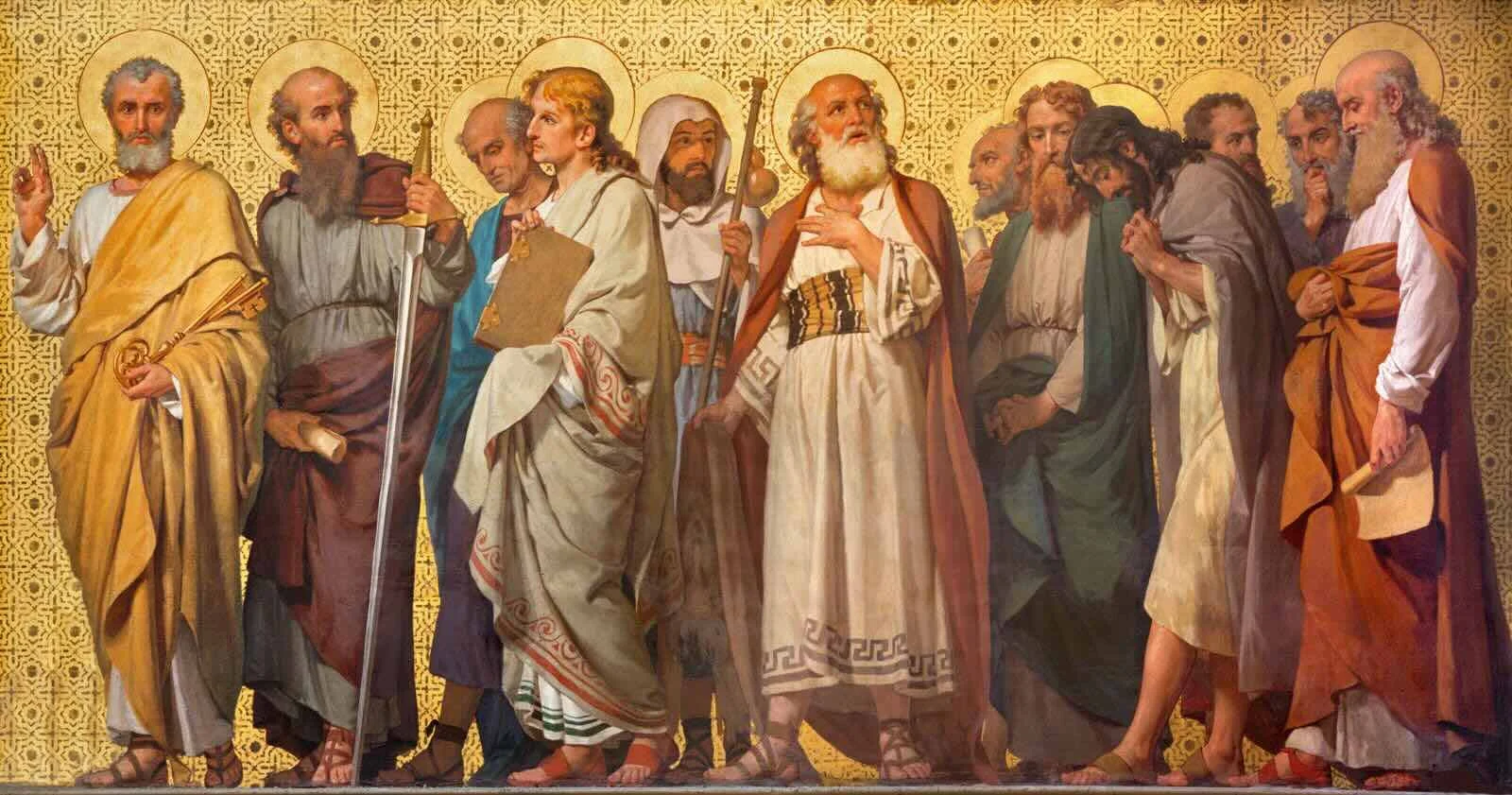
Translated from Philip Schaff's History of The Christian Church
第一章 基督教的传播
目录
§ 3. 文献
§ 4. 阻碍与助力
§ 5. 基督教成功的原因
§ 6. 传播的途径
§ 7. 基督教在罗马帝国的分布范围
§ 8. 亚洲的基督教
§ 9. 埃及的基督教
§ 10. 北非的基督教
§ 11. 欧洲的基督教
§ 3. 文献
I. 史料
没有统计资料或确切的记述,只有散见于下列文献中的零星线索:
普林尼 (Pliny,107年):《书信》(Ep.) x. 96及下篇(致图拉真的信)。伊格那丢 (Ignatius,约110年):《致马格尼西亚人书》(Ad Magnes.),第10章。《致丢格那妥书》(Ep. ad Diogn.,约120年),第6章。
殉道者游斯丁 (Justin Martyr,约140年):《对话录》(Dial.) 117;《护教辞》(Apol.) I. 53。
爱任纽 (Irenaeus,约170年):《驳异端》(Adv. Haer.) I. 10;III. 3、4;v. 20等。
德尔图良 (Tertullian,约200年):《护教辞》(Apol.) I. 21、37、41、42;《致异教徒》(Ad Nat.) I. 7;《致斯卡普拉》(Ad Scap.),第2、5章;《驳犹太人》(Adv. Jud.) 7、12、13。
奥利金 (Origen,卒于254年):《驳塞尔苏斯》(Contr. Cels.) I. 7、27;II. 13、46;III. 10、30;《论原理》(De Princ.),第IV卷,第1章,§ 2;《马太福音注释》(Com. in Matth.),第857页,德拉吕 (Delarue) 编。
优西比乌 (Eusebius,卒于340年):《教会史》(Hist. Eccl) III. 1;v. 1;vii. 1;viii. 1,另参第ix、x卷。鲁菲努斯 (RUFINUS):《教会史》(Hist. Eccles.) ix. 6。
奥古斯丁 (Augustin,卒于430年):《上帝之城》(De Civitate Dei)。M. 多兹 (M. Dods) 英译,爱丁堡,1871年;新版(收入沙弗的《尼西亚及后尼西亚教父文库》),纽约,1887年。
II. 著作
米歇尔·勒基安 (Mich. Le Quien,一位博学的多明我会士,卒于1733年):《基督教东方》(Oriens Christianus)。巴黎,1740年。3卷,对开本。这是一部完备的东方教会地理著作,按君士坦丁堡、亚历山大、安提阿和耶路撒冷四大牧首辖区编排。
莫斯海姆 (Mosheim):《历史评注》(Historical Commentaries) 等(默多克〔Murdock〕编),I. 第259–290页。
吉本 (Gibbon):《罗马帝国衰亡史》(The Decline and Fall of the Roman Empire),第xv章。
A. 伯尼奥 (A. Beugnot):《西方异教消亡史》(Histoire de la destruction du paganisme en Occident)。巴黎,1835年,2卷。获铭文与美文学学院 (Académie des inscriptions et belles-letters) 奖。
艾蒂安·沙斯泰尔 (Etienne Chastel):《东罗马帝国异教消亡史》(Histoire de la destruction du paganisme dans I’ empire d’ Orient)。巴黎,1850年。该学院 (Académie) 的获奖论文。
尼安德 (Neander):《基督教宗教与教会史》(History of the Christian Relig. and Church)(托里〔Torrey〕译),I. 第68–79页。
维尔奇 (Wiltsch):《教会地理与统计手册》(Handbuch der kirchl. Geographie u. Statistik)。柏林,1846年。I. 第32页及后。
Chs. 梅里韦尔 (Chs. Merivale):《罗马帝国的归信》(Conversion of the Roman Empire)(1864年度波义耳讲座),纽约,1865年重印。另参其《帝国统治下的罗马人史》(History of the Romans under the Empire),记述自尤利乌斯·凯撒 (Julius Caesar) 至马可·奥勒留 (Marcus Aurelius) 的历史,伦敦及纽约,7卷。
爱德华·A. 弗里曼 (Edward A. Freeman):《欧洲历史地理》(The Historical Geography of Europe)。伦敦及纽约,1881年。2卷(第I卷,第II、III章,第18–71页)。
参弗里德兰德 (Friedländer):《罗马风俗史》(Sittengesch. Roms),III. 第517页及后;以及勒南 (Renan):《马可·奥勒留》(Marc-Aurèle),巴黎,1882年,第xxv章,第447–464页(“基督教的统计与地理扩展”〔Statistique et extension géographique du Christianisme〕)。
V. 舒尔策 (V. Schultze):《希腊罗马异教衰亡史》(Geschichte des Untergangs des griech-römischen. Heidenthums)。耶拿,1887年。
§ 4. 阻碍与助力
在最初三个世纪中,基督教被置于最不利的环境之下,为要使它彰显自身的道德力量,并且单凭属灵的兵器战胜世界。直到君士坦丁 (Constantine) 统治之时,它在罗马帝国内甚至不具有合法地位;起初被当作犹太教的一个派别而受到漠视,后来又被视为叛逆性的新事物,遭到诽谤、禁止和逼迫,信奉它的人要受到没收财产和处死的刑罚。此外,它不像后来的伊斯兰教那样,对人心败坏的倾向稍有迁就,反而与犹太人和异教徒的流行观念相对立,坚持要求人悔改归信、舍弃自我与世界,毫不宽贷;以致照德尔图良所说,因贪恋享乐而不肯加入这个新教派的人,比因贪生而不肯加入的人还多。基督教的犹太渊源,以及大多数信奉者的贫穷与卑微,也尤其触犯了希腊人和罗马人的骄傲。塞尔苏斯 (Celsus) 夸大了这个事实,无视许多例外,讥讽地说,传讲这种“非理性信仰”的,都是“织工、鞋匠和漂洗工,这些最没有学问的人”,而他们尤其懂得怎样把它推荐给“妇女和儿童”。
然而,尽管有这些异乎寻常的困难,基督教仍不断发展,为其神圣的起源及其适合人类更深层需要的特性提供了鲜明的证据;当时的爱任纽、游斯丁、德尔图良及其他教父,也确实以此作为论据。不仅如此,这些阻碍本身,在上帝护理的手中,反成了促进发展的工具。逼迫导致殉道,而殉道不仅令人恐惧,也具有吸引力,激发了最高尚、最无私的志向。每一位真正的殉道者,都是基督教真实与圣洁的活见证。德尔图良能够向异教徒高呼:“你们精心设计的一切残酷手段,都不能有所成就;它们不过是吸引人归入这个教派的诱饵。你们越是残害我们,我们的人数就越增加。基督徒的血就是他们的种子。”基督徒在道德上的认真,与当时普遍的腐败形成强烈对照;它虽使轻浮纵欲的人退避,却必然给心灵最深邃、最高尚的人留下极深的印象。贫穷和受压迫者对福音的偏爱,证明了福音安慰与救赎的能力。不过,从一开始,上层社会和有教养的阶层中,也有人受到这个新宗教的吸引,人数虽不多,却包括尼哥底母、亚利马太的约瑟、使徒保罗、方伯士求·保罗、雅典的丢尼修、哥林多的以拉都,以及一些皇室成员。在图密善 (Domitian) 的逼迫中受难的,包括他自己的近亲弗拉维娅·多米提拉 (Flavia Domitilla) 及其丈夫弗拉维乌斯·克莱门斯 (Flavius Clemens)。在卡利斯图斯地下墓窟 (Catacomb of Callistus) 最古老、以圣卢基娜 (St. Lucina) 命名的部分,葬有显赫的庞波尼乌斯氏族 (gens Pomponia) 的成员,或许还有弗拉维王朝家族的成员。元老和骑士阶层也产生了若干公开或隐蔽的归信者。普林尼哀叹,小亚细亚各个阶层的人(omnis ordinis)都转而归向基督徒。德尔图良断言,迦太基 (Carthage) 有十分之一的人信奉基督教,其中包括元老、出身最高贵的妇女,以及阿非利加方伯的至亲。从第二世纪中叶起,众多教父,如殉道者游斯丁、爱任纽、希波吕托斯 (Hippolytus)、革利免 (Clement)、奥利金、德尔图良、居普良 (Cyprian),在才智与修养上,超过了或至少不逊于同时代最杰出的异教徒。
这种进展也不限于某些特定地区,而是同样遍及帝国各处。德尔图良在《护教辞》中说:“我们不过是昨日才出现的一个群体,却已遍布你们的一切地方——城市、岛屿、堡垒、市镇、集会,甚至你们的军营、部族、团体、宫廷、元老院、广场!我们只把神庙留给你们。你们的军队,我们数得清;而我们仅在一个行省中的人数,就比他们更多。”这一切事实,都揭露了塞尔苏斯那种可憎指控的不公;一位近代怀疑论者又重述了这一指控,说这个新教派几乎全由民众中的渣滓组成——农民和工匠、男孩和妇女、乞丐和奴隶。
§ 5. 基督教成功的原因
基督教迅速传播并最终得胜,其首要的积极原因,在于它作为普世救恩之宗教所具有的绝对内在价值,也在于其兼具神人二性的创立者那完美的教训和榜样;他向每一颗相信的心证明,自己是救人脱离罪恶的救主,是永生的赐予者。基督教适合人类一切阶层、境况和关系,适合一切民族和种族、一切文化程度,适合每一个渴望从罪中得赎、渴望圣洁生活的灵魂。它的价值,显明在其教义的真理及自证之力中;显明在其训诫的纯洁与崇高中;显明在它使人心灵和生活重生、成圣的果效中;显明在妇女及其所主持的家庭生活地位的提升中;显明在穷苦患难者处境的改善中;也显明在信仰告白者的信心、弟兄之爱、善行以及得胜的死亡中。
除了这些内在的道德与属灵见证,又有强有力的外在证据证明基督教的神圣起源,就是旧约的预言与预表,在新约中如此鲜明地得到应验;最后还有神迹的见证。按照夸德拉图斯 (Quadratus)、殉道者游斯丁、爱任纽、德尔图良、奥利金及其他人的明确记述,在这一时期,神迹仍不时伴随着传教士的宣讲,使异教徒归信。
特别有利的外在环境,是罗马帝国的广大疆域、秩序与统一,以及希腊语言和文化的普及。
除了这些积极原因,犹太教与异教世界毫无希望的处境,也从反面给基督教带来了有力的优势。自耶路撒冷毁灭这一可怕的审判之后,犹太教便在咒诅之下漂泊不安,不再有自己的国家。异教在外表上仍占统治地位,内里却已腐烂,正走向不可避免的衰亡。民间宗教与公共道德,受到怀疑主义和唯物主义哲学的侵蚀;希腊的学术与艺术丧失了创造力;罗马帝国仅靠刀剑的力量和现世利益来维系;社会的道德纽带已经断裂;无边的贪婪和各样罪恶,从王座到陋室,横行于罗马及各行省,连塞涅卡 (Seneca) 和塔西佗 (Tacitus) 这样的人也承认这一点。像安敦宁·庇护 (Antoninus Pius) 和马可·奥勒留这样有德行的皇帝,只是例外而非常例,也无法阻止道德的日趋败坏。古典时代在其最辉煌的岁月所产生的一切,没有一样能够医治这个时代的致命创伤,甚至不能给予暂时的缓解。在渐浓的黑夜中,唯一的希望之星,就是耶稣那年轻、清新、无畏的宗教;它不惧死亡,信心坚强,爱火炽烈,注定要日益获得一切有思想者的认同,被视为现今与未来唯一有生命的宗教。当世界不断受到战争、革命和公共灾难的震荡,当种种哲学体系和王朝兴起又消逝之时,这个新宗教尽管遭遇外部可怕的反对和内部的危险,却以真理不可抗拒的力量,默默而稳步地前进,逐渐渗入人类的骨髓与血脉。
伟大的奥古斯丁说:“基督向这个衰老、败坏世界中的人显现,使他们在周围万物日渐凋零之际,能够借着他得到崭新、青春的生命。”
附注
吉本在他那著名的第十五章中,把基督教在罗马帝国内的迅速发展归因于五点:早期基督徒的热忱,对来世赏罚的信仰,神迹的能力,基督徒严谨(纯洁)的道德,以及紧密的教会组织。然而,这些原因本身,都是吉本所忽略的一个原因所产生的结果,即基督教的神圣真理,以及基督教训与榜样的完美。参约翰·亨利·纽曼博士 (Dr. John Henry Newman)《赞同的文法》(Grammar of Assent),第445页及下页;乔治·P. 费舍尔博士 (Dr. George P. Fisher)《基督教的开端》(The Beginnings of Christianity),第543页及后。费舍尔说:“〔早期基督徒的〕‘热忱’,是对一个人的热忱,也是对与他不可分的事业的热忱;对来世生命的信仰,源于对那位曾死而复活、升入高天者的信心;早期门徒也自觉地把行神迹的能力与同一源头联系起来;道德的洁净,以及作为早期基督徒教会团契之基础的弟兄合一,同样是他们与基督的关系、以及他们共同爱他的结果。基督教在罗马世界的胜利,就是基督的胜利;他被举起来,为要吸引万人来归向他。”
莱基 (Lecky)(《欧洲道德史》Hist. of Europ. Morals,I. 412)比吉本探究得更深,将早期基督教的成功归因于其内在的卓越,以及它对古罗马帝国时代需求的非凡适应性。他说:“基督教正是在这场运动中取得了优势;我们不难发现它获胜的原因。在这样的环境中,从来没有别的宗教兼具如此众多而各不相同的力量和吸引力。它不像犹太教,不受地域纽带的束缚,同样适合每一个民族、每一个阶层。它不像斯多葛主义 (Stoicism),而是以最强烈的方式诉诸人的情感,并提供一种富有同情之心的敬拜所具有的一切魅力。它不像埃及宗教,而是将其独特的教训与一种纯洁高尚的伦理体系结合起来,并证明自己能够在行动中将其实现。在社会与民族大规模融合的运动中,它宣告全人类普遍的弟兄关系。在哲学与文明使人心日渐柔和的影响下,它教导爱的至高神圣性。对于奴隶而言——他们在罗马宗教生活中从未发挥过如此重大的影响——它是受苦者和受压迫者的宗教。对于哲学家而言,它既是后期斯多葛派最高伦理的回响,也是柏拉图 (Plato) 学派最优良教训的扩展。对于一个渴求奇事的世界,它提供了一部充满奇迹的历史,其中的奇事比阿波罗尼乌斯 (Apollonius) 的还要奇异;犹太人和迦勒底人 (Chaldean) 的赶鬼者几乎无法与它的赶鬼者匹敌,而神迹不断发生的传说则在其信徒中流传。对于一个深感政治秩序正在瓦解、热切而焦虑地窥探未来的世界,它以震撼人心的力量宣告世界即将毁灭——它的一切朋友将得荣耀,它的一切仇敌将受永刑。对于一个已经厌倦凝视加图 (Cato) 所体现、卢坎 (Lucan) 所歌颂的那种冷峻而不动情感的伟大形象的世界,它呈现了一个怜悯与爱的理想——这个理想注定在此后许多世纪里,把世上一切最伟大、最高尚者吸引到它周围——一位能够在朋友坟前流泪、能够体恤我们软弱的教师。最后,对于一个被敌对的信条和相冲突的哲学搅扰得纷乱不安的世界,它传授自己的教义,不是将其作为人的思辨,而是作为神的启示;这启示的确证,与其说凭借理性,不如说凭借信心。‘人心里相信,就可以称义;’‘人若立志遵着我父的旨意行,就必晓得这教训或是出于上帝;’‘你们若不信,就不能明白;’‘天生属于基督的心;’‘心造就神学家’——这些话最能表达基督教起初对世界所产生的作用。它与一切伟大的宗教一样,更关切情感的方式,而非思想的方式。它成功的主要原因,是其教训与人类属灵本性的契合。正因为它忠实于那个时代的道德情操,忠实地体现了当时人们所趋向的至高完善典范,契合了他们的宗教需求、目标和情感,使人的整个属灵生命都能在其影响下舒展畅游,它才如此深深地扎根于人心之中。”
梅里韦尔 (Merivale)(《罗马帝国的归信》Convers. of the Rom. Emp.,序言)将罗马帝国的归信主要归于四个原因:1)所记载的预言显然应验,以及神迹为基督教真理提供的外在证据;2)基督教满足了人所承认的对救赎者与成圣者的需要,由此提供的内在证据;3)早期信徒在生与死中所彰显的良善与圣洁;4)基督教在君士坦丁 (Constantine) 治下所取得的现世成功,这成功“如同一场席卷一切的革命,使广大人类转向那在基督耶稣里启示出来、如旭日般升起的真理”。
勒南 (Renan) 在其《马可·奥勒留》(Marc-Aurèle,巴黎,1882年)第31章,第561–588页,讨论了基督教获胜的原因。他主要将其归因于世界所需要的“新的生活规范”和“道德改革”,而这些是哲学或任何既有宗教都不能给予的。犹太人确实远远超越了当时的败坏。“Glorie éternelle et unique, qui doit faire oublier bien des folies et des violence! Les Juifs sont les révolutionnaires du 1er et du 2e siècle de notre ère.”(“这是永恒而独一无二的荣耀,足以使人忘却许多愚妄和暴行!犹太人是公元第一、第二世纪的革命者。”)他们将基督教给予了世界。“Les populations se précipitèrent, par une sorte du mouvement instinctif, dans une secte qui satisfaisait leur aspirations les plus intimes et ouvrait des ésperances infinies.”(“民众出于一种本能的冲动,蜂拥进入一个满足他们内心最深切渴望、为他们开启无限希望的教派。”)勒南十分看重不朽的信仰以及向每一个罪人提供完全赦免的应许,认为这些是基督教吸引人的因素;但他与吉本一样,忽略了基督教作为救恩宗教的真正力量。正是这种力量,说明了它不仅在古罗马帝国,而且在每一个扎下根来的国家和民族中取得成功的原因。
§ 6. 传播的途径
一个值得注意的事实是:使徒时期之后,直到中世纪开始,才再有伟大宣教士的名字见诸记载;那时,各民族的归信是由少数人促成或开创的,如爱尔兰 (Ireland) 的圣帕特里克 (St. Patrick)、苏格兰 (Scotland) 的圣哥伦巴 (St. Columba)、英格兰 (England) 的圣奥古斯丁 (St. Augustine)、德国的圣卜尼法斯 (St. Boniface)、斯堪的纳维亚 (Scandinavia) 的圣安斯加尔 (St. Ansgar),以及斯拉夫 (Slavonic) 各族中的圣西里尔 (St. Cyril) 和美多迪乌斯 (Methodius)。尼西亚会议前时期 (ante-Nicene age),没有差会,没有宣教机构,也没有有组织的宣教活动;然而,自圣约翰去世以后不到300年,当时代表文明世界的罗马帝国,其全体人口在名义上都已基督教化。
要理解这个惊人的事实,我们必须记住,使徒们亲自奠定的根基既坚固又深厚。他们从耶路撒冷直到罗马撒下的种子,经他们的鲜血滋润,长成了丰盛的庄稼。我们主的话又在更大的范围内应验了:“那人撒种,这人收割。我差你们去收你们所没有劳苦的;别人劳苦,你们享受他们所劳苦的”(《约翰福音》4:38)。
基督教一经建立,便成了自身最好的宣教士。它从内部自然生长。它仅凭自身的存在就吸引了人。它是照在黑暗中、照亮黑暗的光。虽然没有终身专门从事这项工作的职业宣教士,但每一个会众群体都是一个差会,每一位基督徒都是一位宣教士,受基督之爱的激励,热切地使同胞归信。耶路撒冷和安提阿 (Antioch) 的教会,以及司提反 (Stephen) 殉道后那些“分散各处,往各处去传道”的弟兄,已经树立了榜样。1殉道者游斯丁 (Justin Martyr) 的归信,是由于他“在海边散步”时遇见的一位可敬老人。德尔图良 (Tertullian) 说,每一个基督徒工人“既寻见上帝,又将他显明出来,尽管柏拉图断言,发现创造主并不容易,即使寻见了,要使众人认识他也很困难”。塞尔苏斯 (Celsus) 嘲讽地说,漂布工、毛织工和皮革工人,以及乡野无知之辈,是传播基督教最热心的人,最先把它带给妇女和儿童。妇女和奴隶将它带进家庭;福音传给穷人,又借着穷人传扬,使他们富足,这正是福音的荣耀。奥利金 (Origen) 告诉我们,城市教会派遣宣教士前往乡村。人睡觉的时候,种子仍在生长,结出果实来,先发苗,后长穗,再后穗上结成饱满的子粒。每一个基督徒都向邻舍述说自己归信的故事,工人向工友述说,奴隶向同为奴隶的人述说,仆人向男女主人述说,正如水手讲述自己从海难中获救的故事一样。
福音主要通过活生生的讲道和个人交往而传播;圣经也在相当大的程度上发挥了作用,它很早就流传开来,并译成多种语言,包括拉丁文(北非和意大利的译本)、叙利亚文(库里顿译本〔Curetonian〕和别西大译本〔Peshito〕),以及埃及文(采用孟斐斯〔Memphitic〕、底比斯〔Thebaic〕和巴什穆尔〔Bashmuric〕三种方言)。从大马士革 (Damascus) 到不列颠 (Britain),罗马帝国各地之间的往来相当便利而安全。为商业和罗马军团修筑的大道,也供和平的使者通行,为十字架无声的征服效力。商业本身在当时与现今一样,是一种强有力的媒介,将福音和基督教文明的种子带到罗马帝国最偏远的地方。
在这一时期,基督教传入各国的具体方式和确切时间,大多不能确定;我们所知道的,除了它确已传入这一事实之外,并无多少。毫无疑问,使徒及其亲传门徒所做的工作,远比《新约》告诉我们的多。但另一方面,中世纪的传统将许多国家教会和地方教会的起源追溯到使徒,而这些教会不可能在第二或第三世纪以前就已兴起。甚至亚利马太的约瑟 (Joseph of Arimathaea)、尼哥底母 (Nicodemus)、亚略巴古的丢尼修 (Dionysius the Areopagite)、拉撒路 (Lazarus)、马大 (Martha) 和马利亚 (Mary),也都被传说变成了前往异国的宣教士。
§ 7. 基督教在罗马帝国的分布范围
殉道者游斯丁约在第二世纪中叶说:“无论希腊人、蛮族,还是任何其他种族,无论他们以何种名称或风俗区别于人,无论他们对技艺或农业多么无知,无论住在帐棚里,还是乘着有篷的车辆四处漂泊——没有一个民族不奉被钉十字架的耶稣之名,向万有之父、万物的创造主献上祈祷和感谢。”半个世纪以后,德尔图良以挑战的口吻对异教徒说:“我们不过是昨日才出现的,却已遍满你们的城市、岛屿、军营、宫殿、元老院和广场;我们留给你们的,只有你们的庙宇。”2这些话,以及爱任纽 (Irenaeus) 和阿诺比乌斯 (Arnobius) 的类似说法,显然都是修辞上的夸张。奥利金的陈述较为谨慎而适度。不过,可以合理地断言,约在第三世纪末,帝国的每一个行省、每一座城市都已知道基督的名,这名既受尊崇,也遭逼迫。马克西米安 (Maximian) 在一道敕令中说,“几乎所有人”都已放弃祖先的崇拜,转而归附这个新教派。
由于缺乏统计资料,基督徒的人数只能凭推测。在第三世纪末、第四世纪初,他们的人数极可能接近罗马臣民的十分之一或十二分之一,即约一千万人。
然而,基督徒是一个紧密团结的群体,朝气蓬勃,充满活力与希望,人数日增;异教徒则大多是一盘散沙,人数日减。这一事实使教会实际蕴藏的未来力量大为增强。
基督教在罗马帝国境外的亚洲各地区和欧洲西北部蛮族中的传播,起初自然远离历史的主流,尚不足以立即产生重大影响。但它为那些地区的文明发展及其日后在世界上的地位预备了道路。
附注
吉本 (Gibbon) 和弗里德兰德 (Friedländer,III. 531) 估计,君士坦丁 (Constantine) 即位时(306年),基督徒约占其臣民的二十分之一,这一估计可能过低;马特 (Matter) 和罗伯逊 (Robertson) 估计为五分之一,则又过高。一些较早的作者受早期护教士夸张言辞的误导,甚至认为帝国境内的基督徒人数即使不超过异教崇拜者,也至少与之相等。若果真如此,单凭通常的审慎考虑,也早在君士坦丁以前就该采取宽容政策了。莫斯海姆 (Mosheim) 在其《历史评注》等著作(Hist. Commentaries, etc.,默多克〔Murdock〕译本,第I卷,第274页及后)中,详论第二世纪基督徒的人数,却未得出确定结论。沙斯泰尔 (Chastel) 估计,君士坦丁时代基督徒在西方占人口的1/15,在东方占1/10,平均为1/12(《异教毁灭史》〔Hist. de la destruct. du paganisme,〕,第36页)。据屈梭多模 (Chrysostom) 所说,他那个时代(380年)安提阿 (Antioch) 的基督徒人口约有十万,即全城人口的一半。
§ 8. 亚洲的基督教
亚洲是基督教的摇篮,正如它也是人类与文明的摇篮。使徒们亲自将这新宗教传遍巴勒斯坦 (Palestine)、叙利亚 (Syria) 和小亚细亚 (Asia Minor)。据小普林尼 (Pliny) 所说,在图拉真 (Trajan) 治下,小亚细亚诸神的庙宇几乎无人问津,献祭用的牲畜也几乎找不到买主。第二世纪,基督教传入美索不达米亚 (Mesopotamia) 的埃德萨 (Edessa),并深入波斯 (Persia)、米底亚 (Media)、巴克特里亚 (Bactria) 和帕提亚 (Parthia) 的一些地区;第三世纪,又传入亚美尼亚 (Armenia) 和阿拉伯 (Arabia)。诚然,保罗本人曾在阿拉伯度过三年,但可能是在退隐默想中,为他的使徒职事作准备。有一个传说说,使徒多马和巴多罗买曾将福音传到印度。但更为可信的说法是,亚历山大 (Alexandria) 的基督教教师潘代乌斯 (Pantaeus) 约于190年前往该国,而到第四世纪,那里已有教会。
权力中心由罗马迁往君士坦丁堡 (Constantinople),以及君士坦丁一世治下东罗马帝国的建立,使小亚细亚,尤其是君士坦丁堡,在此后数世纪的教会史上占据了举足轻重的地位。从325年至787年的七次大公会议,全都在该城或其附近举行;有关三位一体和基督位格的教义争论,也主要在小亚细亚、叙利亚和埃及展开。
在上帝奥秘的护理之下,这些圣经与早期教会之地已被麦加 (Mecca) 的先知征服,圣经被《古兰经》取代,希腊教会也沦于受奴役与停滞的境地;但东方因基督教不朽的精神而获得新生的日子,已不遥远。献身的传教士宣讲纯正的福音,过圣洁的生活,他们所进行的和平十字军东征,将重新征服圣地,并解决东方问题。
§ 9. 埃及的基督教
在非洲,基督教最先在埃及站稳脚跟,时间可能早至使徒时期。这片有法老、金字塔与狮身人面像、神庙与陵墓、象形文字与木乃伊、圣牛与鳄鱼、专制与奴役的土地,自族长时代起,便与神圣历史紧密交织,甚至以“为奴之家”的名称嵌入十诫之中。这里曾是约瑟及其弟兄的家,也是以色列的摇篮。早在公元前二百多年,犹太人的圣经便在埃及译成希腊文;这部连基督和使徒们也使用的希腊文译本,将希伯来思想传遍罗马世界,并孕育了新约特有的语言风格。亚历山大城聚居着众多犹太人,既是东方的文学中心,也是商业中心,还是连接东西方的纽带。最宏大的藏书汇集于此;犹太思想在这里与希腊思想密切接触,摩西的宗教也在这里与柏拉图 (Plato) 和亚里士多德 (Aristotle) 的哲学相遇。当基督在耶路撒冷和加利利教导人时,斐洛 (Philo) 正在这里著书;他的著作注定要通过亚历山大学派的教父,对基督教释经产生重大影响。
据古老传统,传福音的马可奠定了亚历山大教会的根基。旧开罗 (Cairo),即埃及的巴比伦,其科普特人 (Copts) 声称,彼得是在这里写下第一封书信的(《彼得前书》5:13);但他所指的必是幼发拉底河畔的巴比伦,或是奥秘意义上的巴比伦——罗马。优西比乌 (Eusebius) 列举亚历山大最早的几位主教为安尼亚诺斯 (Annianos,公元62—85年)、阿比利奥斯 (Abilios,至98年) 和克尔东 (Kerdon,至110年)。这一主教座自然逐渐获得了都主教及牧首的地位与尊荣。早在第二世纪,亚历山大便已有一所兴盛的神学院,革利免 (Clement) 和俄利根 (Origen) 在那里任教,成为圣经学术与基督教哲学的先驱。福音从下埃及传到中埃及、上埃及及邻近各省,或许在第四世纪已远达努比亚 (Nubia)、埃塞俄比亚 (Ethiopia) 和阿比西尼亚 (Abyssinia)。235年在亚历山大举行的一次会议上,有来自尼罗河之地各处的二十位主教出席。
第四世纪,埃及给教会带来了阿里乌派 (Arian) 异端、亚他那修 (Athanasius) 的正统信仰,以及圣安东尼 (St. Antony) 和圣帕科米乌斯 (St. Pachomius) 的修道敬虔;这种敬虔以不可抗拒之势传遍了基督教世界。
埃及的神学文献主要用希腊文写成。早期希腊文圣经抄本大多抄写于亚历山大,其中可能也包括价值无可估量的《西奈抄本》(Sinaitic MSS.) 和《梵蒂冈抄本》(Vatican MSS.)。但早在第二世纪,圣经就已用三种不同的方言译成本地语言。这些译本的残存部分,对于确定希腊文新约最早的文本,具有相当重要的分量。
信奉基督教的埃及人是法老时代埃及人的后裔,但已大量混有黑人和阿拉伯人的血统。基督教从未完全深入这个民族,而在哈里发欧麦尔 (Omar) 治下穆罕默德教徒征服埃及时(640年),几乎被一扫而空。欧麦尔焚毁了亚历山大宏伟的图书馆,借口是:书中的内容若与《古兰经》一致,便属无用;若不一致,便是有害,理当毁灭。自那时起,埃及几乎从教会史中消失,至今仍在新主人的统治下呻吟,依然是一个为奴之家。人民绝大多数是穆斯林,但科普特人——在五百五十万人中约占五十万——仍延续着祖先名义上的基督教,并成为西方较为活跃的各教会的传教工场。
§ 10. 北非的基督教
伯蒂格 (Böttiger):《迦太基人史》(Geschichte der Carthager)。柏林,1827年。
莫弗斯 (Movers):《腓尼基人》(Die Phönizier)。1840—56年,4卷。(一部权威著作。)
Th. 蒙森 (Th. Mommsen):《罗马史》(Röm. Geschichte),第I卷,第489页及后。(第III编,第1—7章,第5版。)
N. 戴维斯 (N. Davis):《迦太基及其遗迹》(Carthage and her Remains)。伦敦及纽约,1861年。
R. 博斯沃思·史密斯 (R. Bosworth Smith):《迦太基与迦太基人》(Carthage and the Carthaginians)。伦敦,第2版,1879年。同一作者:《罗马与迦太基》(Rome and Carthage)。纽约,1880年。
奥托·梅尔策 (Otto Meltzer):《迦太基人史》(Geschichte der Karthager)。柏林,第I卷,1879年。
这些书论述的是古代迦太基人的世俗历史,但有助于理解当地的处境与历史背景。
朱利叶斯·劳埃德 (Julius Lloyd):《北非教会》(The North African Church.)。伦敦,1880年。叙述下迄穆斯林的征服。
北非各省的居民出自闪族 (Semitic),其语言与希伯来语相近,但在罗马统治下,其习俗、法律和语言都已拉丁化。因此,该地区的教会属于拉丁基督教,并在其早期历史中发挥着主导作用。
腓尼基人 (Phoenicians) 是迦南人的余裔,堪称古代历史中的英国人。他们经营着世界的贸易;与此同时,以色列人为世界预备了宗教,希腊人为世界预备了文明。这三个居于小国的小民族,所完成的事业,比亚述、巴比伦和波斯这些庞大帝国,甚至比罗马所完成的,还更为重要。腓尼基人占据着叙利亚海岸黎巴嫩山与大海之间的一条狭长地带,他们的商船从推罗和西顿驶向旧世界各地,远自印度,直到波罗的海;他们比瓦斯科·达·伽马 (Vasco de Gama) 早两千年绕过好望角,并从马拉巴尔 (Malabar) 运回檀香木,从阿拉伯运回香料,从努比亚运回鸵鸟羽毛,从西班牙运回白银,从尼日尔 (Niger) 运回黄金,从厄尔巴岛 (Elba) 运回铁,从英格兰运回锡,从波罗的海运回琥珀。他们为所罗门供应黎巴嫩的香柏木,帮助他建造宫殿与圣殿。早在公元前八百多年,他们就在非洲最北部海岸建立了殖民地迦太基 (Carthage)。3 凭借这一有利位置,他们取得了对北非海岸从赫拉克勒斯之柱 (pillars of Hercules) 至大叙尔提斯湾 (Great Syrtes),以及西班牙南部、撒丁岛 (Sardinia)、西西里岛 (Sicily) 和整个地中海的控制权。由此,迦太基与仅隔三日航程的罗马之间,竞争势不可免;由此发生了三次布匿战争 (Punic wars),尽管汉尼拔 (Hannibal) 具有卓越的军事天才,战争最终仍以这座北非都城的彻底毁灭告终(公元前146年)。4 “Delenda est Carthago,”(迦太基必须毁灭),这就是老加图 (Cato) 狭隘而残酷的政策。但在奥古斯都 (Augustus) 治下,尤利乌斯·凯撒 (Julius Caesar) 更为明智的计划得到实施,一座新迦太基在旧城废墟上兴起,成为富庶繁荣的城市,起初信奉异教,后来信奉基督教,直到被野蛮的汪达尔人 (Vandals) 攻占(公元439年),最终又被与其最初创建者同族的穆罕默德教阿拉伯人毁灭(647年)。自那时起,“一种悲凉而孤寂的沉默”再次笼罩着它的废墟。5
基督教在第二世纪,或许早在第一世纪末,就已传到由资深执政官治理的阿非利加行省 (proconsular Africa),具体何时、如何传入,我们并不知道。这里与意大利之间往来不断。基督教迅速传遍毛里塔尼亚 (Mauritania) 和努米底亚 (Numidia) 的沃野与灼热的沙地。居普良 (Cyprian) 在258年能够召集八十七位主教举行会议,而在308年,造成分裂的多纳徒派 (Donatists) 在迦太基召开了一次有二百七十位主教参加的会议。当然,那时的教区都很小。
最古老的拉丁文圣经译本被误称为“意大利译本”(Itala),是哲罗姆“武加大译本”(Vulgata) 的基础;它很可能是在非洲为非洲人译成的,而不是在罗马为罗马人译成的,因为当时罗马的基督徒通用希腊语。拉丁神学也不是诞生于罗马,而是诞生于迦太基。德尔图良是其创始者。米努基乌斯·费利克斯 (Minutius Felix)、阿尔诺比乌斯 (Arnobius) 和居普良,见证了第三世纪非洲基督教与神学的活跃和兴盛。第五世纪的第一个四分之一世纪中,它在诸教父中最伟大的圣奥古斯丁 (St. Augustin) 崇高的智慧与火热的心灵里,臻于最高的完善;但在他去世(430年)后不久,它先被汪达尔人的野蛮势力埋没,到第七世纪,又被穆罕默德教徒的征服所掩埋。然而,他的著作在整个黑暗时代引领着拉丁教会的基督教思想,激励了宗教改革者,直到今日仍是一股充满生命力的力量。
§ 11. 欧洲的基督教
“帝国的进程一路向西。”
这一历史规律,也是基督教的规律。使徒教会的行程,是从耶路撒冷走向罗马。自此以后,宣教的进程便不断向西,越走越远。
对于整个西方,罗马教会远比其他教会重要。据优西比乌所说,第三世纪中叶,罗马教会有一位主教、四十六位长老、七位执事和同样数目的副执事、四十二位辅祭员,以及共五十位读经员、驱魔员和守门员;此外还有一千五百名寡妇和穷人由教会照管。由此我们或可估计,其信徒人数约有五六万,即全城人口的二十分之一左右;该城人口固然无法确切判定,但在安敦尼诸帝 (Antonines) 统治时期,必已超过一百万。6 基督徒埋葬死者的地下墓窟规模极其庞大,也证实了基督教在罗马的力量。
教会从罗马传播到意大利的各个城市。据我们所知,第一次罗马教省会议由特勒斯福鲁斯 (Telesphorus,142–154年) 主持,共有十二位主教参加。第三世纪中叶(255年),罗马的哥尼流 (Cornelius) 召开了一次有六十位主教参加的会议。
177年的逼迫表明,第二世纪时,教会已经在高卢 (Gaul) 南部建立。基督教大概是从东方传到这里的;因为里昂 (Lyons) 和维埃纳 (Vienne) 的教会与小亚细亚的教会关系密切,曾将有关逼迫的报告送交他们,而里昂主教爱任纽 (Irenaeus) 又是士每拿的坡旅甲 (Polycarp) 的门徒。据图尔的贵格利 (Gregory of Tours) 记载,第三世纪中叶,有七位宣教士从罗马被差往高卢。其中的狄奥尼修斯 (Dionysius) 建立了巴黎的第一所教会,在蒙马特 (Montmartre) 殉道,后来成为法国的主保圣徒。后来的民间迷信把他与亚略巴古的丢尼修混为一人,后者是在雅典因保罗传道而归信的。
西班牙大概也在第二世纪接触了基督教,不过直到第三世纪中叶,我们才看到当地教会和主教的明确踪迹。306年的埃尔维拉会议 (Council of Elvira) 有十九位主教参加。使徒保罗曾计划前往西班牙宣教;按照罗马的革利免 (Clement of Rome) 的记载,他也曾在那里传道——如果我们把革利免所说保罗将福音传到的“西方的极处”理解为西班牙的话。7 然而,现存记载中并没有他在西班牙工作的踪迹。传说全然不顾年代次序,将该国基督教的起源归于大雅各 (James the Elder);他于44年在耶路撒冷被处死,据说葬于著名的朝圣地坎波斯特拉 (Campostella),其遗骨直到第八世纪末叶、阿方索二世 (Alphonse II) 在位时才首次被发现.1。8
爱任纽谈到福音传到日耳曼人 (Germans) 和其他蛮族中间,说他们“不用纸墨,却借着圣灵将救恩写在心里”;他所指的只能是日耳曼境内属于罗马帝国的地区(Germania cisrhenana,莱茵河此岸的日耳曼)。
据德尔图良 (Tertullian) 所说,不列颠 (Britain) 也在第二世纪末叶归服于十字架的权能之下。早在奥古斯丁 (Augustine) 率领的罗马宣教团使盎格鲁—撒克逊人 (Anglo-Saxons) 归信以前,凯尔特教会 (Celtic church) 就已在英格兰、爱尔兰和苏格兰独立于罗马而存在;此后仍延续了一段时期,并将支派扩展到日耳曼、法国和低地诸国 (Low Countries),但最终先后并入罗马教会。它起初大概源自高卢,后来也从意大利获得传承。传说则将其起源追溯至圣保罗及其他使徒时期的奠基者。可敬的比德 (Bede,†735年) 说,不列颠王卢修斯 (Lucius,约167年) 曾请求罗马主教埃留特鲁斯 (Eleutherus) 差派宣教士。314年在高卢的阿尔勒 (Arles,Arelate) 召开的会议上,有三位不列颠主教出席,分别来自埃博拉库姆 (Eboracum,即约克,York)、伦迪努姆 (Londinum,即伦敦,London),以及伦迪嫩西乌姆殖民城 (Colonia Londinensium,即林肯,Lincoln,或更可能是科尔切斯特,Colchester)。
北欧和西欧蛮族的归信,直到第五、第六世纪才真正开始;我们将在中世纪史中加以考察。
Original Text
CHAPTER I. SPREAD OF CHRISTIANITY.
§ 3. Literature.
I. Sources.
No statistics or accurate statements, but only scattered hints in
Pliny (107): Ep. x. 96 sq. (the letter to Trajan). Ignatius (about 110): Ad Magnes. c. 10. Ep. ad Diogn. (about 120) c. 6.
Justin Martyr (about 140): Dial. 117; Apol. I. 53.
Irenaeus (about 170): Adv. Haer. I. 10; III. 3, 4; v. 20, etc.
Tertullian (about 200): Apol. I. 21, 37, 41, 42; Ad Nat. I. 7; Ad Scap. c. 2, 5; Adv. Jud. 7, 12, 13.
Origen (d. 254): Contr. Cels. I, 7, 27; II. 13, 46; III. 10, 30; De Princ. l. IV. c. 1, § 2; Com. in Matth. p. 857, ed. Delarue.
Eusebius (d. 340): Hist. Eccl III. 1; v. 1; vii, 1; viii. 1, also books ix. and x. RUFINUS: Hist. Eccles. ix. 6.
Augustin (d. 430): De Civitate Dei. Eng. translation by M. Dods, Edinburgh, 1871; new ed. (in Schaff’s "Nicene and Post-Nicene Library"), N. York, 1887.
II. Works.
Mich. Le Quien (a learned Dominican, d. 1733): Oriens Christianus. Par. 1740. 3 vols. fol. A complete ecclesiastical geography of the East, divided into the four patriarchates of Constantinople, Alexandria, Antioch, and Jerusalem.
Mosheim: Historical Commentaries, etc. (ed. Murdock) I. 259–290.
Gibbon: The Decline and Fall of the Roman Empire. Chap. xv.
A. Beugnot: Histoire de la destruction du paganisme en Occident. Paris 1835, 2 vols. Crowned by the Académie des inscriptions et belles-letters.
Etienne Chastel: Histoire de la destruction du paganisme dans I’ empire d’ Orient. Paris 1850. Prize essay of the Académie.
Neander: History of the Christian Relig. and Church (trans. of Torrey), I. 68–79
Wiltsch: Handbuch der kirchl. Geographie u. Statistik. Berlin 1846. I. p. 32 sqq.
Chs. Merivale: Conversion of the Roman Empire (Boyle Lectures for 1864), republ. N. York 1865. Comp. also his History of the Romans under the Empire, which goes from Julius Caesar to Marcus Aurelius, Lond. & N. York, 7 vols.
Edward A. Freeman: The Historical Geography of Europe. Lond. & N. York 1881. 2 vols. (vol. I. chs. II. & III. pp. 18–71.)
Comp. Friedländer, Sittengesch. Roms. III. 517 sqq.; and Renan: Marc-Aurèle. Paris 1882, ch. xxv. pp. 447–464 (Statistique et extension géographique du Christianisme).
V. Schultze: Geschichte des Untergangs des griech-römischen. Heidenthums. Jena, 1887.
§ 4. Hindrances and Helps.
For the first three centuries Christianity was placed in the most unfavorable circumstances, that it might display its moral power, and gain its victory over the world by spiritual weapons alone. Until the reign of Constantine it had not even a legal existence in the Roman empire, but was first ignored as a Jewish sect, then slandered, proscribed, and persecuted, as a treasonable innovation, and the adoption of it made punishable with confiscation and death. Besides, it offered not the slightest favor, as Mohammedanism afterwards did, to the corrupt inclinations of the heart, but against the current ideas of Jews and heathen it so presented its inexorable demand of repentance and conversion, renunciation of self and the world, that more, according to Tertullian, were kept out of the new sect by love of pleasure than by love of life. The Jewish origin of Christianity also, and the poverty and obscurity of a majority of its professors particularly offended the pride of the Greeks, and Romans. Celsus, exaggerating this fact, and ignoring the many exceptions, scoffingly remarked, that "weavers, cobblers, and fullers, the most illiterate persons" preached the "irrational faith," and knew how to commend it especially "to women and children."
But in spite of these extraordinary difficulties Christianity made a progress which furnished striking evidence of its divine origin and adaptation to the deeper wants of man, and was employed as such by Irenaeus, Justin, Tertullian, and other fathers of that day. Nay, the very hindrances became, in the hands of Providence, means of promotion. Persecution led to martyrdom, and martyrdom had not terrors alone, but also attractions, and stimulated the noblest and most unselfish form of ambition. Every genuine martyr was a living proof of the truth and holiness of the Christian religion. Tertullian could exclaim to the heathen: "All your ingenious cruelties can accomplish nothing; they are only a lure to this sect. Our number increases the more you destroy us. The blood of the Christians is their seed." The moral earnestness of the Christians contrasted powerfully with the prevailing corruption of the age, and while it repelled the frivolous and voluptuous, it could not fail to impress most strongly the deepest and noblest minds. The predilection of the poor and oppressed for the gospel attested its comforting and redeeming power. But others also, though not many, from the higher and educated classes, were from the first attracted to the new religion; such men as Nicodemus, Joseph of Arimathaea, the apostle Paul, the proconsul Sergius Paulus, Dionysius of Athens, Erastus of Corinth, and some members of the imperial household. Among the sufferers in Domitian’s persecution were his own near kinswoman Flavia Domitilla and her husband Flavius Clemens. In the oldest part of the Catacomb of Callistus, which is named after St. Lucina, members of the illustrious gens Pomponia, and perhaps also of the Flavian house, are interred. The senatorial and equestrian orders furnished several converts open or concealed. Pliny laments, that in Asia Minor men of every rank (omnis ordinis) go over to the Christians. Tertullian asserts that the tenth part of Carthage, and among them senators and ladies of the noblest descent and the nearest relatives of the proconsul of Africa professed Christianity. The numerous church fathers from the middle of the second century, a Justin Martyr, Irenaeus, Hippolytus, Clement, Origen, Tertullian, Cyprian, excelled, or at least equalled in talent and culture, their most eminent heathen contemporaries.
Nor was this progress confined to any particular localities. It extended alike over all parts of the empire. "We are a people of yesterday," says Tertullian in his Apology, "and yet we have filled every place belonging to you—cities, islands, castles, towns, assemblies, your very camp, your tribes, companies, palace, senate, forum! We leave you your temples only. We can count your armies; our numbers in a single province will be greater." All these facts expose the injustice of the odious charge of Celsus, repeated by a modern sceptic, that the new sect was almost entirely composed of the dregs of the populace—of peasants and mechanics, of boys and women, of beggars and slaves.
§ 5. Causes of the Success of Christianity.
The chief positive cause of the rapid spread and ultimate triumph of Christianity is to be found in its own absolute intrinsic worth, as the universal religion of salvation, and in the perfect teaching and example of its divine-human Founder, who proves himself to every believing heart a Saviour from sin and a giver of eternal life. Christianity is adapted to all classes, conditions, and relations among men, to all nationalities and races, to all grades of culture, to every soul that longs for redemption from sin, and for holiness of life. Its value could be seen in the truth and self-evidencing power of its doctrines; in the purity and sublimity of its precepts; in its regenerating and sanctifying effects on heart and life; in the elevation of woman and of home life over which she presides; in the amelioration of the condition of the poor and suffering; in the faith, the brotherly love, the beneficence, and the triumphant death of its confessors.
To this internal moral and spiritual testimony were added the powerful outward proof of its divine origin in the prophecies and types of the Old Testament, so strikingly fulfilled in the New; and finally, the testimony of the miracles, which, according to the express statements of Quadratus, Justin Martyr, Irenaeus, Tertullian, Origen, and others, continued in this period to accompany the preaching of missionaries from time to time, for the conversion of the heathen.
Particularly favorable outward circumstances were the extent, order, and unity of the Roman empire, and the prevalence of the Greek language and culture.
In addition to these positive causes, Christianity had a powerful negative advantage in the hopeless condition of the Jewish and heathen world. Since the fearful judgment of the destruction of Jerusalem, Judaism wandered restless and accursed, without national existence. Heathenism outwardly held sway, but was inwardly rotten and in process of inevitable decay. The popular religion and public morality were undermined by a sceptical and materialistic philosophy; Grecian science and art had lost their creative energy; the Roman empire rested only on the power of the sword and of temporal interests; the moral bonds of society were sundered; unbounded avarice and vice of every kind, even by the confession of a Seneca and a Tacitus, reigned in Rome and in the provinces, from the throne to the hovel. Virtuous emperors, like Antoninus Pius and Marcus Aurelius, were the exception, not the rule, and could not prevent the progress of moral decay. Nothing, that classic antiquity in its fairest days had produced, could heal the fatal wounds of the age, or even give transient relief. The only star of hope in the gathering night was the young, the fresh, the dauntless religion of Jesus, fearless of death, strong in faith, glowing with love, and destined to commend itself more and more to all reflecting minds as the only living religion of the present and the future. While the world was continually agitated by wars, and revolutions, and public calamities, while systems of philosophy, and dynasties were rising and passing away, the new religion, in spite of fearful opposition from without and danger from within, was silently and steadily progressing with the irresistible force of truth, and worked itself gradually into the very bone and blood of the race.
"Christ appeared," says the great Augustin, "to the men of the decrepit, decaying world, that while all around them was withering away, they might through Him receive new, youthful life."
Notes.
Gibbon, in his famous fifteenth chapter, traces the rapid progress of Christianity in the Roman empire to five causes: the zeal of the early Christians, the belief in future rewards and punishment, the power of miracles, the austere (pure) morals of the Christian, and the compact church organization. But these causes are themselves the effects of a cause which Gibbon ignores, namely, the divine truth of Christianity, the perfection of Christ’s teaching and Christ’s example. See the strictures of Dr. John Henry Newman, Grammar of Assent, 445 sq., and Dr. George P. Fisher, The Beginnings of Christianity, p. 543 sqq. "The zeal" [of the early Christians], says Fisher, "was zeal for a person, and for a cause identified with Him; the belief in the future life sprang out of faith in Him who had died and risen again, and ascended to Heaven; the miraculous powers of the early disciples were consciously connected with the same source; the purification of morals, and the fraternal unity, which lay at the basis of ecclesiastical association among the early Christians, were likewise the fruit of their relation to Christ, and their common love to Him. The victory of Christianity in the Roman world was the victory of Christ, who was lifted up that He might draw all men unto Him."
Lecky (Hist. of Europ. Morals, I. 412) goes deeper than Gibbon, and accounts for the success of early Christianity by its intrinsic excellency and remarkable adaptation to the wants of the times in the old Roman empire. "In the midst of this movement," he says, "Christianity gained its ascendancy, and we can be at no loss to discover the cause of its triumph. No other religion, under such circumstances, had ever combined so many distinct elements of power and attraction. Unlike the Jewish religion, it was bound by no local ties, and was equally adapted for every nation and for every class. Unlike Stoicism, it appealed in the strongest manner to the affections, and offered all the charm of a sympathetic worship. Unlike the Egyptian religion, it united with its distinctive teaching a pure and noble system of ethics, and proved itself capable of realizing it in action. It proclaimed, amid a vast movement of social and national amalgamation, the universal brotherhood of mankind. Amid the softening influence of philosophy and civilization, it taught the supreme sanctity of love. To the slave, who had never before exercised so large an influence over Roman religious life, it was the religion of the suffering and the oppressed. To the philosopher it was at once the echo of the highest ethics of the later Stoics, and the expansion of the best teaching of the school of Plato. To a world thirsting for prodigy, it offered a history replete with wonders more strange than those of Apollonius; while the Jew and the Chaldean could scarcely rival its exorcists, and the legends of continual miracles circulated among its followers. To a world deeply conscious of political dissolution, and prying eagerly and anxiously into the future, it proclaimed with a thrilling power the immediate destruction of the globe—the glory of all its friends, and the damnation of all its foes. To a world that had grown very weary gazing on the cold passionless grandeur which Cato realized, and which Lucan sung, it presented an ideal of compassion and of love—an ideal destined for centuries to draw around it all that was greatest, as well as all that was noblest upon earth—a Teacher who could weep by the sepulchre of His friend, who was touched with the feeling of our infirmities. To a world, in fine, distracted by hostile creeds and colliding philosophies, it taught its doctrines, not as a human speculation, but as a Divine revelation, authenticated much less by reason than by faith. ’With the heart man believeth unto righteousness;’ ’He that doeth the will of my Father will know the doctrine, whether it be of God;’ ’Unless you believe you cannot understand;’ ’A heart naturally Christian;’ ’The heart makes the theologian,’ are the phrases which best express the first action of Christianity upon the world. Like all great religions, it was more concerned with modes of feeling than with modes of thought. The chief cause of its success was the congruity of its teaching with the spiritual nature of mankind. It was because it was true of the moral sentiments of the age, because it represented faithfully the supreme type of excellence to which men were then tending, because it corresponded with their religious wants, aims, and emotions, because the whole spiritual being could then expand and expatiate under its influence that it planted its roots so deeply in the hearts of men."
Merivale (Convers. of the Rom. Emp., Preface) traces the conversion of the Roman empire chiefly to four causes: 1) the external evidence of the apparent fulfilment of recorded prophecy and miracles to the truth of Christianity; 2) the internal evidence of satisfying the acknowledged need of a redeemer and sanctifier; 3) the goodness and holiness manifested in the lives and deaths of the primitive believers; 4) the temporal success of Christianity under Constantine, which "turned the mass of mankind, as with a sweeping revolution, to the rising sun of revealed truth in Christ Jesus."
Renan discusses the reasons for the victory of Christianity in the 31st chapter of his Marc-Aurèle (Paris 1882), pp. 561–588. He attributes it chiefly "to the new discipline of life," and "the moral reform," which the world required, which neither philosophy nor any of the established religions could give. The Jews indeed rose high above the corruptions of the times. "Glorie éternelle et unique, qui doit faire oublier bien des folies et des violence! Les Juifs sont les révolutionnaires du 1er et du 2e siècle de notre ère." They gave to the world Christianity. "Les populations se précipitèrent, par une sorte du mouvement instinctif, dans une secte qui satisfaisait leur aspirations les plus intimes et ouvrait des ésperances infinies." Renan makes much account of the belief in immortality and the offer of complete pardon to every sinner, as allurements to Christianity; and, like Gibbon, he ignores its real power as a religion of salvation. This accounts for its success not only in the old Roman empire, but in every country and nation where it has found a home.
§ 6. Means of Propagation.
It is a remarkable fact that after the days of the Apostles no names of great missionaries are mentioned till the opening of the middle ages, when the conversion of nations was effected or introduced by a few individuals as St. Patrick in Ireland, St. Columba in Scotland, St. Augustine in England, St. Boniface in Germany, St. Ansgar in Scandinavia, St. Cyril and Methodius among the Slavonic races. There were no missionary societies, no missionary institutions, no organized efforts in the ante-Nicene age; and yet in less than 300 years from the death of St. John the whole population of the Roman empire which then represented the civilized world was nominally Christianized.
To understand this astonishing fact, we must remember that the foundation was laid strong and deep by the apostles themselves. The seed scattered by them from Jerusalem to Rome, and fertilized by their blood, sprung up as a bountiful harvest. The word of our Lord was again fulfilled on a larger scale: "One soweth, and another reapeth. I sent you to reap that whereon ye have not labored: others have labored, and ye are entered into their labor" (John 4:38).
Christianity once established was its own best missionary. It grew naturally from within. It attracted people by its very presence. It was a light shining in darkness and illuminating the darkness. And while there were no professional missionaries devoting their whole life to this specific work, every congregation was a missionary society, and every Christian believer a missionary, inflamed by the love of Christ to convert his fellow-men. The example had been set by Jerusalem and Antioch, and by those brethren who, after the martyrdom of Stephen, "were scattered abroad and went about preaching the Word."(1) Justin Martyr was converted by a venerable old man whom he met "walking on the shore of the sea." Every Christian laborer, says Tertullian, "both finds out God and manifests him, though Plato affirms that it is not easy to discover the Creator, and difficult when he is found to make him known to all." Celsus scoffingly remarks that fuller, and workers in wool and leather, rustic and ignorant persons, were the most zealous propagators of Christianity, and brought it first to women and children. Women and slaves introduced it into the home-circle, it is the glory of the gospel that it is preached to the poor and by the poor to make them rich. Origen informs us that the city churches sent their missionaries to the villages. The seed grew up while men slept, and brought forth fruit, first the blade, then the ear, after that the full corn in the ear. Every Christian told his neighbor, the laborer to his fellow-laborer, the slave to his fellow-slave, the servant to his master and mistress, the story of his conversion, as a mariner tells the story of the rescue from shipwreck.
The gospel was propagated chiefly by living preaching and by personal intercourse; to a considerable extent also through the sacred Scriptures, which were early propagated and translated into various tongues, the Latin (North African and Italian), the Syriac (the Curetonian and the Peshito), and the Egyptian (in three dialects, the Memphitic, the Thebaic, and the Bashmuric). Communication among the different parts of the Roman empire from Damascus to Britain was comparatively easy and safe. The highways built for commerce and for the Roman legions, served also the messengers of peace and the silent conquests of the cross. Commerce itself at that time, as well as now, was a powerful agency in carrying the gospel and the seeds of Christian civilization to the remotest parts of the Roman empire.
The particular mode, as well as the precise time, of the introduction of Christianity into the several countries during this period is for the most part uncertain, and we know not much more than the fact itself. No doubt much more was done by the apostles and their immediate disciples, than the New Testament informs us of. But on the other hand the mediaeval tradition assigns an apostolic origin to many national and local churches which cannot have arisen before the second or third century. Even Joseph of Arimathaea, Nicodemus, Dionysius the Areopagite, Lazarus, Martha and Mary were turned by the legend into missionaries to foreign lands.
§ 7. Extent of Christianity in the Roman Empire.
Justin Martyr says, about the middle of the second century: "There is no people, Greek or barbarian, or of any other race, by whatsoever appellation or manners they may be distinguished, however ignorant of arts or agriculture, whether they dwell in tents or wander about in covered wagons—among whom prayers and thanksgivings are not offered in the name of the crucified Jesus to the Father and Creator of all things." Half a century later, Tertullian addresses the heathen defiantly: "We are but of yesterday, and yet we already fill your cities, islands, camps, your palace, senate and forum; we have left to you only your temples."(2) These, and similar passages of Irenaeus and Arnobius, are evidently rhetorical exaggerations. Origen is more cautious and moderate in his statements. But it may be fairly asserted, that about the end of the third century the name of Christ was known, revered, and persecuted in every province and every city of the empire. Maximian, in one of his edicts, says that "almost all" had abandoned the worship of their ancestors for the new sect.
In the absence of statistics, the number of the Christians must be purely a matter of conjecture. In all probability it amounted at the close of the third and the beginning of the fourth century to nearly one-tenth or one-twelfth of the subjects of Rome, that is to about ten millions of souls.
But the fact, that the Christians were a closely united body, fresh, vigorous, hopeful, and daily increasing, while the heathen were for the most part a loose aggregation, daily diminishing, made the true prospective strength of the church much greater.
The propagation of Christianity among the barbarians in the provinces of Asia and the north-west of Europe beyond the Roman empire, was at first, of course, too remote from the current of history to be of any great immediate importance. But it prepared the way for the civilization of those regions, and their subsequent position in the world.
Notes.
Gibbon and Friedländer (III. 531) estimate the number of Christians at the accession of Constantine (306) probably too low at one-twentieth; Matter and Robertson too high at one-fifth of his subjects. Some older writers, misled by the hyperbolical statements of the early Apologists, even represent the Christians as having at least equalled if not exceeded the number of the heathen worshippers in the empire. In this case common prudence would have dictated a policy of toleration long before Constantine. Mosheim, in his Hist. Commentaries, etc. (Murdock’s translation I. p. 274 sqq.) discusses at length the number of Christians in the second century without arriving at definite conclusions. Chastel estimates the number at the time of Constantine at 1/15 in the West, 1/10 in the East, 1/12 on an average (Hist. de la destruct. du paganisme, p. 36). According to Chrysostom, the Christian population of Antioch in his day (380) was about 100,000, or one-half of the whole.
§ 8. Christianity in Asia.
Asia was the cradle of Christianity, as it was of humanity and civilization. The apostles themselves had spread the new religion over Palestine, Syria, and Asia Minor. According to the younger Pliny, under Trajan, the temples of the gods in Asia Minor were almost forsaken, and animals of sacrifice found hardly any purchasers. In the second century Christianity penetrated to Edessa in Mesopotamia, and some distance into Persia, Media, Bactria, and Parthia; and in the third, into Armenia and Arabia. Paul himself had, indeed, spent three years in Arabia, but probably in contemplative retirement preparing for his apostolic ministry. There is a legend, that the apostles Thomas and Bartholomew carried the gospel to India. But a more credible statement is, that the Christian teacher Pantaeus of Alexandria journeyed to that country about 190, and that in the fourth century churches were found there.
The transfer of the seat of power from Rome to Constantinople, and the founding of the East Roman empire under Constantine I. gave to Asia Minor, and especially to Constantinople, a commanding importance in the history of the Church for several centuries. The seven oecumenical Councils from 325 to 787 were all held in that city or its neighborhood, and the doctrinal controversies on the Trinity and the person of Christ were carried on chiefly in Asia Minor, Syria, and Egypt.
In the mysterious providence of God those lands of the Bible and the early church have been conquered by the prophet of Mecca, the Bible replaced by the Koran, and the Greek church reduced to a condition of bondage and stagnation; but the time is not far distant when the East will be regenerated by the undying spirit of Christianity. A peaceful crusade of devoted missionaries preaching the pure gospel and leading holy lives will reconquer the holy land and settle the Eastern question.
§ 9. Christianity in Egypt.
In Africa Christianity gained firm foothold first in Egypt, and there probably as early as the apostolic age. The land of the Pharaohs, of the pyramids and sphinxes, of temples and tombs, of hieroglyphics and mummies, of sacred bulls and crocodiles, of despotism and slavery, is closely interwoven with sacred history from the patriarchal times, and even imbedded in the Decalogue as "the house of bondage." It was the home of Joseph and his brethren, and the cradle of Israel. In Egypt the Jewish Scriptures were translated more than two hundred years before our era, and this Greek version used even by Christ and the apostles, spread Hebrew ideas throughout the Roman world, and is the mother of the peculiar idiom of the New Testament. Alexandria was full of Jews, the literary as well as commercial centre of the East, and the connecting link between the East and the West. There the largest libraries were collected; there the Jewish mind came into close contact with the Greek, and the religion of Moses with the philosophy of Plato and Aristotle. There Philo wrote, while Christ taught in Jerusalem and Galilee, and his works were destined to exert a great influence on Christian exegesis through the Alexandrian fathers.
Mark, the evangelist, according to ancient tradition, laid the foundation of the church of Alexandria. The Copts in old Cairo, the Babylon of Egypt, claim this to be the place from which Peter wrote his first epistle (1 Pet. 5:13); but he must mean either the Babylon on the Euphrates, or the mystic Babylon of Rome. Eusebius names, as the first bishops of Alexandria, Annianos (a.d. 62–85), Abilios (to 98), and Kerdon (to 110). This see naturally grew up to metropolitan and patriarchal importance and dignity. As early as the second century a theological school flourished in Alexandria, in which Clement and Origen taught as pioneers in biblical learning and Christian philosophy. From Lower Egypt the gospel spread to Middle and Upper Egypt and the adjacent provinces, perhaps (in the fourth century) as far as Nubia, Ethiopia, and Abyssinia. At a council of Alexandria in the year 235, twenty bishops were present from the different parts of the land of the Nile.
During the fourth century Egypt gave to the church the Arian heresy, the Athanasian orthodoxy, and the monastic piety of St. Antony and St. Pachomius, which spread with irresistible force over Christendom.
The theological literature of Egypt was chiefly Greek. Most of the early manuscripts of the Greek Scriptures—including probably the invaluable Sinaitic and Vatican MSS.—were written in Alexandria. But already in the second century the Scriptures were translated into the vernacular language, in three different dialects. What remains of these versions is of considerable weight in ascertaining the earliest text of the Greek Testament.
The Christian Egyptians are the descendants of the Pharaonic Egyptians, but largely mixed with negro and Arab blood. Christianity never fully penetrated the nation, and was almost swept away by the Mohammedan conquest under the Caliph Omar (640), who burned the magnificent libraries of Alexandria under the plea that if the books agreed with the Koran, they were useless, if not, they were pernicious and fit for destruction. Since that time Egypt almost disappears from church history, and is still groaning, a house of bondage under new masters. The great mass of the people are Moslems, but the Copts—about half a million of five and a half millions—perpetuate the nominal Christianity of their ancestors, and form a mission field for the more active churches of the West.
§ 10. Christianity in North Africa.
Böttiger: Geschichte der Carthager. Berlin, 1827.
Movers: Die Phönizier. 1840–56, 4 vols. (A standard work.)
Th. Mommsen: Röm. Geschichte, I. 489 sqq. (Book III. chs. 1–7, 5th ed.)
N. Davis: Carthage and her Remains. London & N. York, 1861.
R. Bosworth Smith: Carthage and the Carthaginians. Lond. 2nd ed. 1879. By the same: Rome and Carthage. N. York, 1880.
Otto Meltzer: Geschichte der Karthager. Berlin, vol. I. 1879.
These books treat of the secular history of the ancient Carthaginians, but help to understand the situation and antecedents.
Julius Lloyd; The North African Church. London, 1880. Comes down to the Moslem Conquest.
The inhabitants of the provinces of Northern Africa were of Semitic origin, with a language similar to the Hebrew, but became Latinized in customs, laws, and language under the Roman rule. The church in that region therefore belongs to Latin Christianity, and plays a leading part in its early history.
The Phoenicians, a remnant of the Canaanites, were the English of ancient history. They carried on the commerce of the world; while the Israelites prepared the religion, and the Greeks the civilization of the world. Three small nations, in small countries, accomplished a more important work than the colossal empires of Assyria, Babylon, and Persia, or even Rome. Occupying a narrow strip of territory on the Syrian coast, between Mount Lebanon and the sea, the Phoenicians sent their merchant vessels from Tyre and Sidon to all parts of the old world from India to the Baltic, rounded the Cape of Good Hope two thousand years before Vasco de Gama, and brought back sandal wood from Malabar, spices from Arabia, ostrich plumes from Nubia, silver from Spain, gold from the Niger, iron from Elba, tin from England, and amber from the Baltic. They furnished Solomon with cedars from Lebanon, and helped him to build his palace and the temple. They founded on the northernmost coast of Africa, more than eight hundred years before Christ, the colony of Carthage.(3) From that favorable position they acquired the control over the northern coast of Africa from the pillars of Hercules to the Great Syrtes, over Southern Spain, the islands of Sardinia and Sicily, and the whole Mediterranean sea. Hence the inevitable rivalry between Rome and Carthage, divided only by three days’ sail; hence the three Punic wars which, in spite of the brilliant military genius of Hannibal, ended in the utter destruction of the capital of North Africa (b.c. 146).(4) "Delenda est Carthago," was the narrow and cruel policy of the elder Cato. But under Augustus, who carried out the wiser plan of Julius Caesar, there arose a new Carthage on the ruins of the old, and became a rich and prosperous city, first heathen, then Christian, until it was captured by the barbarous Vandals (a.d. 439), and finally destroyed by a race cognate to its original founders, the Mohammedan Arabs (647). Since that time "a mournful and solitary silence" once more brooded over its ruins.(5)
Christianity reached proconsular Africa in the second, perhaps already at the close of the first century, we do not know when and how. There was constant intercourse with Italy. It spread very rapidly over the fertile fields and burning sands of Mauritania and Numidia. Cyprian could assemble in 258 a synod of eighty-seven bishops, and in 308 the schismatical Donatists held a council of two hundred and seventy bishops at Carthage. The dioceses, of course, were small in those days.
The oldest Latin translation of the Bible, miscalled "Itala" (the basis of Jerome’s "Vulgata"), was made probably in Africa and for Africa, not in Rome and for Rome, where at that time the Greek language prevailed among Christians. Latin theology, too, was not born in Rome, but in Carthage. Tertullian is its father. Minutius Felix, Arnobius, and Cyprian bear witness to the activity and prosperity of African Christianity and theology in the third century. It reached its highest perfection during the first quarter of the fifth century in the sublime intellect and burning heart of St. Augustin, the greatest among the fathers, but soon after his death (430) it was buried first beneath the Vandal barbarism, and in the seventh century by the Mohammedan conquest. Yet his writings led Christian thought in the Latin church throughout the dark ages, stimulated the Reformers, and are a vital force to this day.
§ 11. Christianity in Europe.
"Westward the course of Empire takes its way."
This law of history is also the law of Christianity. From Jerusalem to Rome was the march of the apostolic church. Further and further West has been the progress of missions ever since.
The church of Rome was by far the most important one for all the West. According to Eusebius, it had in the middle of the third century one bishop, forty-six presbyters, seven deacons with as many sub-deacons, forty-two acolyths, fifty readers, exorcists, and door-keepers, and fifteen hundred widows and poor persons under its care. From this we might estimate the number of members at some fifty or sixty thousand, i.e. about one-twentieth of the population of the city, which cannot be accurately determined indeed, but must have exceeded one million during the reign of the Antonines.(6) The strength of Christianity in Rome is also confirmed by the enormous extent of the catacombs where the Christians were buried.
From Rome the church spread to all the cities of Italy. The first Roman provincial synod, of which we have information, numbered twelve bishops under the presidency of Telesphorus (142–154). In the middle of the third century (255) Cornelius of Rome held a council of sixty bishops.
The persecution of the year 177 shows the church already planted in the south of Gaul in the second century. Christianity came hither probably from the East; for the churches of Lyons and Vienne were intimately connected with those of Asia Minor, to which they sent a report of the persecution, and Irenaeus, bishop of Lyons, was a disciple of Polycarp of Smyrna. Gregory of Tours states, that in the middle of the third century seven missionaries were sent from Rome to Gaul. One of these, Dionysius, founded the first church of Paris, died a martyr at Montmartre, and became the patron saint of France. Popular superstition afterwards confounded him with Dionysius the Areopagite, who was converted by Paul at Athens.
Spain probably became acquainted with Christianity likewise in the second century, though no clear traces of churches and bishops there meet us till the middle of the third. The council of Elvira in 306 numbered nineteen bishops. The apostle Paul once formed the plan of a missionary journey to Spain, and according to Clement of Rome he preached there, if we understand that country to be meant by "the limit of the West," to which he says that Paul carried the gospel.(7) But there is no trace of his labors in Spain on record. The legend, in defiance of all chronology, derives Christianity in that country from James the Elder, who was executed in Jerusalem in 44, and is said to be buried at Campostella, the famous place of pilgrimage, where his bones were first discovered under Alphonse II, towards the close of the eighth century.1(8)
When Irenaeus speaks of the preaching of the gospel among the Germans and other barbarians, who, "without paper and ink, have salvation written in their hearts by the Holy Spirit," he can refer only to the parts of Germany belonging to the Roman empire (Germania cisrhenana).
According to Tertullian Britain also was brought under the power of the cross towards the end of the second century. The Celtic church existed in England, Ireland, and Scotland, independently of Rome, long before the conversion of the Anglo-Saxons by the Roman mission of Augustine; it continued for some time after that event and sent offshoots to Germany, France, and the Low Countries, but was ultimately at different dates incorporated with the Roman church. It took its origin probably from Gaul, and afterwards from Italy also. The legend traces it to St. Paul and other apostolic founders. The venerable Bede (†735) says, that the British king Lucius (about 167) applied to the Roman bishop Eleutherus for missionaries. At the council of Arles, in Gaul (Arelate), in 314, three British bishops, of Eboracum (York), Londinum (London), and Colonia Londinensium (i.e. either Lincoln or more probably Colchester), were present.
The conversion of the barbarians of Northern and Western Europe did not begin in earnest before the fifth and sixth centuries, and will claim our attention in the history of the Middle Ages.
Original Footnotes
(1; original 4): Acts 8:4; 11:19.
(2; original 5): "Sola vobis relinqitimus templa."Apol.c. 37. Long before Tertullian the heathen Pliny, in his famous letter to Trajan (Epp. x. 97) had spoken of "desolata templa" and "sacra solemnia diu intermissa, " in consequence of the spread of the Christian superstition throughout the cities and villages of Asia Minor.
(3; original 6): The Phoenician or Punic name is Karthada, the Greek Karchedon (Karchdwvn), the Latin Carthago. It means New City (Neapolis). The word Kereth or Carth enters also into the names of other cities of Phoenician origin, as Cirta in Numidia.
(4; original 7): See the masterly comparison of Rome and Carthage by Mommsen, Book III.ch. 1. (vol. I. 506), of the destruction of Carthage in Book IV. ch. 1. (vol. II. 22 sqq.)
(5; original 8): On the ruins of Carthage see the descriptions of N. Davis and B. Smith (Rome and Carthage, ch. xx. 263-291). The recent conquest of Tunis by France (1881) gives new interest to the past of that country, and opens a new chapter for its future. Smith describes Tunis as the most Oriental of Oriental towns, with a gorgeous mixture of races—Arabs, Turks, Moors, and Negroes—held together by the religion of Islam.
(6; original 9): Gibbon, in his; thirty-first chapter, and Milman estimate the population of Rome at 1,200,000; Hoeck (on the basis of the Monumentum Ancyranum), Zumpt and Howson at two millions; Bunsen somewhat lower; while Dureau de la Malle tries to reduce it to half a million, on the ground that the walls of Servius Tullius occupied an area only one-fifth of that of Paris. But these walls no longer marked the limits of the city since its reconstruction after the conflagration under Nero, and the suburbs stretched to an unlimited extent into the country. Comp. vol. I. p. 359
(7; original 10): Rom. 15:24; Clem. R. Ad Cor. c. 5 (to; tevrma th'" duvsew")
(8; original 11): See J. B. Gams (R.C.): Die Kirchengeschichte von Spanien, Regensburg, 1862-1879, 5 vols. The first vol. (422 pages) is taken up with the legendary history of the first three centuries. 75 pages are given to the discussion of Paul’s journey to Spain. Gams traces Christianity in that country to Paul and to seven disciples of the Apostles sent to Rome, namely, Torquatus, Ctesiphon, Secundus, Indaletius, Caecilius, Hesychius, and Euphrasius (according to the Roman Martyrologium, edited by Baronius, 1586).
脚注
Best guess 对照表
正文及中文脚注中带上标 * 的外文为 best guess,尚未逐项核实;原始字串保留如下。
| 原字串 | Best guess | 语言 | 出现位置 | 说明 |
|---|---|---|---|---|
| Karchdwvn | Καρχηδών | Greek | 脚注 3 | 按旧字体编码还原,h 对应 η,wv 对应 ώ;与迦太基的希腊名称相符。 |
| to; tevrma th'" duvsew" | τὸ τέρμα τῆς δύσεως | Greek | 脚注 7 | 按旧字体字母及重音编码还原,与革利免所述“西方的极处”相符。 |
《使徒行传》8:4;11:19。↩︎
“Sola vobis relinqitimus templa”(我们只给你们留下了庙宇)。《护教篇》(Apol.),第37章。早在德尔图良之前,异教徒普林尼 (Pliny) 在他致图拉真 (Trajan) 的著名书信(Epp. x. 97)中,就曾说到,由于基督教这一迷信传遍小亚细亚的城乡,以致“desolata templa”(庙宇荒凉),以及“sacra solemnia diu intermissa”(例行祭礼久已中断)。↩︎
其腓尼基语或布匿语名称为 Karthada,希腊语为 Karchedon(Καρχηδών*),拉丁语为 Carthago,意为新城 (Neapolis)。Kereth 或 Carth 一词也见于其他源自腓尼基的城市名称,例如努米底亚 (Numidia) 的 Cirta。↩︎
参见蒙森 (Mommsen) 对罗马与迦太基的精辟比较,第III编第1章(第I卷,第506页);关于迦太基的毁灭,见第IV编第1章(第II卷,第22页及后)。↩︎
关于迦太基 (Carthage) 的遗址,参见 N. 戴维斯 (N. Davis) 和 B. 史密斯 (B. Smith) 的描述(《罗马与迦太基》〔Rome and Carthage〕,第xx章,第263–291页)。法国最近对突尼斯 (Tunis) 的征服(1881年),使该国的往昔重新引起人们的兴趣,也为其未来开启了新的篇章。史密斯将突尼斯描述为东方城镇中最具东方色彩的一座,阿拉伯人、土耳其人、摩尔人和黑人汇聚于此,绚丽多彩,由伊斯兰教联结在一起。↩︎
吉本 (Gibbon) 在其第三十一章中,以及米尔曼 (Milman),都估计罗马人口为1,200,000;赫克 (Hoeck,依据《安居拉铭文》〔Monumentum Ancyranum〕)、楚姆普特 (Zumpt) 和豪森 (Howson) 估计为二百万;本生 (Bunsen) 的估计略低;而迪罗·德·拉马勒 (Dureau de la Malle) 则试图将其减至五十万,理由是塞尔维乌斯·图利乌斯 (Servius Tullius) 城墙所圈定的面积只有巴黎的五分之一。然而,自尼禄时期大火之后重建以来,这些城墙就已不再标示城市的边界,郊区更是无限地伸展到乡间。比较第I卷,第359页。↩︎
《罗马书》15:24;罗马的革利免 (Clem. R.):《致哥林多人书》(Ad Cor.),第5章(τὸ τέρμα τῆς δύσεως*,西方的极处)。↩︎
参见 J. B. 加姆斯 (J. B. Gams,罗马天主教徒):《西班牙教会史》(Die Kirchengeschichte von Spanien),雷根斯堡 (Regensburg),1862–1879年,5卷。第一卷(422页)全用于叙述最初三个世纪的传说史,其中75页用于讨论保罗的西班牙之行。加姆斯将该国基督教的起源追溯至保罗,以及七位被差往罗马的使徒门徒,即托尔夸图斯 (Torquatus)、克特西丰 (Ctesiphon)、塞孔杜斯 (Secundus)、因达勒提乌斯 (Indaletius)、凯基利乌斯 (Caecilius)、赫叙基乌斯 (Hesychius) 和欧弗拉修斯 (Euphrasius)(依据巴罗尼乌斯〔Baronius〕于1586年编辑的《罗马殉道者名录》〔Roman Martyrologium〕)。↩︎